
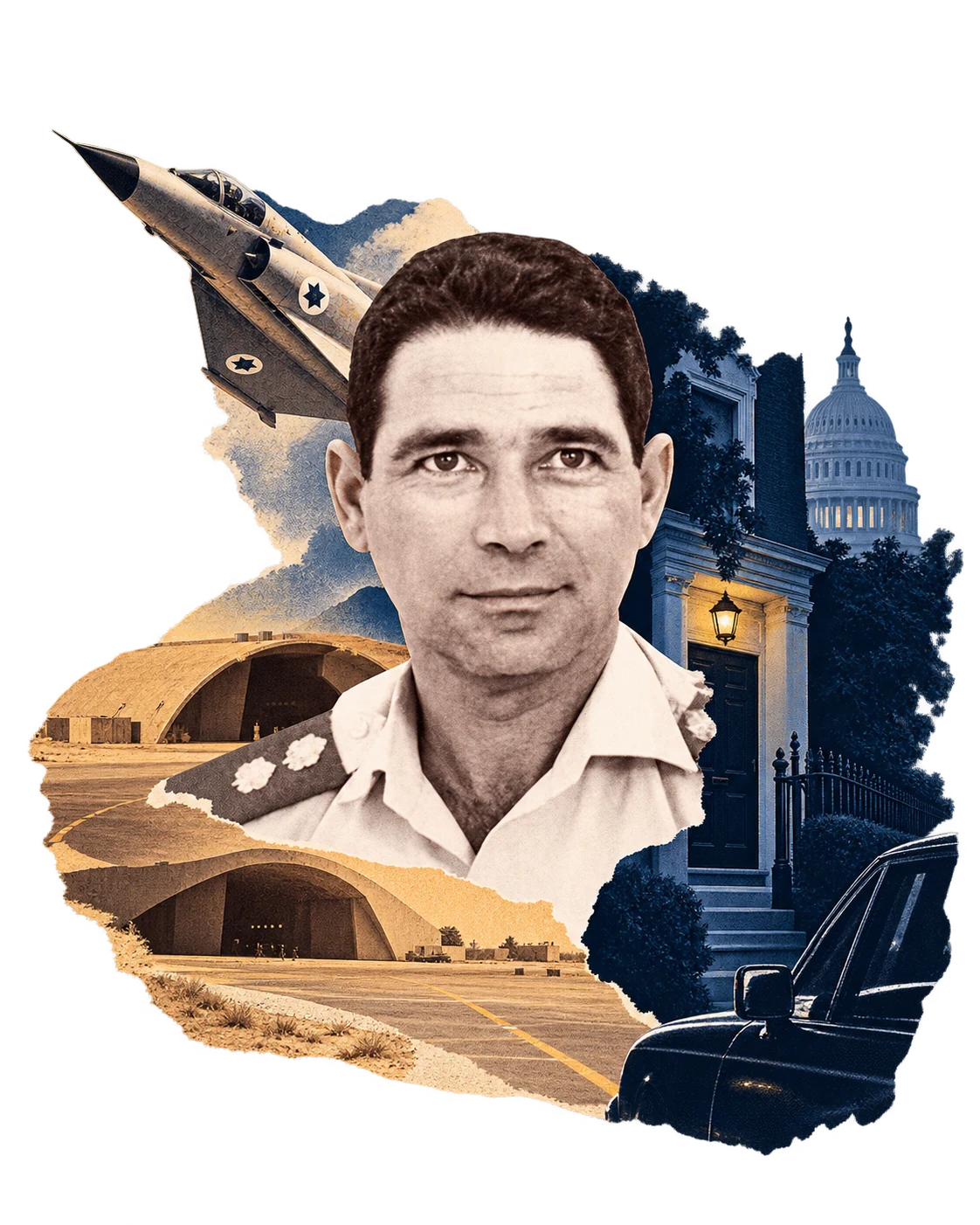
At 1:00 a.m. on July 1, 1973, the car arrived at the Alon family home in Washington. Deborah got out of the car and went inside. Her husband turned off the engine, and as he opened the car door, three fatal shots were fired at him from close range. This was the murder of
Childhood, Exile and Return to the Land
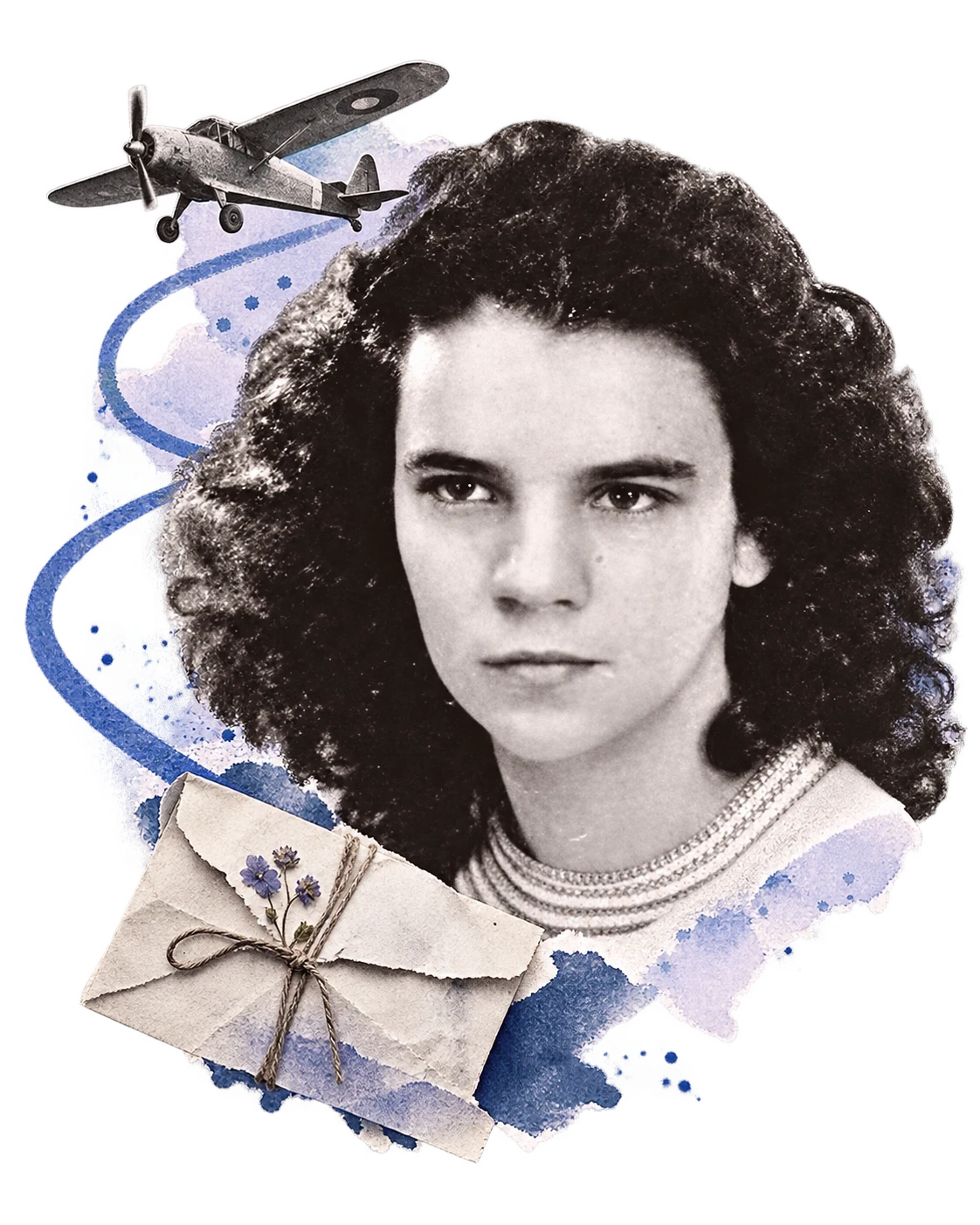
Yosef "Joe" Plachek (later Yosef Alon) was born in Ein Harod in 1929. His German mother and Czech father arrived in Palestine in 1920 as members of the Hefzibah group, and had two sons there: David and Yosef. In 1932, because of his mother's health problems and a certain disappointment with kibbutz socialism, the family returned to Czechoslovakia, to the town of Brno. When World War II broke out, ten-year-old Joe and his fourteen-year-old brother David were sent from Prague to England on a Kindertransport organized by the Englishman Sir Nicholas Winton. There, Joe was adopted by Jenny and George Davidson, a Christian couple who had no children. At the end of the war, Joe returned to Czechoslovakia to look for his parents. There he learned the bitter truth: his parents had been imprisoned in Theresienstadt and murdered in Auschwitz in 1944.
Joe studied goldsmithing and, following his friend Hugo Meisel (later Marom), went to selection tests for the Air Gadna youth aviation program in Czechoslovakia. In July 1948, he began flight training in Czechoslovakia and completed it in November of that year.
In February 1949, Joe immigrated to Israel and joined the Israeli Air Force. At first he served as a meteorologist because there were not enough planes, and the flight training he had completed in Czechoslovakia was not recognized as a full qualification. At age 25, he met Deborah, who worked as a nurse in Beersheba, and started a family with her. Joe began his career in a fighter squadron, and in 1951, after completing an instructor course, he was appointed an instructor at the flight school. Just three years later, he was among the first pilots to fly jet aircraft.
Pilot, Instructor and Hatzerim Commander
In 1966, he was appointed the first commander of the Air Force base at Hatzerim, which was built from the ground up by Israeli hands. During his four years in command, the base grew from 60 people to 3,000, and its personnel fought in the Six-Day War and the War of Attrition. This was the peak of Colonel Joe Alon's military service.
In 1970, Yosef Joe Alon was appointed assistant to the air and naval attaché at the Israeli Embassy in Washington, where he took his wife and three daughters. On the day he was murdered, at the age of 44, he was due to return to Israel at the end of his posting in Washington. Deborah called the police and informed the Israeli ambassador in Washington at the time, Simcha Dinitz. Major General Mordechai (Motta) Gur, then the military attaché in Washington, who was there, asked several times: "Why him and not me?"
Ambassador Dinitz said in an interview at the time: "If terrorists were responsible for what happened to him, it is important that they understand that this is not the way." Dinitz was careful not to say who had attacked the attaché, although everyone was convinced that, this time, the statement from Cairo attributing the murder to terrorists could be believed. The Egyptian Embassy in Washington, on the other hand, claimed that the killers were not Arabs.
Three months before the outbreak of the Yom Kippur War, an extensive manhunt for the killer or killers was underway in the United States. The US president at the time, Richard Nixon, assigned a presidential aircraft to bring Joe Alon's coffin to Israel. As the coffin was taken off the plane at Ben Gurion Airport, four Mirage jets appeared from the west. They flew over the tarmac. Yitzhak Rabin, the former Israeli ambassador to Washington, looked pale; Ezer Weizman, a former commander of the Air Force, stood frozen.
The defense minister at the time, Moshe Dayan, was asked whether Israel would avenge the murder: "We will try to eliminate those responsible for terrorism. We will strike them wherever possible. We have done, are doing, and will continue to do everything we can. We will not carry out retaliatory actions, but will fight to eliminate the terrorists." Dayan said that Israel would not target the embassies of Arab countries. "We expect and hope that the various countries will do everything possible to prevent such acts, and also prevent people of this kind and their supporters from staying in their countries, so that they cannot prepare such operations."
Joe Alon was laid to rest at the cemetery in Kiryat Shaul. A long procession of civilians and military personnel accompanied him, each of whom had played a part in the history of the Air Force. The Air Force commander at the time, Major General Benny Peled, eulogized him: "Exceptional flying ability, courage, and an unwillingness to compromise when it came to standards of flying. He fought like a lion. The Air Force will neither rest nor be at peace until the job is done. Your murderers will not get away with it." The chief of staff, Lieutenant General David (Dado) Elazar, then eulogized him: "Joe was not meant for a life abroad. He was a pilot by nature and in his soul. Joe was a fighter, and he fell in battle, a battle without limits, a battle in which sometimes you cannot see the enemy, but you always know who it is. Joe, you fell in battle, and we will continue the fight."
The Murder and the Ongoing Investigation
The FBI said at the time that the killers' efficient operation, in which they did not leave the scene with screeching tires that would have drawn attention, but drove slowly until they were away from the street, suggested that the killer was a local professional criminal. The assessment at the time was that he had been hired by Arab elements.
In the book Who Killed Joe Alon? by Fred Burton, translated by Amir Oren and published in 2010, Burton, a former special deputy for counterterrorism at the US State Department, writes that the murder was carried out by members of Black September, and that the man who pulled the trigger was a young Palestinian from a family originally from the West Bank that had moved to Lebanon in the 1960s. Director Liora Amir-Barmatz made a film for Israel's Channel One titled Who Killed My Father?, which was first broadcast in 2010. In it, she presented a startling version of events. "The film argues that Joe Alon was an active Mossad agent in the United States and was murdered because he knew something he was not supposed to know," the director explained. "During our extensive research, we too came across many of the testimonies and pieces of evidence Fred Burton presents in his book. I have nothing against Burton, but his claim that Joe Alon was murdered by Black September is not supported by the findings in the film."
Deborah Alon died at the age of 68, convinced that the reason for the murder was that he knew something he was not supposed to know. All the evidence in the FBI files was destroyed, an extremely unusual occurrence for an organization that has kept records since the 1920s. What did John Alon know that led to his death?
Several years after Liora Amir-Barmatz's investigation, the case files were reopened. Benzi Tsafoni, a combat engineer in the Yom Kippur War who suffered from PTSD, came to Joe Alon's daughters. He testified that shortly before the war, he and his fellow soldiers had cleared mines along a 120-kilometer stretch of the canal's banks. Benzi's officers and fellow soldiers confirmed his testimony, but could not explain why mines were being cleared just days before the war. This information joined other details, and the daughters approached historian Uri Milstein, who told them: "The theory is that Anwar Sadat, Moshe Dayan, and Henry Kissinger concluded that if the Jewish-Arab conflict, or at least the conflict between Israel and Egypt, was to be resolved, Egypt had to be given a sense of honor and a small victory. The plan was to let Egypt attack, with the IDF defending itself 'very weakly' so that the Egyptians would make gains. Then the IDF would turn the tables, cross the canal, and conquer parts of Egypt. After all that, the Americans would come and remove Israel from Egypt. The American 'intervention' served US interests: not only peace between Israel and Egypt, but also removing the Soviet Union and replacing it as Egypt's patron. If Egypt drove Israel out of the Land of Goshen or from the west bank of the Suez Canal, the Egyptians would be delighted that the Americans had rescued them, and they would move from the Soviet side to the American side. In addition, an Egyptian victory over the Israelis in the first stage would restore their honor, making it possible to 'do business.' Henry Kissinger made it clear to Moshe Dayan that it would not be a serious matter if the Egyptian victory cost the lives of 500 Israeli soldiers, but they did not expect 2,500 IDF soldiers to fall in battle." These claims are also supported by Colonel (res.) Yaakov Agassi, a fighter pilot in the Israeli Air Force who commanded Ramat David Air Base during the War of Attrition and the Yom Kippur War.
Writer Naomi Frankel lends support to this theory from a completely different direction. At age 50, during the Yom Kippur War, Naomi served as a major in the naval commandos in Sinai and at the Suez Canal. After the war, she gained access to all the senior command's secret protocols. There, she notes, in one of their exchanges, Dayan told Dado: "There is an agreement with Kissinger that we will not attack the Arabs. We will let them win once... " Colonel (res.) Yaakov Agassi is certain that Joe Alon was not murdered by a betrayed husband, as was hinted, or by a terrorist organization. According to him, the Americans murdered him while the Mossad remained silent because he knew about the plan and refused to cooperate with it.

תגובות
עדיין אין תגובות.