
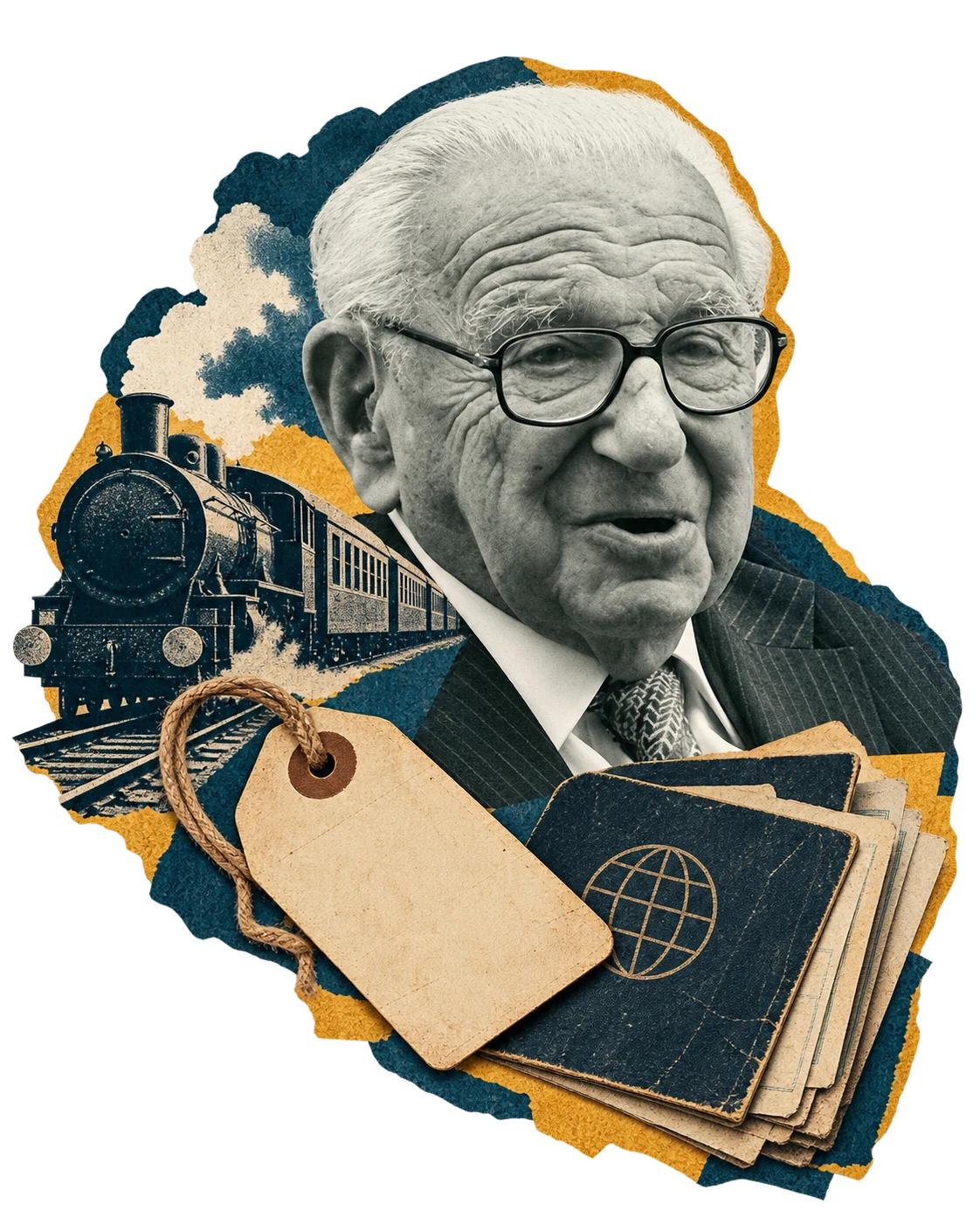
He could have done what many people did in those dark days: turn away and ignore the suffering he did not even see. Instead, he took an active part in one of the most moving rescue operations in human history.
The Surprise Revelation in the BBC Studio
It was supposed to be just another talk show. In February 1988, Esther Rantzen, host of the BBC program “That’s Life,” announced that an album had been found in an attic, containing the names of children rescued from the Nazis during World War II. Among the names was Vera Diamant. Esther told viewers that Vera was sitting in the audience. There was great excitement in the studio. Esther went on to say that Vera’s rescuer, Sir Nicholas Winton, was also in the audience, and that he was “sitting beside you.” The camera focused on Vera as she grew emotional and embraced her rescuer, who was already 77 years old.
Just when it seemed the segment had come to an end, Esther asked, “Is there anyone in our audience tonight who owes their life to Nicholas Winton? If so, would you please stand up?” The camera panned across the audience, who all rose to their feet. They were the very children Nicholas Winton had rescued, and until that moment he had thought he was the one surprising Vera. The emotional Winton wiped away tears as the host began to tell his story. The video went viral after millions of people around the world watched it and were moved.
Nicholas Winton’s rescue efforts were not widely known. He saw no need to talk about them. He assumed that after the war, all the children had left England, as the law required.
In the early 1980s, Nicholas Winton was appointed a Member of the Order of the British Empire, but not for rescuing the children. The honor was for his contribution to establishing sheltered housing for needy elderly people. Only in 1988, fifty years after those events, did his wife find an album in the attic of their home containing lists of the children, their photographs, and letters written by their parents. She persuaded him to make his story public. In a 2009 interview with Channel 2, he said: “Active goodness is when you do something good. Passive goodness is when you simply live a good life and don’t harm anyone. There’s no point in thinking you’ve had a good life just because you never harmed anyone. You’ve had a good life if you did good.” His motto was, “If something isn’t impossible, then there must be a way to do it.” Nicholas Winton brushed off the praise and refused to call himself a hero.
Europe on the Brink of War
The Germans called 1938 the “Year of Decision.” That year, Nazi policy toward the Jews became more extreme, and preparations for war began. Jewish property worth more than two billion marks was confiscated. In October of that year, Jewish passports were invalidated, and those who needed one to emigrate were issued a passport marked with the letter J (Jude - Jew). Another law passed that year required Jews whose names were not typically Jewish to add the name “Israel” for men and “Sara” for women, so they could be identified by their names alone.
In March 1938, Germany annexed Austria in a move known as the Anschluss (annexation). In September, Hitler began demanding the Sudetenland from Czechoslovakia, where many people were of German ethnic origin. At the end of that month, the Munich Conference convened, attended by Adolf Hitler, Neville Chamberlain (Prime Minister of Britain), Édouard Daladier (Prime Minister of France), and Benito Mussolini (Prime Minister of Italy). The conference ended with an agreement that Germany would annex the Sudetenland. Chamberlain returned to London and delivered his famous speech declaring that he had brought “peace for our time.” Even before the conference, Winston Churchill had written: “Britain could choose between disgrace and war. It chose disgrace, but it will not escape war.”
On October 1, 1938, Nazi forces marched into the Sudetenland, the German-speaking region of Czechoslovakia. Prague, the Czech capital, was flooded with desperate refugees trying to flee and, above all, to get their children to safety.
U.S. President Franklin Roosevelt convened the Évian Conference to discuss the refugee crisis in Germany and Austria. In July 1938, representatives of 32 countries met. All expressed sympathy for the refugees, but one after another announced that their countries could not take them in. Australia even argued that “under present circumstances, Australia cannot do more... Since we do not have a real racial problem, we are not eager to import one.” While the British government closed the gates of Mandatory Palestine to immigration and settlement, desperate Jews tried to leave for any other destination they could reach.
The Operation to Rescue the Children of Prague
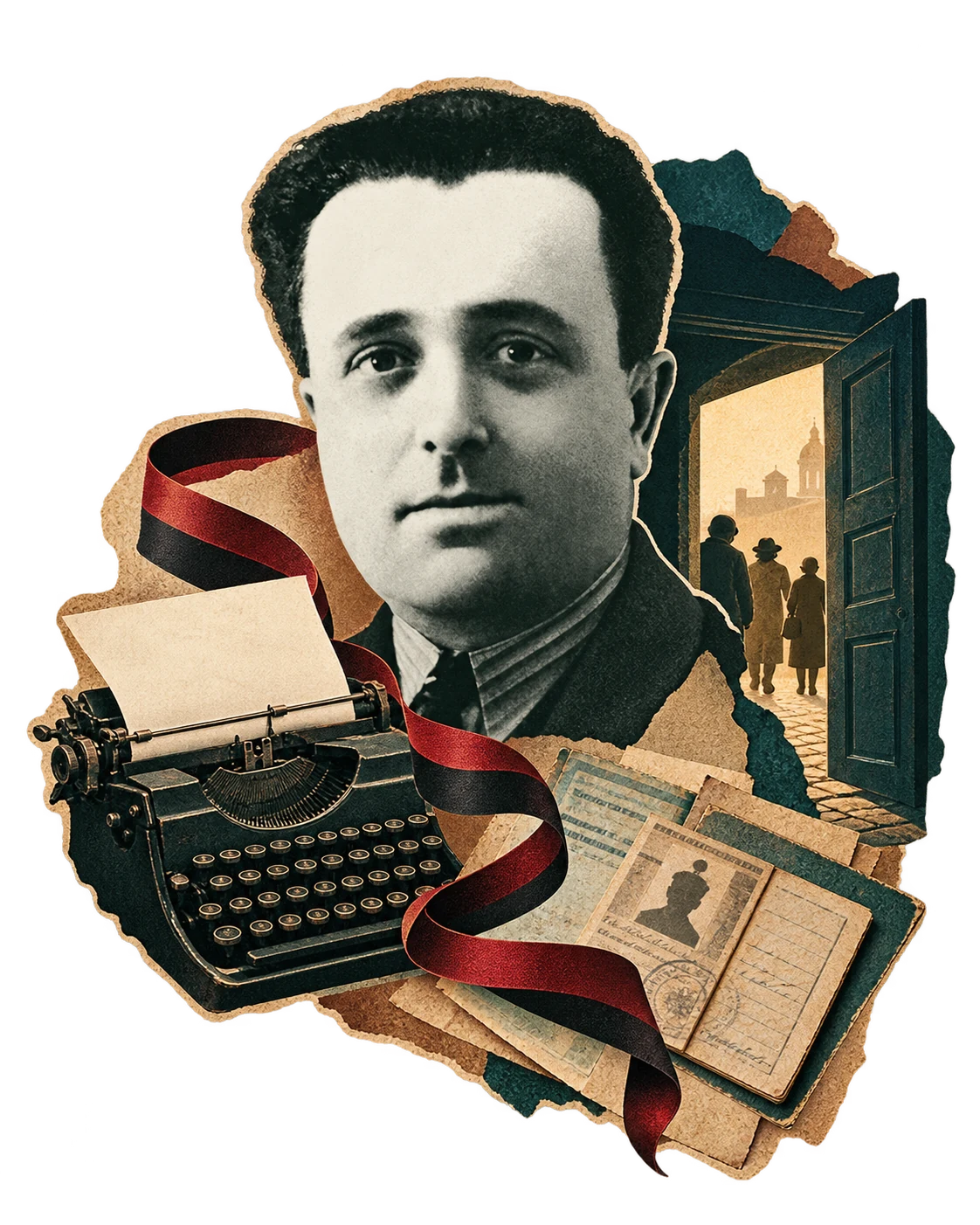
Nicholas Winton was born in England in 1909 as Nicholas George Wertheim. His parents were German Jews who had emigrated to England and converted to Christianity. Two years later, Nicholas was born and baptized as a Christian. During World War I, when the British royal family changed its name to Windsor (its former name, Saxe-Coburg and Gotha, was German), Nicholas’s parents also changed their German name to Wortham, a name with an English sound. After completing his studies, Nicholas Wortham began working at banks in Germany and France. He later returned to England and became a stockbroker on the London Stock Exchange. When his father died in 1937, he changed his name to a more English-sounding one: Winton.
Nicholas Winton was a successful stockbroker who enjoyed the good life in London. In October 1938, about 150,000 refugees from Czechoslovakia were confined to camps, and their lives were in grave danger. At the age of 29, he went to Prague at the invitation of a friend who worked at the embassy, where he encountered the flow of refugees from the Sudetenland. Winton was determined to find a way to get the children out, since many countries refused to accept entire families. He founded the “Association for Aid to Children from Czechoslovakia” and appointed himself its chairman. The organization’s goal was to smuggle out and save as many children as possible. Parents came to him with one request: “Save my child.” Nicholas compiled lists of the children and returned to London to persuade the authorities to let him bring them over. He worked long, uninterrupted nights, enlisted friends and family, and recruited his mother to run the operation in London. The British authorities listened to Winton, but imposed several conditions, the main one being that every child who arrived would need a foster family. Thus began the Kindertransport program (the transport of children). At the same time, he wrote to President Roosevelt, asking the United States to take in children whose lives were in danger. He was turned down...
Nicholas photographed the children and published their pictures in newspapers to find families who would foster them during the war. He knew that every day without a placement put the children at risk. Even after he found families willing to take them in and secured funding for their transport (paying some of the cost himself), the authorities still delayed issuing immigration permits. Nicholas was forced to forge documents and bribe officials just to get the children to safety.
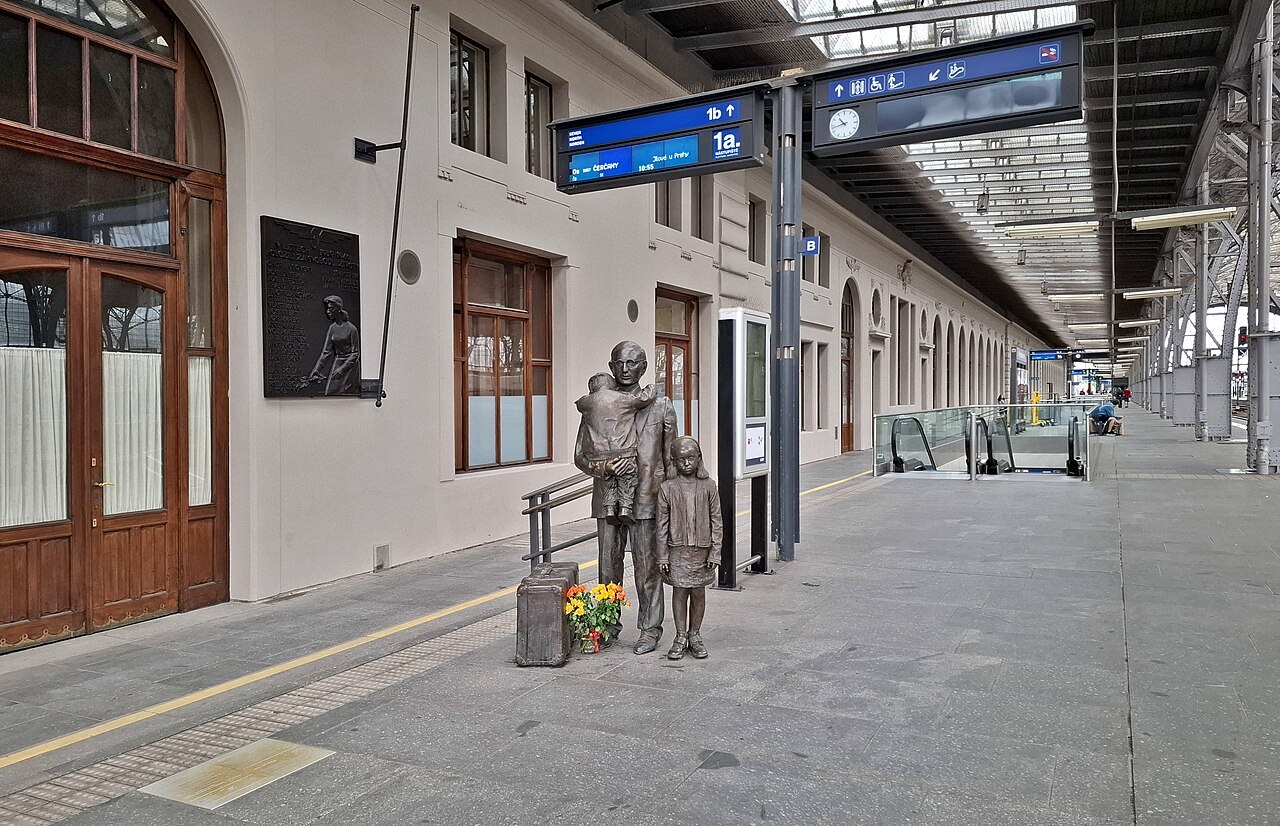
The first twenty children left Prague on March 14, 1939. The next day, German forces invaded the city. Hugo Wiesel was 10 when he saw Hitler drive through the streets of Prague in an open car on a victory tour. Soon afterward, violence against the Jews began there too. First came the confiscation of property, followed by forced labor. Noska and Pavel Wiesel, Hugo’s parents, understood that they had to send Hugo and his brother to England to save them. During the spring and summer of 1939, 669 children set out on seven trains on a long journey from the heart of Nazi Germany to London, where they were placed with foster families.
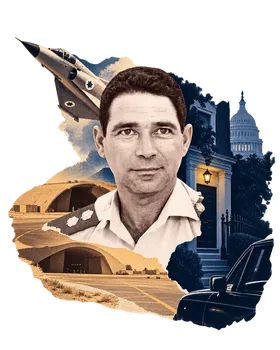
“He was a very modest man and never told anyone about his role in the rescue operation he had initiated,” said Hugo Marom (later a pilot and senior commander in the Air Force), who was also one of the hundreds of children Winton saved. “He didn’t see himself as a hero, as everyone else did, and he always said that the real heroes were the parents of those children.” According to Marom, if Nicholas Winton’s wife had not found the notebook he kept, with the names of all the children he had taken out of the Nazi-occupied region and placed with foster families, “the story might never have come to light.”
“Everyone understood that we had to find a way out of the country, because it would be very difficult to live under Nazi occupation,” Marom explained. “My parents tried to arrange a visa for us to the United States, and approached at least two organizations to help my brother and me leave Czechoslovakia, but they couldn’t manage it, until they got in touch with Winton’s representative and arranged for us to leave the country for Britain... Winton made the parents feel they could trust him when he said that a family would be waiting to welcome each child in Britain. As you grow up, you understand how heroic the parents had to be to trust someone whose photograph they had seen or whose letters they had read,” he said. “They locked the train in Prague, and at the stop we made in Leipzig, there were tables with cocoa waiting for us. They gave us food and drink, and a postcard to send to our parents,” Hugo Marom recalled. “That was also the first time I saw Jews wearing a patch, a yellow Star of David.”
Nicholas Winton organized the entire operation with exemplary precision, which remained etched in young Hugo’s memory: “The departure was very well organized, coordinated with the Germans, and each child left with a specified amount of clothing and no money... The Germans just wanted to get the Jews out, in the most orderly way possible. And that was something Nicholas Winton knew how to do... We arrived in Liverpool, and from there the children went off to the families waiting for them.”
Hugo Marom kept in touch with Winton and organized his visit to Israel: “We spoke many times about building a memorial to the parents (some of whom did not survive the Holocaust), and he said, ‘I’ll be the first to send money.’ He wouldn’t let anyone pat him on the back, not even for a moment. In his eyes, it was all about the parents.”
An eighth train, carrying 250 more children, was due to leave Prague on September 1, 1939, but the war began that day and the train never departed. It is likely that those 250 children did not survive the Holocaust. Several years later, the Nazis began implementing the “Final Solution” and established ghettos, labor camps, and extermination camps. All that time, Nicholas Winton tried to find out what had happened to the parents, including Noska and Pavel, Hugo’s parents. For years, he sought to learn the fate of those children and tried to trace them. The parents of most of the children were murdered in the extermination camps, leaving them orphans. Some stayed in England, some immigrated to Israel, and others scattered across Australia and the United States. Today, they call themselves “Winton’s Children.”
The Belated Recognition of His Deeds
During the war, Winton volunteered as a Red Cross ambulance driver and later trained pilots. At the end of the war, he married and started a family. For 50 years, he said nothing about what he had done before the war. When host Esther Rantzen asked why he had kept it secret for so long, he simply replied, “I didn’t really keep it secret. I just didn’t talk about it... I was there, I did it. My work was done... I had other things to do during those 50 years.” Among other things, Nicholas helped people with intellectual disabilities and built nursing homes. “We’ve just opened our second nursing home, and it’s full,” he said proudly.
Winton’s heroic work did not end with the Holocaust: “I went to the Philippines to help people in the jungle. We adopted two children. We sponsored refugees from Russia and Eritrea. You help people. I live today in a place where I have the opportunity to help people. Now I work two days a week as a volunteer at the children’s hospital... We have to live as well as we can. We have to contribute something to the world and live in a way that would make my parents proud.”
Nicholas Winton received numerous honors, including the British Hero of the Holocaust award, the Grand Cross of the Order of the White Lion, and the Order of Tomáš Garrigue Masaryk. He was made an honorary citizen of Prague; Queen Elizabeth II knighted him in recognition of his work saving the children; two Czech astronomers named an asteroid they discovered after Winton; and in 2008, the Czech government nominated him for the Nobel Peace Prize.
In 1999, the film “All My Loved Ones,” depicting his rescue efforts, was released. Three years later, the documentary “Nicholas Winton: The Power of Good” was produced. In 2002, Tony Blair, then Prime Minister of Britain, praised him and dubbed him “the British Schindler.” In 2005, Nicholas visited Israel and met the children he had saved at an event organized at Yad Vashem. In 2009, on the 70th anniversary of the rescue operation, the journey from Prague to London was reenacted with the participation of those children. In 2023, the film “One Life,” starring Anthony Hopkins as Winton, was released in theaters.
In 2014, when Winton was 105, Barbara Walters published the book she had written about him and said: “It was a great journey of discovery for me, and I was privileged to have access to all the documents and photographs Nicky had kept throughout his life, as well as his own memories and those of his friends, family, and colleagues. I hope that anyone who reads it will find the stories in it as fascinating as I did.”
Among the children he saved were, as noted, Hugo Marom, one of the first pilots in the Israeli Air Force, and Joe Alon, a pilot and senior commander whose name is commemorated by a museum of Bedouin culture in Yatir.
Nicholas Winton was not recognized as Righteous Among the Nations because that title is given only to non-Jews whose rescue efforts put them at risk.
Sir Nicholas Winton lived a long life and died in July 2015 at the age of 106.
תגובות
עדיין אין תגובות.