
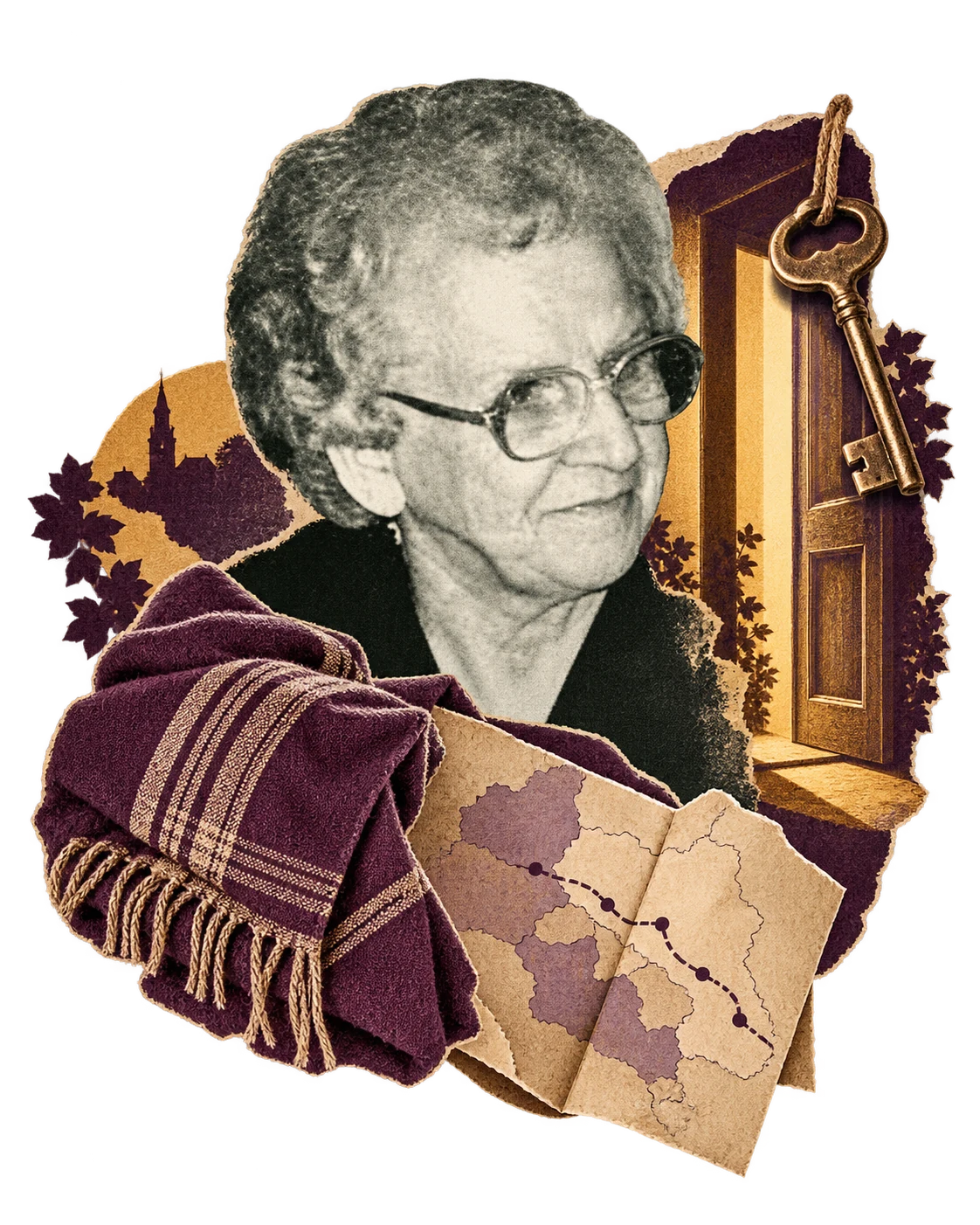
Maria and her three daughters risked their lives to save Jews amid the horrors of World War II. At the end of the war, they converted to Judaism and immigrated to Israel.
The Road to the Destruction of Hungarian Jewry
The assassination of the Austrian Archduke Franz Ferdinand in Sarajevo in 1914 set off a chain of events that led to global devastation. The Austro-Hungarian government held Serbia responsible for the murder of Emperor Franz Joseph's heir, and a month later declared war. The conflict became a devastating world war that lasted four years. But the Austrians could not have foreseen that, at the war's end, the Austro-Hungarian Empire would collapse after 51 years of Habsburg rule. During the war, around 2 million imperial soldiers and 300,000 civilians were killed. The collapsed empire was divided into several countries, including Austria, Hungary, and Czechoslovakia. Border changes left large minorities of Hungarians and German speakers, who had been citizens of Austria, outside the borders of the Austro-Hungarian Empire. This was the case in the Sudetenland, near the German border, where most residents were of German origin. This situation continued until World War II and Hitler's rise to power. Hitler planned to dismantle Czechoslovakia, claiming that the 3 million Germans living in the region had to be annexed to Germany along with the entire Sudetenland. He made this demand of the president of Czechoslovakia and, when it was refused, threatened to start a war.
Europeans, scarred by war, did not want another one. Indeed, under the Munich Agreement of September 1938, the Sudetenland was annexed to Germany, but even this did not prevent World War II.
Hungary was not occupied until March 1944. Even after their rights had been stripped away, the Jews failed to understand that their lives were in such danger. Men drafted into forced labor mistakenly believed they were indispensable to the system and that their fate would therefore differ from that of Jews in other countries occupied by Germany.
In May 1944, around half a million Jews were confined in ghettos, and by mid-May, transports to Auschwitz, the extermination camp, had begun. Within two months, 77% of Hungary's Jews had been murdered; by early 1945, the rest had been killed.
The Chizmadia House as a Hiding Place
The Chizmadia home was a household of women. Maria, a widowed seamstress, raised her three daughters alone: Irene, the eldest; Olga; and Melvina, the youngest, who was 15. They lived in the town of Kishtoronia.
Six years earlier, in October 1938, when laws stripping Jews of their rights were already in force in the town, Maria Kovács Chizmadia, a brave widow and woman of principle, organized a petition signed by local residents calling for the reopening of the department store owned by the Jewish Schwartz family, which had been closed when the Germans arrived. Maria was imprisoned for 10 days as a result.
In early 1944, Olga, then 22, was working in a Jewish-owned shop in the town of Sátoraljaújhely. When the shop's owner, Arno Waller, learned that the Gestapo in town was holding a group of Jews who had tried to escape across the Slovak border, he told Olga. She went straight to the police station late that evening and, by using her wits, managed to get into the detention cell and bring them food, clothes, and money. She never knew who they were or what became of them.
In April of that year, after the Hungarian government was deposed and a Nazi government installed, all Jewish-owned businesses were closed. Arno Waller gave Olga the keys so she could look after the shop until "the storm passed." Olga made an enormous effort to smuggle Waller and his wife out, but he refused to leave his family behind. Arno Waller was murdered at Auschwitz. His wife survived the camp and, during the war, moved into the Chizmadia family home until she emigrated to the United States.
Melvina first encountered the forced laborers while playing in the yard of her home, which bordered the trade school that had been turned into a labor camp holding 210 workers. Melvina, then 14, climbed over the wall and began talking to a Jewish man who worked as the camp's cook. She offered to help, and he asked her to mail his letters. Melvina told Olga about meeting the "strange people," as she called them. When Olga and Irene realized that they were Jews, the whole family rallied to help. Over the wall separating the family yard from the camp, they passed cooked food, baked goods, and other provisions. Their home became the prisoners' link to the outside world. The Chizmadia daughters served as go-betweens for the forced laborers and their families, and kept the prisoners informed about what was happening in the world. At times, the family managed to lift their spirits by smuggling in cigarettes and newspapers. The sisters continued these efforts until almost the end of October 1944.
Over time, Maria's three daughters befriended several members of the unit, which allowed them to use their home as a meeting place for relatives who came to visit from far away. One of the Jews they saved later testified: "Their home was our home."
As the Red Army approached the camp, it was clear that the prisoners would either be executed immediately or sent on a death march. Some asked Olga to hide them in her home, while she found hiding places with other relatives and friends in the area for those who wanted to escape.
At the end of that month, in a carefully planned operation, the family hid 28 men in their home. Every action took place right under the noses of the Nazi soldiers swarming the town, putting the family's lives at risk.
On the day of the escape, a sergeant serving at the camp who suspected Olga came to the family home. He told her that 30 men were missing and advised her to tell them they should return to the camp. Olga replied that she had no idea what he was talking about and suggested that he pick up men in the street.
One of the prisoners, Naftali (Ladislav) Shorni, recounted how Olga distracted a gendarme guarding the train he was about to board, giving him time to escape. He collapsed, exhausted, in a field, and Olga brought him to safety.
This intensive rescue work led to no shortage of extraordinary episodes. On one occasion, Melvina, who was short, managed to drag one of the survivors, a large man, to the hiding place she had prepared for him as an SS officer walked by. In another case, the sisters hid two survivors in a cupboard in an abandoned room in a bridge near the border crossing. One of them was Karol Haim Fisher. Karol wrote to Olga that he had heard the bridge was going to be demolished and asked her to hurry and rescue them. That night Olga led them through a minefield to the town. But when she saw that it was full of German soldiers fleeing the Red Army, she hid them on a threshing floor and ran to her grandfather's house to get them food. When she arrived, she discovered that several German officers returning from the Russian front were staying there. Olga knew that her actions put not only her own life but also those of her beloved family at risk. Nevertheless, she hid Karol and his friend in the attic and fed them for two days, until she took them to an acquaintance who sheltered them.
In early December 1944, when the Red Army entered the town and the Nazi army retreated, the women of the family could finally breathe a sigh of relief, and the survivors could emerge from their hiding places and move about the town. Most of the forced laborers and escapees scattered in every direction. Some returned to their families, while those who had lost their families went out to seek new lives. Only four men remained in the town, including Karol Haim Fisher.
After the War and Recognition
Karol Haim Fisher developed a kidney infection and was taken to the hospital. Since the hospital was bare of equipment, Olga brought him a mattress, bedding, and medicine. When it became clear that he needed penicillin, Olga spent three days traveling on freight trains through battle zones to find the medicine for him. During her daily visits, the two developed a close relationship. After several months in the hospital, Karol recovered and asked Olga to marry him. She accepted and also converted to Judaism at the rabbinate in Slovenia, adding the name "Sarah" to her own.
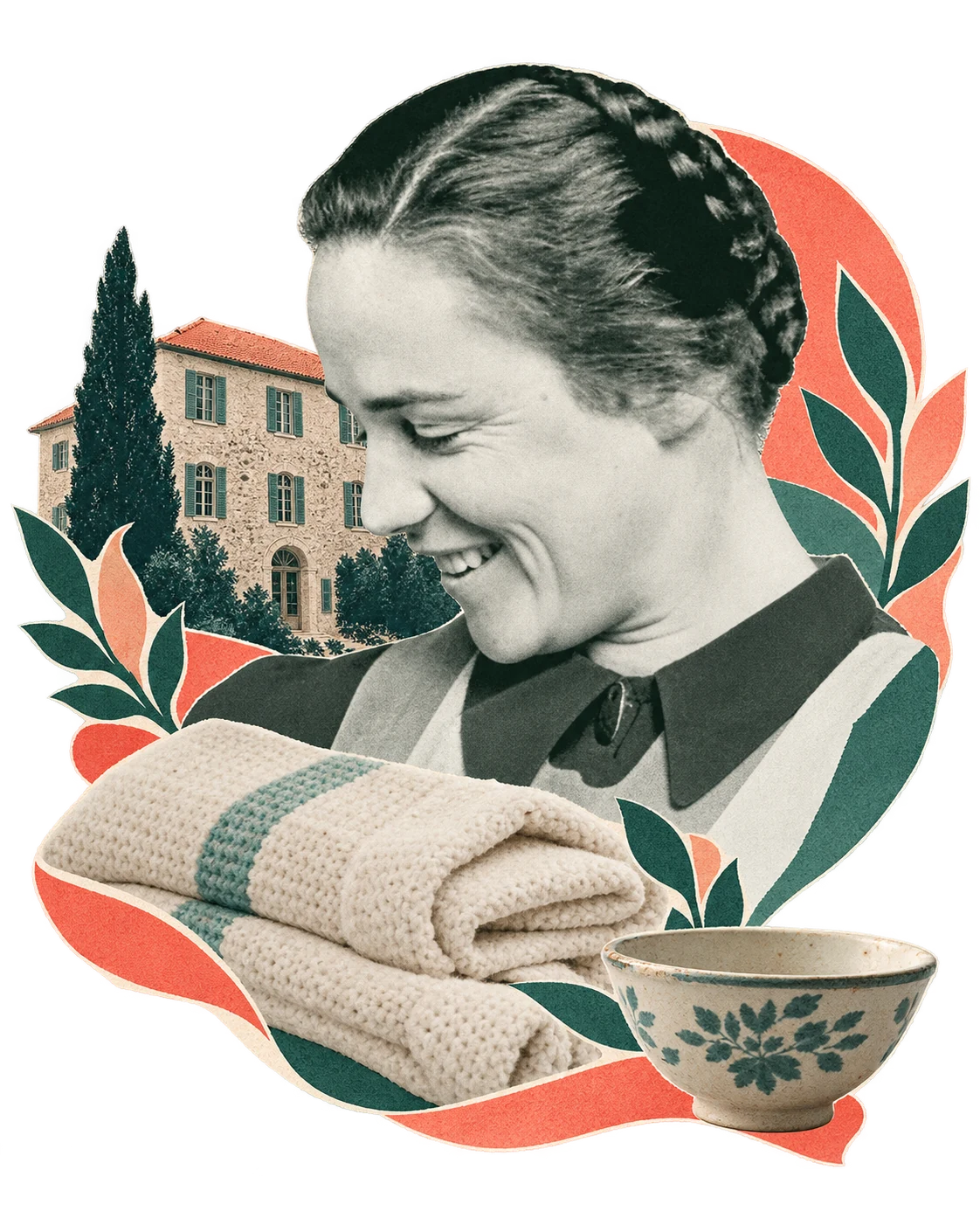
Naftali (Ladislav) Shorni fell in love with her sister Irene. From the very beginning, Naftali approached Maria, their mother, pointed to Irene, and said, "That one will be my wife." Their daughter Tzipi later recalled: "She was only 14 and a half then, and he was ten years older than she was, but later he came back and took her with him." After the war, Irene converted to Judaism, became Orna, and married Naftali Shorni. They moved to Czechoslovakia, where they ran a sports shop. In 1949, they immigrated to Israel with their son, who had been born in Europe; their daughter Tzipi was born in Israel. After arriving, Irene sent a letter to her mother and sisters in Hungary, writing: "Life in Israel is very hard, but this is our country." Irene and Naftali made their home in Nahariya and opened the Shorni Guesthouse in their home. Naftali also worked as a sailor. After receiving the letter, Olga and Karol also immigrated to Israel with their children, Moshe and Yitzhak. Melvina joined her sisters in Israel and married an Israeli.
With Germany's defeat and control returned to the Czechoslovak government, around 800,000 Germans were expelled from the Sudetenland between May and August 1944, and around 30,000 were killed during the transfer.
In June 1965, Melvina received the Righteous Among the Nations medal, and Olga received it in March 1987. Irene was recognized six months later. Their mother, Maria, received the medal in 1988, and a tree was planted in her honor in the Garden of the Righteous Among the Nations. Maria wanted to convert to Judaism as well, but died before she could complete the process.
The sisters' kindness did not end with the war or their immigration to Israel. For many years, Olga volunteered with organizations supporting the community, including groups for cancer patients, blind people, and children with disabilities.
During the Second Lebanon War, Irene's (Orna's) home was hit by a Katyusha rocket. She suffered a stroke from which she never recovered. Irene's home in Nahariya was open to every new immigrant and anyone in need. Her mother, Maria Chizmadia, who lived with her, fed, clothed, and sheltered immigrants, and gladly helped anyone who asked.
Olga Sarah died in September 2006 at the age of 84. Melvina died in 2010 at the age of 84, and Orna died in 2017 at the age of 89.
תגובות
עדיין אין תגובות.