
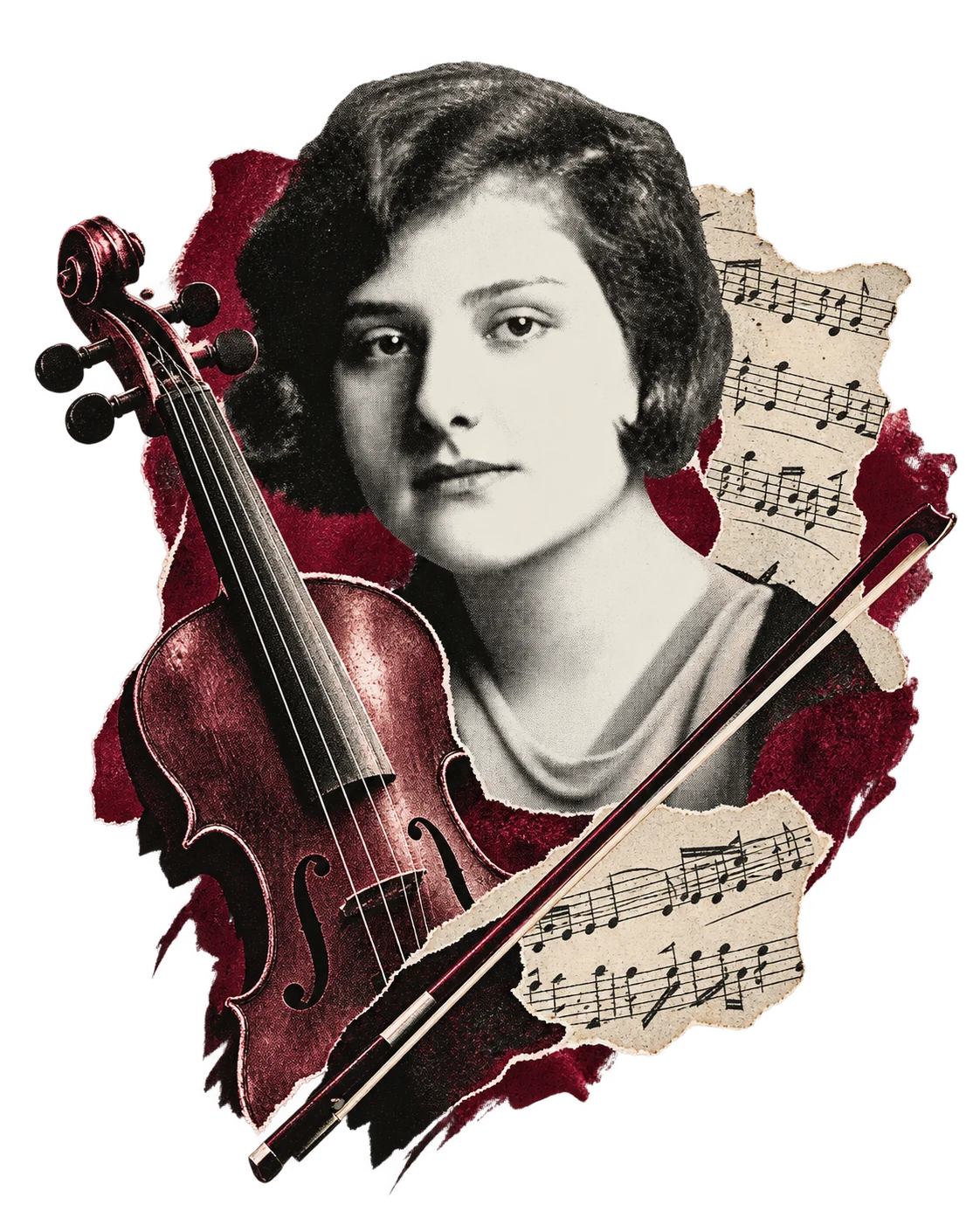
Amid the inferno of Auschwitz, a death camp, calm music played. One director, forty musicians, and an orchestra that never stopped...
The Death and Commemoration of Alma Rosé
"So you could say that you are alive thanks to Alma," began my conversation with Sivan. "Absolutely... Her story burns in my bones, and I have been researching it for twenty years. When I lived in the Netherlands, I visited places connected with different stages of her life. I lived just a few buildings away from her home. The hall where she performed was on my way to my regular café. Her presence enveloped my everyday life."
Although the Nuremberg Laws classified Alma as Jewish, she was treated with respect by the SS officers, who even called her "Frau Alma" (Mrs. Alma), Sivan told me. But the most fascinating event was something else entirely: "There is no doubt that the most surprising event in Alma Rosé's life story is her death." She was poisoned by a German prisoner named Schmidt, who was jealous of her. In the Germans' eyes, this was a serious failure. They considered Alma a precious treasure, and the last thing they wanted was for her to die. It was the only time a funeral service was held for a Jewish prisoner. Alma was laid out on several benches, and each of the orchestra members filed past her. At the end of the service, Dr. Josef Mengele, known to the world as the 'Angel of Death from Auschwitz' and himself a music lover, placed a rose on Alma's body. The cause of death recorded on her death certificate was meningitis." Sivan continued: "The women in the group felt that they had lost a protective mother, and the one who took her death the hardest was my grandmother, Rivka Batzia, then Regina Kuperberg, who had been Alma's personal assistant."
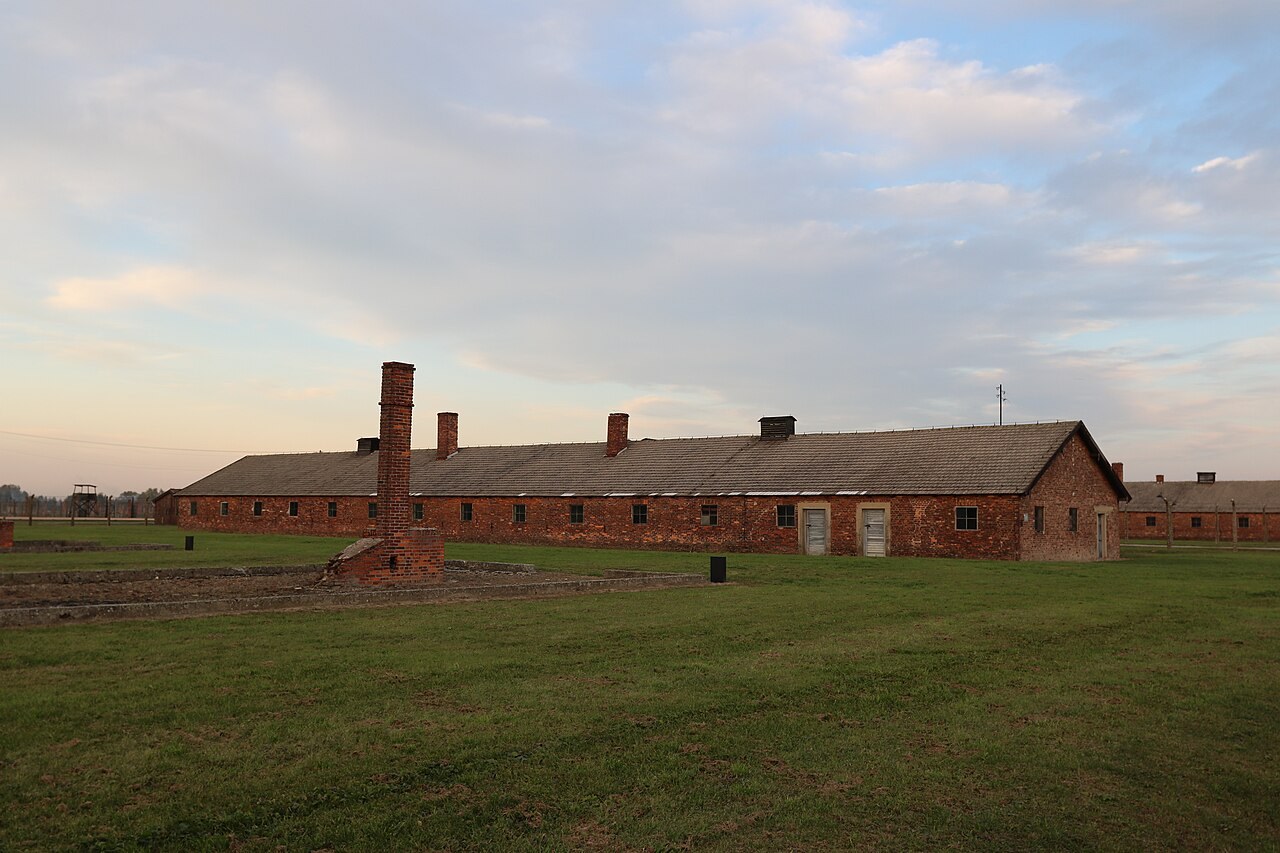
Sivan Cohen Kramer is the driving force behind the 'Jewish Rescuer Citation,' awarded to Alma Rosé by the World Center of the B'nai B'rith organization. Alma Rosé was not awarded the title 'Righteous Among the Nations' because it is given only to non-Jews.
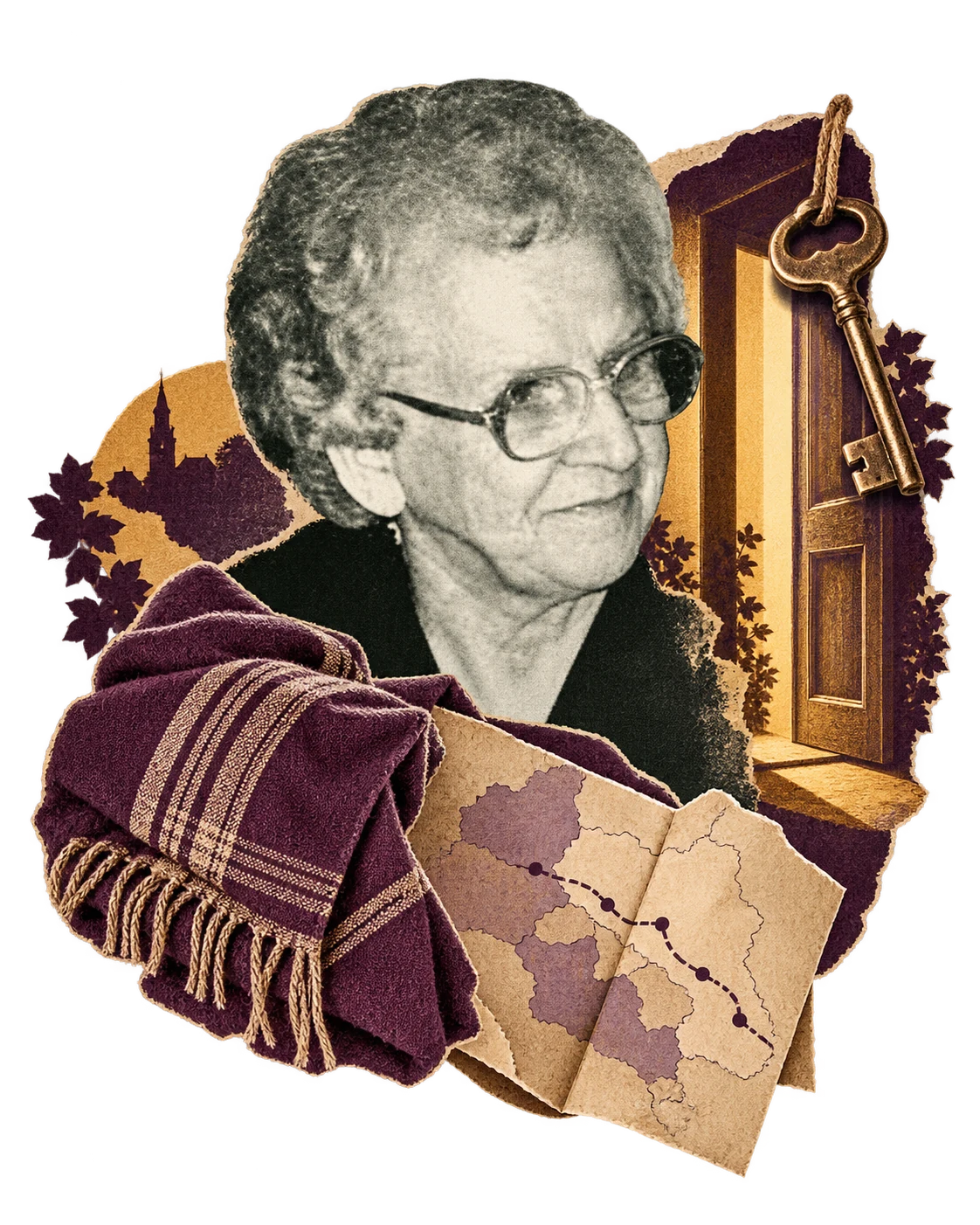
Sivan, who grew up in Kibbutz Netzer Sereni, founded by Holocaust survivors, told me: "My grandmother Rivka arrived at Auschwitz in a transport with all her friends. Her family was selected for extermination, while she and her friends were sent to forced labor. One day, she was called to audition for the orchestra simply because she had learned to play the mandolin at school. She did not want to audition because she wanted to stay with her friends, but Alma Rosé gave her a mandolin and told her to play. She was not a good player. Alma told her she could not take her. That was a death sentence for her, but she was called back, and Alma told her that when she looked into her eyes, she could not let her go. So, despite her limited talent, Alma decided that my grandmother's role would be as her personal assistant... She was the person closest to Alma. She made her breakfast, cleaned her boots, and acted as a link between Alma and the other women... When Alma joined the orchestra, it was led by a conductor named Sofia Tchaikovskaya, and most of the musicians were not Jewish. After Alma arrived, that began to change. I know it was deliberate. She replaced many non-Jewish musicians with Jewish ones because she knew the non-Jews had a much better chance of surviving the camp."
Sivan said that the ceremony honoring Alma Rosé was also attended by the son of Violette Jacquet, a Romanian-born violinist who played in the orchestra and became a singer after the war. Alma saved Violette twice: "Alma, who had arrived at the camp before Violette, told her she would give her eight days' grace before she was examined. One morning, Violette arrived barefoot because someone had stolen her shoes. The conductor Alma had replaced told her to wash her feet in the freezing water at the entrance. Violette burst into tears and said that her parents had gone up in the smoke of Auschwitz. At that moment, Alma announced that she was part of the orchestra."
"The second time, Alma saved her after she recovered from an illness. She was still weak, but she could play. While the other musicians marched with confidence, Violette lagged behind. The camp commandant stopped Alma and asked her who the Muselmann was and what she was doing in the orchestra. Alma replied that she was 'my best musician, and no one is to touch her.' This was despite the fact that she may actually have been the worst musician of them all." Sivan added that the camp director even ordered that Violette be given a larger portion of food so that she would recover.
Musical Roots in Vienna
Alma's fate as a violinist was determined before she was born, since she was the daughter of the highly esteemed concertmaster of the Vienna Philharmonic Orchestra. Although Alma's roots were Jewish (her father's original surname was Rosenblum), the family had converted two years before she was born (her father was Protestant and her mother Catholic), and Alma and her brother Alfred were baptized as Christians. Her mother, Justine Mahler, was the sister of the Viennese composer and conductor Gustav Mahler, the greatest interpreter of the works of the composer Richard Wagner, who was antisemitic.
Alma's father, Arnold, was a celebrated artist not only in Vienna but around the world. The year 1906, the year Alma was born, became known as the 'Year of Mozart,' marking the 150th anniversary of the composer's birth. Alma's uncle Gustav Mahler conducted 37 new productions of Mozart's works that year. The Rosé family was integrated into the Viennese and European aristocracy, and Alma herself belonged to the aristocracy of music. Some said that only Emperor Franz Joseph and Mayor Karl Lueger were more admired by the public than the city's artists. Franz Joseph despised racism, while Lueger was a staunch antisemite and one of the founders of the Christian Social Party, a precursor to Nazism.
Alma loved music and devoted every spare moment to the violin. At 24, she married the gifted Czech violinist Váša Příhoda. Despite her talent, her playing was always judged in comparison with her uncle Gustav or her husband. So, with her father's blessing, at 27 she formed an ensemble of young women violinists who played light music, called 'The Viennese Waltz Girls' (Die Wiener Walzermädeln). Their performances embodied Viennese glamour and romance. As the ensemble became successful and renowned in Europe's major cultural centers, Adolf Hitler began to gain power in Germany.
The Mahler and Rosé families attached little importance to their Jewish roots. They spoke German, not Yiddish, and had more in common with their fellow Austrians than with the Jews who shared their former religion. The idea of racial theory seemed absurd to them, and they did not see the narrow-minded, crude racists as a group posing a real threat to their lives.
In early 1938, the Nazis invaded Austria, and reality came knocking at the Rosé family's door. Under the Nuremberg Laws, the family members were considered Jewish, and their lives were therefore in real danger. The deterioration was rapid. First, Jewish shops were marked and Jewish property confiscated. Restrictions were imposed on employment and movement and on students; Jewish community offices were closed; and ritual slaughter was banned. Later, Jews were dismissed from their positions in public institutions, and racial laws began to be published, including a ban on Jews entering parks. The mass humiliations held in Vienna were called 'street-scrubbing celebrations,' when Jews were forced to scrub the city's streets with hot disinfectant solution.
The Nazi Invasion and the Escape
That year, Alma's mother Justine died, and Alma fled to London with her father and brother. Alma and her father stayed in London, while her brother Alfred continued on to the United States. Music and financial pressures led Alma to leave safe London toward the end of 1939 and move to the Netherlands. About six months later, the Nazis occupied the Netherlands too, and Alma was forced to continue her flight. In 1943, she married an eccentric Dutch engineer named Constant August von Lieven Boomkamp in an attempt to conceal her Jewish identity, although she knew the marriage would not save her. While trying to escape from the Netherlands to Switzerland, she was captured and sent to the Drancy concentration camp in France. In mid-1943, she was sent to Auschwitz, where the most dramatic chapter of her life began.
At Auschwitz, she was sent to Block 10, the medical experimentation block, also known as 'Clauberg's Block' and later 'Mengele's Block.' Maria Mandel, commandant of the women's camp at Birkenau, recognized the famous violinist and decided to put her in charge of the women's orchestra at Auschwitz, the Mädchenorchester von Auschwitz. Alma was transferred to Camp B, Block 12, and in August 1943 was appointed block Kapo.
When Alma took over the orchestra, she set out to make it an asset to the Nazis. She knew they would value professionalism and protect the orchestra and its members, and that the musicians' lives were in her hands. The music would continue as long as they played professionally, so she worked hard to prepare a rich and varied repertoire that would satisfy the Nazis and demonstrate the orchestra's skill. She demanded practice and refinement to the point of perfection, earning such respect that all her requests were granted.
"What the iron discipline she imposed on us achieved was to keep our attention away from what was happening outside the block - from the smoking chimney and the smell of burning flesh - and focused on the sound of an F that should have been an F-sharp. Perhaps this was her way of staying sane, involving us so completely in this pursuit that we too managed to stay sane. She did not think we were playing for the Nazis, but for ourselves, to survive. She also knew the orchestra had to be good, or they would kill us," one of the musicians said. "When Alma played the violin, she took the prisoners with her, beyond the barbed wire, to a distant world of beauty they had lost."
Anita, one of the survivors, described the escape from reality that playing in the women's orchestra offered, and the night the women first played Beethoven's Sonata No. 8: "How can I describe that evening, after the SS had left the area... It was a connection to the outside, to beauty, to culture - a complete escape into an imaginary, unattainable world. With Alma leading us, we lifted ourselves above the inferno of Birkenau into a realm where the degradation of life in the concentration camp could not touch us." Hilda Simcha Greenbaum said: "We played to earn our lives."
Alma used her position to create jobs within the block. She found roles for the less accomplished musicians, such as copying sheet music or maintaining the block. It was important to her that the orchestra look good. At her request, the musicians were given uniforms. She made sure there were mattresses on their bunks and that sanitary conditions in the block were adequate. She demanded that they stop playing outside in the cold, where the strings would snap, and that the heating stove be lit, arguing that the instruments needed a certain temperature and humidity. She was excused from roll calls because, supposedly, the musicians could use that time to practice. She also requested a short rest at midday so that they would be refreshed for evening performances for the staff. This was a privilege unheard of in any barrack or block throughout Auschwitz. Alma was even granted one-time permission to take the musicians on an outing outside the camp.
The orchestra regularly played on the railway platform to welcome the unfortunate people arriving at the camp. They played for prisoners as they left for work and when they returned. The orchestra also played on Sundays, on holidays, on staff members' birthdays, at promotion ceremonies, and for high-ranking visitors. There were about forty women in the orchestra, but not all of them were musicians: some only copied sheet music or maintained the instruments and equipment. The average age of the musicians was nineteen. The oldest was thirty-six and the youngest fourteen. The orchestra included women from different countries, Jewish and non-Jewish, with no common language.
The Women's Orchestra at Auschwitz
Alma Rosé was murdered at Auschwitz in 1944, at the age of 37. After her death, the orchestra was led by a Russian prisoner named Sonia Vinogradovna, who was suspected of being a KGB agent. In November 1937, as the Red Army advanced toward Auschwitz, the Nazis disbanded the orchestra, and its Jewish members were sent to Bergen-Belsen in Germany.
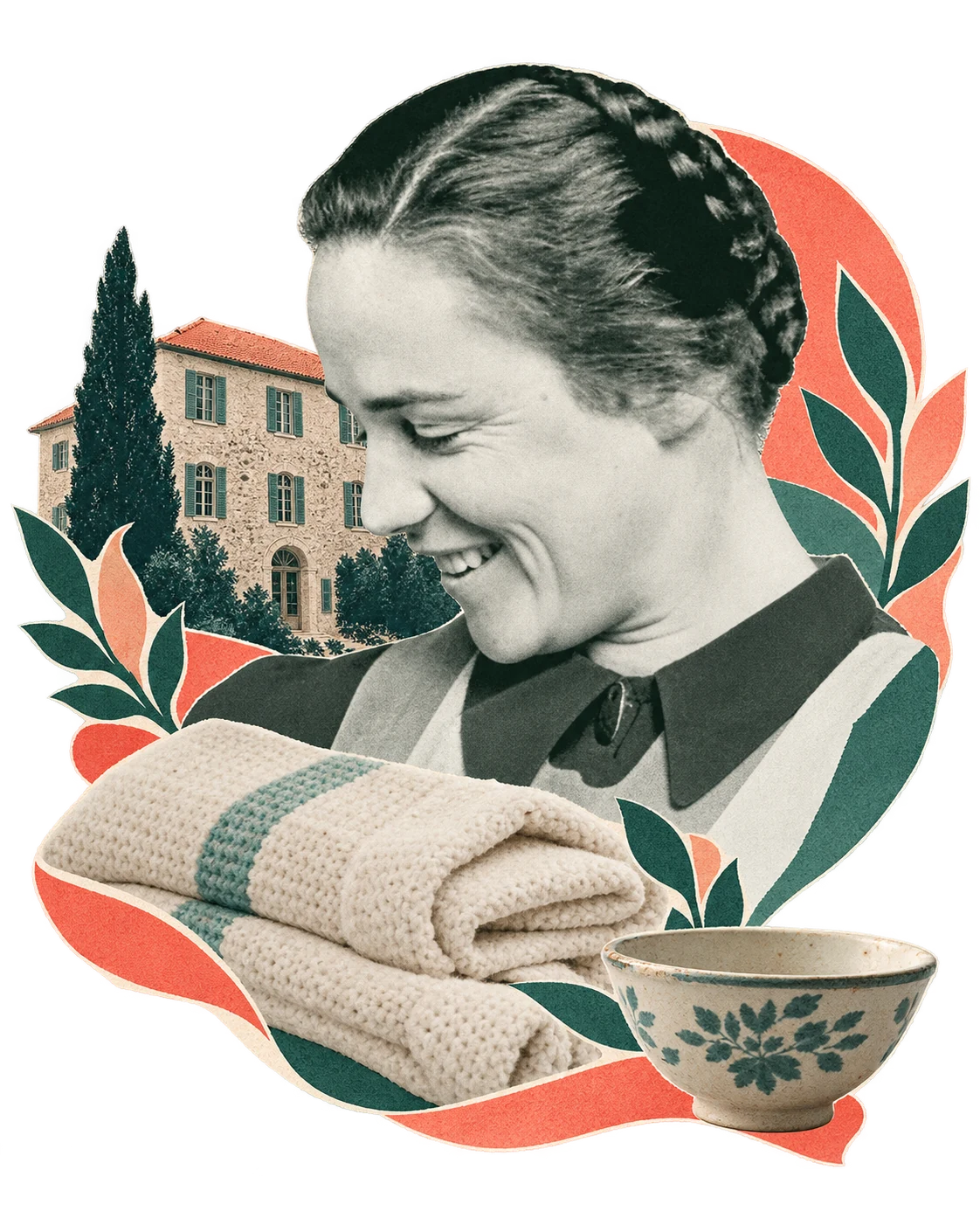
Most of the musicians in the Auschwitz women's orchestra survived, and some even immigrated to Israel. Hilda Greenbaum was 20 when she was captured in 1943 and sent to Auschwitz-Birkenau in the last major transport to leave Berlin. Her friends smuggled her a pillowcase, and she sewed it into a bag in which she kept the sheet music and Alma's personal belongings. At the displaced persons camp, she met Azriel Simcha, who later became her husband. Together with the few friends who had survived, they immigrated to the Land of Israel and settled at Kibbutz Netzer Sereni.
Rivka Kuperberg married Batzia Aaron, and after many hardships they too made it to Netzer Sereni.
Another musician was Claire Monis, a French Jewish singer, actress, and member of the French Resistance against the Nazis. After World War II, she produced films and television programs. Claire Monis died in a car accident toward the end of 1967 and was buried in Paris.
Helena Dunicz-Niwińska was a Polish violinist who traveled to Krakow after her liberation. Until 1975, she worked as deputy head of the editorial department for music education at Polish Music Publishers, and translated professional literature. Helena died in June 2018 at the age of 102.
Helen Spitzer married Erwin Tichauer, head of security for Jewish refugees after World War II. The couple worked for the United Nations on numerous humanitarian projects in Peru, Bolivia, and Indonesia. In December 2019, The New York Times published an article about Helen Spitzer's life at Auschwitz. The 25-year-old Helen had a 17-year-old lover at Auschwitz named David Wisnia. The couple managed to stay in touch from time to time and planned to marry after the war, but they were separated before they could do so. By the time they learned that they had both survived, they were already married to other people. The newspaper brought them together after 72 years.
Anita Lasker-Wallfisch moved to Britain in 1946, where she married the pianist Peter Wallfisch, and they had two children. Anita founded the English Chamber Orchestra, which performed around the world. Her son is the cellist Raphael Wallfisch, and her grandson is the composer Benjamin Wallfisch.
Life After the War
Alma Rosé's story and that of the orchestra became widely known only after the publication of Fania Fénelon's autobiography, Playing for Time, in 1976 (the book was adapted into a television film of the same name in 1980). In the book, Fania portrayed Alma as a harsh woman who imposed cruel discipline and authority, but quite a few of the orchestra members came to Alma Rosé's defense.
In Richard Newman and Karen Kirtley's book Alma Rosé: Vienna to Auschwitz, Alma emerges as a heroine who saved the lives of almost all the women in her care by forcing them to work hard, even if they were not sufficiently talented.
Another film released about her was Michel Daëron's Bach in Auschwitz (original French title: La chaconne d'Auschwitz), made in 1999.
In 2009, the book Don't Cry Here! was published. It was written by Rachel Olavsky-Zalmanowich, one of the orchestra members. Rachel immigrated to Israel in 1949.
The Russian violinist Zachar Bron brought Alma's violin to Israel, and violin maker Amnon Weinstein repaired and retuned it. The violin's mournful tones were heard again at a concert held in Alma Rosé's memory, alongside the sounds of violins belonging to other Jews who perished in the Holocaust.
In 1969, the Vienna City Council named a street after Alma Rosé.
תגובות
עדיין אין תגובות.