
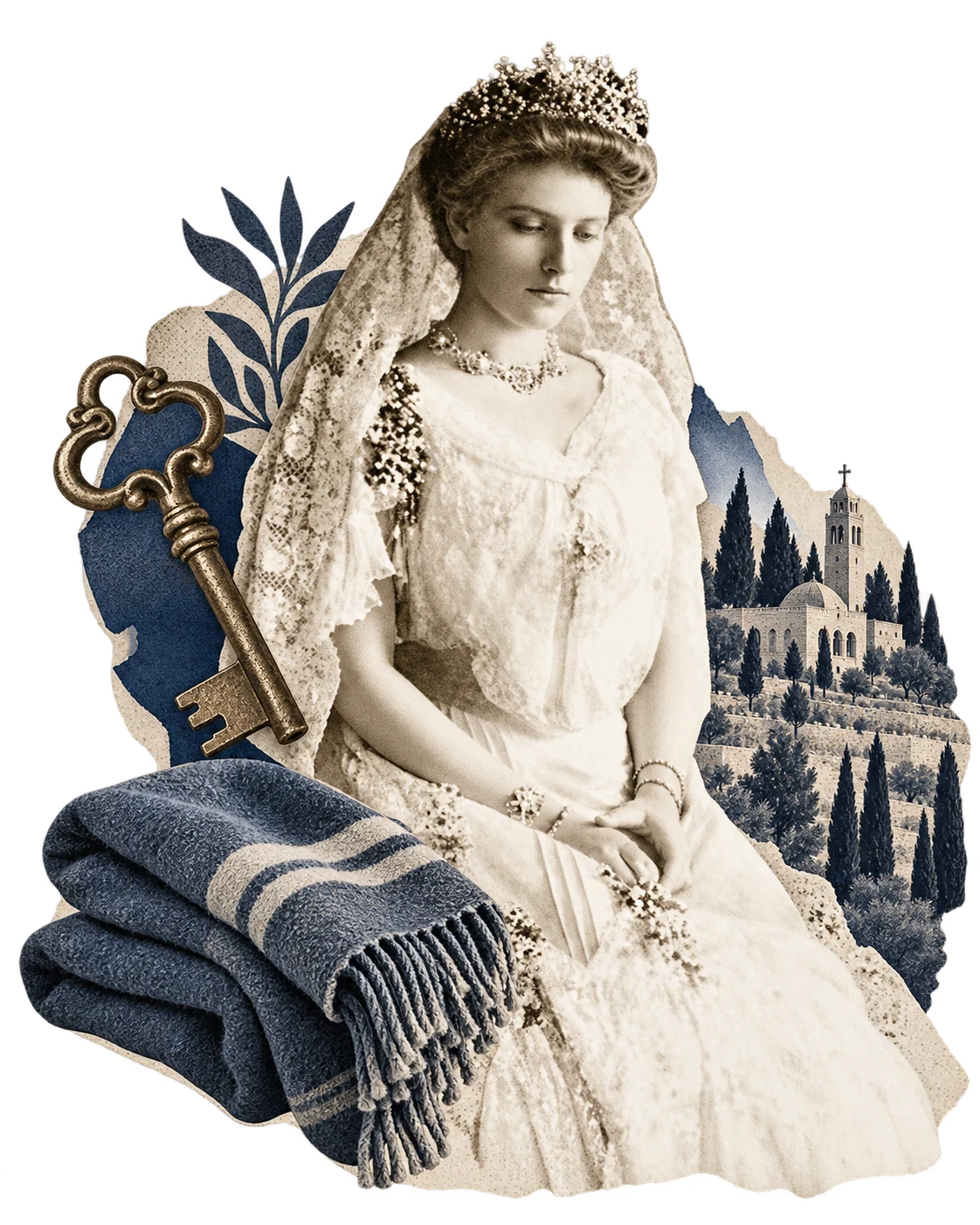
Alice von Battenberg was born at Windsor Castle in England. She was the wife of Prince Andrew of Greece and the mother of Philip, husband of Elizabeth, Queen of the United Kingdom. During World War II, she saved a Jewish family and was recognized as one of the Righteous Among the Nations. Alice is buried on the Mount of Olives.
Royal Roots and Early Childhood
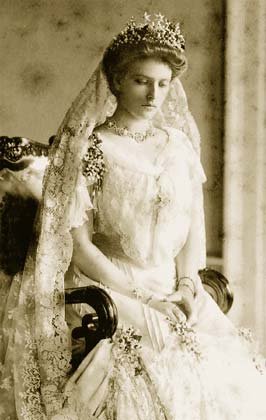
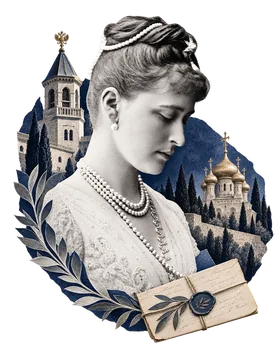
Princess Alice von Battenberg was born in 1885 at Windsor Castle in England. Her full name was Princess Victoria Alice Elizabeth Julia Mary. Her parents were Princess Victoria of Hesse, granddaughter of Queen Victoria, known as 'the grandmother of Europe,' and Prince Louis of Battenberg. Victoria ('the grandmother of Europe') and Albert (Prince of Saxe-Coburg and Gotha and Duke of Saxony) had nine children, whom they carefully married off to members of aristocratic families across Europe. Indeed, to this day, most of Europe's royal dynasties are descended from them. Victoria, their eldest daughter, married Emperor Frederick III of Germany, and their son Wilhelm II became Germany's last emperor. Another relative was Edward VII, King of England. Princess Alice was also related to Russia's Romanov dynasty through two of her aunts - Alice (Alexandra), Empress of Russia, and Elizabeth (Elizabeth Feodorovna), Grand Duchess of Russia.
Princess Alice spent most of her childhood in Germany and Malta. She was diagnosed as deaf at an early age, and by the age of eight she could read lips in three languages: German, French, and English. In 1902, she met Prince Andrew at the coronation of King Edward VII in London. Andrew was the son of George I, King of Greece (son of Christian IX, King of Denmark), and Queen Olga. His parents spoke to each other in German, and all their children were fluent in seven languages. The children spoke Greek among themselves and English with their parents.
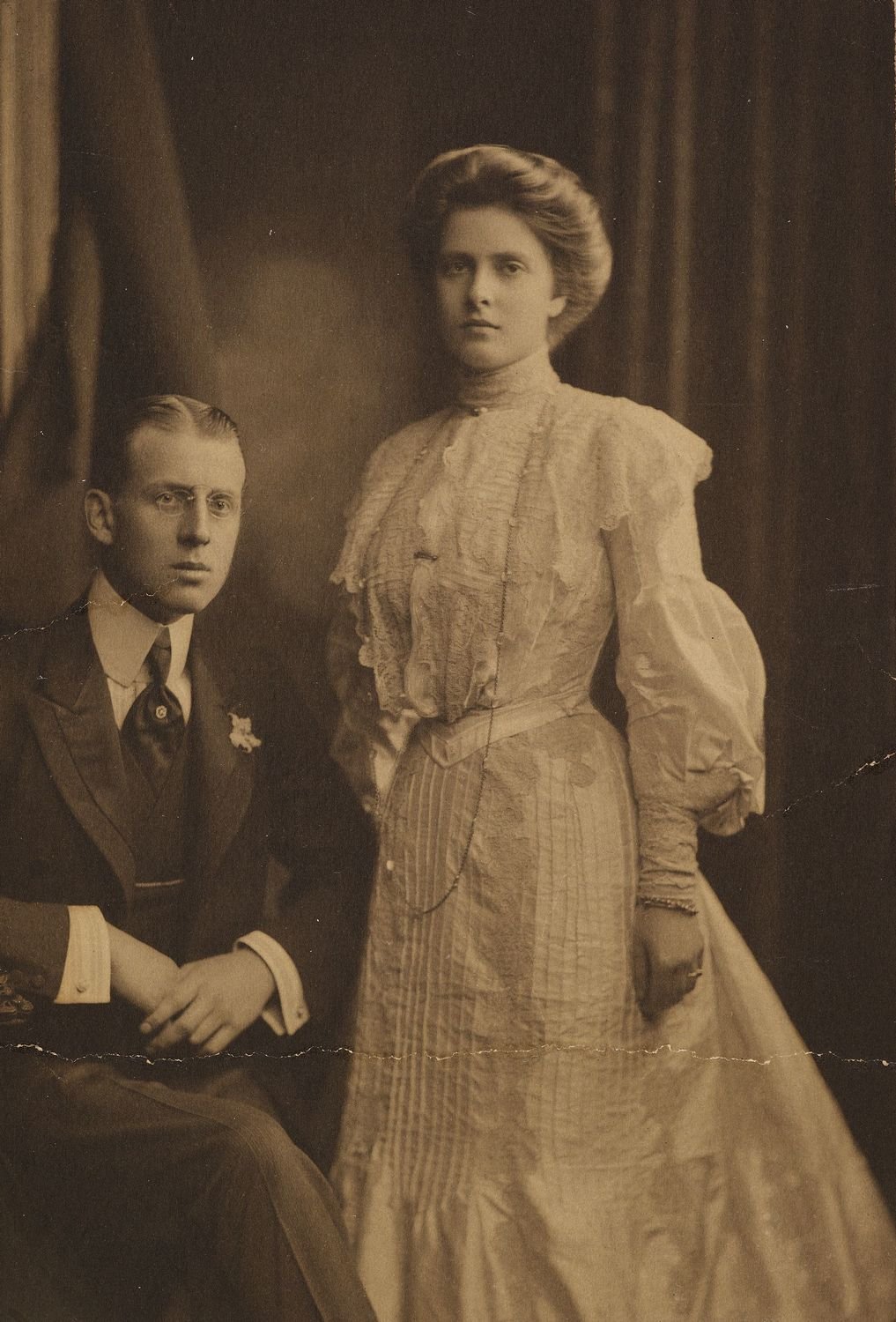
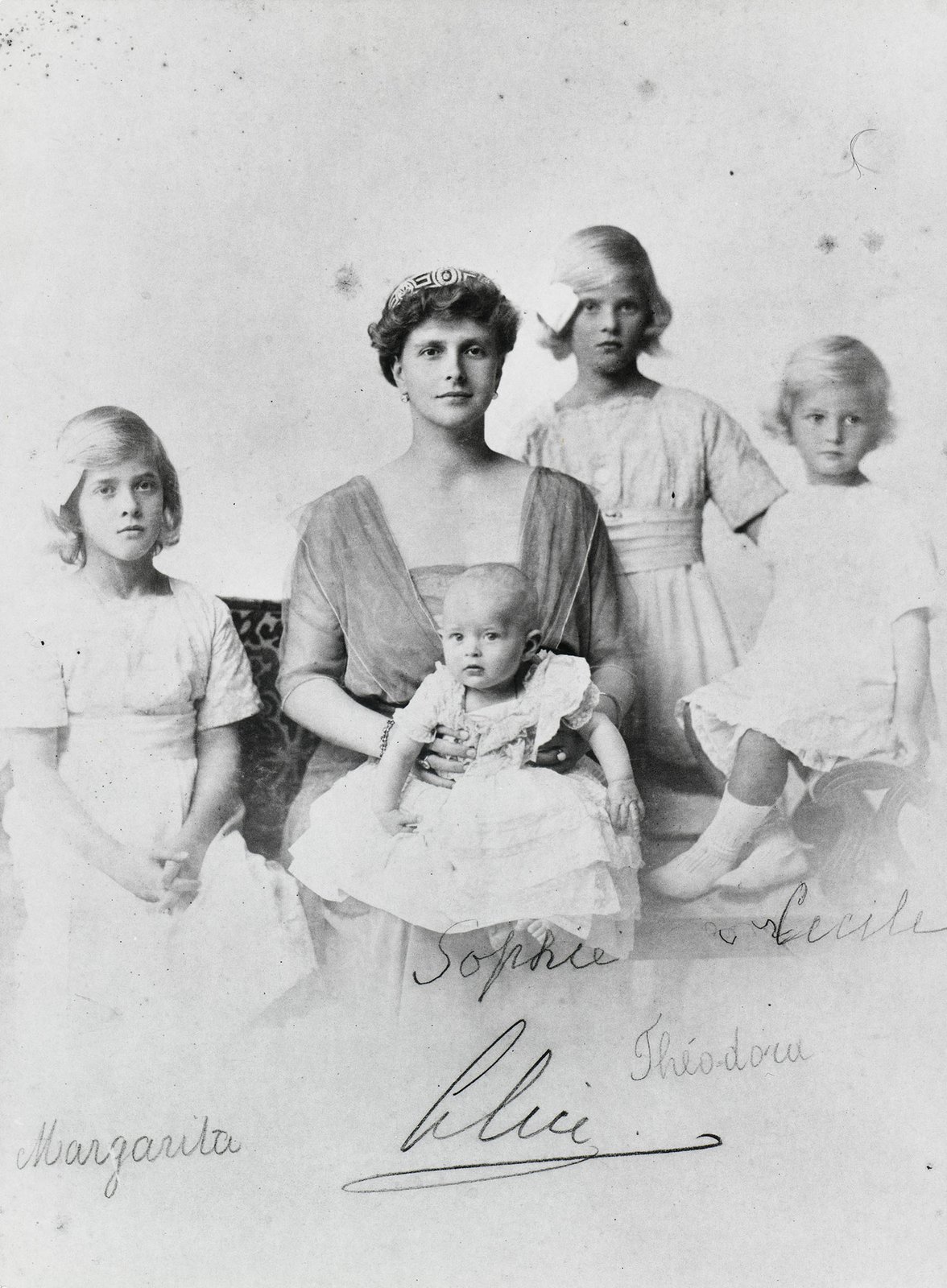
The young blue-bloods, twenty-one-year-old Andrew and eighteen-year-old Alice, married in Darmstadt in 1903. Their wedding would be remembered as the last great gathering of Queen Victoria's royal descendants and those of Christian IX, King of Denmark. Andrew and Alice began their life together in Athens, where their five children were born - four daughters and a son.
The Balkan Wars and Exile from Greece
In 1912, hostility between the Balkan states and Turkey reached its peak, and toward the end of that year the First Balkan War broke out, in which the Ottoman Empire lost almost all of its European territory. During the war, Prince Andrew ran a field hospital, where Princess Alice's compassionate nature first became apparent. She went among the patients, comforted them, handed out medicine, and bandaged the wounded - quite a few owed their lives to her.
In 1914, when World War I broke out, King Constantine of Greece declared neutrality, but parts of Greece were occupied by the Bulgarians. Greek citizens saw this as an act of betrayal and took to the streets in mass demonstrations. The former prime minister and several senior officers rebelled against the king and declared the establishment of an independent Greece in Thessaloniki. As June 1917 approached, with the threat of civil war hanging over his kingdom, King Constantine I, son of George, decided to abdicate and went into exile in Switzerland with his family and close associates. When his son Alexander was crowned in his place, Prince Andrew and Princess Alice accompanied him. Thus, in 1920, Alice and Andrew left Switzerland, returned to Greece, and settled on Corfu. During the Greco-Turkish War, Andrew was given command of the Greek army's Second Army, and in 1921 their youngest son, Philip, was born.
A year after Philip's birth, another coup took place in Greece, and King Alexander was exiled as well. Andrew was arrested for 'refusing orders and taking independent initiatives on the battlefield,' tried, and also sentenced to exile. Alice, Andrew, and their children left Greece aboard the British warship Calypso and settled on the outskirts of Paris, where they stayed in a house owned by Alice's sister-in-law, Princess Marie Bonaparte.
Faith, Illness and Rescue in Athens
For Alice, this escape and the rescue that followed were proof of divine providence, leading her to become a devout Christian. She began charitable work for Greek refugees, joined the Greek Orthodox Church, and began claiming that she received messages from God and had healing powers. The psychological strain took its toll, and in 1930 Alice suffered a nervous breakdown and was hospitalized for two years in a Swiss sanatorium. She lost contact with her husband, and they spent the rest of their lives apart. Alice's family scattered in all directions. Her daughters moved to Germany, and her son Philip went to live in London with his uncles Louis and George Mountbatten. In 1944 Alice returned to Athens, where she spent the days of World War II at the home of her brother-in-law, Prince George, Andrew's brother.
Haimaki Cohen, a Jew, was a former member of parliament with ties to the Greek royal family. Cohen and his family lived in Metrikala in northern Greece. In 1941, after the German invasion, the Cohen family had to flee to Athens, which was under Italian rule and therefore safer for Jews. This relative safety came to an end in September 1943, when the Italian surrender to the Allies led to the German occupation of Athens and the hunt for the city's Jews.
By the time the Germans reached Athens, Haimaki Cohen had died, and his widow Rachel and their five children were looking for refuge. Her four sons chose to flee to Egypt and join the Greek government in exile, based in Cairo. The journey to Egypt was too difficult for Rachel and her daughter Tilda, so they remained in Athens. Princess Alice heard of their plight and offered them refuge in her palace. Later, another son joined them after failing to make the journey to Egypt and being forced to return to the city.
This is what Demosthenes Fouris wrote to Yad Vashem in August 1992: "When the Germans began persecuting the Jews, Princess Alice wanted to know what had happened to the Cohen family. After learning from friends and one of her ladies-in-waiting, Mrs. Virginie Simopoulos, about the plight of Mrs. Cohen and her youngest daughter, Tilda, she decided to host them in her home, or rather to hide them there, despite all the dangers this entailed." Yad Vashem's website also states: "On several occasions, the Germans suspected the princess, and she was even questioned by the Gestapo. The princess used her deafness to pretend that she did not understand her interrogators' questions, until they finally left her alone."
While Alice was sheltering a Jewish family in her home, her daughters were living in Germany, and three of them were close to the Nazi regime. Sophie, the youngest daughter of Alice and Andrew, was married to Prince Christoph of Hesse, a senior figure in the Nazi regime who served under Hermann Göring. In 1935, she was photographed at Göring's wedding, seated at the same table as Adolf Hitler. A few years earlier, Sophie and her husband had hosted Hitler for lunch at their home. "We were very impressed by this man, who was modest and charming, and by his plans to change and improve the situation in Germany," she wrote in her diary. Two years later, she named her son Adolf after the Führer.
Princess Margarita, Princess Alice's eldest daughter, married Gottfried, Prince of Hohenlohe-Langenburg, who fought in German uniform on the Russian front and was seriously wounded. Gottfried did not support Hitler and was among the officers who planned to assassinate him in July 1944, a plot that led to his dismissal from the army. Another daughter, Cecilie, was married to the German prince Georg Donatus, who was also associated with the Nazi Party. In 1937, the two were killed in a plane crash. Alice attended the funeral, where she saw her husband Andrew for the first time in six years. Her sixteen-year-old son Philip came to his sister's funeral in Germany and was photographed walking beside men dressed in Nazi uniforms. Philip himself served in the British Navy during World War II and took part in battles against the Nazis.
After the funeral, Alice resumed contact with her family, and in 1938 she returned to Athens alone to help those in need. She tried to reassert her maternal responsibility for the young Prince Philip and bring him back to Greece, but her brother Louis had already introduced the prince to his future wife, Elizabeth.
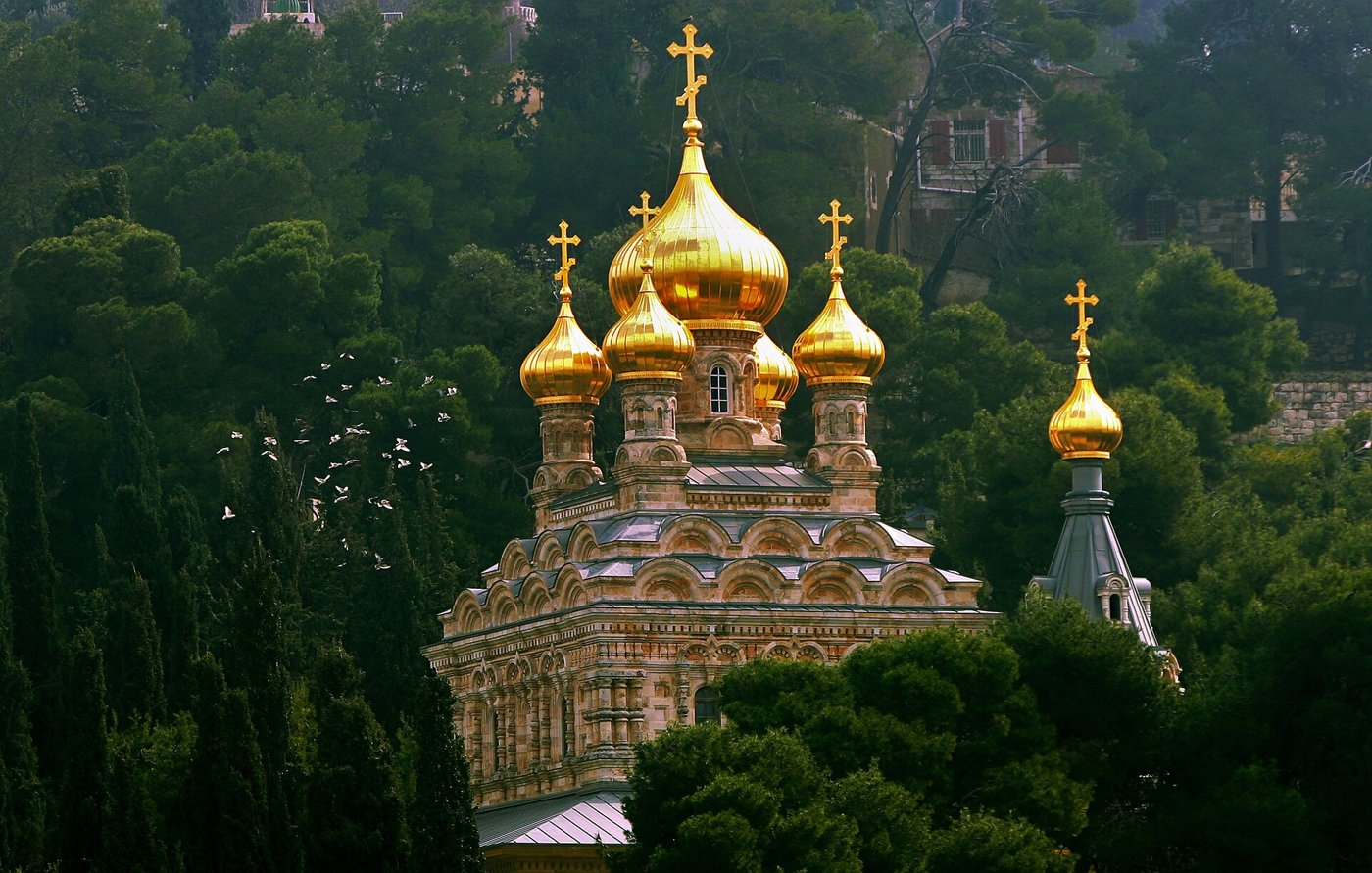
Throughout World War II, Princess Alice volunteered with the Swedish and Swiss Red Cross. After the war, the princess established a Greek Orthodox order, the Order of Martha and Mary, and later founded a monastery and an orphanage in a poor suburb of Athens. In April 1947, Alice returned to her native Britain to attend the wedding of her son Philip (now called Philip Mountbatten) to Princess Elizabeth, daughter of George VI, King of Britain. She gave the couple the few pieces of jewelry she had left so they could be set in Elizabeth's engagement ring. Alice's daughters, Philip's sisters, were not invited to the wedding. Princess Alice died at the age of 84, twenty-two years after the wedding of her son Philip. Before her death, she expressed her wish to be buried in Jerusalem beside her aunt, Princess Elizabeth (Elizabeth Feodorovna). In 1988, her remains were brought to Israel and she was buried at the Church of Mary Magdalene in Jerusalem.
Five years later, in 1993, Yad Vashem recognized Princess Alice as one of the Righteous Among the Nations, and a year later Prince Philip came to plant a tree in her honor. "I believe that at no point did my mother's actions seem to her unusual or extraordinary," he said then. "She was a devout woman with a strong faith, and she saw it as a completely human act toward other people who were in distress."
Twenty-two years later, Prince Charles came to Israel to attend the funeral of former president and prime minister Shimon Peres and took the opportunity to visit his grandmother's grave. Her great-grandson, Prince William, also visited her grave during a visit to Israel and met Evy Cohen, granddaughter of Rachel Cohen, whose life and her daughter's life were saved thanks to Alice's actions.
Prince Andrew died in 1944 of heart failure at the Metropole Hotel in Monaco.

תגובות
עדיין אין תגובות.