
"The world is a dangerous place to live, not because of the people who do evil, but because of those who do nothing about it" (Albert Einstein).
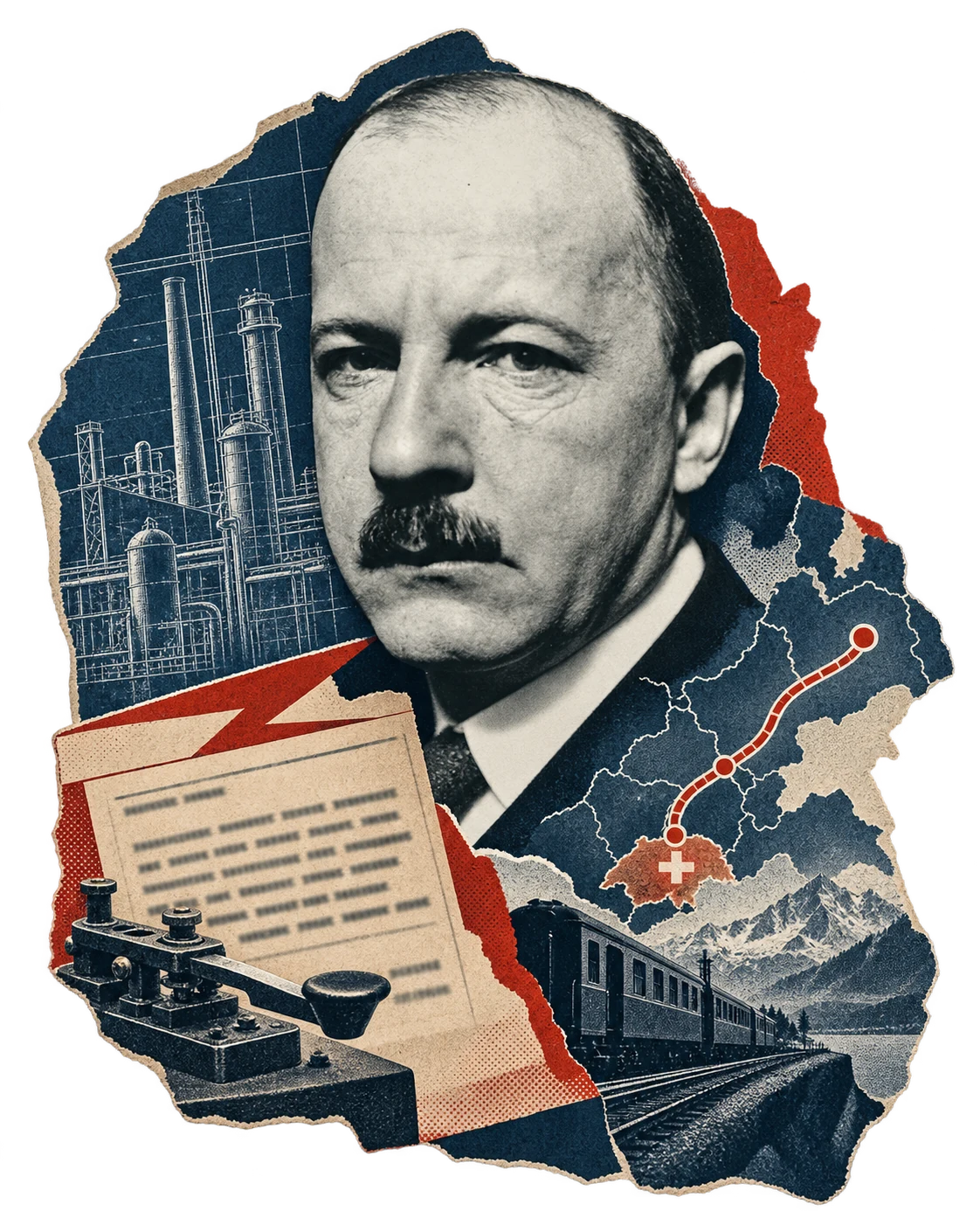
Eduard Schulte Reports about the Nazi killing machine in operation that leaked out of Germany were few and far between, and met with disbelief. In August 1942, two reports arrived from German sources who had witnessed the mass murder. One arrived on August 20 and was the testimony of SS officer Kurt Gerstein, who, on returning from Treblinka, told Swedish diplomat Göran von Otter what was happening and asked him to spread the word. Another report arrived on August 8 in a telegram that came to be known as the "Riegner Telegram."
The Telegram That Warned of the Extermination
The telegram read: "A disturbing report has been received that a plan to eliminate all the Jews in countries occupied or controlled by Germany, numbering three and a half to four million, is being discussed and considered at the Führer's headquarters. They will be eliminated all at once, after being deported and concentrated in the East, in order to solve the Jewish problem in Europe once and for all. The reported plan is scheduled for the fall. It has been reported that the planned methods include the use of prussic acid. We are passing on this information with all necessary reservations, as there is no way to confirm its accuracy. It is claimed that the informant has close connections to the highest German authorities and that his reports are generally reliable." Riegner handed this telegram to the American vice-consul in Geneva, who then sent it to the foreign ministries in Washington, D.C., and London.
It took 38 years for the informant's identity to be revealed. "The informant has close connections to the highest German authorities." The details emerged in the book The Terrible Secret, written by Jewish American historian Walter Laqueur, which describes how the Final Solution became known to the world. Laqueur recounted that the first person to receive the information from the reliable source was a Jewish businessman named Isidor Koppelman, who did business with the source. Koppelman passed the information to another Jew, Benjamin Sagalowitz, who ran the Information Office of the Jewish communities in Switzerland. Sagalowitz passed it to Gerhart Riegner, the World Jewish Congress representative in Switzerland. Riegner, a 31-year-old refugee from Berlin with a doctorate in law, understood how explosive the information he had received was. He informed Howard Elting, the American vice-consul in Geneva, and asked him to pass the information to the U.S. State Department and to Rabbi Stephen Wise, one of the leaders of American Jewry. Elting cabled the information to the State Department, noting that Riegner had stressed that the source was reliable. The source of the information was a German industrialist named Eduard Schulte.
The Industrialist Who Opposed Hitler
On February 20, 1933, Adolf Hitler held a secret meeting with about 20 of Germany's leading industrialists at the luxurious Berlin residence of Hermann Göring, one of Hitler's top officials and, later, commander of the Luftwaffe (the German air force). The aim was to raise money for the Nazi Party. Three weeks earlier, Hitler had been appointed chancellor of Germany by the elderly and ailing president, Paul von Hindenburg. The only person who refused to contribute even a single German mark was Eduard Schulte, then one of Germany's leading industrialists. He watched in horror as the future of the country he loved took shape, and foresaw that Hitler, his entourage, and the other attendees would lead Germany to disaster.
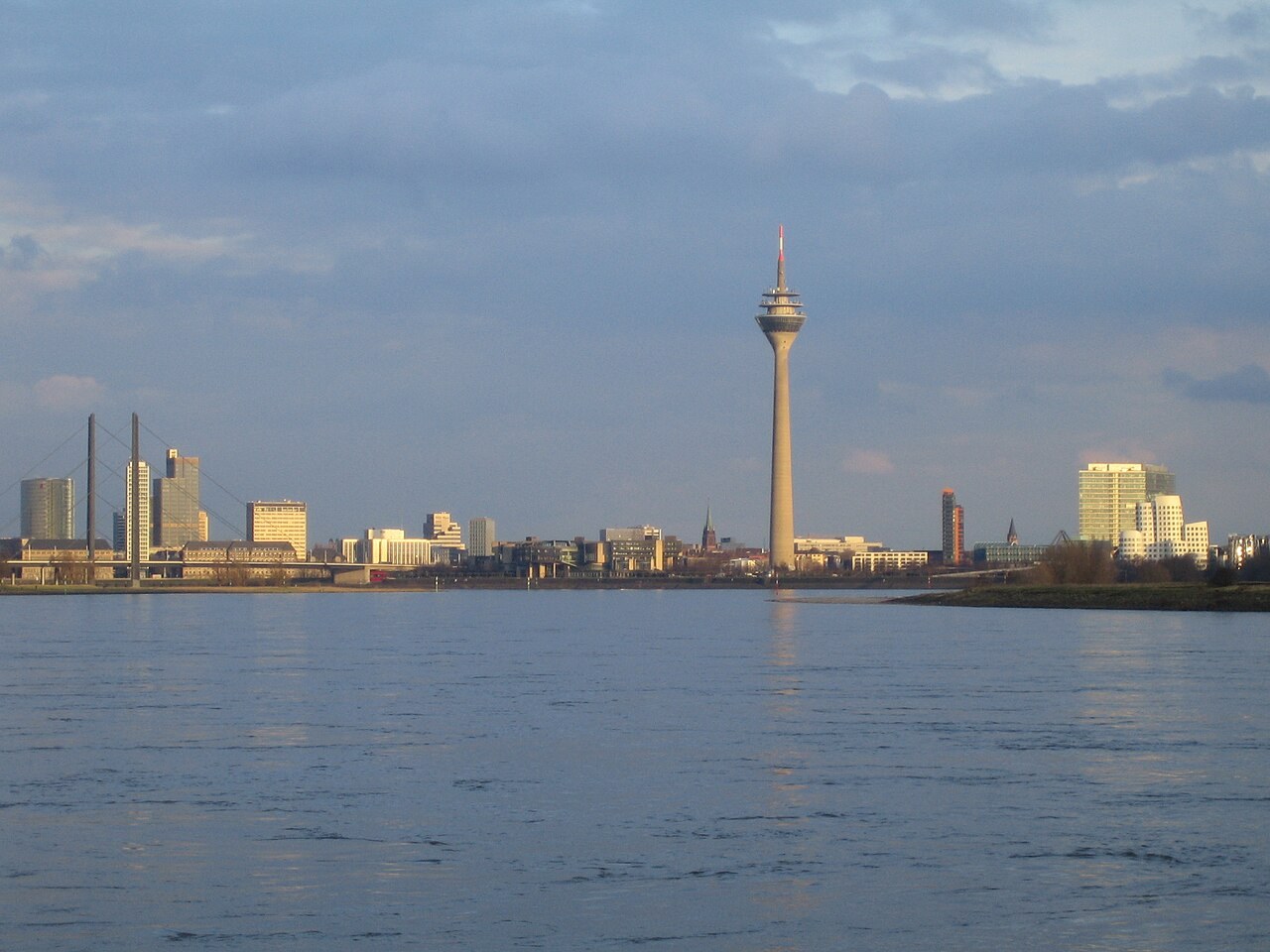
Eduard Schulte was born in Düsseldorf to a wealthy family that ran an art gallery. At the time of the meeting at Hermann Göring's home, he was managing director of Giesche, Europe's largest zinc producer. His deputy, Otto Pfitzner, was a senior Nazi Party official and a member of its leadership. The company's headquarters were in Breslau (then in Germany, now Wrocław in Poland), and its factories were spread across Poland and Germany. The Nazi regime considered zinc production important because zinc played a key role in steelmaking, helping the company expand.
When Hitler came to power, Schulte made the patriotic decision to act against him - a decision that put his life in danger. Schulte's idea was to pass information to the Americans so that they would bring about Hitler's downfall. To this end, he established contacts in Switzerland with American intelligence and with Allen Dulles, an agent of the OSS - the American Office of Strategic Services (predecessor of the CIA). Throughout the war, Schulte provided the Americans with information about war plans and the V-1 and V-2 missile programs.
Toward the end of January 1942, a conference was held with representatives of all the Nazi government ministries in attendance. At this meeting, the "Final Solution" was presented, including the use of Jews as forced laborers and the massacre of all the Jews in Europe. The conference was highly secret and became known as the "Wannsee Conference," after the villa where it was held, in the Wannsee suburb of Berlin.
The SS was responsible for carrying out the "Final Solution," under the leadership of Heinrich Himmler. In July 1942, Himmler visited Auschwitz to see how the plan was progressing and to watch the execution of 449 Jews who had arrived from the Netherlands. From Auschwitz, he continued to a dinner at a villa in Katowice (owned by Giesche), to which he had been invited by Otto Pfitzner, Eduard Schulte's deputy. The next day, Otto Pfitzner boasted to Eduard Schulte about the secret of the "Final Solution." Two weeks later, Schulte was already on a train from Breslau to Switzerland to pass the information to Jewish organizations. This was the first time those organizations learned of the "Final Solution" plan to exterminate all the Jews of Europe using Zyklon B gas.
The "Riegner Telegram" was brought to the attention of the Americans and the British, but they did nothing, and the extermination continued at a frantic pace. About two years after the telegram, in April 1944, two prisoners who had spent two years working at Birkenau escaped from the camp. They reached Slovakia and reported what was happening in the extermination camp. Their account was horrifying, and Jewish leaders appealed to the U.S. and British governments, asking them to bomb the extermination camps and the railway lines leading to them. The Americans refused, explaining that bombing would cause the deaths of camp prisoners and that innocent civilians living nearby might be harmed - a concern that did not stop them, shortly afterward, from dropping two atomic bombs on Hiroshima and Nagasaki.
In 1941, fragmentary reports began reaching the Land of Israel about the murder of Jews in territories of the Soviet Union conquered by the Nazis. The flow of reports increased in 1942. At first, the credibility of the reports was doubted, and the Hebrew press qualified them with notes saying they had not been confirmed. "They didn't believe me... They asked questions and interrogated me as if I were a criminal... How do you know? What happened in other places while you were locked up in your own ghetto? How do you know what happened to the Jews who were transported, when you weren't there?" Yaakov Kurtz recounted in his testimony during the Holocaust.
It was not until toward the end of 1942 that the Allied governments issued a joint statement, published simultaneously in Moscow, London, and Washington, about the extermination of European Jewry. The statement reported that hundreds of thousands of Jews had been murdered, although the number of victims had already reached the millions. The Allied governments pledged to bring those responsible for this crime to justice.
The Secret Revealed After the War
Toward the end of 1943, Eduard Schulte sensed that the Gestapo was closing in on him. At the last moment, he fled to Zurich, Switzerland, with his wife, leaving behind his son, who was serving in the Wehrmacht. In Zurich, Schulte worked with Allen Dulles and an anti-German group to gather and analyze intelligence. After the war, Schulte returned to Berlin and began working for the U.S. military occupation authorities in the city. He expected to be offered a leading role in rebuilding Germany, but when he realized that he was unwelcome in a Germany that regarded him as a traitor, and that he would not be offered the position he wanted, he returned to Switzerland and never went back to Germany. After the war, Schulte remained silent, and Riegner, too, refused to reveal who had given him the information.
Eduard Schulte died in Zurich in 1966, aged 75, in obscurity. The fact that he was the man behind the "Riegner Telegram" was revealed only 20 years after his death. In 1986, Walter Laqueur and Richard Breitman published a biography of Schulte, Breaking the Silence. The book was translated into Hebrew.
That same year, once the source became known, Yad Vashem's Commission for the Designation of the Righteous Among the Nations decided to recognize Eduard Schulte as Righteous Among the Nations "for risking his life during the Holocaust in Europe to save persecuted Jews." The medal was presented at a formal ceremony to his granddaughter, Priscilla Schulte, a professor of anthropology and sociology.
In their testimonies, Kurt Gerstein and Eduard Schulte risked the death penalty and showed extraordinary courage. Their loyalty to Germany was of no consequence when measured against the moral values they held sacred.

תגובות
עדיין אין תגובות.