
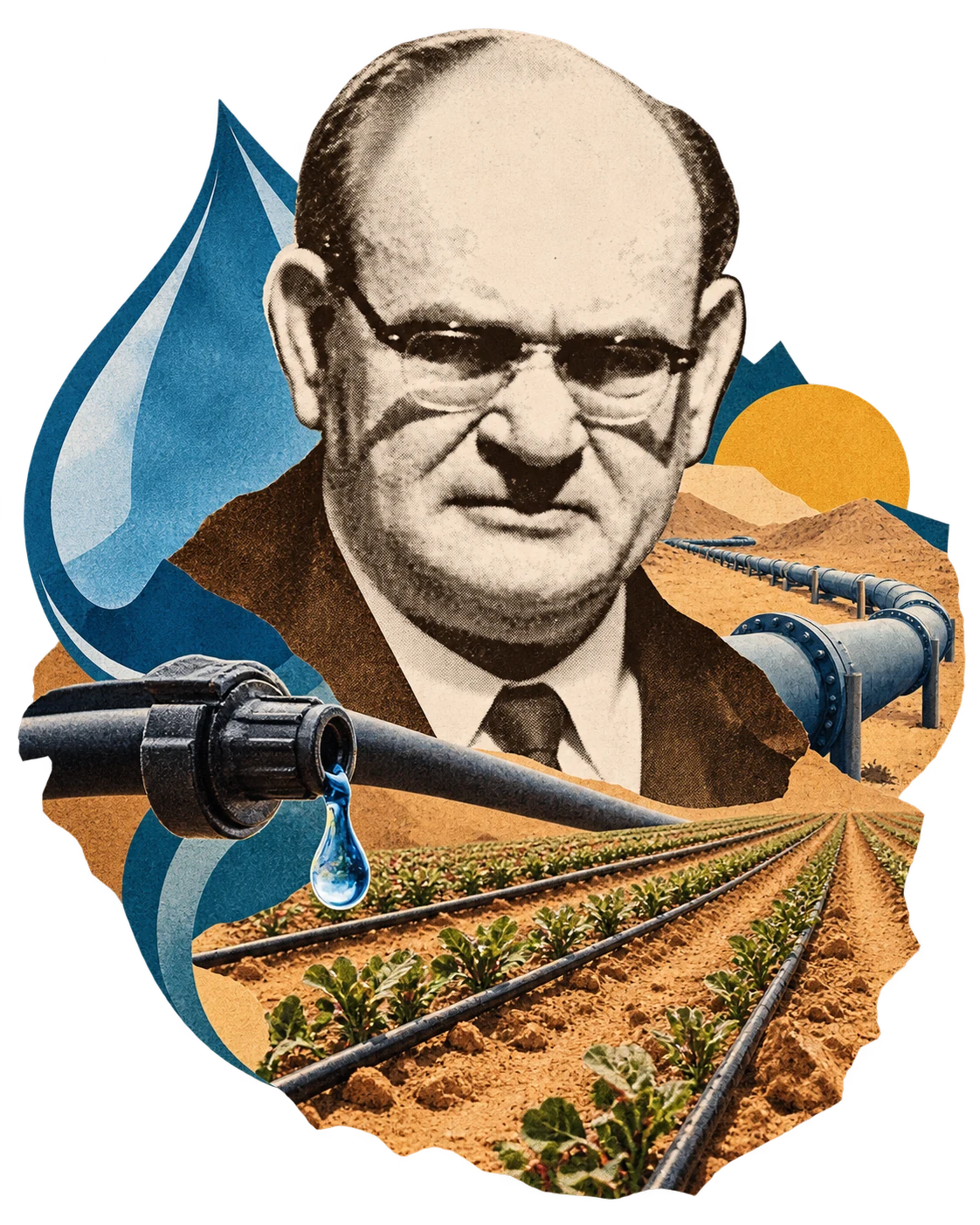
Many dismissed his plans as science fiction and thought him a dreamer, but his inventions saved Jerusalem and made the Negev bloom.
The Unrecognized Genius...
The unrecognized genius...
Simcha Blass was born in 1897 in Warsaw, the capital of Poland, to a wealthy family whose fortune came from estates and forests it owned, and whose lineage traced back to the Hasidic rebbes of Gur. He was himself a sixth-generation descendant of the Gaon of Vilna, and grew up on one of his grandfather's estates, studying Torah with private tutors. The clocks on the walls of his grandfather's house, chiming together, stimulated his mind and would not let him rest. So, at the age of 17, he began studying technology at a Polish technical institute, where he excelled in technical and mathematical subjects and was already tipped for greatness. He had to interrupt his studies when he reached conscription age, but during his military service he invented his first device, in the field of aeronautical meteorology, which helped repel the Red Army. At the end of his service, he returned to his studies.
From the Speech to the Planting Machine
In a speech in 1918, Bund leader Vladimir Davidovich Medem sought to emphasize how ridiculous the Zionist idea was. He argued that 25 years later (that is, in 1943), there would be no more than a million Jews in the Land of Israel (since the land could not provide food for more than that number), while there would be 25 million Jews in the world that same year. Therefore, it was not worth making an effort for 4% of all Jews; the focus should instead be on the Jewish majority who would remain outside the borders of the Land of Israel (then known as Palestine). The Bund was an anti-Zionist organization that opposed Jewish settlement in the Land of Israel, but advocated equal rights for Jews in their countries of birth. Simcha Blass, an enthusiastic Zionist, sat in the hall and listened to Medem's speech. He immediately began thinking about how to increase the land's yield and, in turn, the number of Jews in the country. At the time, his graduation project was about producing an engine powered by alcohol, but after that speech he decided to change his subject to increasing the land's yield. He learned that in China, with its enormous population, wheat was not sown but planted, and so he began designing a machine for planting wheat and barley. He submitted this machine as his graduation project. Simcha Blass thus graduated with honors and qualified as a mechanical engineer.
In Berlin, where he lived after his studies, he met David Ben-Gurion, who had arrived there as a representative of the Histadrut. Blass showed him his planting machine. Seeing Ben-Gurion's enthusiasm for the idea, he hurried to patent the machine in about twenty countries. The machine attracted considerable interest and won first prize when it was exhibited in Italy.
From the Planting Machine to Water
In 1927, Simcha immigrated to Palestine and settled at Kibbutz Degania Bet. After many attempts to plant with the machine, the soil yielded 600 kilos of barley per dunam instead of 150. At first, Blass thought he had broken through the barrier to bringing more Jews to the Land of Israel, but then he realized that he faced two bigger problems. The first was the small number of people who could operate the machine; the second was transporting water to the fields, which until then had been done in barrels carried on donkey-drawn carts. He decided to postpone his 'contribution' to the growth of the Jewish population in the country and set to work energetically on solving the problem of irrigating the fields.
The opportunity came when nearby Kibbutz Beit Zera received funding to build an irrigation plant using water from the Jordan River. The plan presented to them by engineers from the Settlement Department was more expensive and less efficient than the one Simcha proposed, and he was chosen to build the irrigation plant. Degania Bet joined Beit Zera, and Simcha's irrigation plant began operating, supplying 2,000 cubic meters of water per hour instead of 300 cubic meters: "I knew nothing at all about irrigation. Although small areas were irrigated in Degania Bet while I was there, I became acquainted with iron pipes when we built the water plant for the two Deganias... I had taken a course in geodesy (land surveying), and in Degania I held the surveying board. But after I argued with the surveyor about the theodolite's position, in order to achieve the greatest possible accuracy (I knew the theory of precision), the surveyor asked for another worker," he later wrote. That brief experience with water conveyance would determine his future...
A year after immigrating, he returned to Germany because of interest in his planting machine. Although the invention did not succeed in Germany, he made progress toward solving the problem of the limited number of people in the Land of Israel. While there, he married Yehudit (the sister of Eliyahu Dobkin, one of the founders of the Israel Museum).
In 1930, he returned to Israel. On one of his train trips to Haifa, his longtime friend Levi Shkolnik (later Levi Eshkol, Prime Minister of Israel), whom he had known at Degania Bet, sat beside him. Shkolnik remembered how Simcha had solved the water problem at his kibbutz and asked him, "Well, you're crazy about water. Maybe you can find a way to bring water to the western valley?" Blass replied that water from the Na'aman River, which flowed south of Acre into the sea, could be brought to the kibbutzim and moshavim in the valley, where drilling had proved unsuccessful. He added, "Give me money and we'll bring water to the valley..." About a year later, Levi Shkolnik called Simcha Blass and said, "You once said you'd bring water to the valley if there was money. Give me a memorandum about your plan." Blass worked hard on the matter and submitted a plan to pump 5 million cubic meters of fresh water from wells in the Kfar Hasidim area and carry it to the Jezreel Valley.
Thus, in February 1937, the Mekorot company was founded. Its first director was Levi Eshkol (Shkolnik), its secretary was Pinchas Sapir (later Minister of Finance), and its chief engineer was Simcha Blass. Mekorot's first project was the Kishon Water Project, inaugurated in October 1938, and work began on a project to bring water to the communities of the Jezreel Valley.
The Negev, the Pipes and Jerusalem
On January 1, 1947, his vision of transforming the Negev, a sparsely settled region, began to take shape. On that day, work began on laying water pipes with a total length of 220 kilometers, originating at a single point at Kibbutz Nir-Am in the Negev. Eight years earlier, in July 1939, Simcha had submitted a plan to bring water to the Negev, known as the "Plan for Settling the Deserts of the Land of Israel by Bringing Water from the Rivers." Its main aim was to settle the empty areas of the Negev by bringing water from rivers in the north of the country (the Hula region) and from rivers in the center (the Yarkon River). The plan was shelved, but in October 1946, after 11 communities had been established in the Negev, the need for it arose again, and Simcha was asked to quickly propose an updated plan. This time he proposed a new plan that was simpler and cheaper. He discovered that the Nir-Am area was actually rich in water, and that a number of wells could reach it and supply water through hundreds of kilometers of six-inch pipes that had arrived in the country under extraordinary circumstances and were already at his disposal. "Relief and salvation came to us from the streets of London, where hundreds of kilometers of pipes were dismantled and put up for sale. They had been used to put out fires during the Nazi Blitz. Zvi Shariv of the Nir company, who had traveled to London, would ask me from time to time whether to buy them. 'Buy as many as you can,' I told him. And he bought them... Indeed, the pipes that had once put out fires in London kindled a great light, and through them the first water flowed into the Negev." Water was supplied to Jewish communities as well as to Bedouin communities, whose residents guarded the line in return. One sheikh even built a building over the tap, thereby ensuring his control and oversight of the water consumption of the people in his camp.
In April 1947, water began flowing through the pipes. On April 30, it reached Kibbutz Shoval, and five days later, Mishmar HaNegev. The poet Natan Alterman wrote in his "Seventh Column" in the newspaper Davar about "the water flowing south" and a "concerto for a pipe." In the poem's final two stanzas, Alterman expressed his view of the pipe's importance: "More than once, wise and foolish have disagreed: Who makes history? Who has the advantage? One declares: the cabinets make it! Another sings: the bureaucracy! A third insists - capital! One says: the president! Another says: the senator! True, but it may yet turn out, in the end, That it was made by the plumber Who directed a pipe with a tap toward the desert."
And one member of the United Nations Special Committee on Palestine (UNSCOP), after visiting the Negev in the summer of 1947, said to his Israeli escort: "This water pipe will give you the Negev."
Simcha Blass not only planned water projects; he also advised during the UN discussions on the future of the State of Israel in the fall of 1947, helping shape its borders to meet future irrigation needs. Simcha Blass was not an easy man. During those UN discussions, when Moshe Sharett did not accept his opinion, Blass, as he himself recounted, "brought all his weight to bear on Sharett" (Blass was also a big man physically). He would raise his voice during discussions and demolish anyone who disagreed with him. The title of his book, Waters of Strife and Deeds, hints at the many conflicts he was involved in during his career. In the book, he "praised" his opponents, but when he finished writing it, he felt that perhaps he had gone too far and thought it right to add the following note at the beginning: "Whenever I write 'ignoramus,' I do not, God forbid, mean the man's general ignorance, but rather his lack of understanding of the subject I am discussing. For example: Varkats was an ignoramus on water matters." When the state was established and the War of Independence broke out, Blass once again stepped forward to save the capital of the state in the making.
In March 1948, the Jordanian Legion cut off the water pipe to Jerusalem, and it was clear that unless a solution was found quickly, the cisterns would run dry within a few weeks and the city would fall. Once again, Simcha came up with an original plan to solve the problem. His idea was to bypass Latrun and carry water from Kibbutz Hulda along the Burma Road to the water station at Sha'ar HaGai, which was connected to Jerusalem. Ben-Gurion approved the operation and named it Operation Shiloah (after Hezekiah's Tunnel, built by King Hezekiah while he was under siege). For a month, 250 workers labored hard, and toward the end of July water reached Jerusalem, saving the city at the last moment. This water line remained in service until the 1950s. Shortly before the declaration of independence, Simcha Blass was involved in producing weapons, including the PIAT anti-tank launcher. The shell that struck the Syrian tank still standing at the gate of Kibbutz Degania, where he had lived after arriving in the country, was fired from one of these launchers.
Visions of Water and Drip Irrigation
Simcha Blass also had plans that seem fantastical even today. One was a system of tunnels and canals through which water would flow from the coast of Acre to an artificial lake to be built north of the Sea of Galilee, and from there to the Sea of Galilee, turning it into a saltwater lake and saving the Dead Sea from drying up. He proposed using the difference in elevation between the Mediterranean Sea and the Sea of Galilee to build eight power stations: "Diverting the Jordan's waters north of the Sea of Galilee and impounding the floodwaters that drain into it will inevitably affect the size of the Sea of Galilee," he explained in his plan. "Assuming evaporation from the lake is 500-400 million cubic meters a year... over time, however, this could cause the Sea of Galilee to shrink. The absence of water in the Jordan would have an even greater effect on the Dead Sea, and to the extent that the waters of Transjordan were used... the shrinking of the Sea of Galilee and the Dead Sea could undoubtedly have a negative effect on the climate of the Jordan Valley, which is difficult enough as it is. But by bringing Mediterranean water into the Jordan Valley, the Sea of Galilee and the Dead Sea would remain at their present size." Implementing the plan would also require "border adjustments." These would include the Litani River, deep inside Lebanon: "The project would draw on the sources of the upper Jordan, with its three main tributaries (the Dan, the Banias, and the Hasbani), the Hula floodwaters, the Yarmouk, and some of the Litani's waters." The idea was put before the leaders as early as 1944, before the establishment of the state. This followed Ben-Gurion's proposal, back in 1919, that Israeli territory should also include the Lebanese Litani, on the assumption that there would be no Arab-Jewish conflict. There is no precedent in history for countries ceding territory and water resources to another country.
There is not enough space to describe all the roles Simcha Blass held. In addition to those mentioned above, he was also the Prime Minister's adviser on water affairs, director of the Water Division at the Ministry of Agriculture, and the founder and first CEO of the Water Planning for Israel Company Ltd. (Tahal).
Simcha's next patent transformed agriculture and enriched several kibbutzim. It is said that one day Simcha was a guest in Hadera at the home of Abraham Lobzovsky, a member of the Second Aliyah, who proudly showed him a tree that grew "without water." But Simcha was more impressed by the fact that the tree was taller than its neighbors. That was how he discovered a crack in a pipe running beside a tree, from which water dripped directly onto the soil around its trunk. When he returned home, he began building a drip-irrigation system with his son Yeshayahu, and in 1959 they patented it and began looking for a partner to commercialize the system. Uri Werber, treasurer of Kibbutz Hatzerim, heard about the system and realized it would suit the Negev kibbutzim, which were struggling to farm in the harsh conditions of water shortages and salty soil. On one scorching summer day, Simcha and his son arrived for a meeting at Ein Gedi with Dan Binyahu (Bennis) and proposed irrigating and fertilizing vegetables with the system. They conducted a successful trial on one and a half dunams of tomatoes, with excellent results. In 1965, Simcha Blass and Kibbutz Hatzerim founded Netafim. Blass owned 20% of the company, and the kibbutz owned the rest. Other kibbutzim later joined, including kibbutzim in the Arava. With this method, yields increased by about 70% and water consumption fell by about 50%. Today, millions of farmers around the world use Netafim systems, and the company is considered a leader in the field. It operates in about 110 countries around the world, employs over 4,000 people, and has an annual turnover close to one billion dollars.
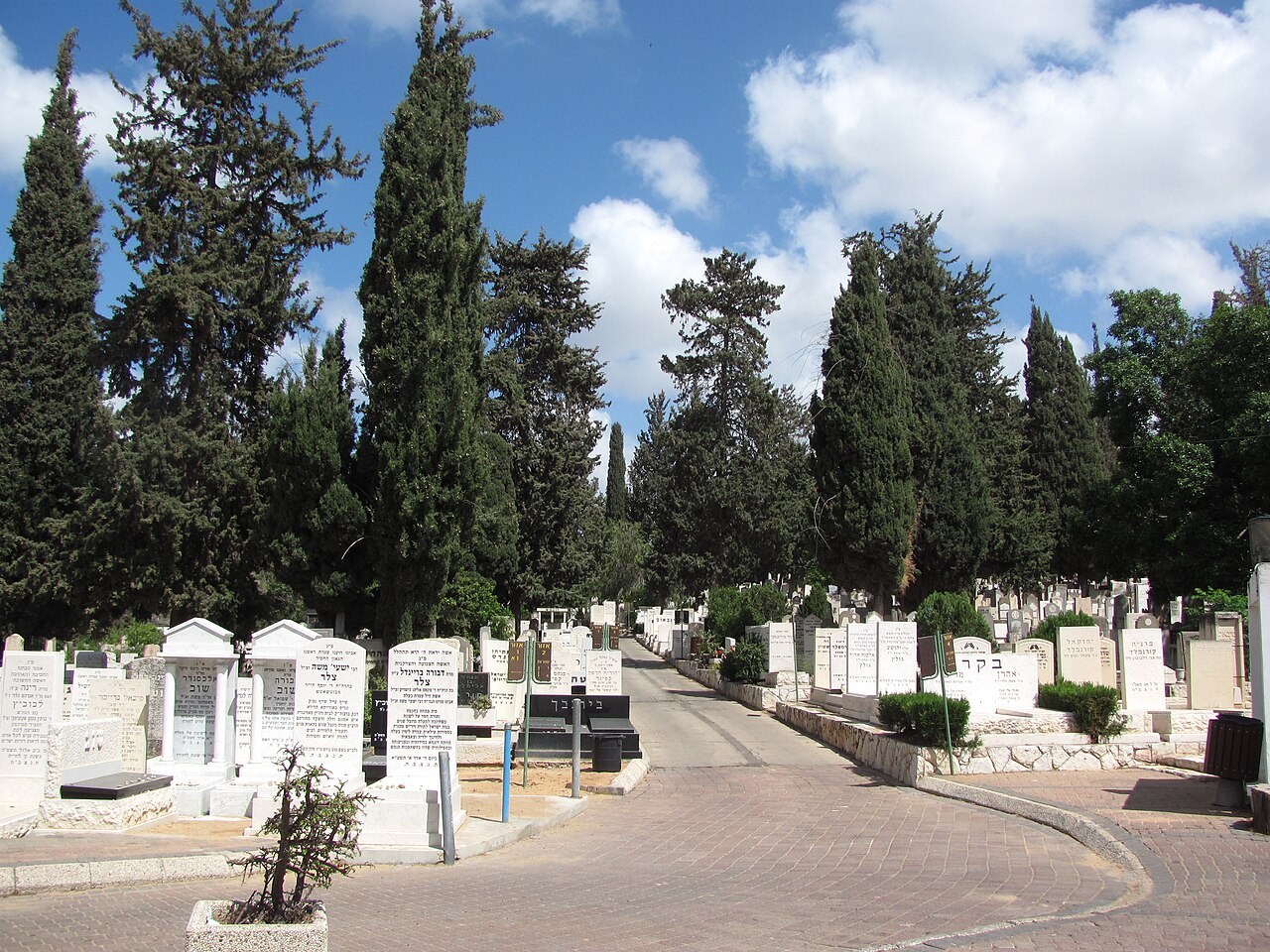
Despite his immense contribution to the water and agricultural sectors in Israel and around the world, few people knew who he was. Simcha Blass died in 1982 at the age of 84 and was buried at Nahalat Yitzhak Cemetery. He left behind three sons (Yitzhak, Yeshayahu, and Haim) and grandchildren. The street next to the Mekorot headquarters building in Tel Aviv is named after him.
תגובות
עדיין אין תגובות.