
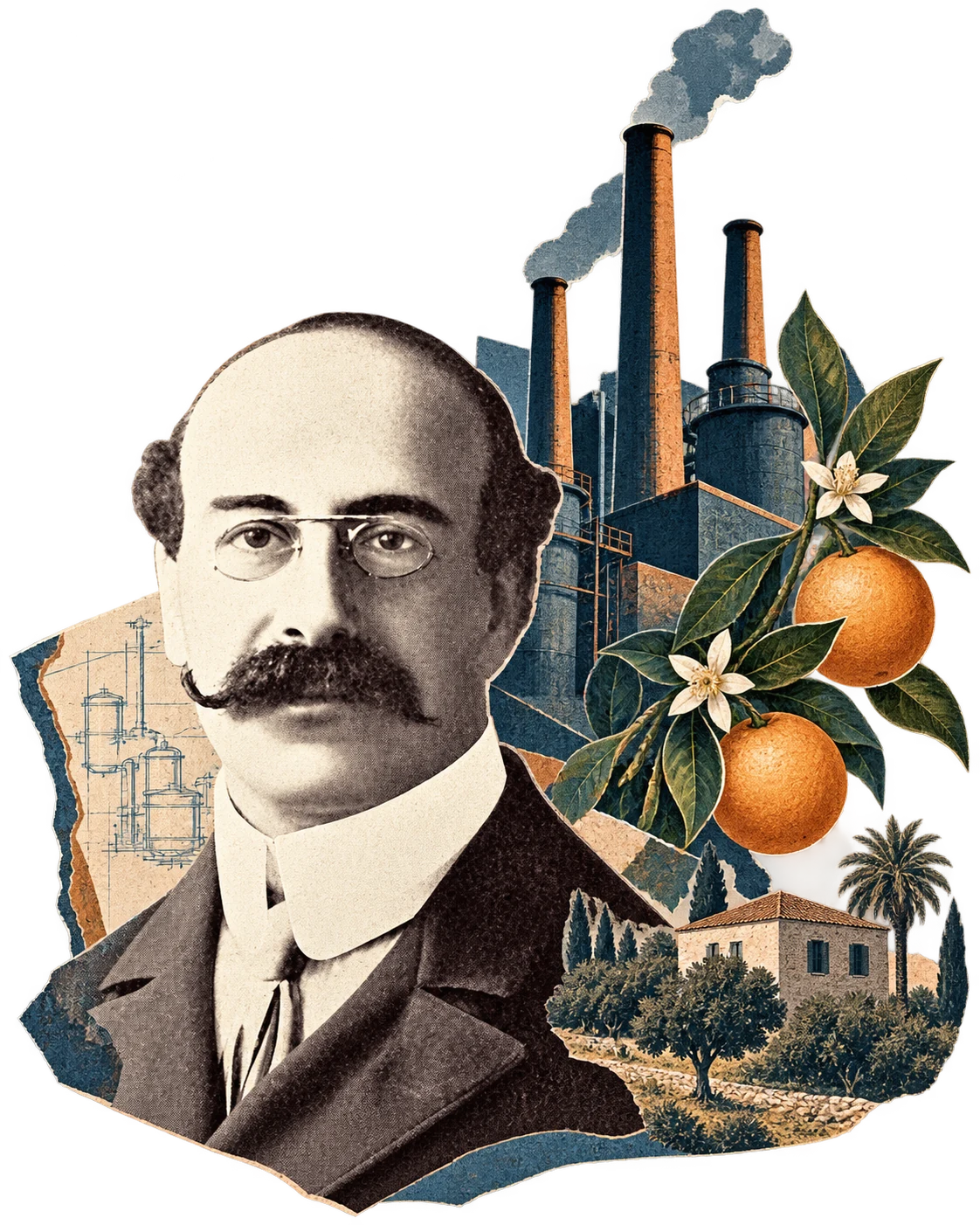
Until late in life, he did not see himself as Jewish. He was one of Britain's wealthiest men, a successful industrialist, a member of parliament, a philanthropic Zionist, and even built a modest home in the land he loved and contributed so much to. The Tel Mond area is named after him.
The Rise of Alfred Mond
Until late in life, he did not see himself as Jewish. He was one of Britain's wealthiest men, a successful industrialist, a member of parliament, a philanthropic Zionist, and even built a modest home in the land he loved and contributed so much to. The Tel Mond area is named after him.
The Jewish community in the Land of Israel in the 1930s was small, but no fewer than three Jewish lords from England lived there at different times: High Commissioner Herbert Samuel, Lord Melchett (Alfred Moritz Mond), and Lord Israel Sieff. The last two lived in the Sharon region, in a small, little-known settlement, just 100 meters apart. Those 100 meters encompassed wealth worth more than 24 billion dollars.
The year 1928 was the high point of Alfred Moritz Mond's life. That year in Britain, Sir Alfred Moritz Mond, the son of German Jewish immigrants, former Minister of Health, successful industrialist, member of parliament, passionate Zionist activist, and the richest man in Britain, was awarded the title of first Baron Melchett and given a seat in the House of Lords.
Alfred was the son of Ludwig Mond, one of the greatest industrialists of all time. His knowledge of chemistry led to the creation of a corporation that is still in operation today, more than 100 years later. Ludwig Mond was born into a distinguished Jewish family in Kassel, Germany, in 1839. Ludwig studied chemistry at the University of Heidelberg, and after completing his studies married his cousin, Frida née Lowenthal.
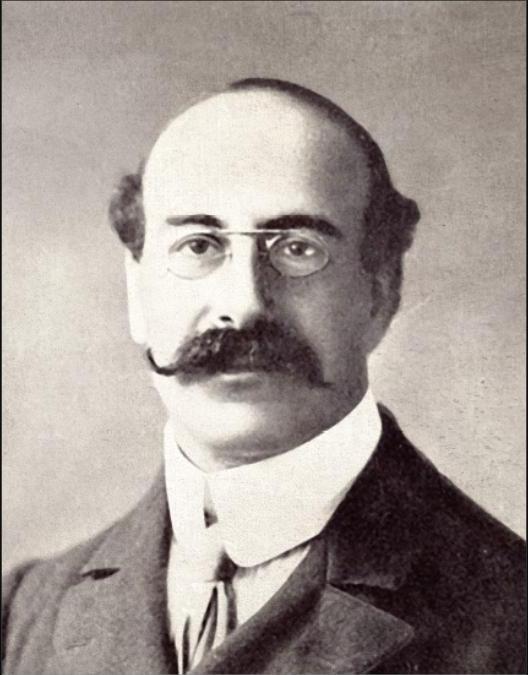
In 1862, he began to experience antisemitism firsthand and emigrated to England.
The young, energetic, brilliant chemist set up a small factory. In 1880, after seven years of hard work, continuous invention and innovation, Ludwig Mond was able to turn his efforts into commercial success by significantly lowering the cost of producing soda. It was a genuine revolution. First, soap could now be produced cheaply, greatly improving people's health and hygiene. This directly helped reduce infant mortality and increase average life expectancy. The invention also lowered the cost of producing glass, paper, textiles, and many other varied consumer goods for which soda is one of the raw materials.
Ludwig and Frida had two sons in Farnworth, Lancashire, England. Both worked with their father and were involved in British politics. They were Alfred Moritz and his brother Robert.
Alfred Moritz Mond was born on October 23, 1868. Alfred Mond's mother tongue was German. Alfred's friend, the sculptor and painter Sigismund Goetze, introduced him to his sister, Violet Florence, who was Christian. They married in 1894 and had four children: Eva Violet, Henry Ludwig, Mary Angela, and Nora Jean, who were baptized and raised as Anglicans.
Alfred Mond continued his father's business and, with great success, turned it into a leading chemical company. In 1926, he merged his factory with three other companies to create Imperial Chemical Industries (ICI). In its first year, the corporation had a turnover of 27 million pounds, and for many years it was Britain's largest industrial corporation.
Alfred was the corporation's first chairman and, in 1927, was considered the richest man in Britain. The Lord's wealth was even mentioned in the humorous poem "A Hard-Boiled Egg" by T. S. Eliot:
"I shall not seek money in heaven / For there I shall meet Sir Alfred Mond / Together we shall lie, wrapped / In a five per cent government bond."
The Political Career in London
Mond began his political career in the Liberal Party, and in 1906 was first elected to the British House of Commons on its ticket. Although he did not identify as Jewish, during the First World War he found himself the target of nationalist and antisemitic attacks, accused of being a German-Jewish traitor. Despite these smears, in 1916 Prime Minister Lloyd George appointed him Minister of Labour and Construction in his Liberal government.
Lloyd George said of Alfred Mond: "We have never had a better business brain placed at the service of the state than that of Sir Alfred Mond." At the height of the war, Alfred Mond was responsible, by virtue of his position, for Britain's armaments program as well as the construction of military facilities, shelters, hospitals, and other public works on a vast scale.
In 1921, Lloyd George appointed him Minister of Health, a position he held for about a year and a half, until the government fell in 1922. Mond then served as an ordinary member of parliament for a further six years. In 1928, he joined the Conservative Party and received the title of Baron Melchett. He thus became the first Lord Melchett, named after the town of Melchett, and was admitted to the House of Lords.
Discovering Judaism and the Bond with the Land of Israel
In 1917, at the age of 50, at the height of his political career in the British government and following the Balfour Declaration, new and stirring feelings began to well up in Lord Mond. Mond began to rediscover his Jewish identity, and this discovery connected him all at once to his roots. It was a revelation that shook him, and he decided to take action and help his people. That year, he gave a speech in which he spoke in support of the Jewish people for the first time.
In 1921, at the invitation of his friend Chaim Weizmann, Alfred came to the Land of Israel for the first time. Weizmann describes the trip: "This time I came to the country with Sir Alfred Mond. We spent January and February touring the land. Sir Alfred proved to be a sensitive man... I still remember the shock and dismay that came over him as we stood watching a group of pioneers breaking stones on the road between Petah Tikva and Jaffa. I watched him closely, and he was on the verge of tears... 'The pioneers were utterly exhausted...' he said. He simply understood these young men and women who were building their own lives as well as the road."
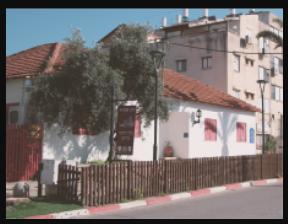
During that tour, they also visited the settlement of Migdal and were guests of Moshe Glickin, one of the managers of the Migdal farm. Following this visit, Mond bought land near Migdal and built his villa there, which still stands today. On the same trip, Mond met Pinhas Rutenberg and became one of the investors in his power station.
In 1925, Lord Mond was appointed to the first board of trustees of the newly established Hebrew University of Jerusalem, chaired by Chaim Weizmann, and also became the Technion's first president when it opened.
In 1928, during another tour of the Galilee, he visited the graves of Joseph Trumpeldor and his comrades at Tel Hai. Disappointed to discover that there was no headstone at the site, he decided to fund the Roaring Lion sculpture. That year, he also initiated and funded an effort to establish a national football team for the Land of Israel, a project that failed because of ongoing friction between the Hapoel and Maccabi sports associations.
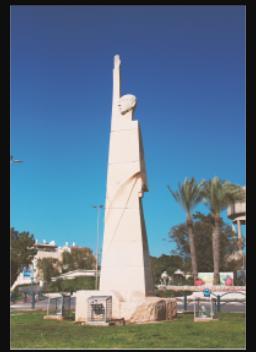
A supporter of the "mixed economy," Mond founded a company in 1928 called "Plantations of the Land of Israel Ltd.," which purchased about 2,500 dunams in the central Sharon region. The JNF bought additional land around this area through a special arrangement in which the workers themselves temporarily financed the land purchase, because of the JNF's difficult financial situation. These lands were intended for the establishment of three workers' moshavim: Kfar Hess, Ein Vered, and Herut. Together, they form the Tel Mond area, named after Alfred Mond. Mond's house still stands on Tel Mond's main street, with a statue of him nearby.
Alfred Mond died in December 1930, at the age of 62, and was buried in St Pancras Cemetery in London.
Lord Mond's children, Henry and Eva, followed their father's Zionist path and converted to Judaism in 1933. Henry Mond, the second Baron Melchett, served as chairman of the Jewish Agency, chairman of the Israel Electric Corporation, chairman of Plantations of the Land of Israel (which owned the lands of Tel Mond), and president of Maccabi World Union. His daughter Eva (Hava) married Gerald Isaacs, the second Marquess of Reading, whose father gave his name to the power station in Tel Aviv. Eva served as president of the British Zionist Fund and headed the British branch of the World Zionist Congress. Lord Mond's great-grandson, Peter Melchett, once served as chairman of Greenpeace in England.
תגובות
עדיין אין תגובות.