
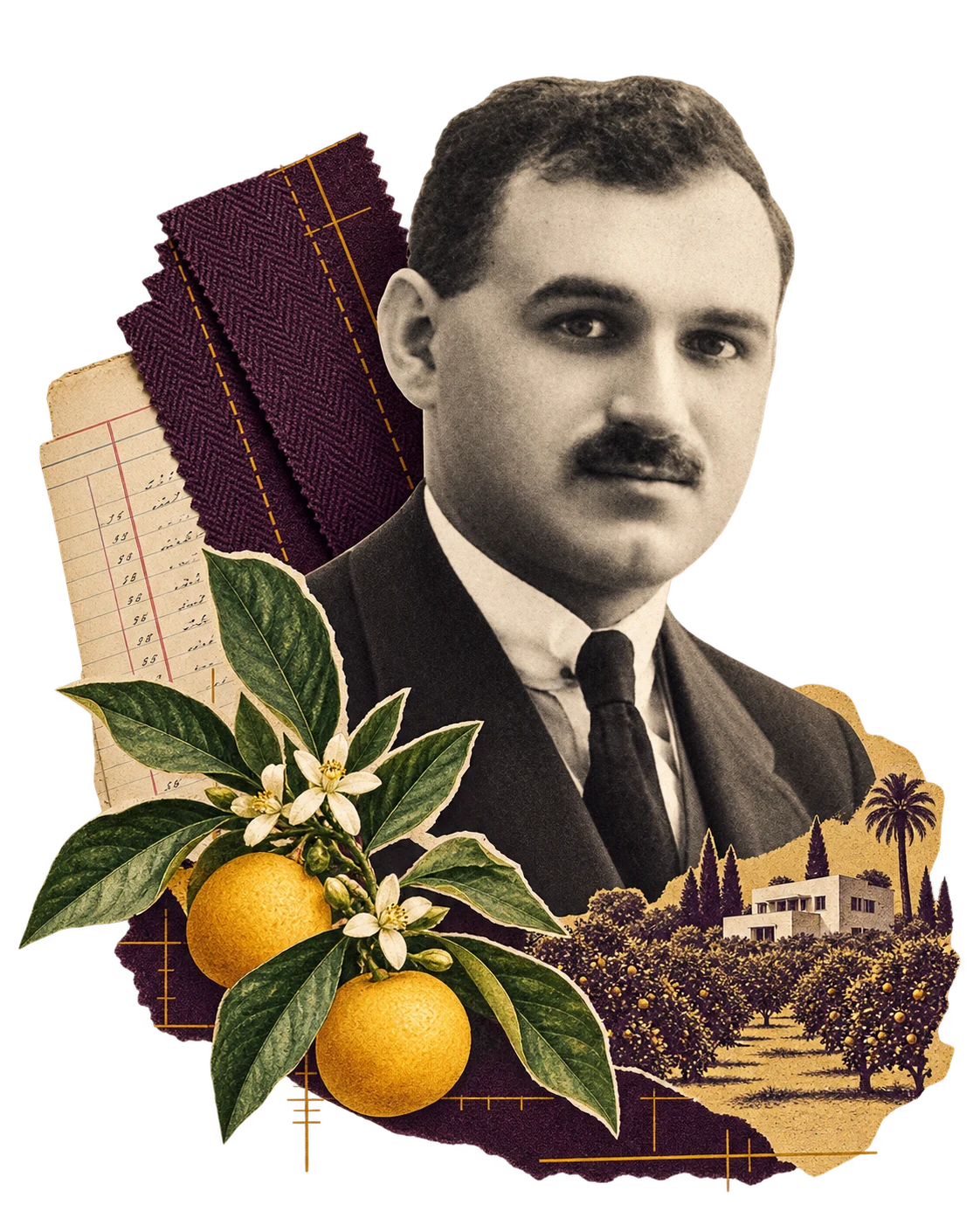
From a single penny to ten billion pounds. This is the remarkable story of one of England's wealthiest men, the owner of the Marks & Spencer chain of stores, who helped establish WIZO, the Weizmann Institute, and the Tel Mond bloc.
From the Kiosk to the Marks & Spencer Chain
From a single penny to ten billion pounds. This is the remarkable story of one of England's wealthiest men, the owner of the Marks & Spencer chain of stores, who helped establish WIZO, the Weizmann Institute, and the Tel Mond bloc.
"Don't ask the price. It's a penny." That was the sign hanging above Michael Marks's kiosk.
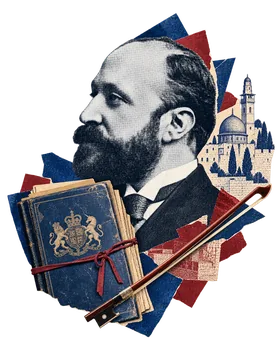
Michael Marks, the son of a Lithuanian Jewish family, was born in June 1859 in the city of Slonim (now in Belarus). He emigrated to England and worked in the city of Leeds for Barran, a company that often hired refugees because they would work for low wages. In 1884, Marks met Isaac Dewhirst, who owned a shop near his workplace. Marks became Dewhirst's traveling salesman, selling his products in nearby towns, and began to earn money.
Marks and Isaac Dewhirst became close friends, and Isaac even taught Marks English. Marks had great ambitions. He knew where he wanted to go, but didn't have the money he needed. He turned to his friend and received a loan of £5. With this money, Marks opened a kiosk in Leeds and hung up the sign: "Don't ask the price. It's a penny."
Marks understood that the profit on a single penny was small, and that to build significant wealth he would have to sell goods in large quantities. He approached Dewhirst again and asked him to find him a business partner for a stall in the covered market in Leeds.
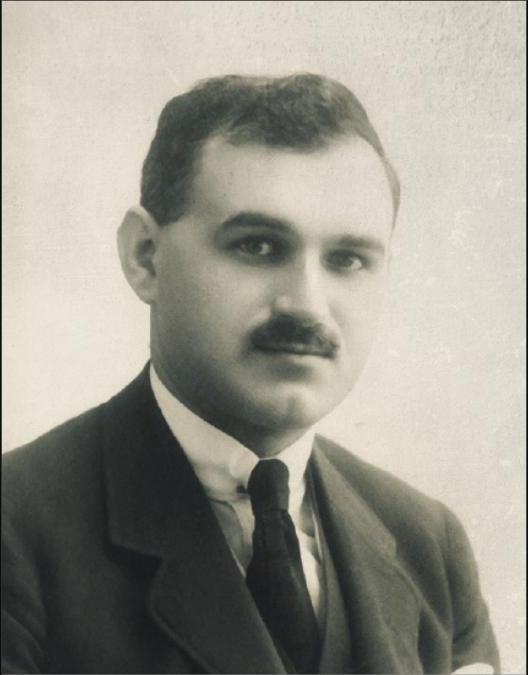
Dewhirst introduced him to Thomas Spencer, his cashier and an excellent bookkeeper. Spencer invested £300, and with his help the two men acquired the coveted stall in the Leeds market. The business partnership made them friends, and Spencer's wife went on to help Marks improve his English.
In the years that followed, the two opened similar stalls in other cities in northwest England, and the Marks & Spencer chain became England's largest retail chain. The company built its reputation on selling only products made in England, a policy that continued until 2002.
Today, the chain has 852 shopping centers throughout Britain, as well as dozens more around the world. It employs more than 83,000 people and has a market value of about £5.3 billion, with annual sales of £10 billion.
Michael Marks had one son and two daughters: his son Simon Marks, Rebecca, who married Israel Moshe Ziv, and Miriam, who married Harry Sacher. Simon was born in 1888 and inherited his father's position at the age of 19. In 1944, he was knighted, and in 1961 he was made a baron. Simon died in 1964, after 56 years of work at the company. He was succeeded by his sister Rebecca's husband, Lord Israel Moshe Ziv, who ran the company until 1967. He, and especially his wife, are the heroes of our story.
Israel Ziv, Rebecca and the Zionist Enterprise
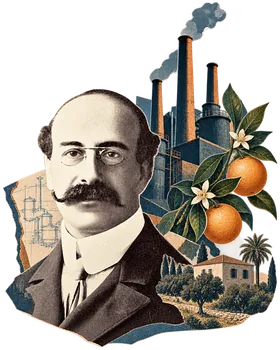
Lord Israel Moshe Ziv was born in Manchester in 1889. He studied economics and business administration and was active in his father's business. He later married Rebecca, the daughter of Michael Marks, and became the brother-in-law of Harry Sacher (after whom Sacher Park in Jerusalem is named) and Simon Marks. All of them were fervent supporters of the Zionist cause.
From February 1917, Israel Ziv was a member of the Zionist Political Committee in London, along with Walter Rothschild, James de Rothschild, Herbert Samuel, Harry Sacher, Herbert Bentwich, Chaim Weizmann, and Nahum Sokolow. The committee's representatives negotiated with representatives of the British government, which was preparing to conquer the Middle East during World War I, in order to define a place for a national home for the Jewish people. These contacts led to the Balfour Declaration.
Rebecca, Israel Ziv's wife, was one of the four founders of the World Zionist Women's Organization, WIZO, established in 1920. She also served as its president for many years.
In March 1933, a notice appeared in the newspaper Davar: "Tragedy in the home of Israel Ziv. The London paper State reports: A tragedy has occurred in the family of Mr. Israel Ziv. His son, 17-year-old Daniel, was found hanging in his room from the door of a wardrobe, in front of a mirror, dressed in a shirt and trousers and wearing sandals. An investigation was held. Daniel Ziv was known among his acquaintances as exceptionally talented. He spent much time conducting scientific experiments with wireless telegraphy."
Israel Ziv later wrote: "One summer afternoon, I went for a walk in Hyde Park with Dr. Weizmann. Weizmann was a great help to us when our son Daniel died. He knew the boy well... From a conversation about this subject, which he loved so much - alternatives to petroleum energy - we went on to discuss science in general... and so we returned to our beloved Daniel, of whom people had said that if he pursued science, he would have a laboratory of his own. Suddenly Weizmann said, 'If you want to commemorate Daniel, why not establish a scientific institution in his name? It is the one thing he would have wanted. I will be its first director.'"
And so, to commemorate Daniel, the family established the Daniel Ziv Institute for Scientific Research in Rehovot. Chaim Weizmann was appointed head of the institute, which later became the Weizmann Institute of Science.
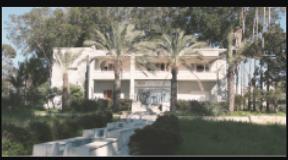
In the early 1930s, Lord Ziv joined the Land of Israel Plantations Company and purchased about 800 dunams in the Tel Mond bloc. In 1935, the couple built their home, Beit Hadar, also known as Villa Ziv. The house was built in the heart of the orange groves, not far from Lord Mond's modest home.
Designed by the architect Richard Kauffmann, the house was built in the Bauhaus style and is one of the most beautiful homes in the country. Rebecca Ziv, who lived in the villa permanently from 1938, hosted lavish balls in the garden, attended by many senior British officials in Palestine. They were unaware that just beyond the estate fence, secret activity was taking place at the Haganah's weapons factory, the Sela Institute.
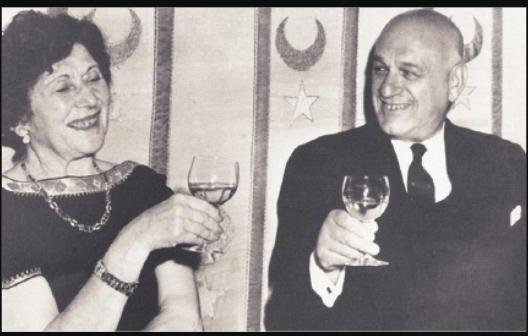
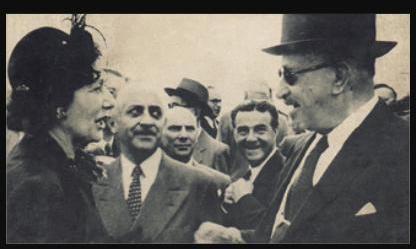
In 1960, the Tel Mond Council granted Rebecca and Israel Ziv its first honorary citizenship. Rebecca also received the highest distinction of the British Empire, awarded to her by the Queen of Britain.
Rebecca died in 1966 and was buried in a state funeral attended by the president of Israel, Deputy Prime Minister Abba Eban, and Labor Minister Yigal Allon. After the many eulogies and the recitation of the Kaddish by her son Marcus, the most moving moment came when one of the longtime workers on the Ziv estate sang a Yemenite-style lament over the grave.
The Zivs are commemorated in several places in Israel. The community of Neve Ziv and the Rebecca Ziv Hospital in Safed are named after them.
Marcus Ziv and the Legacy Continues
The commitment to the Zionist enterprise was also passed on to their son, Marcus Ziv. After Israel Ziv's death, while he was head of the Marks & Spencer chain, he was succeeded by Israel's brother, Edward (Teddy) Ziv, who held the position until 1972. Lord Marcus Ziv, the son of Israel and Rebecca, then took over and served as the chain's president until 1984.
During World War II, Marcus Ziv was an artillery colonel and fought in the Allied invasion of Sicily in 1943. He was appointed an Officer of the Order of the British Empire (OBE) for his service in that battle. After the war, he served in Jerusalem for two years, and in May 1948 he served as a military adviser to David Ben-Gurion.
In 1951, Marcus Ziv returned to Britain, though he often visited Israel. Many years later, Ziv established ties with Egyptian President Anwar Sadat, advising him on the Egyptian economy and working to build relations between Israel and Egypt. Ziv made the aspiration to improve relations between Jews and Arabs his guiding principle, and in 1988 he established the Marcus Ziv Foundation, which awards prizes for Jewish-Arab cooperation.
He was made a lord in 1980, becoming the second Lord Ziv. In 1984, he became chairman of the London subsidiary of First International Bank and worked to persuade British Jewish businesspeople such as Sami Shamoon, Robert Maxwell, and Charles Bronfman to invest in Israeli companies.
Lord Marcus Ziv died on February 23, 2001.
תגובות
עדיין אין תגובות.