
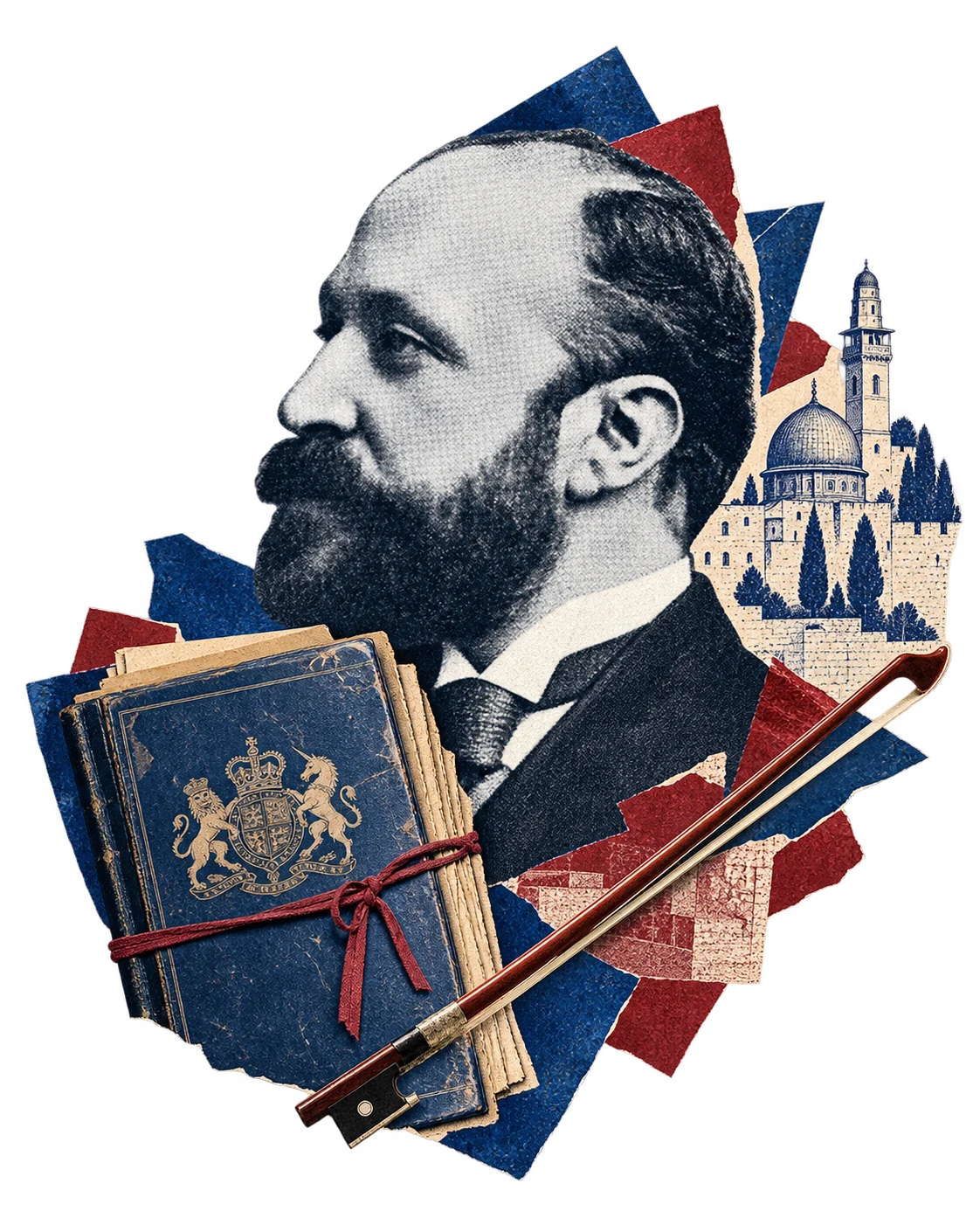
A little-known dynasty that tied its fate to Zionism, British gentlemen in the Land of Israel, and the first confrontation between Netanyahu and the Attorney General.
The Bentwich Dynasty
Make yourself a cup of tea, set aside everything else, turn off the television, and settle onto the sofa, because this time I'm taking you on a tangled journey through a web of family connections. Look away for a moment and you might lose your way. Fasten your seat belts - we're taking off.
The Bentwich family is one of the most distinctive dynasties to have influenced Zionist history, even though few people know of it. Many prominent figures belonged to the family, including cellist Thelma Yellin, after whom the arts high school in Givatayim is named; Lilian Friedlaender, wife of the orientalist and historian Rabbi Israel Friedlaender, who founded Beit Daniel in Zikhron Ya'akov; Nita Langa, who founded the Langa Estate in Zikhron Ya'akov together with her husband Michael; and Joseph Bentwich, an educator who headed the Hebrew Reali School in Haifa in the 1950s.
The Bentwich dynasty's family connections also reached into other well-known families, including that of Herbert Samuel, the first High Commissioner of the British Mandate, and the Agranat family - one of whose members, Shimon Agranat, was the third president of the Supreme Court - among others. The Bentwich family was the only family to own a private burial plot on Mount Scopus.
The unique story of the Bentwich dynasty has also been reflected in Israeli culture. In 2015, family member and film director Gur Bentwich released Bentwich Syndrome, a humorous portrayal of the family's history. Norman Bentwich, Herbert's son, also documented the family's history.
Herbert Bentwich and Zionism
"On the night of April 15, 1897, a small, elegant steamer sailed from Port Said in Egypt to Jaffa. There were thirty passengers aboard, 21 of them Zionist pilgrims who had come from London via Paris, Marseille, and Alexandria. The leader of the group of pilgrims was the respected and affluent Herbert Bentwich, my great-grandfather. Bentwich was not a typical Zionist. In the late nineteenth century, most Zionists were Eastern European, whereas Bentwich was a British subject. Most Zionists were desperately poor, while he was a gentleman of means. Most Zionists were secular, but he was a man of faith. For most Zionists of that era, Zionism was the only option, but my great-grandfather chose it of his own free will. In the early 1890s, Herbert Bentwich reached a decision: the Jews must return and settle in their ancient homeland." This is how Israeli journalist Ari Shavit chose to open his book My Promised Land. We'll return to the connection between Ari Shavit and the family later.
The dynasty began with Matthias, Herbert's father, who emigrated from the town of Paiser in western Poland to London in the 1840s, as part of the wave of Jewish emigration prompted by the abolition of their rights. The family name Bentwich is probably a corruption, in London, of the name "Ben Tov Ish." Matthias was a rabbi who made his living selling jewelry. He had no shop, but traveled from town to town and village to village, offering his wares from house to house. Matthias belonged to England's Ashkenazi Jewish minority, while the Jewish elite was largely Sephardic. In time, he learned the local language, adopted British dress, and eventually changed his name to Marks, a name that sounded more British. During his travels, he came to the town of Bedford in southeastern England, where he met Rose Levy, a member of an established Jewish family. They married and moved to London's Whitechapel neighborhood, where their son Herbert was born. Over the years, the couple's financial circumstances improved, allowing them to leave the neighborhood and join established British society, while remaining loyal both to the British Crown and to the Jewish people.
In 1877, Herbert graduated with honors in law. Three years later, he married Susie Solomon, a member of a Zionist family and a gifted pianist. After their marriage, Susie devoted her life to the family, and the couple had eleven children, including triplets. Hoping to fulfill her musical dream, she raised each set of triplets as a chamber ensemble. The first of each set was to be a pianist, the second a violinist, and the third a cellist. The children received an excellent education from private tutors, and the family moved to Abbey Road - now associated with the Beatles' famous album.
At the age of 21, Herbert opened a law office, but at the same time devoted much of his time to activity in the Jewish community. He established Jewish studies classes for the community's children, served on the committee of the synagogue in the St John's Wood neighborhood of Westminster, and later founded a synagogue in Hampstead. Herbert and his descendants, like many British Jews, could have fully integrated into the life of the kingdom and disappeared into the pages of history had they not been drawn to the ideas of Zionism. Herbert was among the first to embrace the aspiration for the Jewish people to return to the Land of Israel. His home became a gathering place for leaders of the Zionist movement in England, beginning with Ohel - the umbrella organization of Britain's Hovevei Zion, founded in 1888 by Colonel Albert Goldsmid, a British officer who converted to Judaism. Herbert was also a member of the Maccabean Club, a Jewish gentlemen's club whose members included painter Solomon Joseph Solomon, Susie's brother; writer and playwright Israel Zangwill; and historian Elkan Nathan Adler. Zangwill described the club as "a bold attempt to unite Jewish forces," not necessarily through men of wealth, but through "men of intellect." The Maccabean Club took on special significance on the eve of the First Zionist Congress, when Theodor Herzl sought its support for his ideas. In his diaries, he wrote that the club was "the ideal instrument I need. It has artists, writers, and intellectuals from every field."
During his first visit to London, in late 1895, Herzl presented two revolutionary ideas: one was to convene representatives of all Jewish communities, an idea that led to the First Zionist Congress; the other was to send a fact-finding mission to the Land of Israel to explore the possibilities for settlement. He returned to visit the club several times, and the meetings were held at the Bentwich family home. These visits made a deep impression on the family. Years later, Herbert’s son Norman wrote: "Herzl often visited our home, and his magnificent presence, regal dignity, and beautiful voice made him a hero in the children's eyes."
According to some members of the family, Herbert himself helped draft the first version of the Balfour Declaration, a testament to his profound influence on the emerging Zionist movement.
The Journey to the Land of Israel
The 1897 journey to the Land of Israel had been planned for more than a year. Herbert's aim was to ignite in the English a desire to settle in the Land of Israel. He was joined by Israel Zangwill; Rabbi George Joseph Emanuel, chief rabbi of the Birmingham community; and Samuel Finn, a cloth merchant and member of the Hovevei Zion society from South Shields. The travelers also included Henry Davis, one of the leaders of the Jewish community in Birmingham; painter Isaac Snowman; Asher Feldman, a Jewish immigrant from Russia; and playwright and journalist Samuel Levi Ben-Shoshan, who that year became editor of the weekly The Jewish World. Avigdor Birnstingl, a wealthy stockbroker, and his wife Cordelia, the daughter of a successful diamond merchant, joined them as well. The journey combined the experience of traveling to an exotic land with an intense Zionist fervor. In those days, traveling to the Land of Israel involved many logistical challenges and risks; it was no pleasure cruise. On his way there, Herbert stopped in Paris and met Max Nordau and Baron Edmond de Rothschild. From there he continued to Alexandria, where he was hosted in the home of Baron Felix de Menasce, one of the city's wealthiest Jews. In time, the settlements of Kfar Aharon, Herzliya, Even Yehuda, Tzur Moshe, and Netanya were established on land he purchased in the Land of Israel.
The delegation traveled from Egypt to the port of Jaffa, and on their way to Jerusalem they visited the Mikveh Israel agricultural school. In Jerusalem, Herbert met the teacher David Yellin, a public figure and founder of David Yellin College, who had helped establish the Teachers' Union, the Hebrew Language Committee, and the Zikhron Moshe neighborhood in Jerusalem. In time, the families became connected by marriage when David Yellin's son married Herbert's daughter.
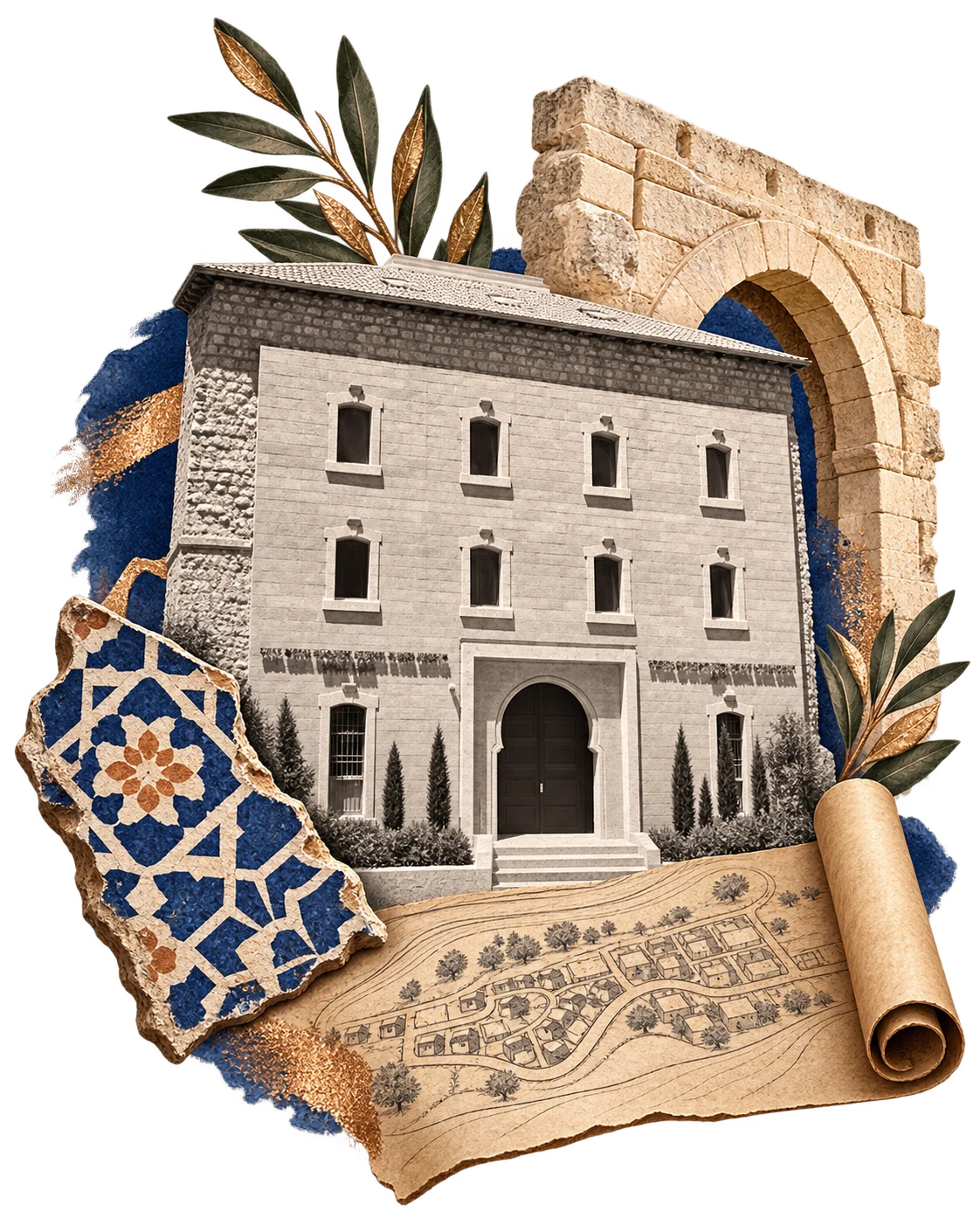
The members of the delegation celebrated Passover in Jerusalem, which Herbert described as breathtaking. After their visit, they continued to Nablus, Mount Tabor, and the Sea of Galilee, then returned to London via Beirut. When he returned to England in April of that year, Herbert was even more enthusiastic about the idea of English-Jewish settlement in the Land of Israel. During his travels, he was especially captivated by the views of Mount Carmel, so he named his estate in Kent "Carmel Court." He also gave the name Carmel to one of his daughters, and a granddaughter - the daughter of his eldest daughter Lilian - was given the same name. In 1929, Herbert fulfilled his personal Zionist vision and immigrated to the Land of Israel. He lived at the Langa Estate in Zikhron Ya'akov, built by his daughter Nita, and at times in his home in Jerusalem's Rehavia neighborhood. His great dream was to establish an estate on Mount Scopus, and for that purpose he purchased a large plot of land on the summit. Although his plan was never fully realized, most of the land was eventually donated to establish the Hebrew University, which was founded 28 years later. However, a small plot on the edge of the campus remained in the family's hands and served as a family cemetery. The small cemetery contains only a handful of family members. Until the Sharon family's burial estate was established at Sycamore Ranch, the Bentwich family burial estate was the only one of its kind in the Land of Israel. It lies in the university’s national park, next to the Hebrew University's Mount Scopus campus. Susie, Herbert's beloved wife, died in 1915. Six years later, in 1921, he had her remains transferred to Jerusalem, where she was buried at the center of the small family plot. He was later buried beside her. The couple, who laid the foundations of the family dynasty, were buried in a raised grave at the center of the plot, with their children and other family members buried around them. The plot is planted with dense cypress trees and overlooks the Jerusalem landscape. The entrance gate is shaped like a concrete tent, inspired by the British Zionist society of which Herbert was a member.
Norman Between Cairo and Jerusalem
Norman Bentwich was 14 when his father, Herbert, returned from his journey to the Land of Israel and enthusiastically told him about his experiences. Like his father, Norman studied law. In 1908, he qualified as a lawyer, and that same year decided to travel to the Land of Israel. Unlike his father, who had set out on his journey at the age of 41, Norman went at 25, which gave his trip a more adventurous character. He was joined by his cousin Albert Louis, Leonard Stein, and Albert Montefiore Hyamson, all of whom later settled in the Land of Israel under the British Mandate. The group sailed to Cairo, visited Jerusalem, and continued to Damascus before returning to England. During the journey, Norman recorded his experiences in his diary and enthusiastically noted that the students at the Hebrew Gymnasium spoke fluent Hebrew. During his visit to Caesarea, he even proposed building golf courses there. Unlike his father, who was enthralled by Jerusalem, Norman remarked with restraint, "This is undoubtedly the most Oriental city we have visited." In 1911, Norman returned for another visit to the Land, this time accompanied by his cousin Colonel Robert Solomon, a lawyer who later became director of the Jewish National Fund. Their journey began at the Tenth Zionist Congress in Basel, continued through Palestine and Damascus, and ended in Amman, in Transjordan. During the trip, they met Aaron Aaronsohn, who was working to establish an agricultural research station in Zikhron Ya'akov. Norman wrote resolutely in his diary: "There is no country in which a Jew can advance his people as much as a Jew can in Palestine. I will make my way there and leave behind in England the ineffectiveness of writing alone." Thus the decision to immigrate to the Land of Israel and settle there took shape in his mind.
In 1912, Norman applied for a legal position in the Egyptian government, and at the end of that year was appointed an examiner in the Egyptian courts. A short time later, he moved to teach at Cairo University, where he taught international law. In Egypt, Norman met Menachem Ussishkin, one of the leaders of Zionism in Russia; sociologist Franz Oppenheimer, one of the founders of the cooperative settlement at Merhavia; and Dr. Arthur Ruppin, director of the Palestine Office. In Cairo, he also met Helen Caroline Franklin, a member of an established Jewish banking family from London. They married in September 1915, and Helen joined him in Cairo.
At the beginning of 1915, Norman tried to enlist in the Mule Corps, a transport unit established in Alexandria under the command of John Patterson, a devout Irish Protestant, and Joseph Trumpeldor. However, his application was rejected because he had no military experience. Shortly afterward, when British Secretary of State for War Field Marshal Horatio Kitchener established a defense force for Egypt and the Sinai Peninsula, Norman joined the war effort. He was given the rank of second lieutenant, largely thanks to his education, which included knowledge of Arabic and familiarity with the local community, and was sent to command the Camel Corps, which numbered about two thousand camels and their riders. In early December 1917, the Camel Corps under Norman Bentwich reached the outskirts of Jerusalem. When he celebrated Passover in the city in April 1918, he remembered how his father had celebrated the same holiday in 1897. Thus Norman came to the Land of Israel with the British conquest, as a fighter and liberator.
The Mandate Official and the Criticism
At the end of the military administration and the transition to the British Mandate government, Bentwich was appointed legal secretary to the Mandate government by the first High Commissioner, Herbert Samuel, his wife Helen's uncle. After his appointment, the couple bought a spacious new home overlooking the Valley of Hinnom. During the twelve years Helen lived there, the house became a gathering place for local aristocrats and dignitaries from the various communities. At the same time, Helen devoted herself to establishing educational programs for Jewish and Arab children. In her memoirs, Helen described the events held in their home as "a lively social life." Bentwich played a central role in shaping the Mandate's legal code, parts of which were later adopted by Israeli lawmakers. The code was based on Ottoman law, adapted to British rule, and Western legal codes, especially French law, were later adopted as well. The British preferred to preserve the existing legal framework in order to avoid opposition from the local population. Despite his work, Bentwich was seen as a controversial figure by both Arabs, who regarded him as an ardent Zionist, and Jews, who viewed him as a collaborator with the British. Criticism from both sides made him widely known. The hostility toward him reached its peak in November 1929, when a Palestinian laborer tried to assassinate him. He was wounded in the thigh but managed to escape to his office. The incident made headlines in many newspapers. The tensions around him continued even after he left the British administration and moved to the Hebrew University, where he headed the Chair of the Law of International Peace, which later became the Department of International Relations. At the chair's inauguration ceremony, Revisionist activists, including Abba Ahimeir and Benzion Netanyahu, burst into the hall and prevented him from delivering his lecture, shouting insults at him. A rumor circulated that Benzion Netanyahu met Tzila Segal at this demonstration; she later became his wife and the mother of his children Benjamin, Iddo, and Yonatan.
Bentwich's critics saw him as the embodiment of Zionist failure. In addition to his past as an official in the Mandate government, he was suspected of supporting the binational ideas of the Brit Shalom association, a claim with no basis, as the association's members themselves made clear. In 1932, following the events at the university, Haim Arlosoroff wrote in his diary: "Mr. Bentwich used to sit between two, and perhaps three, chairs. The Arabs saw him as an unrestrained Zionist, the British abandoned him because he was a Jew, while the Jews saw him as someone who wanted to be so objective that he preferred to do an injustice to his own people rather than risk being suspected of unfairness toward others."
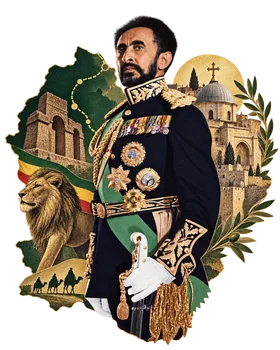
In 1951, Bentwich retired from the Hebrew University and returned to England, where he devoted himself to writing and published many books on international law, Zionism, and Judaism. In the 1960s, he devoted considerable effort to helping Ethiopian Jews. He had known Emperor Haile Selassie personally since the Second World War, and through his connections with him he secured permission to promote various activities on behalf of the Ethiopian Jewish community.
Norman Bentwich died in London in April 1971, at the age of 88. His wife Helen, who at the time was serving as acting mayor of London, the first woman to hold the position, accompanied his coffin only as far as the airport, where she said goodbye to him with the words, "Here our paths part." While she chose to be buried in England, Norman's remains were laid to rest in the family plot on Mount Scopus. The Bentwiches had no children, and after his death Norman left his entire estate to the Hebrew University.
The Family Branches and the Legacy
Thelma Yellin, Norman's sister, is not buried in the family plot. The arts high school in Givatayim is named after her. Thelma grew up in a home that nurtured a love of music, became known as a gifted cellist, and married architect Eliezer Yellin, son of the teacher David Yellin. Together, they were among the founders of Jerusalem's Rehavia neighborhood, and their home at 14 Ramban Street was the first house in the neighborhood.
Israel Friedlaender is also buried in the family estate. A rabbi, educator, biblical scholar, and orientalist, he married Lilian (Havazelet Ruth), Herbert's eldest daughter. Friedlaender was murdered in Ukraine in 1920 while on a mission for the Joint Distribution Committee, which brought his remains to be buried on Mount Scopus in 2001. His impressive white obelisk gravestone bears the Joint's emblem and stands as a silent testament to his sacrifice.
Two years after his murder, his widow Lilian immigrated to the Land of Israel with their children and settled at the Langa Estate in Zikhron Ya'akov, the estate house built by her sister Nita and her husband Michael Langa. Nita and Michael, who had no children, left the estate to Lilian after their deaths. When she died in 1954, Lilian was buried beside her sister and brother-in-law in the cemetery in Zikhron Ya'akov.
Daniel, the son of Lilian and Israel Friedlaender, was a gifted pianist, but suffered from mental illness and died by suicide at the age of 18 in a psychiatric sanatorium in Chicago. His gravestone, decorated with a harp and musical notes, bears the opening notes of Schubert's Unfinished Symphony, as well as the verse from the Book of Daniel: "But go thou thy way till the end be: for thou shalt rest, and stand in thy lot at the end of the days." In his memory, his mother founded Beit Daniel, a music center and holiday home for artists. Their daughter Carmel, Herbert's granddaughter, married Judge Shimon Agranat, who later became president of the Supreme Court.
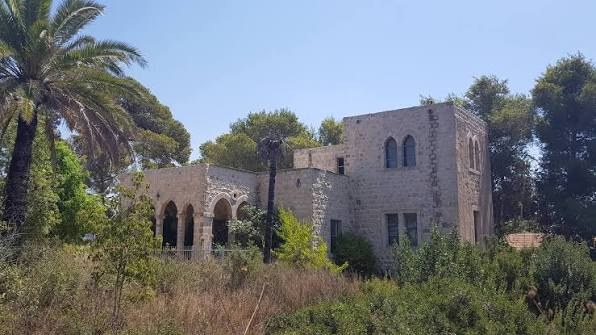
Nita and Michael Langa immigrated to the Land of Israel in 1912 and built the family's magnificent estate, which also served as an important cultural center. Their lives, however, ended in tragedy: Nita died in mysterious circumstances, and Michael took his own life three years later.
Another of Herbert's daughters, Dorothy, converted to Christianity and went to live in a convent, leading her father to sit shiva for her and cut her off from the family. Her sister Marjorie, a gifted violinist, also converted to Christianity after their father's death and devoted her life to organizing concerts at Beit Daniel.
Some members of the family devoted themselves to education. Herbert's son Joseph Bentwich, who was married to Sarah, daughter of Dr. Hillel Yaffe, one of the earliest physicians in the Land, became head of the Reali School in Haifa and received the Israel Prize for education. His children continued the tradition: artist Rachel Shavit, mother of journalist Ari Shavit, was buried at the estate on Mount Scopus; Professor Zvi Bentwich, a pioneer in AIDS research; Professor Micha Bentwich, a physics researcher; and Dr. Shoshana Kini, an educator and one of the founders of Makif Gimel High School in Be'er Sheva.
This family story spans generations and continents. Each member of the family left a mark in their own way, whether in education, law, music, or art. The family's history is woven into the cultural landscape of the Land of Israel, and its legacy lives on today.
תגובות
עדיין אין תגובות.