
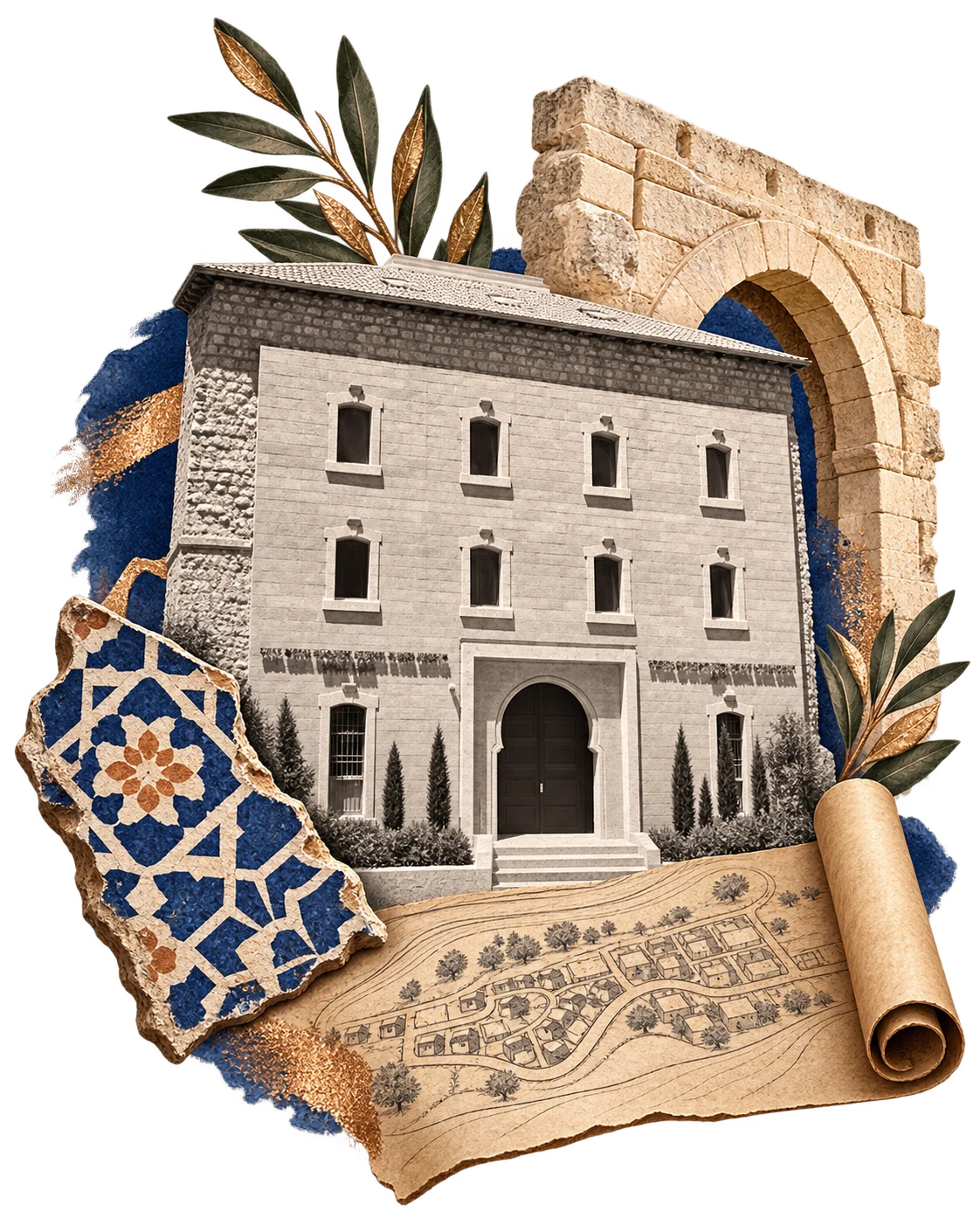
In the days when the Jewish community was confined within the walls of the Old City, the Sephardim received rights and benefits from the Turkish authorities, which were sometimes exploited to discriminate against Ashkenazi and Moroccan Jews. Rabbi David Ben Shimon arrived determined to improve his community's lives and even built the second neighborhood outside the walls.
The First Neighborhoods Beyond the Walls
In 1860, Moses Montefiore established Mishkenot Sha'ananim, the first neighborhood built outside the walls of the Old City. The city's Jews, however, received it with considerable hesitation.
For years, opinions differed over which neighborhood was the second to be built outside the walls. It was unclear whether it was Nahalat Shiv'a or Mahane Israel. A recently discovered document (the Yaakov Sarna collection) indicates that Mahane Israel preceded Nahalat Shiv'a by two years. The neighborhood's land belonged to a Christian named Yuray. The area was purchased by members of the Western (Moroccan) community: Makhlouf Zirguwal, Shlomo Itbul, and Eliyahu Ezra. By 1866, most of the area around the Mamilla neighborhood was Jewish-owned. The neighborhood was founded by individuals, but there is no doubt that Rabbi David Ben Shimon was the one who gave it momentum. He purchased the land from Eliyahu Ezra, and the synagogue was built on that site. If the founding of a neighborhood is dated from the day its land was purchased, then Mahane Israel preceded Nahalat Shiv'a.
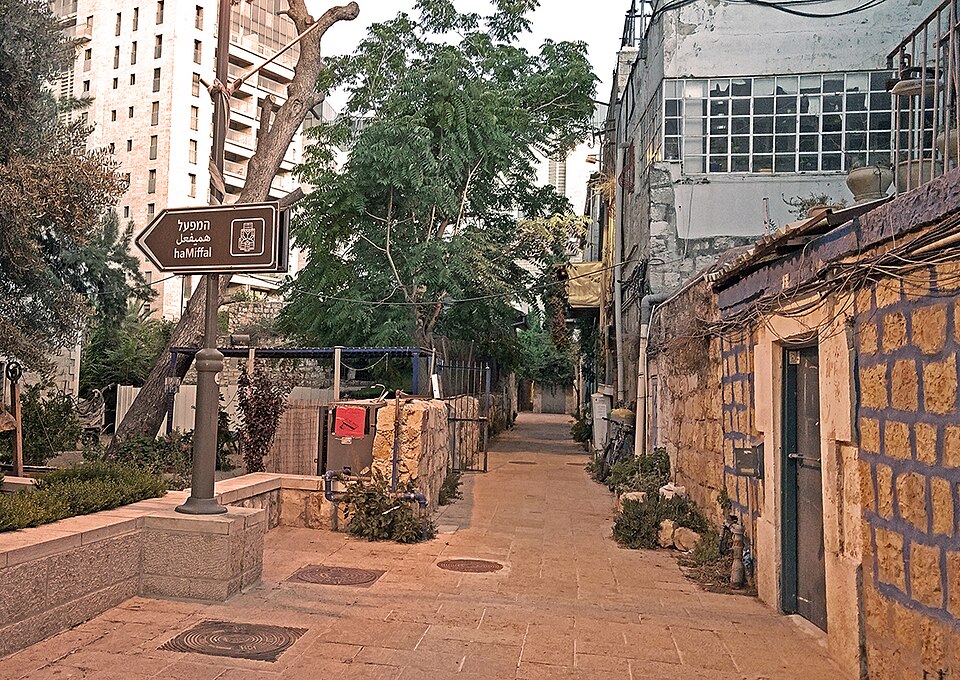
At the time, the Sephardi community in the Land of Israel was made up mainly of descendants of the Jews expelled from Spain and immigrants from Muslim lands who had arrived between 1831 and 1840, whom the Sephardim called Musta'arabim. The Ottoman authorities recognized only the Sephardi community, whose members were Turkish subjects, and its representative, the Hakham Bashi, as the exclusive representative of all the Jews of the Land of Israel. Around 1850, the various communities began seeking organizational independence. The first to break away from Sephardi authority were the Ashkenazim, followed soon after by immigrants from Morocco.
The struggles between the Maghrebi and Sephardi communities over various matters of religious law continued for twenty years. These included burial, kosher food, and the right to send shadarim (rabbinic emissaries who raised funds), among other issues. This caused frustration, and the Maghrebis came to hope for a strong leader who would take responsibility for the community and lead it.
David Ben Shimon in Morocco
David Ben Shimon was born in 1826 in the mellah (the term for the Jewish quarter in Moroccan cities) in Rabat, the capital of Morocco, at the foot of the fortress after which the city was named. He was born into a wealthy family descended from the Jews expelled from Spain, whose lineage traced back to the House of David. Many members of the family served as rabbis in Morocco, Safed, Jerusalem, Egypt, and Bukhara. Ben Shimon studied under the sage Saadia Maraji, who made him an assistant teacher and later entrusted him with a class of select students to teach. David Ben Shimon married Rachel, the daughter of the sage Massoud Sabbah. From a young age, he showed the qualities of a strict and determined leader who cared for the people of his community, organized and protected them, and looked after them as though they were his own children. He gathered talented students around him and trained them to become religious judges, ritual circumcisers, kosher slaughterers, scribes of sacred texts, and prayer leaders. His students served their own communities and others throughout Morocco, and wherever they went, they helped spread his good name.
In 1854, torn between his love for the people of his community in Rabat and his love for the Land of Israel, Rabbi David Ben Shimon and his family made aliyah. Among those who came were Torah scholars and wealthy families, including the Ben Tovos and the Abushdids. The difficult journey to the Land of Israel went from Morocco to Algeria and from there to Egypt. When the rabbi arrived in Jaffa, at the age of 28, he fell to his knees and kissed the earth. He later explained: "Since the Land of Israel is the dwelling place of the Divine Presence, it is itself a Holy of Holies, like the case of a Torah scroll, which is sacred. Thus, kissing the stones of the Land of Israel is like kissing the Divine Presence that dwells there."
After a brief stay in Jaffa, he moved to Jerusalem. He saw the dire situation of Jerusalem's Jews within the walls and the low standing of his community within the Sephardi community. The rabbi organized the Western community, and in 1860 succeeded in securing partial independence and seceded from the Sephardi community. He established the "Committee of the Western Community in Jerusalem" and became known by the name Tzuf Devash (an acronym for David Ben Shimon, also known as the Radbash - Rabbi David Ben Shimon).
The Radbash was among the builders of the city. At first, with money donated by the Sharvit family, he founded a neighborhood in the Jewish Quarter (today's Plugot HaKotel Street). The neighborhood had homes, three mikvehs, three Torah schools, and two synagogues. One was called "the Great Synagogue," and the other was named for Rabbi Elazar (a community benefactor and donor, Rabbi Elazar Ben Tovo). Later, the Maghrebi homes expanded into the Muslim Quarter, where the community's Tovi Yisbe'u yeshiva was located.
The Radbash's crowning achievement was undoubtedly the establishment of Mahane Israel, the second Jewish neighborhood outside the walls, though at first it was called the Maghrebi Neighborhood. It was neither large nor grand, as shown by the fact that the community's wealthy members lived elsewhere, while the Radbash moved there himself. The Amiel family, for example, built its home between Nahalat Shiv'a and the Russian Compound; Aharon Moyal lived in Nahalat Shiv'a, and the Alalouf family remained in the Old City. Later, Maghrebis also settled in the new neighborhoods and established synagogues there.
His Work in Jerusalem and the Land
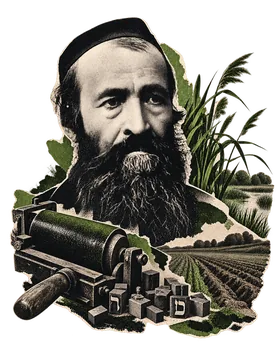
In addition to his work on behalf of his community and members of other communities, the Radbash was also active in Torah scholarship. He planned to write a book, Sha'arei Tzedek, in four parts: Sha'ar HaHatzer, a collection of sources praising the Land; Sha'ar HaMatara, a collection of laws relating to the Land; Sha'ar HaKadim, on commandments dependent on the Land; and Sha'ar HaMifkad, on the customs of Israel and Jerusalem. In 1862, eight years after making aliyah, the Radbash lived to see only Sha'ar HaHatzer, on which he had spent most of his fortune. In it, he included a vast range of articles by Ashkenazim and Sephardim, opponents and Hasidim, and scholars of his own generation, all praising the Land. The book was published anonymously and made a tremendous impact.
Rabbi Yehuda Leib Fishman Maimon, one of the founders of the Mizrachi movement, recounted that when the book was brought to his parents' home by a rabbinic emissary from the Land of Israel, it stirred in him a desire to work for the Land. The book was also one of the inspirations for A'aleh BeTamar, the aliyah of Yemenite Jews (1881-1882). In his book Olat Re'iyah, Rabbi Abraham Isaac Kook refers to some of the ideas in Sha'ar HaHatzer.
The Radbash encouraged agricultural settlement and wanted to see Jews observe the commandments relating to the Land and to working the soil. After Montefiore visited Morocco in 1860, the Radbash arranged with him for five families to move to Jaffa and work in Montefiore's orchard (today's Montefiore neighborhood). The Havatzelet newspaper reported in 1862: "There are members of the community who have come to the Land and are suited to working the soil..."
Of those who left the Land, he would say: "Not everyone merits having their soul bound and joined to the Land of Israel. This requires a soul containing sparks of divine fire, and a person whose every limb, spirit, and breath of life are fashioned from the substance of the holy Land. Whoever lacks all these things - even if they come and settle in the Land of Israel, the holy Land cannot bear them. After their death, the angels on high will come and return them to the Diaspora, to the place from which their dust was gathered and their soul formed."
The Radbash was also called "the father of orphans and judge of widows," because he welcomed orphans and widows to his table and fed them. At Passover, he made a point of distributing shmura matzah to the city's poor. When he saw that members of his community were abstaining from meat because the city had only one kosher butcher shop, where meat was expensive, he set up a kosher butcher shop for them. He personally handled the hindquarters of the animals, which were usually discarded, and sold them to the poor.
The Radbash cared not only for Jerusalem's poor. As he traveled among the Moroccan communities that had made aliyah, he encountered a gifted boy in Haifa who had never studied in a Torah school because the city had none. He persuaded the boy's parents to send him to study in Tiberias at his own expense. In time, the boy became one of the leading sages of his generation and the rabbi of Gibraltar: Rabbi Raphael Haim Moshe Ben Na'im. Rabbi Raphael spoke with admiration of the Radbash, who, despite being a man of great stature, did not hesitate to take an interest in a child in a shop, even though at first it was not at all clear that the child was Jewish.
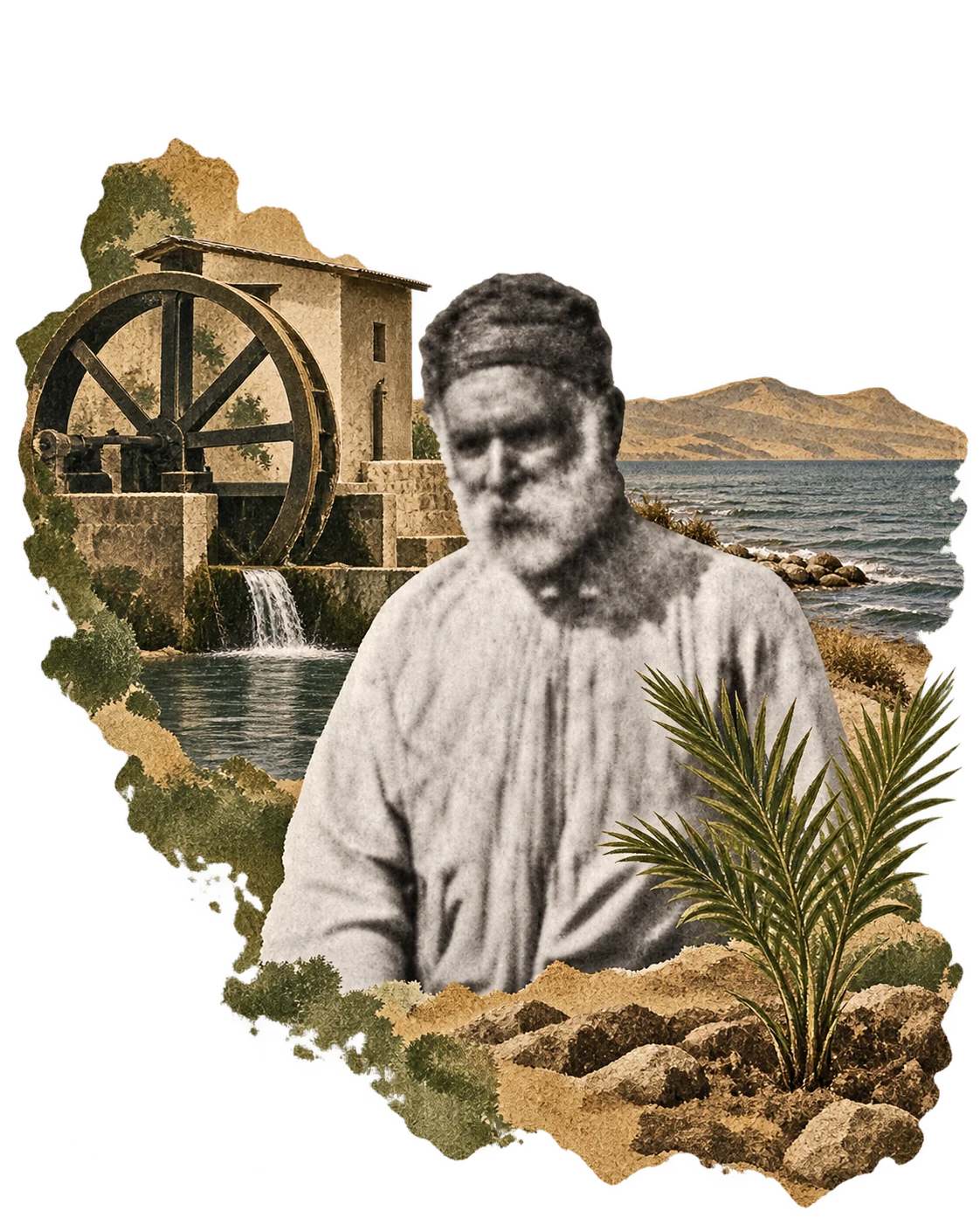
In the summer of 1879, the Radbash lived to see with his own eyes a camel caravan carrying the first grain harvest from the first settlement, Petah Tikva. The settlement's residents were observant Jews who carefully kept the commandments of gleanings, forgotten sheaves, and the corners of the field, and duly set aside terumot and tithes. Yoel Moshe Salomon and David Meir Gutman displayed the produce of their land to the celebrating crowd for the first time since the destruction of the Temple. It was a moving moment for the Radbash, as he witnessed the commandments relating to the Land being fulfilled before his eyes. At the end of that year, he closed his eyes for the last time and returned his soul to his Creator. The rabbi died at the age of 53 and was buried on the Mount of Olives.
His headstone bears the inscription: "A cry of lament is heard from Zion, a bitter cry, and Jerusalem raises her voice, weeping and wailing, for the jewel she cherished is lost; its glory has departed, its splendor and its beauty. The Land of Beauty, its delight grown great, has had its adornment taken from it. The pious one has perished from the land, a mighty defender at the breach, whose taste in Israel was sweeter than honey. The faithful shepherd to his community, righteous in his faith, kind to the poor and a shelter to the needy, a man of kindness, David's faithful kindnesses, a lion among his peers... The wondrous rabbi, filled with the glory of God, a pious and holy man who merited and brought merit to the many, the Western lamp, spreading Torah in Israel, a holy man of God, renowned for his name and deeds, our teacher and rabbi, the honorable Rabbi David Ben Shimon, of blessed memory, author of Sha'ar HaHatzer..."
תגובות
עדיין אין תגובות.