
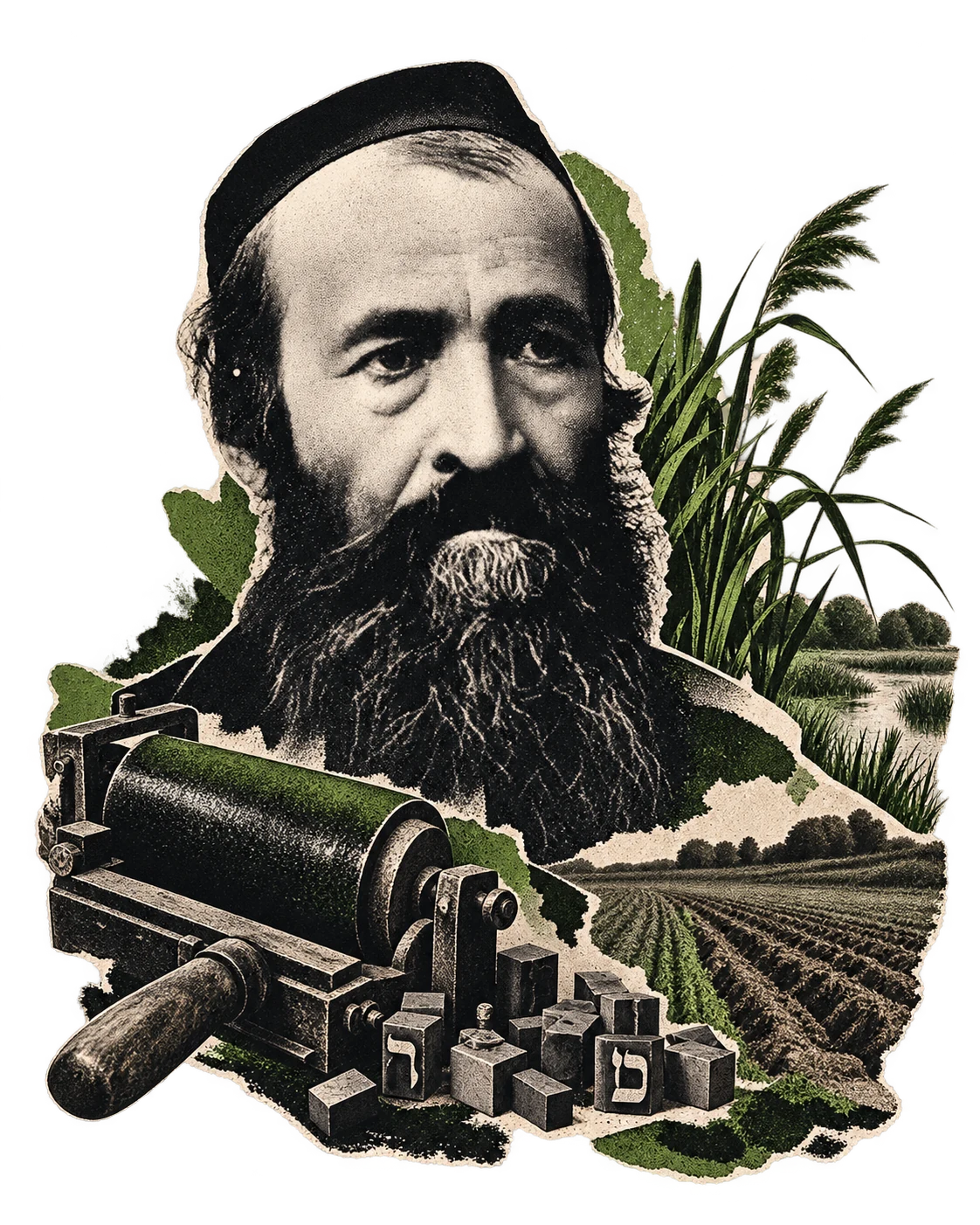
He was more than just a song. He was an ultra-Orthodox Jew who believed that the redemption of the Land would come through agricultural settlement. At a time when people lived on donations from abroad, he established neighborhoods and a colony - and no, he did not "grow wings."
Rabbi Yehuda the Hasid and the Hurva
The story of Yoel Moshe Salomon is woven through with more than a few deeds regarded as miracles. Some might argue that miracles, pioneering, and settlement ran in the family. These miracles begin the story even before the first member of his family arrived in the Land in 1700, with the extraordinary story of Rabbi Judah the Pious. Rabbi Judah was born in 1660 to the Segal family in Poland. When he grew up, he believed that if he immigrated to the Land and settled there, the coming of the Messiah would draw nearer and the Jews would be redeemed from the danger of the pogroms that periodically broke out in Europe. At first, he recruited about 30 followers and set out with them on a three-year journey. Along the way, another 1,500 or so people joined him. Some of the group remained in Europe, while others perished from illness and in storms at sea. In 1700, about 1,000 followers arrived in the Land, joining the 1,200 Jews already living in Jerusalem. A few days after the group arrived, Rabbi Judah the Pious died at the age of 41. Just days before his death, Rabbi Judah the Pious had managed to buy the plot beside the ancient Ramban Synagogue, where he intended to build a synagogue. His unexpected death and disagreements within the community broke it apart and left it owing large sums to Arab builders. As a result of these debts, Ashkenazi Jews were barred from living in the city for a hundred years. Those who remained there, or arrived from Ashkenazi countries, had to pass themselves off as Sephardim, particularly in their dress.
111 years after Rabbi Judah the Pious died, Rabbi Abraham Shlomo Zalman Zoref, aged 25, left Lithuania with his wife and three children, together with students of the Vilna Gaon (Rabbi Elijah ben Solomon Zalman, known as the Gaon of Vilna), for the Land of Israel. He first lived in Acre, then moved to Safed, where he opened a silversmith's shop and learned Arabic. In 1816, he moved with his family to Jerusalem, but because of Rabbi Judah the Pious's debt, he entered the city disguised as a Jew from a Sephardic community. He also opened a silversmith's shop in Jerusalem, and perhaps this is how his family came to bear the name "Zoref," meaning silversmith. Abraham Shlomo Zalman Zoref had unmistakable charisma and the ability to inspire others with his vision. From time to time, he traveled to Europe to raise money for the Land of Israel. One of the goals he set himself was the restoration of the "Ruins of Rabbi Judah the Pious." Twenty-five years after immigrating to the Land, he managed to obtain permission from Muhammad Ali Pasha, the ruler of Egypt, who at the time also ruled the Land of Israel, to build legally within the "area of the Ruins of Rabbi Judah the Pious." This disregarded the earlier debts, since Ottoman law, based on Sharia, stipulated that a debt expired after 40 years, and by the time he obtained the building permit, more than 130 years had passed.
Abraham Shlomo Zalman Zoref cleared away the rubbish and built the Menachem Zion Synagogue on the site, also known among the people as the "Old Study Hall." Around it, he built homes, a Talmud Torah, and a yeshiva. These actions, and his failure to repay the old debt, made enemies for him among the Arabs. There were two attempts on his life. In the first, an Arab shot at him but missed. In the second, as he was on his way to the Menachem Zion Synagogue, several Arabs attacked him and struck him on the head with a sword. He lingered for ten months, and on his last day the family gathered around him. As the account describes it, "his beautiful, courageous soul, devoted to his holy city, departed in the company of his beloved and gracious family." In time, Abraham Shlomo Zalman Zoref came to be recognized as the first person killed in a hostile attack in modern times. His grandson Yoel Moshe Salomon, then 13, wrote a funeral ode for him. At the end of the eulogy, the boy cried out: "Awake, Israel!/ From your night's slumber!/ Awake, arm of God!/ Take up your strength!" The name Salomon was first adopted by Mordecai, Abraham Shlomo Zalman's son and Yoel Salomon's father, after he changed the Ashkenazi name Zalman to the Sephardic-sounding Salomon. The name Yoel Moshe Salomon burst into Israeli consciousness with the release of Yoram Taharlev's song "The Ballad of Yoel Moshe Salomon," which describes the founding of Petah Tikva. The song's first verse opens with the words "On a damp morning in the year 5638" and describes five riders setting out from Jaffa: "Stampfer came, and Gutman came, and Zerah Barnett, and Yoel Moshe Salomon, with a sword at his belt." The song sparked a bitter dispute among the founders' descendants over who had really been among the colony's founders. The dispute led to the establishment of an arbitration committee to consider the matter. Descendants of some of those mentioned in the song testified before the committee, including members of the Gutman, Barnett, and Stampfer families, as well as the Raab-Ben-Ezer family, who are not mentioned in the song and claimed that the name of Judah Raab had been unfairly left out. This dispute brought the history of early settlement to light, and we will return to it later.
The Old Yishuv and Leaving the Walls
The Bar Kokhba revolt, which took place between 132 and 136, was a revolt against Roman rule. The Romans were tolerant of religions and their practices, but intolerant of rebellions and civil unrest, which they suppressed brutally. In 135, Betar, the rebels' last stronghold, fell. In 136, the revolt was finally crushed and Bar Kokhba was killed. The destruction was immense. The region of Judea was emptied of its inhabitants, the spiritual center moved to the Galilee, and there were grave fears that Judaism would disappear. The years of the Bar Kokhba revolt were the last time Jewish independence existed in the Land of Israel until the establishment of the State of Israel. The Jewish population dwindled to a few tens of thousands, concentrated in the four holy cities of Safed, Tiberias, Jerusalem, and Hebron. These were walled cities that protected their inhabitants from the world beyond the walls, where the laws observed within them did not apply and robbers and murderers held sway. The Jews living there studied Torah and supported themselves with donations sent by Jews abroad.
The beginnings of modern settlement can be traced to a farm established by Rabbi Israel Bak in 1834 on Mount Meron, an unusual settlement for that period. About thirty years later, people began moving beyond the walls. In Jerusalem, this movement began with the establishment of the Mishkenot Sha'ananim neighborhood. The main reasons for leaving the walls were overcrowded living conditions inside them and the strong desire to stop relying on donations and start earning a living through agricultural labor. After all, most Jewish holidays are tied to the land. Mishkenot Sha'ananim was a private initiative of Moses Montefiore. Sixteen spacious homes were built in the neighborhood, by the standards of the day, each with a plot of land in front, along with a flour mill, two synagogues (Sephardic and Ashkenazi), and a water cistern. Contrary to expectations, no settlers arrived when construction was complete. The fear of living outside the walls outweighed the appeal of moving into a spacious home with fresh air and its own water cistern.
In addition to agreeing to let the homes on long-term leases, Moses Montefiore also had to provide financial support for settlers to encourage them to move out of the walls and into the neighborhood. The neighborhood's success encouraged the establishment of others. In 1869, along the road leading out of the city, the Nahalat Shiva neighborhood was built, and Yoel Moshe Salomon was among its founders.
The Jerusalem Prodigy and the Printing Press
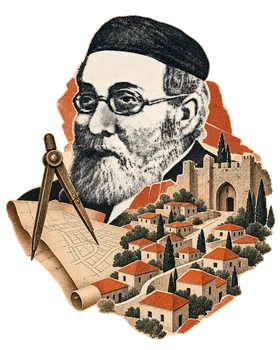
Yoel Moshe Salomon was born within Jerusalem's walls in 1838. His father, Rabbi Mordecai Zoref Salomon, was a public activist. Yoel Moshe Salomon stood out from a young age and was considered a prodigy. His teachers in Jerusalem would not even charge him for his studies, considering it a great honor to count him among their students. At the age of 13, he was given the title "the Jerusalem prodigy." In the bar mitzvah sermon he wrote himself, he quoted the verse, "Do not read them as your children, but as your builders," and explained that the verse meant Jerusalem's children had a duty to help build the Jewish community in the Land of Israel. On that occasion, he announced that this was what he intended to do. After the sermon, the Gaon Rabbi Isaiah Bardaki came up to him, kissed him on the head, and said: "I bless you, and my hope is that God will help you to be among those who build our holy Land." His grandfather also kissed him and said: "A wise son gladdens his father. I am sure that this grandson will follow in the footsteps of his forefathers and take our place in the community, and all Israel will take pride in him." Only his father, Mordecai, was absent from the bar mitzvah ceremony, as he was abroad on a mission for the people of Jerusalem, as usual.
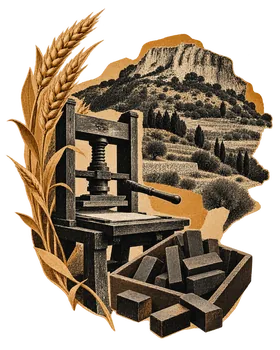
After a long journey that took them through Russia, Italy, and Morocco, the Rothenberg family arrived in Jerusalem in 1854. The head of the family, Abraham Rothenberg, a Hasid of Chabad, established a printing press in the city. Two years later, he had the privilege of marrying off his daughter Fruma to the prodigy Yoel Moshe Salomon, who was then 18. Three years after their marriage, Yoel Moshe Salomon and his friend Michal Hacohen went to Lithuania to study, leaving Fruma alone with their children in Jerusalem for the first time. In Lithuania, he was offered the position of rabbi of Lomza, in northeastern Poland, but Yoel had other plans: "I will not be a rabbi, neither here abroad nor in Jerusalem. It will be better for me to earn my living by my own labor in the Holy Land," he declared. In Lithuania, Yoel and Michal learned the art of lithographic printing. They bought a press and brought it back to Jerusalem. Together with their friend Yehiel Brill, they established the Salomon Printing Press. This was Yoel Moshe Salomon's first initiative in a chain of pioneering and courageous ventures.
Until the Salomon Printing Press was established in 1862, the only printing press operating in Jerusalem was Israel Bak's, established in 1842 and known as "Masa'at Moshe ve-Yehudit." The first item Yoel printed was the Shoshanata, a poster in the shape of a rose, bearing pictures of sites in Jerusalem. The Shoshanata was the first lithographic print produced in the Land of Israel. The printed "roses" had symbolic value: they were sent to Jews in the Diaspora as greetings from the Holy Land and served as a way to raise donations. Later, Yoel Moshe Salomon discovered that Rabbi Israel Bak's exclusive rights had expired, and began publishing HaLevanon, the first Hebrew newspaper in the Land of Israel. He announced that the newspaper would be "a herald of Jerusalem's peace, bringing news from the Holy Land, reporting what is hidden in the land of Syria, the land of Yemen, and the country of India, everything an Israelite might wish to know." HaLevanon was the newspaper of the Perushim, and Israel Bak decided to publish a newspaper called HaHavatzelet, associated with the Hasidim. Bitter rivalry, denunciations, and slander marked the two papers, and the Ottoman authorities were forced to shut them down. A year later, HaLevanon was published again in Paris, while in Jerusalem Yoel Moshe Salomon founded a new newspaper in 1877, called Yehuda ve-Yerushalayim.
From Cairo to the Settlement Enterprise
To write an article about one of Cairo's rabbis, Yoel Moshe Salomon went to Egypt, where he stayed for two years. During that time, a cholera epidemic broke out, and many Egyptians fled to the Land of Israel, along with Yoel Moshe Salomon. The ship carrying the refugees reached the shores of Jaffa but was not granted permission to dock, for fear that the passengers were carrying the disease. Despite this, the epidemic spread to Jaffa and then to Jerusalem, claiming many lives. Salomon himself contracted cholera and recovered. His parents did not survive the disease and died just a few days apart.
During his two years in Cairo, Yoel announced that he was moving from words to deeds: "Forge your pens into spades, writers... Leave the world of reason and speech for the world of action... I am leaving my work editing Yehuda ve-Yerushalayim, and the clods of earth I turn will be sweeter to me than a thousand words and speeches." The Salomon Printing Press continued operating for decades. During the War of Independence, it was the only printing press in the city that printed newspapers. In 1993, the building that housed it was demolished, bringing 130 years of activity to an end.
It was clear to everyone that the reason for the large number of deaths and illnesses was overcrowding, as well as the shortage of doctors and medicines. Salomon wrote in his diary: "About two hundred of the city's finest people perished in the epidemic, and a third of Jerusalem's inhabitants lay in their graves because of the overcrowded Jewish community." The epidemic prompted him to act in two ways: first, to establish new neighborhoods outside the walls, and second, to establish a hospital outside the walls. Yoel Moshe Salomon and six other friends bought a plot of land outside the walls and called the place Nahalat Shiva, after its seven pioneering founders. All seven were desperately poor and could barely make a living. They set up a kind of cooperative, organized a shared fund, and each member pledged to contribute a fixed amount every year. The money they accumulated was used to build the first two houses, and each year they held a lottery to decide which families would live in them. Yoel Moshe Salomon wrote about buying the land: "It was Lag BaOmer. We were walking outside the city along the road to Jaffa, as far as the new wall the Russians had begun building around the land they had bought. As we walked, we saw fields sown with lentils and fava beans. As soon as we entered the fields, the fellahin raised their voices at us: 'Hey, Jews, what are you doing on our land?' 'We want to buy these fields from you,' I replied. At once they softened and said, 'Why, sir, and for what purpose?' I said, 'So we can sow peas or fava beans like you. Isn't that a good business?' 'Yes,' they said, 'it's a good business for you, being close to the fields, though your home is inside the city.' In short, I began negotiating with them about the price, until I promised to pay them half a grush for every cubit. They asked where I lived in Jerusalem, so they could come the next day with the other landowners. My friends who were with me grew alarmed when they heard me explain in detail how to find my home in Jerusalem. My friends were sure that everything I had said to the fellahin about buying the land was just an excuse to get rid of them. When I told them plainly that I had indeed decided to buy the land, I saw them looking at me as though I had lost my mind. 'Are you really going to sow fava beans and lentils here, in this place, like those fellahin? Is it worth shutting down your printing press to grow peas and sell them in the market?' Meanwhile, I said goodbye to the fellahin and reminded them of the day they had arranged to meet me in Jerusalem. When I got home with my friends, I told them: 'Know this, brothers: I am buying these fields in order to build homes here, for myself and for brothers and friends who want to do the same. Know that the time has come for the Jewish community to leave its prison inside the city and settle beyond the walls.' My friends began studying my face again, with particular curiosity, looking for signs of madness. 'Can it be?' they asked in amazement and astonishment. 'Can you really build yourself a home in this desolate place? What will you do at night, when the gates of Jerusalem are locked and closed, and no one can go in or out? And if the fellahin and Bedouin find the chance to attack you and your friends, whom will you call for help?' At last I went into the city and spoke to my friend Rabbi Yosef Rivlin. I knew that he, too, wanted to settle outside the walls. That night, I found five more friends who agreed with me."
Nahalat Shiva and the New Neighborhoods
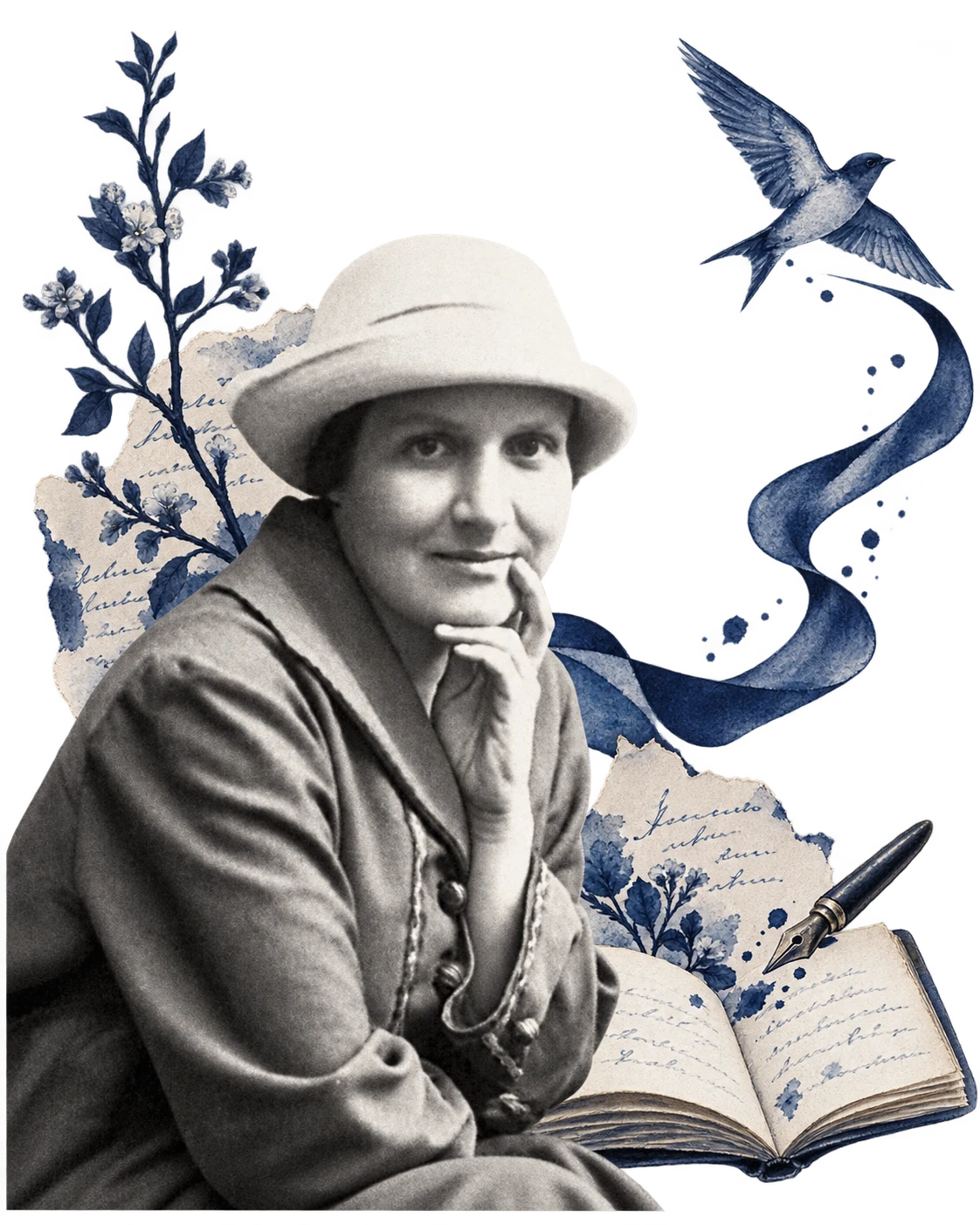
In 1869, he and his friends founded the Nahalat Shiva neighborhood and built his home there. Salomon was the group's pioneer, and for the first few months he lived alone in the first house built in the neighborhood. When her husband began working to realize the idea of moving beyond the walls, Fruma supported him in the face of those who mocked him. When people told her he had gone mad, she replied: "My husband is that madman, and I will go with him wherever he goes." In 1872, the family moved to Nahalat Shiva. Fruma had to manage the household in extremely difficult conditions, as well as run the printing press in the Old City, while Yoel Moshe continued his public work and frequent travels. Fruma knew the printing trade well and was a shrewd businesswoman. The men who worked under her management followed her instructions with great respect.
The neighborhood's growth led to the establishment of the next one. He wrote: "Two young scholars, energetic yeshiva students, came to me and asked me to draw up a plan for founding a new neighborhood. The next day I handed them a plan, and those young men went out into the city with it in hand. In two days, they managed to persuade about a hundred friends and named the neighborhood Me'ah She'arim. From then on, new neighborhoods began to be built one after another." The neighborhoods' success gave him the experience, and with it the confidence, to establish an agricultural settlement. At the same time as he worked to establish Me'ah She'arim, Yoel Moshe Salomon was active in the Old City as well. He was among those who invested their own money to redeem the land sloping down from Zion Gate to the Western Wall, the site where the Batei Mahse neighborhood was built. Yoel Moshe Salomon was also involved in establishing the Sha'arei Hesed neighborhood, together with Naftali Zvi Porush-Glückman, the grandson of Moses Porush, one of the founders of Agudath Israel.
Another field that occupied Yoel Moshe Salomon was health. At that time, Bikur Cholim was the second hospital established in the Jewish Quarter. It was founded in 1867 and was severely overcrowded. As the twentieth century approached, the hospital was on the verge of bankruptcy. Yoel Moshe Salomon worked to raise funds for the existing building and to build a new one outside the walls. In 1908, he bought a plot for the new building, which was inaugurated only after his death.
Petah Tikva, Yehud and Jerusalem
If everything had gone according to plan, Petah Tikva would today be near Jericho. In 1872, after establishing the Me'ah She'arim neighborhood, Yoel Moshe Salomon joined a group that planned to buy land for a new agricultural settlement. The site they found was near Jericho, and the group gave it the name Petah Tikva. The name comes from the Book of Hosea (chapter 2, verse 17): "And I will give her vineyards from there, and the Valley of Achor as a door of hope." The Jericho deal was never completed. That same year, he also tried to buy the lands of Duran, where the city of Rehovot now stands, but that deal fell through as well. These attempts strengthened the ties between Yoel Moshe Salomon, Zerah Barnett, and David Gutman, and they continued searching for land to buy. In 1878 (the year 5638), new members joined them, and together they set out to look for land in the Yarkon area. The group went with a consulting doctor, the same Mazareki mentioned in the ballad. When they reached their destination, the doctor noticed there were no animals in the area and suspected that the place was unfit for human habitation. According to the song, Yoel Moshe Salomon stayed behind alone, and Petah Tikva was founded thanks to him alone. There are several accounts of this event. Yoel Moshe Salomon's son Tuvia wrote that Gutman decided to buy the land despite what the doctor had said. He looked at his friends, who stood silently with their heads bowed. Yoel Moshe Salomon was the first to break the silence: "All the same!" Stampfer immediately joined in: "Let's try!" Gutman was deeply moved. He embraced the two men and burst into tears of happiness, and they wept with him. The doctor, who recognized their emotion but not its cause, thought they were crying over the money they had wasted on a completely useless piece of land. "Better," he said, "better for a man to lose his money than to risk his life, which is worth more than all his wealth." How surprised he was when he realized that, despite his words, they intended to settle there. Two years later, the settlers arrived to work the land. Since no houses had yet been built, they lived in caves in the area. After an especially harsh winter, they began building homes. Some built near the stream, while others built on a nearby hill. The heavy rains flooded the Yarkon and brought down the houses, and malaria spread through the area, forcing the residents to leave the colony. Some of the settlers, including Yoel Moshe Salomon, moved south and established Yehud. His wife Fruma considered the move to Petah Tikva absurd and dangerous, so she stayed in Nahalat Shiva with their seven children. She worked to bring women into the printing press and looked for creative ways to increase its income. At that time, Yoel Moshe Salomon and his friends traveled back and forth between Petah Tikva and Yehud. In the morning, they went out to work the land at Petah Tikva, and in the evening, they returned to Yehud. The family joined him in Yehud, where Fruma became one of the community's pillars. Yehud became a community settlement, while the settlement at Petah Tikva consisted mainly of men. In 1886, the colony began to recover, and with the support of the Baron it began to flourish, turning the vision into reality. Gutman and Stampfer returned, took on public roles there, and largely shaped its character for years to come. The Salomon family, by contrast, continued living in Yehud for some time.
In 1892, the Salomon family returned to Nahalat Shiva in Jerusalem. Three years later, while traveling to Russia as a representative of the Va'ad HaKlali Knesset Yisrael, Yoel Moshe Salomon stayed with Rabbi Kook, and a deep friendship developed between the two. After the rabbi of Jaffa died, Yoel Moshe Salomon obtained a special visa allowing Rabbi Kook to remain in the Land permanently. Rabbi Kook's presence indirectly helped Zerah Barnett's Neve Shalom neighborhood project.
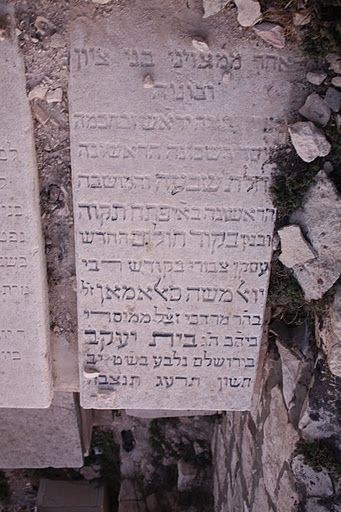
In October 1912, Yoel Moshe Salomon died in Jerusalem at the age of 74 and was buried on the Mount of Olives. His wife Fruma lived to the age of 93, dying about 15 years after her husband. In his will, Yoel Moshe described Fruma as follows: "My upright and guileless wife, who shared the burden with me."
The Family Legacy and the New Ballad
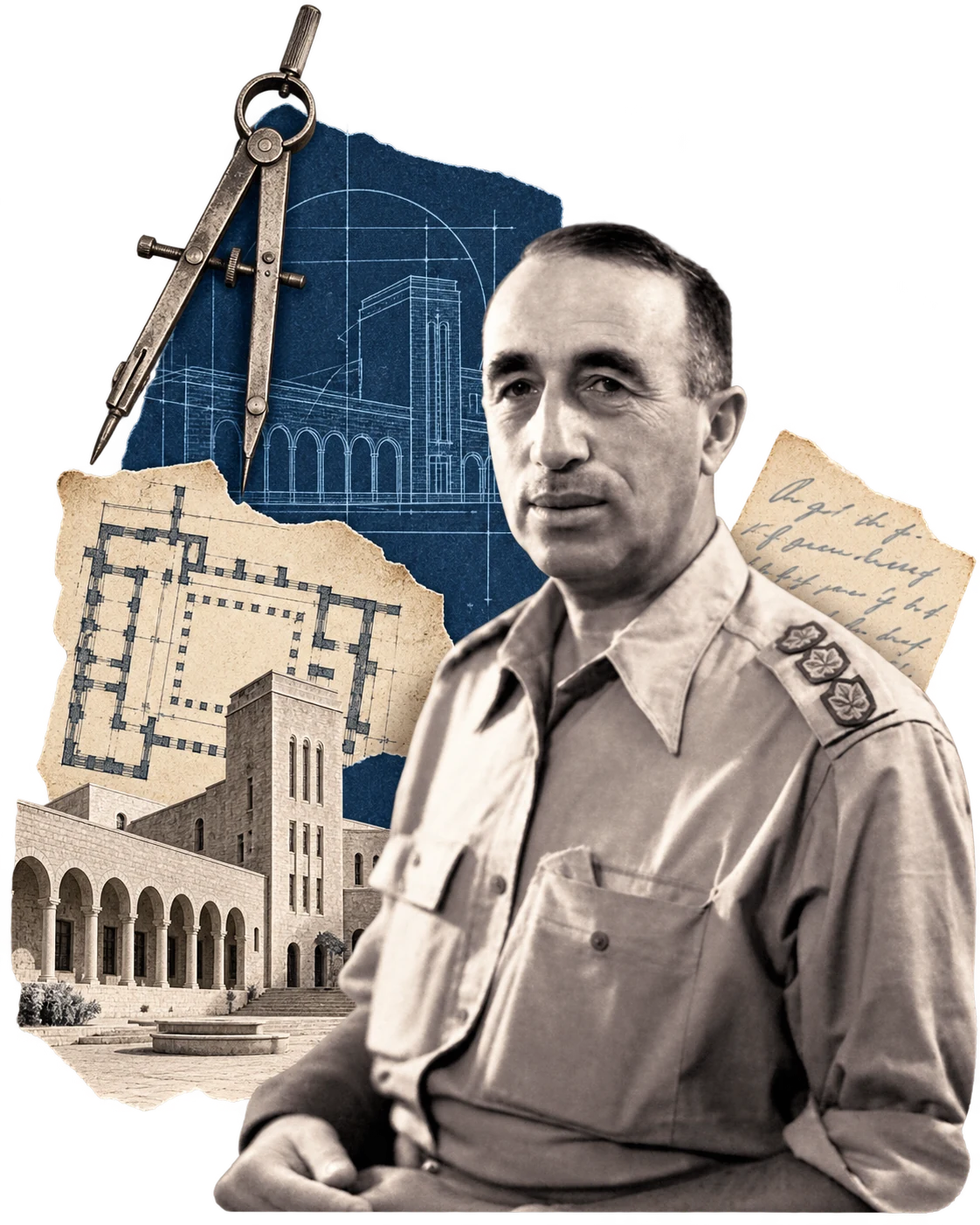
The pioneering spirit was passed down to Yoel Moshe's children. When Salomon left for Petah Tikva, his son Yohanan David took over his father's public roles and also managed the family printing press. Yohanan David died in Cairo at the age of 50. Shlomo Zalman died at the age of 19 while working at the press, and Tuvia Salomon was one of the owners of the Salomon Printing Press, as well as a researcher and poet. Aryeh Leib married Hannah Pearl, the daughter of Mordecai Diskin, one of the first settlers in Petah Tikva. Mordecai Salomon, one of the first settlers in Petah Tikva, was a researcher of settlement and the author of the book Three Generations in the Yishuv, which formed the basis for the song "The Ballad of Yoel Moshe Salomon." Yoel Moshe's daughter Esther married Rabbi Reuven Gottfried. His daughter Zipporah married Moshe Gottel Levin, who was chairman of the Jewish Community Council in Haifa. His sixth son, Haim, worked in a pharmacy and in 1901 established a wholesale and retail pharmaceutical business in Jerusalem with his brother-in-law Moshe Levin. In 1913, his nephew Yitzhak Elstein joined the partnership and managed the Jaffa branch. At first the company was called Salomon, Levin, Elstein, but it became better known as SLE. When the Nazis came to power, imports of medicines from Germany were halted, and the company began manufacturing medicines independently. At the same time, a rival pharmaceutical factory called Teva was established in Jerusalem. In the 1960s, SLE acquired Teva. The final merger of the two companies was carried out by the late Eli Hurvitz, who was married to Haim Salomon's granddaughter. Years later, Yoram Taharlev returned to Petah Tikva and wrote a new version of the famous ballad (the song first appeared in the anthology No Turning Back, published by the Ministry of Defense in 2004).
The Ballad of Yoel Moshe
On a damp morning in the year 5768 / With hearts beating strong / Those five set out from Jaffa on horseback:
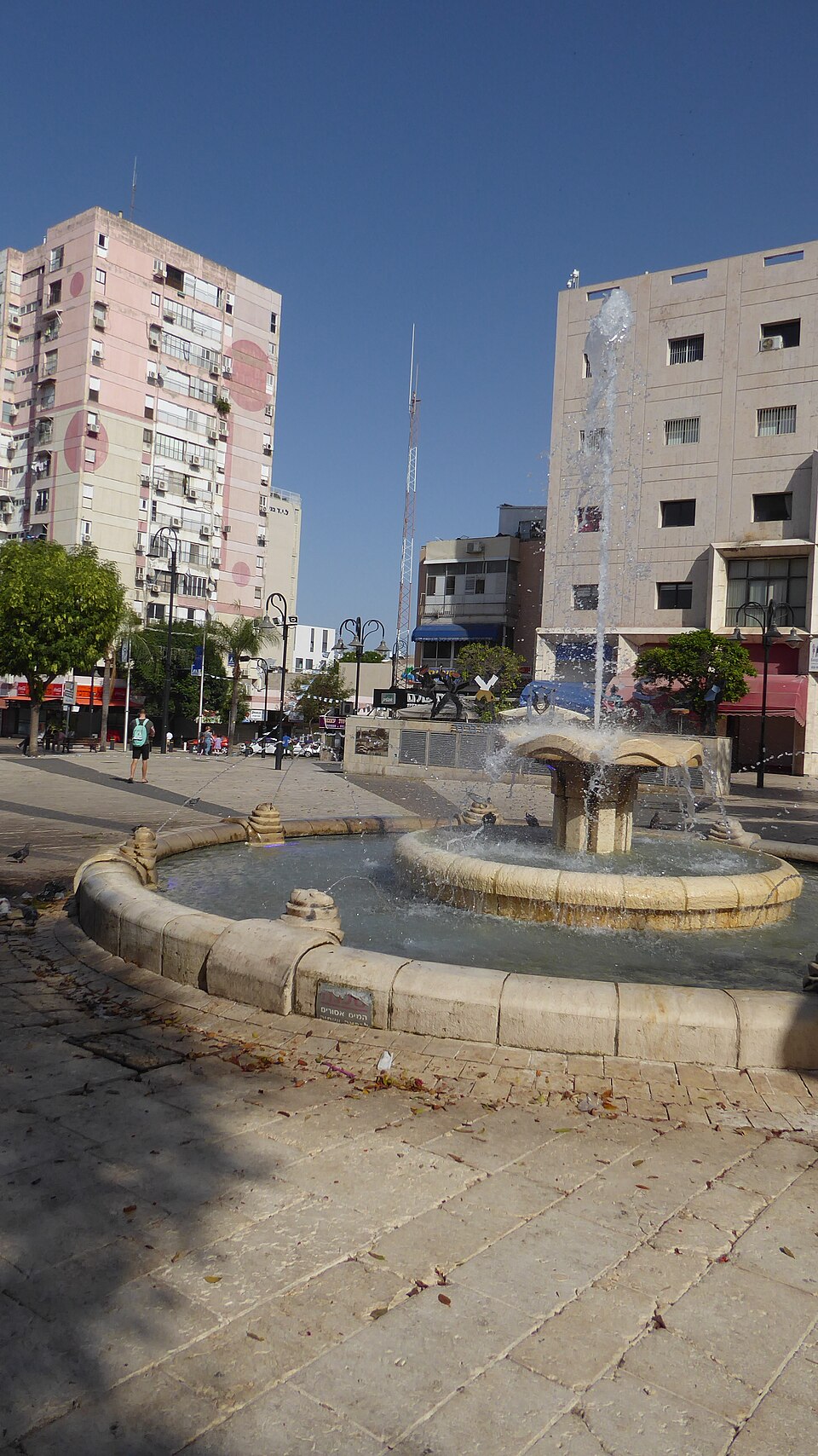
Stampfer, Gutman, and Barnett / Old and kindly / And Yoel Moshe Salomon / A hundred and seventy years old.
They wanted to return to the Yarkon / As in the year 5638 / And start the country all over again / A little more successfully.
With them rode Dr. Mazareki / The qualified doctor / To check their blood pressure / During rush hour.
In Ramat Gan they stopped / In a pointless traffic jam / Two drivers went to blows / At the Elite intersection.
A serious accident on Bialik / A roadblock on Ben-Gurion / At the Bnei Brak intersection, the traffic light / Is stuck on red.
Mazareki said to them: / What are you doing?! / Let's go back to Jaffa, gentlemen / Those horses are wasted here.
Then Yoel Salomon said / With a dreamy look: / I'm staying here tonight / Facing this traffic light.
The five climbed to one side / Onto a little sidewalk / They thought a blue-and-white stripe / Was the flag of the state.
A policeman issued them a ticket / And as he wrote / He cast one quick glance / At the computer screen.
Then he looked at the group / And called out without hesitation: / You haven't paid your fee / For nearly a hundred years!
When they started to explain / He said: Thank you / You'll also pay interest, / Fines, and indexation!
And there they are, still stuck to this day / And we are there with them / For without dreamers / Nothing would ever get built!
תגובות
עדיין אין תגובות.