
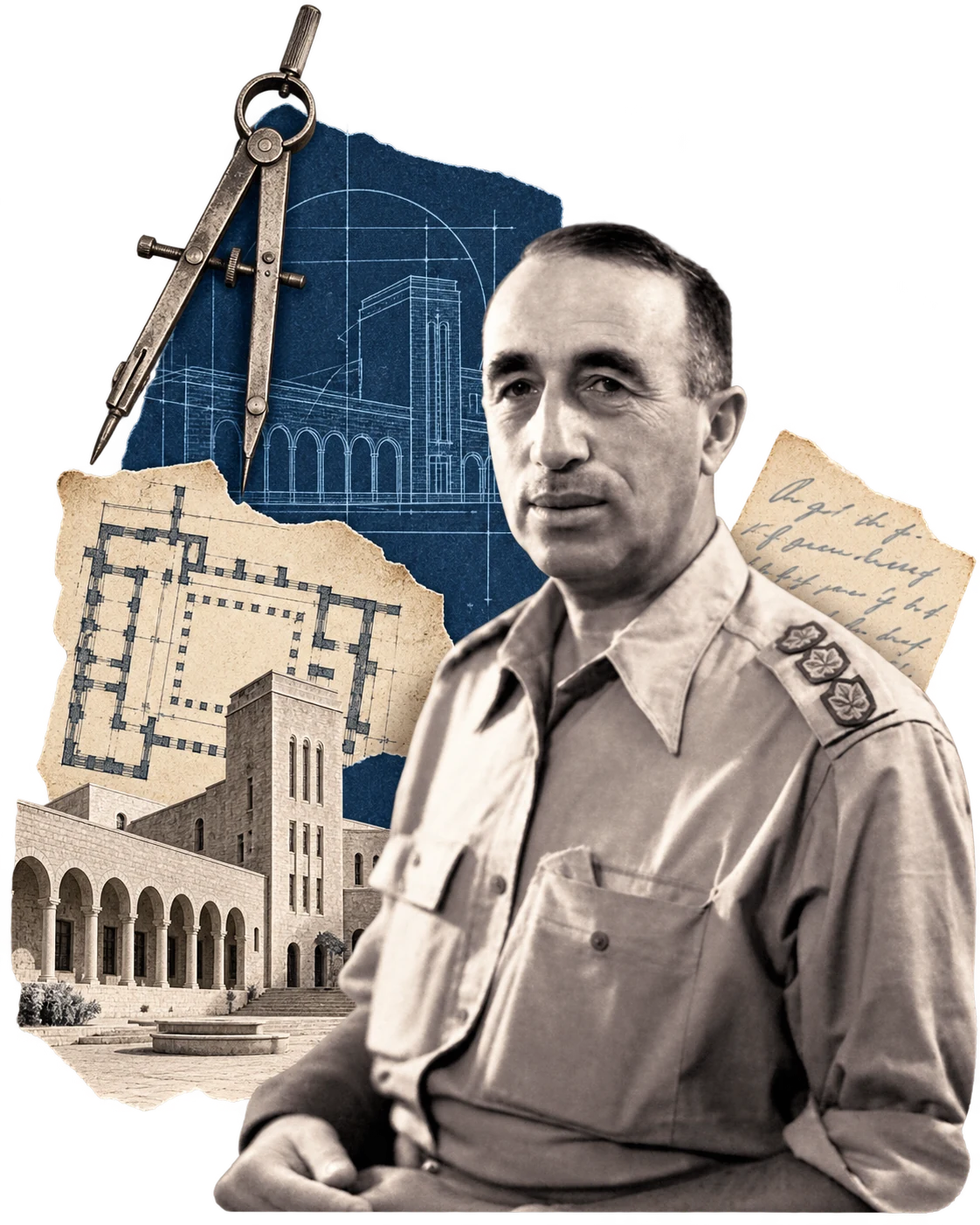
The poet Rachel loved him. He arrived in the country as an officer with extensive military experience, was immediately recruited by the Haganah, and was a candidate for chief of staff. He was the architect who designed the Jewish Agency building in Jerusalem, Beit Berl, and Midreshet Sde Boker.
The poet Rachel loved him. He arrived in the country as an officer with extensive military experience, was immediately recruited by the Haganah, and was a candidate for chief of staff. He was the architect who designed the Jewish Agency building in Jerusalem, Beit Berl, and Midreshet Sde Boker.
Two Rachels, One Beginning
This is what Michael, Yohanan Ratner's son, wrote: "My father was born in Odessa in 1891 to a wealthy, assimilated family. They had no connection to religion or Zionism, and after the pogroms of 1905, it was decided to send my father to study in Germany. Just before the outbreak of World War I, my father returned home for a visit and was soon drafted into the tsar's army. Throughout the various stages of the war, he was determined to serve in a combat role, and by its end he was serving in the Siberian Division and had twice been awarded a medal for distinguished service. With the Revolution, my father joined the Red Army and served as chief of staff of the division during the fighting campaign in Ukraine. After the war, he returned to Odessa, where he first came into contact with Zionism. He met Rachel Kagan, who was considered a war widow because her husband had not returned from the war, and fell in love with her."
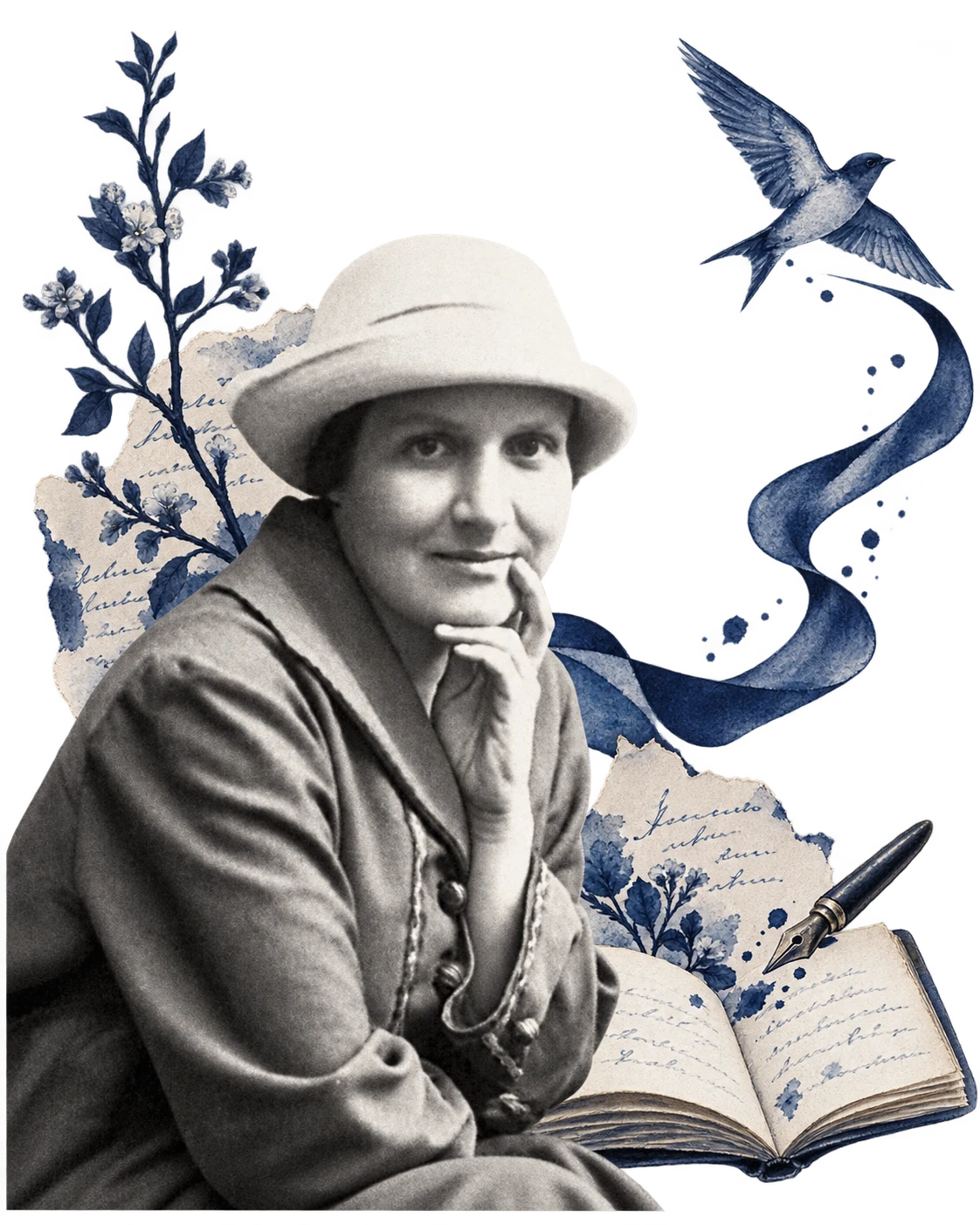
Rachel Kagan was also born in Odessa. She was three years older than Yohanan and was born into a traditional, Zionist Jewish family. Her father, Yaakov Lubarsky, was one of the founders of the Hovevei Zion movement. In 1919, she immigrated to the Land of Israel, and aboard the ship Ruslan she met Rachel Bluwstein (the poet Rachel), who wrote her a poem in Russian. Rachel Kagan later became a member of the Knesset and chair of WIZO Israel. Kagan is one of only two women to have signed the Declaration of Independence, together with Golda Meir.
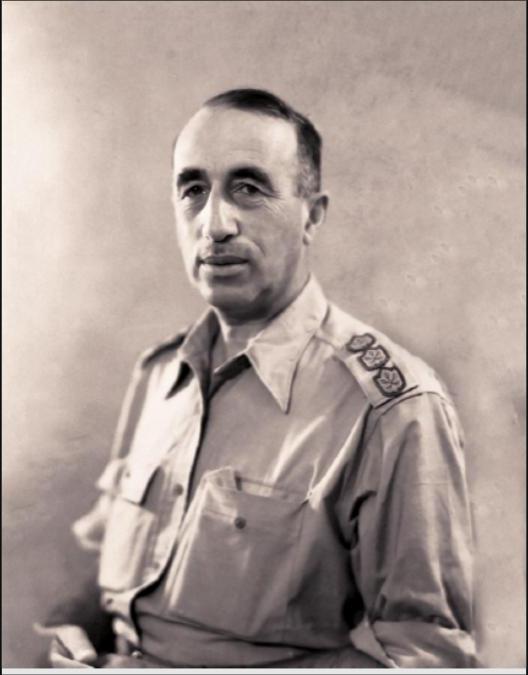
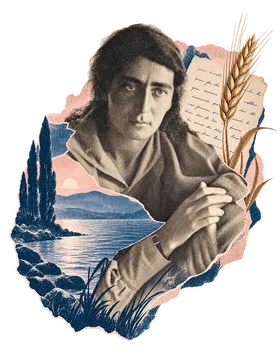
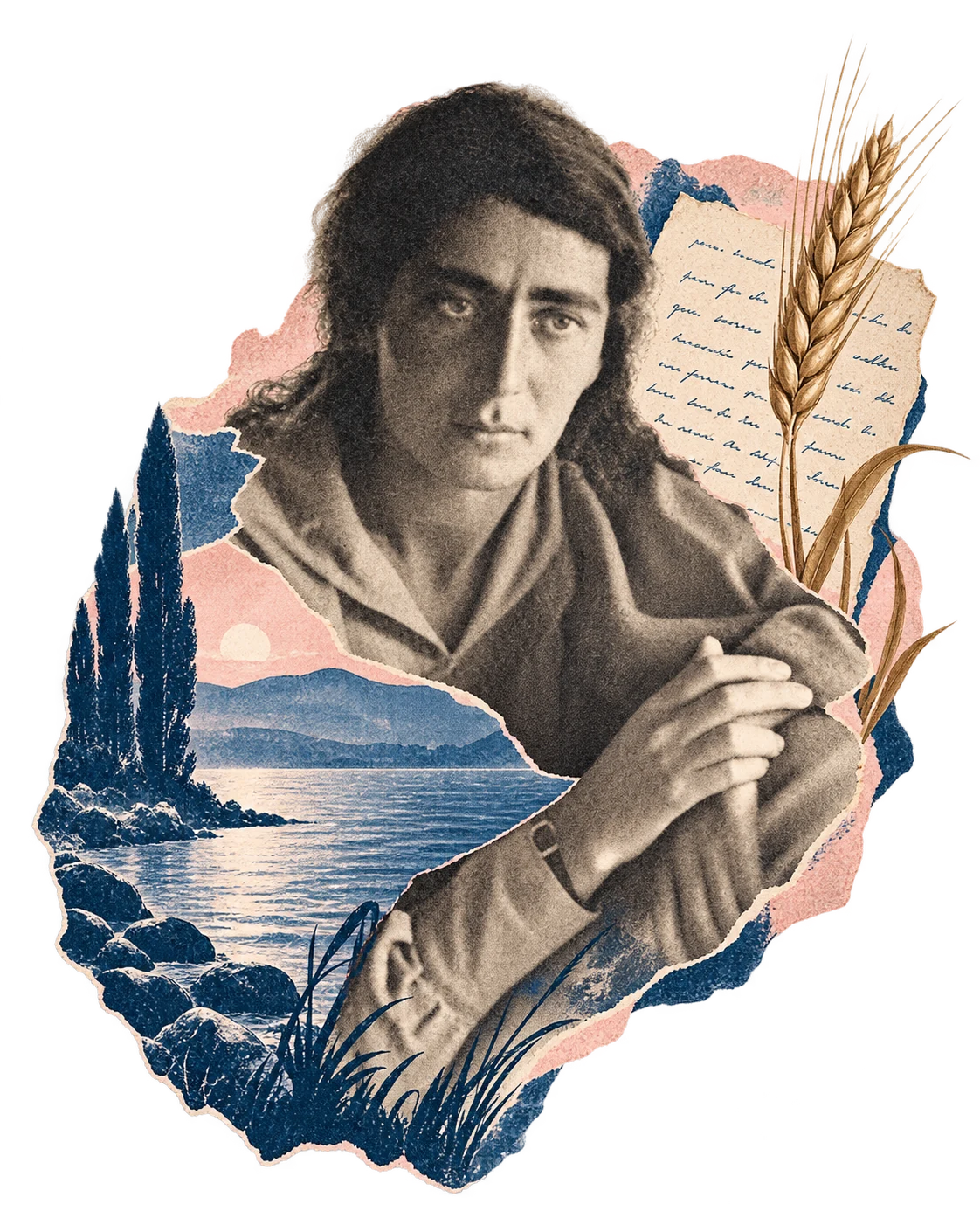
Before the two Rachels left for the Land of Israel, Yohanan also met the poet Rachel in Odessa. Years later, he described her this way: "Another Rachel appeared, a bony, tall girl, slow-moving, not very young, with a somewhat sunken chest and a pair of magnificent eyes - a niece of Rachel Stein, Rachel Bluwstein, who would become the greatest and most popular of Israel’s women poets. But at first glance she looked like a sickly water bird, cast ashore against its will, moving across the landscape awkwardly and dispiritedly. And indeed, she was ill and unhappy."
Rachel fell in love with the handsome, tall Yohanan and wrote him three love poems in Russian. In Odessa, Rachel and Yohanan were excited to discover that they were both planning their futures in the Land of Israel, and both understood that this would be a significant change in their lives and that their shared dream would bring them together there.
Between Architecture and Defense
While still in Odessa, Yohanan began taking an active role in Jewish defense. He went to Germany to study architecture, and in 1923 arrived in Jerusalem, where he met the poet Rachel again. And so their paths crossed once more. This time Rachel taught Yohanan, the new immigrant, Hebrew.
In the Haganah, Yohanan Ratner was recognized as a talented officer, and his potential was apparent. Ratner was considered a military authority. He arrived with an enormous amount of experience, unprecedented in the country at the time, and yet insisted on completing the Haganah's training program from beginning to end. His abilities stood out, and he rose quickly through the ranks until he was appointed deputy commander of the organization in Haifa.
Ratner and Rachel met for a third time after her death in 1931, when Ratner volunteered to design her gravestone at Kinneret.
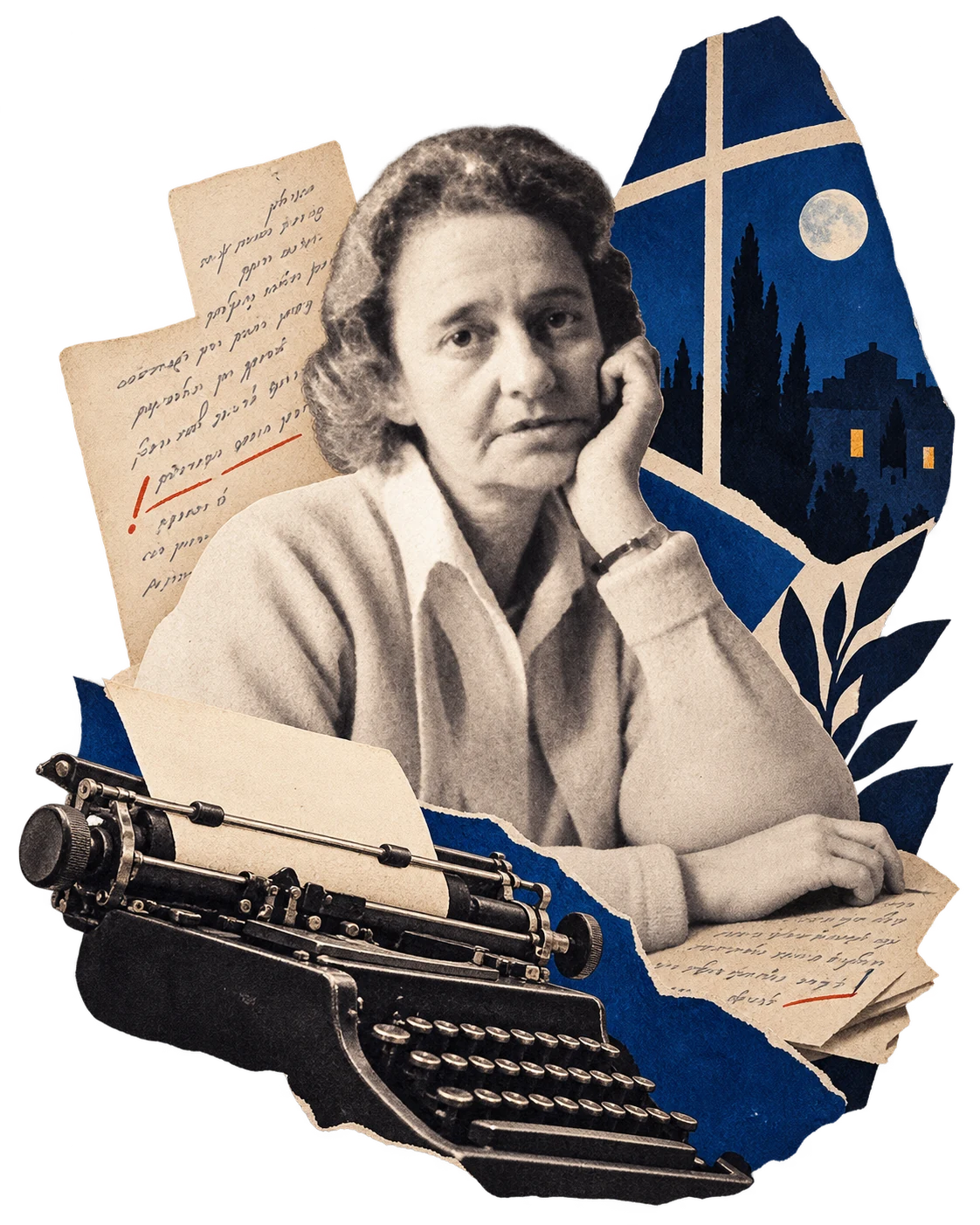
Between the two world wars, Europe experienced a cultural flowering. Jews in Germany and Austria were deeply involved in social, economic, and cultural life. It was common among Jews to send their daughters to study dance as part of a general education. The modern dancer was seen as an educated bohemian with social awareness, a kind of priestess of dance heralding a new world. The early years were difficult for the dancers who came to the country from Europe. The world they found themselves in was different from the one they had known. Most arrived without means and were sent straight to kibbutzim, where they were seen first and foremost as a source of labor. The need to earn a living eroded their professionalism. Culturally, the Land of Israel in the 1940s was a solitary pocket of flourishing in a world ravaged by war. Among the dancers who arrived in the country at that time was Ora Weil. Critics of the period described her this way: "The tall, dark-haired, blue-eyed woman, who had a natural aptitude for acrobatics, specialized in a dance technique called Mensendieck." Weil arrived in Haifa in 1932 and married Yohanan Ratner a year later. The couple had two sons: David and Michael.
In 1939, Ratner left the Haganah and returned to the Technion, while continuing his work as an active architect. Among other projects, he designed the Jewish Agency building in Jerusalem, for which he also won a prize; Beit Berl; Midreshet Sde Boker; and the Clalit Health Services building on Zamenhof Street in Tel Aviv.
The Post He Never Got
In March 1948, after Yaakov Dori, who headed the fighting forces, fell ill in the midst of the battle for the road to Jerusalem, Ratner received the following telegram: "The Executive has assigned you to serve as acting Chief of the General Staff. You must devote yourself to this task immediately, bearing in mind its urgency and vital importance. You must come to Tel Aviv and take up the work in the coming days - signed, David Ben-Gurion."
At the age of 57, having already served as the first head of the Haganah’s national staff and as David Ben-Gurion's military adviser, Yohanan Ratner had the opportunity to enter the pages of Zionist history as the first chief of staff of the IDF. That army was to be established with the declaration of Israel's independence, less than two months after that telegram was sent.
Ratner did not hurry to accept Ben-Gurion's request. He asked to conduct an assessment that lasted about ten days, in order to examine the situation. "Ratner didn't want the job. He understood that, professionally, he wasn't suited to it. He was too old. He wasn't one of the Haganah crowd; he was an outsider," explained Professor Yoav Gelber, who studied the period.
Despite Ratner's refusal to become chief of staff, Ben-Gurion continued to make use of his abilities, this time on a new front - one that shaped the future of the State of Israel and continues to shape it today: the front of science, innovation, and entrepreneurship, where Israel now leads at a global level.
It all began in 1947, when Yohanan Ratner and Aharon Katzir, a professor at the Weizmann Institute of Science and an Israel Prize laureate in the natural sciences, convinced Ben-Gurion that a scientific unit in the Haganah was essential. Ben-Gurion gave the long-awaited approval and set a budget. Ratner and Katzir recruited people, and almost immediately the department began developing weapons: bombs, mines, Molotov cocktails, and more. Much of the scientific department's research and development was carried out secretly by students. A group of chemistry students at the Hebrew University worked on developing explosives and various types of bombs. One of its members was Aharon Katzir's younger brother, Ephraim Katzir, later a professor of biochemistry and the fourth president of the State of Israel.
The student atmosphere, improvisation, and shortages gave rise to some amusing anecdotes. Ephraim Katzir recounts that Amos Horev, former president of the Technion and recipient of the Israel Security Prize for lifetime achievement, proposed a delay mechanism for a bomb based on sulfuric acid, which would slowly eat through a rubber casing and then set off the charge. Condoms were used for the rubber casing, and when one of the group members began buying large quantities of condoms for experiments at a shop on King George Street, he won the shopkeeper's admiration. The shopkeeper was convinced that the strapping young student was using them for an entirely different purpose.
Return to the Technion
In 1957, David, Yohanan's eldest son, was killed in an aircraft accident in the Judean Desert. The accident affected Ratner deeply, and he could not be consoled.
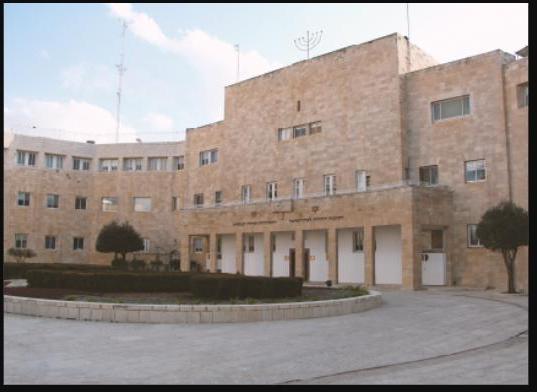
Nearly a decade after Ratner had refused to take Yaakov Dori's place as the future chief of staff, he became his successor in civilian life. Ratner and Dori met in the early 1950s at the Technion, where Ratner became dean of the Faculty of Architecture and vice president of the Technion, while Dori was the Technion's president. In 1957, when Ratner was asked to take Dori's place at the head of the Technion, he readily agreed.
Yohanan Ratner died in 1965 and was buried in the civilian section of the cemetery on the slopes of Mount Carmel. Despite being one of the first six major generals of the IDF, Ratner's name is not widely known.
תגובות
עדיין אין תגובות.