
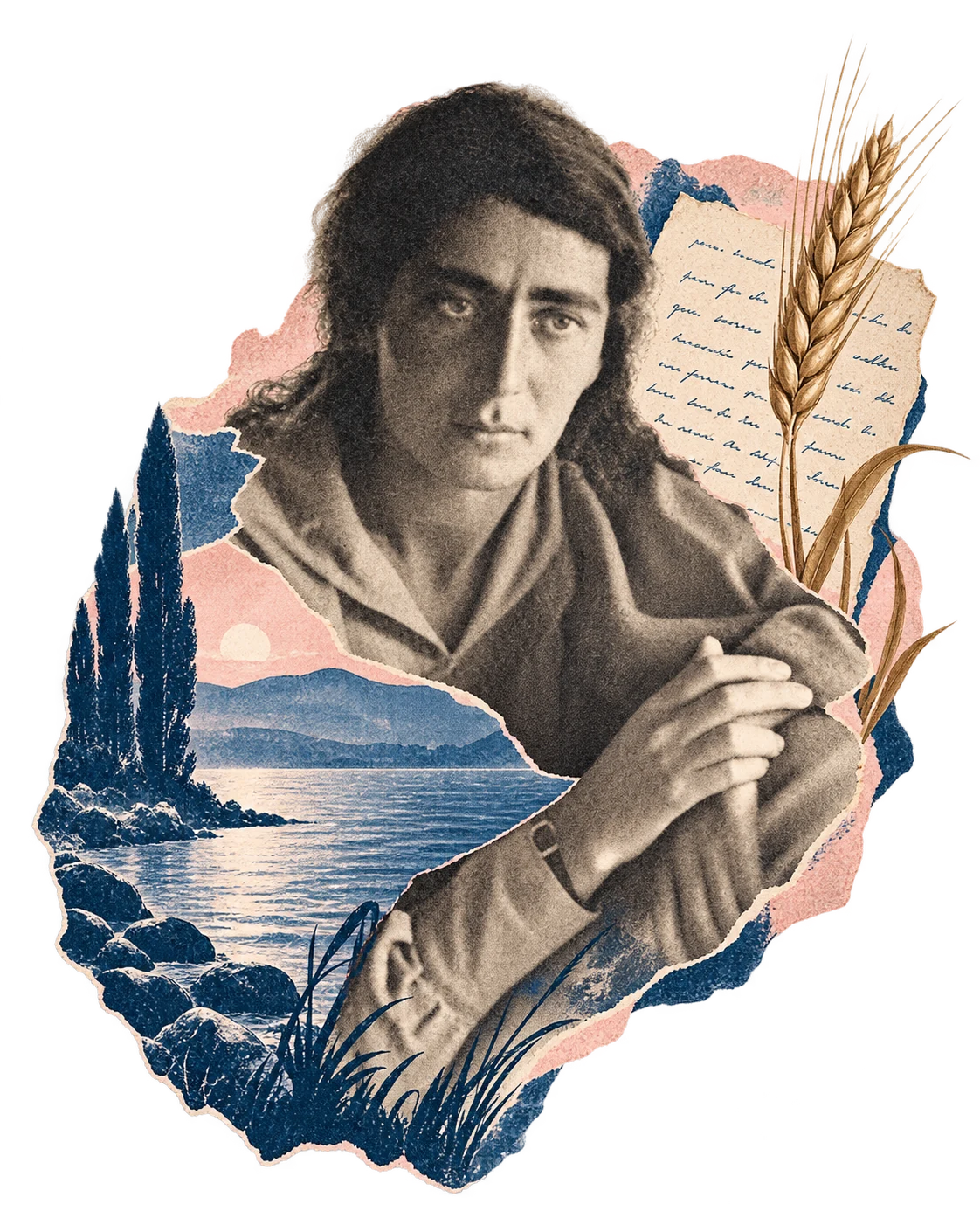
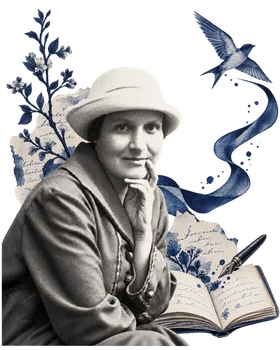
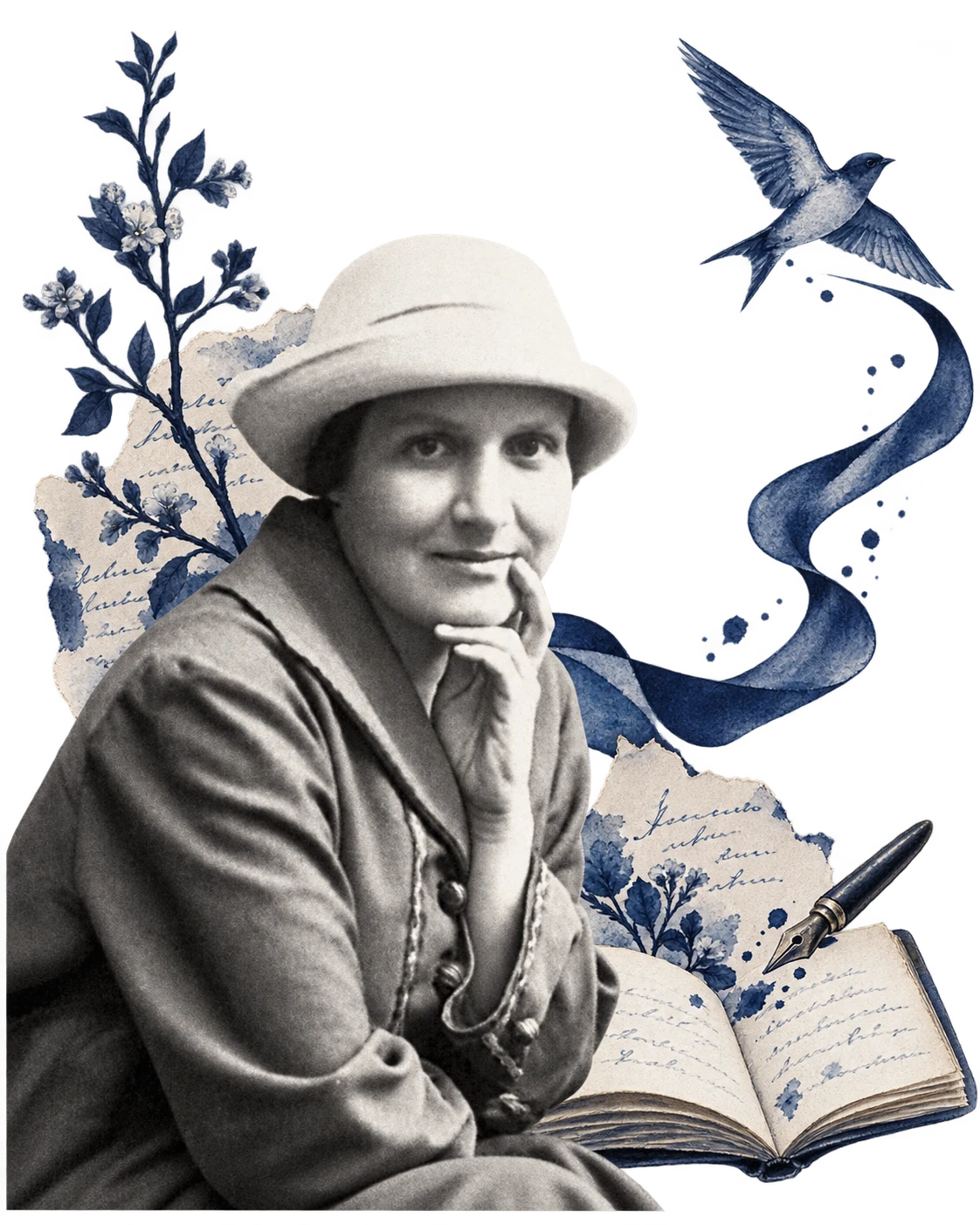
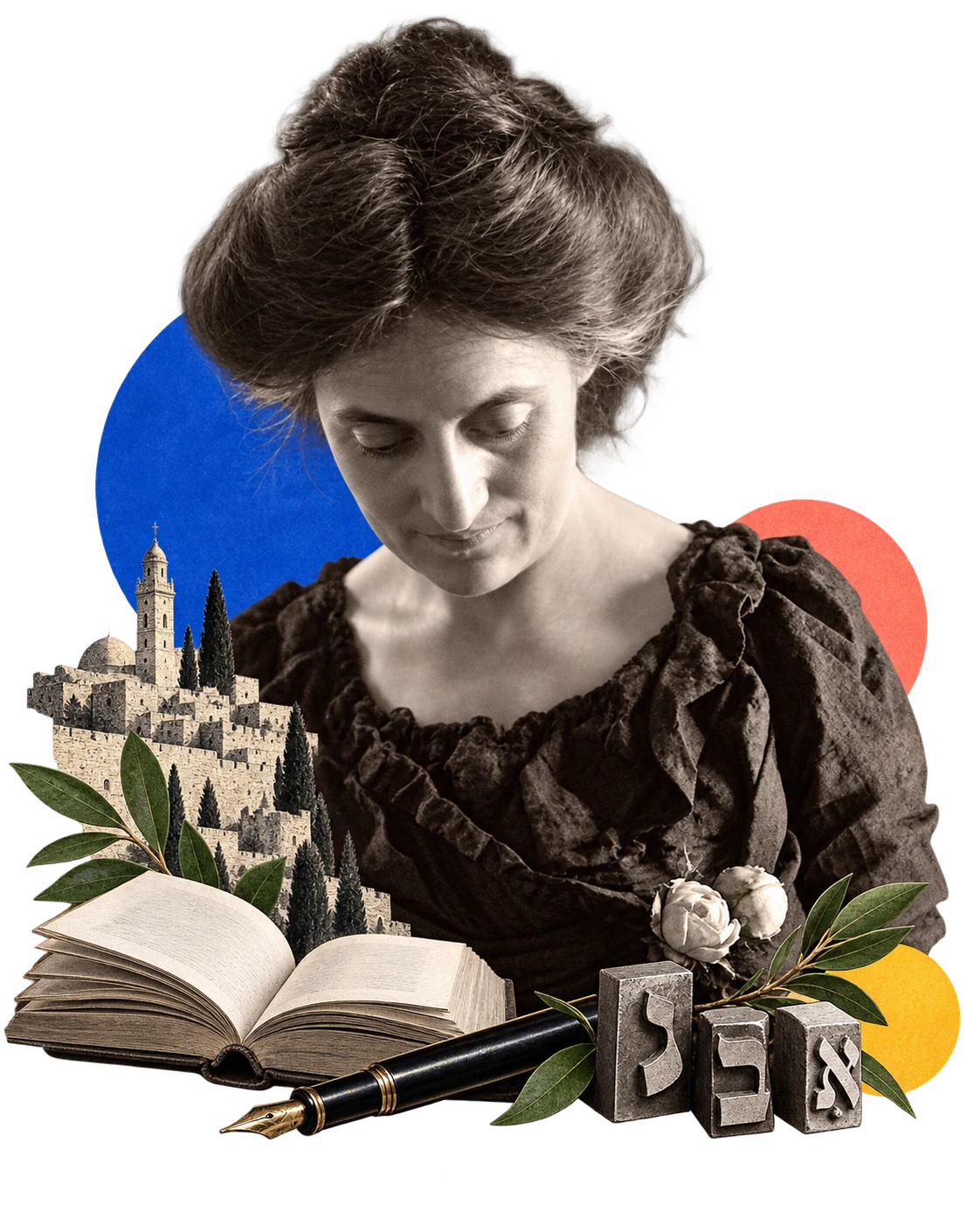
This is the story of the Second Aliyah, of pioneering, and of great loves. The country's president, Zalman Shazar, wrote of her: "A shepherdess of geese, tall and slender, dressed in white, blue-eyed, light as a doe and beautiful as the Sea of Galilee." Her poems won many hearts. Rachel's story embodies the Zionist-Israeli ethos.
This is the story of the Second Aliyah, of pioneering, and of great loves. The country's president, Zalman Shazar, wrote of her: "A shepherdess of geese, tall and slender, dressed in white, blue-eyed, light as a doe and beautiful as the Sea of Galilee." Her poems won many hearts. Rachel's story embodies the Zionist-Israeli ethos.
The Bluwstein Family in Saratov
Rachel Bluwstein was born in Saratov, on the banks of the Volga River, in 1890. She was the eleventh of twelve children. When she was born, her father was 67 and her mother was 47.
Her father, Isser Leib Bluwstein, was an only son and a very unusual man. When he was eight, agents of Tsar Nicholas I abducted him and sent him away to be educated and toughened in body and spirit in preparation for a long period of military service. When his father heard that his only son had been abducted, he suffered a heart attack and died. A short time later, his mother, Rosa, took her own life.
Twenty-five years later, at the age of 33, he was discharged from military service and began trading in bear furs. Isser became very wealthy, bought houses and land, and traded in diamonds and gold. In time, he married a woman who bore him four children. She died a short while later, leaving him with four young children. He then married Sofia Mendelstam, who was 20 years younger than he was. Sofia adopted his four children from his first marriage and bore him eight more.
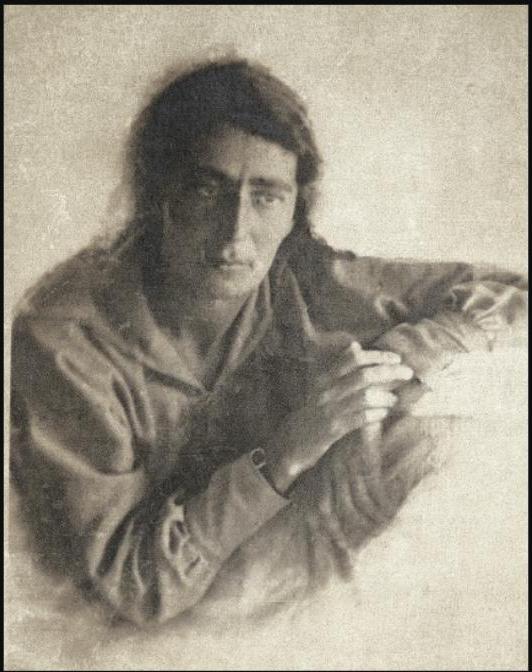
Sofia came from a wealthy, distinguished family. She was well educated and spoke several languages. Her family traced its ancestry to Rashi, and prayers at home were conducted in Hebrew. They played music and read Pushkin, Tolstoy, and Lermontov, and Sofia even corresponded with Leo Tolstoy. Sofia's grandfather had been an adviser to Tsar Alexander I. Another of her relatives, Rosa, escaped the death penalty after attempting to assassinate Tsar Alexander II. This rebellious aunt had a great influence on Rachel.
Isser and Sofia provided all their children with higher education. The children studied at universities in Italy and Germany, free of worries, and pursued further studies in medicine, engineering, and the humanities and social sciences.
The Brother Who Drew Her to Zionism
Rachel's brother Jacob was ten years older than she was and held a doctorate in philosophy. He translated the book The Source of Life into Hebrew, gave thousands of lectures to the public through a foundation established by Haim Nahman Bialik, became an ardent Zionist, and immigrated to the country. He wrote to his sister from the Land of Israel: "Dear Rakhaleh, this is the last time I am writing to you in Russian, because I hope to master even the spelling of our language. I am studying the Hebrew language with enthusiasm and passion." He was the one who awakened Rachel and her sister Shoshana's interest in Zionism. They took part in discussion groups attended by leaders of the Zionist movement, including Ber Borochov and Yitzhak Ben-Zvi.
The Journey to the Land of Israel
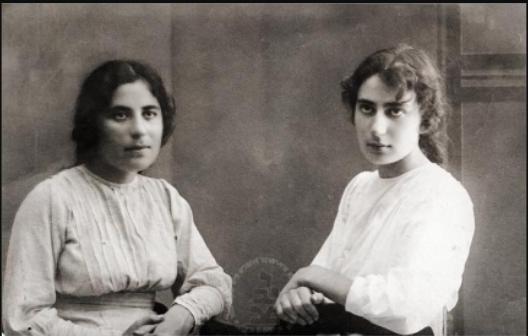
In 1906, their mother Sofia died of tuberculosis, passing on to 16-year-old Rachel a susceptibility to the disease. At the time, women throughout the Russian Empire were forbidden to study at universities. So, in 1909, Rachel and her sister Shoshana decided to go to Italy to study, stopping to visit the Land of Israel along the way. The two arrived in the country as tourists, not as Zionists, and not because they were fleeing persecution or driven by an ideal of making the world and humanity better.
On her way to the country, Rachel wrote in her diary: "In haste I climb onto the ship's deck. Oh, God! What a sight! The sky and the earth have merged into one. Night has wrapped them in its black cloak. But thousands, tens of thousands of little flames flicker here and there. Silver paths stretch from them to the sea. Silence. And I seem to stand in the very heart of the night. I stand there and listen, and hear the voice of silence."
The sisters fell in love with the country and decided to stay. The very next day, they moved to the colony of Rehovot, which was then the same age as Rachel - both were 19. They settled on Menucha VeNachala Street ("the Millionaires' Street"), where they met members of the First and Second Aliyot.
The street was called "the Millionaires' Street" because of its magnificent houses. One man had come from America and built a house considered large and splendid, which was used to host important people visiting the colony. Another had come from Australia and built a beautiful summer house, with an almond grove nearby. A third was Jacob Broida, head of the Menucha VeNachala company, which built the entire street; his was the most splendid house of all. Broida also financed the building of a mikveh and a synagogue.
The Tower of the Three Sisters
Their younger sister Bat-Sheva, who had graduated from a music school in Russia, joined Rachel and Shoshana in Rehovot. They rented a room on the second floor of Broida's house, which became known as "the Tower of the Three Sisters." To master Hebrew, the sisters agreed to speak Russian for only one hour a day.
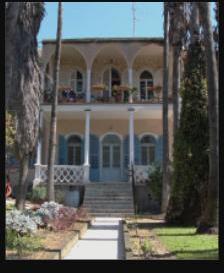
They bought a piano, and when the workers returned from the vineyards and fields, Bat-Sheva would hurry to the piano and accompany them with her playing. Before long, their room had become the cultural and social center for young people in Rehovot and Jewish youth from the surrounding area.
In Rehovot, Rachel met Nakdimon Altshuler, her first love. He fell in love with Rachel tentatively and shyly. In her eyes, he was the prototype of a new kind of Jew, unshaped by exile, not an intellectual, and full of vitality. They fell in love. Together they rode a horse or danced wildly on Love Hill. On the photograph she gave him, Rachel wrote: "To Nakdimon, the love of my youth, will you remember me? - Rachel."
This is what she wrote in her poem "Quiet Happiness": The sandy hill, steeped in sunlight, On the sandy hill - you and I, And in my heart - a quiet happiness.
Around that time, a group of pioneers arrived in Rehovot, nicknamed "the Vegetable Growers." Rachel was then working for the farmers. The group's leader, Noah Naftolsky, fell in love with Rachel at first sight. Rachel was impressed by the combination in him of spirituality and strength, courage and farming. At times they were close, at others their paths diverged.
This is how Shimon Kushnir describes Noah and Rachel's first meeting and relationship in Men of Nebo: "One day, on his way home from work, Noah met a handsome, tall young woman at the Zeltzer house. She was simply dressed, and spoke with grace and charm. He knew at once that she must be one of 'the sisters.' As he passed her, she turned to him and asked, 'Are you the man who came from the Sea of Galilee?' Noah blushed and answered, 'I am.' 'And I already know your name is Noah; my name is Rachel,' she said charmingly, extending her delicate hand, and added, 'You see? Here, across from this house, in the pink house, is our home. Please visit us whenever you have a free moment. We have a mutual friend, your friend Kahanovitch, and he has already taught us your song. A lovely song.' Rachel warmly shook Noah's hand and left. The magic of her presence, her large, deep blue eyes, captivated his heart, and her words rang through his soul like a melody."
Sometimes Noah joined the group on night walks on Love Hill. Rachel would lean toward him, trying to draw him out, offering brilliant thoughts on the poetry of human life on earth. She was witty in her remarks about writers whose spirit was unlike hers, and passionate about the poetry of great poets such as Lermontov, Pushkin, and Goethe.
Noah, too, with his remarkable memory for poetry and legend, would draw from his store of Hebrew books, writers, and poets. Rachel was enchanted by Noah's beauty and nobility, and by his shyness as well. She would visit his room and absorb his knowledge of the sources of Hebrew literature. Noah spent hours teaching Rachel the legends, and through them Rachel savored the wisdom of the ancients.
In those days, Noah wrote these verses in his notebooks, expressing his state of mind and his love:
"You will never know, pale girl / how a weak young man can love - a gentle lad, pale, with a bright brow / how could you know? Sometimes you look into my eyes / what can you read there, in one glance? - can you discern the silent sorrow / Slowly trembling in a drop of tears? / Here is the secret of the wonder / this is how I love in secret..."
Rachel wanted to hear Noah tell her about his friends in the Galilee: A. D. Gordon, Ben-Zion, and Kinneret. He told her about meeting Berl Katznelson and about the magic of the Galilee, and a change came over Rachel. During her meetings with Noah and the friends who came to visit him, she became familiar with their idea and grew attached to it: the idea of renewing humanity through work. She, too, began to dream of "the music of the hoe" - an idea Noah had expressed: that the complete redemption of the Land of Israel would come through the hoe, which would uncover and bring forth the song of the Temple from the ruins of the land. "To make music with the hoe and paint on the earth."
This was now Rachel's dream.
From Rehovot to Kinneret
In April 1910, the "Rehovot Celebrations" were held. Hundreds of farmers, workers, writers, artists, and members of Hashomer came to the celebrations from all over the country. At those celebrations, Rachel met A. D. Gordon for the first time. Gordon, older than she was, serious and immensely charismatic, reminded Rachel of Tolstoy, her mother's friend. From Gordon, Rachel learned not only pure, spellbinding Hebrew, but also the pioneer spirit. He was her rabbi, her secular rabbi. She decided to tie her fate to that of the group and take part in their next adventure: founding an agricultural settlement at the Kinneret Farm.
Rachel wrote Gordon a poem and waited to hear what he thought of her work. It was her first poem in Hebrew, "State of Mind":
"The day passed and darkened, the day faded / the skies were covered in muted gold / and the lofty mountains Around me the vast fields darkened / a mute expanse / my path grew distant - my path, lonely / my path, desolate..."
A. D. Gordon answered her with the only poem he ever wrote:
"Go on your path, climb higher / let no one stop you, let no one say: climb! / And as you rise, the day will shine for you And behold, you will not be alone on high."
Rachel joined Hannah Meisel's Young Women's Farm on the shore of the Sea of Galilee, a place intended to train women workers for agricultural labor. Rachel loved that life. Years later, she expressed her longing for that time in the poem "Perhaps":
"And perhaps it never happened at all / perhaps / I never rose at dawn to go to the garden / to work it by the sweat of my brow?"
There she became friends with prominent people such as A. D. Gordon, Berl Katznelson, and Joseph Trumpeldor, and she also knew love.
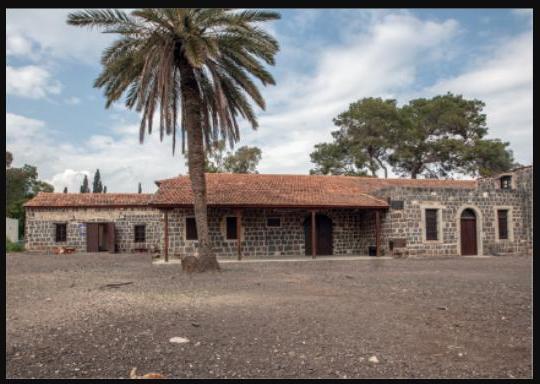
One of them described his first encounter with her this way: "And then the gate opened, and from the courtyard came a flock of white geese, noisy and clamorous, spreading over the whole hill. Behind the flock walked the shepherdess, tall and slender, dressed in white, blue-eyed, light as a doe and beautiful as the Sea of Galilee. She held a palm branch in her hand, and with that wand, her young, strong voice, and the supple movement of her floating figure, she gently and powerfully mastered all the surging commotion. In lilting Hebrew, at dawn, she led the flock of geese out of the Kinneret Farm courtyard to pasture. I held my breath, hiding behind the fence, until the whole white procession had passed before me. That shepherdess was the poet Rachel."
The writer, then 20 years old, was Zalman Shazar, who would later become the third president of the State of Israel. He loved her, and she dedicated several poems to him. One was "The Covenant of the Echo," written in 1927, seven years after he married Rachel Katznelson:
"The covenant of the echo forged between us / the armies of days could not break it / still, in the depths of our hearts, shines / the memory of a pure and innocent 'then'."
Another poem that expresses their relationship is "A Meeting, Half a Meeting":
"A meeting, half a meeting, one swift glance / fragments of obscure words - that's enough... / and once again it all overflowed, and once again it all surged / the breaker of happiness and pain."
Three years later, Shazar wrote "The Voice," which echoes "A Meeting, Half a Meeting" and bears witness to a hidden dialogue between the two poets in love.
"And suddenly, a fierce happiness flooded everything and comforted me."
In 1927, Rachel wrote the poem "A Locked Garden," which she dedicated to Shazar through the word "Lazar" - an acronym formed from his name, Zalman Rubashov, before he changed it to Shazar.
"Who are you? Why does an outstretched hand / not meet a sister hand? And eyes wait only a moment / then lower in embarrassment A locked garden. No path to it, no road / a locked garden - a person Shall I go away? Or strike the rock / until blood flows?"
At Kinneret, she also met Berl Katznelson. Berl's sharp mind and broad, self-acquired education charmed Rachel. His party politics and Bolshevik character drove her away. He inspired her poem "Childless":
"If only I had a son, a little boy, with dark curls, I would call him Uri." Berl's pen name was Uri Harari, and he did indeed have dark curls.
Toulouse and Michael Bernstein
At the farm, they decided to make use of Rachel's knowledge of French and send her to France to study agronomy. In 1913, Rachel went to study in Toulouse, facing fierce criticism from her friends at Kinneret, especially from Shmuel Dayan (Moshe Dayan's father), who accused her of leaving the country. Rachel answered him: "What do you think is the purpose of my journey? Is it not to improve the work, to bind myself to work with every fiber of my heart and mind, to delve into the hidden secrets of plant life, into the mysteries of all creation? Is it not to breathe life into clods of earth, to improve and beautify the face of my country? I will leave her now, and return to her in two years' time. I will return in the spring, with longing and aspirations for what lies beyond. For so I swore to the sea, to the mountains, to my Jordan..."
Gordon supported her, writing: "We do not live to make sacrifices, and the whole world can be our home if we know how to live fully. That is how we should build our lives here: as full lives, lives of constant self-education, self-expression, human growth, and creation."
Rachel was the only woman and the only Jew among the students, and she graduated with honors. In Toulouse, she met Michael Bernstein, a Jewish student from Russia who had come to study engineering. He was the most significant love of her life. Their romance lasted several years, and she wrote "Melancholy Song" for him:
"Will you hear my voice, my distant one, Will you hear my voice, wherever you are, A voice calling out with strength, a voice weeping silently And above time commanding a blessing?"
Rachel and Michael corresponded for several years, and he wrote to her:
"My dear Ria (Rachel, affectionately), my distant one, how can I compare the joy I feel when you are near? Your letter, its lines bursting forth, full of energy, bring me the scent of carnation flowers that have not withered, the breeze above our heads, the trace of a vanishing star. Ria, how I dreamed of this joy through the long, difficult years. In the cold railway carriage, walking in the forest, and sometimes as I stood during a lesson, your image would suddenly appear before me... Write about your friends in the Land of Israel. Where is your sister Shoshana? Where is your little niece Sarah now... I await a new joy, a new envelope with foreign stamps, containing words written by the hand I long to tell, with a caress, what is hard to put into words. Ria, I kiss you hard, hard, as once on the seashore... Write, my dear, beloved one, your letters are the song of my life, and perhaps we will meet after all. Yours, M."
After finishing her studies in Toulouse, Rachel decided to return to Russia to visit her relatives. There, the First World War caught up with her. The Land of Israel was under Turkish rule. Turkey was Russia's enemy at the time, so Russian citizens were barred from entering the country. Rachel was thus forced to be separated from the country for four years. During those years, Rachel worked at an orphanage and continued corresponding with Michael, who had meanwhile returned to Russia. Their romance lasted ten years, eight of them spent corresponding.
This love was the basis for Nurit Gertz's novel Between Me and You, the Sea.
At the orphanage, Rachel discovered the dreadful symptoms: chest pain, coughing up blood, and a relentless cough. It was clear she had contracted the terrible disease known as "the white death" - tuberculosis.
In 1917, the British captured the country from the Turks. Russia went through days of upheaval, with power changing hands rapidly between the Bolsheviks and opposing forces, and the country in the midst of a civil war.
The Odessa Jewish Committee appealed to the Russian authorities to allow residents of Palestine to return to their homes.
And so Rachel found herself aboard the ship Ruslan, which left the port of Odessa in southern Ukraine at the end of November. In Odessa, she met Yohanan Ratner for the first time; at the time, he was in love with Rachel Kagan. The ship set out and docked at the port of Jaffa in December. Among its 700 passengers, Rachel met the historian Joseph Klausner, architects Ze'ev Rechter and Yehuda Magidovitch, dancer Baruch Agadati, Yisrael Guri (later a member of the Knesset and father of the poet Haim Gouri), poet Yonatan Ratosh, Rosa Cohen (Yitzhak Rabin's mother), Rachel Cohen-Kagan, a member of the first Knesset (a signatory of the Declaration of Independence), and actor Meir Teomi.
Rachel tried to return to the Young Women's Farm at Kinneret, but since the farm was in a period of transition, she joined Kibbutz Degania, where she wrote humorous pieces. When the members discovered she was ill, they sent her good friend David Gilad to deliver the "message." The words he had been asked to say were difficult, and he stammered and sounded apologetic, but he managed to tell Rachel the sentence that remained etched not only in her memory. Even many years later, the words remained in the collective memory of the Land of Israel: "You are sick," he told her on behalf of the members, "and we are healthy, so you have to leave." The members did not come to say goodbye. Their treatment wounded her, and she wrote of it: "A heavy black cloud descended on me. It choked me. I wanted to scream and could not."
From Degania, Rachel moved to Jerusalem, where she taught agriculture at the study farm run by Rachel Yanait and gave private lessons in Hebrew and French. She lived in Rachel Kagan's home on Hanevi'im Street, where she wrote the poem "The Pear Tree":
"A hand of spring in this bond... A person wakes from sleep / and sees: before the window / a pear tree in leaf;"
"And in a moment: the mountain that lay on the heart / crumbled and was no more. / You understand: a person cannot, in grief, stubbornly cling to the one flower that has withered."
In Jerusalem, she met Yohanan Ratner again. He rented a room right next door to hers, and she fell in love with him.
Her illness frightened landlords, who refused to rent her a room, so she moved to Tel Aviv. At first, she lived with her brother Jacob, but he, like the people of Degania, asked her to leave for fear she would infect his young daughter.
Rachel was hospitalized in Safed twice. She wrote to Ben-Zion Israeli: "Ben-Zion, didn't Noah (Naftolsky) tell you that I am here, and that you should come visit me, since visiting the sick is a mitzvah? When we sat on the bank of the Jordan that blessed Sabbath, now so far away, the Sabbath of Passover, I wrote a poem, and the poem is for you, Ben-Zion, because you were an inseparable part of the sorrowful joy of memories that enveloped me. I want to give you the poem with my own hands, so you must come. My home, almost a permanent residence, is at Hadassah in Safed."
Safed became associated with her illness, and she wrote to a friend: "Every day I find dead flies beside me, suffocated by the fumes of boredom rising from me... The Safed chapter is about to end. A long and bitter chapter... I am leaving Safed. This city, which I once loved so much and now hate."
The Final Years in Tel Aviv
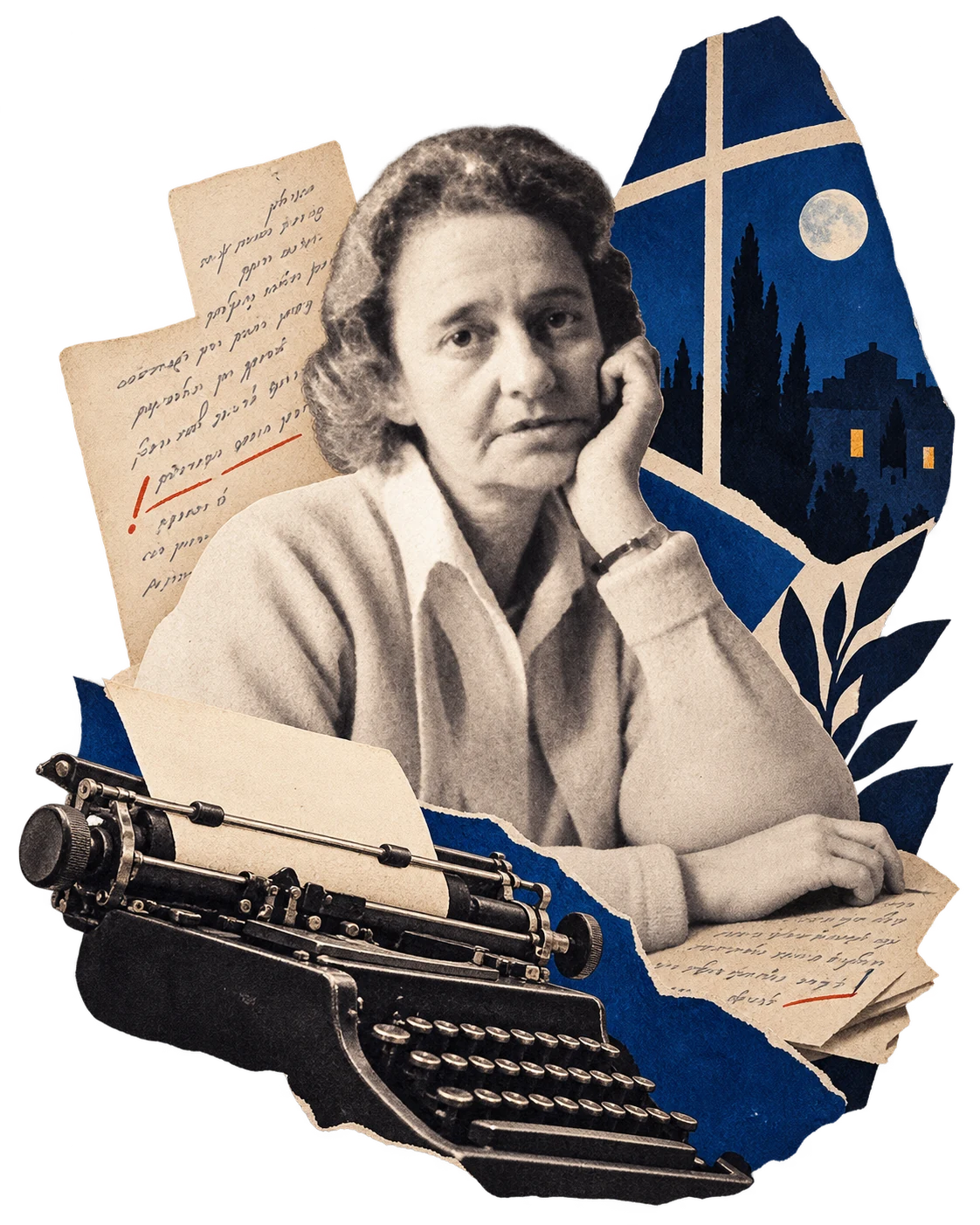
In her final years, Rachel lived in Tel Aviv, at 5 Bograshov Street, in an apartment arranged for her by Dr. Moshe Beilinson, who befriended her and treated her. She wrote most of her poems in that apartment. "In poems, I find a little consolation." These were her most productive years.
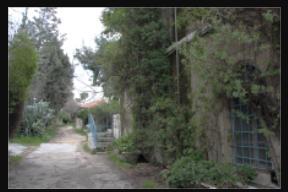
Rachel lived in poverty, but that very poverty enriched her work. The editors of the newspaper Davar loved her and created a supportive environment around her. Her poems were published every Friday, and she felt she was bringing a gift to her friends and the editors. Shazar and Berl (both among the editors) believed that literature and poetry, just like working the land, should redeem the world, and that art had a role in building a better human being. Rachel fulfilled that need.
Rachel was persuaded to go to a sanatorium for tuberculosis patients in Gedera. The stay there was unbearable for her. After a few days, she asked to return to Tel Aviv. On the long journey, traveling on her back in a horse-drawn cart, she asked to stop in the colony of Rehovot to say goodbye to one of her loves, Nakdimon Altshuler, who was now married and had a family. "She was lying in the cart. I did not need anyone to tell me who was coming. Before me I saw a human skeleton. Her magnificent hair had become dry straw. Her delicate, cheerful face, always smiling and teasing with an ambiguity no man could fully understand, was now gaunt and drooping, wrinkled. I stood and looked at her and began to sob. Her blue eyes, like a spring sky, looked at me, and a solitary tear rolled down her cheek," Altshuler recounted.
Rachel's last words were "Goodbye, Nakdimon." Nakdimon loved Rachel until the end of his life.
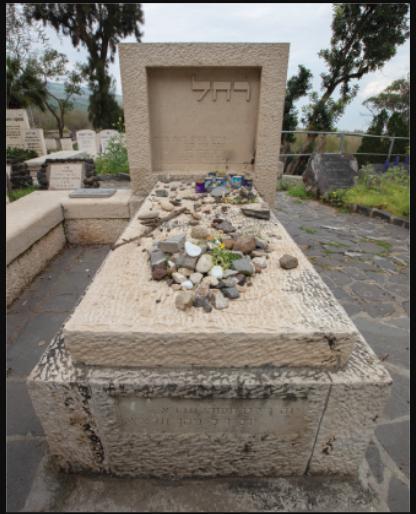
Rachel arrived at Hadassah Hospital in Tel Aviv. She died on April 16, 1931, in complete solitude. Rachel the Poet was buried on the shore of the Sea of Galilee, as she had asked in her poem "If Fate Decrees," which became a kind of will:
"If fate decrees that I live far from your shores - let me, Sea of Galilee, rest in your cemetery."
She was 41 when she died. The funeral procession, which began in the hospital courtyard, was attended by crowds who loved her poems and had waited to read them every Friday in Davar.
Yohanan Ratner designed Rachel's headstone in the cemetery at Kinneret. It was their third and final meeting. Thanks to Rachel, the Kinneret cemetery became a sought-after burial place. People wrote in their wills that they wished to be buried there: Noah Naftolsky, Avraham Herzfeld, and Kushnir all wrote that they wanted to be buried beside Rachel. Naftolsky died in 1974 and was buried there. A place was indeed reserved for them, but not in the same row or on the same line, since they had not accepted her when she was in pain and hardship. Here, things were settled once and for all. Behind Rachel's grave lies the poet Elisheva Bikhovsky, of whom Rachel said, "There is only one who equals me in Hebrew poetry."
תגובות
עדיין אין תגובות.