
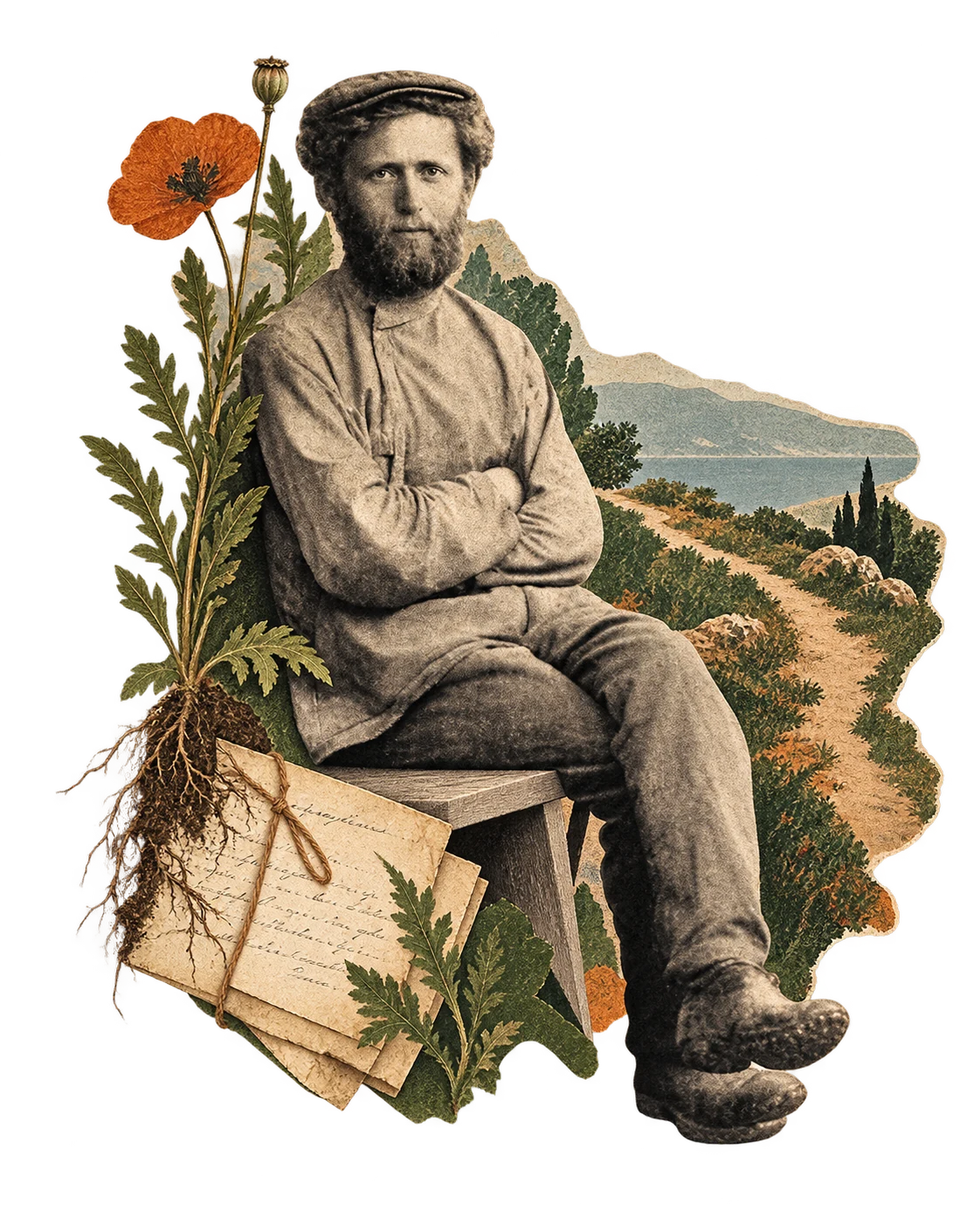
"Noah was strange and eccentric. Taciturn, he walked about the isolated house on the hill as though he did not know how to speak, attentive to what was happening around him and within him." This is how Shimon Kushnir, the author of the book 'People of Nebo,' described him. He was an instructor and a farmer, and worked in Kinneret, Kfar Tavor, Mas'ha, Sejera, and Rehovot, where he met the poet Rachel.
"Noah was strange and eccentric. Taciturn, he walked about the isolated house on the hill as though he did not know how to speak, attentive to what was happening around him and within him." This is how Shimon Kushnir, the author of the book 'People of Nebo,' described him. He was an instructor and a farmer, and worked in Kinneret, Kfar Tavor, Mas'ha, Sejera, and Rehovot, where he met the poet Rachel.
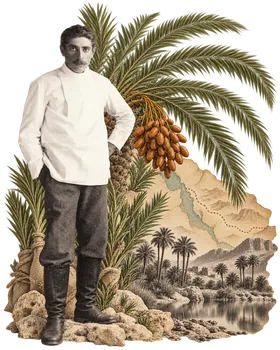
Noah Naftolsky was born in 1883 on his father's estate near the town of Snovsk, in the Russian steppes. His father was a distinguished scholar, a timber merchant, and an estate owner; his mother came from a well-known rabbinical family. Noah grew up in a non-Jewish environment, so he studied the Talmud and halakhic authorities at his father's home, first with the finest private tutors and then on his own.
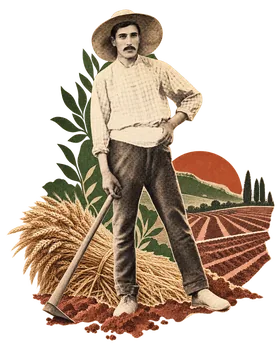
In 1917, he came down with pneumonia and had to stop his studies. He abandoned the books of the Torah, Mishnah, and Gemara, as well as the faith of his ancestors, and began reading the works of A. D. Gordon, Berdyczewski, Bialik, and Brenner. These books transformed him profoundly: he absorbed the message of awakening and renewal among the Jewish youth and decided to become a farmer in the Land of Israel.
First Steps in the Land
On the second night of Hanukkah in 1905, Noah arrived by ship from Odessa in Jaffa, together with 85 other immigrants. Among them were S. Yavnieli, Yitzhak Gutman, the Yavin family from Odessa, who settled in Gedera, and Hannah Sprinzak and her parents.
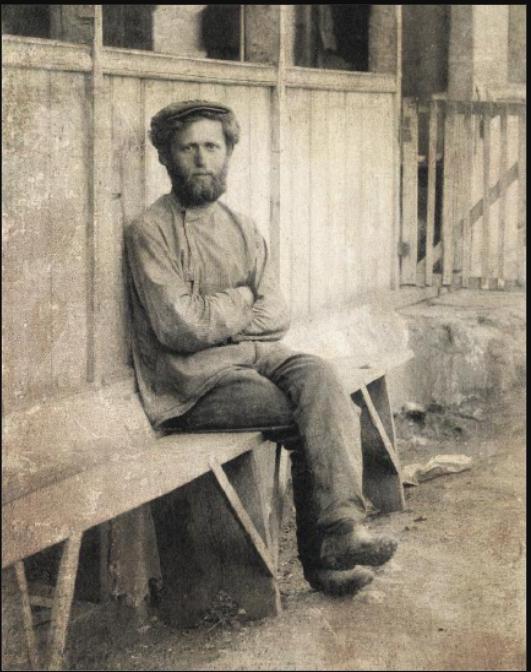
From Jaffa, Noah went to Petah Tikva and from there to Rehovot, where he shared a room with his idol, A. D. Gordon. Despite his advanced age and distinguished standing, Gordon insisted on putting his teachings into practice and went out to work in the fields with a hoe every morning.
On his first morning sharing a room with Gordon, Noah was surprised to see him wrap himself in a prayer shawl, put on tefillin, and say a brief prayer, including the Shema and the Amidah, before setting out to work. When Noah asked why he prayed, since they had left the religious way behind, Gordon replied that they must not abandon the Jewish path, for without it they would never have come to the Land of Israel. Noah disagreed with Gordon's view, but out of respect for him, he kept quiet.
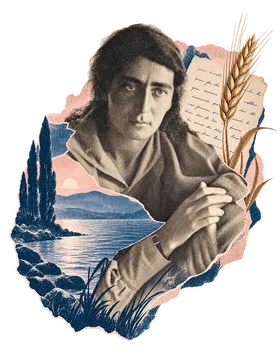
At this point, Noah's path crossed that of Rachel Bluwstein, who would later become known as the poet Rachel. Noah was a young laborer working in the orchards of Rehovot, while Rachel, a blossoming young woman who had just arrived in the Land of Israel, lived with her sister Shoshana in the Zeltzer home. Every evening, the young women of Rehovot would gather around them. The sisters' room was filled with music and song and became the colony's cultural center.
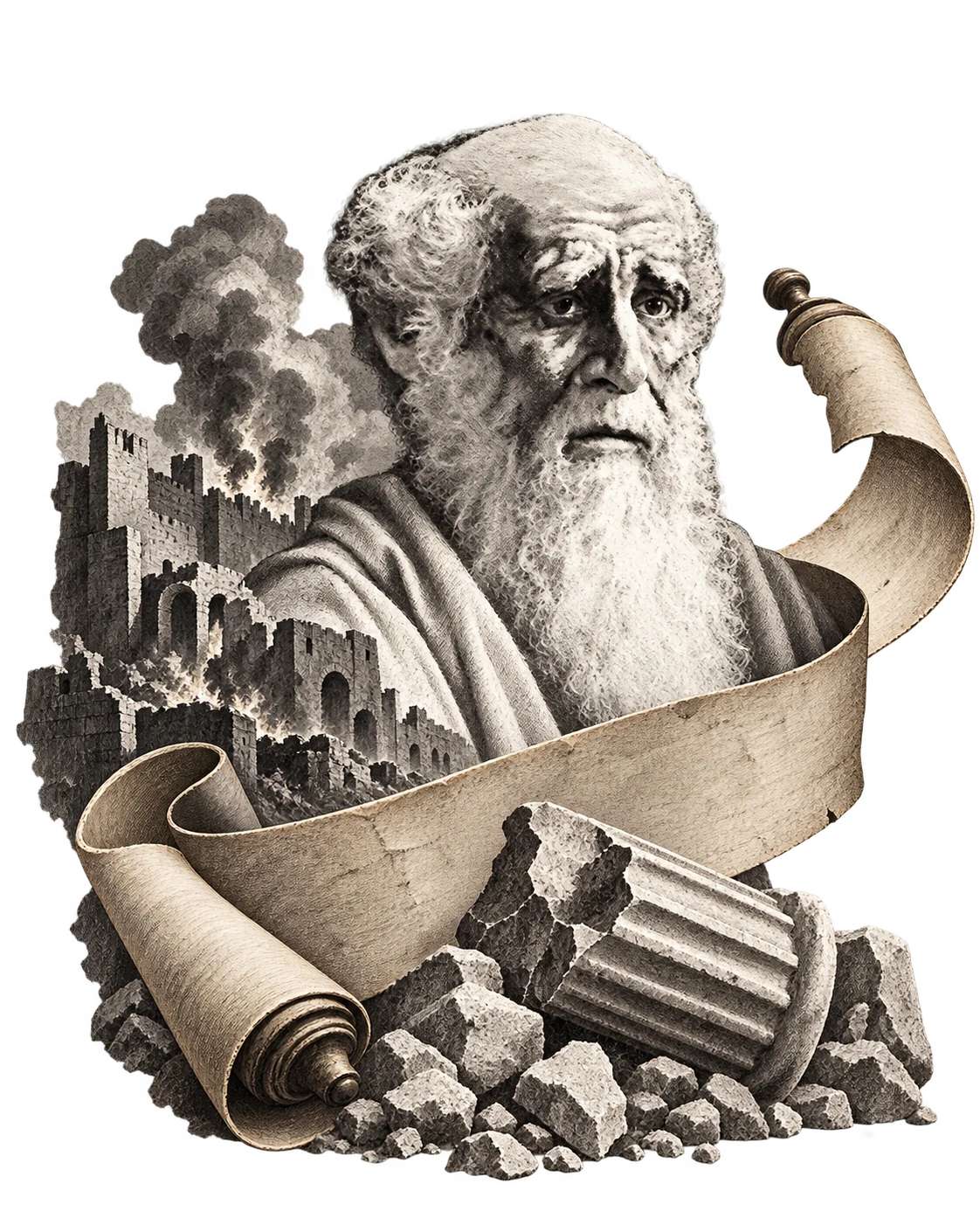
Shimon Kushnir tells of Rachel and Noah in his book 'People of Nebo': "The magic of her presence, her deep blue eyes, captivated his heart. Her words rang through his soul like a melody. At night they would go out together and walk in a place called 'Hill of Love.' Rachel would lean against Noah and tell him excitedly that she had found a wonderful expression in Frischmann: 'letters taking flight.' Noah told her that the expression came from the story of the Ten Martyrs, from the account of the death of Rabbi Hanina ben Teradion. He was wrapped in a Torah scroll and burned, and his students asked him, 'Rabbi, Rabbi, what do you see?' He answered, 'The parchment is burning, and the letters are taking flight.'"
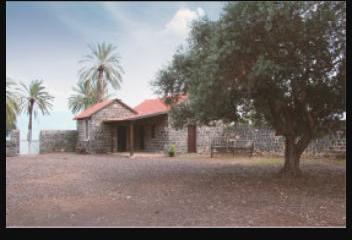
In 1909, Noah moved to the Kinneret farm, where he was among its first workers and among the first to favor intensive agriculture. There he joined Ben-Zion Yisraeli and Meir Rothberg, and the three became known as the 'Together Trio.' From Kinneret, they moved to Yavne'el, and as they wandered from place to place, they worked in Kfar Tavor, Mas'ha, and Sejera. After a year of work in Sejera, the trio returned to Kinneret. But when Noah was struck by malaria, he went back to Rehovot and then returned to Kinneret, where his path crossed Rachel's once more.
On Saturdays, Rachel would go wandering with Noah along the mountain slopes, through Wadi Fijas (Nahal Yavne'el), to hidden spots where poppies, anemones, and dandelions bloomed. There, Noah opened up new worlds of nature to Rachel: the secret of the delicate scents of flowers that attract moths, and the secrets of mating and fertilization in nature. This 'springtime' was brief, followed by days of storms and cold, loneliness and heartbreak. Noah and Rachel parted again. She moved to Safed, while he wandered the roads as an agricultural consultant.
From Kinneret to Givatayim
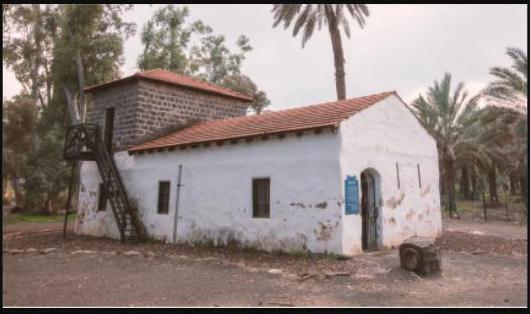
In 1924, Noah bought about ten dunams of land in the desolate hills between Bnei Brak and Jaffa, where the city of Givatayim would later develop.
There he finally decided to fulfill his dream and establish a farm for growing rare plants. He began cultivating the large plot, digging ditches, laying water pipes and setting up an irrigation system, planting citrus and other fruit trees, and preparing beds for experiments in growing plants. Later, he bought another two dunams on the barren, wild kurkar hill next to his larger plot.
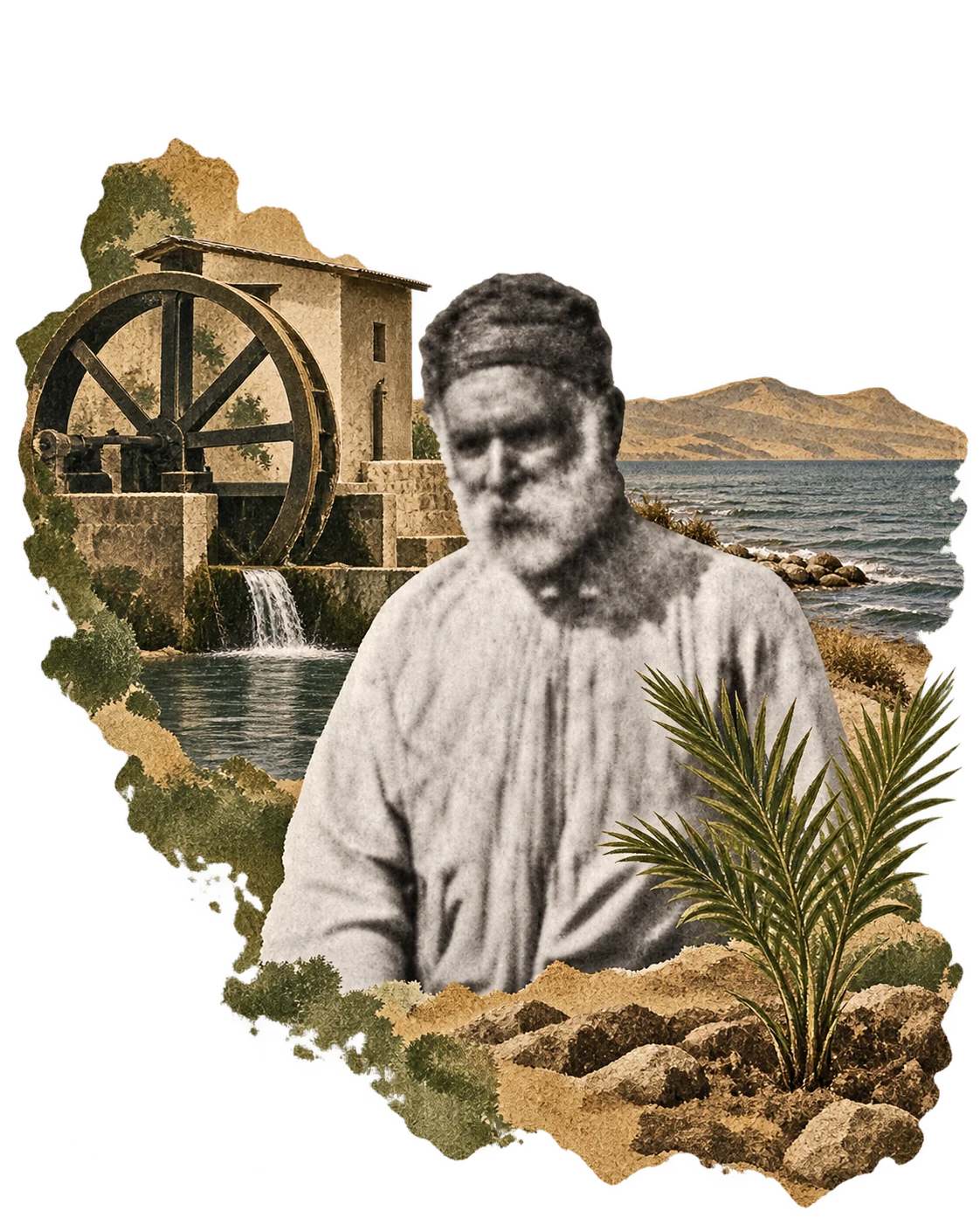
From the top of the hill, the great city could be seen stretching all the way to the blue sea. Noah, with his long white beard and quiet manner of speaking, lived on HaGilboa Street, on the slopes of Kozlovsky Hill. He looked like a saint, but he was alone, with no wife or children. The flowers were what brought him happiness.
You can learn more about Noah Naftolsky's life in Shimon Kushnir's book 'People of Nebo,' which opens with the words: "Noah was strange and eccentric. Taciturn, he walked about the isolated house on the hill as though he did not know how to speak, attentive to what was happening around him and within him... The hill also enchanted Noah with its view, stretching from horizon to horizon: to the east, the Judean Hills; to the south, all the wide-open spaces of the Ono Valley; to the north, all the lands of the Sharon; and to the west, the sight of the great sea. On the summit of the hill, Noah would dream: 'I will build myself a small house and an upper room for my old age, where I can be alone with the universe.'"
Noah never managed to adapt to the communal way of life in a kibbutz or a workers' moshav. He remained a reclusive lone wolf.
Rachel came to Tel Aviv and lived in a small room near the sea. Now they were close again, but it was too late. When he came to visit her, she was coughing heavily. She closed her eyes and said, "Noah, Noah, take me to the sailboat and let us sail on the Kinneret to its beautiful hidden places to gather crocuses and cyclamens."
When the State was established, in his innocence, Noah gave his land to the Jewish National Fund and the Givatayim Municipality without any payment, keeping only a small plot for the rare plants he grew. Near the end of his life, he discovered that the institutions to which he had given his land had made a fortune by selling it to contractors, who built large, gray apartment blocks all around him, hemming him in on every side. Tractors rolled over his botanical farm, trampling the rare flowers in their path. An old man, stunned and heartbroken, he wandered the site, trying to save whatever he could, a rare flower or a bulb.
Noah's close friends, the couple Haya and Meir Rothberg, were pioneers and former heroes of the settlement enterprise. Like Noah, they had also been pushed out of communal life, had no children, and had accumulated no wealth. The State was established and rushed forward at speed, while they were left behind, forgotten, without a home or a decent livelihood.
Meir Rothberg was by then an old, frail man, gravely ill with Parkinson's disease. Noah built them a house on his plot on the slope of the kurkar hill. Meir Rothberg and Noah, heroes of the Second Aliyah and founders of the Kinneret Group, would go out at dusk and wander aimlessly around the hill in silence, supporting one another, until night fell and Haya came to call them home.
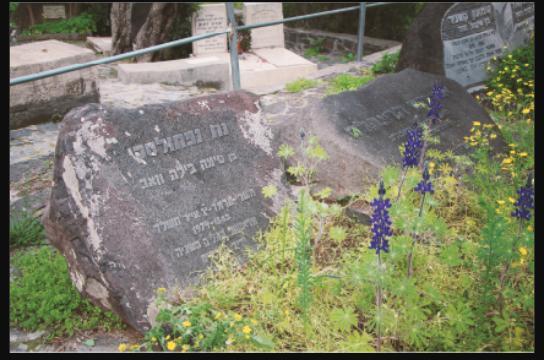
Noah Naftolsky died in 1974. He bequeathed his collection of flowers to the botanical garden at Tel Aviv University, which bears his name. He is considered the discoverer of the rare flower known as the 'white lily,' which everyone had believed was extinct in the landscapes of the Land of Israel.
תגובות
עדיין אין תגובות.