
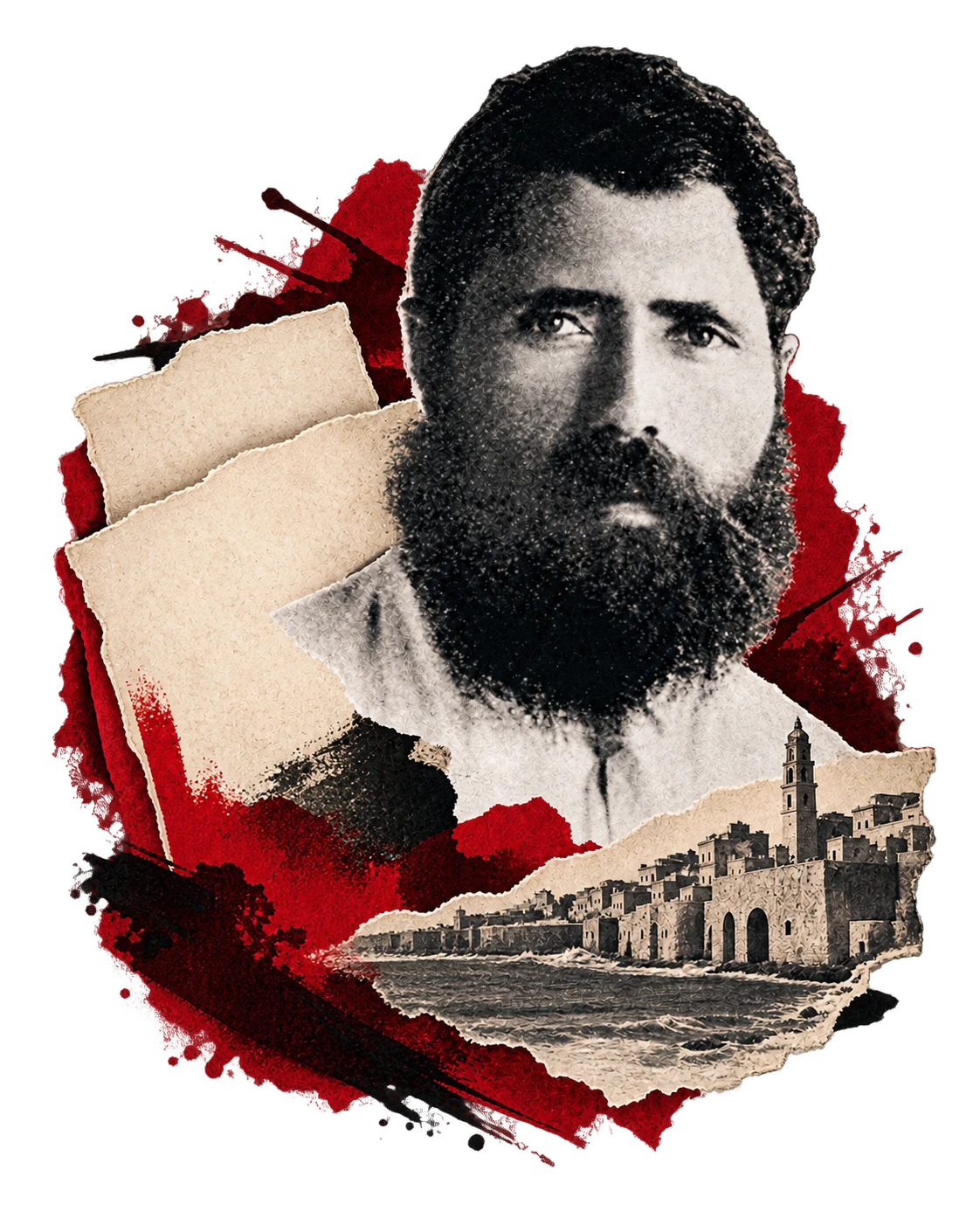
On February 12, 1909, just a few days after the arrival of that "editor," the following notice appeared in the newspaper HaTzvi: "The writer Y. H. Brenner has come to the Land of Israel. He disembarked in Haifa." The notice was brief; there was no need to say more. Everyone knew who he was. They only needed to announce his arrival. His departure, too, was accompanied by a short notice: "The grave has closed over Y. H. Brenner." This announcement brought the community into four days of mourning. The loss was immense - Y. H. Brenner was murdered at the age of 40 and entered the cultural pantheon of the Jewish people living in the Land of Israel.
His Childhood and Early Studies
Joseph Haim Brenner was born in 1881 to Shlomo and Raizel, in a remote, impoverished village called Novye Mliny in the southwestern part of the Russian Empire. His family suffered from poverty, but with what little they had, they made sure to provide their children with an education. At just nine years old, Brenner was sent away from home to study Torah. His father's dream was that he would become a rabbi, marry the daughter of the town's wealthy man, then return and support his family. Brenner describes this period in his story "Shama," about the torment of a small boy separated from his home. At the yeshiva where he studied, Brenner secretly encountered secular learning. At night, he took an interest in secular literature and science, and even committed the sin of writing articles in Hebrew. When one of the students informed on him, he was summoned before the head of the yeshiva, Rabbi Leib Haft, who slapped him in front of everyone and even expelled him from the yeshiva. Ironically, years later, Rabbi Leib Haft's grandson, Yaakov Haft, himself a writer and accountant, founded the accounting firm Haft & Haft, established the Brenner Prize, and continues to fund it to this day.
After leaving the yeshiva, Brenner returned home and pleaded with his father to let him move to the big city and pursue a general education. His father refused, arguing that education would give him nothing, while Torah study would bring him a life of respect, status, and wealth. Heavyhearted, Brenner gave in, and in 1896 went to study at the yeshiva in the town of Pochep.
In Pochep, Brenner experienced feelings of happiness for the first time in his life. The yeshiva was run by Rabbi Natan Gnessin, a sensitive and well-educated man. There Brenner met Natan's son, Uri Nissan Gnessin, who became one of his closest friends, if not his very closest. The rabbi's son was everything Brenner had never been: tall, noble, handsome, restrained, and level-headed. Brenner was short, broad, slovenly in his dress, excitable, loud, and extreme. He was even convinced that his body and breath gave off a foul odor, and neglected his appearance and clothing.
The Friendship with Uri Nissan Gnessin
The exchange of letters between Gnessin and Brenner, some 800 in all, also expresses what they shared: both were gentle souls, keen observers, and lovers of writing. Brenner ended one of his letters to Gnessin this way: "My dear, my beloved, I will never forget you, until the day I return to dust." In a poem Brenner dedicated to his "eternal beloved," he wrote: "Only death will part us!!! An eternal covenant is sealed between A. N. Gnessin and Joseph Haim Brenner." At the yeshiva in Pochep, Brenner and Gnessin took their first steps in writing together. Later, Brenner would name his only son Uri Nissan, after his good friend, and in time their relationship would even be analyzed as one that involved sexual excitement... Brenner was 15 when the supervisor caught him committing the same sin again, reading secular literature. He had to leave Pochep and went to his uncle in Bialystok to prepare for his matriculation exams and study Russian. He told his father he was going to study at a yeshiva. At his uncle's, he bought Russian textbooks so he could read them in secret. When his uncle discovered this, he wrote to Brenner's father that his son was straying from the righteous path. Brenner received a letter from his father telling him that he was disappointed in him and that his mother cried all day. Brenner decided to repent and wrote to Rabbi Gnessin that he had neglected his literary passions and was now wholly devoted to the study of the holy Torah. The letter found its way to his friend Uri Nissan Gnessin, who saw it as a betrayal. "Here a tear fell from my eye. A tear for the loss of life," Gnessin wrote to him. After receiving this letter, Brenner decided to return to his passion and thanked Gnessin for saving him. "My dear, my beloved, my darling, my love, apple of my eye... Farewell! I am forever indebted to you, because if not for you I would now be drowning in the stinking waters of Hasidism... And you, only you, saved my soul." Brenner returned to Pochep. He studied Russian and German and read Bialik's poems and Hebrew journals such as HaShiloah. At 17, he discovered that "I am certainly no poet, but I certainly have a gift for storytelling." He wrote to his friend Shimon Bichovsky, later the husband of the writer Elisheva, who had moved to Vilna: "A lost and afflicted young Hebrew, bent and low, with a hurting heart filled with terrible bitterness."
In 1901, Brenner was drafted into the Russian army. He barely survived for two years, and when the Russo-Japanese War broke out, a chance encounter brought him together with the writer Yitzhak Katzenelson. Katzenelson published a laudatory article about Brenner. Hillel Zeitlin wrote to him, informing him that the "rising star" he had written about was, by chance, suffering in a military barracks near Zeitlin's city, serving as an ordinary soldier. Katzenelson hurried to the base and found Brenner "standing and polishing copper utensils: his clothes were patched upon patches, his short legs seemed to be drowning in oversized, wide boots, and his crushed, brimless cap rested almost entirely on the back of his head." Katzenelson refused to believe that this scruffy man was the writer he admired, and was even more surprised that Brenner, the object of his admiration, was familiar with Katzenelson’s writings. Katzenelson spoke with the company commander, and Brenner was allowed to stay at his home on weekends. Katzenelson vouched for his conduct and promised that his protégé would not desert the army, as many Jewish soldiers had done. At Katzenelson's home, Brenner was able to read books, write, receive letters, and even welcome visits from his beloved friends from his Pochep days: Gnessin, Bichovsky, and others.
Deserting the Army, and London
It was clear that Brenner could not survive in the army, and, much to Katzenelson's dismay, since he had vouched for him, he would have to desert. As the battalion moved east, Brenner asked to step aside to relieve himself, then fled. A short time later, he was caught by chance by deserter-hunters. He told them he was from the city of Bobruisk, so he was sent there in a prisoners' convoy to verify his identity. Brenner's friends heard about it and began organizing another escape plan. Among the organizers was Mordecai Ben Hillel Hacohen, father of Knesset member David Hacohen and uncle of Rosa Cohen, Yitzhak Rabin's mother. The Bundists, members of the Jewish Socialist Workers' Party, attacked Brenner's guards and rescued him without anyone being hurt, then took him to their secret printing house. The Bundists knew that Brenner did not share their ideology, but they loved and respected him, and so they risked their lives to free him and get him to safety in Prussia, from where Brenner escaped to London. By 1903, Brenner had become a well-known writer in the Jewish world. His first novel, BaChoref, was published in installments in HaShiloah, edited by Bialik. Though Brenner was then only 21, Bialik said of him, "For now, I see no writer like him in Israel." At 23, Brenner, penniless and stateless, landed in London. He was struck by the fact that "at least there one hears no oppressor's voice, and you are free to bang your head against the wall as you please." Later, when Uri Gnessin also arrived in London, he wrote to Bichovsky that he was surprised not to have encountered a single gendarme or army officer during the eight-hour journey, an unusual experience for someone accustomed to living under the rule of the tsar.
London and 'Around the Point'
During the three years Brenner lived in London, he resided in the poor neighborhood of Whitechapel, where he began writing professionally. In 1904, he wrote the book Around the Point. In his writing, Brenner focused on the rootlessness and physical wretchedness of immigrants uprooted from the Pale of Settlement, who failed to put down roots in their new home and were caught up in endless ideological conflicts. "A place where foul vapors and mustiness rise, a place where one melts and withers away completely in stench... a place where Jewish women from Lithuania and Poland mutter in their strange jargon about their little ones at 'skool' and their husbands at 'workshop,'" Brenner wrote.
The language, the stories, and the way they were told astonished Hebrew readers. Around the Point opened a new era in Hebrew fiction. Bialik wrote that Brenner was "the new Hebrew storyteller of our time, in the fullest sense of those words." In the summer of 1905, Brenner conceived the idea of publishing an independent Hebrew journal. He did not see himself merely as a Hebrew writer, but as an intellectual with a mission. He chose the activist title HaMe'orer, "The Awakener," and, as he put it, set out to spread the motto "For I have come to awaken you, my brother." Brenner was unable to raise money from donors and decided to publish the journal almost entirely by himself. He took on the whole burden of producing it: he typeset, proofread, edited, wrote, printed, stuffed the envelopes, and, in the cold and chill of the London morning, even went to the post office to distribute it. His partner in this enormous undertaking was the writer Yehoshua Radler-Feldman, known by his pen name R. Binyamin, a religiously observant Jew from Galicia and one of the first to speak about Jewish-Arab coexistence and the study of the Islamic world. R. Binyamin, too, had disagreements with Brenner. For example, his landmark essay "An Arab Journey" is a manifesto on the need to preserve the cultural connection between Judaism and Islam, between Jews and Arabs. Brenner, by contrast, believed that conflict between Jews and Arabs was inevitable. Brenner's outlook was racist and nationalist, and he wrote harsh descriptions of Palestinians, referring to them in the same breath as plants and animals. "We do not need the Land of the Gazelle; we need a cave to hide in, because six million, as though shorn from the beards of our men and children, are headed for slaughter." Brenner wrote this in 1905, accurately foreseeing the horrific future: "For the people of Israel, by the laws of reason, there is no future."
It is hard to overstate the importance of HaMe'orer. It was a new literary journal in Hebrew, at a time when other Hebrew journals, such as HaShiloah, were shutting down. Some closed because of censorship in Russia after the First Revolution. HaMe'orer was the journal that carried the banner of the Hebrew language in its hour of distress. Its impact on readers was astonishing, and it could even be said that everyone who received a copy became a writer or aspired to be one. Indeed, the journal achieved its goal and awakened people to thought and creativity. For two years, HaMe'orer was the only journal being published, and it offered a counterweight to European culture. It was a sparkling beacon that swept Jewish readers toward the shores of Hebrew culture.
Yaakov Fichman wrote about HaMe'orer: "It was the one that poured a spirit of intoxication over us, that kindled the fire of madness within us... It startled us with a peal of bells, it called us to set out, because danger was near, because this was the final battle." 1907, the year the journal was published, was a year of exaltation and dreams fulfilled, but also a year of disappointments.
HaMeorer and the Ideological Debates
For a time, Brenner lived as a subtenant in the apartment of Sarah and Kalman Marmur. Kalman abandoned his wife, Sarah Shifra, and their son and went to the United States. During that time, Brenner became Sarah's friend. He felt compassion for her, for her loneliness and her struggle to survive with her son without her husband's help. Over time, as she grew further from her husband, stopped receiving letters, and felt that she and Brenner shared the fate of the abandoned and forsaken, their feelings deepened, and an affair developed between them. Kalman heard about the affair in New York, was outraged, and the Marmurs reunited.
The next disappointment came from Gnessin, in 1906. The two had already made names for themselves in the literary world. Gnessin wrote his story "HaTzida," and its publication caused a sensation. Brenner, too, had become a well-known writer thanks to his books and HaMe'orer. Bichovsky and Gnessin, Brenner's friends from Pochep, published their own literary journal, called Nisyonot, and in the spring of 1907 Gnessin arrived in London. Brenner awaited him like a lover waiting for the object of his affections, and his arrival was a celebration. Immersed in his tormented inner world, Brenner was unaware of Gnessin's medical condition and the severity of his heart disease.
Gnessin arrived in London after the hardship and poverty he had endured had worsened his health. A sensitive aristocrat, he did not like to expose his suffering to the public. The silence that had surrounded him for as long as anyone could remember became deeper and harder to break through. He suffered alone, but proudly. Brenner, by contrast, became more outwardly expressive, revealing the burden of his suffering, crying out in pain, and expecting others to share his sorrow. Brenner failed to notice Gnessin's suffering and even interpreted Gnessin's reserve as the pampered behavior of a rabbi's son accustomed to special treatment.
Gnessin, for his part, despised Brenner's public self-torment and his cries of "Oy vey." He saw before him a healthy young man who never stopped weeping over his bitter fate, while Gnessin himself had already been condemned to die. They parted, and Gnessin did not reply to Brenner's letters. The next time Brenner spoke of him was only after Gnessin's death.
In 1907, HaMe'orer closed for lack of financial support and literary material. Brenner felt revulsion toward cold, damp London and its wretched, crowded ghetto. After debating between Europe, New York, and the Land of Israel, he chose the Land of Israel. But when he learned that Gnessin was also headed there, he changed his mind: "I am no longer going to the Land of Israel: I hate the chosen people and I hate the dead land, this so-called 'Land of Israel.'"
Gnessin arrived in the Land of Israel, but his heart condition soon forced him to return, disappointed, to his father's house in Pochep.
In 1908, Brenner went to the city of Lviv in Galicia, where he befriended the writer Gershon Shofman and rented an apartment with him. Gershon, like Brenner and Uri Nissan Gnessin, had studied at a yeshiva and had also deserted the Russian army. But unlike Gnessin, who lived to the age of 33, and Brenner, who lived to 40, he lived a long life and wrote until he was 92. In his writing, unlike his brilliant, depressive friends, Gershon emphasized sexuality and wrote about brothels and homosexuality. They were opposites: the solemn, serious, ascetic Brenner and the pleasure-seeking Shofman, who liked women of easy virtue, some barely of age. Brenner returned to writing, and in Lviv he met a pretty, graceful high school student named Tinka-Estherka Lampert. Shofman, apparently more experienced with women, described her as a symbol of ugliness and thought Brenner had become attached to a girl who was unworthy of him, not beautiful and unsuitable as a partner. In a gesture of friendship, and to save Brenner from this girl, he made Tinka-Estherka fall in love with him. Brenner discovered the betrayal and left her. This brief romantic triangle produced a rich literary harvest. Some time later, Tinka regretted what she had done and tried to win Brenner back, but did not succeed.
In 1911, an announcement appeared of the engagement of 31-year-old Shofman to Shifra Fliegelman, a petite, blonde girl of about 16. Brenner, who had broken off his engagement just three years earlier because of Shofman, wrote to him sarcastically that he wanted her photograph "because I would like to love her, too." Shofman, a butterfly flitting from flower to flower, soon abandoned his young fiancée. Shifra became the unforgettable love of the poet Uri Zvi Greenberg (known by his initials, U.Z.G.). Gershon Shofman stayed in Lviv, married Annie, a Catholic Austrian girl 20 years his junior who converted to Judaism for him, and, when the Nazis rose to power, the couple immigrated to the Land of Israel. Shofman continued writing there until he was 92.
From Working the Land to Jerusalem
Brenner, who saw himself as a prophet, was captivated by the ideal of working the land, which would create a new person connected to his people and to himself, and through working the land would redeem himself from exile. Brenner tried his hand at agricultural work... A glance at the holes he dug in the colony of Hadera was enough to show that he was not cut out for this work... After a week, he moved to Jerusalem and joined the editorial staff of HaPoel HaTzair, founded by Yosef Aharonovitch, where he worked as an editor and writer. HaPoel HaTzair was a party newspaper and stood at the center of the literary scene of the time.
In 1909, Brenner settled in Jerusalem and joined the editorial staff of HaPoel HaTzair. He rented a room in the home of the widow Tova Katinka and her three daughters. The girls' father had been murdered in the Bialystok pogroms in the summer of 1906, and it seemed that Brenner took on the role of father in the Katinka family. It is possible that Rachel, the youngest of the Katinka daughters, then 12, reminded him of his unrequited love for Tinka-Estherka in Lviv.
Rachel said that from the moment Brenner arrived at their home, he treated her as if she were a grown girl. She wrote that "he told her about the difficult situations he had been in, about the many countries through which he had wandered. I would lay my head on his chest, and I felt as though I were listening to the heartbeat of the world..."
Some time later, Brenner decided to leave Jerusalem for Tel Aviv, perhaps because he feared what might develop between him and Rachel, the girl. In a letter to the editorial board of HaPoel HaTzair, he wrote: "For personal reasons, I have withdrawn from taking part in editing HaPoel HaTzair as of the beginning of the year 5670." Time passed, and Tova Katinka and her daughters moved to Tel Aviv. The beautiful Rachel enrolled in the second class of the Levinsky Teachers' Seminary, which opened in Neve Tzedek in 1912. Rachel renewed her connection with Brenner, but by then she was no longer a minor, and Brenner was allowed to visit her alone in her room. In 1918, Brenner learned that 21-year-old Rachel was going to marry Yehoshua Brandstatter, one of the founders of Kibbutz Beit Alfa. Brenner warned his protégé against him, mockingly saying, "You're going to marry that dancer? The one who dances at every wedding?" His prophecy came true...
In 1927, six years after Brenner's murder, Rachel was living in the Netherlands with her two young daughters, while her husband, Yehoshua Brandstatter, courted Margot Klausner. In letters she wrote about her life with Brenner, from childhood through her youth: "The only man who ever conquered me, before whom I revealed myself without any doctrine, who knew how to draw everything out of me... For years I was with this man and with everything he loved." It seems Rachel really had been Brenner's beloved from her youth onward...
The painter, activist, and socialite Brandstatter divorced Rachel Katinka, the mother of his two daughters, and in 1931 married Margot Klausner, founder of Herzliya Studios and a pioneer of Hebrew cinema. Rachel married the poet Aharon Ze'ev in 1940. He would later become the IDF's Chief Education Officer.
In the November 1910 issue of HaPoel HaTzair, Brenner addressed assimilation with tolerance. He believed that religious assimilation was just one stage in the assimilation of culture and language. The article divided the literary community into two camps: on one side were the generation of Bialik and Ahad Ha'am, and on the other were younger writers such as Brenner, Berdyczewski, Shofman, and their peers. Ahad Ha'am demanded that support for HaPoel HaTzair be discontinued. Ussishkin, Bialik, and Klausner were in favor of ending the support. Yehoshua Radler-Feldman, R. Binyamin, Brenner's friend from HaMe'orer, organized a gathering in Jaffa to support Brenner and HaPoel HaTzair. The gathering was attended by religiously observant writers who opposed Brenner, including A.Z.R. and Sheinkin. Although they agreed that the article and its content were inappropriate, they considered ending its funding an attack on the press. In 1911, his book From Here and There, Brenner's first novel set in the Land of Israel, was published. There, too, Brenner sharply and mercilessly criticized the Jewish community in the country at the time. He did not spare his friends, the members of his generation who had immigrated from the towns of Eastern Europe. The reality was bleak, and the future promised nothing. Anyone familiar with the period and the figures of the Second Aliyah can easily recognize A. D. Gordon in the character of Aryeh Lapidot, and Brenner himself in the narrator, called "At a Loss" in the book. Brenner wrote about hardship and squalor, without romanticizing them. He coldly analyzed the state of the country, reflecting reality without sugarcoating it. At first glance, it might have seemed that this book would provoke hostility among his friends and even deter people from immigrating to the Land of Israel. In practice, however, its honesty encouraged immigration. Among those who read Brenner's writings was Gershom Scholem, one of the greatest scholars of Kabbalah, who immigrated to the Land of Israel after reading this book. Another pioneer, Eliezer Slutzkin, was asked in his old age, "When you came to the Land of Israel, were you not disappointed by the reality you found here?" He answered, "No, because I had read Brenner and already knew all the country's ills." Berl Katznelson, the greatest leader of the Second Aliyah, called it the definitive book of the period.
Gnessin's Death and Putting Down Roots in Jerusalem
In March 1913, a terrible blow struck Brenner. Five years after his good friend Uri Nissan Gnessin had left London, he died in Warsaw at the age of 30. A friend who had nursed him in his illness informed Brenner of his death and wrote: "You should know that on his last night he spoke in his sleep... and even when awake, only of Petah Tikva... and of you. He called your name several times."
That same year, Brenner was at the center of Jerusalem's intellectual circle. He edited the journal HaAhdut. The circle also included three certified kindergarten teachers, who were then considered the elite of society. At first, he had a relationship with Hassia Fainsod, who established the first modern Hebrew kindergarten in the Land of Israel. She later married the archaeologist Eleazar Lipa Sukenik, and they had Yossi and Yigal Yadin, who became the second chief of staff of the IDF. Brenner then had a relationship with Hassia's close friend, the kindergarten teacher Haya Broida from Petah Tikva, who had been S. Y. Agnon's beloved. About a year later, they married. Brenner was 32 and Haya was 24. The ceremony was conducted by Alexander Ziskind Rabinovitz, known as A.Z.R., the religious old man whom Brenner had angered with his articles. A.Z.R. considered Brenner one of the 36 righteous men. Haya and Brenner moved into the hut of his brother-in-law, Haim Broida, at the end of Ein Ganim Street in Petah Tikva. Brenner drew on his impressions of the years he lived in the hut for two novels: From Here and There and Bereavement and Failure. His only son was also born in this hut, and Brenner named him Uri Nissan, after his friend Uri Nissan Gnessin, who had died about a year earlier. His son Uri was the love of his life.
The Years of Marriage and Separation
These were the days of the First World War. The Turks deported the Jews of Tel Aviv to Petah Tikva, the newspapers closed, their source of income disappeared, and poverty and displacement beset the young couple. Their marriage had little chance of succeeding. They were opposites who could not complement one another. Brenner, an extreme ascetic, disorganized and slovenly, was the opposite of the well-groomed Haya. Brenner was reserved in his attitude toward his wife. He spoke of her with affection and concern, but not with love.
When the English drove the Turks from the country, the economic situation improved and it became possible to return to Tel Aviv. Berl Katznelson entrusted Brenner with editing the monthly HaAdama, and Brenner once again encouraged and promoted young writers, including S. Y. Agnon, as he had done in the days of HaMe'orer.
At the end of February 1920, Haya wrote Brenner a letter asking to separate from him. His reply has been preserved: "I read what you wrote and sent me. I have known it for a long time. But I have no strength to mend things. I cannot be a husband. In this, you are entirely right." Haya described their seven years of marriage as hell. After the divorce, Haya took their son and went to Berlin to study early childhood education, while Brenner spiraled downward, into a life of extreme poverty and wandering, in a rented room in the Red House and toward his terrible fate.
Brenner began corresponding with his son Uri. It was a deeply moving, heartbreaking exchange between a father from whom his beloved son had been torn and a son who missed his father, wrote in a small child's handwriting, and told him that he was learning Hebrew and would soon come to the Land of Israel to see him. "To my distant child, Uri Nissan. I know, my dear: my gift is meager, feeble. I have written only what I could, as best I could. When you grow up and read these writings, written without you before me, still, one thought of you drove me on. My soul longs to give you more."
The Red House and the End
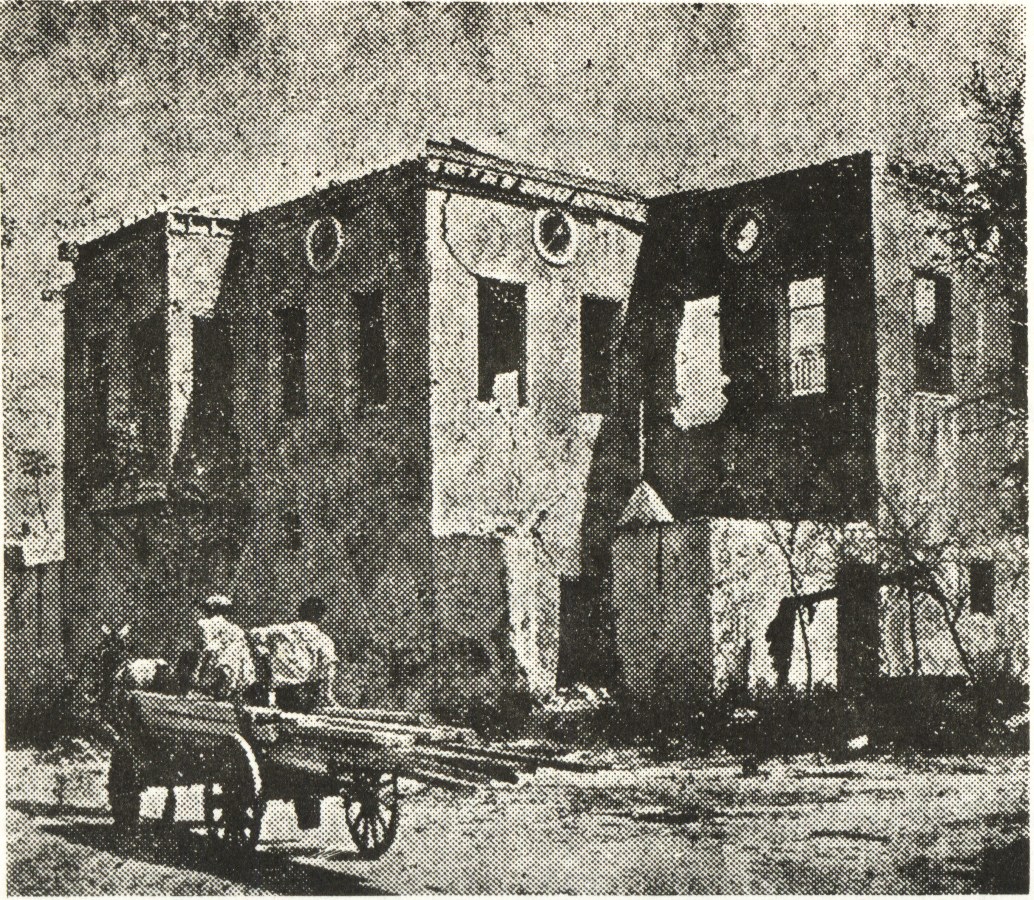
After his divorce and separation from his son, Brenner rented a room in the home of the Yitzker family in the Abu Kabir neighborhood, on the edge of Jaffa. He shared the room with the writers Yosef Luidor, Zvi Shatz, and Zvi Gugig. The house was known as the "Red House." At the end of the First World War, which the Turks lost, the Arabs found themselves in a new reality in which the British and French divided control of the Middle East between them, bringing the dream of a great Syrian Arab kingdom to an end. In March 1921, Churchill arrived for a visit to the country and met with a delegation from the Arab Executive Committee. They asked him to cancel the establishment of a Jewish national home, as promised in the Balfour Declaration, close the gates of the Land of Israel to Jewish immigration, and establish an Arab national government in the country. Churchill replied that, under the Balfour Declaration, the British government was committed to the Jewish people.
From then on, the Arabs began inciting against the Jews, including in the pages of the newspaper Filastin, which opposed British policy on the question of the Land of Israel. On May 1, 1921, a workers' procession organized by Ahdut HaAvoda took place in Tel Aviv. At the same time, a group of members of the Communist Party, Mops, set out from Neve Shalom, on the edge of the Manshiya neighborhood, carrying signs with revolutionary slogans in Yiddish. The two Jewish groups clashed and began exchanging blows. The Arabs took advantage of the quarrels and brawling between the two groups and began rioting against the Jews. This was the spark that ignited the unrest.
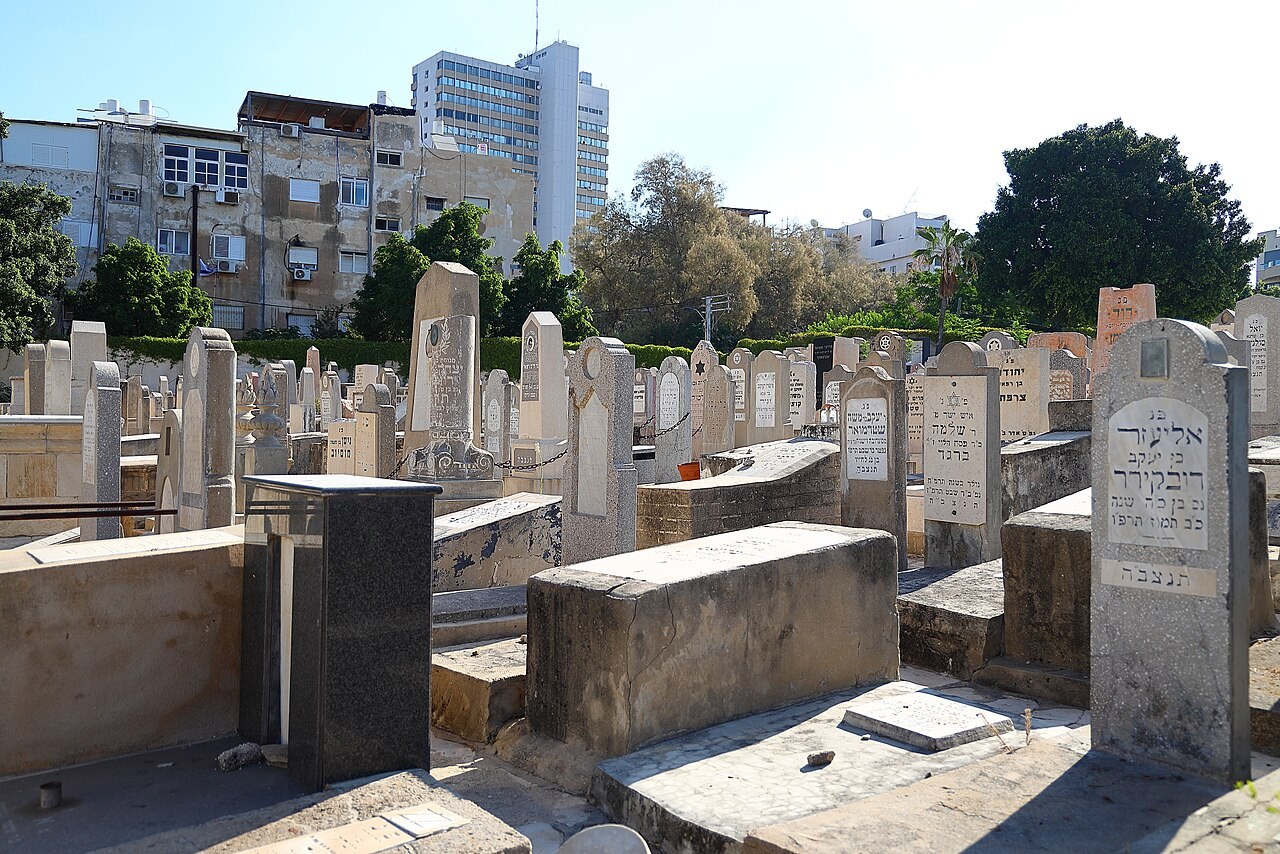
Two beekeepers from the Lerer family of Ness Ziona, who had been trapped in Tel Aviv during the riots, fled to the "Red House." It was clear that the residents of the isolated Red House, surrounded by an Arab neighborhood and orchards, were in danger, so a car was sent to rescue them. There was not enough room for everyone, and Brenner refused to board, asking that his place be given to the two men from the Lerer family. Six people remained in the house under siege: Brenner, Luidor, Gugig, Shatz, Yehuda Yitzker, and his son Avraham. The next day, May 2, as the riots resumed, the residents of the Red House decided to flee to Tel Aviv. They escaped through the back gate, hoping to hide in the orchards, while Luidor covered their escape from the front gate. Unfortunately, at that moment, a funeral procession passed by for a 13-year-old Arab boy who had been shot and killed by a Jewish policeman the day before. The funeral-goers saw an opportunity and decided to take revenge. The car that returned to collect Brenner, accompanied by an armed escort, arrived too late. They found the bodies lying on the path about 60 meters from the house. The six bodies were in a horrific condition, naked from the waist down and showing signs of severe violence. Brenner was found lying on his stomach. Luidor's body was described as "blackened," and his hands were tied behind his back, evidence of abuse. When the police arrived to remove the victims, Luidor's body had disappeared. It was found only months later, dismembered and thrown into a well in the area. Torn, bloodstained pages lay scattered on the threshold of the looted house. They were Brenner's last stories... The Jewish community was overcome with grief and guilt. The six bodies were displayed at Herzliya Hebrew Gymnasium and buried in a mass grave at Trumpeldor Cemetery. Four days of mourning were declared. "Heavy mourning in the Land of Israel" was the headline in the newspaper the next day. Events were postponed, meetings canceled, and schools closed for four days. The Chief Rabbinate issued a proclamation calling on the residents of the Holy Land to recite the prayer "Our Father in Heaven" and psalms each day for the elevation of the souls of the holy victims.
Joseph Haim Brenner was murdered on May 2, 1921, at the age of 40.

A strange cult of remembrance developed around the murder. Brenner's body and those of the other victims were brought to Herzliya Hebrew Gymnasium and photographed. Images of them, shot and beaten, were circulated and shocked the Jewish world. One newspaper reported that Brenner had been shot in the stomach and died of internal bleeding in his intestines. The murder turned Brenner into an unparalleled symbol for his generation. The Jewish community of the time felt that it had suffered a grievous loss. To this day, some scholars consider Brenner one of the most brilliant intellectuals we have had and our greatest literary critic. Brenner was charismatic and projected the force of a prophet or an ascetic monk. The painter and writer Nahum Gutman describes him with his Russian shoes and his solemnity, as if the burden of the Jewish people rested on his shoulders. He was like a comet: he flashed for a moment, crossed the skies of our culture, illuminated us all, and went dark. Years after his departure, Brenner continued to light up the skies of Israeli culture, setting the color and tone of its light. He was The Awakener. Itamar Ben-Avi wrote in the newspaper Doar HaYom: "At the grave of this excellent writer, our friend, we stand and express our great and profound sorrow over the terrible disaster that has befallen us all in his death. Brenner's blood cries out to us from the earth. Shall we not speak? Shall we remain silent?!" In 1923, David Ben-Gurion visited the Soviet Union, and on his return to the Land of Israel, smuggled Brenner's collection of letters in his belongings. He had received it from his good friend Shimon Bichovsky.
The question of Brenner's sexual identity arises frequently. Quite a few scholars have concluded that Brenner was homosexual, among them Haim Be'er, Alon Hilu, Menachem Perry, and others.
Uri Nissan Gnessin, Brenner's son, was seven when his father was murdered. He wrote to him but received no reply... This son was Brenner's dream: an intelligent, well-read, broadly educated boy who, as an adult, became a fighter and deputy commander of the Palmach, a member of the working settlement movement, a historian, and an educator.
תגובות
עדיין אין תגובות.