
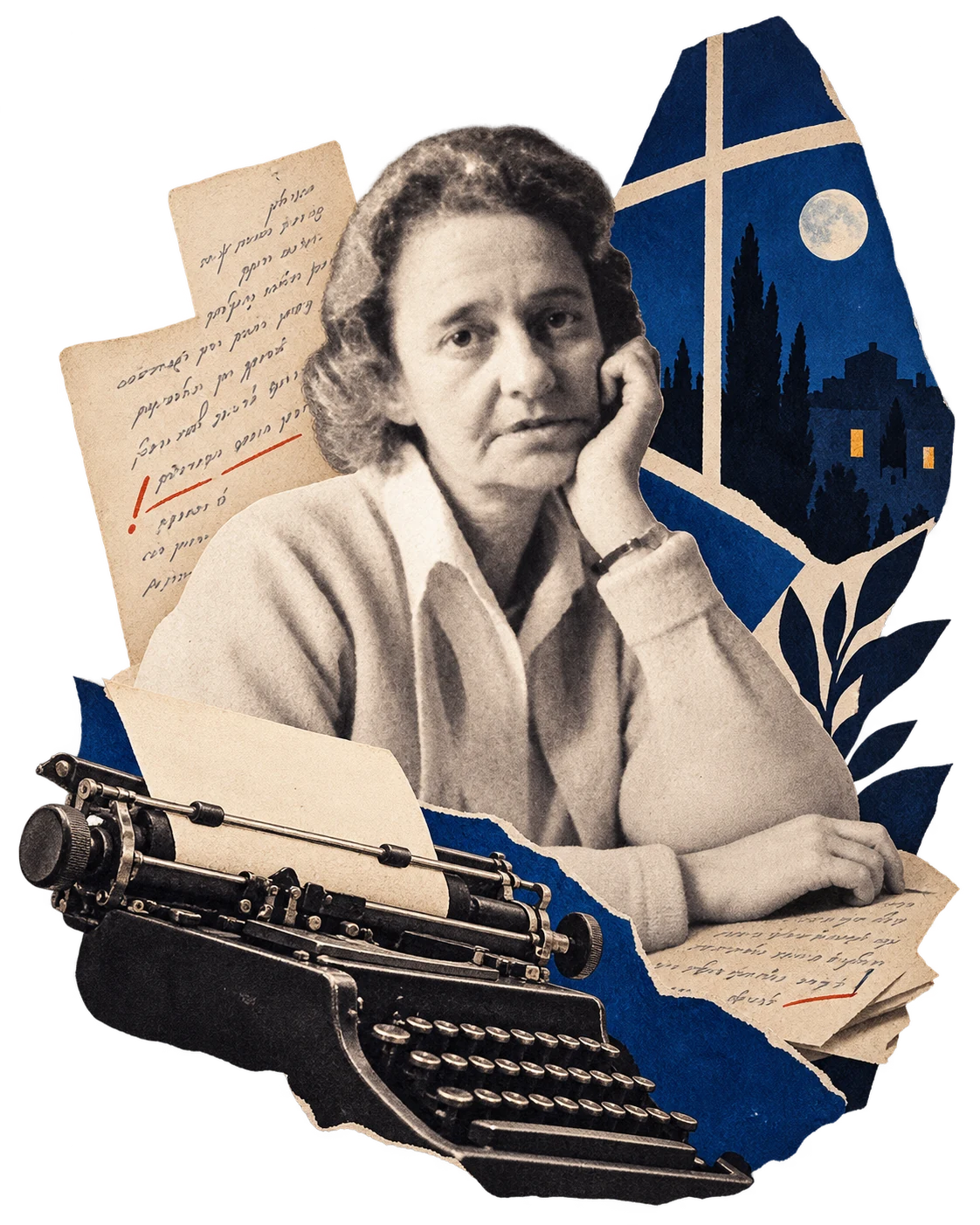
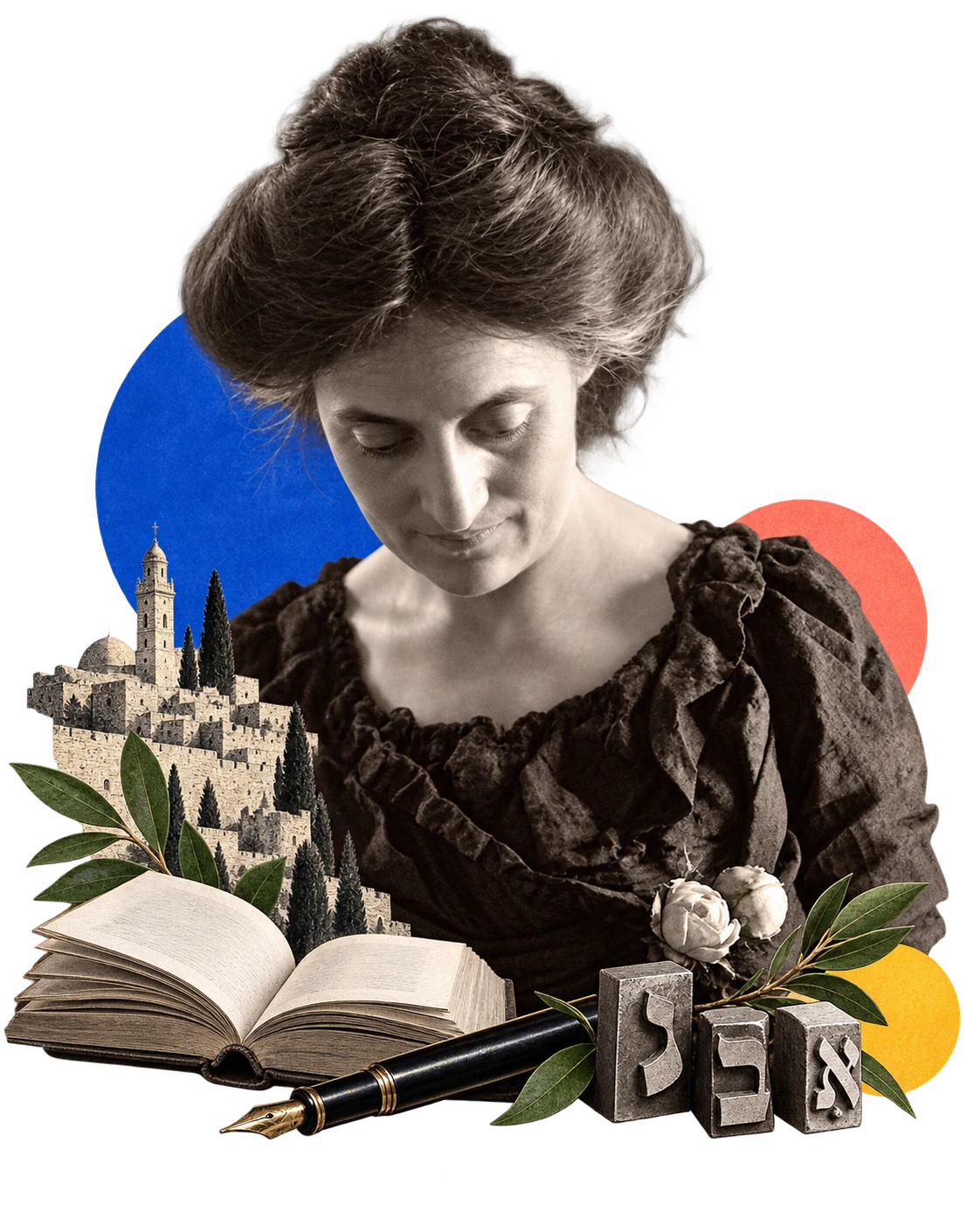
She described herself as "not a beautiful woman." Her unrequited loves inspired her greatest works. One of the most famous Hebrew poets of modern times, she was a writer, translator, literary scholar, journalist, cultural critic, and professor of literature.
Childhood, Exile and the Beginnings of Writing
She described herself as "not a beautiful woman." Her unrequited loves inspired her greatest works. One of the most famous Hebrew poets of modern times, she was a writer, translator, literary scholar, journalist, cultural critic, and professor of literature.
Leah Goldberg was born in 1911 in Kaunas, where she lived until she was 3. When World War I broke out, her family was forced to wander through Russia for 4 years, and Leah lived as a refugee in small villages. After seeing soldiers fight and die, she began making up stories as an escape from the harsh reality.
At the end of the war, as the family was making its way back to Kaunas, soldiers stopped them at the Lithuanian border. Because Leah's father wore yellow shoes and red socks, he was accused of being a communist, and the soldiers abused him in front of his daughter. For ten days, they staged his execution.
When the family returned to their ruined home in Kaunas, her father developed manic depression, apparently as a result of the abuse he had endured. Her mother went to work, while Leah, then 8 and just beginning to attend commercial school, proved to be a brilliant student. Within six months, she had learned Hebrew.
To earn a scholarship to study in Berlin, Leah worked as a nanny. At 18, she was already writing her doctoral dissertation on the Samaritan translation of the Torah. She began writing it in Berlin and continued in Bonn. In 1932, during the days she spent at the library, she met the Indian Dattatreya Phadke, a science student.
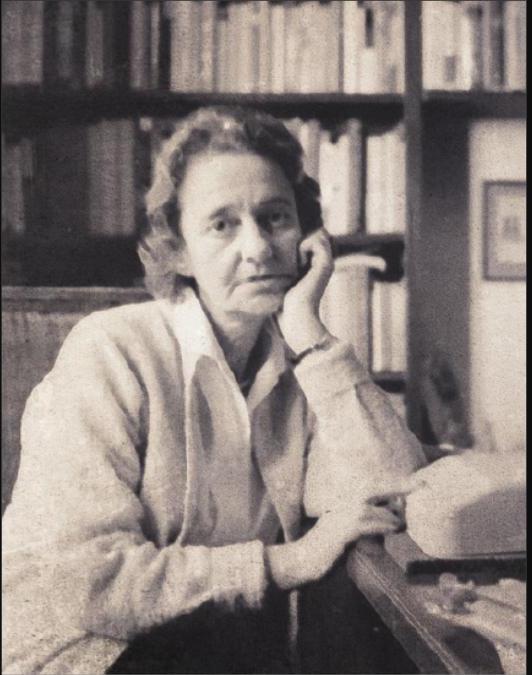
"The only person who is somewhat close to me is neither Jewish nor European, but, of all things, Indian... We often dance. To tell the truth, I have done well on the dance floor."
Phadke was "the night that comes to the owl, to show it all things in the dark." Goldberg was then 21. But this love, like all those that followed, had no future. From the start, it was clear that Phadke would return to his country, ending a relationship that often caused her pain. In the story "In Mouse Alley," she described the public humiliation she suffered when Phadke flirted with another woman in her presence.
In the Land: Writing and Loves
In 1933, the Nazi Party came to power, and Leah was once again forced to move, returning to Lithuania. There, with Abraham Shlonsky's help, she obtained permission to enter Palestine. Two years later, Leah immigrated to Palestine and joined the Yachdav group, whose members included Abraham Shlonsky, Nathan Alterman, Abraham Halfi, Alexander Penn, Eliezer Steinman, Yaakov Horowitz, Moshe Lifshitz, and Israel Zmora. She was the only woman in the group. That same year, Abraham Shlonsky brought out her first book, "Smoke Rings." She described those people as "truly close to me."
Leah earned a living through translation, writing theater reviews for the newspaper Davar, lecturing, and writing advertisements and sketches for the Matateh theater. Above all, what made her famous was her writing for the children's newspaper Davar Liyeladim, which made her an instant celebrity among teachers, kindergarten teachers, and children.
In 1935, Leah fell in love with Yosef Offin of Kibbutz Afikim. Over 33 years, she wrote him 42 intimate letters. He was tall and handsome, and was living with another woman when they met. Leah often visited Afikim, and her lines "A lamb will return to its mother's embrace / lie down in the pen and fall asleep" are considered a criticism of communal sleeping in the kibbutz.
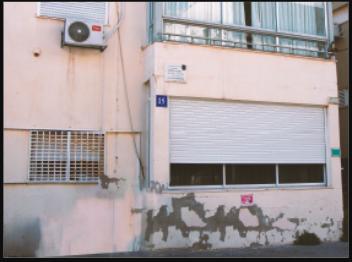
Leah concealed the nature of her relationship with Offin in poems filled with hints. In one of many poems that immortalize her as one of the most erotic poets in Hebrew poetry, she wrote:
"For I knew a beloved in my soul / and in my flesh and in all my 248 limbs, / and I loved flesh as one loves a soul. / And I bit the mezuzah on my closed door, / as one bites the bare shoulder of a man."
In Leah Goldberg's book "Nissim ve-Nifla'ot" (Miracles and Wonders), little Ya'akov asks her:
"Where are your children?" / "I don't have any children." / "And whose aunt are you?" / "No one's." / "And who is No One?" / "No One is no one." She is "No One's aunt."
This was the life she consciously chose at 27: "I'm afraid to have children because my father suffered from insanity, and people like me must not bring children into the world."
In 1936, her mother, Tzila, arrived in Palestine. Her father remained in a German boardinghouse for people with mental illness, and Leah wrote a kind of biography about him in the book "Vehu Ha'or" (And He Is the Light). It describes a young Jewish woman whose father has gone mad and who fears for her own sanity, as she struggles with fear and chooses life.
Leah's great love was Abraham ben Yitzhak. He was taciturn, stern, and critical, a poet who published only twelve poems, and was 28 years older than she was. Abraham ben Yitzhak left a profound impression on her, and she wrote: "If you give me my share / in the terror of your darkness / perhaps I will see a little light / if you lay on my shoulders / the heavy burden you carry / perhaps I will feel a little lighter."
Abraham ben Yitzhak was the model for the men who did not want to get close to her. Some say he was homosexual. His rejection of her and her attachment to him suited her and nourished the spring of her creativity: "You are an ugly woman, twenty-two years old / an extinguished candle on the Sabbath table / like a pale, transparent moon among the lights of heaven / you are always between the blue of the abyss and one." This is how she wrote about herself.
Thirteen years after their first meeting, Leah went to visit him at the sanatorium in Ramatayim and brought him a book and a letter. He slept throughout the visit. When she returned to Tel Aviv, Abraham ben Yitzhak opened his eyes and said to the doctor, "I don't want to read anymore. I'll die today."
"On my birthday, 29/5, Abraham ben Yitzhak died. Since then, in fact, nothing matters except this." Two years later, Leah published a memoir about ben Yitzhak, "Meeting a Poet." From the time she was 27 until she was nearing 40, he had been the great, unrequited love of her life.
Jerusalem, the Last Love and the End
In 1952, Leah was invited to teach at the Hebrew University in Jerusalem, and was glad to leave Tel Aviv and Shlonsky behind. She soon settled into university life and felt at home there. At home, her mother took care of everything, allowing her to devote herself to her work: "Your image is so serene, you are different / a little proud and embarrassed that you are my mother."
Jacques Adou, a French teacher at the Alliance school in Haifa who was two years younger than her, became the object of her new love. In her diary, she describes how he finished teaching and wanted to return to Switzerland, and said goodbye to her. In 1952, she wrote: "He did his part; he contributed a great deal to Hebrew literature."
In 1963, her last great love burst into her life. His name was Paolo Vivante, a young Italian lecturer she had met at the Hebrew University. She went to Italy because she mistakenly thought he had invited her to visit him, but found him there with a young American student. In her cycle of poems "Ne'ilah," Leah described the scars of her humiliation and her lament: "How the light in the sky changes / and how my loves fall / like dead birds."
And also: "A strange woman walked down the street / a woman neither beautiful nor young, / strangers saw her, her face was strange, / and they said: a strange woman."
In May 1969, at 59, Leah began to feel unwell. A malignant tumor was found in her breast, at a stage when surgery was no longer worthwhile. She reacted with joy: "Wonderful, now I can paint in peace." Shortly afterward, cancer was also found in her lungs. The cigarettes she had smoked all her life were what caused her death.
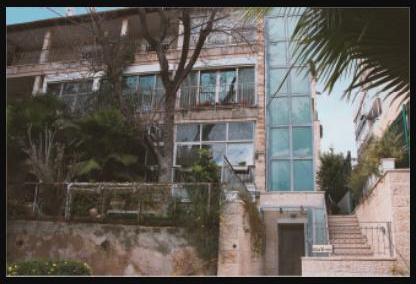
Leah Goldberg died on January 15, 1970. "But Mother. What will happen to Mother?" were the last words she said before lapsing into a coma. Her mother lived another 12 years after her.
תגובות
עדיין אין תגובות.