
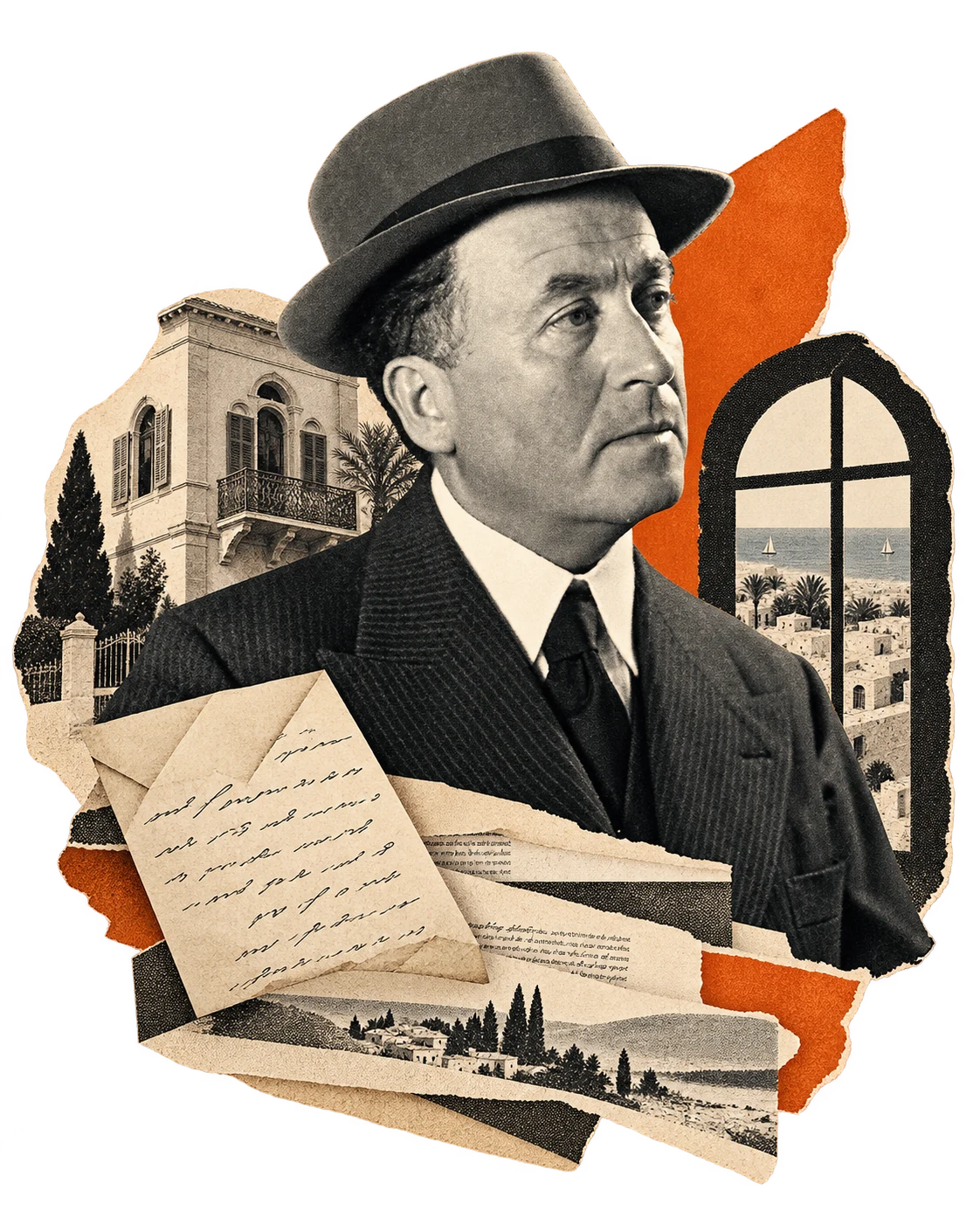
One of the greatest Hebrew writers, with many streets in Israel named after him. A story of a great love that never came to fruition, in a time when class and origins had a decisive influence on marriage decisions. This is the story of Agnon's love for the daughter of the wealthy Shlush family.
The Shlush Family and Neve Tzedek
One of the greatest Hebrew writers, with many streets in Israel named after him. A story of a great love that never came to fruition, in a time when class and origins had a decisive influence on marriage decisions. This is the story of Agnon's love for the daughter of the wealthy Shlush family.
In 1839, the family patriarch, 26-year-old Abraham Shlush, arrived from Algiers at the head of 150 people. Shlush came from a family of Jews expelled from Spain. He was born in the city of Fez, Morocco, and believed that Jews should return to the Land of Israel and live there by the labor of their own hands, thereby hastening the redemption. When they reached Haifa, despite the rough seas, they decided to make their way to shore by boat. One boat capsized, and all 18 passengers drowned, including Shlush's two sons, nine-year-old Elijah and seven-year-old Joseph. Shlush reached the shore with his wife Simcha, his son Aaron, and his two daughters, Rika and Hannah.
From Haifa, then a small village, the family moved to Nablus, which was considered a commercial center. But since there was no Jewish community there, they moved on to Jaffa. A few years after arriving, Shlush opened a jewelry business and became known as a leader of Jaffa's Jewish community.
His daughter Hannah married an Ashkenazi man, Alter Luria, a descendant of the holy Ari of Safed, at a time when marriages between Sephardim and Ashkenazim were rare. Many members of the Shlush family continued the tradition of marriages between Sephardim and Ashkenazim.
After Abraham died, his son Aaron became head of the family. He continued in the jewelry and money-changing business, and made his fortune that way. With his surplus funds, he bought land north of Jaffa, anticipating that the city would not be able to contain all its residents within the walls for long. By the end of the 19th century, his prediction had come true.
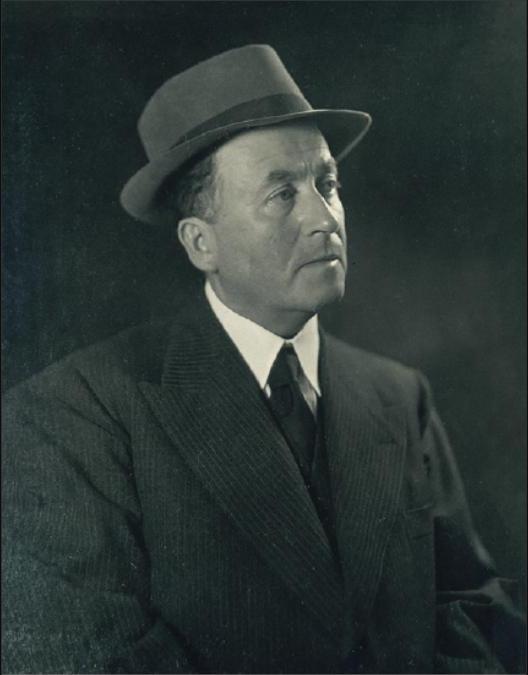
In 1887, Shimon Rokach founded the Ezrat Yisrael society in partnership with Aaron Shlush. Its aim was to establish a spacious Jewish neighborhood outside Jaffa's walls. Aaron wanted to give his land to settlers for free, but Ezrat Yisrael refused such a large gift, and the land was sold for a low price, about a third of its market value. Construction of the neighborhood began without delay.
In the Neve Tzedek neighborhood, at the corner of Shlush and Rokach Streets, stands Beit Shlush. It is an impressive, large, two-story house, with a small synagogue next to it. It has been credited as 'the first Jewish house outside Jaffa.' But, as the written records show, it does not deserve that title.
Opposite the magnificent Beit Shlush, Solomon Aboulafia's very modest home was built. He taught Hebrew and Arabic, and his wife was Rebecca, née Freiman. Here, too, a Sephardic-Ashkenazi marriage took place. Rebecca had been Aboulafia's student at the school in Rishon LeZion. Solomon died relatively young, and his wife moved to a new home in Ahuzat Bayit.
Rebecca rented out their home in Neve Tzedek to Shmuel Czaczkes, who immigrated to the Land of Israel in 1909. He rented the attic and quickly became part of the neighborhood's life. He befriended Neve Tzedek's intellectuals, Yosef Haim Brenner, S. Ben-Zion, and Rabbi Kook, was greatly influenced by them, and began to 'sin' by writing in Hebrew.
After a period of solitude opposite Beit Shlush, which blocked his entire view, Czaczkes caught sight of one of Aaron's granddaughters: the beautiful Margalit. Margalit was the eldest daughter of Perla and Jacob. Their second daughter, Meira, married Walter Adam, a banker who immigrated from Germany. Their youngest daughter, Leah, married David Lubinsky, who immigrated from Poland in the 1920s and went on to found the David Lubinsky Ltd. group.
A Rejected Love
Shmuel Czaczkes approached Aaron and asked permission to date his granddaughter Margalit. Aaron Shlush refused. Some say he refused because Czaczkes had a ridiculous name, was poor and had no distinguished lineage, and earned his living writing stories. Czaczkes was hurt by the refusal and returned to his room, heartbroken. In the attic where he lived, he wrote the book And the Crooked Shall Be Made Straight, which established his reputation as a Hebrew writer. In that same attic, he also wrote the story 'Agunot,' from which he derived his Hebrew name, S.Y. Agnon.
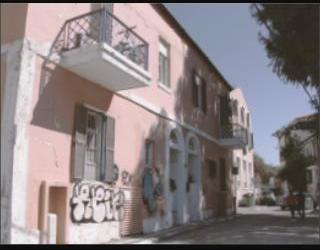
Years later, while living in Jerusalem, Agnon wrote Only Yesterday, inspired by his days in Neve Tzedek. He skillfully described the different views visible from the windows of the apartment he rented: 'Hemdat lives in an upper room at the edge of Neve Tzedek, at the edge of Jaffa... and he has five windows: through one window you can see the great, endless sea; through another, the boundless green orchards; through another, the valley where the train passes; through one window, the desert on which Tel Aviv was later built; and another window faces Neve Tzedek.'
Agnon completely ignored the existence of the large Beit Shlush, which effectively blocked the view of the sea. As far as Agnon was concerned, the Shlush family did not exist.
In time, Agnon found his great love in Germany. His beloved wife, whom he called 'My dearest Estherlein' in his letters, was a great source of inspiration to him. It was Agnon who introduced the psychological novel to Hebrew literature, depicting the subtleties of relationships between the sexes and of married life.
S.Y. Agnon is the most highly regarded Hebrew writer in the world, and to this day he is the only Israeli to have won the Nobel Prize in Literature. Agnon was also commemorated on the 50-shekel banknote.
In 2001, Beit Shlush was sold for $4 million to Daniel Versano and his sons, Guy and Yaron, who owned it until it was sold again to Marius Nacht, one of Check Point's founders, for $16 million. Roman Abramovich, the Russian oligarch who owns Chelsea Football Club, offered Nacht $30 million for the house, but Nacht refused. Although the deal did not go through, for the time being, it set the house's price.
The beautiful Margalit later married Moshe Havatzelet, a mathematician and an official at the Ministry of Defense, and died in 1984 at the age of 80.
On July 7, 1969, Agnon suffered a stroke. He was transferred to the Herzfeld Medical Center in Gedera, where his wife was also hospitalized. On February 17, 1970, S.Y. Agnon died. He was given a state funeral and buried in the Mount of Olives Cemetery.
תגובות
עדיין אין תגובות.