
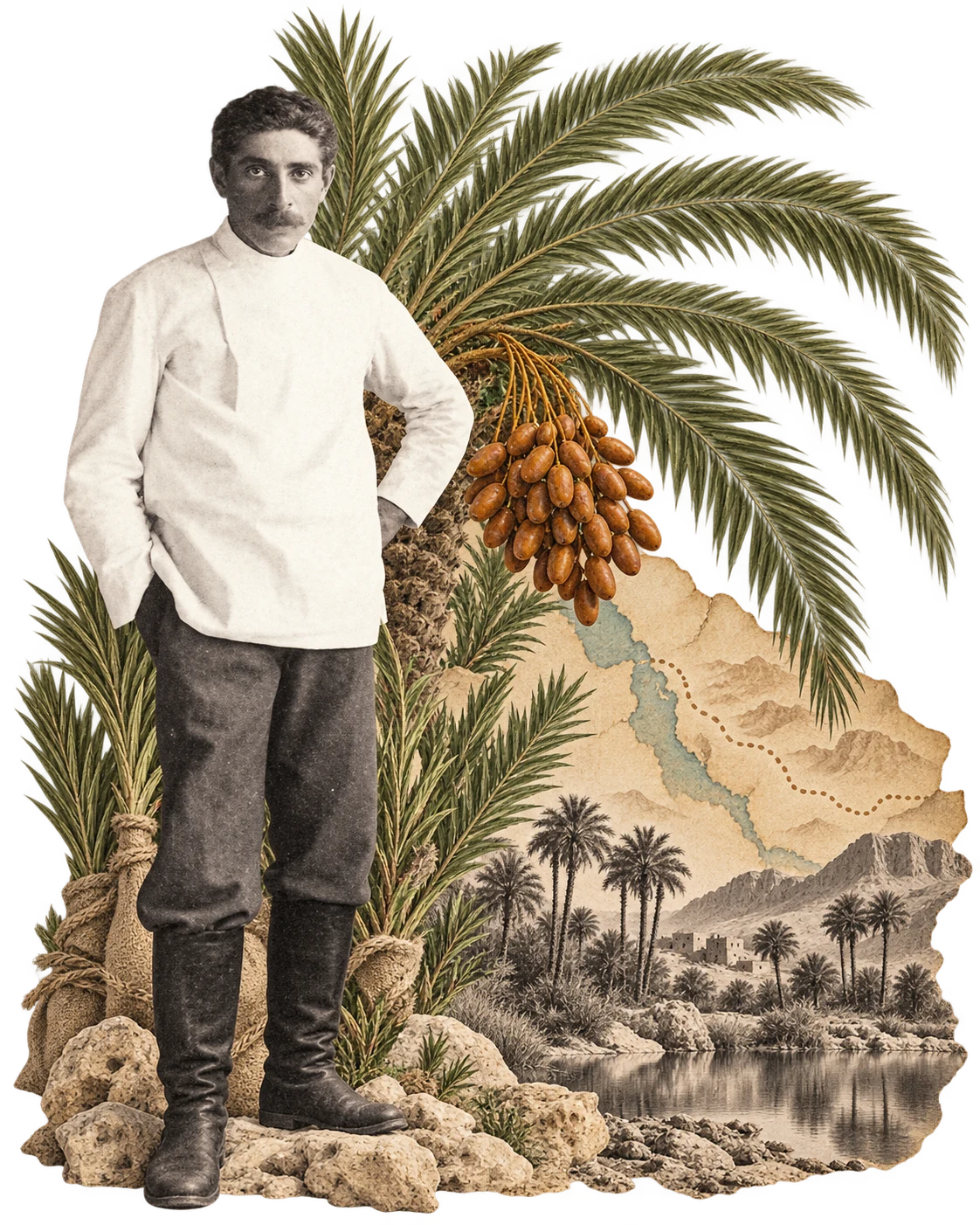
The man who made our land flourish with date palms. He made cultivating the land with date palms his life’s mission. From search expeditions around the world to secret, dangerous missions, he devoted himself to this goal like a monk devoted to his God.
The man who made our land flourish with date palms. He made cultivating the land with date palms his life’s mission. From search expeditions around the world to secret, dangerous missions, he devoted himself to this goal like a monk devoted to his God.
Roots in Kinneret
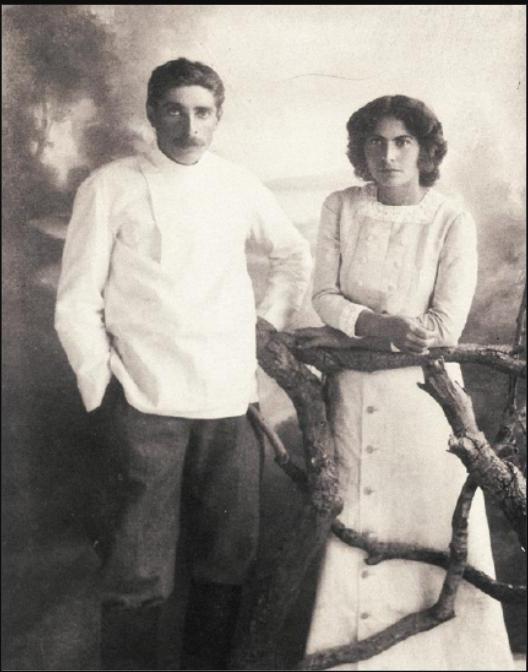
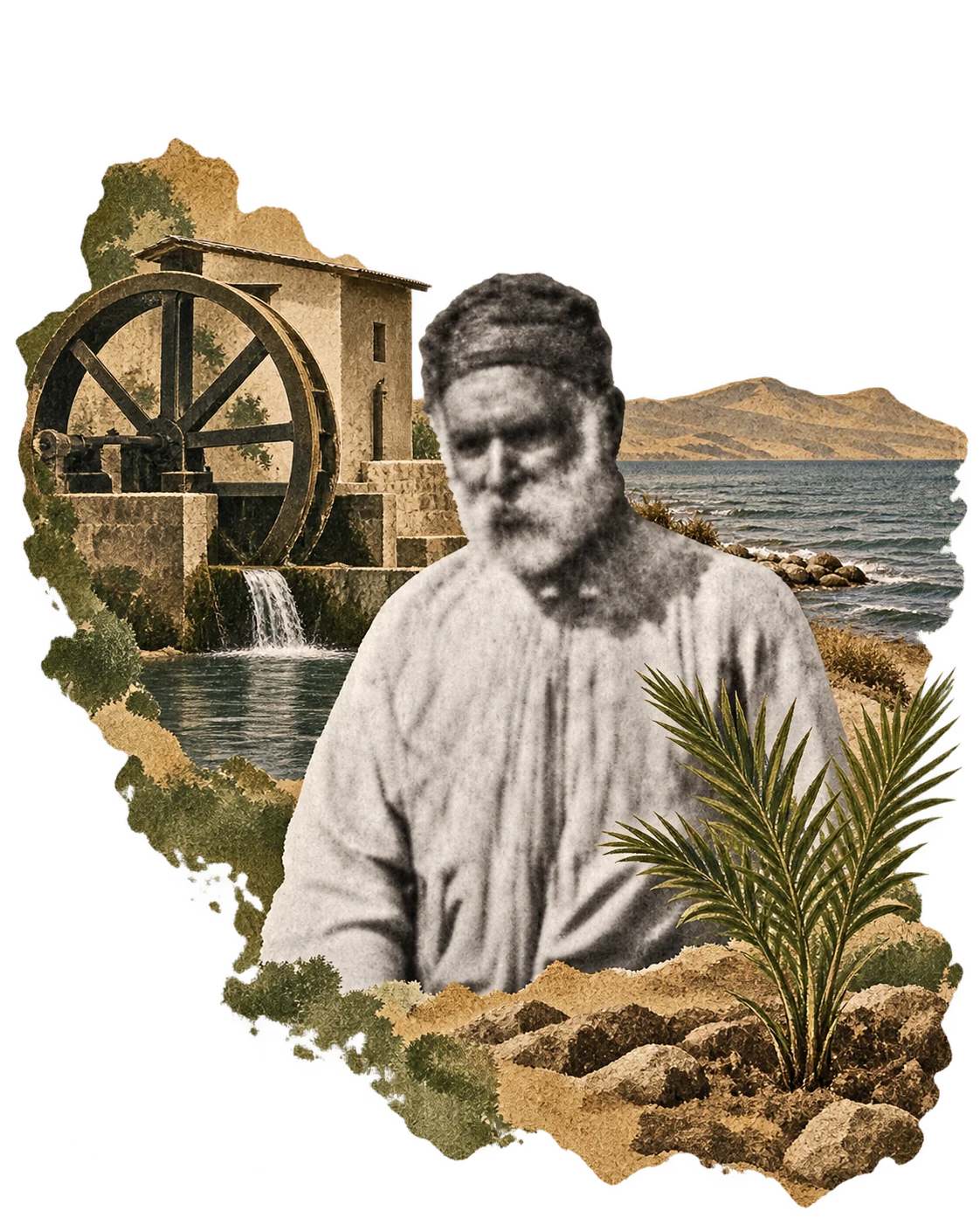
Ben-Zion Israeli was born Bentzi Chernomirsky into a traditional Jewish family in Ukraine. His father was a ritual slaughterer and a rabbinical judge. In 1906, after the Kishinev pogroms, he immigrated to the Land of Israel and changed his name to “Israeli.” Ben-Zion worked in Petah Tikva with A.D. Gordon, where he met two of his friends, Noah Naftolski and Meir Rothberg. The friends moved together to Rehovot, where they did odd jobs in the colony’s orchards. Ben-Zion fell in love with Haya, and the two married. Some time later, Ben-Zion traveled to Russia for a visit. While there, he was drafted into the Russian army but deserted. In 1909, he returned to the Land of Israel and led a group of 13 workers, headed by his two friends, Naftolski and Rothberg (together known as the “Yahad Group” or the “Yahad Trio”), which worked to establish a settlement at Kinneret.
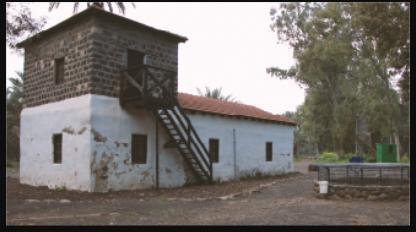
The group worked at Kinneret Farm, and the “Trio” lived in the Motor House (which still stands today near the baptism site), where they worked on a cooperative project independent of the farm. After a dispute with the manager of the agricultural operation there, agronomist Moshe Berman, the Trio left Kinneret. They first went to Sejera and Mes'ha, and even tried to establish a settlement at Kfar Uria. At Arthur Ruppin’s request, Israeli and his friends returned to Kinneret and founded the Kinneret Group.
Journeys in Search of the Date Palm
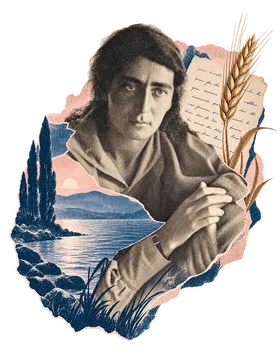
In 1933, Ben-Zion Israeli traveled alone to bring date-palm offshoots from Iraq, with just 17 liras in his pocket. In those days, smuggling offshoots from Iraq was a matter of life and death, since the Iraqis guarded their local varieties of palms, which were unique and yielded enormous returns for local agriculture. He planted the offshoots he brought at Rachel’s Garden, established in memory of the poet Rachel. It was a plantation of mother date palms, grown to produce offshoots that were distributed as far as Sodom.
Ben-Zion went on several more journeys to Iraq, Kurdistan, and Persia in search of prized dates. During his searches, he became acquainted with the Jewish communities there and brought them news of the Zionist revival.
In 1934, Ben-Zion was captivated by the charm of Babylonian Jewry. He set out from Mosul and Baghdad to visit Jewish communities in Sulaymaniyah, Halabja, and Kurdistan, and visited the tomb of the prophet Daniel in Kirkuk. When he returned from Kurdistan in 1935, he began campaigning vigorously in the Land of Israel to bring Jews from Iraq and Iran to the country.
Ben-Zion explained to anyone willing to listen that the date palm is a wondrous tree that can serve as a substitute for bread and sugar; its fruit can be used to make a delicious juice, the Bedouin makes all his utensils from its fronds, and from its trunk he hews a post for his tent. And of it the Sages said: “Just as the date palm has no waste, but only dates for eating, palm fronds for praise, palm branches for roofing, fibers for ropes, stalks for sieves, and an abundance of beams with which to roof a house” (Numbers Rabbah, 3). And the lesson is: “So it is with Israel.”
The subject burned so intensely within him that years later, during a bitter argument in the dining hall at Ein Harod, in the difficult days before the split, he called on the members to put everything aside and plant date palms.
The Mission That Continued After Him
In 1954, Ben-Zion and Yani Avidov set out for Iran to bring 30,000 offshoots to the Arava. The two reached the border, then made their way between the Euphrates and Tigris rivers into Iraq, through dangers and winding roads, until they reached the longed-for offshoots. They had only one dream in their hearts - to make history grow in the Land of Israel and bring the date palm back from its Babylonian exile to the land of the Bible. To their dismay, they had to postpone shipping the offshoots because of the intense heat.
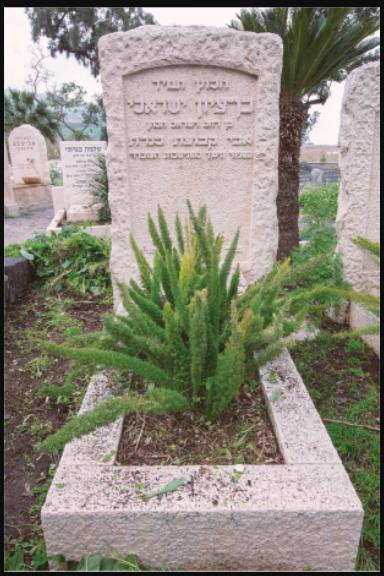
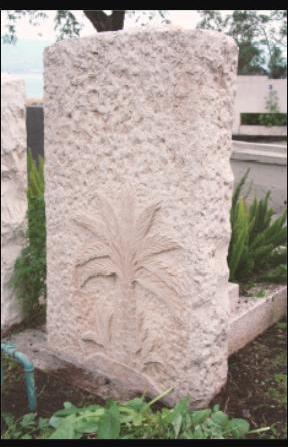
Later that year, Ben-Zion returned to Kinneret for a short vacation. During a memorial gathering near Kibbutz Ma'agan for the parachutists from the Land of Israel who perished in Europe during World War II, a Piper plane performing an aerobatic display crashed into the crowd, and Ben-Zion was among those killed. He was buried in the Kinneret cemetery, and an illustration of a “date palm” is engraved on his tombstone.
After Ben-Zion’s death, Yani Avidov decided to complete the mission, and in 1955 smuggled 62,000 offshoots to the Land of Israel aboard a ship he had chartered. The ship flew an Italian flag, and its travel documents listed Europe via the Suez Canal as its destination.
Only once they were in the Mediterranean did Avidov tell the ship’s captain that the destination had been changed to Israel. Despite the uproar that followed, the ship reached the country. (You can read about these and other adventures in Yani Avidov’s book “Adventures in Iraq,” which could easily rival the James Bond stories.)
Since then, descendants of those date palms have been planted throughout the Jordan Valley and the Arava, from the Kinneret Valley to Eilat. The Israeli date palm is a worldwide success story, and it owes its success to two people: one dreamed, and the other made it happen.

תגובות
עדיין אין תגובות.