
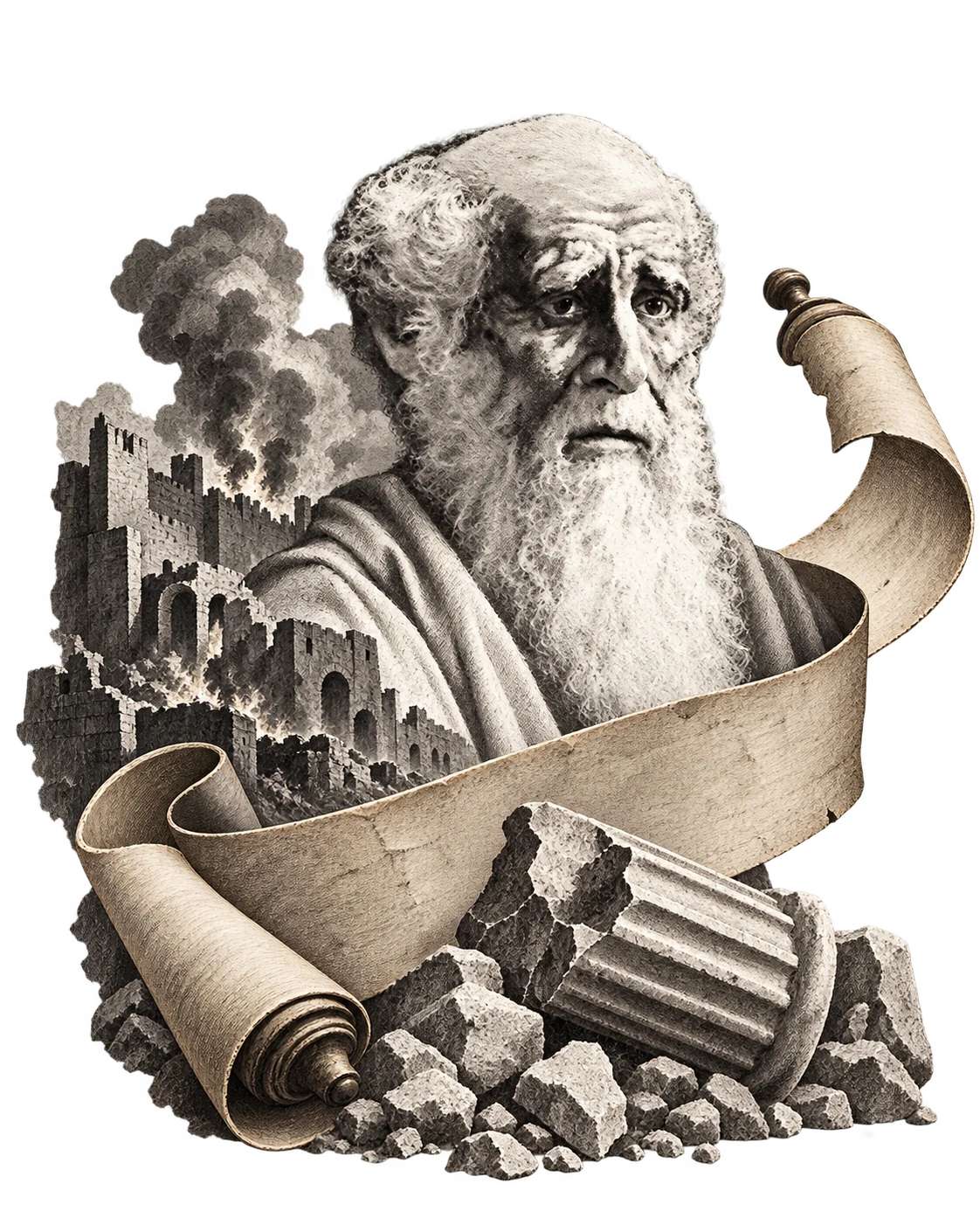
He bore the title "Rabban" even though he did not belong to the line of Nasi leaders descended from Hillel the Elder. He instituted ordinances to meet the realities of life after the Temple's destruction, reshaped Judaism as we know it today, and succeeded in leaving the Jewish people's mark on the pages of history.
The Background to the Revolt and the Destruction
There is no doubt that the main factor behind the Jewish people's Great Revolt was the profound frustration they were experiencing at the time, which led to internal violence and sparked a revolt that ended in disaster. Among the problems they faced were the idolatry practiced in the land and strained relations with their Syrian neighbors and the Hellenizers, problems that erupted into violence and claimed lives. Jewish life in the land seemed out of reach.
In the year 40, another burden was added to the Jews' shoulders: the decree of the Roman emperor Gaius Caligula, who decided to erect his statue in the Temple in Jerusalem. Until then, the Temple had been the Jewish people's sole and central anchor for sacred worship. Now, in the very heart of Jewish worship, idolatry had taken hold...
At first, the revolt was led by the extremists among the people, and everyone else was drawn in after them. In Rome, the revolt was seen as an attempt at revolution, and the Romans showed no tolerance toward the Jews. Fearing the revolt's effect on other conquered peoples, they responded with extreme aggression. The consequences were dire. Fields and vineyards were laid waste, settlements were wiped out, and a third of the population was killed. Within four years, all the revolt's leaders in the Galilee had been lost, the Temple had been burned, and Jerusalem had been destroyed. The revolt was then suppressed.
To this day, debate continues over whether it was right to launch a revolt when the balance of power was so unequal, to say the least. Was it an irresponsible act bordering on suicide, or an unavoidable necessity? In any case, on the 8th of Av in the year 70, the Roman general Titus was already at the gates of Jerusalem, and two days later, on the 10th of Av (not the 9th of Av, as is commonly thought), the Temple went up in flames. The Jewish people came within a hair's breadth of being erased from the pages of history. The Temple, then the sole center of worship for five million Jews, was more than a symbol to them. Every Jew paid a tax to the Temple and expected it to endure and secure their future, knowing that if it ceased to exist, "the world would no longer be a blessing to its inhabitants, and the rains would not come in their season."
In the immediate aftermath of the destruction, fundamental questions arose about matters relating to the Temple, such as the offering of sacrifices and the declaration of the new month, from which the festivals were determined. The problem of division among the people also had to be addressed. On one side stood the aristocratic Sadducees of the House of Herod, and on the other, the anti-Roman Zealots, who belonged to the House of Shammai. The conflict between these factions was ideological and physical, and it even claimed lives. Following the failure of the revolt, some of the Zealot rebels fled to Egypt, where they tried to lead another revolt, but it failed. As a result, the moderates of the House of Hillel gained power. They traced their lineage to Hillel the Elder, who, according to tradition, was considered a descendant of the House of David.
The Jewish people faced two possibilities: extinction or reinventing themselves. That meant a Judaism without a Temple, with new spiritual and practical leadership. The question also arose more than once: had the Torah of Moses in fact lost its validity, and was it time to make a "new covenant"? There is evidence that large numbers of Jews turned to foreign forms of worship, including Christianity.
Rabban Yohanan ben Zakkai and New Leadership
Rabban Yohanan ben Zakkai, one of the greatest of the Tannaim and the successor of Rabban Shimon ben Gamliel as head of the Sanhedrin, took it upon himself to save the Jewish people from destruction. His appointment as head of the Sanhedrin, even though Rabban Yohanan ben Zakkai was neither of the House of David nor a priest, was an emergency appointment, made after Rabban Shimon ben Gamliel was killed in the revolt.
He began his mission by instituting ordinances governing Jewish practices in the absence of the Temple. He established the Hebrew calendar as we observe it today. For example, the commandment to take the lulav throughout the seven days of Sukkot, as practiced today, was instituted by him "in remembrance of the Temple." This differed from the time when the Temple stood, when the commandment was observed only on the first day of the festival. Another ordinance of his established that when Rosh Hashanah falls on Shabbat, the shofar is to be sounded in Yavne, unlike when the Temple stood, when sounding the shofar on Shabbat was permitted only in the Temple. This ordinance made clear that holiness is not bound solely to the city of Jerusalem or to the Temple itself.
Regarding the process of conversion, he ruled that immersion and circumcision alone were sufficient to complete the conversion, unlike in the time of the Temple, when the process concluded with an offering of a sacrifice in the Temple.
Little information about Rabban Yohanan ben Zakkai has survived, and only the testimonies of the Sages shed a little light on him. The Sages say that his life was divided into three periods of 40 years each. In the first, he made a living as a merchant or farmer; in the second, he studied; and in the last, he taught and issued rulings. The Talmud says that Rabban Yohanan ben Zakkai was the youngest of Hillel's students and that the title "Rabban" (Aramaic for "our rabbi") was given only to a select few who were descendants of the House of David. Rabban Yohanan ben Zakkai was the only one to receive the title without that family lineage.
The Midrash relates that when Hillel was near death, all 80 of his students gathered around his bed, and only Yohanan stood outside the door. "Where is the youngest among you?" Hillel asked, and added, "He is a father to wisdom and a father to generations." Some interpreted the phrase "a father to generations" as "the father of the future." Since he was not descended from the House of David, while still alive he made way for Rabban Gamliel of Yavne.
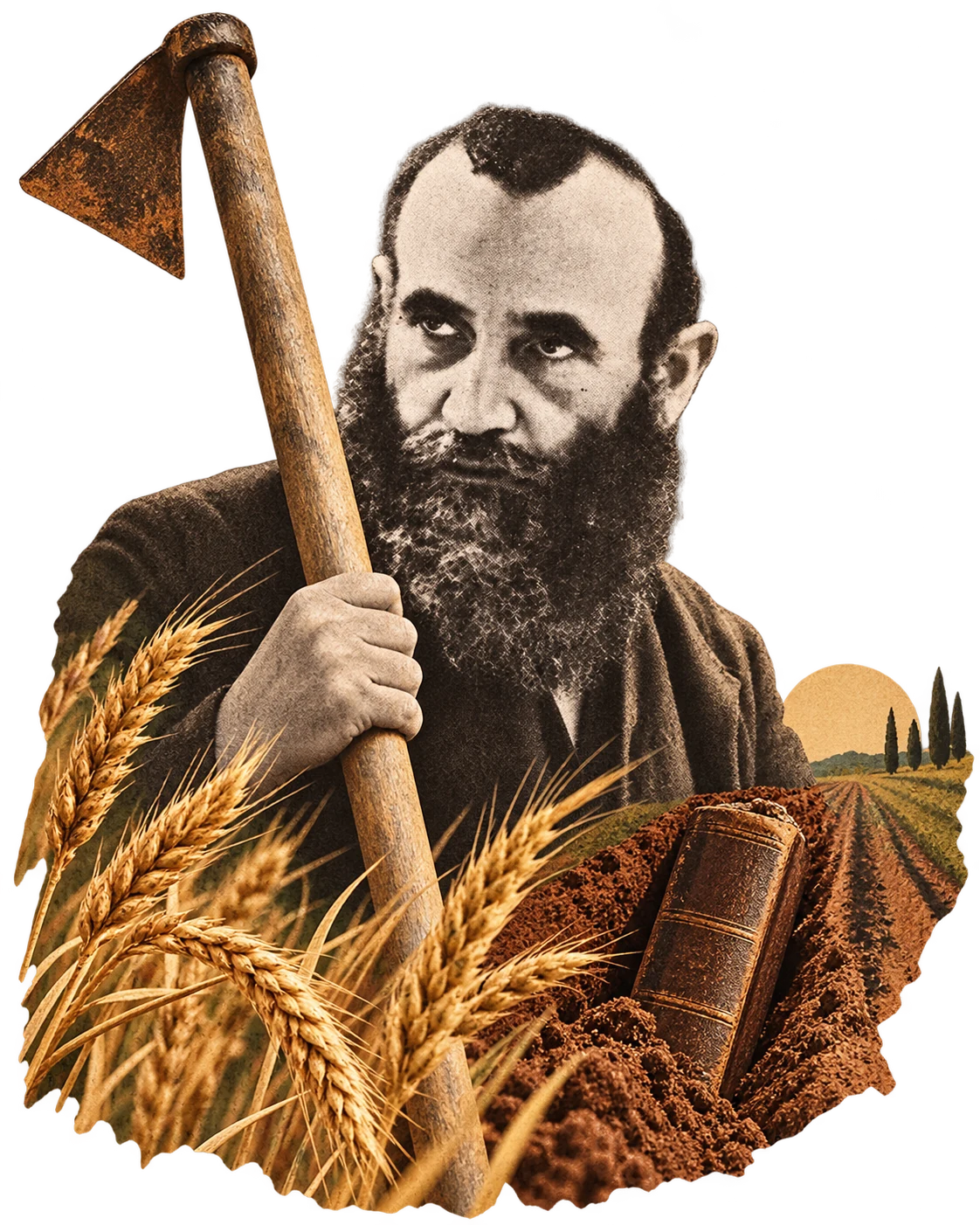
Rabban Yohanan ben Zakkai was moderate in his outlook, advocated coexistence with non-Jews, and did much to bridge the divide between the various Jewish factions and bring them closer together. The historian Gedaliah Alon described him as "a clear-eyed realist, who did not hesitate to warn his countrymen against the most extreme expressions of patriotic fervor." He is said to have been such a realist that he told his students that if they were sowing a field and heard that the Messiah had arrived, they should finish sowing first and only then go to greet the Messiah.
Yavneh and the Legacy of Rabban Yohanan ben Zakkai
In the year 68, Titus imposed a harsh siege on Jerusalem (the Talmud mistakenly attributed the siege to Vespasian). Rabban Yohanan ben Zakkai, having failed in his attempts to prevent the revolt, decided to leave Jerusalem despite the siege. It should be noted that both the Sages and Josephus testify that during the siege of Jerusalem the Romans offered the rebels a surrender agreement, including a promise not to destroy Jerusalem and the Temple, but the Zealots refused to surrender. It is said that Rabban Yohanan ben Zakkai asked two of his students to prepare a coffin, hide him inside it, pretend they were taking the dead man to his grave, and bring him before Vespasian. The Roman emperor, who knew Rabban Yohanan ben Zakkai's views and standing, received him warmly and asked what he wanted. "I want nothing for myself," Rabban Yohanan replied, "except Yavne, where I can go and teach Torah to my students, establish a house of prayer, and fulfill all the commandments." The legend adds that Rabban Yohanan was the one who prophesied to Vespasian that he would rise to power, and that during their conversation a messenger arrived from Rome and announced that he would be the next emperor.
In those days, Yavne was under the complete control and supervision of the Romans. Some scholars argue that he was even exiled there and that it served as a kind of concentration camp. In any case, thanks to Rabban Yohanan ben Zakkai, Yavne became the most important spiritual center after the fall of Jerusalem. Under his leadership, it became the place where the Jewish people were rebuilt and reinvented - without the Temple and without Jerusalem. In Yavne, Rabban Yohanan established a study house and a court, one for religion and the other for leadership.
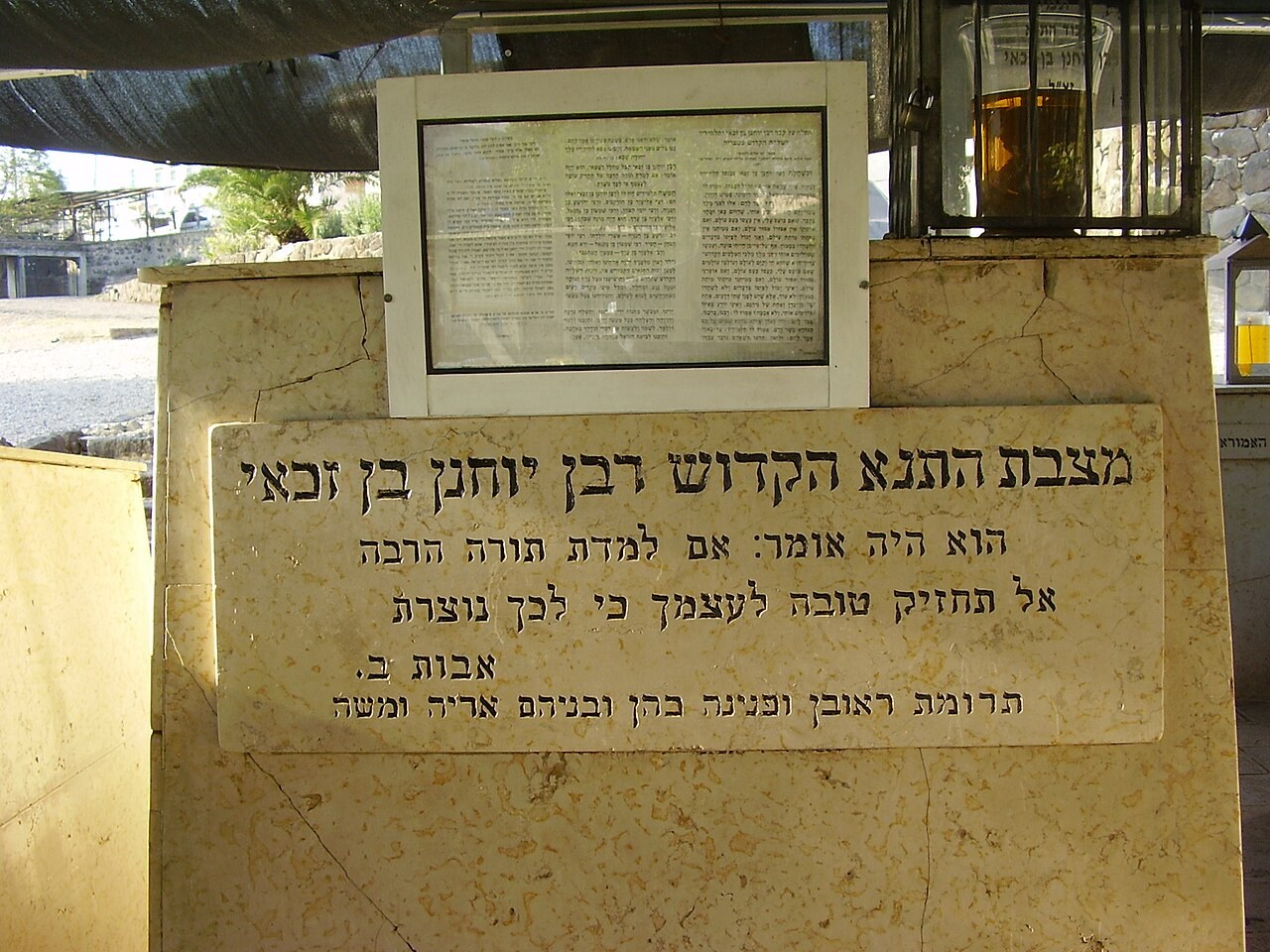
Rabban Yohanan spent his final years not far from Yavne and lived to the age of 120. The Talmud tells of his final moments (Tractate Berakhot): "When Rabban Yohanan ben Zakkai fell ill, his students came in to visit him. When he saw them, he began to weep. His students said to him: Light of Israel, right-hand pillar, mighty hammer, why are you weeping? He said to them: If they were taking me before a mortal king, who is here today and in the grave tomorrow, whose anger is not everlasting if he is angry with me, whose imprisonment is not everlasting if he imprisons me, and if he puts me to death, my death is not eternal, and whom I could appease with words or bribe with money, I would still weep. Now that they are taking me before the King of kings, the Holy One, blessed be He, who lives and endures forever and ever, whose anger is everlasting if He is angry with me, whose imprisonment is everlasting if He imprisons me, and if He puts me to death, my death is eternal, and whom I cannot appease with words or bribe with money; moreover, two paths lie before me, one to the Garden of Eden and one to Gehenna, and I do not know which one they are taking me along - how could I not weep?"
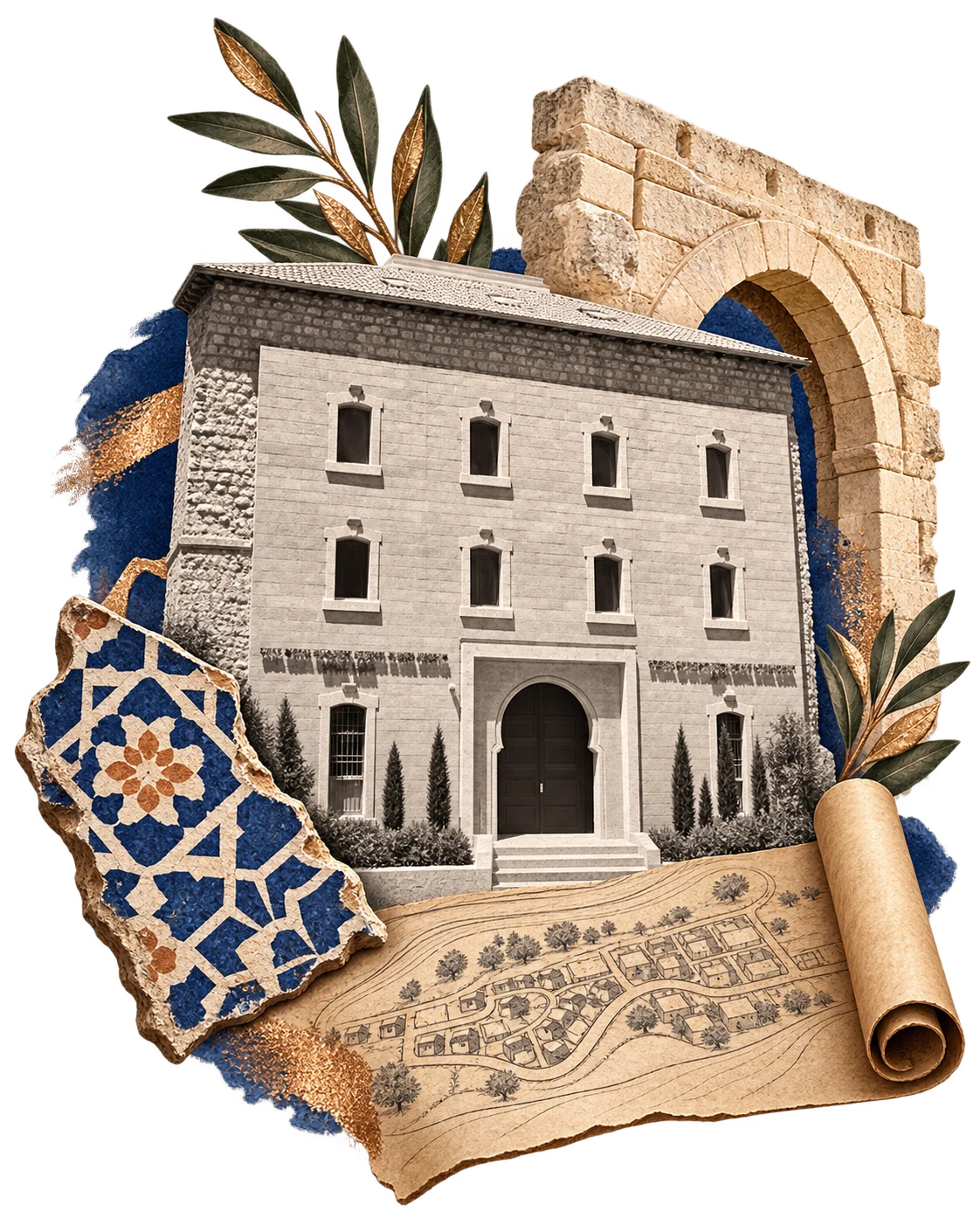
Just as Eliezer Ben-Yehuda can be credited with reviving the Hebrew language and Herzl with the Zionist vision, Rabban Yohanan ben Zakkai can be called the founder of the Jewish people after the Temple's destruction - the man who began it all again. He formulated the constitution by which Jews lived for the next 1,700 years. The community of Ben Zakkai, many synagogues, and streets throughout the country are named after him.
תגובות
עדיין אין תגובות.