
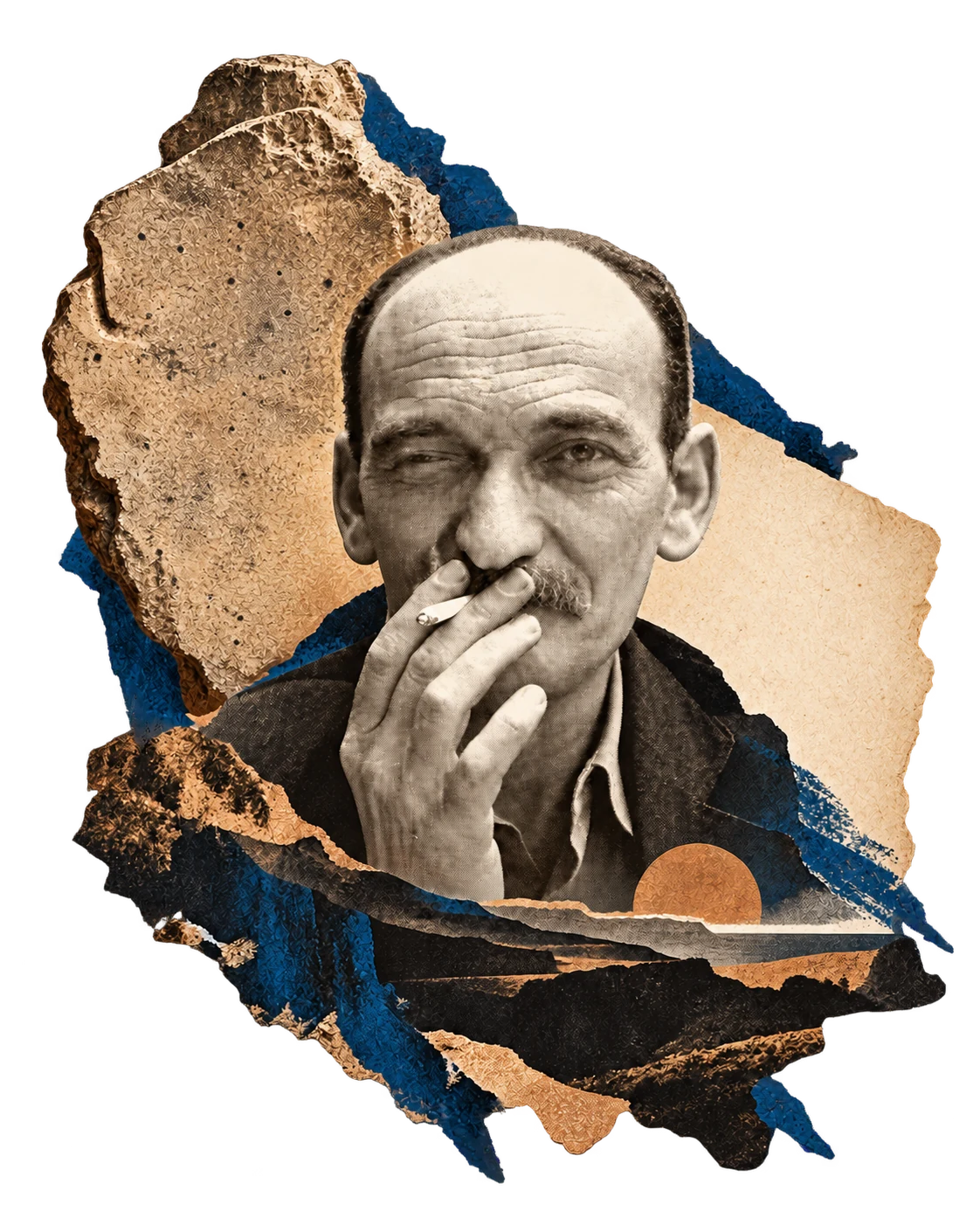
This is the story of a radical movement that advocated separating religion from nationality and proposed an alternative to Zionism. It was led by a gifted poet and uncompromising ideological linguist.
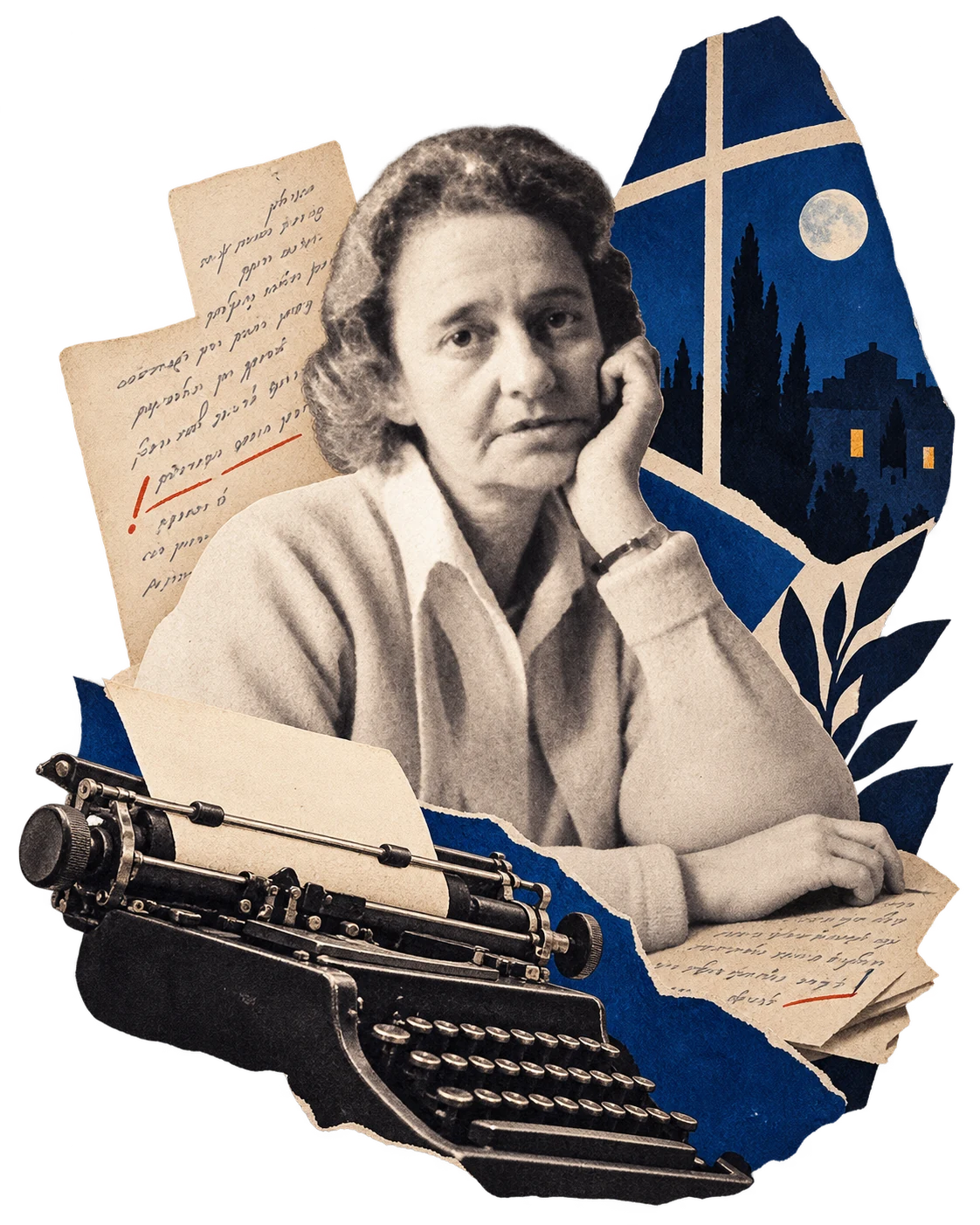
Uriel Shelach-Halperin ("Yonatan Ratosh")
The Beginnings of the Canaanites and the Hebrew Vision
The turning point that led to the founding of the Canaanite movement is generally placed at the meeting between Adia Horon and Yonatan Ratosh in 1938. The following year, the two founded the "Committee for the Consolidation of Hebrew Youth," an organization whose goal was to reshape the identity of the emerging nation in the Land of Israel. It should be noted that the name "Canaanites" originated as an ironic term of abuse coined by the poet Avraham Shlonsky. Nevertheless, the group’s members chose to adopt it proudly as a symbol of a return to ancient, earthly roots that predated the Jewish religion. At the heart of Canaanite ideology was a firm distinction between Jewishness and Hebrew identity. In 1943, Yonatan Ratosh published his foundational manifesto, "An Epistle to Hebrew Youth," which opened with the following declaration: "The Committee for the Consolidation of Hebrew Youth does not call upon you to leave the organizational framework in which you find yourself of your own free will, through conviction and choice, and by force of circumstance; the framework in which you find the greatest personal fulfillment, in which you have chosen to devote your strength, and in which, when the time comes, you will be ready to give your life as well..." Further passages from the manifesto clarify the movement’s radical principles and the break it demanded from the exilic past: "The Committee for the Consolidation of Hebrew Youth calls upon you to recognize the full depth of the chasm and the estrangement that separate you, the Hebrew youth, from all those Jews of the Diaspora. The Committee for the Consolidation of Hebrew Youth does not address you because so many Jews have been destroyed in so many Diasporas, or because the relative weight of the Jewish community in the Land of Israel has risen by so many degrees in the balance of the worldwide Jewish Diaspora [...] The Committee for the Consolidation of Hebrew Youth addresses you because you are Hebrew [...] and not as a solution to the Jewish question [...] because the reality in which your character took shape is the Hebrew reality, because the very body of your soul is the landscape of your homeland, and your past is the past of your homeland alone."
Ratosh believed that Judaism was a universal religion without a defined territorial base, like Islam or Christianity, and therefore could not serve as the foundation for modern nationalism. In his view, a person could be Jewish anywhere in the world, but only someone whose language was Hebrew and who was physically rooted in the land could be Hebrew. While Judaism rested on the tradition of the Sages, Jewish law, and the Talmud, the Canaanites drew inspiration from the ancient history of the peoples of antiquity, Semitic mythology, and Ugaritic culture. Unlike Zionism, which sought to defend the interests of Jews worldwide, the Canaanites aimed to establish a new Hebrew nation integrated into its geographic region. This vision also included integrating Arabs into the nation, in the hope of creating a society of "Jews without Judaism and Arabs without Islam."
The Canaanites did not regard the surrounding Arab peoples as enemies on religious grounds. In their view, the Arabs were indigenous peoples corrupted by the religion of Islam, but their origins were Semitic-Hebrew. The Canaanite vision dreamed of establishing a "Hebrew State" encompassing the entire Semitic region and uniting Hebrew and Arabic speakers under a single national and linguistic identity.
The movement rejected Zionism, which it saw as a Jewish religious movement trying to solve the "Jewish problem" instead of founding a new nation. In its view, a new generation had emerged in the Land of Israel, one whose mother tongue was Hebrew and whose character was shaped by the local landscape, and which therefore had no binding connection to Diaspora Judaism. This outlook led the movement to campaign for the removal of the nationality "Jewish" from identity cards and its replacement with "Hebrew" or "Israeli."
Although the combination of complete secularism, separation of religion and state, and a focus on territory as the basis of citizenship may today bring to mind positions associated with the radical left, a look at the sources reveals a more complex picture: Ratosh and his associates came from the most nationalist and right-wing factions of Hebrew politics at the time.
Uriel Shelah in His Youth
Uriel Halperin was born in Warsaw in 1908, into a Hebrew-speaking household. His father, Yehiel Halperin, was a well-known Hebrew educator and children’s author, and his mother, Penina, was a Hebrew kindergarten teacher. His parents, who were friends of Alterman’s parents, were devoted to the Hebrew language and made a point of speaking only Hebrew at home. This environment instilled in Uriel the sense that Hebrew was not merely a sacred language or a tool of communication, but an existential essence and a defining element of nationality.
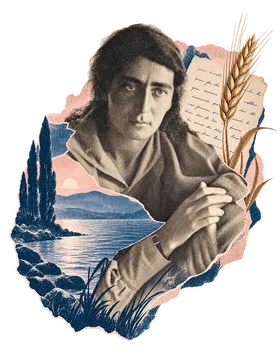
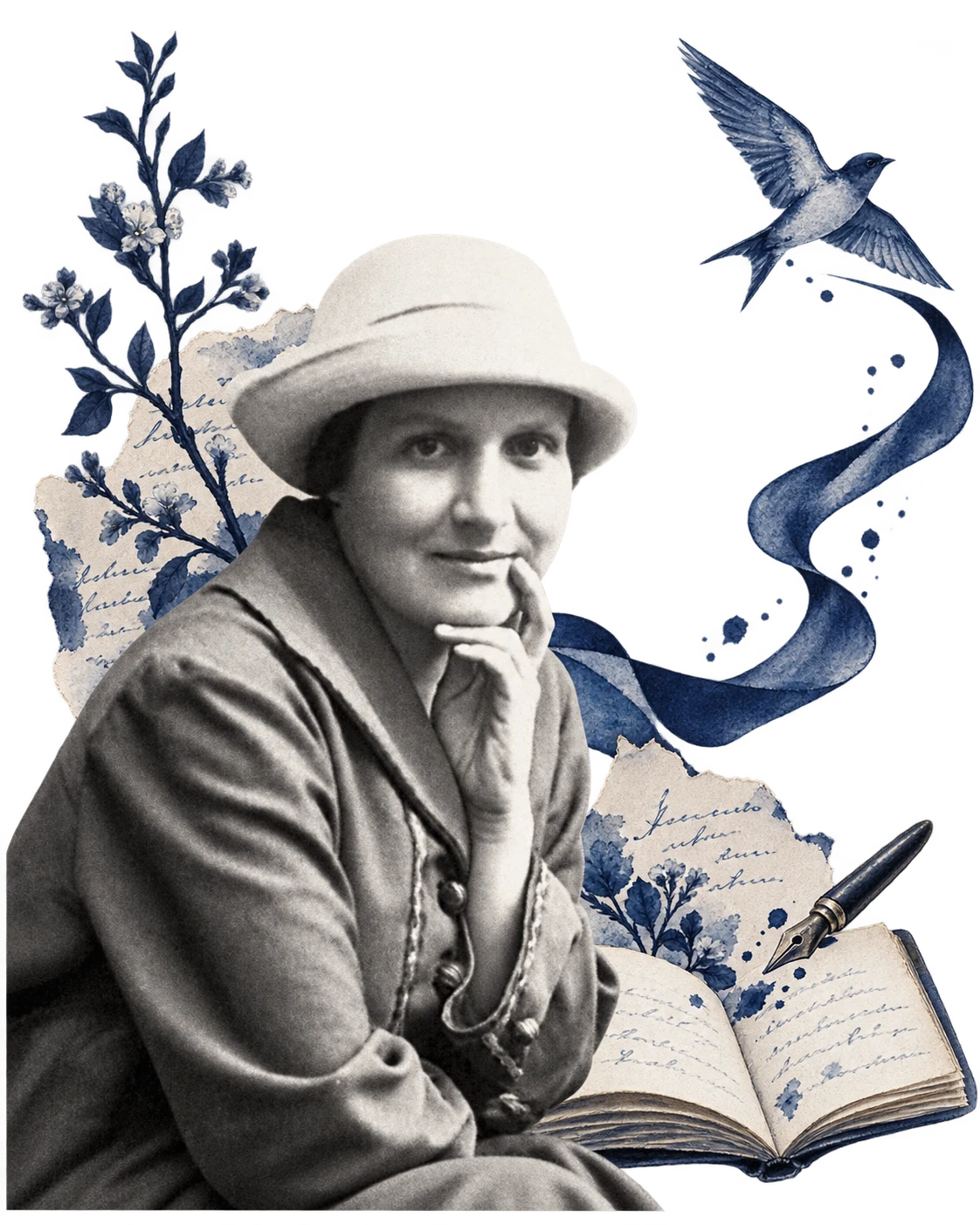
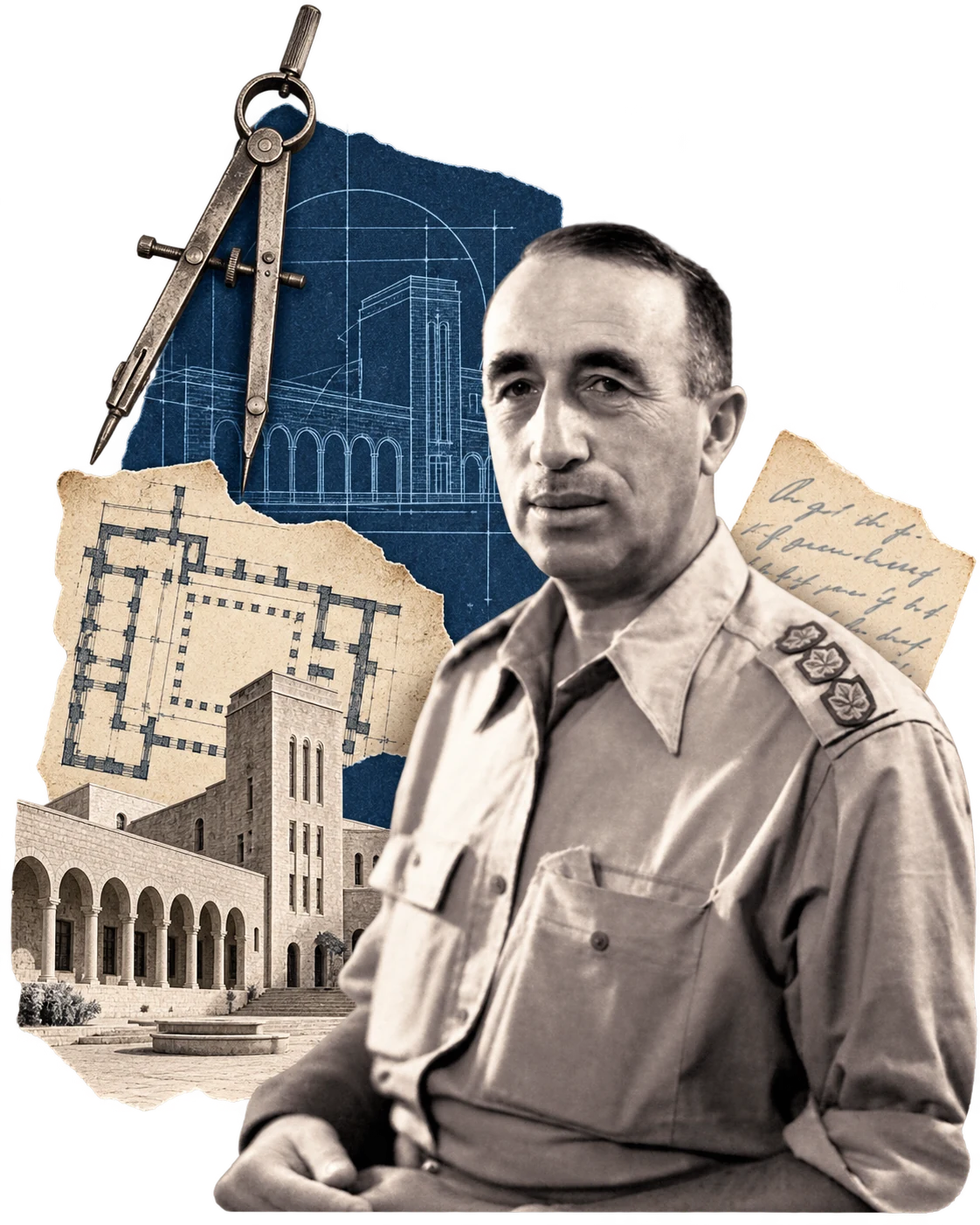
In the wake of the upheavals of World War I, the family moved to Odessa, and in 1919 immigrated to the Land of Israel aboard the ship Ruslan, alongside the poet Rachel, historian Joseph Klausner, Dr. Moshe Glikson (later editor of the newspaper Haaretz), engineers and architects Yehuda Magidovitch and Ze'ev Rechter, dancer Baruch Agadati, caricaturist Aryeh Navon, Israel Guri (a member of the Knesset and father of the poet Haim Gouri), Dr. Haim Yassky (director of Hadassah Hospital), Rosa Cohen (mother of Yitzhak Rabin), sculptor Moshe Ziffer, Rachel Cohen-Kagan (a member of the first Knesset), and many others.
Young Uriel grew up in Jerusalem and Tel Aviv, and studied at the Hebrew Gymnasium and the Herzliya Gymnasium. In 1926, he studied law for a year, then went to France to study linguistics at the Sorbonne, where he met the historian and linguist A. G. Horon. The meeting of these two figures gave birth to the Canaanite movement. When they returned to Israel, they established the movement’s first committed circle. Over the years, many of its members became known as artists, journalists, authors, and poets. Around this time, readers of Haaretz encountered Ratosh’s first poem, and later his first collection of poems appeared in the journal Turim, the central platform of the Yachdav group and the local modernist generation, led by the poet Avraham Shlonsky. The poems were "Serenade," "Forest," "Canopy," and "To Your Cheeks"; only 13 years later were his poems "In the Image" and "Absalom" published. The legal and linguistic education he received in France gave him the scholarly foundation he later used to analyze Semitic languages and coin new words.
During those years, at the request of Ben-Zion Netanyahu (Benjamin Netanyahu’s father), Yonatan Ratosh began working for Hayarden, the newspaper of the Revisionist movement. This work led him directly to the Irgun, where Abraham Stern and David Raziel, leaders of the underground organization, made use of his skills in drafting the instructional manual The Pistol. After the Irgun split, Ratosh joined Lehi and also took on the editorship of the organization’s newspaper, Hamivrak.
Language Innovations and Creative Work
In the history of modern Hebrew culture, few figures have caused as intense, multifaceted, and enduring a stir as Yonatan Ratosh. His most tangible and lasting legacy is his immense contribution to the Hebrew language. Ratosh believed that language was not merely a tool of communication, but that it shaped thought and national identity. In his view, creating a new Hebrew nation required a vocabulary that would cleanse the language of the influences of exile and foreign languages, and he is considered one of the greatest modern coiners of words. An extensive study by Professor Michal Efrat (Ratosh’s sister-in-law), documented in her book The Words That Suggest Themselves, records some 4,000 words attributed to him. Ratosh worked from a deep grammatical understanding of the Semitic languages, drawing on ancient morphological structures (such as the suffix -una) and seeking roots in the Bible and in Ugaritic.
Surprisingly, some of the words coined by Ratosh became an integral part of modern Hebrew, often without speakers knowing where they came from. These include haslama (escalation), which Ratosh derived from the word sulam (ladder); memsad (establishment), a coinage that became an integral part of political and social discourse; tashtit (infrastructure), derived from the root sh.t.t; chatich (handsome guy), one of his most surprising coinages. Ratosh took the word chaticha (a slang term then in common use) and turned it into a supposedly standard masculine adjective, which caught on with the public to an extraordinary degree; and ofano'a (motorcycle), which replaced the terms "motorized carriage" and "motosikl".
His poems were almost entirely free of ideology, and most were both personal and national. They include some of the most beautiful love poems written in Hebrew, poems of sacrifice and suffering, and poems centered on biblical figures. The poems in Black Wedding are distinguished by the rhythm of a magical incantation, ancient and archaic Hebrew, and the use of Ugaritic words; many of the poems are veiled in a kind of "mythic ritual," almost pagan. Ratosh published eight books, and his first, Black Wedding, already displays the innovation, daring, and beauty that would characterize his poetry.
Several of Ratosh’s poems were set to music. The best known is "Al Chet," composed and performed by Zvika Pick. Ilan Virtzberg composed his poem "Million," performed by Ofra Haza (the poem also has another setting by Shem Tov Levi, performed by Arik Einstein). Shem Tov Levi also composed and performed Ratosh’s poem "If You Had Come." Another well-known poem by Ratosh is "Almost," composed by Yigal Gordon and sung by Nurit Galron.
Uriel Shelach came up with the pen name "Yonatan Ratosh" in 1937, when he published the poem "Torah." One of the main reasons for choosing a pseudonym was concern that his Revisionist views might damage his standing. Over the years, different interpretations of the name have been offered. His brother, Uzi Ornan, testified that Ratosh wanted to create a combination of opposites: "Yonatan," representing gentleness, and "Ratosh" (from the root r.t.sh), representing toughness. The scholar Yosef Ozer, however, believed that "Ratosh" alluded to the Talmudic term "abandoned," thereby expressing the abandonment of the Jewish exile past.
Political Activity and Canaanism
Between 1948 and 1953, the journal Aleph was published irregularly as the voice of the "Young Hebrews." Three years after the journal began publication, during the World Zionist Congress in Jerusalem, movement members distributed scathing leaflets denouncing Zionism. That September, the movement held its founding conference, after which it submitted a formal application for legal association. The Ministry of the Interior deliberately delayed approval, officially claiming that the police had not yet completed their customary investigation of political associations.
According to the press of the time, the movement had only about a hundred members, while its own members claimed that it had some 500. In June 1952, about nine months after the founding conference, events took a turn following the arrest of Amos Kenan on suspicion of throwing a bomb at the home of the transportation minister at the time, David-Zvi Pinkas. The press launched an attack on the Canaanite movement, of which Kenan was a member, and claimed that its leaders made no secret of their sympathy for the act. It was also reported that movement members had planned actions against "Scrip shops," which sold imported goods in exchange for foreign-currency purchase vouchers during the austerity period. The movement’s members denied any connection to the incident and claimed that Kenan had left their ranks about two years earlier. Ratosh’s shift from the extreme right to Canaanism was not an abandonment of nationalism, but its radicalization. While the Revisionists sought to establish a Jewish state, Ratosh sought to establish a Hebrew nation detached from the worldwide Jewish context. He believed that military power and territorial sovereignty were the only components of a nation, and that all other elements (religion, Jewish tradition) were burdens holding back the birth of the new people.
One of the most distinctive elements of the Canaanite movement was its attempt to ground national identity in the pre-Jewish past of the Land of Israel. Ratosh argued that a cultural and linguistic continuum connected the Semitic peoples who lived in the Fertile Crescent in the second millennium BCE with the modern Hebrew nation. The Canaanites drew inspiration from archaeological discoveries of the period, particularly the "Ugaritic epics," cuneiform texts discovered in Syria that revealed a rich Semitic mythology. Ratosh presented the myths of Baal (god of storms and rain), Anat (goddess of war and hunting), El (father of the gods), and Asherah (goddess of nature) as an alternative to Jewish monotheism. To him, these gods represented a vital, instinctive, earthly culture connected to the cycle of the seasons and the local landscape, in contrast to Judaism, seen as an abstract religion detached from the land. The sculpture Nimrod by Yitzhak Danziger became the movement’s visual symbol because it represented an ancient Hebrew hunter, connected to the sandstone of the land and detached from all traditional Jewish markers.
With the outbreak of the Six-Day War, Ratosh resumed publication of Aleph, the central journal of Canaanite ideology. In the wake of the war, he called for Israeli sovereignty to be extended over all the occupied territories, in the hope of founding a new Hebrew nation there that would replace the traditional Jewish nationality. This nation was intended to unite Hebrews of both Jewish and Arab origin. In his view, the Arabs in these territories were to become citizens of the Hebrew state, be educated in the Hebrew language, and abandon Jewish and Islamic religious traditions in favor of developing a modern, secular-civic Hebrew culture.
In Ratosh’s eyes, founding the Hebrew nation was an avant-garde step toward establishing a regional power detached from non-territorial religions. He envisioned a nation extending across the ancient Near East, built on alliances with Middle Eastern minorities such as the Kurds, Maronites, and Druze, whom he regarded as descendants of the original Hebrew nation. This vision was intended as a modern revival of the glory days of the Hebrew-Canaanite kingdom in and before biblical times. As a practical expression of these ambitions, in 1970 the Ministry of the Interior granted Ratosh’s request and, in a precedent-setting move, registered his nationality as "Hebrew" on his identity card.
In addition to his well-known work as a poet and linguist, Yonatan Ratosh was an exceptionally prolific translator. He brought Hebrew readers dozens of books on history and science, as well as works of prose, some of which were published under pen names, including "Yosef Luz." He also left his mark as a pioneer of science fiction: in 1952, under his original name, Uriel Shelach, he published the collection Once Upon a Future, an anthology of short stories by genre giants Ray Bradbury and A. E. van Vogt.
Family, Legacy and Ending
Yonatan Ratosh’s personal life was intertwined with his ideological and literary life’s work. In 1933, Ratosh married his first wife, Devorah, daughter of Shmuel and Roda Katzenelson and sister of the Revisionist journalist Kalman Katzenelson. Their sons were the renowned mathematician Saharon Shelah and the judge Haman Shelach. Family life was marked by tragedy when, in October 1985 (after Ratosh’s death), Haman Shelach, his wife Ilana, and their daughter Tzlil were murdered in a terrorist attack at Ras Burqa by an Egyptian soldier.
Ratosh came from a family deeply connected to language and society. His brothers were the linguist Professor Zvi Rin and Professor Uzi Ornan, a member of the Academy of the Hebrew Language and a prominent activist on matters of religion and state, who worked extensively to preserve and study his brother’s linguistic and intellectual legacy.
Later in life, Ratosh married Johanna (also known as Yohanna or Yo'ana), a music teacher by profession. They had a daughter, whom they gave the symbolic name Canaan, after the movement.
Although many regarded Ratosh as a controversial figure because of his uncompromising views, he succeeded in inspiring a generation of writers who were profoundly influenced by the power of his poetry and the innovation of his language, leaving an indelible mark on Hebrew culture.
Ratosh, who died in 1981, appears as both a genius and a tragic figure. He dreamed of a Hebrew empire in the Fertile Crescent, a vision shattered by the political realities of the 20th century, but his quiet victory lies in our everyday language. Whenever an Israeli uses words coined by Ratosh, such as memsad, tashtit, or haslama, or feels an immediate connection to the desert landscapes, they are expressing the legacy of the man who sought to build a Hebrew world from the ruins of the past. Ratosh gave us tools with which to confront the fundamental questions of our existence in this land, and his voice, echoing through myth and language, remains more relevant than ever in an era when questions of religion, nationality, and identity are once again at the forefront.
תגובות
עדיין אין תגובות.