
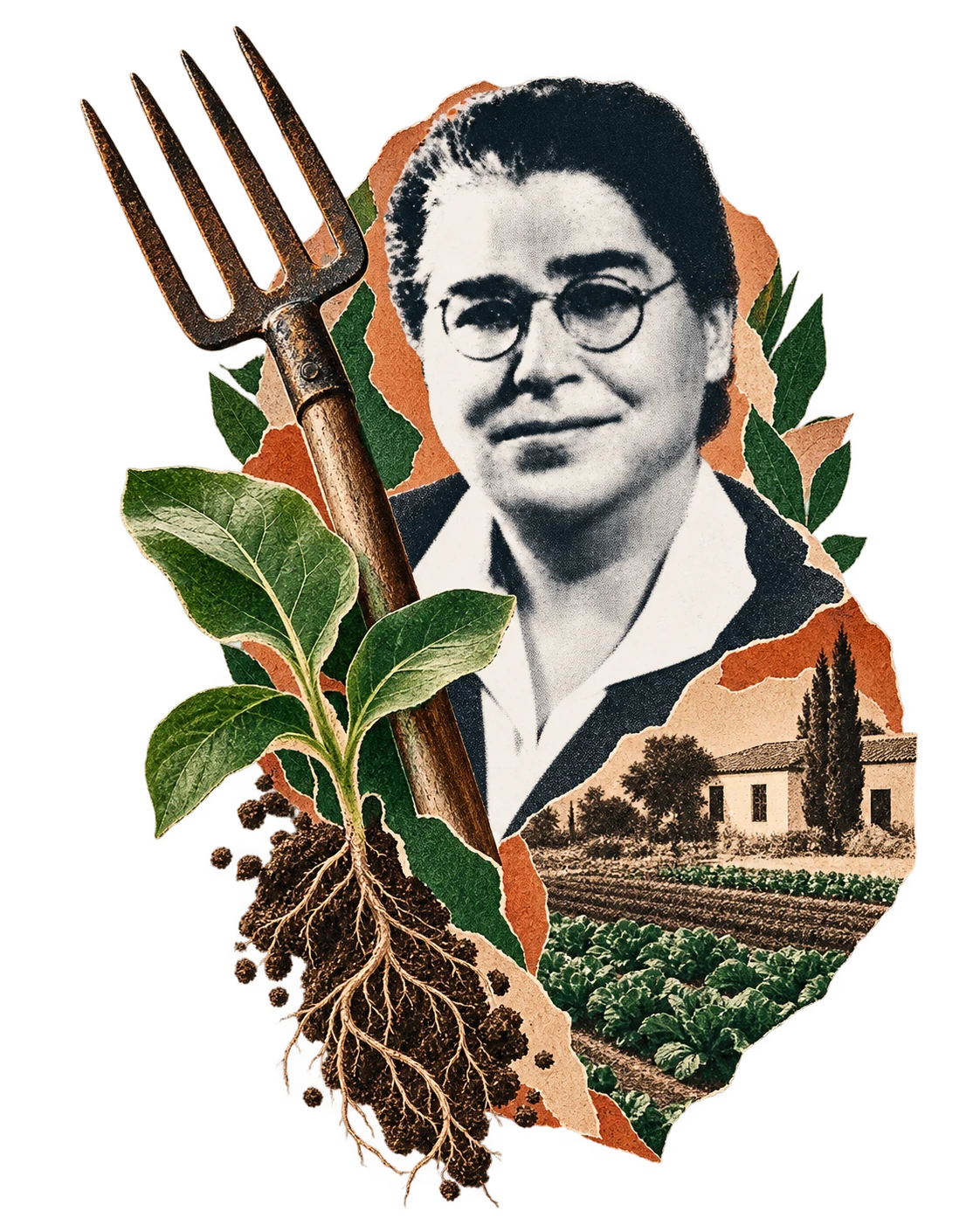
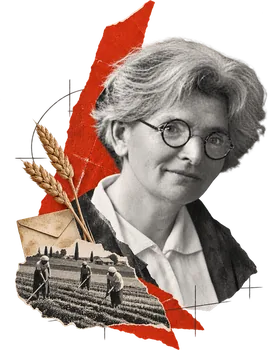
She was a determined woman, driven by a single purpose - to train the women of the Second Aliyah in agriculture. In her view, agriculture was a profession that liberated women and remade them.
Founding 'HeHalutz' and Agricultural Training
On the night of November 9, 1918, a group of young people gathered at Chaim Arlosoroff’s apartment in Berlin. Among them were Hannah Meisel Shohat, millionaire Walter Moses (later a literary critic), Julius Berger (a JNF official), and Zalman Rubashov (Shazar, later president of the state).
On that night, as World War I came to an end, these eager young people knew they were about to make history: they were going to establish the Hechalutz movement in Germany. Its aims were to study Hebrew, provide agricultural training, build ties with the labor movement in the Land of Israel, and create a new society based on cooperative settlement, with immigration to the Land of Israel as its primary goal.
About a decade before this group met, Mania Shohat had founded the first “collective” in Sejera (Ilania) - the first organized labor movement in the Land of Israel, which aspired to a communal way of life, exactly in keeping with the aims of Hechalutz.
Mania’s husband, Israel Shohat, was one of the founders of the Bar-Giora organization (later Hashomer), which set out to take over the guarding of the settlements in the Land of Israel before the establishment of the state. Eliezer, his brother, who was married to Hannah Meisel, helped found Hahoresh, a labor movement in the Galilee whose aim was to organize workers who were healthy in body and spirit.
Hannah Meisel was born in late 1883 in Russia to a prosperous family that could afford to provide a private education for all eleven of its children. As a result, they all spoke Hebrew from an early age.
The men in the Meisel household were away on business trips much of the time, and the home was run by educated, strong-minded women. At the time, it was not customary for women of a family with Hannah’s means to study agriculture, but Hannah Meisel knew exactly what she wanted. As early as high school, when she joined the Poalei Zion association as an activist, she wanted to be a pioneer and knew that, once she immigrated to the Land of Israel, her contribution would be to agricultural development. After graduating from high school, she went to study natural sciences at the University of Bern in Switzerland, then traveled to France for further training in agriculture. In 1909, at the age of 26, after graduating with honors and earning a doctorate in science, she immigrated to the Land of Israel and joined the group of young people from the Second Aliyah. Hannah Meisel was the first agronomist in the Land of Israel.
The young people of the Second Aliyah fervently believed that redeeming the land and creating a new person required, among other things, an egalitarian society engaged in agriculture. But there was a wide gap between this belief and the ability to work in agriculture under the conditions then prevailing in the country. Most of the immigrants arrived with no knowledge of agriculture whatsoever. It was seen as hard labor meant only for strong men, and despite all their aspirations for equality, the women were left with traditional domestic work in the kitchen and laundry.
Hannah Meisel understood that equality would not come from the place where women were, or from the place where they were expected to be. In her view, a pioneering woman worker had to “...know how to use a hoe and pruning shears before learning to use a microscope.”
As an agronomist, Hannah knew how women could be involved in working the land without requiring great physical strength. Together with several other women, she joined the farm at Sejera, where they were given a plot to grow vegetables and flowers. They became productive and essential workers, just like the men.
Sarah Krinser recalled that period: “We gathered separately in a room, and Hannah Meisel spoke to us about the need for a budget for a cowshed, a chicken coop, and a vegetable garden, so that work better suited to women workers could be provided. It was a new and exciting idea for us. In fact, this was the beginning of the women’s labor movement in the country... The young women should not have to do work unsuited to their body type. At that time, it was customary for two women workers to be employed in every agricultural settlement, where their task was to cook soup and porridge in large pots over branches outdoors. But Hannah Meisel’s ideas gradually brought about a significant change.”
Hannah Meisel and Agricultural Education
Hannah’s success was mingled with great sorrow when her sister took her own life, and she had to return to Russia. In 1910, she came back to the country, to Haifa, and worked with the agronomist Eliyahu Blumenfeld in an olive grove at the foot of Mount Carmel.
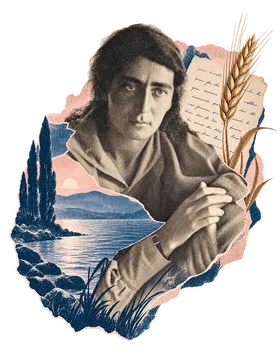
That same year, Rachel Bluwstein (Rachel the Poet) also arrived in the country. While Hannah Meisel was working in Sejera, Rachel worked in the colony of Rehovot. When she decided to study agriculture, she was referred to Hannah Meisel in Haifa. The agronomist Blumenfeld refused to take Rachel on as a worker, prompting Hannah Meisel to establish the Young Women’s Farm, where women could learn agricultural professions.
To put her plan into practice, Hannah Meisel set out to secure land and raise funds. The Jewish National Fund gave her a plot in Kinneret for the farm, while the money for its day-to-day operations came from the Organization of Jewish Women for Cultural Work in Palestine, founded by Sarah Thon in Germany. Sarah Thon enthusiastically took up the cause and published her ideas in an article titled “Women’s Work in the Land of Israel.” Her plan was to establish several training farms where women would work in agriculture.
The Young Women’s Farm was established in 1911 in the Kinneret courtyard. The first class had only six students, but their number gradually grew to twenty. The young women learned various farm skills, including vegetable growing, orchards, poultry, dairy farming, and home economics. The first class’s graduates were Leah Miron, Hannah Chizik, Atara Karol Sturman, Mina Zvin, Sarah Krigser, and Rachel Bluwstein (the poet).
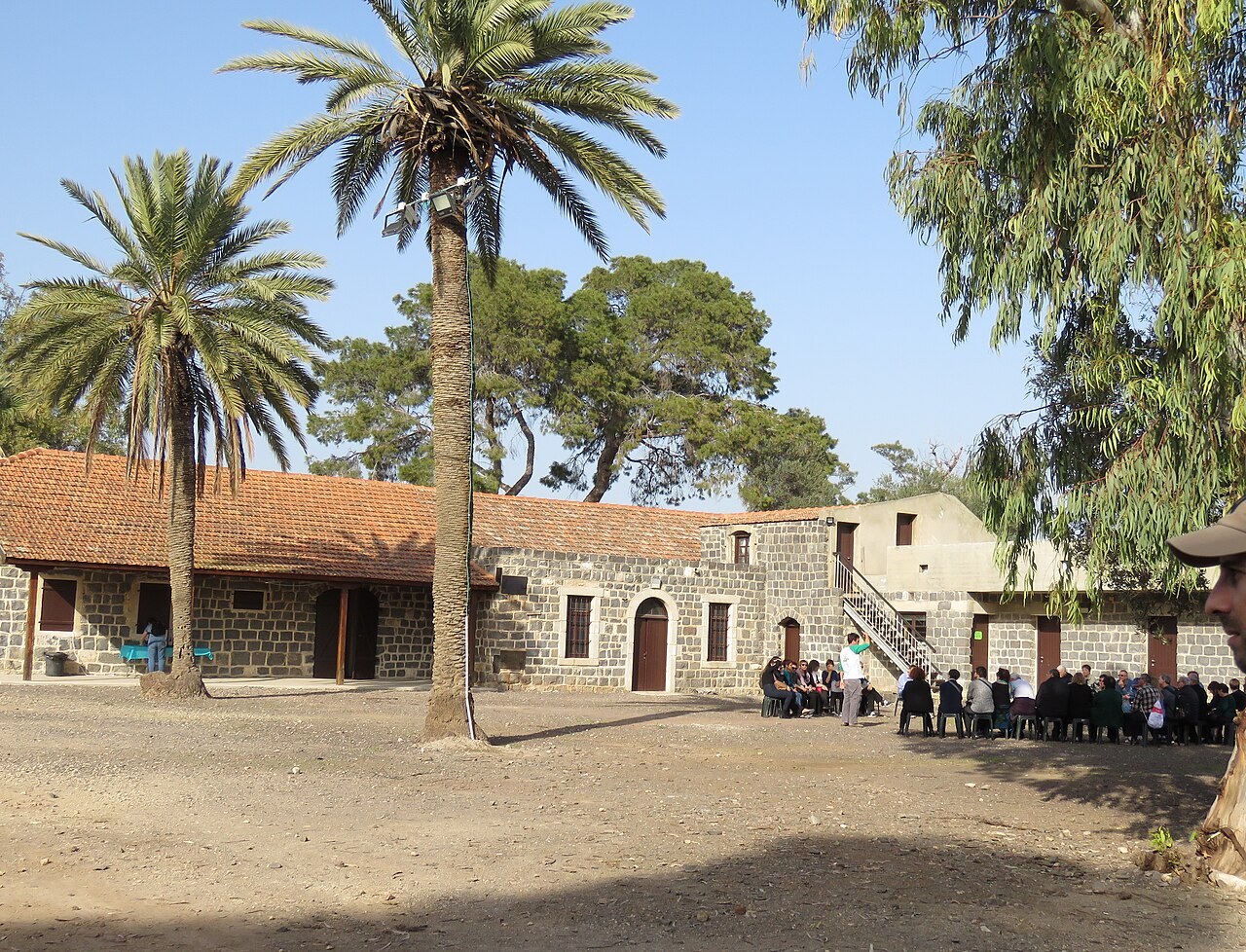
Rachel the Poet described that period this way: “We young women, too, were now entering a different, new era. The young men would be only our neighbors. Their lives would flow separately from ours. We were given a special plot of land, entirely our own, to work as we wished and as we were able. A golden age, what liberation.” The work, the heat, and the fever took their toll, but their sense of purpose and accomplishment kept their spirits high, as Rachel wrote: “We longed for sacrifice, for suffering, for the shackles of imprisonment, in which we would proudly sanctify the name of our homeland... More than one of us would later lie trembling with fever on her poor bed. But not for a moment did any of us lose her sense of gratitude to fate. We worked in a state of exaltation...”
The women of the Young Women’s Farm described their goal well: “We women workers, like the men workers... aspire first of all to restore our health, body and spirit, through work, and to attain through it the freedom, beauty, and wholeness of the soul that Mrs. Thon speaks of... to cast off all at once the habits, ways of life, and even ways of thinking that they brought with them from exile.”
Agricultural schools existed even before Hannah Meisel’s initiative. Mikveh Israel was founded by Karl Netter in 1870; in 1908, the agricultural farm at Kinneret was established, followed by agricultural farms at Ben Shemen and Hulda. Agriculture was taught at all these institutions, but none of them offered women the opportunity to work in agriculture.
Sarah Thon was critical of the women, and in March 1913 she wrote: “In their desire to resemble men in everything, they go so far as to stop paying attention to their appearance, cut their hair, and deliberately try to rid themselves of that thread of mystical grace stretched across the face of every young woman.”
During the farm’s seven years of operation, Hannah Meisel trained about seventy young women. World War I left the farm unable to sustain itself. The Turks took over the farm buildings and established a field hospital there for Turkish soldiers. After they left, the buildings were abandoned, and the story of the Young Women’s Farm came to an end.
The Young Women's Farm at Kinneret
Hannah Meisel’s intense activity did not stop. In 1919, she managed a workers’ kitchen in Tel Aviv, providing the city’s workers with nutritious, healthy, inexpensive food. But her passion for teaching remained, and she opened cooking courses for women. The idea of training women for agricultural work never left her, and she wrote to Arthur Ruppin that the farm needed to be revived and young women taught the various branches of agriculture. Two years later, Hannah Meisel and her husband Eliezer Shohat, whom she had married in 1913, were among the first settlers of the moshav of Nahalal. Hannah began putting her vision into practice and wrote to the Settlement Department about the practical preparations for opening the school:
“14 Tevet 5683 - January 2, 1923
To the Management of the Department of Agricultural Settlement in Jerusalem,
I hereby wish to inform you that I have begun the work of organizing the agricultural school for young women. I have bought a pair of good draft animals, with everything needed for them (a wagon, harnesses, etc.). I have begun hauling timber for the construction of huts that will serve the needs of the farm and provide housing for the students, who will be admitted as soon as this housing is ready, as well as for the construction of chicken coops for raising chickens... I received 150 Palestinian pounds in cash from the Department of Agriculture and Settlement, which was spent on buying draft animals and a wagon. An additional sum is therefore needed to begin the work outlined above, and I ask you to send me at least 200 Palestinian pounds as soon as possible.”
At the same time, Hannah got in touch with the women of the Hadassah-WIZO organization in Canada and enlisted them in the effort. Thus, six months ahead of schedule, the agricultural school was established in Nahalal under the name “WIZO Canada Nahalal Comprehensive Agricultural School.”
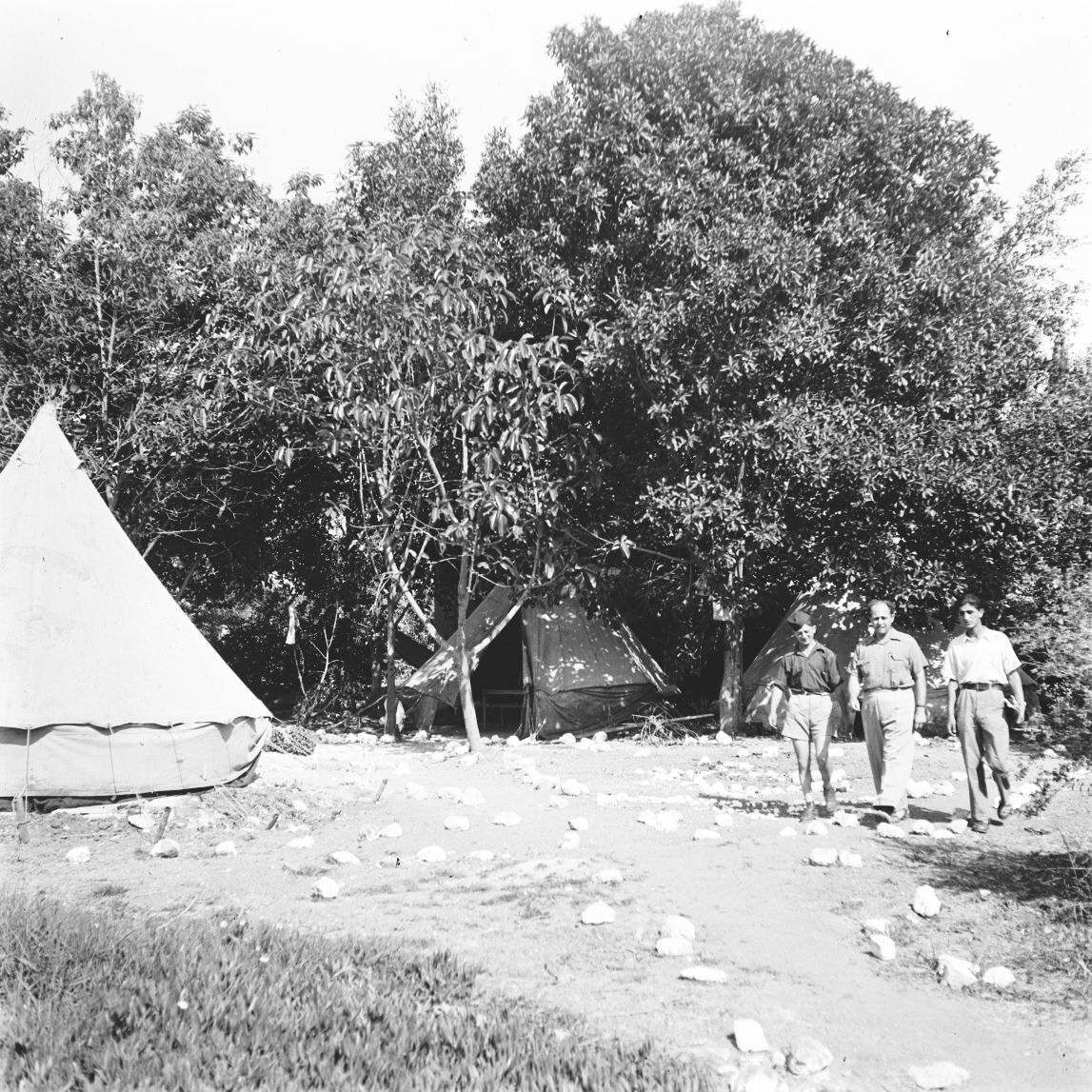
The school in Nahalal was intended for young women aged 20 and over. The admission requirements were that they “have talent and a desire to work,” and the course lasted “one year.” At first, they lived in tents, then moved into huts without floors or furniture. In the early years, there were no women trained to teach, so the teachers were men. It is said that maintaining the students’ sexual purity was a problem, and some of them married the workers, even though the school was nicknamed “the convent.” Hannah Senesh was among the school’s well-known students.
The Agricultural School in Nahalal
In 1926, the permanent residence building was inaugurated. It was the first two-story house in the Jezreel Valley and the most magnificent in the area. Dr. Chaim Weizmann attended the opening ceremony, and the guest of honor was Beatrice, the wife of High Commissioner Herbert Samuel, who gave a speech in Hebrew. At the ceremony, Hannah Meisel set out her philosophy, saying: “Settlement that has no scent of the field and no organic bond with the land will not bring about the desired revolution... Special institutions for agricultural education and training must be established to help women free themselves from the habits of city life and idleness, and to acquire knowledge and experience in the work of the rural household...”
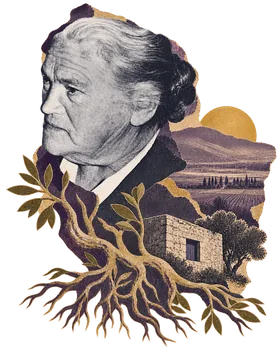
Hannah and Eliezer Shohat had no children, and she devoted her life to the school. In 1930, at the age of 50, Eliezer Shohat decided to leave Nahalal and went to work as a laborer in Petah Tikva. Hannah remained in Nahalal, but they kept in touch by letter. In 1960, Hannah retired and moved to Tel Aviv to live with Eliezer. Eliezer Shohat died in 1971 at the age of 96. A year later, Hannah died at the age of 89 and was buried beside her husband in Nahalal.

תגובות
עדיין אין תגובות.