
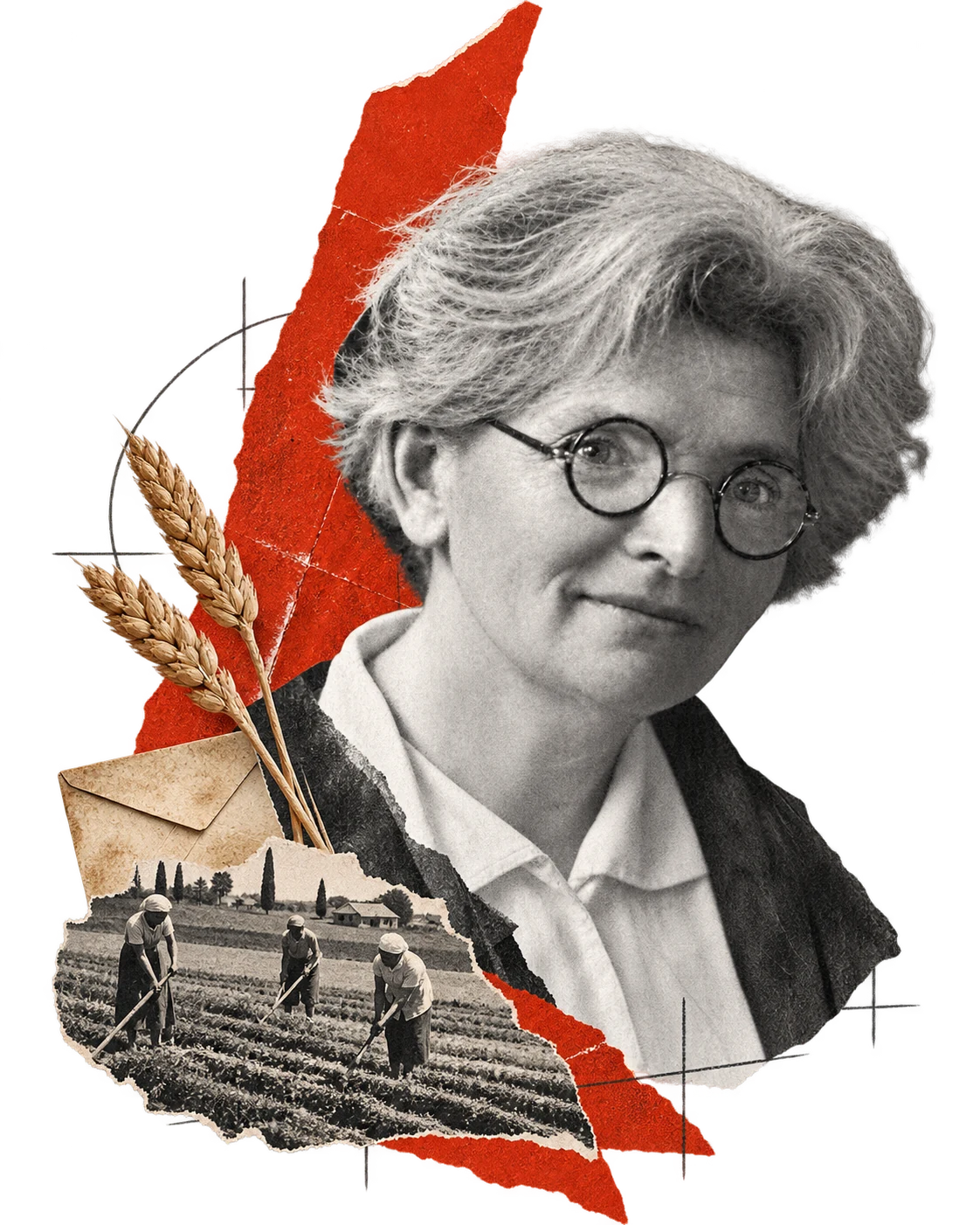
She was one of the most important figures in the Land of Israel during the Second Aliyah and became a legend in her own lifetime. A terrorist accused of one murder and suspected of several others. One of the founders of "the Collective" and "Hashomer." This is the unbelievable story of Mania Shohat.
The Russian detective was very cautious. He approached the window of the house and peered inside. Brussels, the capital of Belgium, was deserted at this hour of the night. He looked around, but not a soul could be seen on the cold street. He knew he was following one of the most dangerous women. He took a deep breath, raised the window, and slipped into the apartment. A faint bang rang out, and a bullet pierced his brain... The light came on, and the short young woman set about a task she seemed accustomed to. She brought the wooden crate to the middle of the room and put the detective's body inside, but his legs stuck out. She went to the storeroom, fetched a saw, cut off his legs, and stuffed them into the crate. She put on the lid and nailed it shut. The next day she took the crate to the post office and mailed it to the detective's handler, her former lover in Russia.
A Childhood in the Shadow of Revolution
The shooter, Mania Vilbushevich (later Shohat), was born in Russia in 1878, during the reign of Tsar Nicholas. These were days that heralded revolution. After World War I, Russia was battered by heavy losses. The people remained poor and enslaved under the rule of the supreme leader, the tsar, who lived in ostentatious luxury. It was on this soil that the ideas of Karl Marx and Friedrich Engels began to take root, ideas that would later be called communism. The people and the intellectuals were ready to sacrifice their lives to bring about the necessary change, a change that would create equality among the classes. Tsar Nicholas was the last in the tsarist dynasty; he and his descendants were murdered to make way for the revolution that was already underway.
Mania Shohat's family had, with good reason, a reputation for being mad. This is what Avshalom Feinberg (whose sister married into the family and who therefore knew them) wrote to Rebecca Aaronsohn: "[Nahum's] brother Moze [Moses] Vilbushevich sold a patent and is mad, like the whole family." (The Nahum and Moses mentioned here were Mania's brothers.)
The family history begins with Vilbois, Mania's grandfather, a French officer who came to Russia with Napoleon's army. He was wounded in one of the battles and treated by the daughter of the town's rabbi, and they fell in love. Vilbois converted to Judaism and changed his surname to Vilbushevich. The couple had a son named Ze'ev (Wolf), Mania's father.
Ze'ev was an ultra-Orthodox Jew who studied in a cheder as a child and at a yeshiva as an adult. He married Sarah, a highly educated young woman. The family lived in comfort and wealth, thanks to an inheritance of land and money, and employed many workers. But soon after the wedding, with the birth of their first children, tensions arose between the couple over their children's education: broad learning, as the mother demanded, or religious education, as the father demanded.
Four of Ze'ev and Sarah's eight children took their own lives. Mania, too, attempted suicide several times. At just four years old, she snatched up her dolls, ran to the river, and jumped into the raging current after her brother Isaac, who had drowned himself in the river. Isaac immigrated to the Land of Israel in the First Aliyah and was one of the Bilu pioneers. Unable to adapt to life in the country, he returned to Russia to serve in the army, but eventually killed himself. Her sister Frania, who had also immigrated in the First Aliyah, was an incurable romantic. After a disappointed love affair, she too returned to Russia and committed suicide. Her husband was Yosef Hazanovich, one of the founders of the "Beit Ne'eman" library, which would eventually become the National Library. Another sister was Anna, Mania's beloved sister, who took her own life.
As time passed, Mania steeled herself to face extreme situations. At six, she tied herself to a tree to protect herself from snakes in case she ever reached India; at twelve, she stood beside an oven for a whole day to accustom her body to intense heat in case she reached the deserts. Mania, who had grown up in a wealthy home, had a keen sensitivity to the exploitation of others and a powerful desire for equality - an unusual attitude for her status and the era. At twelve, she ran away from home and went to work as a porter. That same year she tried to kill herself again by swallowing poison, but she was found and agreed to return only on the condition that she work in her brother Gedaliah's factory. There she learned carpentry and was exposed to the differences between rich and poor, and between Jews and non-Jews. At work she fell in love with the revolutionary Gregory Gershuni, who recruited her to the Bund - the Jewish Workers' Party of Lithuania, Poland, and Russia.
From Arrest to the Workers' Union
Mania had a knack for getting into all kinds of trouble. Joining the Bund put her in real danger. In tsarist Russia, such activity was seen as defiance of the tsar's rule. The Okhrana, the secret police of tsarist Russia, arrested her in 1899.
During her imprisonment, a relationship developed between Mania and her interrogator, Sergei Zubatov, who would later head the secret police throughout Russia. Zubatov offered to help establish the "Independent Jewish Workers' Union" and even finance its activities, in return for her cooperation and non-opposition to the regime. He made a similar offer to Father Gapon, who was one of the leaders of the underground trade unions. In making the offer, he turned Mania and Father Gapon, without their knowledge, into double agents who were rebelling against the regime on one hand, while reporting to it and receiving its funding on the other.
In 1901, with Sergei Zubatov's help, the "Independent Jewish Workers' Union" was established to improve the conditions of Jewish workers. Once, during a meeting, Sergei Zubatov told her: "I promise you that when your revolutionaries seize power, they will be twice as cruel, and rivers of blood will sweep through Russia." He also made it clear to her: "I am fulfilling the duty of a thinking Russian. On this subject, we will never agree. As a Jew, you will never understand it."
But Mania understood perfectly well that "the Jewish worker occupies the lowest rung of Europe's workforce," and all she wanted was to improve their working conditions. Among the union's aims was to limit the workers' day to just twelve hours. The organization Mania founded was an enormous success, and within a short time it had tens of thousands of members. Mania then began organizing workers' strikes in Odessa and Minsk.
There are quite a few hints of a complicated, perhaps even sadomasochistic, relationship between Mania and Sergei Zubatov. When she suspected that Father Gapon and Sergei Zubatov were betraying her, she wanted to kill Father Gapon, but eventually they reconciled. Realizing that his life had been spared, Gapon arranged a meeting for her with the interior minister, Vyacheslav Plehve. When he made an antisemitic remark, she threw a heavy statuette at him. Later, she tried twice to kill Sergei Zubatov. Once, she pulled out a gun and fired at him, but in her fury she forgot to cock it, and Sergei survived. After these failed attempts, she tried to hang herself again, but was saved at the last moment. Two years after the founding of the "Independent Jewish Workers' Union," the Kishinev pogroms began and antisemitism surged. Mania decided that Jews in Russia had to defend themselves and began smuggling weapons purchased with Baron Rothschild's money in Belgium. There, on Sergei Zubatov's orders, a Russian police detective was following her - you have already read what became of the detective in the crate. This was not the last time Mania resorted to violence. In 1915, she threatened to stab Baha al-Din, the kaymakam of Jaffa. Mania was also responsible for the murder of an Arab officer named Tawfiq Bey al-Sa'id, identified as a participant in the 1921 riots in Jaffa. In 1924, she was suspected of involvement in the murder of the ultra-Orthodox activist Yaakov Israel de Haan. Her brothers were violent too: her brother Gedaliah said that he had planned to blow up his father's estate in revenge for the exploitation of the workers. Later, he tried to assassinate Eliyahu Scheid, who headed Baron Rothschild's administrative apparatus.
The demonstrations Mania organized in Russia and the organization's success alarmed the tsarist government, which moved immediately to dismantle the organization and suppress the protests. The situation became very dangerous, and two years after its founding, the organization fell apart. Sergei Zubatov was dismissed from his post. When the Russian Revolution broke out and Tsar Nicholas II was deposed, Sergei went into his room, took his service pistol, and fired a single bullet into his head.
For Mania, 1903, the year the Jewish Workers' Party was disbanded, marked the end of the Russian chapter of her life. Years later she wrote: "The only thing that bound me to Russia was a desire for revenge, and no constructive plan." Her brothers, realizing the great danger she was in, asked her to come to the Land of Israel to care for her very ill brother Nahum. In 1904, Mania landed on the shore at Jaffa. When she realized that her brothers had lied and that Nahum was not ill at all, she asked to return to Russia, but the ship had already left the dock. In 1907, two separate initiatives merged, and their founders were joined in marriage. The first was Mania Vilbushevich's initiative to organize a group of Jewish workers to engage in agriculture, an organization that would later be called "the Collective." The second was Israel Shohat's initiative to establish a secret organization that would take over guard work, later to be called "Bar-Giora." Israel, who knew about Mania's initiative, added a condition: anyone wishing to join Bar-Giora had to join the Collective as well. Mania Vilbushevich (Shohat) was born in Russia in 1878 into a wealthy family with eight children, four of whom died by suicide. The first to immigrate to the Land of Israel were her two brothers, Gedaliahu and Nahum, who were entrepreneurs, inventors, and practical men. The first member of the family to arrive in the country was the eldest brother, Gedaliahu Vilbushevich, an engineer and architect. He immigrated in 1892 in the First Aliyah, but returned to Russia three years later. In 1912 he returned to the country and joined his brother Nahum, who had immigrated in 1903. Gedaliahu established the country's first iron foundry and helped his brother Nahum Vilbusch establish the Nesher cement factory.
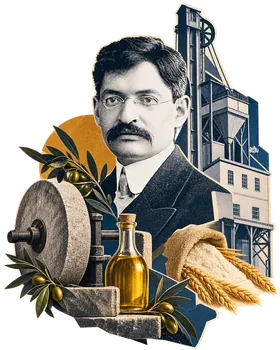
Nahum Vilbusch was one of the pioneers of modern industry in the Land of Israel. He founded a number of factories in the country, including the Shemen factory in Hadid (now Ben Shemen), and was a member of the Zionist Organization delegation that explored Uganda as a possible site for a Jewish state. Nahum married Shoshana Feinberg, daughter of Israel Feinberg, one of the pioneers of Rishon LeZion, and sister of Avshalom Feinberg of the NILI underground. Through this marriage, the two founding families became connected.
In 1919, Moses arrived. He was considered the genius of the Vilbushevich family. Moses invented the modern process for producing margarine and developed "live bread" - bread made by grinding sprouted wheat grains. He also hoped to bring peace to the world through nutritional solutions. He loved astronomy and enjoyed watching the stars at the observatory he built on Mount Scopus.
Like his brothers, Moses left his parents' home at a young age, feeling guilty about the workers laboring on his parents' farm in Russia. In the country, he became a factory worker. Moses began to grow wealthy from his inventions, and at the end of World War I, while in Switzerland, he met Vladimir Lenin, who offered to take him back to Russia by train and make the revolution together. When Moses refused, Lenin seized his property in Russia.
The Beginning in the Land of Israel
Mania arrived in the country in 1904 after a turbulent period in Russia. At first she came only to visit her brother Nahum, after being told he was ill, but here she discovered that he was well and that the story had been a pretext to get her away from the dangers in Russia. That same year, Mania and Nahum studied the water sources in the Land of Israel. Mania fell in love with the country and decided to stay.
She was welcomed by the well-known "redeemer of the Valley's lands," Yehoshua Hankin, and his wife Olga. They introduced her to the country and brought her together with the leading figures of the time. At Yehoshua Hankin's suggestion, Mania investigated the reasons for the poor state of Baron Rothschild's colonies and reached two important conclusions. The first: "We immigrants from the labor movement, the socialists, should not accept settlement built on private property in any form." The second: "We must find a form of collective agricultural settlement suited to the conditions of the country and the principles of the Jewish National Fund" - that is, public ownership of the land, not employer-employee relations, but relations of social equality. At the time, these ideas seemed strange and suspect. How could people work without an overseer? And what did public land even mean? Mania already had a clear goal and a way to pursue it. She went to Paris to persuade Baron Rothschild to lend her money, but the baron, who was supporting the colonies at the time, did not believe the idea was practical. She met Max Nordau, but he advised her to see a psychiatrist at once. From Paris, Mania continued to the United States, where she met Henrietta Szold and Judah Leon Magnes to raise funds for establishing the Collective. From there she went on to Canada, seeking financing for her vision. In Canada she met members of the Doukhobor sect, whom she had known in Russia. The sect opposed the church, championed love of others, care for the vulnerable, and mutual aid. Its members established homes for the needy, the elderly, widows, people with disabilities, and orphans. They regarded work as a supreme value and a source of mental well-being, not merely a means of survival. They lived communally, held human life sacred, and refused to bear arms. The writer Leo Tolstoy supported them and sent them all the royalties he received for his book Resurrection.
Mania was influenced by the Doukhobors. She wrote: "From childhood, under the influence of my brother Moses Vilbushevich, I rejected the system we all live under, a system of rich and poor... I thought that only people who live by the labor of their own hands are honest and decent, while the bourgeoisie are criminals, knowingly or unknowingly, and I sought a way of life that would involve the least possible exploitation of others... I came to the conclusion that workers' agricultural settlement should be built on a collective basis."
The Cooperative Experiment at Sejera
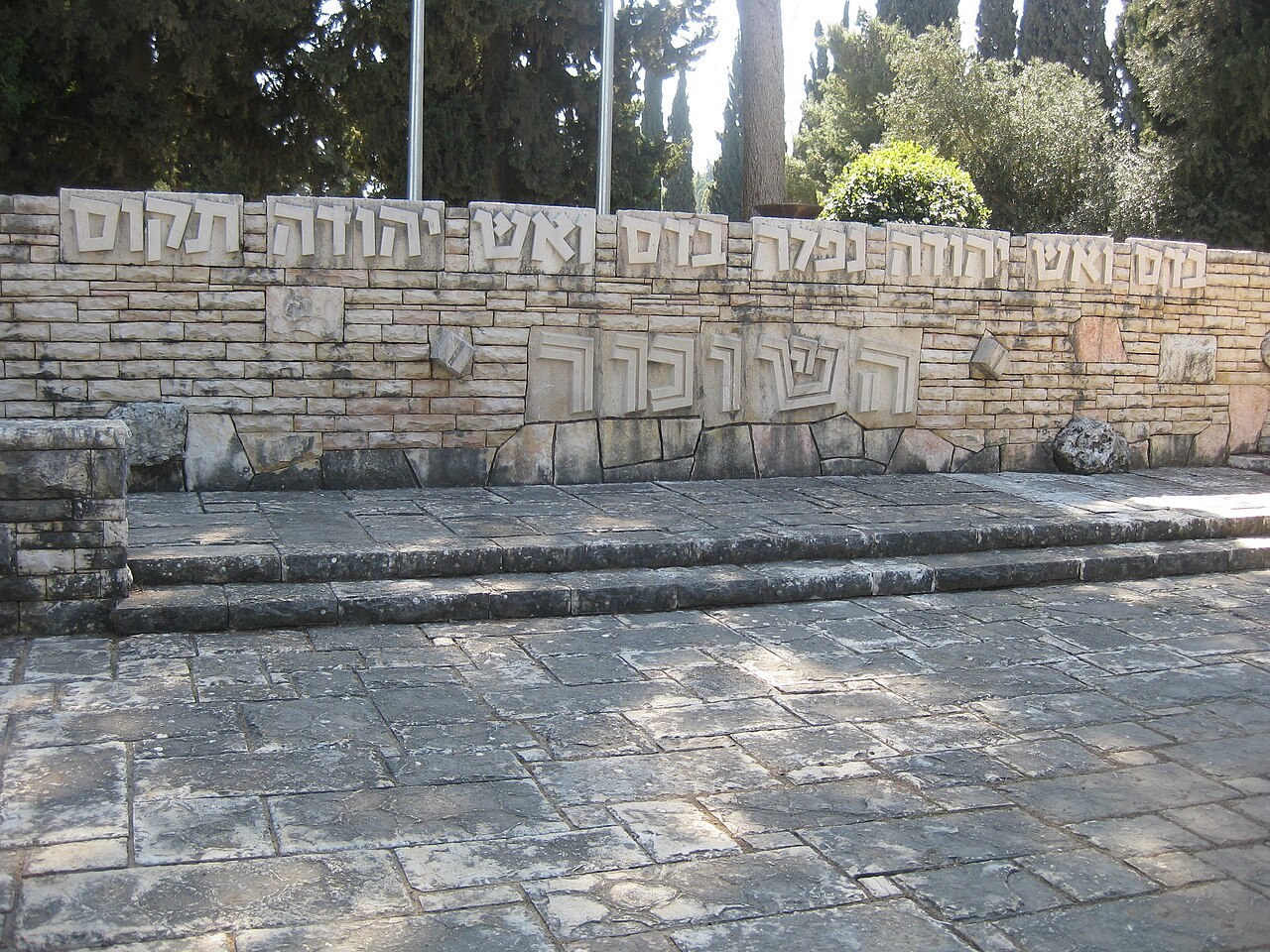
The only person who thought the idea of the Collective was right and worthwhile was Yehoshua Hankin. In 1907, when Mania returned to the country, he went with her to Sejera to persuade the farm manager to hire a group of workers without an overseer or clerks. That year the farm was in financial difficulty, and JCA (the Jewish Colonization Association) fired all the overseers and instructors and sold most of the agricultural equipment. As winter approached, the farm manager, agronomist Eliyahu Krause, knew that unless dryland farming began, an entire year's harvest would be lost. When Mania Vilbushevich and Yehoshua Hankin appeared at his door, Krause already knew that the previous year had ended in a loss, but he was still wary of the idea of the Collective, which seemed extreme to him. Yehoshua and Mania made it clear that if he refused, the land would be abandoned and security problems would worsen. They promised him that the workers would be dedicated, determined, strong, and would regard working the land as a mission. Krause agreed and leased them 2,000 dunams. He lent them animals and tools, provided seeds and an advance for living expenses, and gave them permission to live on the farm for a year. That same year, at the home of Yitzhak Ben-Zvi in Tel Aviv, Israel Shohat, Israel Giladi, and Alexander Zaid met in complete secrecy. The group decided to establish a secret organization called Bar-Giora, whose aim was to transfer the guarding of agricultural fields into Jewish hands. Until then, the work had been in Arab and Circassian hands. Israel Shohat was chosen as the organization's commander. Its motto was: "Judea fell in blood and fire; in blood and fire Judea shall rise" - and indeed, they intended to be militant, resolute, and ready to sacrifice what was dearest to them - their lives...
Mania Vilbushevich's initiative aligned with Israel Shohat's. He was looking for a remote place where he could gather the members of Bar-Giora, where they could work, train, and go out on guard duty. The members of Bar-Giora kept both their membership in the group and its aims secret.
The members of the Collective learned agricultural work in Sejera from the Russian immigrants, and in the evenings they studied Hebrew and Arabic. Mania was the bookkeeper and the driving force of the place. The atmosphere was that of pioneers creating something new and daring, and many eyes were watching them. There were six women in the Collective: Mania Vilbushevich, the Shturman sisters, and the Becker sisters. The women worked in the fields, wore the same gray work clothes as the men, cut their hair, donned keffiyehs, and went out to work in the fields. A year later, in 1908, Mania and Israel married. She told him that she was eight years older than he was, and he revealed to her that the secret Bar-Giora organization existed within the Collective. And just as Mania Vilbushevich (now Shohat) and Yehoshua Hankin had promised, they ended the year with a profit. The Collective in Sejera proved that cooperation between women and men at work, and the operation of a cooperative group of workers, could be profitable. This experiment came two years before the Degania group.
Mania wrote: "It was the happiest year of my life. They were beautiful days for all of us. Each day, it was as if we were consecrated to our work. Everyone felt elevated by this work. We felt that our experiment would serve as a cornerstone in the future for many workers who would settle on Jewish National Fund land and take responsibility for their own work. We believed that we were laying the foundations for lasting cooperative work, for ourselves and for our children after us... We ended the year with great success and a considerable profit... The first time in the history of Jewish dryland farming in the country!"
The Collective and the Hashomer Organization
In 1907, Mania Shohat established the first Collective in Sejera (now Ilaniya), with the aim of conquering labor and sharing equally the property produced by that labor. At the same time, Israel Shohat established the secret organization Bar-Giora, whose aim was to take over guard duty. Some members of the Collective also belonged to Bar-Giora. By the end of 1908, both organizations had already achieved tremendous success. Demand for Jewish guards was high, and the members of Bar-Giora, led by Israel and Mania, who had married the previous year, decided in 1909 to establish Hashomer - a kind of guards' association. Unlike Bar-Giora, which was secret, Hashomer was legal and public.
In April 1909, the founding assembly was held in Kfar Tavor, where Israel Shohat and Yitzhak Ben-Zvi spoke passionately. Procedures were established, an organization was set up, and its leaders were elected: Israel Shohat, Israel Giladi, and Mendel Portugali. Before long, guard contracts were signed with the leading colonies: Kfar Tavor (Mesha), Hadera, Rishon LeZion, and Rehovot.
Many wanted to join Hashomer, but its admission criteria were strict: candidates had to know how to use a weapon, ride a horse, and speak Arabic. Candidates were accepted in a highly impressive, almost religious ceremony. The association had one hundred members; in times of pressure, temporary guards were recruited from among the Jewish workers. The guards made an impressive sight - mounted on horses and dressed like daring, fearsome Bedouin horsemen.
Hashomer's second assembly took place at the end of 1909 in the Shohats' apartment in Haifa. By then, all the colonies of the Lower Galilee had handed responsibility for guarding over to the organization. At this assembly, the "Labor Legion" was established to take over the lands of the Jezreel Valley.
In 1912, Israel Shohat went to study law in Constantinople with Yitzhak Ben-Zvi and David Ben-Gurion. Since Gideon (Gide), the Shohats' eldest son, was born that year, Mania stayed in the country.
That same year, Hashomer members lost some of their contracts as a result of disputes with the farmers. In some communities, the guards had clashed with their Arab neighbors, and the farmers considered this a threat to their safety. Throughout this time, Mania stood by Hashomer's members like a protective mother, trying to balance the need to survive with the need to engage in defense. She insisted that every guard receive a plot of land, so that once guards were no longer needed, the member could work his land and continue to support himself.
In 1913, the organization's fifth assembly was held. It was then decided for the first time to establish a guards' settlement - Tel Adashim - and the sixth assembly was held there.
Kfar Giladi and the Kibbutz
Three years later, under the leadership of Israel Giladi, a group of Hashomer members working in Kfar Tavor set out to establish a second settlement for Hashomer members, to be called Kfar Bar-Giora, after the original organization. The settlement was established on the northern border of the state in the making, in the belief that settlement itself would determine the border along which Jews would live. Five years after the settlement was established, Israel Giladi died, and it was renamed Kfar Giladi.
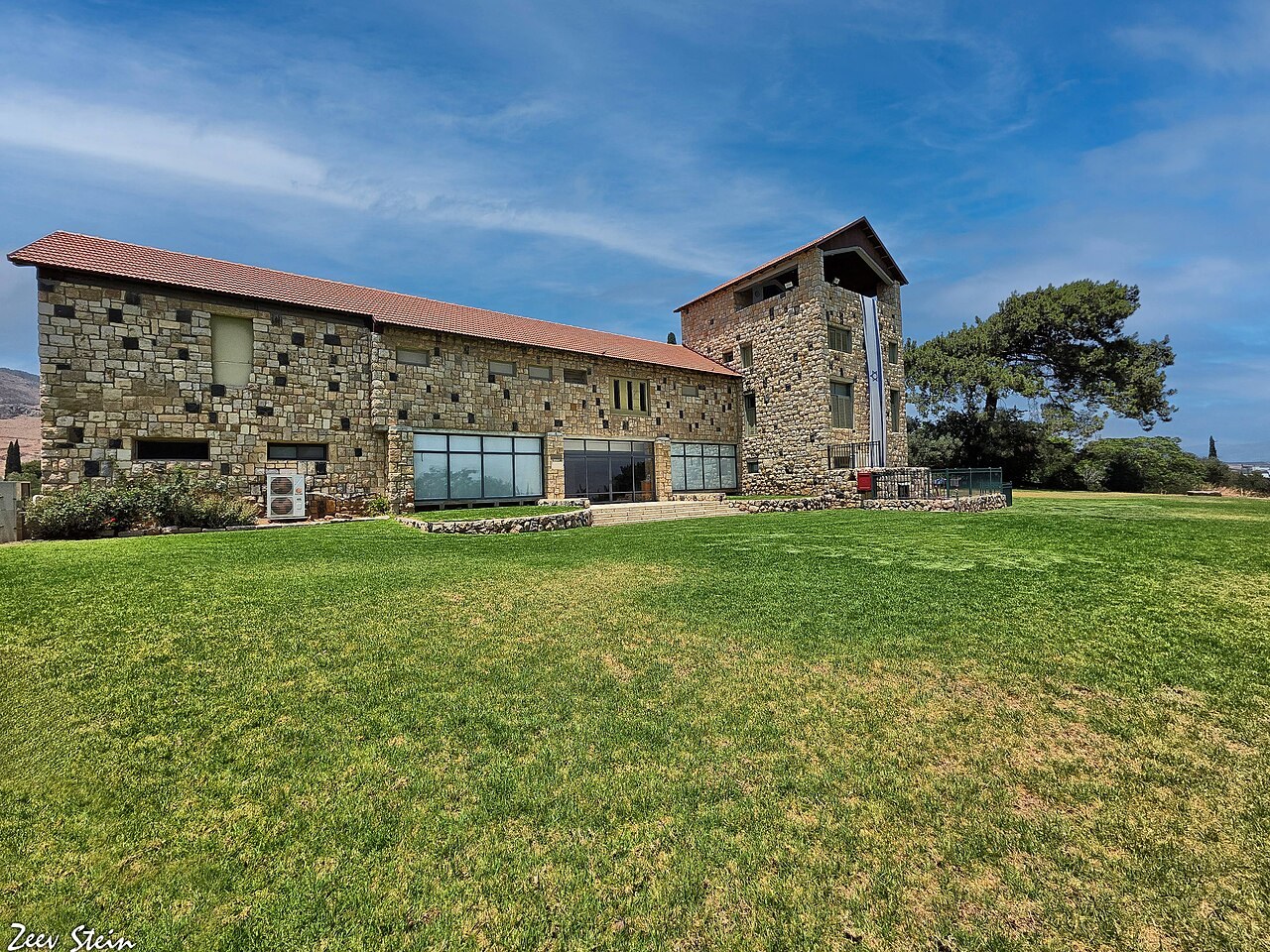
In 1914, with the outbreak of World War I, the Turkish authorities saw the Shohats as dangerous subversives and exiled them to Bursa in Anatolia. Their five-year-old son, Gideon, remained in the kibbutz and moved from house to house, while their daughter Anna was born in Turkey. At the end of the war, in 1919, the couple returned to Tel Adashim, but things in the country had changed: the British were in power, and the political activists who had remained in the country, including Yitzhak Tabenkin, Eliyahu Golomb, and Ben-Gurion, had gained influence. The Ahdut HaAvoda party was established under Berl Katznelson's leadership, and it demanded that Hashomer submit to the authority of the large, united party.
The vision of a state in the making, which required organized defense and central leadership, made clear that an organization like Hashomer, which provided a local solution for each settlement, was no longer suitable. In May 1920, a central assembly was held in Tel Adashim, where it was decided to disband Hashomer. A month later, at a conference at Kinneret Farm, the decision was made to establish a broad, popular organization to take responsibility for the defense of the entire community - the Haganah. During Hashomer's eleven years of activity, the community's outlook had changed. The colonies, once dependent communities vulnerable to extortion, became capable of defending themselves. When the state was established, Ben-Gurion would describe the Haganah as the father of the IDF and Hashomer as its grandfather.
The founders of the Haganah regarded Hashomer's members as extremists. Israel Shohat was not elected to the Haganah leadership, a decision that gave rise to the strangest chapter in the Shohats' lives: "the Kibbutz." The Shohats believed they could advance their goals through terrorism and secrecy. Thus, at exactly the same time as the Labor Battalion was established, Mania and Israel formed the Kibbutz with their friends. It had about 100 members: half were former Hashomer members and half were members of the Third Aliyah.
Despite Israel Shohat's declaration that the Kibbutz's purpose was "a small group of comrades, with a clear purpose, who know what they want and believe in their path, can accomplish great and wondrous things, and draw the masses after them," the Kibbutz's members had different aspirations. In practice, no goals were defined. It was unclear whether the enemy was the British or the Arabs, or perhaps the Zionist capitalists or the ultra-Orthodox leadership, which opposed the establishment of a state. The Shohats' kibbutz, Kfar Giladi, was the Kibbutz organization's secret center. The organization operated throughout the country and even beyond its borders. Its members founded a military academy, and some of them received training in military subjects in Europe, including aviation and seamanship. They equipped hidden arms caches and amassed more weapons than the Haganah, some of which they even stole from it.
The Kibbutz organization enforced iron discipline, like that of a terrorist organization, and its bylaws prescribed a punishment for treason that could extend "up to death." The Kibbutz was credited with several operations, including intercepting a shipment of arms from Europe intended for the Haganah and hiding it in an arms cache in Kfar Giladi.
In May 1921, Arabs attacked the immigrant house in Jaffa. The frightened immigrants locked the doors and waited for the police to arrive and protect them. But when the Arab police officers arrived, they broke down the doors and let the rioting mob into the house, where they murdered 14 Jewish immigrants. Two years later, in January 1923, it was decided to avenge the attack by killing the Arab officer identified as Tawfiq Bey al-Sa'id. Mania Shohat planned and ordered the killing, and the Kibbutz carried it out. (It was later discovered that the identification had been mistaken and they had killed the wrong man.) Toward the end of that year, Kibbutz members robbed a car belonging to Jewish money changers and used the money to buy weapons, which they hid in Kfar Giladi. The arms cache was designed by Gedaliahu Vilbushevich, Mania Shohat's brother.
The Kibbutz was an attempt to bring about an armed, Russian-style communist revolution in the Jewish community. Its leaders believed that the Jewish community should put its trust in Russia and form an alliance with it. Israel Shohat and his comrades sought to make contact with representatives of the Soviet regime in Europe, and in 1926 Israel Shohat and Menachem Elkind received an invitation to visit Moscow. "We were like dreamers," Shohat said of his first meeting with representatives of Soviet military intelligence. At that meeting, Israel and his comrades asked the Soviet Union to issue an official declaration in favor of "the establishment of a communist Jewish state in the Land of Israel," as a counterweight to the Balfour Declaration. They also asked Russia for military aid. The Russians, for their part, proposed that they first take over the Jewish labor movement, undermine the status of the Zionist left-wing parties, and establish an "Arab Democratic Party." Their proposal ran counter to the Kibbutz's outlook, but offered an alternative to an agreement with the British. The Kibbutz members were effectively being asked to act as a Trojan horse in the Zionist camp. The Russian secret police leaders viewed the group with suspicion and suspected them of being British agents. The trip was deemed a failure.
When members of the labor movement learned of the meeting, they were horrified by its implications and realized they had to dismantle the Kibbutz. In July 1926, the political struggle between Histadrut secretary David Ben-Gurion and the Kibbutz members reached its peak. The Kibbutz members sent a threat through Yitzhak Ben-Zvi, a friend of the Shohats and a fellow member of Ben-Gurion's leadership, warning that if Ben-Gurion dared enter their stronghold in Kfar Giladi, he would be murdered!!! They saw Ben-Gurion as a provocateur stirring up hostility toward their people. Ben-Gurion and Yitzhak Ben-Zvi did not back down, and went on a tour of the north anyway, reaching nearby Tel Hai. There they were met by Nahum Horowitz, a Kibbutz member, who pointed a gun at them and ordered them to leave at once. Ben-Gurion decided not to enter. He knew Mania Shohat could carry out her threat to kill him.
In 1926, the Kibbutz ceased to exist as a result of internal disagreements and budgetary problems.
The Dream of the Labor Battalion
By 1920, the work Mania and Israel Shohat had done could have filled the lifetimes of five people. Mania, born in Russia, had already joined the Jewish Workers' Party (the Bund), attempted suicide twice, fallen in love with the head of the Russian secret police, Sergei Zubatov, tried to kill him, and killed a hapless secret police agent who had followed her in Belgium. In 1904, she arrived in the country as a tourist, fell in love with it, and founded the Collective in Sejera, a cooperative workers' association. At the same time, Israel Shohat founded the Bar-Giora organization to take guard duties at the colonies from the Bedouins and Circassians. A year later, Mania and Israel married. Together, the couple established Hashomer, and they were also the founders of the guards' settlements Tel Adashim and Kfar Giladi, where their first son, Gideon (Gide), was born. During World War I, the couple were exiled to Turkey, where their daughter Anna was born. When they returned to Tel Adashim, with the British now ruling the country, they discovered that a new leadership had already taken shape. Hashomer was disbanded, and its members joined the Haganah. Israel and Mania turned to their next project: establishing a workers' movement.
In those days, despite a severe economic crisis in the country, immigrants continued to arrive. The British military government decided to employ them for low wages on public works such as building roads and railway lines. Veteran members of the Second Aliyah then took charge of managing the work. Nevertheless, a leadership seeking self-government was also taking shape among members of the Third Aliyah. One August night in 1920, on the hill opposite the Tiberias hot springs, forty-four pioneers who saw themselves as continuing Trumpeldor's path gathered. This was how the Labor Battalion was founded. At first it was called the Yosef Camp Battalion, and it operated and grew without written rules. Among its founders were Yitzhak Sadeh and Yehuda Almog, who wrote: "The aim was to conquer labor and the land, not for ourselves, the handful, but for the whole nation, crying out from the hell of its exile... The way forward was unclear, too, and there was no concept of 'companies.' We hoped that truth would emerge from life, that we would sift away all the chaff, throw off all the husks, and find ourselves a way of life."
Three days later, the first gathering was held, and Yitzhak Sadeh, Yehuda Almog, and Menachem Elkind were elected to the leadership. Within a month, the battalion had grown to about 300 members. The ideas of self-management and equal sharing were partly a combination of ideas the immigrants had brought from Russia, but also a necessity imposed by circumstances. Most of the immigrants had never done manual labor, and, above all, they were suffering from hunger.
The Labor Battalion's center was established in the colony of Migdal. In a report submitted by Yitzhak Sadeh, he wrote: "The battalion will be a reservoir of the human material needed for settlement, to be educated in the spirit of a new social life, the defense of the country, and the creation of a type of working person always ready to wield both plow and rifle. A community of idealists willing to sacrifice themselves for every public need that may arise in the life of our people in the country, in the spirit of Trumpeldor's idea of establishing agricultural settlements of border guards."
The Labor Battalion, founded about three months before the Histadrut, served as a beacon for ideas about organizing workers. Berl Katznelson would later say that road-building was the labor movement's university.
The Labor Battalions worked, among other things, on paving the Tiberias-Migdal road, fishing, stevedoring, and building houses in the Jordan Valley. Battalion members laid the railway line between the Rosh HaAyin springs (Afek Park) and Petah Tikva and built the British military camp in the Jenin area. They drained the Hadera swamps, restored the ruins of Tel Hai and Kfar Giladi, and in Jerusalem settled in the courtyard of the Ratisbonne Monastery, where they worked in quarrying, stonecutting, and paving King George Street. They left their mark throughout the city. They built the neighborhoods of Rehavia, Talpiot, and Beit Hakerem. They also built the Porat Yosef Yeshiva in the Old City and the Hadassah building at the corner of Rav Kook and HaNevi'im Streets. In Tel Aviv, they built Nahalat Binyamin Street, Ben Yehuda Street, Rothschild Boulevard, and the Tel Nordau School. The same battalions also established the joint farm of Ein Harod and Tel Yosef in 1921, and Ramat Rachel in 1926.
Kfar Giladi, whose members were Hashomer people, including Mania and Israel Shohat, officially belonged to the Labor Battalion, but in practice operated separately. The Labor Battalions were run like a kibbutz: all members' income was deposited in a shared fund intended to serve everyone equally, according to their needs.
From the Labor Battalion to Vayo Nova
Over the years, the battalion experienced splits over ideological differences. Tel Yosef split away in 1923, and three years later came the second split, in the Vayo Nova affair. Some members of the Labor Battalion, led by Menachem Elkind and Yehuda Almog, who belonged to the left wing, fought first and foremost for social aims: common property and equal distribution. Menachem Elkind was a member of the Kibbutz organization, which advocated achieving its aims through underground terrorism and was led by Mania and Israel Shohat. In 1926, this organization met with representatives of Soviet military intelligence, asking the Soviet Union to issue an official declaration in favor of "the establishment of a communist Jewish state in the Land of Israel," as a counterweight to the Balfour Declaration, and to provide them with military aid. The Russians, for their part, proposed that they first take over the Jewish labor movement, undermine the status of the Zionist left-wing parties, and establish an Arab Democratic Party. The meeting was a failure.
Menachem Elkind did not accept the idea of putting settlement first and social goals second. In 1927, he left the country with about thirty of his comrades and returned to Russia. There, on the Crimean Peninsula, they established the commune Vayo Nova ("New Way" in Esperanto) - an Israeli kibbutz in every respect. They had a communal dining hall, children's houses, shared expenses, evenings of group singing, and Hebrew-Jewish education. The commune's members welcomed new settlers from Russia and Bulgaria, some of whom were even antisemitic.
The kibbutz served Soviet propaganda purposes, and in 1930 the Soviet authorities sent several artists there to document life in the Jewish kibbutz. Among them were the painters Meir Axelrod and Mendel Gorshman. An exhibition of Axelrod's paintings, titled "Paradise Lost," was shown at the Ein Harod Museum. Among the settlers were also the writer Shira Gorshman and her husband Mendel Gorshman, who left the country and moved to Moscow. In 1989, Shira returned to the country and published the book Hannah's Sheep and Cattle, describing her experiences in Vayo Nova. Several years later, the First Channel produced the documentary film New Way, in which Gorshman spoke about her life in the Labor Battalion and Vayo Nova. Nathan Shaham's novel Bone to His Bone tells the story.
This settlement lasted only a few years. Most of the commune's members were suspected of being rebels and disappeared into Stalin's labor camps. Menachem Elkind left the commune and moved to Leningrad, and from there to Moscow. His third son was born in 1937, and the baby's grandfather traveled to Russia to circumcise him. Two months later, on December 2, Elkind was arrested for taking part in a circumcision ceremony. On February 19, 1938, he was executed by firing squad in Moscow.
The other faction of the Labor Battalion, which emphasized its Zionist dimension - the importance of settlement first, and society afterward - was supported by the leadership of the labor movement, including David Ben-Gurion, David Remez, Berl Katznelson, and Yitzhak Tabenkin. Members of this group became part of the mythology of the Second and Third Aliyot. They included Yitzhak Sadeh ("the Old Man"), Yaakov Levin (father of the writer Amos Kenan), Sarah Chizik, who fell defending Tel Hai, Ben-Zion Eshel and Emmanuel Bar-Haim, who founded Kibbutz Ramat Rachel, Mordechai Ish-Shalom (a former mayor of Jerusalem) and Hava Ish-Shalom, Alexander Zaid, who founded Hashomer, the writer Aryeh Lifshitz, and many others.
The Joseph Trumpeldor Labor and Defense Battalion survived for about ten years, coming to an end in late 1929. During its brief existence, it had a major influence, and the idea of a cooperative, egalitarian society became deeply embedded in the labor movement's path and in the development of the General Histadrut. The battalion's most significant contribution was the founding of the United Kibbutz Movement, a movement that pursued settlement in strategic locations to redeem land and set the border.
Life Beyond the Mission
After the establishment of the state, and until her death, Mania Shohat cared for new immigrants living in transit camps. The public mission the Shohats had taken upon themselves drained them of all their strength. Their children were the first to suffer, growing up without their parents. In 1921, their pace of activity slackened, and their work no longer filled their entire lives. By then, the differences between the couple were already apparent. Israel Shohat was elegant, with a polished and impressive appearance, while Mania dressed like a man heading out to work in the fields. Israel wanted family life; Mania, less so. The couple separated but stayed in touch: Mania moved with the children to Kfar Giladi, while Israel remained in Tel Aviv and opened a law office. On weekends, he would sit in a café with his friends from the days of Bar-Giora, Hashomer, and the Kibbutz, reminiscing about the past.
Their son Gideon (a retired colonel) was one of the founders of the Israeli Air Force and Israel's ambassador to African countries. In 1966, at the age of 55, he died by suicide on the Herzliya beach, not far from his home. Gideon had two daughters: Alona, who married Arik Einstein and later divorced him, then became religious along with her daughters. Alona died of cancer in January 2006. His daughter Yael lives in Australia.
When Israel fell ill in 1948, Mania moved to Tel Aviv to care for him. She died in 1961 at the age of 81. Israel Shohat died several months after her, at the age of 75, and both were buried in the Hashomer section of Kfar Giladi. At Mania's funeral, her friend Rachel Yanait Ben-Zvi eulogized her, calling her "a symbol of the generation growing up in the country, one of a kind in her great heart and devotion to others, a symbol of the Land of Israel." And despite all the toughness Mania displayed, it turns out she was sensitive. Her niece said, "With Mania, toughness covered up a sentimental nature. Every item of her clothing had pockets, and inside them were chocolate and candies."
תגובות
עדיין אין תגובות.