
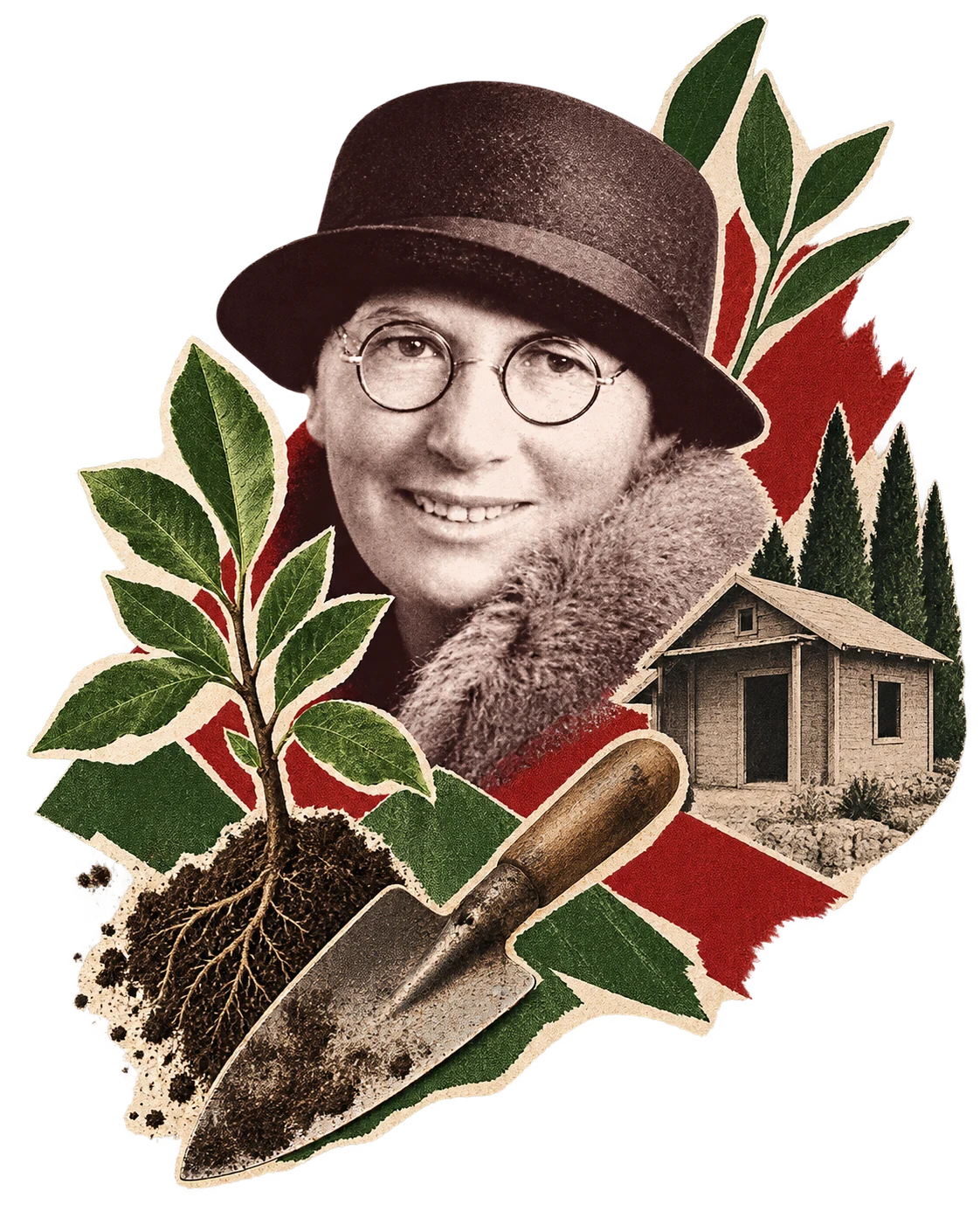
It was a chilly December. The distinguished delegation, setting out from the wooden cabin in the Rehavia neighborhood accompanied by cavalry, a guard of honor, and police cyclists, proceeded through the streets of Jerusalem in a festive procession. Crowds of citizens filled the decorated streets and saw in the open car the next president of the State of Israel and his wife. The president’s wife stood tall, waved her hand, and called out warmly, "Greetings, multitudes..."
Childhood in a Jewish Shtetl
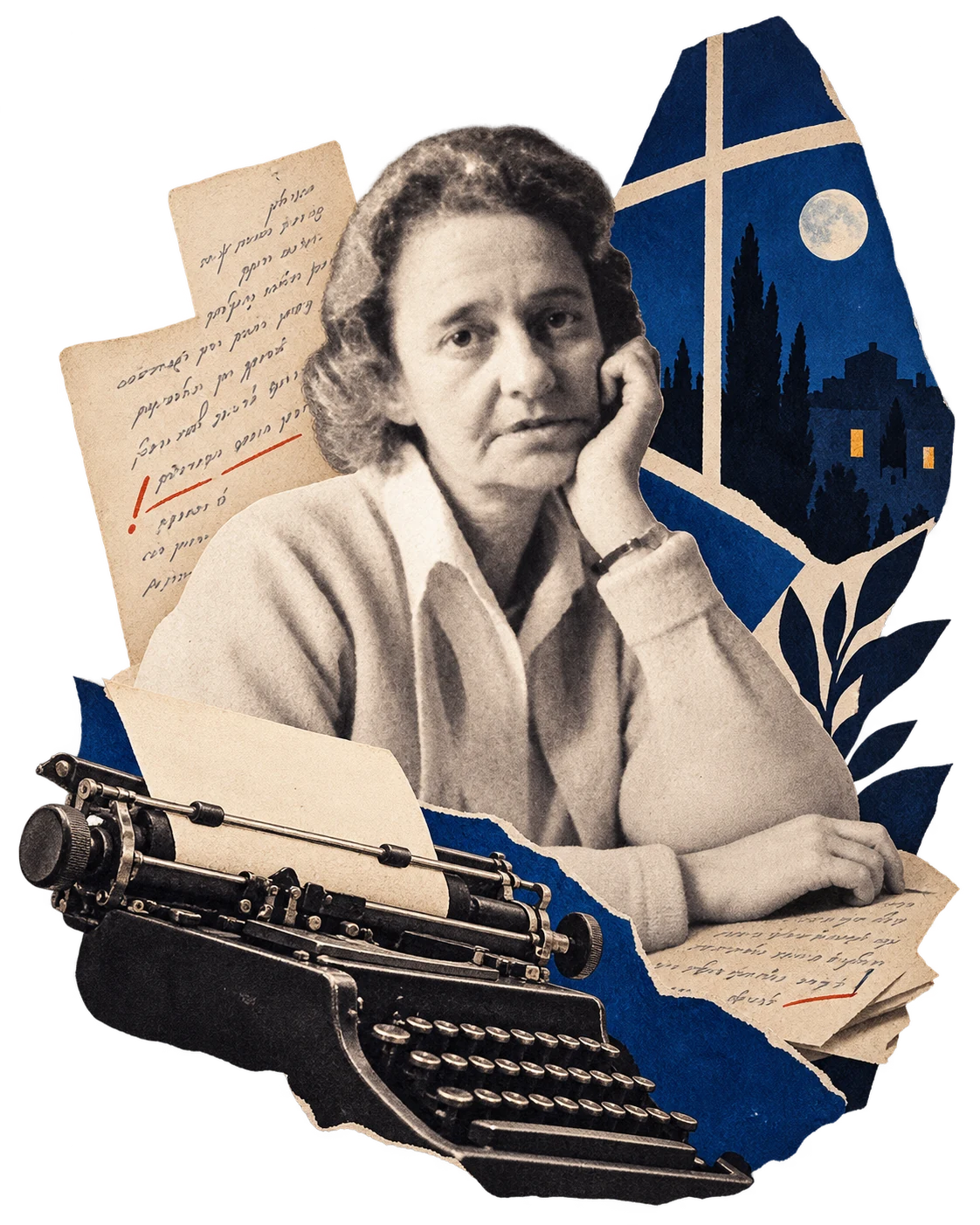
Rachel was born Golda Lishansky in a small town in Ukraine in 1886. In her memoirs, she described her home as a traditional, Hasidic, prosperous, and warm Jewish household. She was very proud of her family relationship to the town’s rabbi and recalled her great-grandfather’s longing to immigrate to the Land of Israel. Her mother ruled the family with a firm hand and was the one who told them stories from the Bible, the Midrash, and Jewish folk legends. In the town where she grew up, Golda and her family experienced antisemitism and, later, the horrors of the pogroms.
Even as a child, Golda was unusual. She wanted to study the Talmud with the boys, and when she was refused, she joined her cousin, who was studying with a private tutor. With him, she studied Hebrew, grammar, the Prophets, the Talmud, and Russian. At 15, she moved to the large city of Zhytomyr to attend high school, where she lived alone and supported herself by tutoring Hebrew.
To Poalei Zion and to the Land
In the wake of a blood libel and antisemitic incitement, pogroms against the Jews of Kishinev took place in 1903 and 1905. Golda Lishansky was horrified by the pogroms, so she moved to Kyiv and joined the Poalei Zion party. "The Jewish people must be rebuilt as a healthy people founded on workers" was one of the party’s principles. Dov Ber Borochov, one of the party’s leaders, believed that such a state could be established only in the Land of Israel: a state based on cooperative institutions and run on the principle of equality, where workers would earn their living through manual labor, preferably in agriculture. Some party members became leaders of the emerging state, including David Ben-Gurion, Israel Shochat, Yaakov Zerubavel, Yitzhak Ben-Zvi, Mania Shochat, and others. The party’s activities were seen as a defiance of the authorities, and Golda found herself in prison. After her release from prison, she went to Germany to study zoology and botany. During her studies, she attended the Seventh Zionist Congress, held in Basel, and joined the camp opposing the Uganda Plan, led by Borochov. In 1905, she traveled with Borochov to Russia to take part in demonstrations, and there, at the Berdychiv branch of Poalei Zion, she met the great love of her life, Yitzhak Ben-Zvi. Two years later, she came up with the idea of establishing a fund to encourage Jewish workers to immigrate to the Land of Israel: KPAI (the Workers of the Land of Israel Fund). That same year, Golda was the only woman elected to the party’s central committee.
In the spring of 1908, Golda was sitting in a library in St. Petersburg, reading a letter that had arrived for her. The letter described the riots in Jaffa (known as the "Jaffa Events" [Purim 5668]). She was astonished that a pogrom against Jews was taking place in the Land of Israel, and said that a clear call rose in her mind: "'Get up and go to the Land of Israel!... As if an unseen hand had taken hold of me and raised me to my feet.'" Another reason that spurred her to immigrate was her longing for Yitzhak Ben-Zvi, who had gone to the Land of Israel a year earlier.
"What will you do there in the Land of Israel?" Bialik asked Golda, who had come to visit him on her way to the port of Odessa. "I will live!" the enthusiastic young woman replied.
As soon as she stepped off the ship, she began her new life, and the first thing she did was change her name to Rachel Yanait. She later wrote that she wanted to identify with the Hasmonean king Alexander Jannaeus, and that the name Yanait also preserved, in part, her father’s name, Jonah.
In the spring of 1908, Rachel Yanait joined her partner Yitzhak Ben-Zvi in his public activities in the movement. "He was very worried, and his face was downcast," she recalled of their first meeting. That summer, the two began traveling together around the country, discovering its landscapes. "Anyone who has been to the Land of Israel but has not seen Jerusalem is like someone visiting a palace of art who has lingered in the corridor and never entered the reception hall," Ben-Zvi wrote several years later. Love blossomed between Rachel and Yitzhak. Rachel was spontaneous and emotional, while Yitzhak was level-headed. "If you asked me when the happiest time in my life was," Rachel said many years later, "I would answer that it was those days when Yitzhak and I woke up in our tent, above the wooden planks, and decided to walk from Jerusalem to Hebron, Ein Gedi, without any preparations or ceremony..."
In Jerusalem, she joined the teaching staff of the Hebrew Gymnasium, the first secular national school in the country. The school met with opposition among some of the city’s communities, and its enrollment was small, but Rachel took the job seriously and prepared thorough lesson plans for teaching Hebrew. She also worked as a laborer at the Achdut Print Cooperative and organized the first strike in the country: a strike by printing workers against the owners of the print shops who exploited them.
Rachel also joined the Bar-Giora organization, which had been founded a year before she immigrated to the country. Its success and the demand for Jewish guarding led its members, in 1909, to decide to establish the Hashomer organization at Mescha, under a veil of secrecy. Rachel Yanait was among them. The organization’s aims were to take control of guarding, gain control of the land, and establish an independent Jewish defense force. At that very moment, not far away, Arabs attacked Sejera, where their comrades Yisrael Korngold, secretary of Poalei Zion in the Galilee, and the tenant farmer Shimon Malmud fell.
Rachel showed rare courage on many occasions. She demanded equality between women and men, and described the joy that overwhelmed her when she was able to take part in the defense of Sejera after the attack. She wrote: "This is the first time I have been on guard - and in the Galilee! My heart is open and throbbing; the hurt has receded..." A year after Hashomer was founded, Yanait was appointed to the "Armaments Committee" of the Poalei Zion party. The committee oversaw both the Hashomer organization and the Shimshon gymnastics association. Through her work, she met Mania Shochat, and the two became close friends. Rachel Yanait was the only one of all Mania’s friends who did not abandon her.
A Shared Life in Jerusalem
As the Passover break of 1911 approached, Yitzhak and Rachel resigned from the gymnasium in Jerusalem and began planning their next steps. Yitzhak went to study law in Salonika and later at the University of Istanbul, where he studied with Israel Shochat, David Ben-Gurion, and David Remez. Rachel tried to gain admission to the University of Damascus. "How can you imagine that female students could be admitted here?" the university administrator challenged her. In the end, Rachel moved to Nancy, France, where she completed her studies at the Faculty of Agriculture, qualified as an agricultural engineer, and gained practical experience. Rachel lived in Nancy in solitude, with only her correspondence with her beloved Yitzhak to keep her company.
World War I hastened Rachel’s return to the country. When she arrived in July 1914, her parents, Shoshana and Jonah, and her sisters were waiting for her: Batya (the sculptor Batya Lishansky), Tamar, and Sarah (Sarah founded the first clinic of the Clalit Health Fund). When she met Yitzhak again, after he had interrupted his studies in Turkey and returned to the country, their relationship grew closer, and they were already surrounded by a whole family.
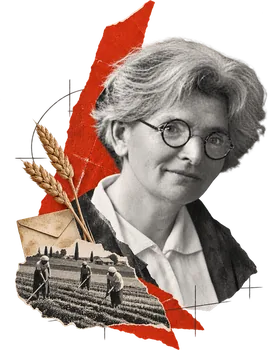
That same year, the editorial offices of HaAchdut closed, and Yitzhak Ben-Zvi and his friend David Ben-Gurion were arrested and deported to Egypt. From there, they went to the United States and together established the local Hehalutz movement. During World War I, Rachel worked at Aharon Aaronsohn’s experimental farm in Atlit, and her connections with the Nili underground enabled her to serve as a liaison between the Hashomer organization and the Nili movement.
At the end of the war, in 1918, Rachel married her beloved Yitzhak Ben-Zvi, but retained the name she had adopted, becoming Rachel Yanait Ben-Zvi. The couple had two sons, who were given biblical names: Amram (1922) and Ali (1924).
Rehavia, the Enterprises and the Loss
The tall, ancient trees of Jerusalem stand because of Rachel. In 1919, she established a plant nursery in Rehavia called Meshek HaPoalot (the Women Workers’ Farm), with the aim of training pioneering women in agriculture. She persuaded Ronald Storrs, then governor of Jerusalem, to plant trees from her nursery throughout the city. The trees were planted mainly in Rehavia, Talpiot, and Beit Hakerem.
The year 1924 was an exceptionally intense one in Rachel’s life. Her second son was born, and the couple bought a lot in Jerusalem’s Rehavia neighborhood. The price was high, so they could not afford to build a house on it. As a soldier recently discharged from the British army, Ben-Zvi received two Austrian cabins that the British army had taken as war booty. The cabins were joined together to make a single, six-room cabin, where Yitzhak Ben-Zvi’s parents and Rachel Yanait’s parents also lived. In June of that year, Rachel left the nursery and once again became the revolutionary Rachel. She gave the order to assassinate Yaakov de Haan, a fierce opponent of the Zionist movement who represented the ultra-Orthodox community. He worked to thwart Zionist development, and for this purpose met with Abdullah in Jordan and with senior British officials. It was the first political assassination in the country.
At the beginning of the 1948 War of Independence, Rachel wrote to her husband Yitzhak and told him about her journey to besieged Jerusalem in the convoys: "What is this? These children have to protect us, the adult pioneers? They are children! Their story of victory is presented, but they themselves do not always feel victorious. Often they know that victory is bitter."
During the battles for the city of Jerusalem, her younger son Ali, one of the founders of Beit Keshet near Mount Tabor, told her that he and his fiancée, Pnina, planned to marry at Passover. Rachel, worried for her son’s life after attacks by Arab gangs in the Lower Galilee, asked him to bring the wedding forward, and it was set for March 25. Nine days before the wedding, 24-year-old Ali was killed in a planned ambush by a neighboring Bedouin tribe. His fiancée Pnina described the tragedy: "Everyone was stunned and hungry. Mother brought chicken soup that was meant for the wedding. They ate the soup, and the savory pies and strudels, too. There was deathly silence. All I could hear was the clatter of spoons against the soup bowls. No one cried. Everyone wanted to be strong." Rachel knew she had to face the greatest pain of all.
The state was established, and in 1952 Yitzhak Ben-Zvi was elected the second president of the State of Israel. He insisted that the presidency be based in Jerusalem (his predecessor, Chaim Weizmann, had lived in Rehovot). The state offered to purchase a grand house for the new president, but the couple insisted on continuing to live in their modest home, believing that one could lead and give citizens a sense of fellowship only by meeting them as equals. Official receptions and state events were held in those Swedish cabins. Every Rosh Chodesh, the president and his wife would gather representatives of Israel’s communities in the cabin and devote the meeting to getting to know one community, its culture, and its history in depth.
Yitzhak Ben-Zvi died in 1963. In 1979, sixteen years after her husband, Rachel Yanait Ben-Zvi died. They were buried in a simple grave plot at the top of the Rabbis’ section, high up in Jerusalem’s Har HaMenuchot cemetery.
תגובות
עדיין אין תגובות.