
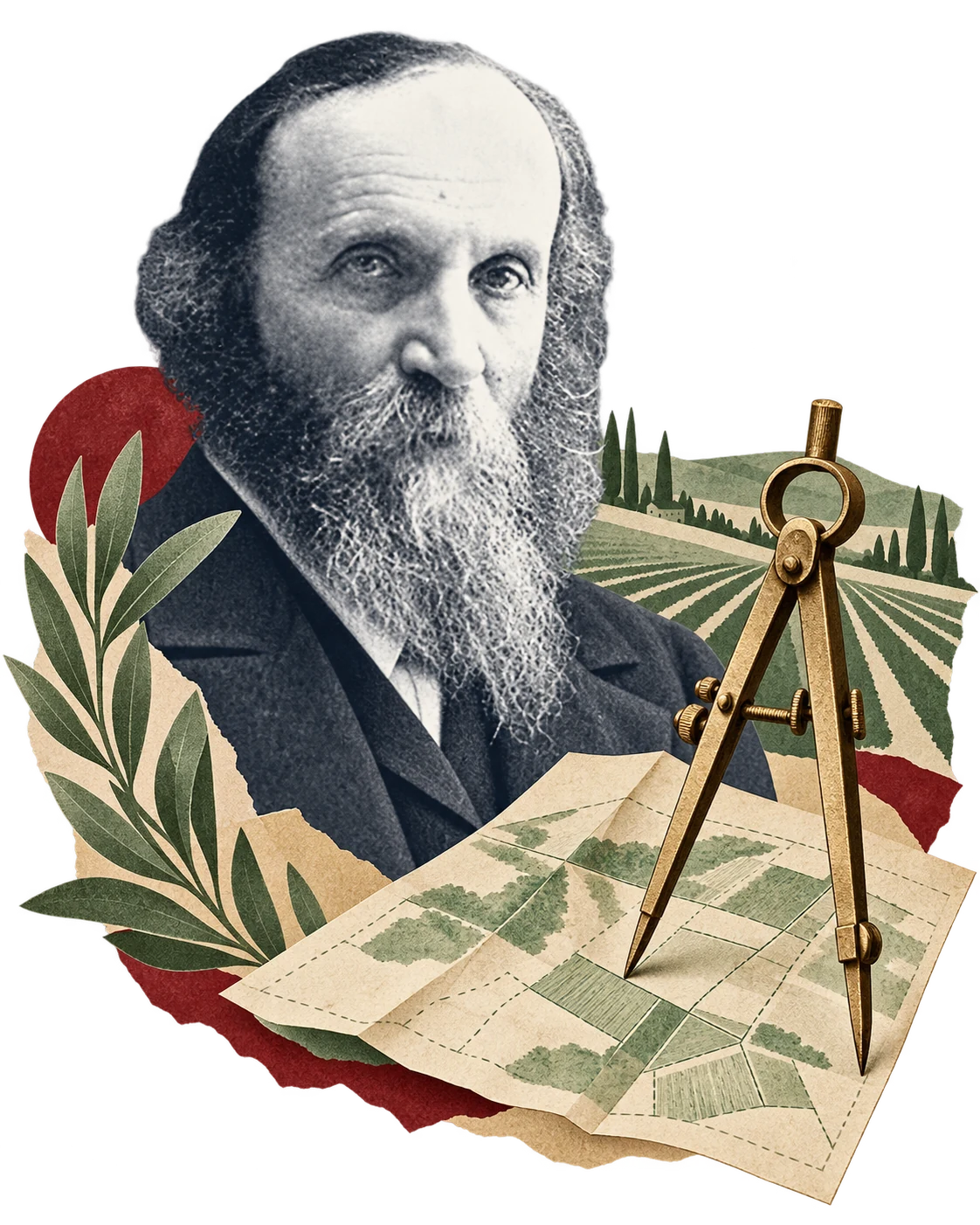
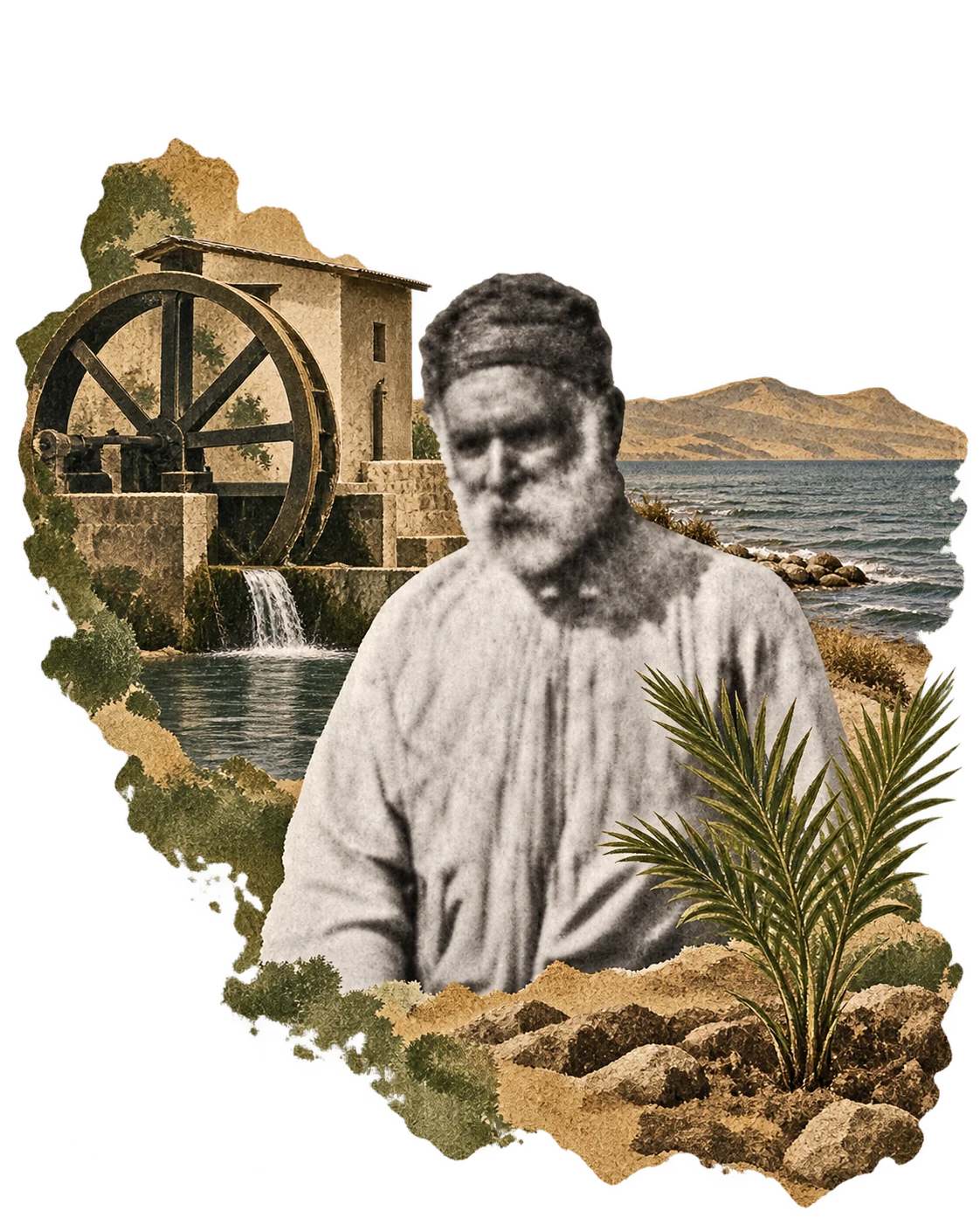
With his long hair and beard, he looked like a messianic figure, sitting tall on his horse like a man from the Wild West. The Arabs called him "Khawaja Musa." He was a businessman and the greatest land purchaser in the Land of Israel.
From Ukraine to the Yishuv
Berl Katznelson wrote of him: "Yehoshua Hankin is an 'only son' of the people, one of the strangest and most remarkable figures of his generation, without whom we cannot now imagine how our enterprise came into being. His upright, radiant figure, dream-filled and focused, is etched in our hearts as one of the generation's most encouraging and heartening sights... He made himself a 'one-trade man,' renouncing every other pursuit in life. He knows neither idleness, nor amusement, nor rest. His days and nights, his deeds and thoughts, are consecrated to that one 'trade.'"
Yehoshua Hankin was born in Ukraine in 1864. His father, Yehuda Leib, was the only farmer among Jewish merchants and artisans. Yehuda Leib, an educated man, sent his son Yehoshua to study at a high school in the nearby city, where Yehoshua was introduced to Russian culture, literature, and history, though he loved mathematics most of all. When he returned home, he would put down his schoolbooks, don his farmer's clothes, and join his wise father in the fields, toughening his body through hard labor and sharing his thoughts with him.
In those days, under the rule of the tsar, peasants were serfs who earned pennies and were exploited to death. Ideas of revolution, of fair distribution and a new society, were beginning to stir, and Yehoshua, moved by the revolutionary ideas, began planning with his friends to overthrow the tsar.
In March 1881, Tsar Alexander II was assassinated by the Narodnaya Volya movement (People's Will). The murder was blamed on the Jews, and in April pogroms against Jews began in Ukraine, pogroms known as the "Southern Storms." When Yehoshua was 16, his family decided to immigrate to the Land of Israel, and in 1882 the family arrived in Jaffa. Yehuda Leib, Yehoshua's father, wanted to establish a Jewish agricultural settlement in the Land of Israel, an unusual undertaking in those days. He founded the "Committee of the Pioneers of Yesod Hama'ala" and sought to purchase land to realize his vision. He was involved in purchasing the lands of Rishon LeZion and was also the one who built the first house in the colony. Yehuda Leib had the knowledge and confidence to cultivate his land, and the land responded to its owner, rewarding his hard work with fruit. The Hankin family was the only family in Rishon LeZion that did not need assistance and was not dependent on the baron's favors or his officials. This independence amounted to defiance of the officials' authority, and there was no shortage of reasons for conflict. Eventually, under pressure from all the residents, the family left the colony.
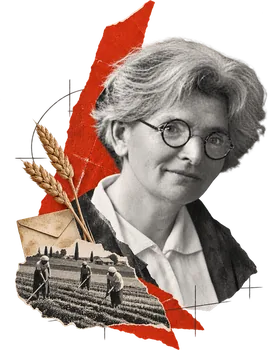
From Rishon LeZion they moved to Gedera, where the colony operated without an official appointed by the baron. There Yehoshua married his fiancée, Olga, who was thirteen years older than him. The age difference between them was noticeable, and to lessen the awkwardness, Yehoshua let his hair grow long and grew a beard, giving him an older appearance. Olga was the eldest daughter of Meir and Shifra Belkind. She was born in Belarus in 1852. This marriage connected Yehoshua to the Belkind and Feinberg families. Among their relatives were Meir Belkind, a pioneer of Hebrew instruction; Israel Belkind, founder of the Bilu movement and of Gedera; Sonia Belkind (Olga's sister), the first gynecologist in the Land of Israel; Israel ("Lolik") Feinberg, one of the founders of Rishon LeZion, Hadera, and Tel Aviv; Nahum Wilbusch, one of the founders of the Shemen factory (and brother of Mania Shohat); Avshalom Feinberg, Eitan Belkind, and Naaman Belkind, members of Nili. Olga studied midwifery in Russia, where she fell in love with a Russian officer. Her mother grew suspicious when she noticed that the studies were taking a long time, and asked her daughter to come to the Land of Israel to deliver her sister's baby, on the pretext that there were no good midwives in the country. Olga agreed to her mother's request, but on her way to the Land of Israel, while pregnant, she miscarried. Unable to conceive again, the midwife would never give birth herself.
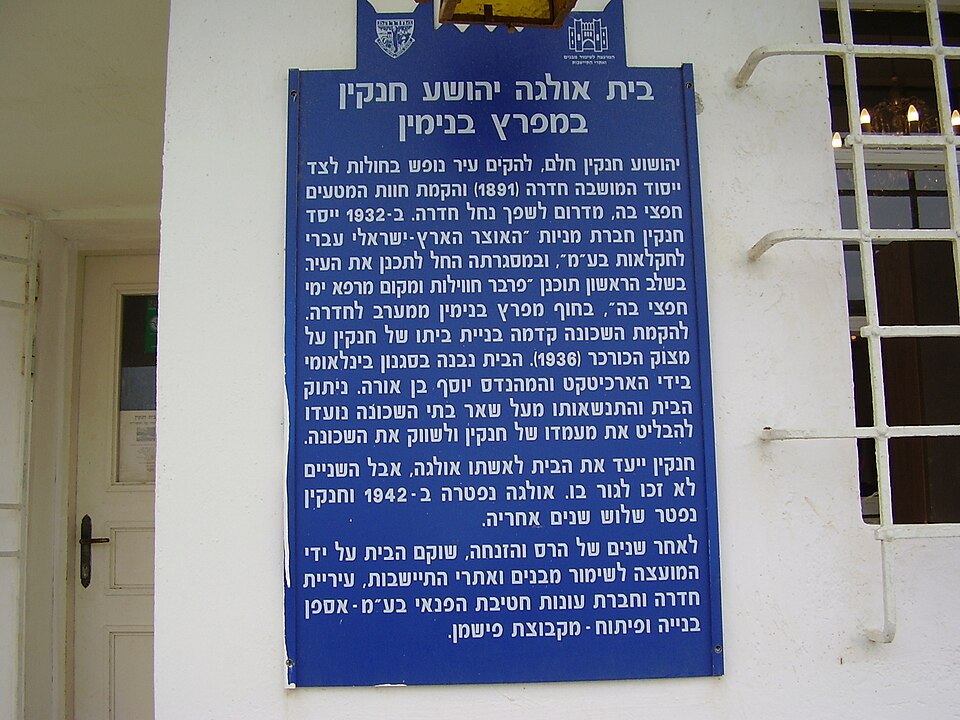
In Gedera, Yehoshua learned Arabic and formed good relations with the local Arabs, partly thanks to his wife Olga, who assisted their wives in childbirth. At that time, a large wave of immigration from Russia arrived in the country. Land prices rose, and Yehoshua took advantage of the increase, selling his estate in Gedera and moving to Jaffa.
The Calling to Buy Land
While living in Jaffa, Yehoshua understood his calling and decided to purchase Arab lands for Jewish settlement. As the son of a farmer and a farmer himself, he saw what others overlooked: he knew the laws, knew how to negotiate, and knew how and when to buy.
In 1904, Menachem Ussishkin, one of the leaders of Hibbat Zion, said, "Without ownership rights to the land, the Land of Israel will never be Jewish." He added, "A land is acquired either with money, by force, or through government. Since we Jews have neither force nor government, all that remains for us is to acquire land with money." And that is what Yehoshua did.
Olga became known as a midwife who delivered boys. One of Haifa's wealthy men was Salim Khoury. Salim had seven daughters in a row. When his wife became pregnant for the eighth time, he insisted that Olga be the midwife, and to his great joy, she delivered a boy. Immediately after the birth, Khoury met with Yehoshua Hankin, and in 1891 sold him 30,000 dunams of swampland, on which Hadera was established and where the Hankins built their home. This was Yehoshua Hankin's second purchase. A year earlier, at the age of 26, he had bought 10,000 dunams at Khirbet Duran, on which the colony of Rehovot was established.
Yehoshua had the ability to envision the future. One of his later purchases was the lands of the Hefer Valley. He approached Shimon Dominik, a wealthy Russian Jew, and proposed that he invest in purchasing the land. This is how he described the lands of the Hefer Valley: "A place where all the virtues of which our Holy Land boasts will come together, a place of wheat and barley, grapevine, fig, and pomegranate. A place of rivers and streams, situated by the sea" - though at the time, it was nothing but shifting sands and deadly swamps, unfit for human habitation. With this deal, Yehoshua Hankin proved himself an outstanding businessman, and the valley was purchased in 1929. Thirty years later, the price of the land had risen twenty-threefold, and the valley, as Yehoshua had foreseen, had become one of the most flourishing regions in the Land of Israel.
The Great Deals in the Valley
Yehoshua Hankin knew how to enlist his extended family in support of his projects. When Mania Shohat came up with the idea of the "collective" (a workers' cooperative), it was Yehoshua Hankin who introduced her to Eliyahu Krause, manager of the farm at Sejera (Ilania), and made sure he gave her a chance to prove that her vision had a future. Eliyahu Krause was married to Yehoshua Hankin's sister. "Let us work as tenant farmers, and just don't interfere. We'll give you 20% of the profits," Mania said with feigned confidence. And indeed, the "collective" proved itself. It was the first year the farm made a profit.
On another occasion, Yehoshua bought land near Kfar Saba from the Muslim Shanti family of Jaffa, and established a new company of his own, "The Eretz-Israeli Hebrew Agricultural Treasury Ltd." The company's partners were his two brothers, Tanhum and Mendel Hankin; Mendel's partner, gynecologist Alexandra Belkind (Olga's sister); Eliyahu Krause, a JCA official, manager of the Mikveh Israel agricultural school, and Yehoshua Hankin's brother-in-law (married to Haya Hankin, Yehoshua Hankin's sister); and Zalman Lifshitz (Leif), the engineer and land surveyor for the Palestine Land Development Company (grandfather of social protest leader Daphne Leef).
Some of Yehoshua Hankin's deals inspire astonishment and admiration for the persistence, flexibility, and patience they required. One such deal was the purchase of the lands of the Jezreel Valley. The purchase of the Jezreel Valley lands was his greatest undertaking of all, his third. The deal lasted about 30 years (1890-1920). Most of the land belonged to the Sursock family, whose roots were in Beirut and Egypt. As early as the summer of 1890, Yehoshua Hankin met with the family in Beirut, and they sealed an agreement to purchase 120,000 dunams with a handshake. Yehoshua raised some of the money with the help of friends and invested some of his own, but he was unable to complete the deal. The land remained in the hands of the Sursock family and was sold to a merchant from Jaffa. Several years passed before, in 1909, Yehoshua managed to buy 10,000 dunams in the heart of the valley, where Merhavia was established, near Afula. When World War I broke out, the Ottoman authorities exiled Yehoshua Hankin and his wife, along with several leaders of the Jewish community, to Constantinople. Their exile lasted until 1918.
By the time the Hankins returned to the country, it was already under British rule. Yehoshua joined the Palestine Land Development Company, bringing with him knowledge, experience, and longstanding connections. In 1920, when Yehoshua Hankin renewed contact with the Sursock family, this time with its Egyptian branch, he learned that they were on the verge of signing a contract to sell the land to Nasseef Bey, a Christian Arab from Haifa. Yehoshua met Nasseef Bey in Haifa and reached an agreement with him to transfer the rights under the contract to him. The new agreement included two main conditions: first, Yehoshua undertook to buy the land at a price of five Israeli pounds per dunam; second, if he could not complete the purchase due to a lack of funds, the land would be leased to him for ten years, during which Nasseef would not be able to sell it. Thus Nasseef's contract passed to Yehoshua Hankin, and he resumed negotiations with the Egyptian branch of the Sursock family. The negotiations dragged on, and only in early 1921 did Yehoshua Hankin inform Dr. Ruppin that he had purchased 60,000 dunams and had even paid a down payment. But the coffers of the Palestine Land Development Company and the Jewish National Fund were empty. Hankin returned to Egypt and amended the contract. The new agreement stipulated payment in installments over six years, and the valley's land passed into Jewish hands. The settlements of Ein Harod, Tel Yosef, Geva, Kfar Yehezkel, Beit Alfa, and Heftziba were established on this land. Hankin later purchased the hills of Sheikh Abreik, where Beit She'arim stands. Toward the mid-1930s, he bought the lands of Bir Asluj in the Negev, where Kibbutz Revivim was established.
Recognition of His Life's Work
After fifty years of activity, Hankin had become the greatest land purchaser in the Land of Israel. More than a million dunams were acquired with his help, about 600,000 of them directly by him. He acted on behalf of the Palestine Land Development Company, the Palestine Office, JCA, PICA, and the Jewish National Fund, and also purchased urban land for private investors.
For fifty years, Yehoshua Hankin worked to purchase land, earning the title "Redeemer of the Land." When he turned sixty, Dr. Ruppin, who knew him well and had worked with him, wrote of him: "The outward impression is that Yehoshua Hankin is a quiet man, and because he says little, he seems surrounded by secrecy and mystery. He is an ascetic not only in his hair, untouched by a razor, but also in his inclination to withdraw and his distance from the pleasures of this world. But this calm is deceptive, and his withdrawal from the world is merely an outer shell, concealing within it an ever-burning fire, tremendous energy, and superior wisdom. Because he is sparing with words and has cast aside everything that does not concern the very heart of his life's work, Hankin has achieved such concentration in his work, devoting all his strength and talents to the one purpose of his life."
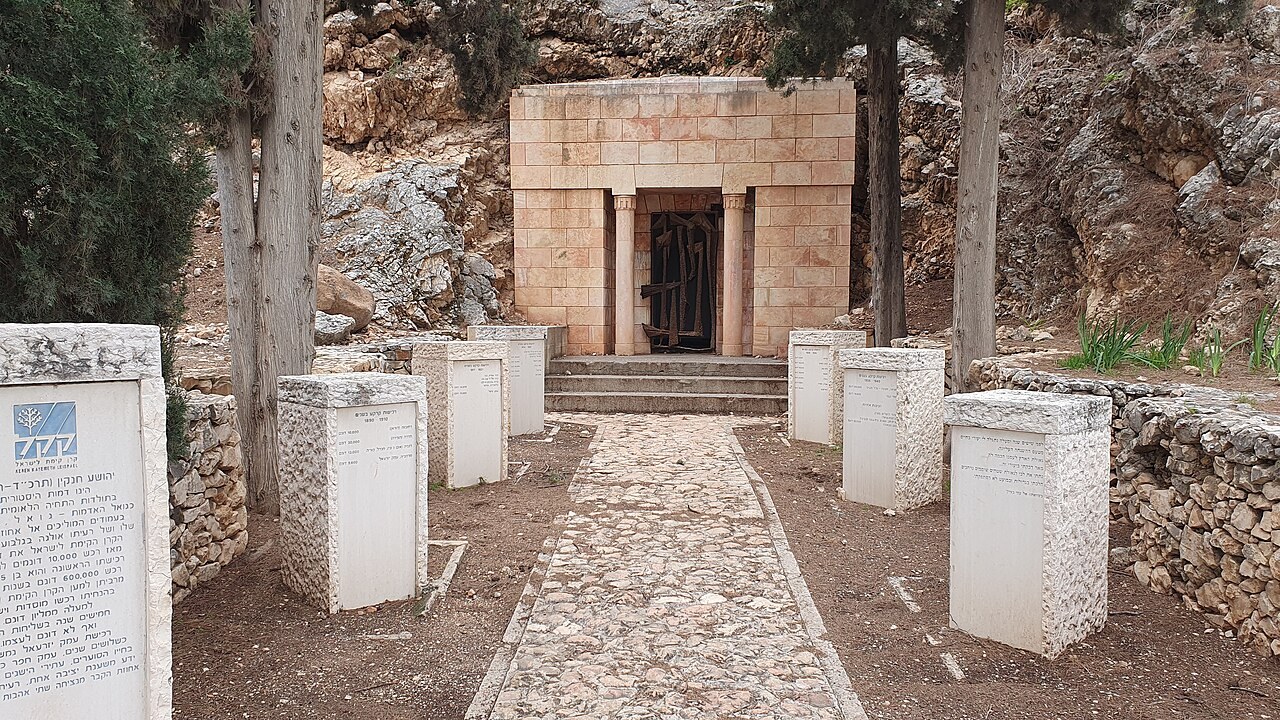
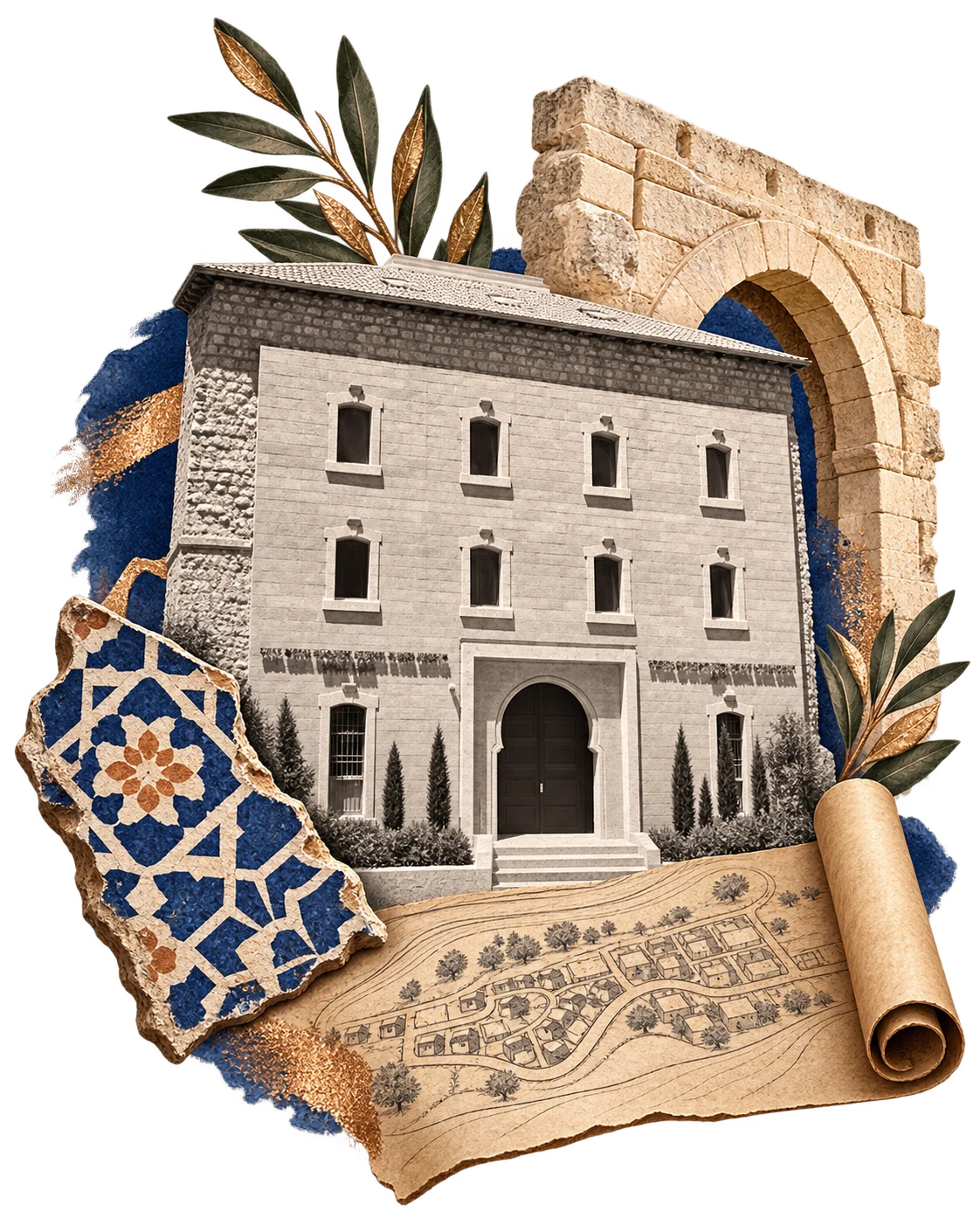
During their lives, the Hankins moved through many homes. They built the home of their dreams in the Jezreel Valley, near Harod Spring, but never got to live in it. The house was completed when Yehoshua Hankin turned 70. At the time, his wife fell ill, and they began hewing out a tomb for her on Mount Gilboa. Olga Hankin died in February 1942, and her husband decided to turn the house into a museum devoted to the history of the land and settlement in the Jezreel Valley. Three years later, in 1945, Yehoshua died and was buried beside his wife.
תגובות
עדיין אין תגובות.