
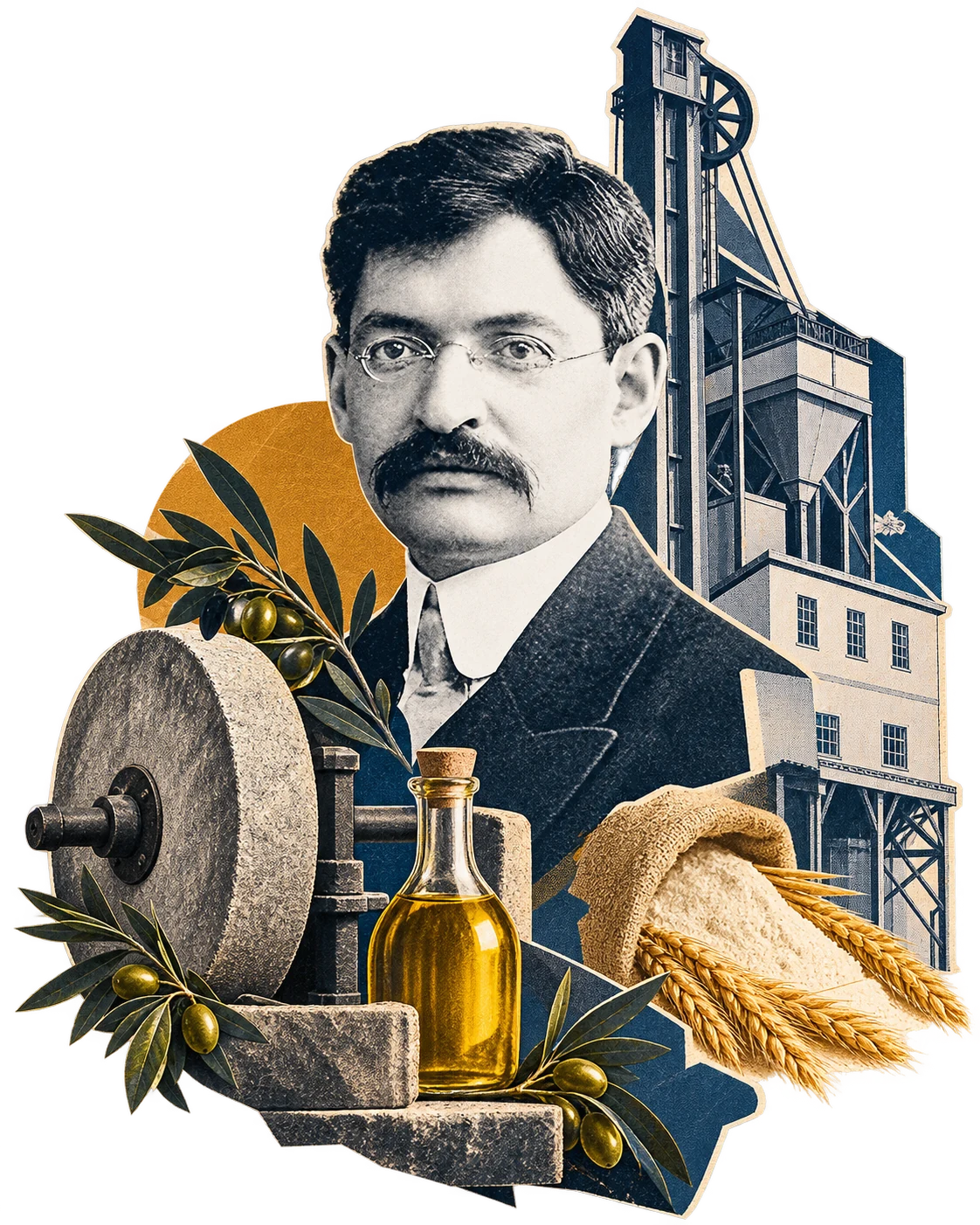
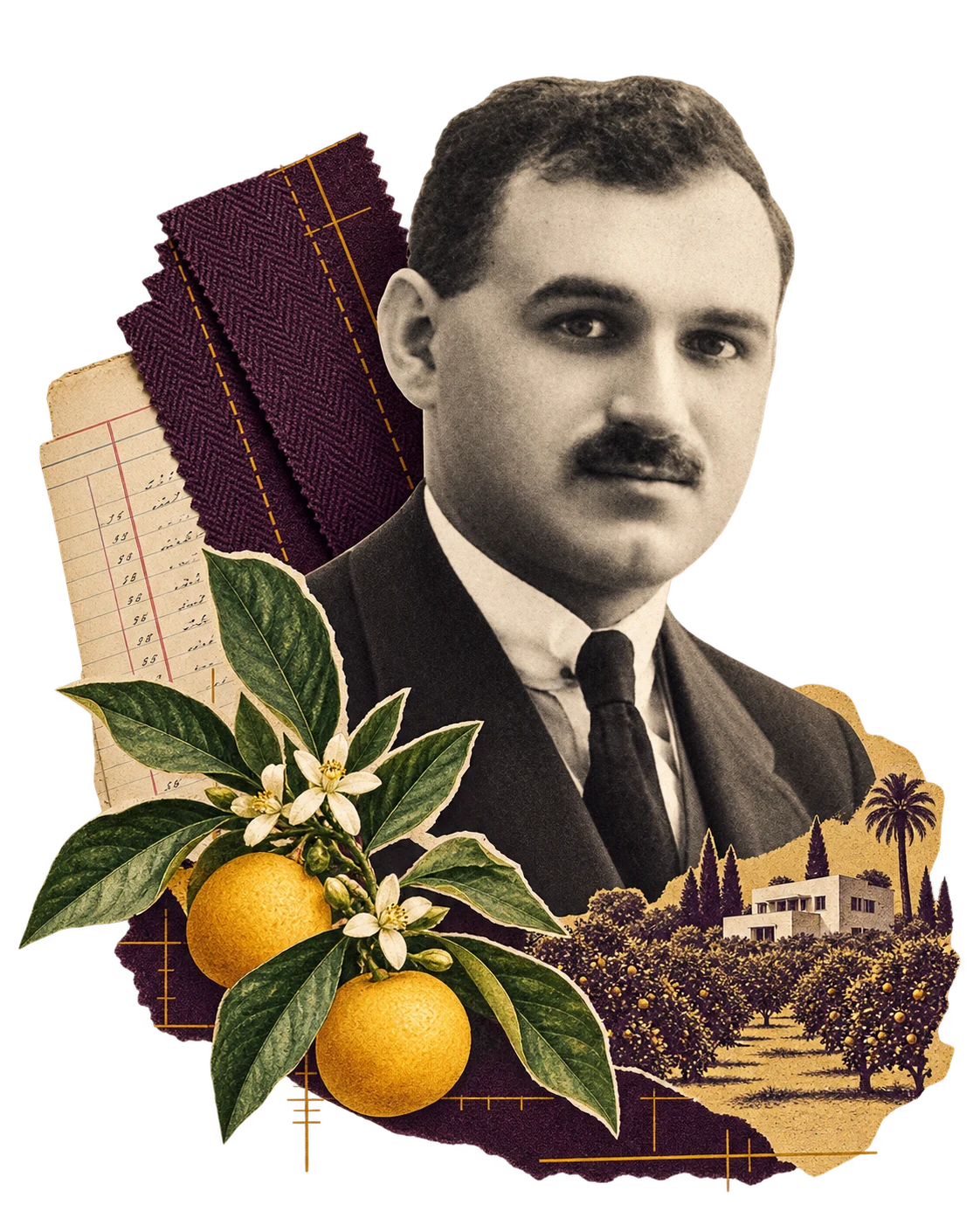
An entrepreneur and partner in the first modern industrial ventures in the Land of Israel, he believed the future of the Jewish community lay in industry, not agriculture, as everyone thought.
The Roots of the Wilbush Family
Nahum's family rightly earned a reputation for being crazy. His brother-in-law Avshalom Feinberg once wrote to Rebecca Aaronsohn: "His [Nahum's] brother Muze [Moshe] Vilbushvitch, after all, sold a patent and is crazy like the whole family."
The family history began with Vilboa, Nahum's grandfather. Vilboa was a French officer who came to Russia with Napoleon's army. He was wounded in one of the battles, and while he was being treated by the daughter of the town rabbi, love blossomed between them. Vilboa converted to Judaism and changed his surname to Vilbushevitz. The couple had a son named Zeev (Wolf) - Nahum's father.
Zeev was an ultra-Orthodox Jew who studied in a heder as a child and at a yeshiva as an adult. He married Sarah, a highly educated and intelligent young woman. The couple lived comfortably on inherited land and money, and employed many workers. As soon as they married and their first children were born, tensions began to develop between them over the children's education: a broad education, as the mother demanded, or religious education, as the father demanded.
Four of Zeev and Sarah's eight children committed suicide. Their son Aizik immigrated to Israel in the First Aliyah and was one of the Bilu members. Unable to adjust to life in the country, he returned to Russia to serve in the army, but after some time he took his own life. Their daughter Frania, who also immigrated in the First Aliyah, was an incurable romantic. Following an unrequited love, she too returned to Russia and took her own life. (Her husband was Yosef Hazanovich, one of the founders of the Beit Ne'eman Library, which eventually became the National Library.) Anna also took her own life. Manya Shohat, Nahum's sister, was one of the founders of the Bar-Giora and Hashomer organizations and of Kibbutz Kfar Giladi; she too attempted suicide several times. Her son Gideon, one of the first members of the Air Force, also took his own life.
The first of the family's children to arrive in the country was the eldest brother, Gedalyahu Wilbushevitz, an engineer and architect. He immigrated in 1892 as part of the First Aliyah, but returned to Russia three years later. In 1912 he returned again and joined his brother Nahum, who had immigrated in 1903.
In 1919 Moshe arrived, regarded as the genius of the Wilbushevitz family. He invented the modern process for producing margarine and developed "living bread" - bread made by grinding sprouted wheat kernels - and aspired to bring peace to the world through nutritional solutions. He loved astronomy and enjoyed stargazing at the observatory he had built on Mount Scopus. Moshe began to grow wealthy from his inventions, and at the end of the First World War, while in Switzerland, he met Vladimir Lenin, who invited him to return with him by train to Russia and help make the revolution. When Moshe declined, Lenin seized his property in Russia.
Nahum in the Land of Israel
Nahum Wilbush, the youngest child, studied at a German polytechnic institute, where he qualified as a civil engineer. After graduating in 1903, he returned briefly to Russia and from there set out for the Land of Israel. He married Shoshana Feinberg, daughter of Israel Feinberg, one of the pioneers of Rishon LeZion, and sister of Avshalom Feinberg of the Nili underground. Through this marriage, the two founding families became connected.
In the Land of Israel, he made an extensive tour with his sister Manya Shohat. He measured the flow of water in the streams and investigated whether they could provide enough power to run a factory, having learned that flour mills had once been powered by water.
Nahum was also interested in developing modern industries that could supply the country's needs and even export products to the world. He published his findings in the Russian Zionist newspaper Yevreyskaya Zhizn (Jewish Life). In an article he wrote, he called on entrepreneurs to come to the country and establish industries there. His call found a receptive audience, and a group of Zionist entrepreneurs with money was formed in Russia. One of them was his brother Gedalyahu.
At that time, he traveled to Uganda on behalf of the Zionist institutions. His task was to determine whether it was at all possible to develop industry in Uganda and settle Jews there. His recommendation was unequivocal: it was impossible to establish industry in Uganda! In his view, it was entirely unsuitable for Jewish settlement. In this way, he saved the early Zionist movement from an expected split. Wilbush sailed back to the country, and aboard the ship he shared a table with a sharp-witted English major returning from Boer captivity, Winston Churchill.
When he arrived in the country, Nahum Wilbush began looking for a site to build a factory that would process olive pomace, the residue left over from oil production. He estimated that with suitable technology, more oil and soap-making material could be extracted from the pomace itself. He bought land northeast of Lod, near the village of Haditha. At first he restored the site's ancient name, "Hadid," and later called it "Ben Shemen." He ordered the machinery from Germany, and after two years of overseeing the construction while sleeping in a tent, he informed the investors in Russia: "The factory is operating."
The first year was not easy. Nahum kept expenses to a minimum and was himself manager, laborer, and mechanic. A worker named Freiman served as storekeeper, bookkeeper, purchasing agent, and salesperson, and the final product - soap - began to sell. Unfortunately, the factory was not profitable and closed after a fire broke out there. Ben Shemen Farm was established in its place, and the machinery was transferred to Haifa, where the factory was set up again.
The choice of Haifa was no accident. By then, Baron Rothschild had already said: "What Jerusalem is to the Jewish religion, and Tel Aviv to Hebrew culture and the national spirit, Haifa will one day be to the Hebrew economy. Our most important industry will be concentrated in Haifa, and a bright future lies ahead for it." This was the backdrop to the founding of the Atid oil and soap factory. The factory was built on the work of Nahum Arman, an expert in soap production who had immigrated from Russia and brought his knowledge and equipment with him. He was joined by the investors Shmuel Pevzner, Shmuel Itzkovitch, and Tuvia Dunia, who bought the equipment from Nahum Arman and began producing soap and oils under his supervision. Nahum Wilbush, who arrived with the equipment from Ben Shemen, joined the four men.
Writing about the establishment of this factory in 1907, Ben-Gurion said: "Progress is evident not only in fieldwork; manufacturing, too, is developing in the country. The shareholding association 'Atid,' headed by engineer Nahum Wilbushevitz, is preparing to establish several factories in the Land of Israel. Not long ago, it opened in Haifa the second factory for processing soap from olive oil." Since the Atid company was run without close oversight of expenses and salaries were high, the factory operated at a loss and finally closed in 1910.
Nahum saw himself as a pioneer walking ahead of the group, moving from one factory to another, putting it back on its feet and handing it over to others to operate. He dreamed of establishing a general Jewish industrial syndicate - an organization that would develop cost-effective technology in the Land of Israel. Even then, he foresaw that the country's advantage lay in industrial technology based on intellect and skill. Nahum was the one who identified the site near Haifa for the establishment of Nesher, the country's first cement factory, and the site in Tel Aviv for the Silikat sand-lime brick factory,
Founding the 'Shemen' Factory
Moshe, Nahum's elder brother, developed a process for solidifying oil, which made it possible to produce margarine. Moshe wanted to establish such a factory in the country and asked Nahum to travel to St. Petersburg and work in one. Nahum Wilbush worked there for a year and a half and returned to the country in 1914, when the First World War broke out. He was appointed engineer for the city of Jerusalem by Jamal Pasha. He renovated the Dome of the Rock and the Al-Aqsa Mosque. Toward the end of 1917, the Nili underground was exposed, and because of his family connection to his brother-in-law Avshalom Feinberg, Nahum was arrested for two weeks.
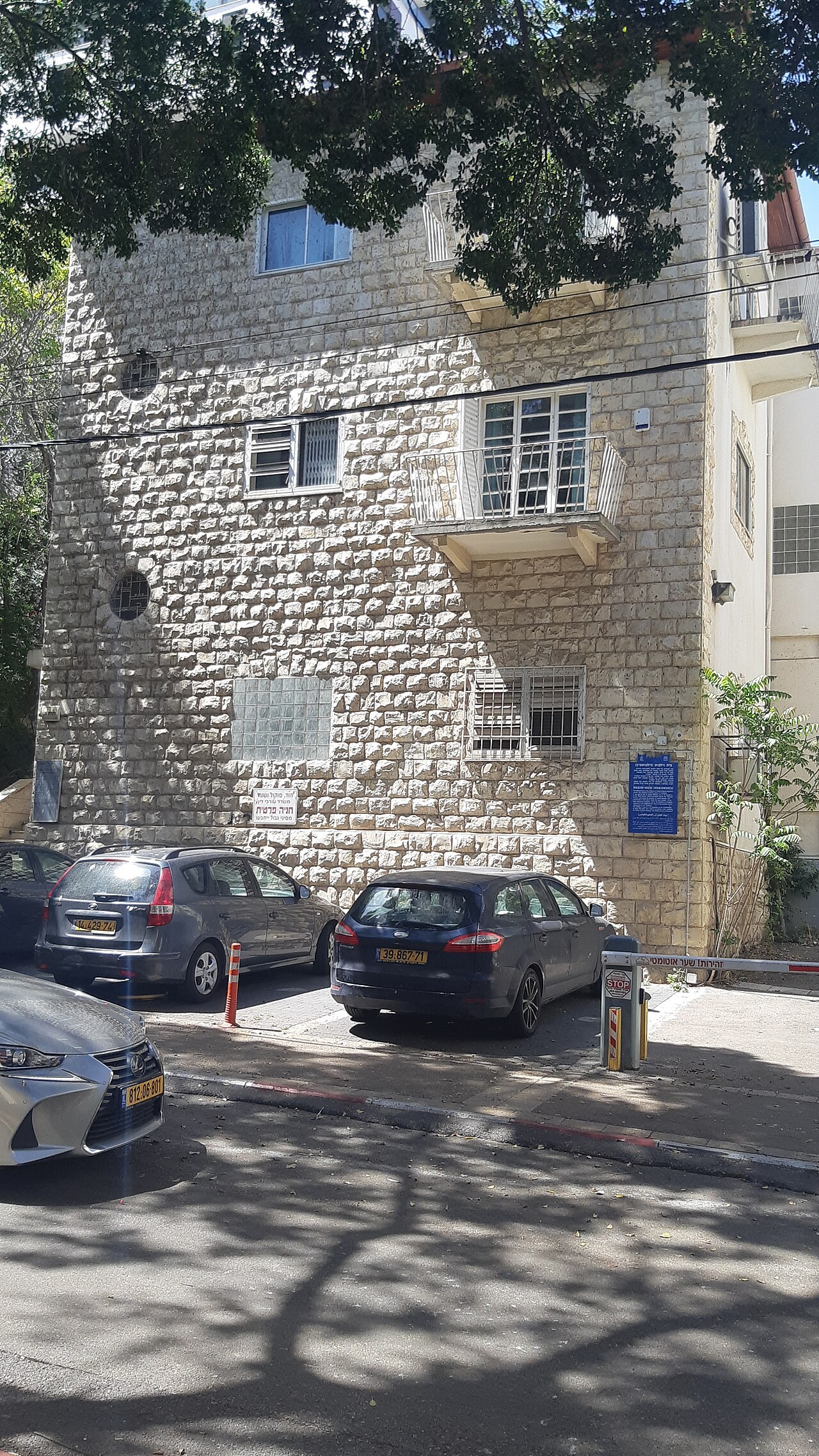
In 1922, the brothers Moshe and Nahum began building the Shemen factory beside what remained of the Atid factory in Haifa. In 1924, the factory was inaugurated by High Commissioner Herbert Samuel. A year after construction of the factory began, Nahum built his home at 26 Jerusalem Street in Haifa, where it still stands today. The Shemen factory changed hands several times, first to the Hamashbir Hamerkazi chain and later to Kur.
Today, the building serves as a museum showcasing the olive oil industry over the course of 5,000 years, during which it was a major economic sector in the Land of Israel.
Until he retired at the age of 72 in 1951, Nahum was the factory's hands-on and technical manager. Nahum saw himself as one of the workers. In Atid's kitchen, the workers took turns serving meals to their colleagues, and Nahum was included in the rotation. When they dug the well, he himself went down to the bottom of the deep well to inspect it.
Nahum Wilbush died at the age of 92 and was buried in Hadera.
תגובות
עדיין אין תגובות.