
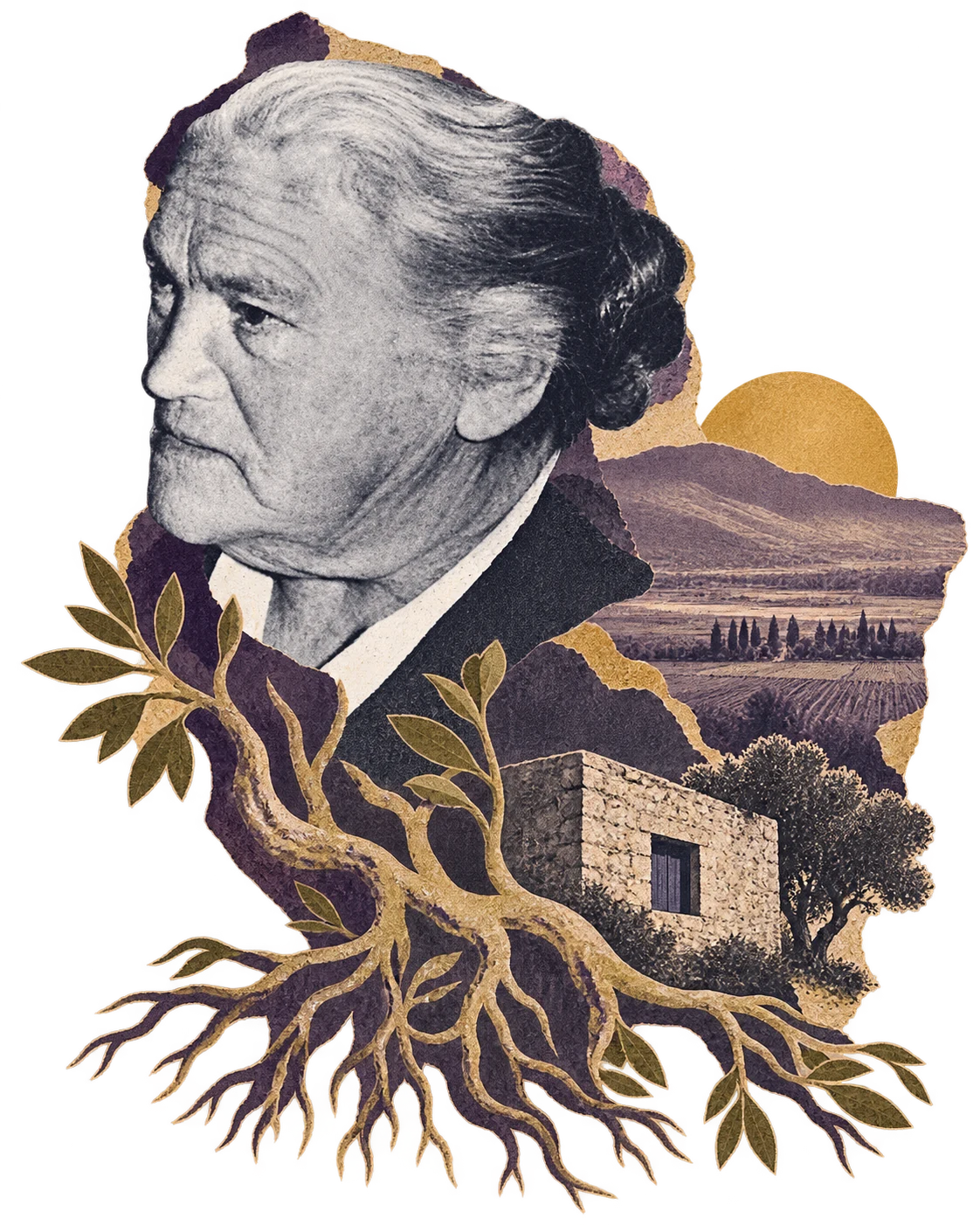
The story of the Sturman family is a distillation of the story of the Jewish people in modern times. From the remote village where they were the only Jewish family, through their immigration to the Land of Israel, their hold on the land, the fighting against the Arabs, the deaths in the struggle to establish the state, and finally the deaths in the struggle to preserve it - at almost every crossroads of action, a member of the Sturman family was there. This is the story of
From a Village Near Kyiv to Sejera
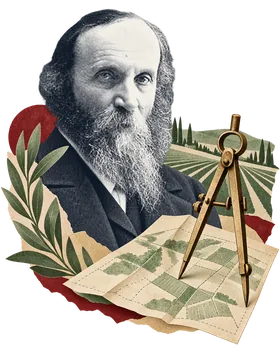
The family story begins with the arrival in the Land of Israel of the first Haim Sturman. Haim was the youngest son of Moshe and Menucha. He was born in a village near Kyiv, where his family was the only Jewish family. Alongside his studies in heder, he learned Hebrew, the Bible, Jewish history, and, of course, Russian and arithmetic.
Haim had four sisters. Haya was the first to immigrate to the Land of Israel, in 1905, and the rest of the family followed a year later. The family lived in Jaffa, and Haim enrolled at the Herzliya Hebrew Gymnasium. He was in the first class of the first Hebrew high school, and even then he dreamed of making history... When the family patriarch died, the family moved to Seg'era (today's Ilaniya). Seventeen-year-old Haim began supporting the family and worked plowing fields. His mother moved to Yavne'el and opened a workers' kitchen there, which barely provided enough to support her. The eldest, Shifra, and her sisters Esther and Sarah joined the collective at the settlement of Seg'era, along with members of the Second Aliyah, and became part of the Hashomer association. They did plowing, cleared stones, and worked the land and fields - tasks that were hard even for men. The Sturman sisters came to Hannah Meisel's Young Women's Farm at Kinneret, where they met the poet Rachel and Krayndela, who received her new name, Atara, from Rachel. The Sturman sisters adopted Atara, and she became their new sister.
Haim, who, as mentioned, worked as a farmer in Seg'era, joined the guard alongside members of Bar-Giora and Hashomer. He became friends with his fellow guards and the workers, and formed a deep bond with Seg'era, its land, and its landscape. When the strike against wage labor broke out in 1910, Haim left Seg'era with a heavy heart and went to work as a guard in Yavne'el, then in Zikhron Ya'akov and Hadera, where he was one of the first six Jewish guards. From Hadera he moved to Merhavia - the first Jewish settlement established in the Jezreel Valley.
In 1912, while serving as a guard in Merhavia, Haim was asked by Zvi Nisanov to join him in Yavne'el. As they rode near Kfar Kama, Haim Sturman, Zvi Nisanov, and another guard traveling with them became caught in an exchange of fire with Arab shepherds. Zvi covered his companions as they retreated. Haim quickly returned to the scene and, together with Nisanov, admitted their involvement in the exchange of fire. The two were arrested by the Turkish police and sentenced to three and a half years in Acre Prison. After a year and a half, they were released through the intervention of Israel Shohat and Ben-Gurion.
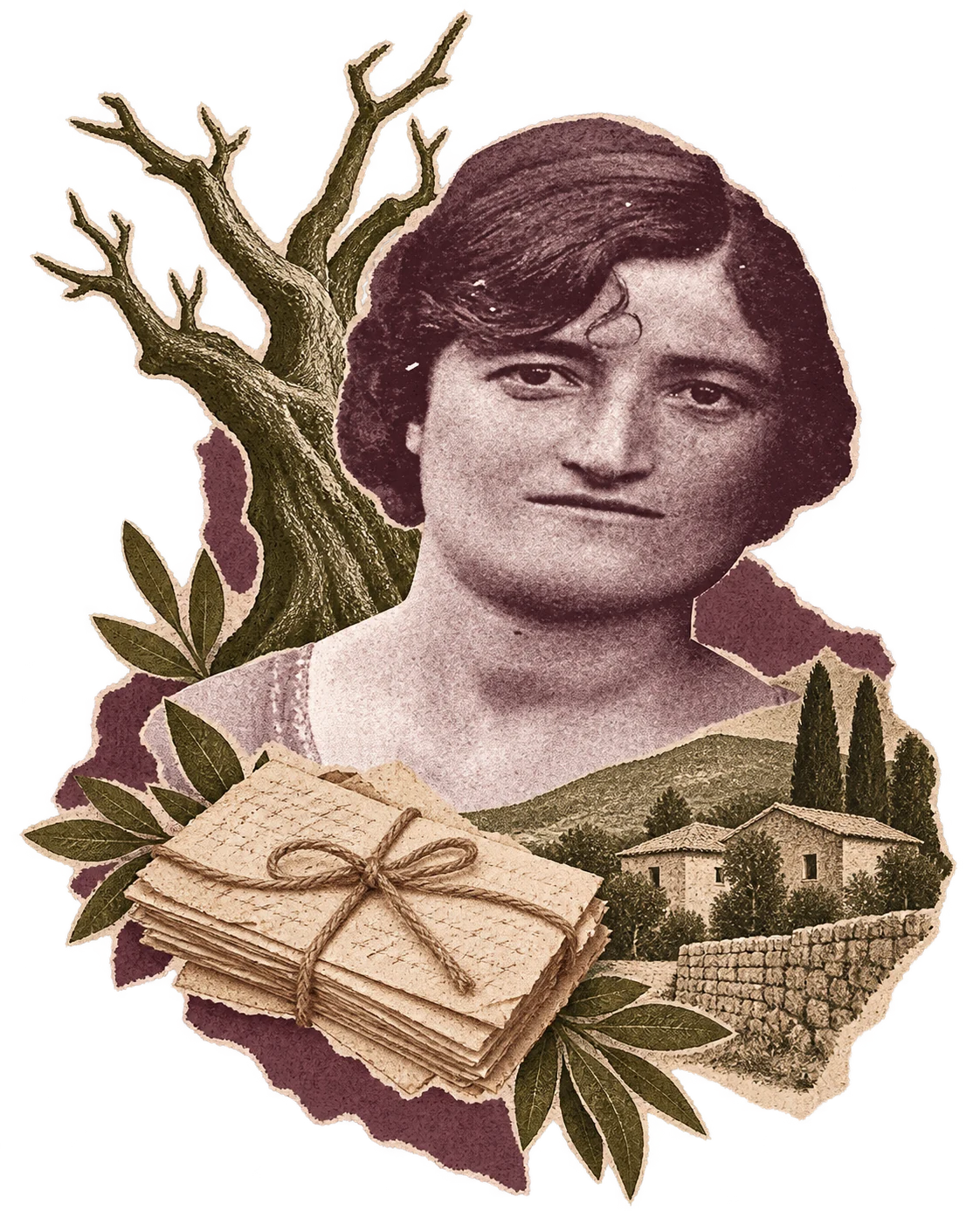
During that year and a half, Atara realized that Haim was not merely her "brother" but the object of her love, and in prison Haim discovered that his heart yearned for her. Atara said that she had vowed to marry Haim as soon as he returned from prison, and described him this way: "Tall, even-tempered, quiet, and reserved... He seemed different from others, strange in his manner, and drew attention by the way he looked at people, with such concentration and thought." When Haim returned from prison to his sister's home in Ben Shemen, he met Atara, and they decided to marry. In Merhavia's folklore, they say that everything was ready - the groom waited in his finest clothes, but the bride did not come...
The guests began to whisper and worry, but Haim, calm and smiling, said, "That's how it is with Atara... She's so busy all the time that she must have forgotten about the wedding." At last Atara arrived, thoroughly embarrassed. "I'm sorry," she called. "I was baking challah and watering the vegetable garden, and I didn't notice the time passing." "What did I tell you?" Haim laughed. "She doesn't even have time to get married..."
The Vision of Tel Adashim
In prison, Haim made another decision: they had to establish a moshav for guards. Upon his release, he began working to realize his vision of founding the Tel Adashim group, a place where members of Hashomer, who by then had families of their own, could settle their families and no longer shuttle them between the settlements where they worked. Each member would have a permanent home to return to.
These were the days of the Balfour Declaration. The British were approaching the country, and the Turks were beginning to retreat north. The Nili underground had begun working for the British against the Turks, and Haim knew that the fate of the Jewish community depended on its ability to defend itself. He began stockpiling weapons. His calm, caution, and composure served him well here, too. "He was neither a commander nor a man with a title, but at every critical moment, all eyes turned to him naturally." So wrote his colleague Eliyahu Golomb.
But things at Tel Adashim did not all go according to Haim's dream. The place was small and impoverished. When veteran guards arrived after many years of wandering, they were disappointed to find that they had been given neither work nor proper treatment. Disputes arose over work assignments, food for the horses, and the families' rights. Haim and Atara decided to leave...
At the end of the First World War, Haim and Atara joined the Kinneret group, where their eldest son, Moshe, was born. The new father received the news from the poet Rachel (Bluwstein), who was then in the hospital in Safed.
The Valley's Security Commander
During their time in Kinneret, Haim Sturman began helping Yehoshua Hankin acquire land in the Jezreel Valley for the Jewish National Fund. In 1921, the family moved to Ein Harod, where Haim established the various branches of the farm and immediately took charge of security. The Sturmans' children - Moshe, the eldest, Devorah, and the youngest, Tama - became part of the children's community. Haim took responsibility for coordinating security in the Ein Harod and Beit She'an Valley area, and was among the founders of the Tower and Stockade settlements. The Arabs called him the "sheikh of sheikhs" among the Jews, the Bedouins respectfully called him "Khawaja Haim," and the British administration called him "the Jewish district governor." In those years, Charles Orde Wingate, known as "the Friend," arrived in the valley, and together they established the Special Night Squads, whose headquarters were at Kibbutz Ein Harod. Orde Wingate said of him, "It is better to be silent with Haim Sturman than to talk with other people."
In 1935, Moshe Rosenfeld of Menahamia decided to capture the gang of Izz ad-Din al-Qassam, based in Jenin and active in the orchards and fields of the valley. Moshe rode toward Mount Gilboa and was murdered by the gang. At his funeral, Haim coined the phrase, "Those who fall are those who go first."
It was clear that Haim's work was extremely dangerous. People often asked him, with undisguised concern, whether it was really wise to visit this Bedouin encampment or that Arab village when relations were so tense. Haim would answer, "There is no other way. We are committed to living with them, meeting with them, and ultimately coming to an understanding with them. They will respect us in keeping with our courage and despise us in keeping with our cowardice, so we must not be afraid to enter even into their jaws." His wife Atara wrote of this: "I did not dare interfere. Deep down, I knew that what had to be done must be done, whatever the cost."
Almost three years after he buried his friend Moshe Rosenfeld, an expedition set out to find a site for a settlement that would later be called Kfar Ruppin. Haim Sturman's car led the convoy, carrying his friends Aharon Atkin of Kibbutz Geva, his partner in Haganah and security matters, and the veterinarian Dr. David Musinson. On their way from Beit She'an to Tirat Zvi, their car struck a mine, and all three were killed. Haim was 46 when he fell. Atara described that day: "A woman came into the shower and told me: Haim has been badly wounded. I set out. As the car neared the scene of the disaster, I knew it was all over. Three stretchers covered with sheets. On the first stretcher: Musinson, asleep. On the second - Atkin, pale. On the third - Haim, still warm."
When news of the disaster became known, deep mourning descended on the valley. Visitors from all over the country came to the courtyard at Ein Harod. One wreath after another was laid on the grave. Orde Wingate wrote on his wreath: "A great Jew, a friend of the Arabs. Fell at Arab hands." A friend from his Hashomer days said of him: "And here was this man, a true citizen of this land, cut down in the midst of his work. When his creative drive and the fruitfulness of his life had reached their peak, he was shattered by that force which acts in the name of 'anything goes.'" Atara stood silently before her husband's fresh grave. When people called out, "Be strong," at the funeral, she answered, "We are strong!" Atara did not cry. When she saw his sister Sarah weeping, she whispered, "Hashomer people do not cry." The words Haim Sturman had spoken at his friend Moshe Rosenfeld's funeral were engraved on his grave: "Those who fall are those who go first."
Remembrance and Family Tragedies
In his memory, Beit Haim Sturman Museum was established; the settlement of Ma'oz changed its name to Ma'oz Haim, and the Sahne spring became the national park Gan HaShlosha, named for Haim and the friends who fell with him.
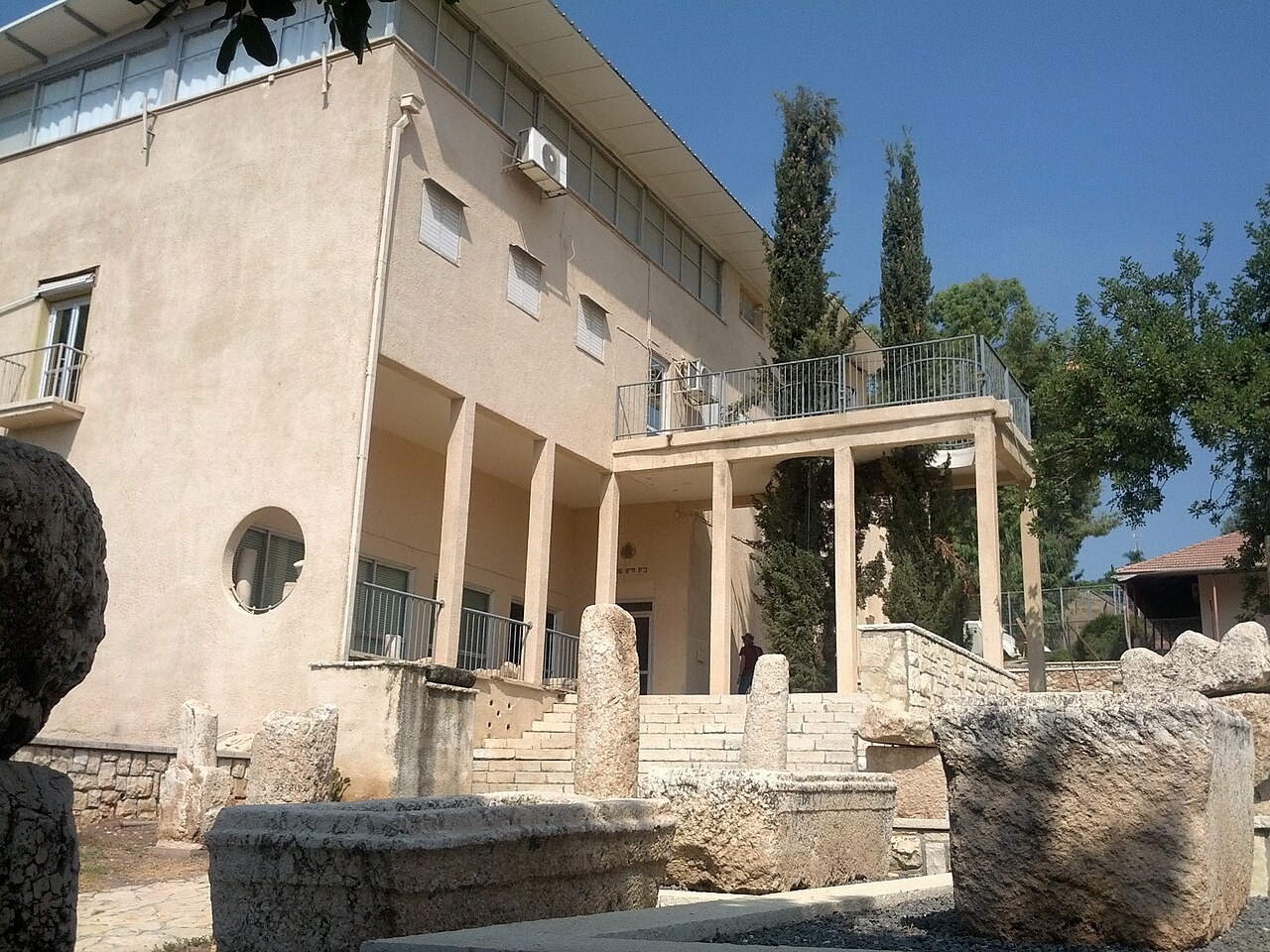
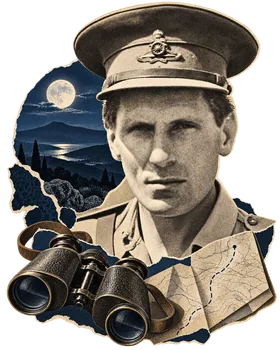
At the end of the mourning period, his son Moshe received his father's pistol and binoculars. Ten years after his father's death, he married Rauma Bareli, and when their son was born, they named him Haim. When Haim (the second) was two years old, another tragedy struck the Sturman family. Not far from where his father Haim had struck a mine, a sniper's bullet pierced Moshe's heart, and Atara found herself once again in the cemetery, burying her son not far from her husband. Rauma later married the historian Ze'ev Iviansky, who had been a member of Lehi in his youth and was one of the founders of Kibbutz Yir'on. When they married, Ze'ev said: "We decided that little Tamar and Haim would not call me Father, so that Moshe would not be forgotten. Haim was a withdrawn child. Nervous. Only later did he lift his head and become cheerful. One day he asked me: 'Ze'ev, what are you to me?' And I told him: 'I will be like a father to you and your best friend in life.'"
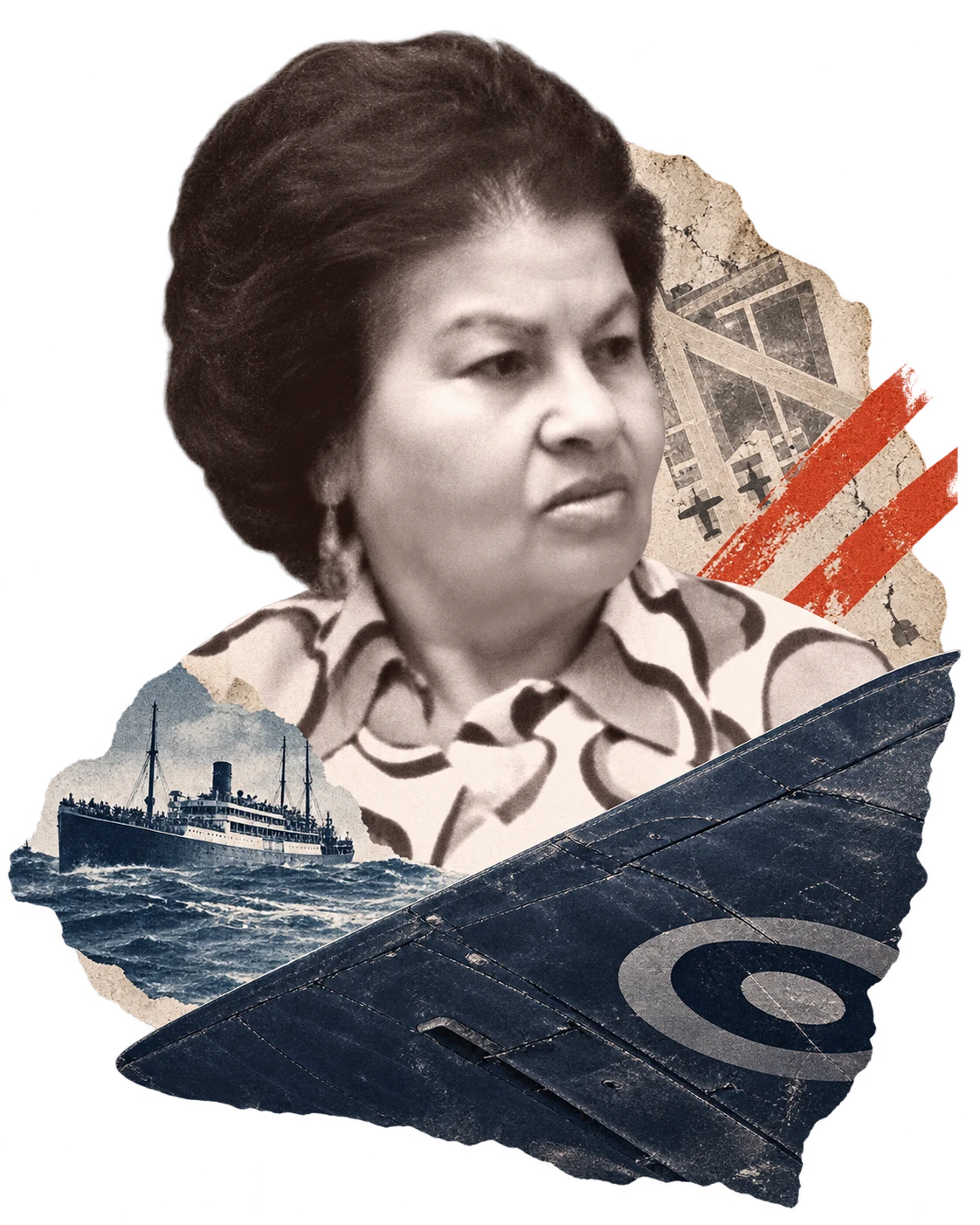
Haim, the grandson, nicknamed "Haimon," grew up to become an impressive man. Shayetet 13 welcomed him with open arms, and he was even awarded the Medal of Distinguished Service. Twenty years after his father Moshe's death, tragedy struck the family again, and once more Atara stood before an open grave - her grandson Haim was killed in a raid on Green Island. Like his father and grandfather, Haim was also buried in the small cemetery at Ein Harod. He was 23 when he died. Another year passed, and once again Atara stood before another coffin. Her grandson Amir Brin, son of Tama Sturman, Moshe's sister, fell in the Suez Canal sector when the tank he was driving struck a mine. Amir was twenty when he died.
Atara was present at all these funerals. "She buried her four beloved ones, and her soul fell silent beneath the heavens" (as Tikva Sarig wrote in The Sturmans). Shortly before her death, Atara said, "No matter how hard we try to ignore the way people's lives and deaths can be seen as fate and symbol, we cannot." Atara Sturman never recovered from the last tragedy. The basalt gravestones added beside Haim's stone were too heavy to bear. Joseph Kessel, a French writer who visited Ein Harod and met Atara, wrote: "She had traveled the path of every torment, yet she accepted them because they were the torments of a great love, mingled with this land, which she had watched grow."
Atara died in 1973 at the age of 80 and was buried beside her loved ones in the soil of Ein Harod. Yoram Kaniuk, who was at the funeral, described the friends who came to pay their last respects: "They were a secret society. They dreamed and built, and in the end disappeared from the stage. They had sworn: 'In blood and fire Judea shall rise,' and 'He who breaks a fence will be bitten by a snake.' They came, the last of them, with snake-like determination, unbitten but wrinkled, full of dignity, dressed oddly, with mustaches and gray hair, to bury their beloved..." "The dead - those who go first"
תגובות
עדיין אין תגובות.