
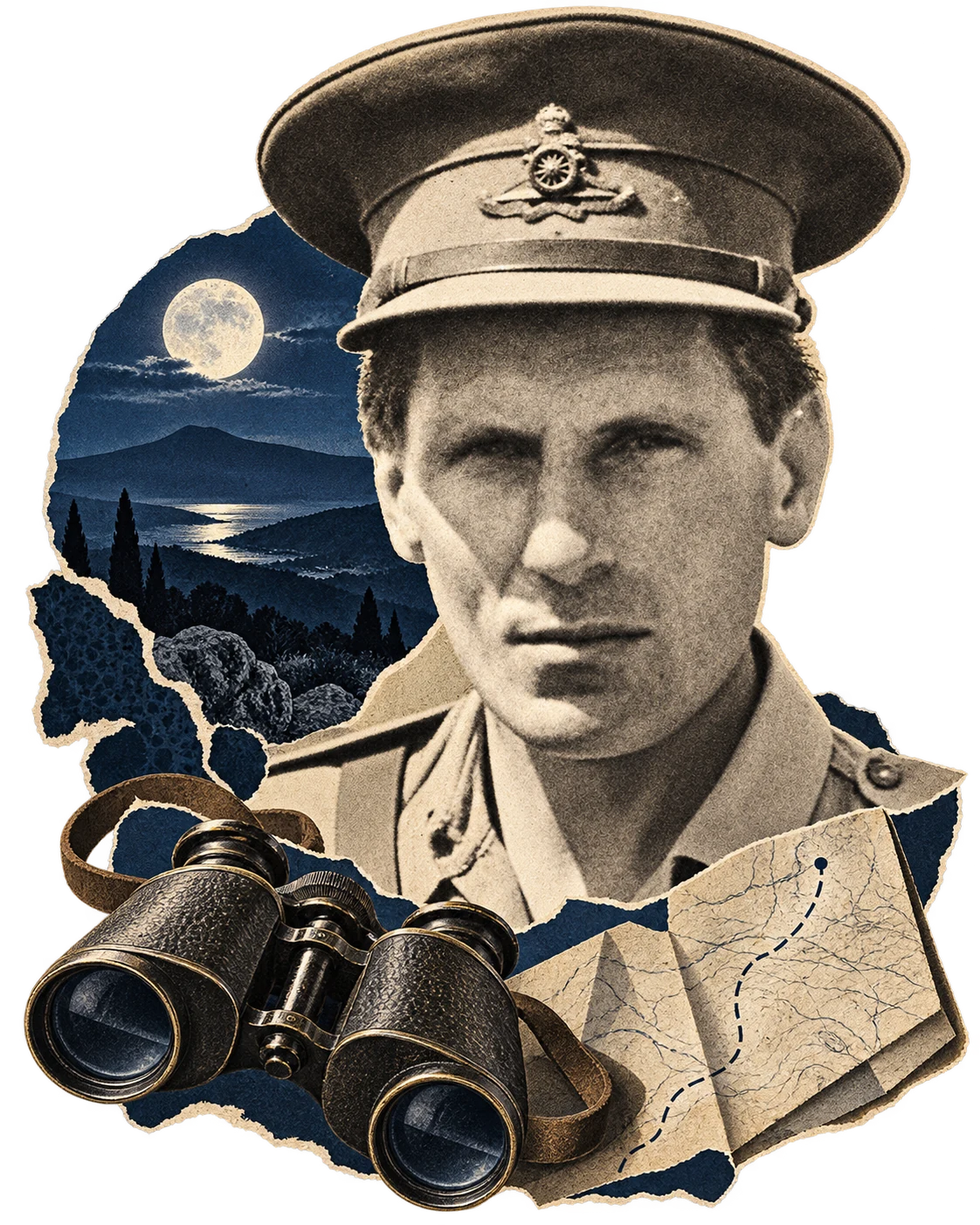
There was no need to say his name aloud - it was enough to say "the Friend." A Zionist British officer, one of the founders of the Night Squads, and his deeply devout Zionist wife, who did much to help the Jewish people and the state.
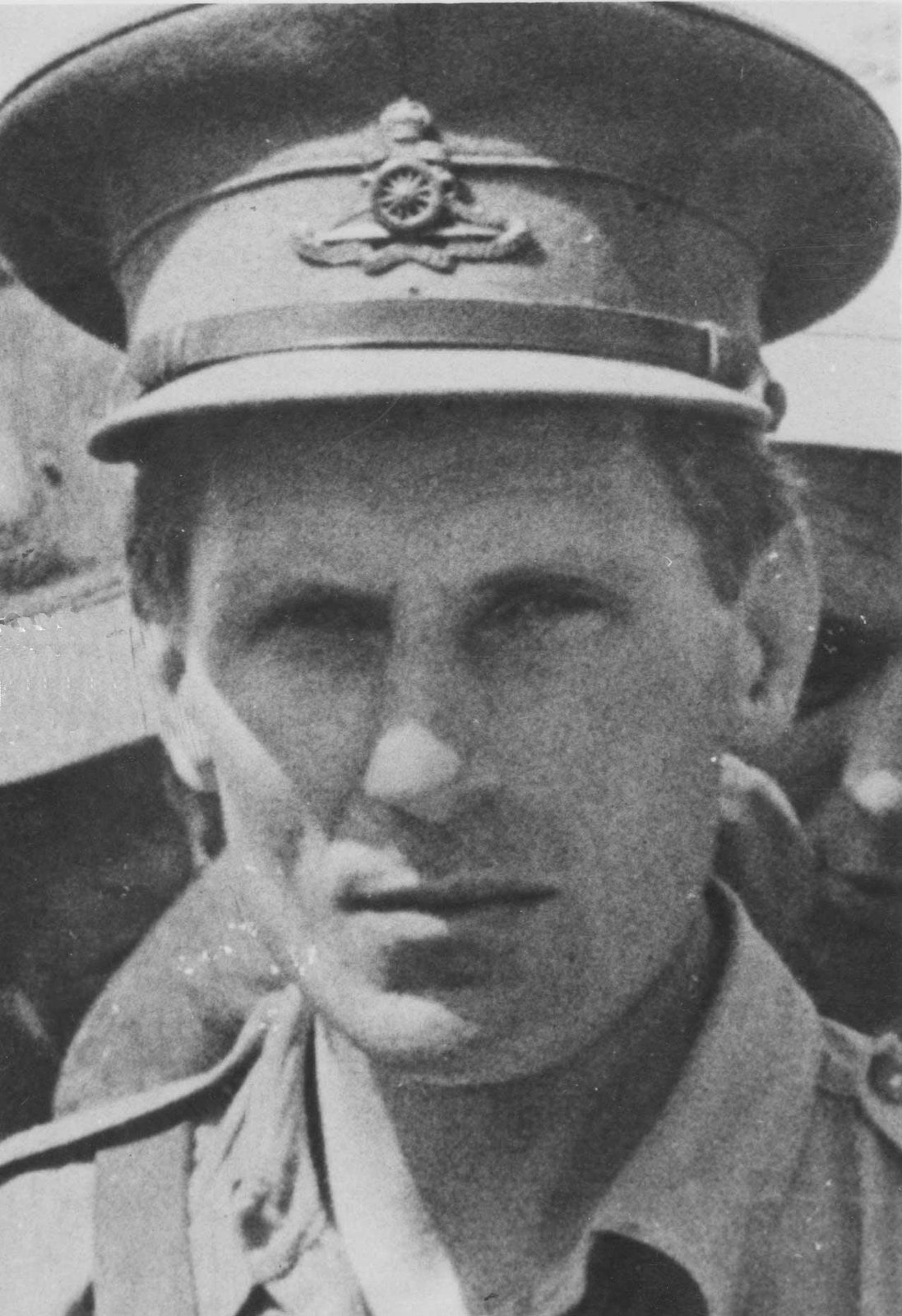
The Wingate Family and the Start of His Career
Family tradition in Scotland tells that, just as Samson tore down the gates of Gaza, one of Orde Charles Wingate's ancestors tore down the gate of a fortress and made its capture possible. That battle gave the family the name Wingate (gate of victory) and the right to its family crest. Among Orde Charles Wingate's well-known cousins were the governor of Sudan, Sir Reginald Wingate, and Thomas Edward Lawrence (known as "Lawrence of Arabia"). His father and grandfather were army officers who became missionaries. The Bible was a familiar book in the family, and his grandfather even spoke Hebrew. His mother was a devout Protestant who, among other things, studied Kabbalah, and it was she who instilled in him a love for the Land of Israel.
Orde Charles Wingate was born in 1903 in India, at the foot of the Himalayas, to a 51-year-old father serving in the regular army. His mother made sure he studied music, drawing, mathematics, French, Latin, and Greek, but Sundays were devoted to the Bible, and from a young age Orde could recite entire chapters. When his father completed his military service, the family returned to England.
At 18, Orde Wingate joined the Royal Military Academy in England. He graduated successfully in the summer of 1923 and was posted to serve near Stonehenge. In 1927 he was promoted to first lieutenant, and a year later to captain. Around that time he studied Arabic, and upon completing his studies (1925), Orde was sent to serve in Egypt, where he befriended Bedouin tribes and learned Arabic dialects and customs. Three years later, with the help of his relative Sir Reginald Wingate, who served as governor of the country, he arrived in Sudan and was posted to the border, where slave traders were active. There he gained experience in dealing with gangs, which led to the development of "small-scale warfare."
In the spring of 1933, during a voyage from Alexandria to Cairo, he met Lorna Patterson. Chaim Weizmann, who met her, said that she was "very young and very beautiful." Ruth Dayan said that "men couldn't take their eyes off her." Two years after that voyage, the 18-year-old young woman and the 32-year-old officer married in England.
The Encounter with the Land of Israel
The couple first arrived in the Land of Israel in September 1936. Orde called it the "Land of Israel," not "Palestine," as his fellow officers did. Lorna fell in love with the landscapes she had read about in the Bible, and with the people who admired her husband. The pioneers who worked their land and fought to establish their country seemed to her to embody biblical prophecy, and she felt herself a historical partner in the founding of a state-in-the-making. Orde believed that the Jewish people were the chosen people, and his greatest ambition was to lead the Israeli army in the war of the End of Days. He arrived in the country as an intelligence officer, although he had trained as an artillery officer, and became an admirer of the Jewish people: "When I was at school, people looked down on me and made me feel that I was a failure, unwanted in the world. When I came to the Land of Israel, I found an entire nation that had been treated in a similar way for many generations, and yet, in the end, its sons were not defeated. They are a great force in the world and are rebuilding their country. I felt that I belonged to such a people."
It was the time of the Arab Revolt, and Orde was gathering intelligence from the Arabic- and Hebrew-language press and compiling a database on the prominent figures in the country. He met senior leaders of the Yishuv, among them Chaim Weizmann, Moshe Sharett, Yohanan Ratner, David Hacohen, Emmanuel Wilensky, Reuven Shiloah, and others. A fervent Zionist, Orde proposed to Weizmann that he establish an army for the Jewish state that would come into being, and the Yishuv's leaders gave him the nickname "the Friend." At that time he first met Avraham Akavia, who was 13 years younger than Orde. Akavia was born in Poland and immigrated to the Land of Israel in 1924. Their paths crossed in 1938, and they became close friends. Akavia was Orde's right-hand man, and the two were together on all the major operations.
Orde concluded that the Jews, rather than the Arabs, were Britain's natural allies in the region. He was convinced that a Jewish state that belonged to the British Commonwealth would be a major strategic and economic asset. This was contrary to the prevailing pro-Arab view. In a letter to his cousin Reginald, he wrote: "The Jews are loyal to the Empire. The Jews are people who keep their word; they always have been. In fact, that is the Christians' main complaint against them. There are 15,000,000 Jews in the world, and Palestine could absorb far more than a million within seven years. You have no idea what they have already done here. You would be filled with wonder at the sight of the desert blossoming like a rose with intensive agriculture. Everywhere there is energy, faith, ability, and ingenuity such as the world has never seen. I have seen the Jews in groups. I promise you they will make a better fighting force than ours. All we need to do is train them. They will equip it. Palestine is vital to our Empire, our Empire is vital to England, and England is vital to world peace."
The Special Night Squads
In June 1938, Wingate established the Special Night Squads (not "companies," since by British standards they were too small to qualify as such). They were mixed units of trained British soldiers and Jewish guards from the Haganah. The innovation of the Night Squads was their use of intelligence, deception, and surprise attacks - tactics that would later be identified as "small-scale warfare." Some describe him as "the father of modern guerrilla warfare." Moshe Dayan said, "Everything we knew about the army... we learned in the Night Squads."
A fine example of this doctrine can be seen in an operation at Tirat Zvi, described by local residents: "We followed him southwest, toward the eastern slopes of the Samarian hills. This Englishman, who had never been in our area, ran ahead through the dark night like a fleet doe, as if he had lived here all his life. When we had gone some distance from the kibbutz, he stopped. He ordered sentries to be posted, sat us down, and began to speak... in Hebrew. Slow, hesitant Hebrew, but Hebrew! We were surprised and embarrassed, too. Could the gentile have understood what we had been talking about among ourselves? Could he know about the illegal weapons? And this is roughly what he said: 'After a break of two thousand years, tonight you are creating the nucleus of a renewed Israeli army...' and a few more sentences along those lines. Then he continued with a military briefing for the operation: 'We will set an ambush on the route used by the gangs crossing from Transjordan into Samaria. We must let the infiltrators come within arm's reach. Then we will ram our rifles into their bodies and pull the trigger.' It was, indeed, a surreal scene. Ten Jews and one Englishman slipping into the area at night, an area even the mighty British army had not dared to enter."
The Night Squads operated for only about a year and a half, but achieved tremendous success and their operations made waves. As a result, Orde himself was promoted to major and awarded the Distinguished Service Order, the second-highest decoration in the British Empire.
Orde experienced prolonged periods of depression. He called them "fits of rage." "God is good" was the phrase he repeated until he calmed down. Some of his eccentricities included eating raw onions, brewing tea through his socks, and receiving guests naked. Eliyahu Epstein said that when he came to visit Orde in Jerusalem, Orde opened the door as naked as the day he was born. Without a word of explanation or any attempt to apologize, he led his guest into the living room, sat down opposite him, and engaged him in lively conversation. They began with Persian literature, Eliyahu's field of expertise, and then moved on to Zionism, Wingate's great passion. Several hours later, when he escorted his guest to the door, he was still completely naked.
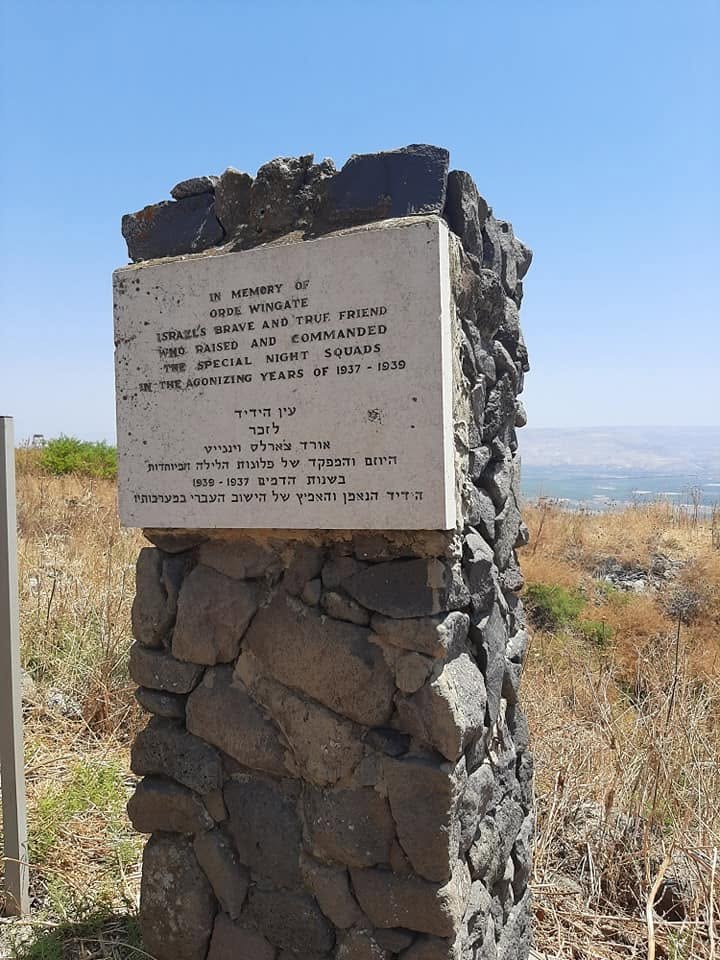
In October 1938, Orde went on leave to London. He used the time to meet with Colonial Secretary Malcolm MacDonald and Member of Parliament Winston Churchill, trying to interest them in the Zionist enterprise and press them to reject Arab demands. These actions angered his pro-Arab superiors, and the following was written in his service record: "Orde Wingate D.C.O. [Distinguished Service Order]; a good soldier, but insofar as Palestine is concerned, he is a security risk. He cannot be trusted. The interests of the Jews are more important to him than the interests of his country. He must not be allowed to return to Palestine." Orde was removed from command of the Night Squads and was eventually expelled from the Land of Israel.
Ethiopia and the Gideon Unit
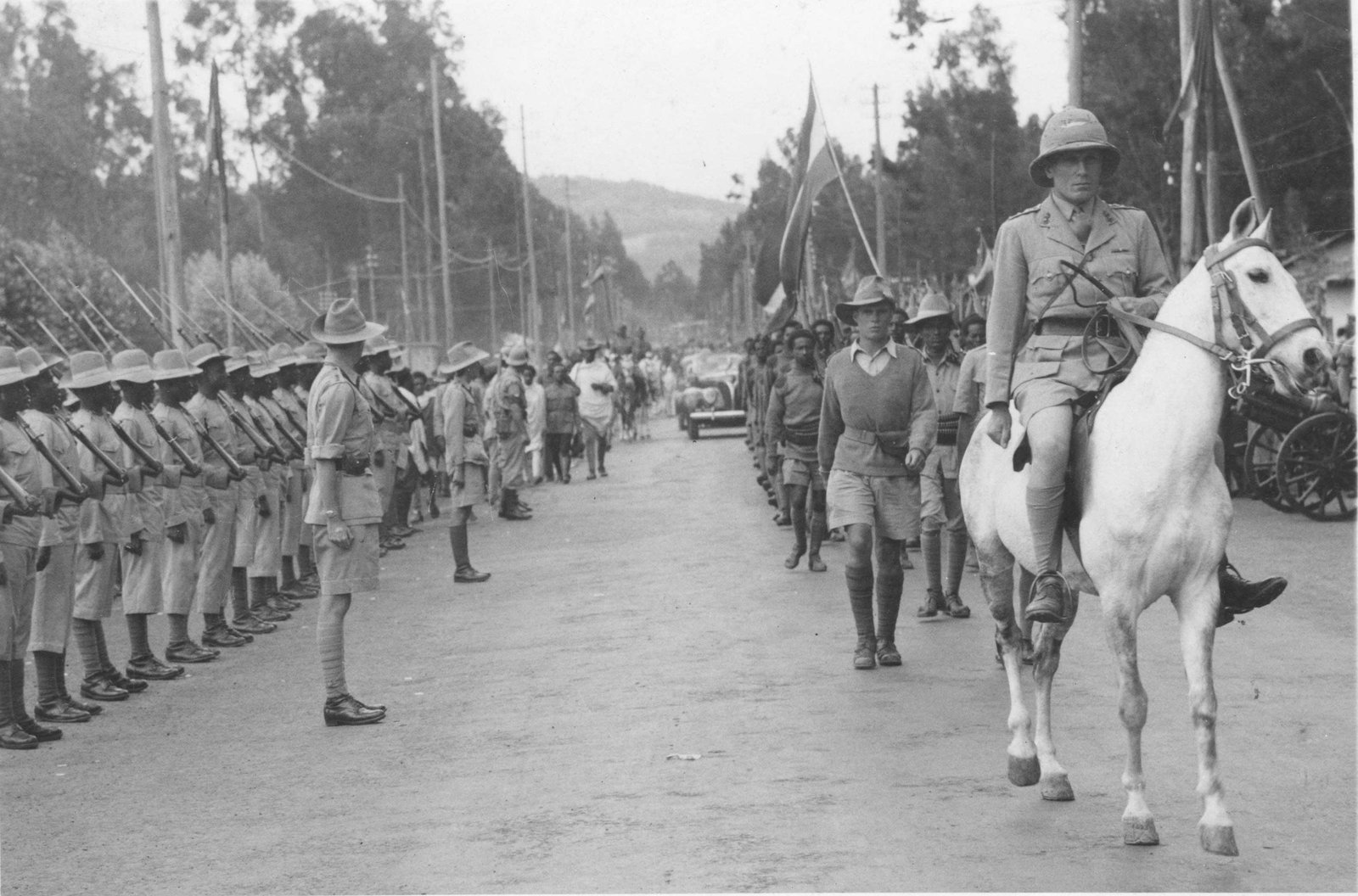
When the Second World War broke out, Orde proposed establishing a Jewish army in the Land of Israel, but was sent to Ethiopia, where he formed a guerrilla unit named Gideon, after the judge Gideon son of Joash. The unit was made up of Sudanese and Ethiopians, along with a number of Haganah veterans. It numbered about 1,700 fighters. By then Avraham Akavia was a civilian, but Orde insisted that he remain his aide-de-camp and stand by his side. Akavia recounted their wartime experiences in his book With Wingate in Abyssinia. Akavia took part in the victory parade in Ethiopia's capital, Addis Ababa, in May 1941. "We marched through the streets of the city in the first victory parade of the Second World War. Orde rode at the head on a white horse, and I marched behind him... at the head of an Ethiopian company." Orde insisted that Jewish doctors from the Land of Israel treat the wounded. At Passover, he held a field Seder for his Jewish soldiers and delivered a moving Zionist speech to them.
Akavia not only translated from English into Hebrew, he also translated military jargon into Hebrew and published a Dictionary of Military Terms, containing 6,000 terms, including "report," "location," "up-to-date," "to report," "briefing," and "improvisation."
Akavia's contribution to the liberation of Ethiopia from the dictator Mussolini was recognized, and in 1966, when Ethiopia celebrated 25 years since its liberation, Emperor Haile Selassie invited Akavia to receive the Order of Menelik II. Orde, who was prepared to die fighting for Ethiopia, saw his service there as a way to return to the Land of Israel at a higher rank and with greater influence in the army.
Burma and the Chindits
While the war was being fought in Europe, a war between Japan and China was underway in Southeast Asia, continuing until 1941. The Japanese cut China off, and the only way to get supplies into China was through Burma. The Japanese understood that capturing Burma would finally bring China down and allow them to surge toward India, alarming the British, who ruled India at the time. The British thought they could take control of Burma easily, but the Japanese beat them to it and captured Burma in May of that year. The British were looking for an officer who could penetrate Burma and drive the Japanese out, and Orde offered his extensive experience in small-scale warfare. He proposed sending special teams into Burma to carry out guerrilla operations using hit-and-run tactics. In June 1942, Orde was promoted to brigadier general and appointed to command the 77th Indian Infantry Brigade, which was to carry out the raids in Burma. The first raid took place in February 1943 and was an enormous success, attracting widespread attention. Orde's forces came to be known as the Chindits, after a mythical creature, half-eagle and half-lion, which, according to Burmese tradition, guarded the pagodas. Orde would be remembered as the first to defeat the Japanese on land.
Orde Charles Wingate was invited to London by British Prime Minister Winston Churchill and appeared at the military Quebec Conference in August 1943, where he lectured on guerrilla warfare. On his return to India, he was promoted to major general, but his intention was to return to the Land of Israel and work the land until he was called upon to lead the Jewish army to victory and independence.
Toward November 1943, his wife Lorna told him she was pregnant. They were overjoyed, and Orde wrote to her: "At this moment I feel, 'By the rivers of Babylon, there we sat down, yea, we wept, when we remembered Zion... If I forget thee, O Jerusalem, let my right hand forget her cunning.' I will return and we will go back to Israel. See you soon." But they never saw each other again... and they never returned to Israel...
Orde returned to Burma. This time his mission was to attack the Japanese and establish several bases. The attack, carried out in March 1944, succeeded, disrupted Japanese efforts to attack India, and saved China from starvation.
On March 24, Orde took off to visit three bases established in Burma. The plane he was flying in crashed on its way back to India, and its ten passengers were killed. Orde's body was never found; only his helmet was located at the site.
In a speech to the British Parliament, Churchill said of him: "We had placed our hopes in the supreme commander, Admiral Louis Mountbatten, and his brilliant deputy, Major General Wingate, who, to our deep regret, has paid the soldier's debt. He was a man of genius who could very likely have become a man of destiny. He is gone, he has left us, but his spirit lives on in the long-range penetration groups and underlies all those complicated and daring operations by air and land, based on air transport and air supply."
After Ethiopia was liberated, Avraham Akavia returned to the Land of Israel and was sent to fight the Nazis in Italy as part of the Jewish Brigade. There, as a commander, he wrote: "One of the most moving events took place on Italian soil, when, at the battalion parade, the Zionist flag was raised openly for the first time, with permission... On European soil he encountered survivors of the Holocaust... The Jews saw the Star of David on the cars and leaped for joy. They climbed onto the cars as they drove along, slowly on purpose, and kissed the emblem and us, too."
Shortly after completing his officer training course in the British army, Akavia married Ruth, and they became parents to three sons: Gideon-Joseph, Eliyahu, and Uri-Michael. Uri, the youngest son, served as a tank company commander in the 74th Battalion of the 188th Brigade in the southern Golan and fell in the Yom Kippur War. He was awarded the Medal of Distinguished Service for his fighting and command in the battle in which he was killed.
Avraham Akavia lived a long life. In 2014, a year after his wife passed away at the age of 98, he died, leaving behind books, a dictionary, and a legacy.
Two months after Orde Charles Wingate was killed, a son was born whom he never got to know. In his memoirs, Ben-Gurion wrote: "I sent a telegram to Lorna Wingate, the recent widow of Orde Wingate, 'the Friend'. She gave birth to their first and only son shortly after Orde fell, and named him Orde Jonathan. And so I wired her: 'My sincere wishes for a happy new year to you and young Orde. Thousands of Orde's friends around the world remember you with deep affection. May the baby have a true and vivid picture of his unforgettable father. David Ben-Gurion.'"
Lorna Carries On the Legacy
Like her husband, Lorna Wingate became a Zionist, with a sense of commitment to building the country. In the run-up to the UN vote at the end of November 1947, she sent a telegram to Ethiopia's Emperor Haile Selassie, reminding him of what her husband had done for him and of his obligation to her husband and to the Jewish people, who had hosted him in Jerusalem when he fled Ethiopia. Selassie did not reply. On the day of the vote, Ethiopia's representative abstained.
That year, Lorna traveled to North America and spoke passionately to Jews and Christians about the need to help the Jews who had survived the brutality of Nazi Europe. In Canada, she urged the women's organization of St. James's Church to pressure the Canadian government to ask Britain to fulfill Balfour's promise to establish a Jewish state in the Land of Israel. She explained to her captivated audience that this was as much a Christian interest as a Jewish one.
Immediately after the state was established in 1948, Israel was attacked by six Arab armies. Lorna, aged 31, came to the country to stand by the Jewish people in their darkest hour. When a journalist asked why she had left the peaceful comfort of her home in Aberdeen, Scotland, she replied: "It is much harder for a true friend of Israel to sit quietly in Scotland and read about the tumultuous events taking place in the country than to be here at the front."
The newly born state was short of weapons, fighters, and commanding officers. Lorna approached her friend Ben Dunkelman, a wealthy Canadian Jew, and told him, "If my husband were alive, he wouldn't accept a negative answer from you. He would ask you to go and volunteer and contribute your knowledge." Dunkelman, an experienced Canadian officer who had taken part in the invasion of Normandy during the Second World War, understood the hint, volunteered, and helped recruit overseas volunteers as part of Mahal. He later took command of the 7th Brigade and liberated parts of the Land of Israel.
Wingate's Bible
As the fighting for the country continued, Lorna heard about the besieged residents of Ramot Naftali and tried to raise the spirits of the defenders under siege. Her aim was to deliver her husband's Bible to them. There are several versions of the story of how the unique book was delivered, showing just how much it became part of the epic of that time. One version, recounted in the book First into Battle (Galia Yarden), tells that when Lorna arrived at Ramot Naftali, which was under attack, and it became clear that she could not get close enough to meet the defenders, she took a small book from her purse. "This is my husband Orde's Bible," she said. "Please give the book to the people defending Ramot Naftali!" She wrote a short letter to the soldiers and left that, too, with Uri Yaffe, one of the commanders there. Later, Yaffe led a squad of soldiers who reached the place and left them the Bible, giving the besieged the encouragement they needed to continue fighting.
Another version claims that the Bible was dropped from a plane piloted by Yeshayahu Budinovsky. This version appears in Yeruham Cohen's account in his book In Broad Daylight and in Darkness.
The final version claims that the Bible was given to the fighters' wives, who had been evacuated to Yesud Hama'ala. The Bible itself, together with its dedication letter, is now in Beit Sturman, named after Chaim Sturman, Wingate's good friend.
The letter reads: "To the fighters of Yamin Orde, 7.5.1948. Orde Wingate is with you in spirit, although he himself cannot lead you into battle. I am sending you the Bible he carried with him on all his journeys, the Bible from which he drew the faith that led him to his victories. May this book be a covenant between you and him, in victory or defeat. Now and forever."
At Ein Harod, where Orde's headquarters had been at the height of the fighting, Lorna Wingate offered words of encouragement: "I would like to tell my friends this evening that Wingate's work for this land, which he loved, did not end with his death. He never stopped working for it or thinking about it. During the years of war before his death, he fought in three major campaigns and waged many diplomatic battles. In Abyssinia, Burma, London, and Quebec, his aims were always the defense of this land and securing its victory... He knew how to win hearts to his ideas, despite fierce and stubborn opposition, and to prove that it really was possible to carry out operations that seemed unimaginable to people wedded to routine. He worked on his bold plans, recording and noting every detail, and in his extraordinary conquests in Abyssinia and in the jungle (in Burma), he sought to demonstrate how the few could overcome the many when they adopted particular methods of warfare. In developing bold methods of fighting the many with the few, the aims of the Hebrew community in the Land of Israel were always before his eyes. That is why he bequeathed to me, by special instruction, all his notes on his methods of operation, certain that these notes, containing precious material to guide our army, would reach it through me. And I am certain that his spirit, which dwells among us, knows that we have done well. I came to you because I could not remain apart from you. I cannot help you; only through your own strength can you bring deliverance."
The Procurement Operation and Commemoration
A few days later, Lorna was due to return to London, but just before she left, she was asked to perform one more small service as part of the procurement effort for the young army. The procurement mission was assigned to Lova Eliav, who was supposed to travel to Italy. Although the state had been declared, the British were still in the country and guarding the borders, and Lorna's task was to smuggle Eliav abroad. Emmanuel Wilensky, a key figure in the Haganah in Haifa and a friend of the Wingates from years before, approached her with a simple request, as Lova Eliav described it: "We wanted her to sit beside me on the plane and treat me as though we were old friends. Perhaps even friends since childhood and youth, behaving with one another freely and naturally, like a pair of friends or a pair of lovebirds..."
The beautiful Lorna agreed. "The next morning, Lorna and I set off in a taxi for the airfield near the Shemen factory in Haifa." Eliav continued: "The airfield was heavily guarded by British army units. The road leading to it was blocked by a police checkpoint and the 'anemones,' the paratroopers in their red berets. We passed through the inspection with Lorna talking to me intensely the whole time, lightly holding my hand and treating me like a friend from her youth. The British police officers and officials treated her, and me as well, with great deference and the respect she was due." They later landed in Nice, France. "There I said goodbye to Lorna with a light kiss and heartfelt thanks. She continued on to London, and I caught another plane..." As part of that procurement operation, four ships and the first torpedo boats were sent to the country.
The state had been established, and Lorna continued her work on its behalf. In 1953, the moshav Nir Etzion was founded, and nearby a youth village named after Orde Charles Wingate was established. The money to build a village in her husband's memory came from Jewish and non-Jewish donors in Britain whom Lorna had enlisted for the cause. After the money had been raised, Lorna approached Moshe Kol, a member of the Jewish Agency's executive, and asked where it would be best to establish a youth village in her husband's memory. "The man was a war hero," Kol replied, "steeped in reverence for God; verses from the Bible were like his internal organs. On Mount Carmel stands a community commemorating Kfar Etzion, a kibbutz founded on faith in the God of Israel by young people who lived through the inferno that destroyed the Jewish people in the Diaspora. The young men and women who cleared the hills of Judea of age-old rocks, built on the mountain, studied there, and trained their hands for defensive warfare were also steeped in biblical verses, chapters, and books. They were attacked, fought, and fell heroic deaths. Nir Etzion was established by the few survivors of that heroic battle. There is no place in the country more fitting for establishing a community in Orde's memory. They share the same identity."
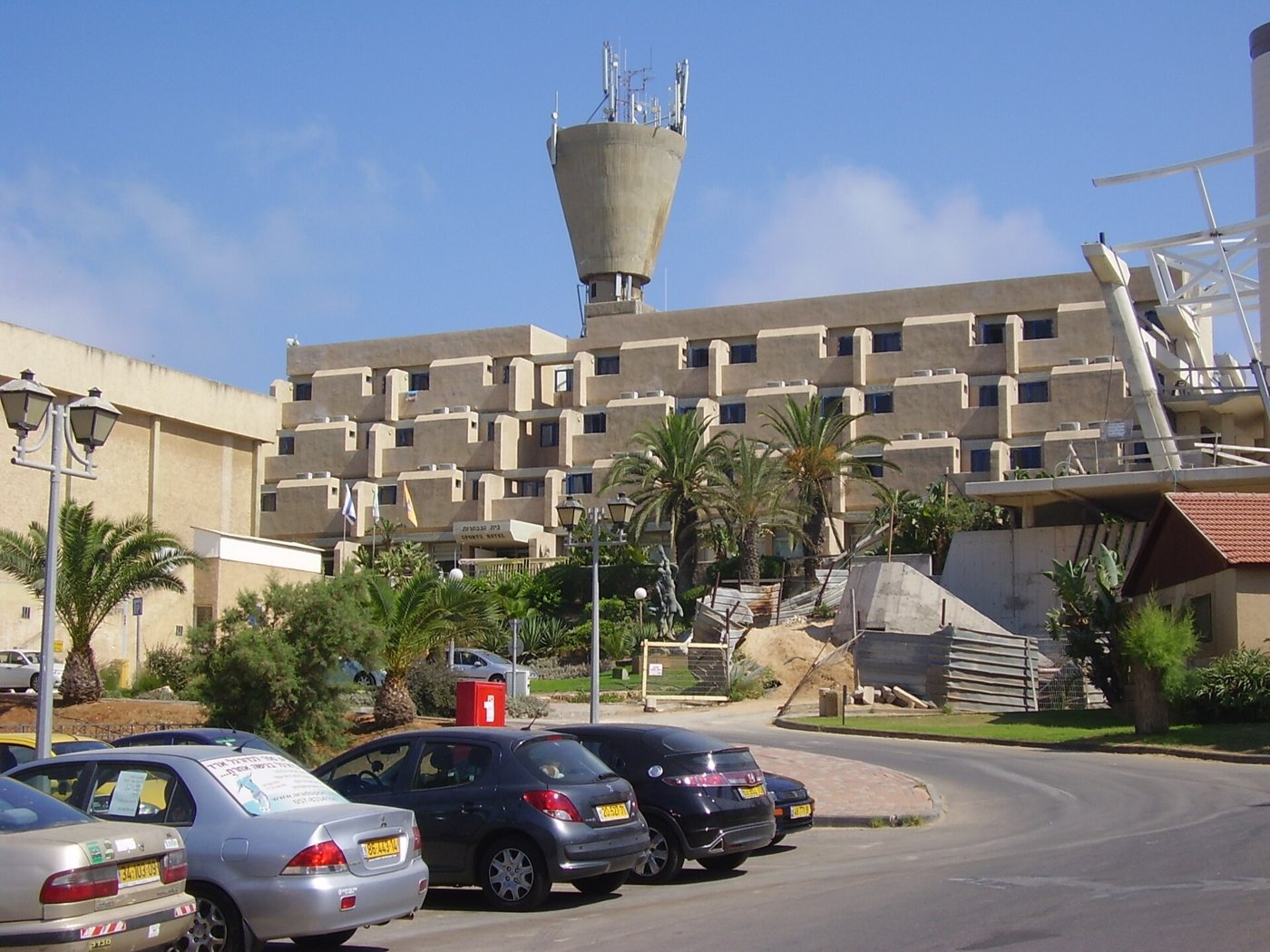
At the dedication ceremony for the youth village, Winston Churchill, the British prime minister, sent a letter: "I am very glad that the money to build the 'Yamin Orde' village was raised in the United Kingdom, and that a memorial to the friendship that should always bind Britain and Israel has been established on Mount Carmel." That same year, construction also began on the Wingate Institute near Netanya, the National Institute for Excellence in Sport.

The Memory That Remains
Orde Charles Wingate, who was 41 when he died, never saw his son Jonathan and never lived to see the establishment of the Jewish state for which he had so long yearned. Memorials to him, without a grave, are located in the Wingate family plot at Charleston Cemetery in London and in Arlington National Cemetery in Virginia.
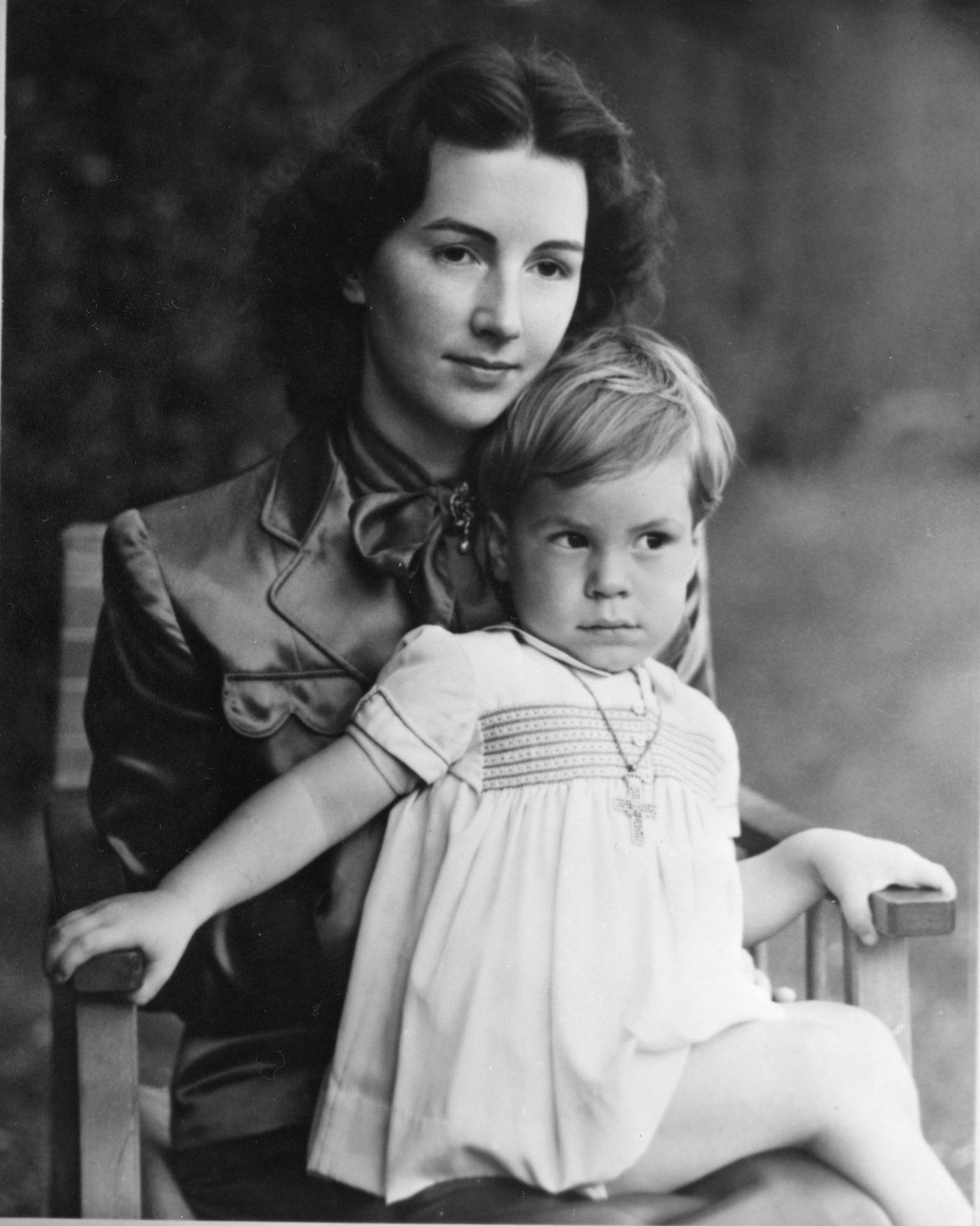
A few years later, Lorna married a Scottish farmer named John Smith, and they had a son and a daughter. Her eldest and only child by Orde, Orde Jonathan Wingate, also pursued a military career.
Lorna Wingate died in 1991. Orde Jonathan Wingate died in 2000.
In addition to the youth village and the Wingate Institute, Orde Charles Wingate was commemorated at an educational institution on the slopes of Mount Carmel and in streets throughout the country, and also in the name of a baby girl born shortly after his death: Ordit, daughter of Akiva Atzmon, a member of the Night Squads who admired his commander. Akiva Atzmon also commanded the Gadna in the early 1950s. Among his projects were establishing the Gadna farm at Be'er Ora, founding the Gadna orchestra, and planting eucalyptus trees along the country's roads, among other things.
תגובות
עדיין אין תגובות.