
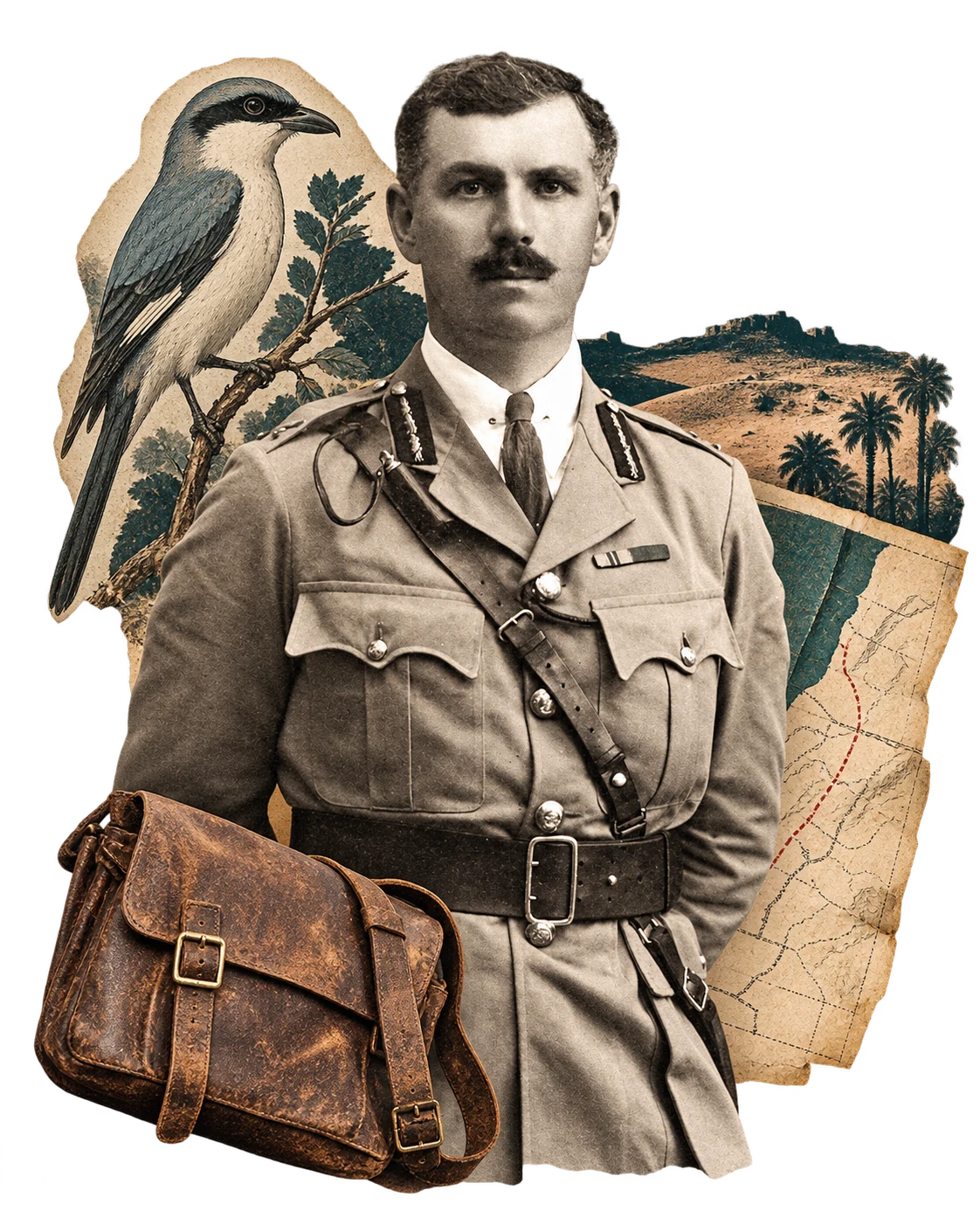
He was a naturalist, a travel enthusiast, a political commentator, and, some say, even a murderer, but he will always be remembered as a brilliant and colorful intelligence officer under General Edmund Allenby.
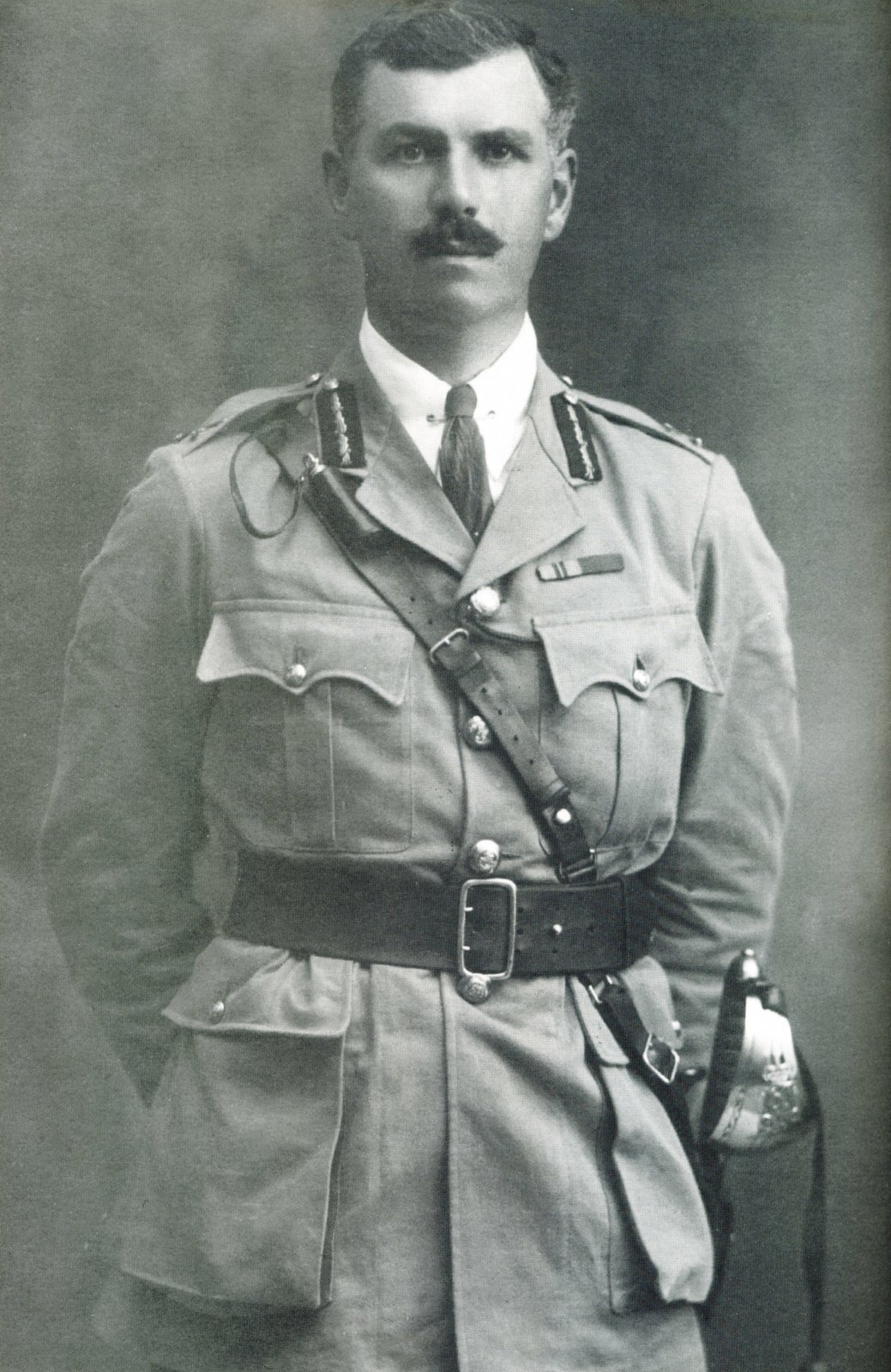
Richard Meinertzhagen was born in England on March 3, 1878, and spent his childhood in Hampshire. Because of his unusual name, his friends teased him, hinting that he was German Jewish, although his ancestry was Danish. As he wrote: "As far back as I can trace my roots, there is no Jewish blood in my veins, nor has there ever been." Among the family’s friends were the philosopher Herbert Spencer and the evolutionary biologist Charles Darwin, who encouraged Richard to devote himself to studying the natural world. Meinertzhagen became an enthusiastic birdwatcher and even discovered a bird that would later be named after him. When he enlisted in the National Cavalry, he was sent to serve in Kenya. There, in Kakamega Forest, he discovered a skull and pieces of skin belonging to the giant forest hog (Hylochoerus meinertzhageni), which was also named after him.
Deceiving the Turks in the Land of Israel
Meinertzhagen earned most of his fame during World War I. At the time, the Turks ruled Palestine, and the British were preparing in Egypt to wrest it from them. Under General Archibald Murray, the British crossed the Sinai Desert, captured Rafah, and prepared for the battle to capture Gaza. The British suffered defeats in the first two battles, leading to the replacement of General Archibald Murray by General Edmund Allenby.
In 1917, Meinertzhagen was sent to Egypt to take charge of General Allenby’s intelligence department. Two days after his ship set sail for Egypt, it was hit by an enemy torpedo. Meinertzhagen and his companions jumped from the damaged ship and spent about five hours at sea before being picked up by a Japanese destroyer. After arriving in Cairo, he took responsibility for the Field Intelligence Department and was sent to coordinate forward intelligence in the Deir al-Balah sector of northern Sinai, where Allenby was planning to attack Gaza for the third time.
Meinertzhagen devised a plan to mislead the enemy. At his suggestion, a briefcase of documents was prepared for him to "lose" near the front line, at Patish Fort, in the eastern part of present-day Ofakim. The Turks who found the briefcase would conclude from its contents that the British were preparing for a third campaign against Gaza, when in fact Allenby would attack his enemies at Beersheba. "Lately I have been engaged in preparing a dummy staff officer’s notebook containing all sorts of rubbish about our plans and difficulties," he wrote in his diary. "Today I took it out into the field northwest of Beersheba, intending to drop it into enemy hands without arousing suspicion. After crossing Wadi Gaza, I turned northwest toward Sheria. I rode well, and near Gerar I came upon a Turkish patrol, which immediately gave chase. I rode back about a mile, and then they stopped, so I halted. I dismounted and fired at them from a distance of about 600 yards. This annoyed them enormously, and they immediately resumed the chase, firing harmlessly all the while. This was my opportunity. As I struggled to get back on my horse, I let my haversack, field glasses, and water bottle fall, doing everything I could to make them think I had been hit and had fled for my life. Meanwhile, they came close enough, and I rode off, dropping the haversack containing the notebook and various maps, my lunch, and so on. I saw one of them stop and pick up the haversack and rifle. I soon escaped them, very pleased with myself and with the success of my deception. If they act on what is written in the notebook, we are going to achieve great things."
Apart from Allenby and three other officers, no one knew about the deception. As soon as he returned to base, Meinertzhagen reported to the headquarters of the Desert Mounted Brigade, described the items he had lost, and asked them to send out a patrol to retrieve the missing haversack. "When I returned to headquarters," he recounted cheerfully, "I reported to Allenby, who told me he had received an angry message from the Desert Mounted Brigade asking that 'such young and inexperienced officers not be sent on patrols' and saying that I had caused immeasurable damage through my negligence and stupidity."
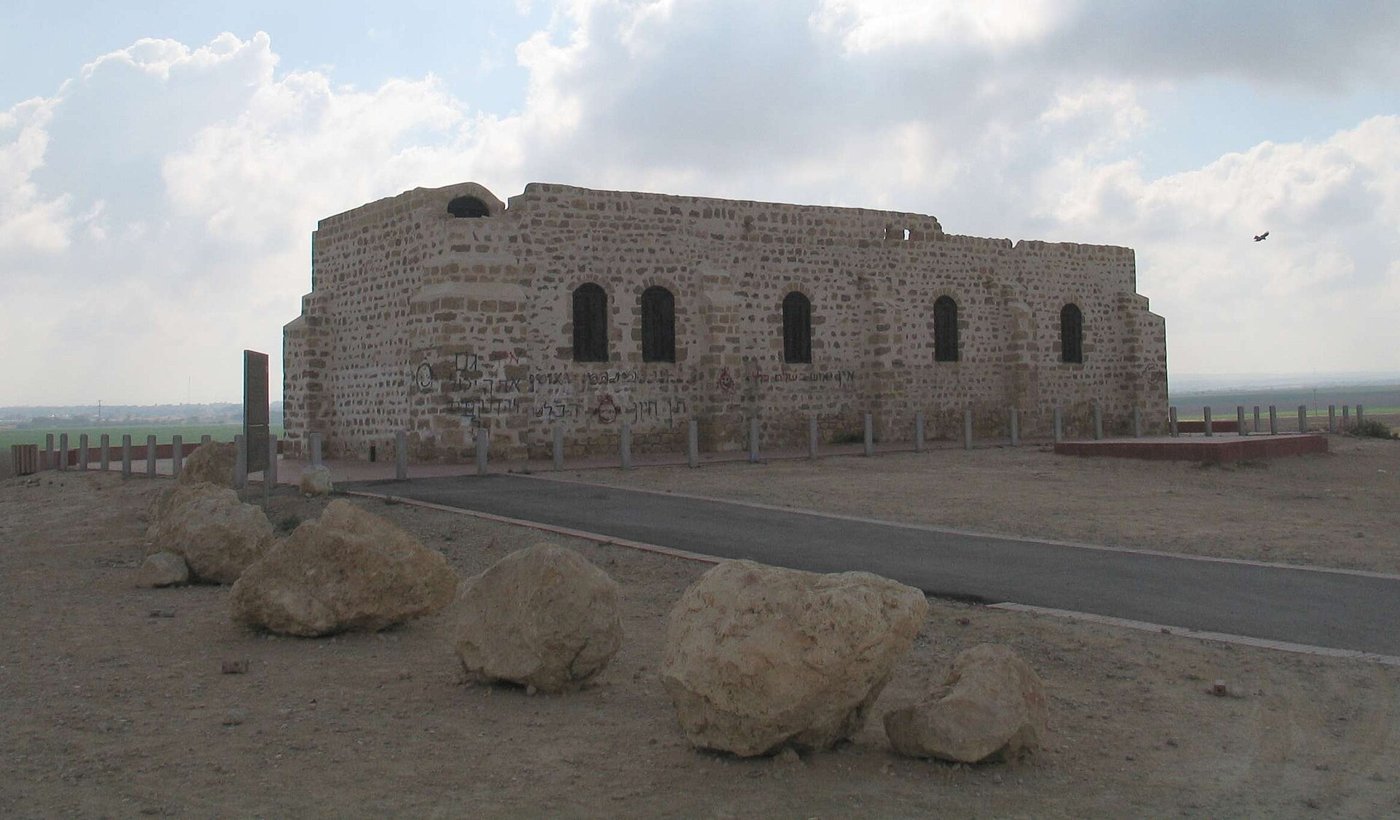
The Turks took the bait. They changed their deployment, reinforced the Gaza sector, and weakened the defense of their eastern flank. As a result, they were taken completely by surprise on October 31, 1917, when Allenby’s forces attacked Beersheba instead, captured it, and advanced on Gaza, which was eventually captured as well. Among the captured documents discovered in Gaza was a report signed by the Turkish colonel Ali Fuad, stating that "on October 10, our patrol captured maps and documents left behind by a senior officer in the British army. This important material enables us to understand all the enemy’s plans in the Gaza sector and to summon reinforcements to crush the English attacker."
From July 1917, Meinertzhagen began developing his next idea: "to blunt the edge of the Turkish army holding Gaza and drug it on the day we launch our attack." Starting in August, British aircraft regularly flew over the Turkish lines at sunset and dropped small packets of cigarettes containing a little propaganda. After a few days, the Turks grew accustomed to the cigarettes, and as soon as the planes had gone, the soldiers would leave their trenches and collect the packets. This continued until November 5. On that day, thousands of packets were dropped, and every cigarette was soaked in a very generous quantity of opium. "The result was," Meinertzhagen wrote in his diary, "that on November 6 a large part of the Turkish army at Sheria and Gaza was drowsy and stupefied. Some of the prisoners taken could hardly speak and were in no condition to resist."
Allenby himself greatly valued Meinertzhagen’s contribution to his victories. In his 1917 evaluation, he wrote of his intelligence officer: "This officer is to a great extent responsible for my successes in Palestine."
Identifying with Zionism
In 1910, on his 32nd birthday, Meinertzhagen visited Odessa, where he witnessed a pogrom that left an indelible impression on him and bound him even more closely to the idea of establishing a national home for the Jews in Palestine. He wrote: "I was shaken beyond belief... I would never have believed that human beings could behave worse than the wildest and most savage beasts... I witnessed a pogrom in the streets of Odessa... I am shaken to my core by these terrible deeds, and I have resolved that whenever and wherever I can help the Jews, I will do so to the best of my ability. There is no word in the English language to describe such vile and bestial behavior."
When he arrived in Egypt, Meinertzhagen, for the first time in his life, formed a close working relationship with Jews. They were Aaron Aaronsohn and his fellow members of the NILI underground: "...I soon came to know their intelligence and courage... They were all in excellent health and, to my great surprise, fair-haired and blue-eyed. They worked as a team, led by Aaron Aaronsohn. This extraordinary man was the boldest and most modest agent."
He particularly admired Chaim Weizmann, one of his closest friends: "I have rarely admired a man more... I have never seen such devotion to a cause, such determination, and such a rich intellect, all embodied in a single soul. Rarely has a man devoted to such great ideas been so honest and sincere."
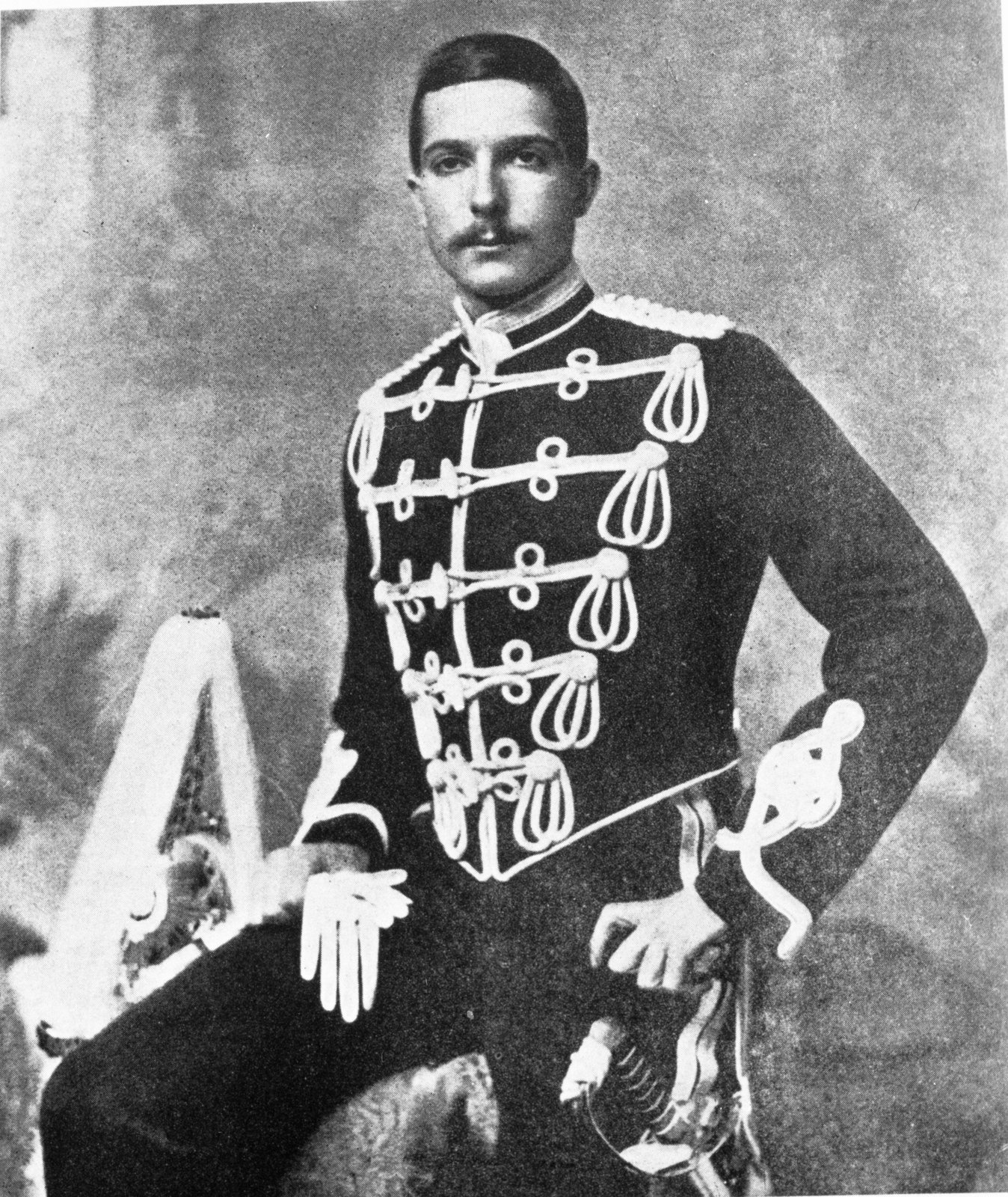
In 1919, Meinertzhagen proposed to David Lloyd George, then prime minister of Britain, that a sovereign Jewish state be established in Palestine. He published a book called Middle East Diary, in which he proposed the borders of the Jewish state, which would include the Golan Heights, part of Transjordan, and most of the Sinai Peninsula.
In 1925, Richard Meinertzhagen left the army after holding several posts under Lord Balfour. His wanderlust persisted, and he began traveling through Asian countries to collect birds for his natural history collection. In 1928, his wife was killed in an unexplained shooting accident, and some even claimed that he had murdered her.
In the 1930s, he initially saw some hope in Hitler’s rise to power, but soon became disillusioned with him. Shortly before the outbreak of war, he entered Hitler’s office armed with a pistol. He did not shoot him, but later was troubled by the thought that killing him might have prevented the war. When Hitler greeted him with a Nazi salute and "Heil Hitler," the amused Meinertzhagen replied, "Heil Meinertzhagen." No one laughed... At the beginning of World War II, he was called back into service, but was wounded during the retreat from Dunkirk and remained at home until the fighting ended.
On April 23, 1948, at the age of 70, Meinertzhagen set off on a vacation and arrived in Haifa by ship. That day, decisive battles between Jews and Arabs were being fought in the city. Meinertzhagen saw the British summon a company of soldiers from the ship to protect British supplies at the port. He obtained a uniform, a rifle, and 200 rounds from one of the soldiers, went down to the port, and joined the Haganah forces, where he proved an excellent shot against the Arab fighters. The Haganah fighters did not know exactly who the old man fighting alongside them was, but his performance left no doubt about his abilities or intentions. When he ran out of ammunition, a British officer discovered Meinertzhagen and returned him to the ship. "I went aboard, returned my uniform to my friend, cleaned his rifle, and then ordered a large bottle of champagne, which we drank together in his cabin. All in all, I had a wonderful day."
Richard Meinertzhagen lived long enough to witness not only the establishment of the State of Israel, but also its victory in the Six-Day War. He died on June 17, 1967.
תגובות
עדיין אין תגובות.