
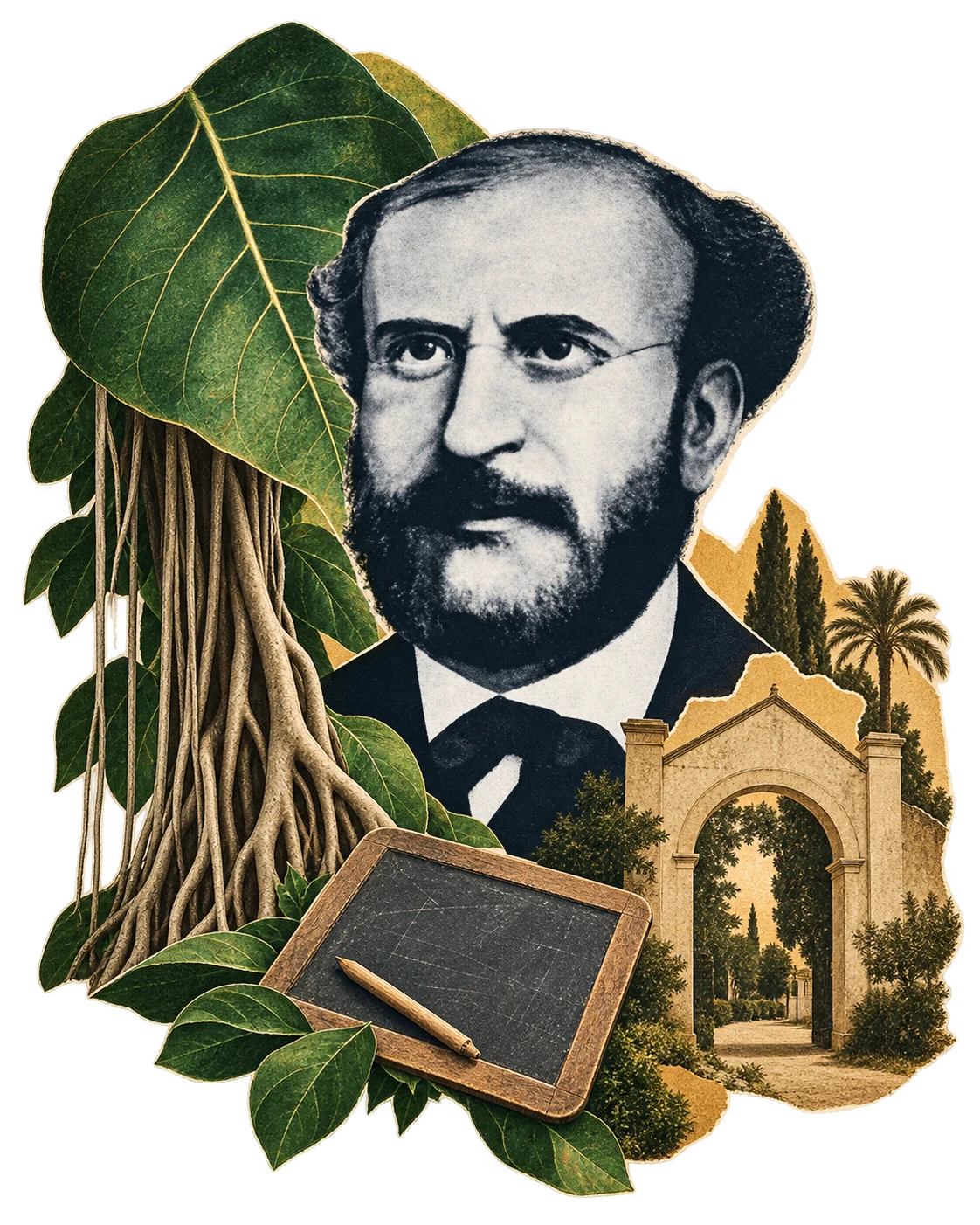
A Zionist tree from Bengal, a child kidnapped on the pope's orders, and Mikveh Israel... A special story about a special man
In 1895, the Dreyfus trial took place, in which a Jewish French officer was accused of spying for Germany. A journalist named Herzl covered the trial, and this inspired him to found the Zionist movement, whose banner was the establishment of a national home for the Jewish people. Thirty-seven years before the Dreyfus affair, on the morning of January 24, 1858, the papal police knocked on the door of the Mortara family, a well-known and respected Jewish family of merchants. They had come to take six-year-old Edgardo. The reason given to the family was: "The child is Christian," and the law prohibited non-Catholics from raising a Catholic child. The stunned family learned that when Edgardo was two years old, the family's Christian maid had taken him and baptized him.
The family's efforts to get the child back failed, as did Moses Montefiore's attempts to intervene with Pope Pius IX. The affair, which made headlines around the world and became known as the Edgardo Mortara affair, exposed the political weakness of the Jews.
Two years after the abduction, in May 1860, 17 young men representing the Jewish bourgeoisie of France at the time gathered and decided to establish an organization to help Jews. The meeting, held at Karl Netter's home, gave rise to the Alliance Israélite Universelle, also known as Alliance, and Karl was elected treasurer of the organization.
The organization sought to fight everywhere for the emancipation and rehabilitation of Jews and to provide effective assistance to all those who suffered simply because they were Jewish. Its goals were to defend Jewish rights, improve the social and political standing of Jews, introduce Western culture everywhere, and teach modern subjects such as mathematics and geography - something considered a real revolution at the time.
Karl Netter and the Agricultural Vision
Karl (Charles in French) Netter was born in 1826 in Strasbourg. His father was a learned man and a descendant of a family of rabbis. Karl was a successful and wealthy businessman, and could afford to devote himself to the affairs of the Jewish community. In his role at Alliance, he traveled to Cairo in 1867. The following year, he arrived in the Land of Israel and spent two months visiting Jewish residents in Jerusalem, Jaffa, Hebron, Safed, and Tiberias. He investigated their problems and took an interest in their livelihoods and education. What he found was shocking: most Jews lived in great poverty and depended for their livelihood solely on donations from benefactors around the world. He observed that the Jews had grown weary of a life of idleness and Torah study, and longed for a life of dignity and independence.
On his return to Paris, Karl submitted a report to the members of the movement, drawing on the well-known proverb: "Give a man a fish, and he will eat for a day; teach him to fish, and he will eat for a lifetime." In other words, an agricultural school for Jews should be established in the Land of Israel. Jews should be taught to be productive, support themselves, and develop the land. "A Jewish farmer in the Land of Israel? Who's ever heard of such a thing?" The members, some of whom knew about the Jews of the Land of Israel and others who had only heard of them, held back their laughter out of respect for Netter. Only Adolphe Crémieux, then president of Alliance, supported the idea, but on one condition - that Karl Netter himself carry it out.
It was clear to everyone that if Karl Netter accepted the proposal, he would have to leave his comfortable home and the wealthy, pampered lifestyle to which he had grown accustomed, and move to a hot, disease-ridden land that was far less developed than Paris at the time.
The unmarried Karl was delighted that his plan had been approved, and devoted all his abilities and energy to making his dream come true. On April 5, 1870, he received a permit to purchase land east of Jaffa. A cave in the nearby kurkar ridge served as temporary lodgings for Karl and his men while the agricultural school he had planned was being built. He oversaw the construction work and the laborers. When construction was complete, Karl Netter planted the famous tree with his own hands - the Bengal fig.
The Old Yishuv welcomed the establishment of the agricultural school. The school was inaugurated during the week of the Torah portion Bechukotai. It was named after the words of the haftarah from the Book of Jeremiah: "O Lord, hope of Israel, its savior in times of trouble, why are you like a stranger in the land, like a traveler who stops for the night?" (14:8). The agronomist Neigo was sent from France to run the educational institution. The school was intended for thirty local students, who would study free of charge, and thirty students from abroad, who would pay tuition. But the students did not come, because Jerusalem's rabbis threatened to excommunicate anyone who studied at a school where modern subjects were taught. Karl persisted and managed to recruit four students, and opened the school with them.
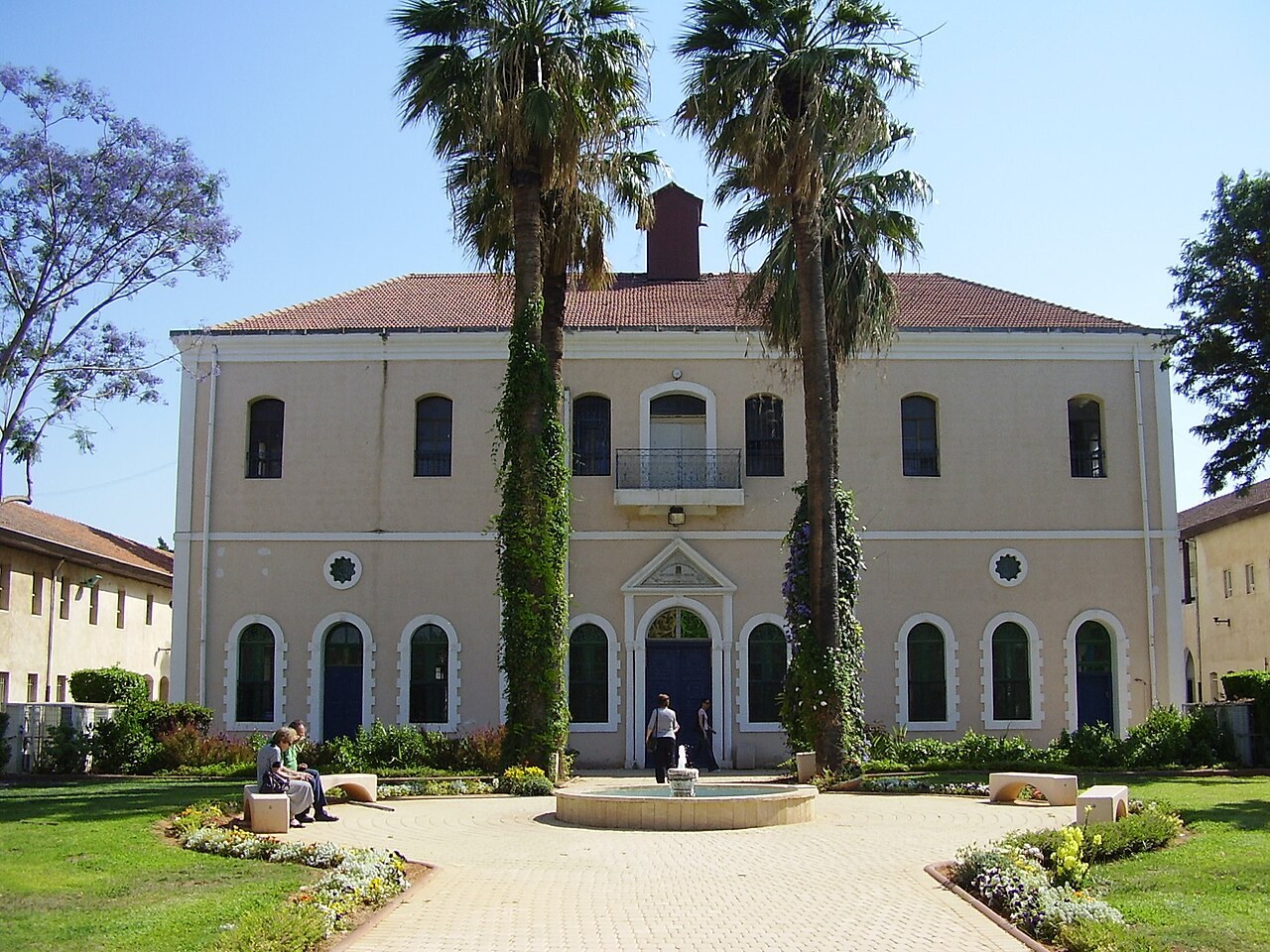
Mikveh Israel and the Legacy
For a full decade, Mikveh Israel was the only agricultural Jewish settlement in the Land of Israel. With the arrival of the First Aliyah, it became a hub for the various settlement groups. It was a source of knowledge for the new farmers, and nearby settlements were established, including Rishon LeZion, Ness Ziona, Gedera, Mazkeret Batya, and Rehovot. In 1909, the city of Tel Aviv was founded north of the school.
Karl saw the school as his family and the students as his sons. In 1873, Karl fell from a horse and was seriously injured. On his doctors' advice, he traveled to Europe for rehabilitation and was forced to step down as head of the school. On August 30, 1882, Netter came to Mikveh Israel for the last time. He met with the Biluim, the first Jewish workers' group in the Land of Israel, and supported them. Two days later, he took ill with the chronic liver disease from which he suffered. Karl Netter died on September 20, 1882, and was buried on the grounds of Mikveh Israel, near the institution's entrance gate. In 1898, not far from Karl Netter's grave, the director Neigo hosted Herzl on the eve of his famous meeting with Kaiser Wilhelm. The famous photograph of that meeting was taken there. Historic meetings with the leading figures of the land, as well as with people such as Bialik and Ahad Ha'am, were also held there. Berl Katznelson wrote: "Netter was not fortunate enough, nor were we, to have a loving biographer who would reveal to us the turns of his soul: how the dream took shape in his heart, how he fulfilled it step by step, and what his soul received in return during his life - the consolations of hope or the bitterness of despair. Who knows whether anyone in his circle cared about this, whether anyone understood his spirit. All that remains to us is the fact itself, the riddle of a legend: a new Jew, a stranger and a distant figure, who returned from far away to the land of his fathers to establish a foothold there for the future redemption of the people. We also have the name of the enterprise, which carries a double meaning. Mikveh Israel: the hope of Israel, the gathering of the people, and the people's hope."
David Ben-Gurion recognized the immense importance of Mikveh Israel and said: "Had Mikveh Israel not been established, it is doubtful whether the State of Israel would have come into being... Everything began there, and we merely came to complete the work politically and nationally."
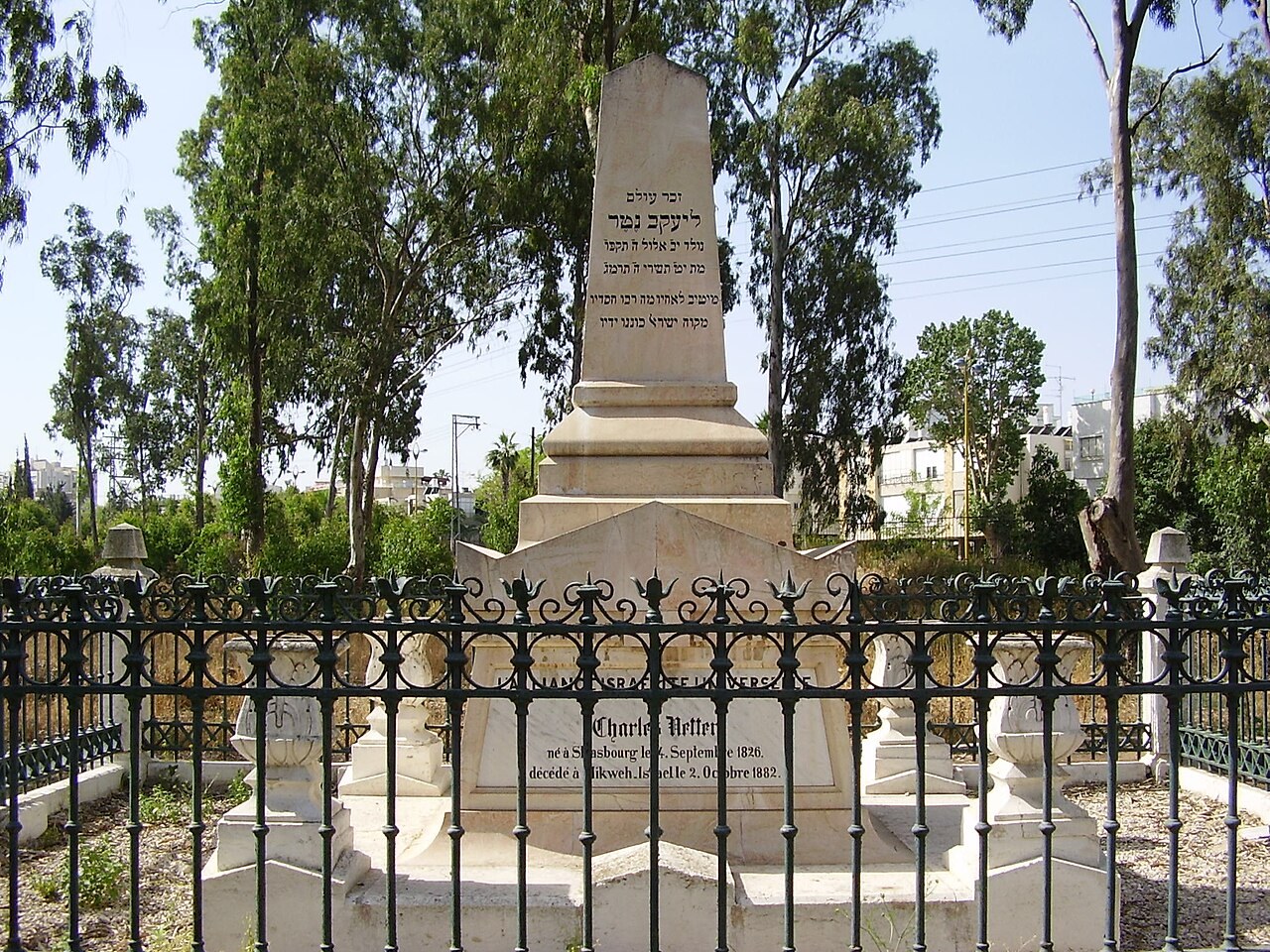
Karl Netter was among the founders and members of the first lodge of the Freemasons established in the Land of Israel. The moshav of Kfar Netter in the Sharon region was founded in 1939 by graduates of the school and named after its founder.
The Bengal fig planted by Netter has passed the age of 100, and thousands of students at the agricultural school have rested in its shade. The enormous tree spreads over more than a dunam and gives the impression of a small forest, though in fact it consists of a single thick trunk, with everything else made up of aerial roots.

תגובות
עדיין אין תגובות.