
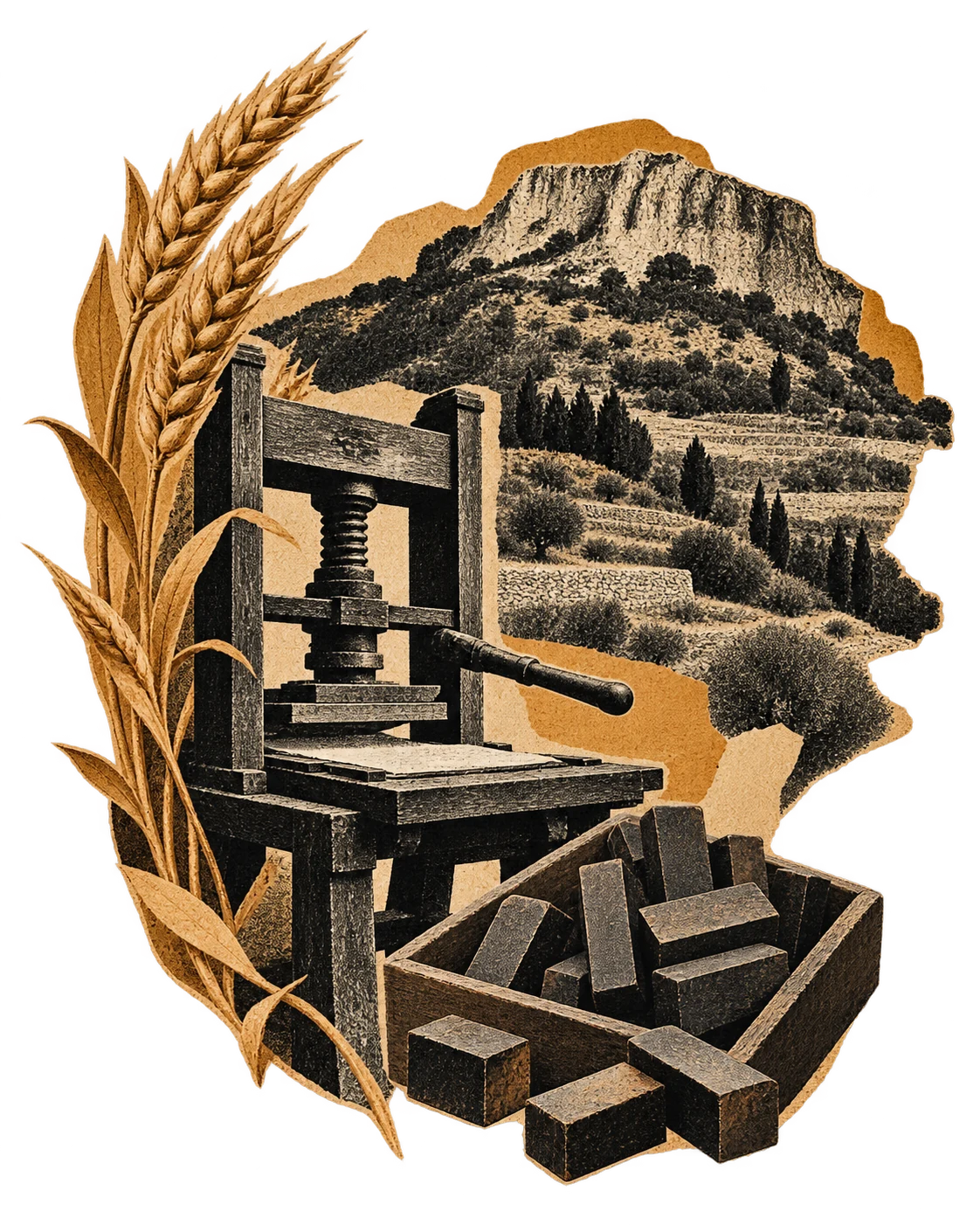
Who were the people of the “First Aliyah,” really, and what was the “first agricultural settlement”? Now we’ll find out...
The Beginnings of Settlement in the Galilee
We are accustomed to calling the Jewish immigration to the Land of Israel between 1882 and 1903 the “First Aliyah,” but was it really the first? It was preceded by the “Aliyah of the Perushim,” the disciples of the Vilna Gaon, who arrived in several waves, the first of them as early as 1772, led by Rabbi Azriel of Shklov. But they weren’t the first either. Before them came the “Aliyah of the Hasidim,” or the “Aliyah of the disciples of the Baal Shem Tov,” who reached the Land of Israel as early as 1747. Perhaps they are the ones who truly deserve the title “First Aliyah.” It is worth mentioning that the Baal Shem Tov himself had tried to immigrate to the Land of Israel 14 years earlier, but without success.
A family of Ruzhin Hasidim became part of the new Hasidic community, bringing with them to the Land of Israel a commitment to earning a living through hard work, cultivating the land, and expanding Jewish settlement in the country. The head of the family was Rabbi Yisrael Bak, the hero of our story. His family produced a succession of pioneers, some of whom even had streets named after them around the country.
All of this took place before that “First Aliyah”...
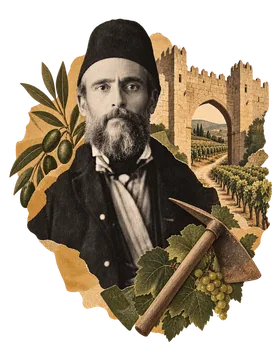
Petah Tikva was founded in 1878, the year 5638 (as the song says...). A few weeks earlier, the settlement of “Gei Oni” had been established on land that would later become Rosh Pina. The land had been purchased in 1875 by Eliezer Rokach, Yisrael Bak’s grandson. Before that came Mikveh Israel, founded in 1870 south of Jaffa by Karl Netter, and before it the settlement of Motza, on the outskirts of Jerusalem, whose land had been purchased as early as 1860. But without a doubt, the title of “first agricultural settlement” belongs to the settlement on Mount Meron, on land belonging to the village of Jarmak. Established by Rabbi Yisrael Bak in 1834 (today, Hurvat Bak), it came half a century before Petah Tikva. Thus Rabbi Yisrael Bak both belonged to the real First Aliyah and established the first agricultural settlement.
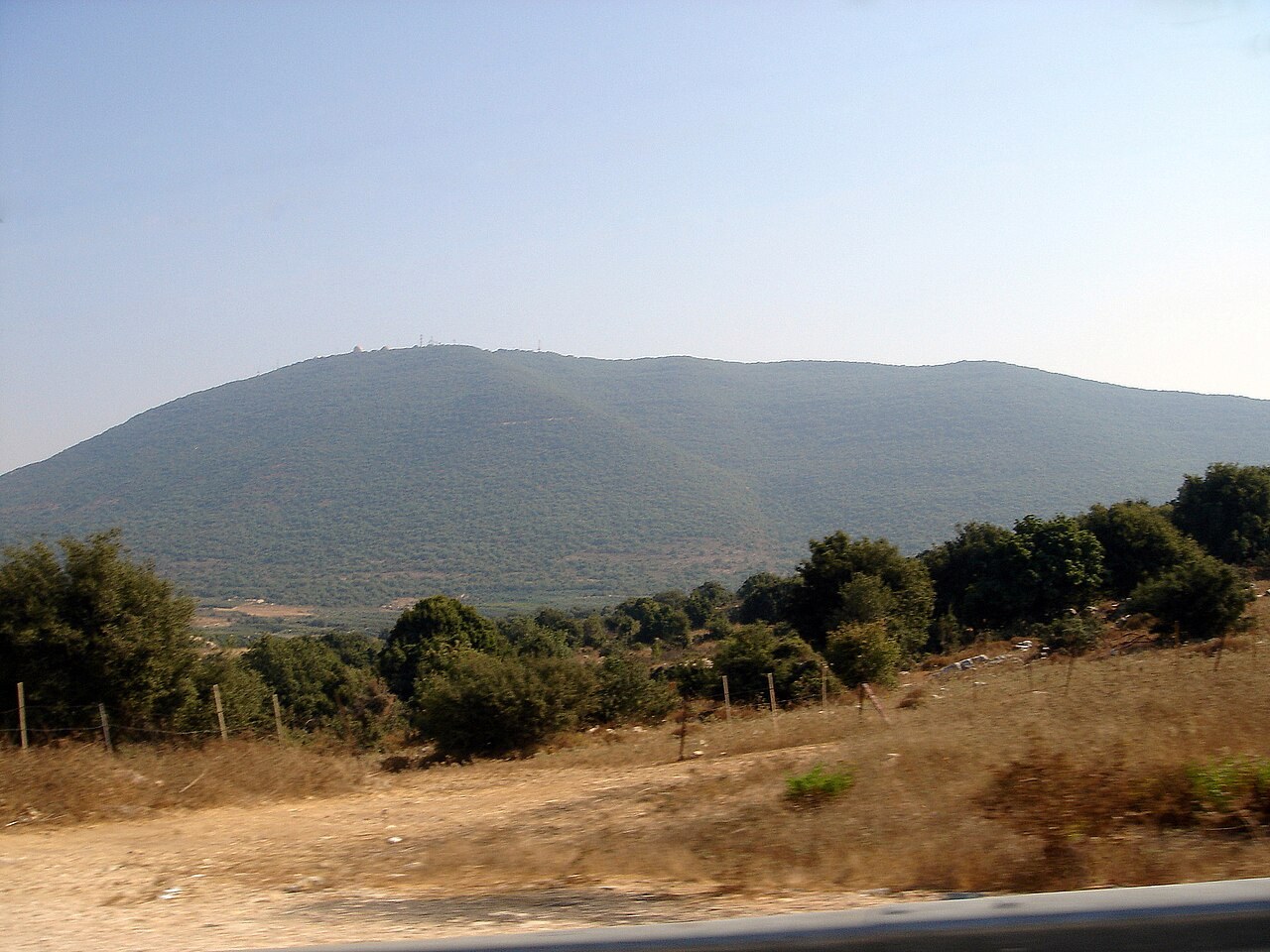
This was only the starting point for the work of Yisrael Bak and his family; there is not enough space here to describe all they contributed to the Jewish settlement of the Land of Israel. But first, we need to understand the terms Hasidim and Perushim.
Hasidim and Perushim
Hasidism is the movement founded in the 18th century by the Baal Shem Tov (Rabbi Yisrael, the Master of the Good Name), in the region of present-day Ukraine. Its most prominent feature is the bond between believers and the Rebbe, the head of the Hasidic court. Since most members of the community were not Torah scholars but hardworking people who struggled to make ends meet, they consulted the Rebbe about everything, as he was the only person in the community well versed in the intricacies of Jewish law. This led to the establishment of a number of courts across Europe, each with its own Rebbe, rules, and customs. Their most prominent features are their distinctive clothing and their emphasis on the spiritual experience that permeates their religion and prayers, which are performed with great joy, accompanied by singing and dancing.
On the other side were the Perushim (or “Mitnagdim”), led by the leader of Lithuanian Jewry, the “Vilna Gaon.” They saw Hasidism as a departure from the traditional path of Torah study and meticulous observance of all the commandments. They opposed Hasidic mysticism, the study of Kabbalah, and the veneration of the Rebbe. Today, Hasidim and Perushim (or Litvaks) live primarily in the Haredi world. Although significant differences remain, they cooperate in many areas.
Yisrael Bak: From Berdychiv to Safed
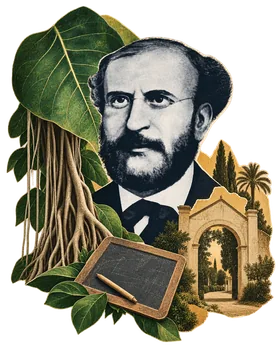
Rabbi Yisrael Bak was born in 1797 in Berdychiv, Ukraine (then part of Russia), to Rabbi Avraham Bak, a bookseller. Some say the name Bak (an acronym for “children of holy ones”) was given to the family after one of its ancestors died sanctifying God’s name. Another tradition says that his father, Avraham, was the Torah reader at the synagogue of Rabbi Levi Yitzhak of Berdychiv, and that this is where the name came from. Yisrael was a gifted young man with a talent for many fields. He excelled at painting, design, carving, and clockmaking, and at the age of 19 he established a printing press in Berdychiv. His great dream was to immigrate to the Land of Israel. To raise the money he needed to make the journey with his son Nisan and his five daughters, he spent eight months working on a clock commissioned by a wealthy Pole, intended for the top of the Catholic church tower in Berdychiv.
In 1831, Rabbi Yisrael Bak finally realized his dream and immigrated to the Land of Israel with his family, his assistant Leibtsi Gisser (a type founder), and several printing presses, settling in Safed. At the time, people immigrated to the Land of Israel to study Torah, and their livelihoods came from charity. The fact that the Hasid from Berdychiv wanted to earn his living through work was therefore highly unusual. Establishing a printing press was also a novelty: the last time Safed had had a printing press was 245 years earlier. Among the Perushim, only a few earned a living through their own labor. They included Rabbi Avraham Shlomo Zalman, who worked as a silversmith, and Rabbi Shlomo Rosenthal, who changed his name to Pah, an acronym for “engraving of a seal,” meaning a silversmith.
Yisrael Bak’s printing press was no small business. It had four printing machines and employed about thirty Jewish workers who had chosen to make a living through their own labor rather than from halukka funds. In this way, he was not only a pioneer of Hebrew printing but also a pioneer of Jewish labor.
A few years after he settled in Safed, Muhammad Ali, the ruler of Egypt, conquered the country from the Ottoman Empire and imposed conscription into his army. This sparked a wave of rebellions that peaked in 1834 and became known as the “Peasants’ Revolt.” During the revolt, the rebels attacked the Jewish population of the country, murdering, robbing, and raping. Rabbi Yisrael Bak wrote: “They went up the mountain from the holy city of Safed, may it be rebuilt and established, and from the villages, and laid hands on the spoils, plundering all the Jews, abusing them and destroying their homes. They beat the Jews, killing and maiming them; some were blinded or crippled, and several people died, may God protect us. We were left lying in the streets... and nothing remained to us but our bodies. They destroyed my house and the printing press, and nothing was left. They even took his books out into the street and burned them, and cast bullets from the lead type.” Yisrael Bak was beaten in the riots and left with a disability in his left leg. That same year, his wife Beila, the mother of his six children, died. After her death, he married Reiza, with whom he had two more daughters.
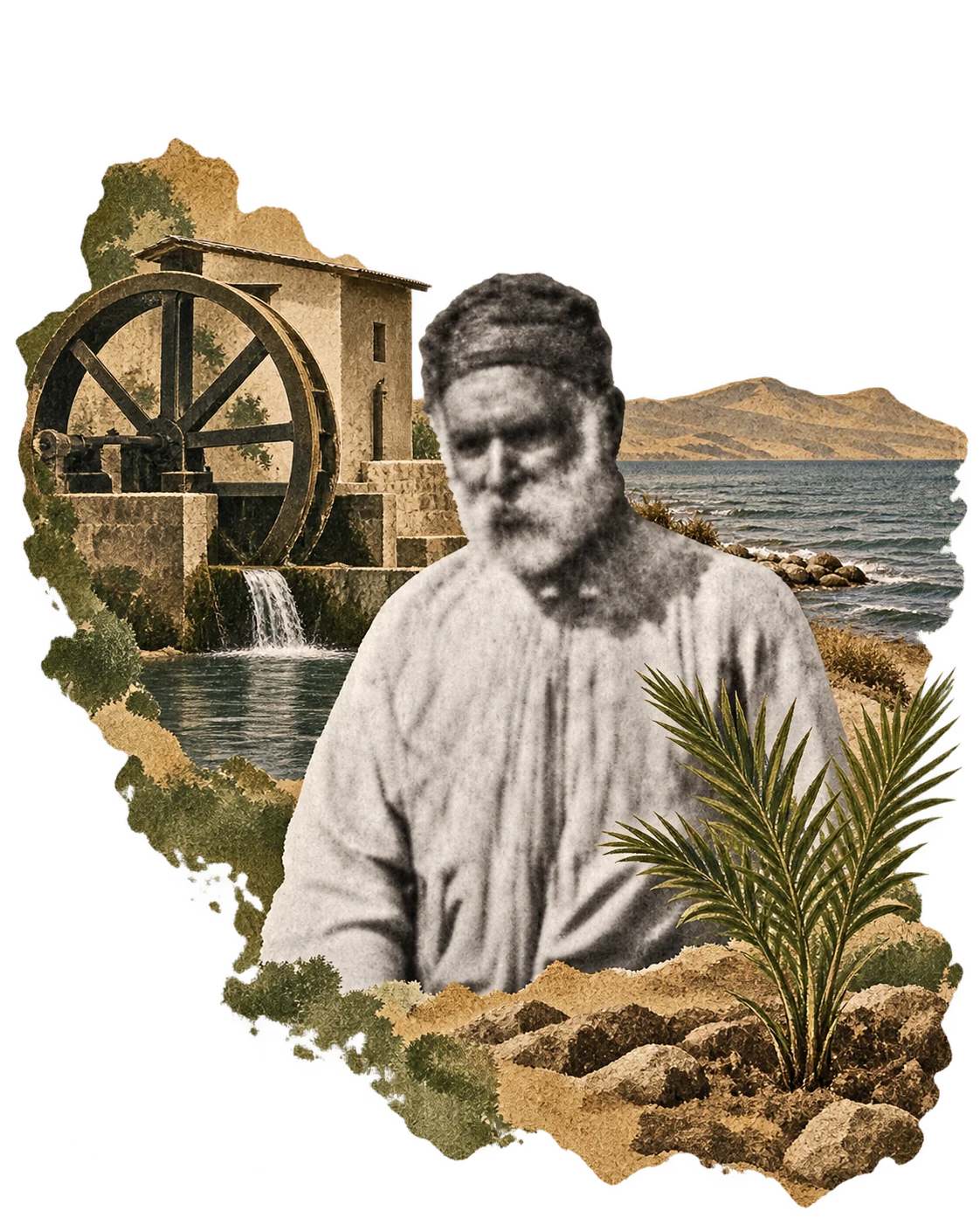
Rabbi Yisrael also sometimes served as a doctor. He was one of the few people in the Galilee who took it upon himself to treat both Jewish and non-Jewish patients. After Ibrahim Pasha, the Egyptian ruler, put down the revolt in Safed and elsewhere, the governor of Acre fell ill with a fever. At the Pasha’s request, Rabbi Yisrael treated the governor. In gratitude and appreciation, Ibrahim gave Rabbi Yisrael the title Hakham Bashi (the Pasha’s doctor), and sent an order through him to the governor of Safed to grant the doctor all his requests. He was also given land on Mount Meron, where he built the first Jewish agricultural settlement in the Land of Israel.
From the Farm to Jerusalem
Thus Rabbi Yisrael Bak established the first agricultural farm in the country, founded in 1834 and managed by his son Nisan. Two years after the farm was established, a devastating earthquake struck the area, destroying Safed and killing many hundreds of members of the Jewish community in the Galilee. The printing press was also destroyed. “The city had not yet recovered from this terrible blow [the Peasants’ Revolt] when the earthquake came in the year 5597, claiming thousands of Jewish lives in Safed,” Rabbi Yisrael Bak wrote. After the earthquake, Rabbi Yisrael moved to the farm. He remembered those days as a blessed time of fulfillment: “I built houses there to live in, made gardens for myself, and sowed fields; that very year, I ate my fill of the produce of the land. In the second year I had cattle and sheep, six sheep and six goats, horses and donkeys, and, with God’s help, I also observed the Sabbath in all its details and particulars. I fulfilled all the commandments that apply to the Land in an exemplary manner, my home was open to all, and the blessing of God rested on all my work, at home and in the field.” At the time, it was unusual for a Hasid to engage in farming, and his name became known around the world. People saw him as a true harbinger, proving that it was possible to live in the Land of Israel without money from donations.
This undertaking impressed Moses Montefiore, who at the time was the greatest supporter of Jewish settlement in the Land of Israel. Five years after the farm was established, Montefiore visited and had the honor of serving as sandek at the circumcision of Nisan Bak’s son Shmuel. Montefiore’s wife, Judith, described the visit in her diary: “We came to the home of Rabbi Yisrael, and his household, his descendants and their descendants, three generations, came out to greet us and bless us.” The initiative lasted six years. When the Egyptians withdrew from the country and the Ottomans returned, the farm was left undefended, and Yisrael and his extended family were forced to leave. Today the place is called Hurvat Bak.
After abandoning the farm, the Bak family moved to Jerusalem. Rabbi Yisrael was already tired and had suffered many disappointments, but a small flame still burned within him. After Montefiore sent him a printing press from England (today, it is at Reichman University), Yisrael Bak established a printing press in Jerusalem in 1840. It was the first Hebrew printing press in Jerusalem, and Bak named it “The Gift of Moses and Judith.” Two years after it was established, the German convert to Christianity Ferdinand Christian Ewald, a missionary in North Africa and Jerusalem, visited it. He wrote: “I paid a brief visit to Rabbi Yisrael, whom I had already visited several times before. He belongs to the Hasidic community, and there is a small synagogue in his home where members of the community gather for prayer. Rabbi Yisrael is an exceptionally warmhearted man. He recently established a printing press, with two printing machines and eighteen employees. The most remarkable thing is that almost everything connected with the enterprise is made here, under the guidance of Yisrael Bak. He casts the printing matrices himself, and although his enterprise is still in its infancy, he has already printed several books in Hebrew... An interesting fact is that a prayer for the gracious Queen of England was included in a prayer book recently printed at Rabbi Yisrael Bak’s press in Jerusalem.”
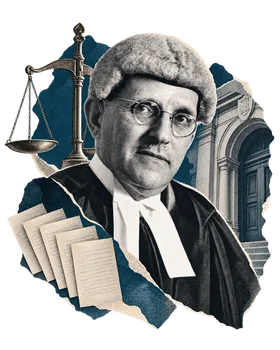
In 1863, two newspapers were launched: HaLevanon, published by the Perushim, and HaHavatzelet, published by the Hasidim. HaHavatzelet was printed at Rabbi Yisrael Bak’s press, and he was one of its initiators and founders. It was the first Hebrew newspaper in the Land of Israel. Its first issue appeared in 1863, but after five issues the authorities stopped its publication. Printing resumed in 1870 and continued without interruption until 1911. The editor was Dov Frumkin, Yisrael Bak’s son-in-law (and the father of Gad Frumkin, the first Supreme Court judge in the Land of Israel during the British Mandate). The newspaper aimed to encourage immigration and settlement in the Land of Israel. It focused mainly on Jerusalem and the Jewish community, publishing, for example, Joshua Yellin’s travel stories and articles by Rabbi Yehuda Alkalai supporting the commandment to settle the Land of Israel... Its contributors included Avraham Luncz and Shlomo Buber. In 1882, Eliezer Ben-Yehuda became its acting editor, and the newspaper thus helped establish the Hebrew language. Under Ben-Yehuda’s direction, the newspaper campaigned against the Alliance Israélite Universelle and Baron Rothschild’s officials, who, in Ben-Yehuda’s view, were holding back the development of the country and failing to encourage Jews to work independently. A year later, Elazar Rokach (Yisrael Bak’s grandson, the son of Miriam), Naftali Herz Imber (author of “Hatikvah”), Avraham Orenstein, David Yellin, Rabbi Yehiel Michel Pines (one of the founders of Motza), and Yosef Rivlin (from the family of former president Reuven Rivlin) also joined the writing staff. The printing press operated on HaDegel Street in Jerusalem’s Muslim Quarter, in a place known as “the HaHavatzelet courtyard.” Eliezer Ben-Yehuda lived there for a time. The courtyard was rented from Haj Amin al-Husseini, the enemy of the Jews and leader of the rioters.
Rabbi Yisrael Bak had good connections not only in the Land of Israel but also in Turkey. In 1854, during the Crimean War between Russia and Turkey, the Rebbe of Ruzhishche visited Jerusalem. On his return to Russia, he was afraid to cross Turkey with a Russian passport, so he obtained a Turkish passport in Jerusalem. When he passed through Constantinople, the Russian passport was also found on him, and he was suspected of being a Russian spy and arrested. Yisrael Bak turned to his friend Ibrahim Pasha of Jerusalem, who worked to secure the Russian rabbi’s release. On that occasion, Yisrael Bak made connections with the head of the viziers in Turkey (the prime minister) and was appointed his political adviser. He influenced political decisions, including the selection of the prince of Wallachia, a principality under Turkish rule. On returning to the Land of Israel, he was appointed consul of Wallachia in the country.
Rabbi Yisrael Bak died in Jerusalem on the eve of the first day of the month of Kislev in 1874, at the age of 77. His tombstone reads: “Here lies the elderly rabbi, a Hasid and a humble man, our teacher Yisrael Bak, printer.”
Nisan Bak and Those Who Followed
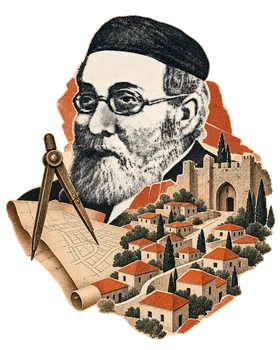
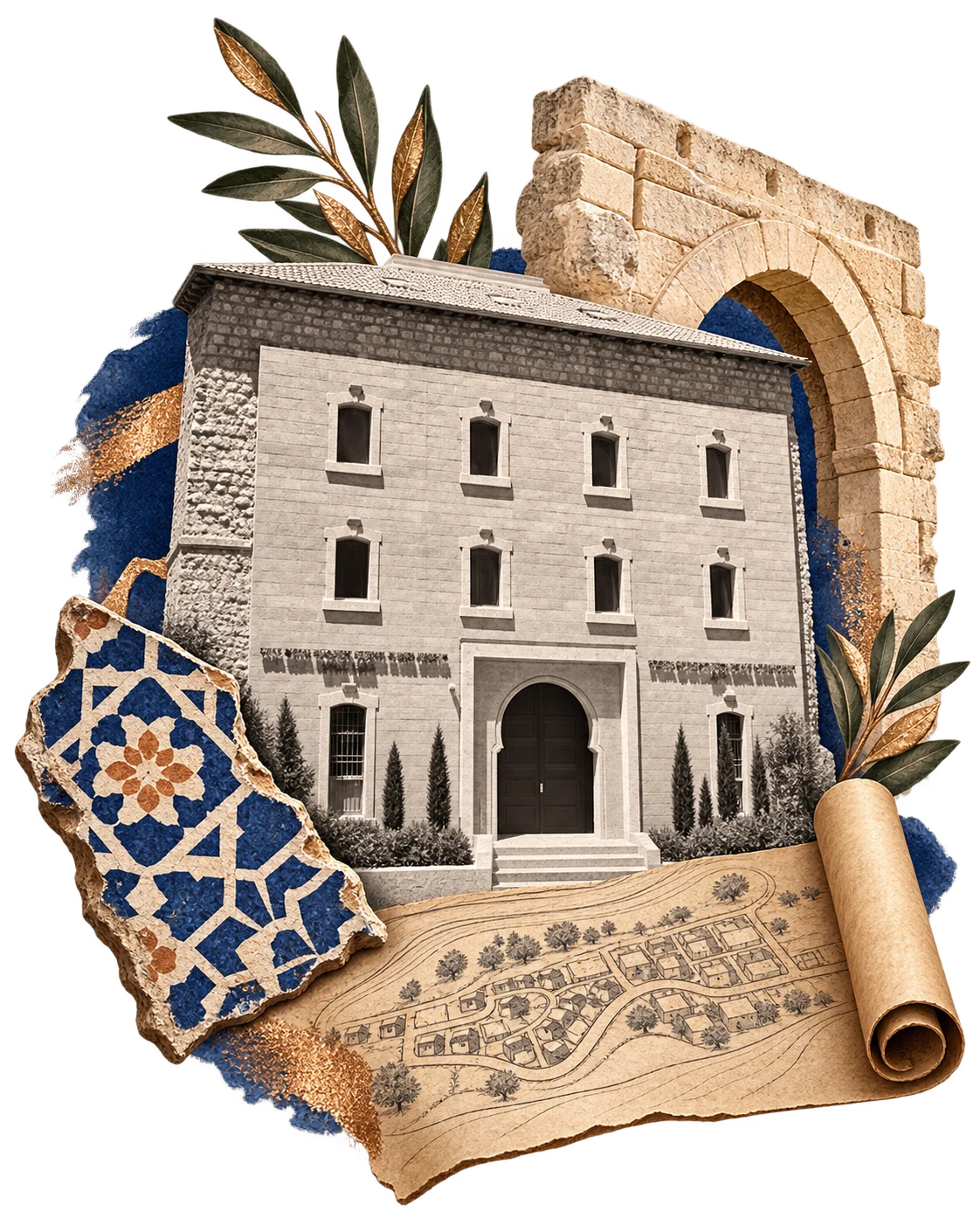
His son Nisan took up the mantle of pioneering. In 1843, he learned that the Russian tsar, Nicholas, was negotiating to buy a huge plot of land west of the Western Wall to build a Christian compound. Fearing that the compound would block access from the Jewish Quarter to the Western Wall, Nisan sent an urgent letter to Rabbi Yisrael Friedman of Ruzhin. In response, the rabbi sent Nisan a vast sum of money to buy the plot. The Russian tsar was furious and declared, “Once again, the Jew Yisrael Friedman has defeated me” (the first time was when the rabbi escaped from Russia before Tsar Nicholas could arrest him). Instead of buying that plot, the Russians bought land outside the walls of the Old City, known as the Russian Compound. Nisan Bak planned to build a synagogue on the plot he had bought for the Hasidic community, and construction began in 1857. In 1869, three years before construction was completed, the Austro-Hungarian emperor Franz Joseph visited the synagogue while in Jerusalem on his way to the opening ceremony of the Suez Canal. He asked why the synagogue had no roof, and Nisan replied, “Because the building, too, has taken off its hat in your honor.” The emperor understood the hint and donated the money to complete the roof. Construction was completed only after 15 years spent on bureaucratic battles to obtain building permits and raise funds. Nisan Bak was the synagogue’s architect, and he recruited none other than Martin Ivanovich Eppinger, the architect of the Russian Compound, to assist him. The synagogue was strikingly beautiful and stood opposite the Perushi synagogue, the Hurva. It was named Tiferet Yisrael after Rabbi Yisrael of Ruzhin, who had since passed away, but everyone called it the Nisan Bak Synagogue. Nisan served as its chief gabbai until his death.
Nisan Bak had other pioneering initiatives, including establishing a neighborhood outside the walls. The first two neighborhoods outside the walls (and there is disagreement about which came first) were Mishkenot Sha’ananim, established by Moses Montefiore, and the Maghrebi neighborhood of Machane Israel. The third and most important neighborhood, led by the Perushim, was Nahalat Shiva. Buoyed by their success, the Perushim established a series of other neighborhoods: Beit David, Mea She’arim, and Even Yisrael, all along Jaffa Road. In 1875, Nisan Bak broke that run by establishing the first Hasidic neighborhood, opposite the Damascus Gate, and named it “The Homes of Moses and Judith,” hoping that Montefiore would quickly contribute funds. When the money did not arrive, the neighborhood was renamed Kiryah Ne’emanah. It became a magnet for a number of new neighborhoods around it, housing immigrants from Georgia, Kurdistan, Aleppo, and elsewhere. But everyone called all these neighborhoods “Nisan Bak’s Homes,” because everyone remembered his earlier kindness.
Nisan Bak also helped found the Ezrat Nidahim society, established to address the difficulties faced by Yemenite immigrants who arrived as part of the “E'eleh BeTamar” immigration. The society was founded by Nisan’s brother-in-law (and Yisrael’s son-in-law), Yisrael Dov Frumkin. It established the Yemenite village known as Kfar Hashiloah,
Nisan Bak died in Jerusalem in 1889 at the age of 74 and was buried on the Mount of Olives.
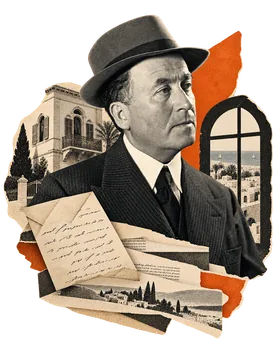
Another branch of the family inherited Rabbi Yisrael Bak’s pioneering spirit through his daughter Miriam, who married Yitzhak Rokach. They had three sons: Shimon, Eliezer, and Yaakov Shalom. Yitzhak, the father, held the Ottoman government concession for the road tax. He was responsible for managing the collection of the dal al-karusa tax (the carriage tax), levied on passengers traveling by carriage between Jerusalem and Jaffa. The tax was collected at the Sha’ar HaGai khan.
Their son Shimon Rokach, also known as HaShar, carried on the family tradition of pioneering and was one of the founders of Neve Tzedek, the first Jewish neighborhood outside Jaffa. Founded in 1887, it is considered by some to be the mother of the first Hebrew city, Tel Aviv. Shimon Rokach also worked to redeem land and plant citrus trees. In 1905, he helped purchase and plant the Behariya orchard on the banks of the Yarkon, the largest orchard planted by Jews before World War I.
Shimon and his wife Rachel had five children: Yosef, Hannah, Yitzhak, Yisrael, and Miriam. Their son Yisrael Rokach later became mayor of Tel Aviv (Rokach Boulevard in the city is named after him). Their son Yitzhak later managed the Pardes Association, founded the Jaffa Orange Syndicate, and was a member of the Farmers’ Federation. Their daughter Hannah married Dr. Leon Magero. Hannah and Leon’s daughter Leah is a sculptor and painter, and through her I learned about the family story.
Shimon’s brother Eliezer Rokach, like his father, opposed the halukka funds on which members of the Old Yishuv depended, and advocated a life of work, especially agricultural labor. He wanted to follow in the footsteps of his grandfather Yisrael Bak and initiated the purchase of land in the village of Ja’uneh in 1875. Three years later, 17 families settled there and named the community Gei Oni. The settlement did not last, and most of its residents left. Eliezer Rokach went to Romania and Russia and succeeded in bringing Jewish settlers from Romania to Gei Oni. They reestablished the settlement and named it Rosh Pina. During his travels in Europe on behalf of the Jewish community, he met Shmuel Yosef Czaczkes (later known as S. Y. Agnon) in Buchach, Ukraine, and appointed him his secretary.
תגובות
עדיין אין תגובות.