

It was the first judicial appointments scandal in the Land of Israel. Suspicions and rumors swirled around it, and the legal community split between supporters of the justice minister and his opponents. Only 65 years after the affair erupted, five pages came to light that revealed the truth. Today we look back on this affair and wistfully yearn for such a level of morality. This was the affair of
Family, Studies and Zionist Activity
Gad Frumkin was born in 1887 in Jerusalem. His father was Israel Dov Frumkin, owner of the newspaper Havatzelet. Frumkin senior was a Chabad Hasid who immigrated to the Land of Israel from Russia at the age of 9, and at 15 married the daughter of Rabbi Israel Bak. After she died, he married Bilka (Bilhah), sister of Ephraim Cohen-Reiss, head of the Lemel School. They had four children, including Gad. Israel Dov Frumkin inherited Havatzelet from his father-in-law, Israel Bak, who had founded it in 1863. The newspaper was published until 1911.
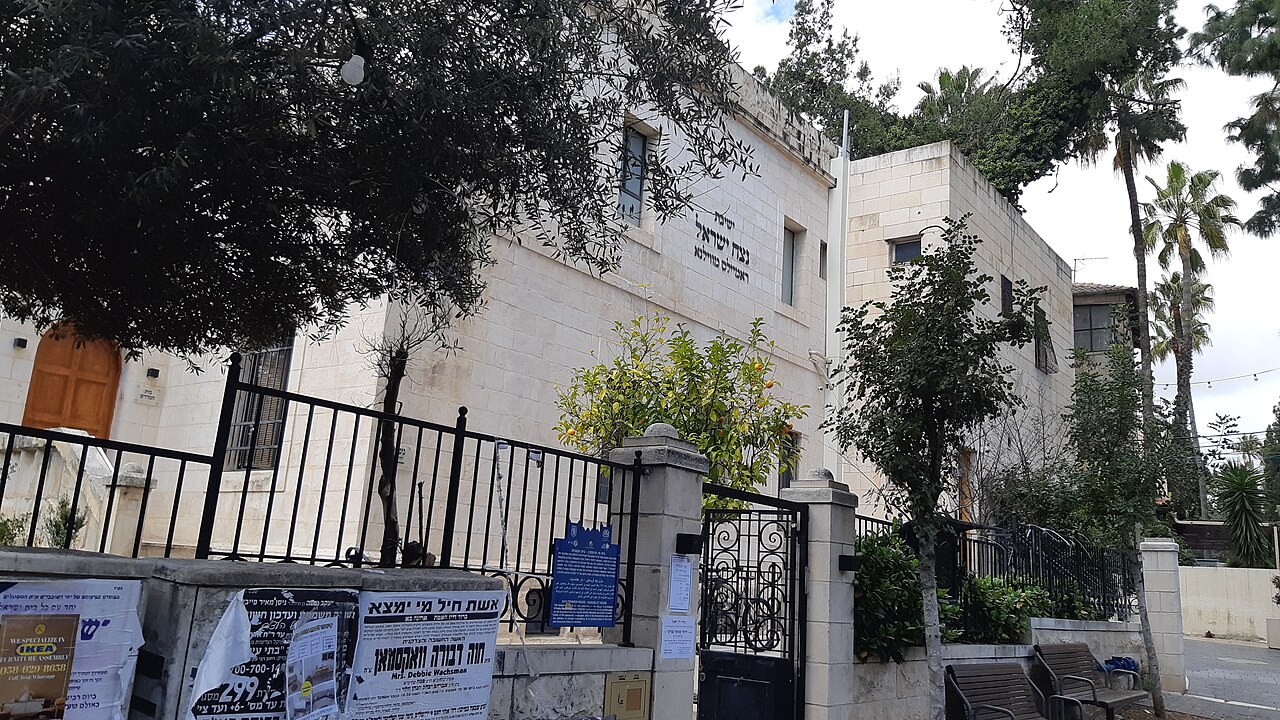
Gad grew up in the Jewish Quarter and studied with private tutors. He was expected to inherit the newspaper, but he aspired to something else. In 1908 he went to study law at the University of Constantinople, the university of the Turkish Empire, which ruled the Land of Israel at the time. In Constantinople he formed connections with medical students who would later become known as the Young Turks, who deposed the tyrant Sultan Abdul Hamid II and seized power. After the revolution, Gad aspired to be elected to the Turkish parliament.
At that time, Gad's father-in-law, Aharon Eisenberg, one of the founders of Rehovot, aspired to establish a Zionist company to promote Jewish settlement in the Land of Israel. He turned to Gad, who was well versed in Turkish law, and appointed him as his representative. Gad registered the Neta'im Association, the first settlement association to be legally registered with the Ottoman authorities. The association established three planting centers: the Hefzibah Farm south of Hadera, the Ataa Farm near Rehovot, and a planting center at the Sejera Farm (today's Ilaniya). With his friends David Ben-Gurion, Yitzhak Ben-Zvi, Moshe Sharett, David Remez, Israel Shochat, and Mania Shochat, he established the Ottoman Hebrew Students Association in Constantinople. Gad himself headed the organization, and Ben-Gurion served as its secretary. When World War I broke out, Gad Frumkin returned to the Land of Israel and became one of the three leading Jewish lawyers in the country.
As Dov's son and Aharon Eisenberg's son-in-law, he had many connections and began receiving the "big cases." The Turks called him "the Treasury's lawyer in the Jerusalem District Government." His standing is reflected in the words of Norman Bentwich, the legal adviser to the British Mandate: "The only qualified Jewish advocate in the city" - "the only high-caliber Jewish lawyer in the city."
A Judge on the Mandate Supreme Court
By 1918, the British were already ruling the country, and at the request of Jewish representatives, they agreed to appoint a Jewish judge to the British judicial system. Chaim Weizmann approached Gad Frumkin and offered him a judgeship. Frumkin accepted after Weizmann clearly promised that the Zionist Organization would cover the difference in salary (then, as today, there was a large gap between a judge's salary and that of a self-employed lawyer). And so, in June 1918, at the age of 31, Gad Frumkin was appointed a judge at the Jerusalem Magistrate's Court. In September 1920, he was appointed to the Mandate Supreme Court, despite never having served as a district court judge.
The British valued his work, and in 1941 King George VI awarded him an honorary title. Five years later, he was appointed a judge on the Supreme Court.
With the establishment of the state, it seemed only natural that Gad Frumkin would be appointed to the Israeli Supreme Court. But he was not among the five judges selected for the newly formed Supreme Court. The person behind his exclusion was Pinhas Rosen (Felix Rosenbluth), the first justice minister.
On June 25, 1948, Rosenbluth circulated a document among the cabinet ministers listing the candidates for appointment and adding: "I do not wish to propose Mr. Gad Frumkin, formerly a judge of the Supreme Court under the Mandate government." The reason was "rumors and gossip" about his ethical conduct. This decision not to recommend him became the first judicial appointments scandal in the Land of Israel.
Over the years, various explanations were offered for Rosen's opposition. Some argued that Rosen's motive was a desire to promote his law firm partner, Moshe Zmora, who became the first president of the Supreme Court. Others claimed that since Gad was not identified with any political party, no one worked to advance him. Some also argued that because Gad came from a family of the Second Aliyah, he did not suit the ambitions of Jews from Germany (to which Rosen belonged) to take control of the judicial system. There were also rumors of bribery...
The Reason for the Non-Appointment Revealed
The reason came to light only in 2013, during work on a master's degree by a law student named Aviram Shachal. Shachal discovered an unknown file in Pinhas Rosen's archive. The file contained a single unsigned document, five pages long and written in German. It was written in March 1940, about eight years before the Supreme Court appointment scandal. The document concerned a man named Dr. P., whom Shachal concluded was Frumkin (there is evidence supporting this conclusion). According to the document, Frumkin had illegally taken a loan from the estate of a Jerusalem businessman named Weinberger, whom he had known before his death.
This is what Rosen wrote after speaking with Weinberger's daughter and widow about the loan: "On that day, two or three hours after this visit, Dr. P. appeared once again at the home of the W. family in their apartment... and asked to be shown the gold dollars in the deceased's estate, which he had apparently learned about from the deceased himself. He then counted out some of those dollars for himself, without Mrs. W. or her daughter, Mrs. L.W., noting how many, since both of them trusted him completely. He wrapped the gold dollars in a towel that the family had provided for this purpose." The sum was about 900 Israeli pounds, equivalent to about 40,000 shekels in today's terms...
Gad Frumkin described the transaction as a loan at an annual interest rate of 5%, and he did not report it to the estate's administrator. It is not known whether the loan was repaid later. While serving as a judge on the British Mandate's Supreme Court, Gad Frumkin requested another loan of 3,000 pounds from the estate. At that point, the family approached Rosen and presented their claims to him.
For Pinhas Rosen, integrity mattered above all. A single piece of hearsay about an improper act was enough for him to disqualify someone. On the other hand, despite his strictness, Rosen proved to be a true gentleman. He kept the details of the affair to himself, and even when Prime Minister David Ben-Gurion intervened and appointed a "committee of inquiry into the matter of honor" to resolve the dispute between the two men, Rosen did not reveal the details. The committee ruled that no evidence of wrongdoing had been found in Frumkin's conduct, and that he had suffered unjustified moral and social harm.
The "Frumkin Committee," established in 1950 to discuss the education of immigrant children, was the swansong of his public life. His final years were marked by great distress. In 1955 he published his autobiography, A Judge's Path in Jerusalem. The last public event he attended was a party for his 70th birthday. Moshe Sharett, who offered his congratulations, wrote in his diary that "the entire occasion was tense." Frumkin died three years later, at the age of 73.
His daughter Saada was deputy attorney general and married Colin Gillon, who later became state attorney. His son Yadin served as the first commander of the Kirya Camp (Camp Yehoshua). His grandchildren are Judge Alon Gillon and Carmi Gillon, who later became head of the Shin Bet.




תגובות
עדיין אין תגובות.