
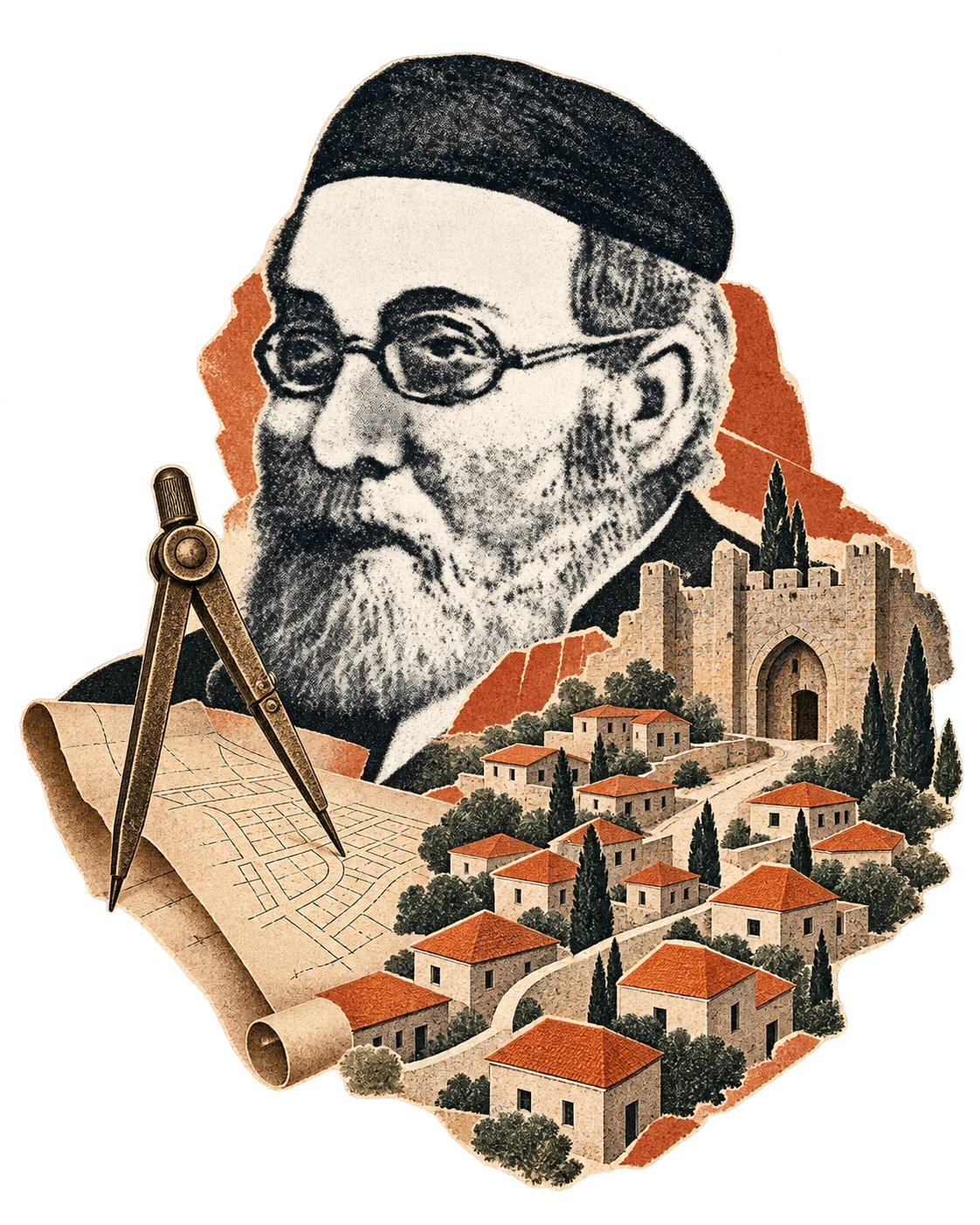
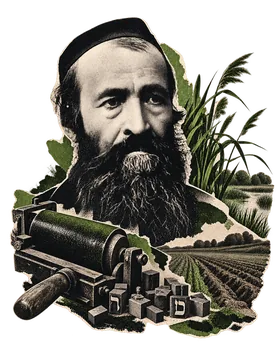
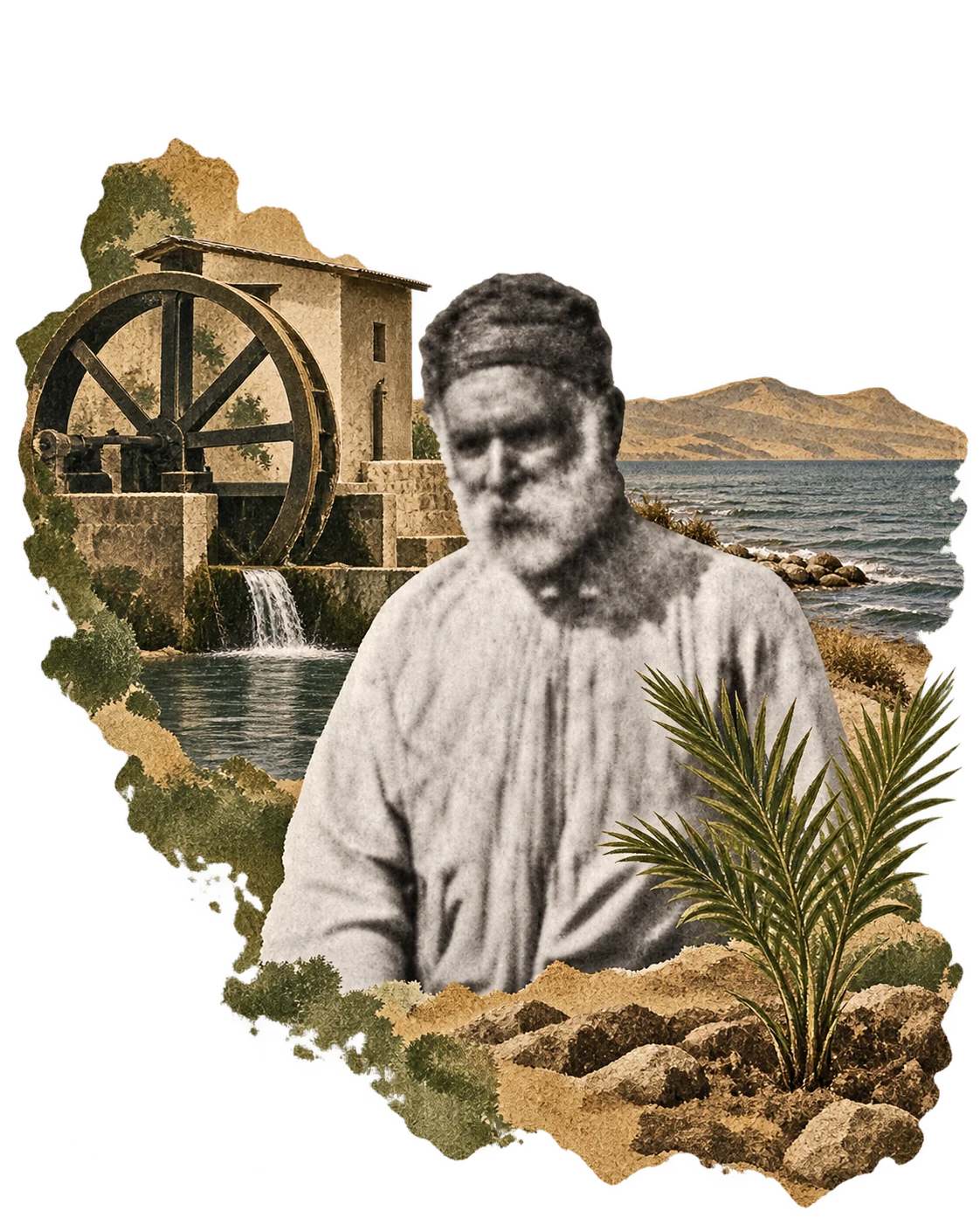
He was a devout believer in messianic redemption who led Jerusalem's Ashkenazi community, founded around 16 neighborhoods in the city and changed its face. He became known as "R' Yashe der Shtetlach-Makher" (Rabbi Yoshe, the neighborhood builder).
Yosef Rivlin
Crowded Jerusalem and the Danger Beyond the Walls
Around 1878, Zerah Barnett, one of the founders of the Mea Shearim neighborhood and of Petah Tikva, described his return to Jerusalem after a tour of the center of the country in search of land for a new settlement: "When we later returned to Jerusalem, we brought fresh joy to our families and the city's residents. Our friends and relatives rejoiced over us as if we had risen from the dead, because by the fifth day after we left, they thought we had been slaughtered by the knives of Bedouin robbers, and had asked the police to track us down. Now that we had returned, we seemed to them like people come back to new life." At the time, venturing beyond the walls meant risking robbery and murder. The idea of settling outside the walls was considered impractical. Every night, the city gates were closed and opened only at daybreak. The Jewish community lived in severe overcrowding, which led to outbreaks of chronic illnesses and infectious diseases such as cholera and trachoma, which caused blindness. In addition, there was a shortage of water and widespread poverty, and the Jews lived on funds distributed from donations by Jewish communities in the Diaspora.
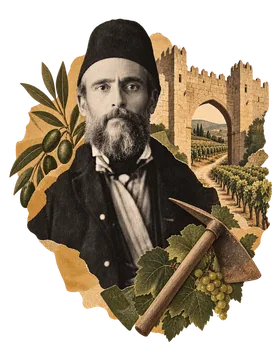
Some of the communal funds had already been allocated to members of the "Perushim aliyah," the students of the Vilna Gaon who came in several waves of immigration. The first wave arrived as early as 1772, led by Rabbi Azriel of Shklov, about 110 years before the people of the "Second Aliyah" arrived in 1882. They initially lived in Safed and later moved to Jerusalem. In 1840, Jerusalem's Perushim community invited Rabbi Moshe Rivlin of Shklov to serve as its rabbi. That year, Rabbi Moshe Rivlin set out for the Land of Israel, stopping along the way to collect donations. When he reached Constantinople, he met Moses Montefiore and discussed the state of settlement in the Land of Israel with him. Moshe Rivlin led the Perushim community and the Ashkenazi community for about five years, during which he spearheaded an initiative considered pioneering at the time. He purchased some of the land in Kfar HaShiloah, which lay outside the walls, for planting and sowing. It was rare in those days to see observant Jews engaged in agriculture.
Before the students of the Vilna Gaon arrived, Jerusalem's Jewish community numbered about 2,000 people. With their arrival, however, its population grew to about 45,000, and they became the city's majority. This was a demographic transformation without parallel since the destruction of the Second Temple.
Yosef Rivlin and the Messianic Vision
Rabbi Moshe Rivlin's pioneering spirit grew stronger over the generations and found expression in his grandson, the hero of this story, Yosef Rivlin. Yosef Rivlin is credited with founding no fewer than 16 neighborhoods in Jerusalem, making him one of the most important figures in the movement beyond the walls.
Yosef Rivlin was born in Jerusalem in 1838. From a young age, his charismatic personality and grand vision stood out. He believed that Jerusalem's boundaries should extend beyond the walls of the Old City, not only to relieve the overcrowding and poverty there, but also to create a new space where Jews could live with dignity and security. Rivlin saw building beyond the walls as part of the process of redemption, an act of settling the land and building Jerusalem. He believed that leaving the walls behind was not merely a physical necessity, but a messianic mission, a decisive stage in the "complete redemption." In his writings, filled with Kabbalistic allusions, he returned time and again to this idea, issuing an emphatic call to leave the walls and build the new Jerusalem. Many thought he was mad; others claimed that the idea had come to him from the "desert dybbuk" that had entered him and was drawing him to desolate places. At the advice of the Gaon Rabbi Meir Auerbach, they tried all sorts of charms and incantations, with the help of "experts," to drive the dybbuk out of him, but in vain...
When he became engaged to Sarah Tzipa Goldschmidt, he told her in advance that he intended to establish a neighborhood outside the walls and be the first to live there. The bride's family was horrified, since this was as dangerous as could be, but to his great delight, she herself declared that she liked the idea. Yosef Rivlin was more than a building developer, as S. Y. Agnon wrote about him in his book Only Yesterday: "Jerusalem's elders still remember Reb Yoshi Rivlin. For twenty-five years he was a faithful scribe. By day he labored on behalf of the poor, and by night he labored over the Torah, and all his life he knew no good fortune. He bent his shoulder to bear troubles and afflictions with a good heart and humble spirit, and all the money that came to Jerusalem was distributed by him. He ate no meat and drank no wine, not even on Sabbaths and holidays. He made do with black bread and black coffee, and when he left this world he did not leave his widow and orphans even enough for a single meal, but he did leave behind eleven neighborhoods that he had added to Jerusalem."
Moving to the new neighborhoods was not easy. Women refused to go out into the desolate wilderness. Some even demanded divorces from their husbands when the idea of leaving the shelter of the walls was raised with them. When a murder took place in Mea Shearim, Rivlin stood beside the victim and, rather than give in to fear, called for renewed commitment: "With God's help, this sacrifice will give us greater courage and strength in the face of Satan, and beside the murdered man's bed we will pledge ourselves to take every measure to build the houses as quickly as possible."
Nahalat Shiva and Mea Shearim
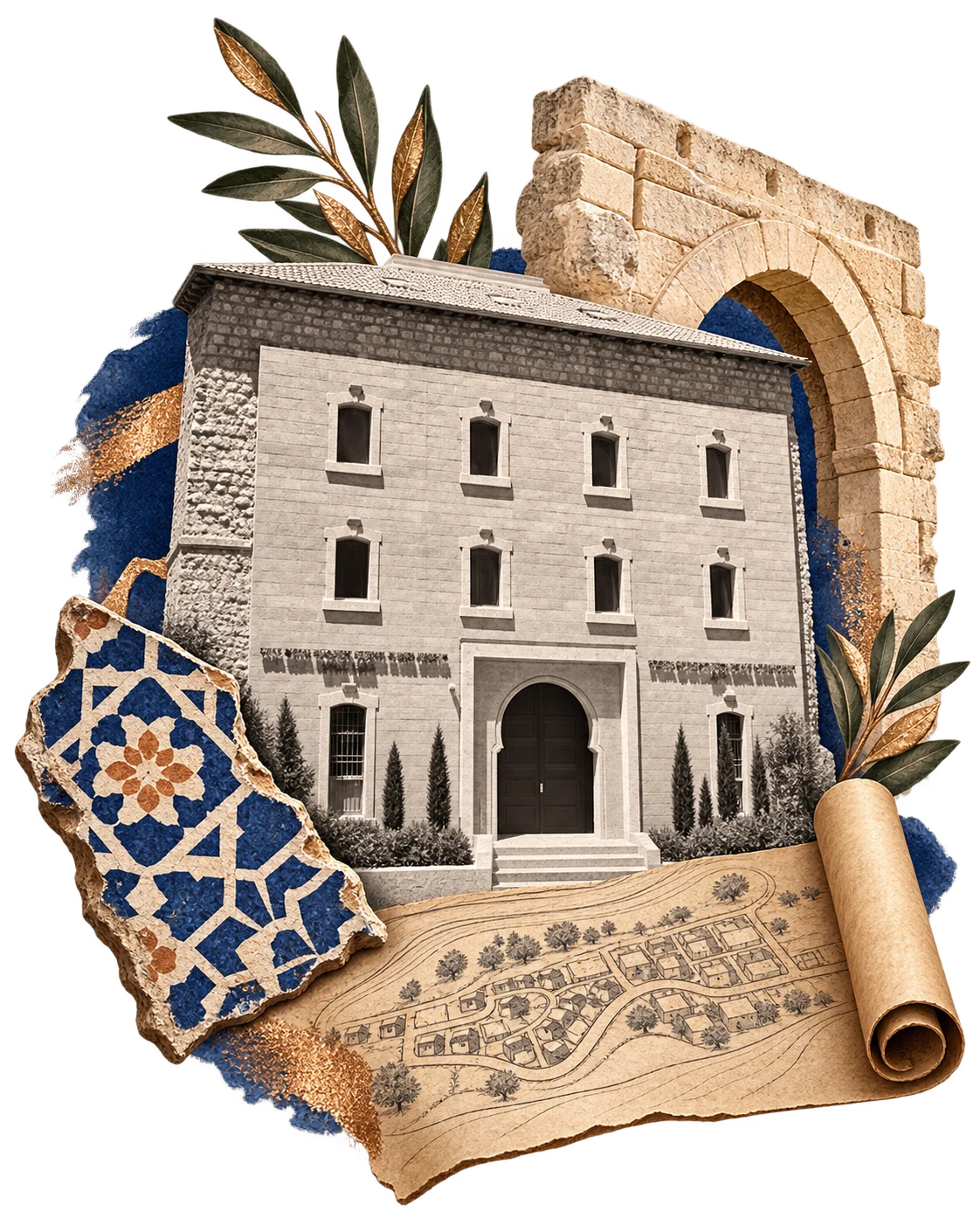
In 1869, seven young Jerusalemites, led by Rivlin, initiated the founding of Nahalat Shiva, the third neighborhood outside the walls. Unlike Mishkenot Sha'ananim and Mahane Israel, which had been established before it, Nahalat Shiva was founded solely at the initiative of members of the Old Yishuv in Jerusalem, without outside assistance. One factor that hastened the founding of a neighborhood outside the walls was an outbreak of cholera that struck the Jewish community. The founders were all religious Jews who aspired to fulfill the commandment to settle the Land of Israel and build Jerusalem. The neighborhood was named after its seven founders: Moshe Rivlin, Yoel Moshe Salomon, Yehoshua Yellin, Michal Hacohen, Binyamin Salant (son of Rabbi Shmuel Salant, Jerusalem's Ashkenazi rabbi), Chaim Halevi, and Aryeh (Leib) Horowitz.
S. Y. Agnon also described the neighborhood in his book Only Yesterday: "These seven houses have neither grandeur nor good looks, but they possess a greater virtue: they expanded Jerusalem's borders and helped strengthen the settlement. The people of Jerusalem were not accustomed to going out through the city gate and beyond, except during the intermediate days of Passover, when it was customary to walk around the city wall. Once Nahalat Shiva was built, they began going out on other days too, to visit their brothers in Nahalat Shiva."
To establish the neighborhood, Rivlin raised donations from Jews around the world, persuaded families to move to the new neighborhood, and worked tirelessly to ensure its success. Rivlin did not limit himself to building houses; he also saw to the residents' needs, establishing synagogues, ritual baths, and educational institutions, and ensuring that they all operated in the spirit of Torah and the commandments.
Michal Pines, a public figure and Zionist activist, described him admiringly: "Yosef Rivlin was a man who knew no compromise. He believed with all his heart that building Jerusalem was a great commandment, and he devoted his entire life to this goal. He did not merely build houses; he built a community, he built a people. He was a man of faith, a man of Torah, and a man of action."
When Rivlin wanted to live in the neighborhood, his family refused to join him for fear of the robbers, and he lived there alone for a long time. His family stayed with him during daylight hours and left when darkness fell. Life in the new neighborhoods was not easy. Sarah Tzipa Goldschmidt, Rabbi Yosef Rivlin's first wife, died after falling ill from the shock she suffered when an Arab attacked her in her home in Nahalat Shiva. After her death, he married Miriam, née Pizitzer, and they had two sons and two daughters. One of his sons was the cantor and cantorial instructor Shlomo Zalman Rivlin.
The fourth neighborhood outside the walls was Beit David, established in 1873 by the Jewish philanthropist David Reis. Although Yosef Rivlin was not among its founders, he played an indirect role in its establishment. One Sabbath, David Reis was a guest in Nahalat Shiva, where he heard Yosef Rivlin preach in the synagogue about the importance of expanding Jerusalem's boundaries and decided to join the effort. He placed a large sum of money in Yosef Rivlin's hands, and Rivlin bought a plot next to Nahalat Shiva, where the neighborhood was built.
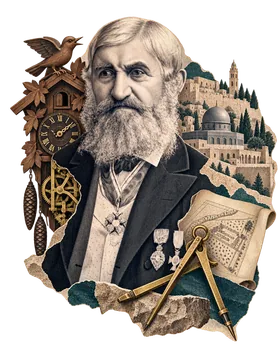
In 1874 he established Mea Shearim, the fifth neighborhood outside the walls. It was founded by the Jerusalem Builders Society, which Yosef Rivlin had established as early as 1857, when he was only twenty years old. Among the neighborhood's founders were Yosef Rivlin, Yoel Moshe Salomon, and Zerah Barnett, who already had experience from the founding of Nahalat Shiva. It is worth noting that the neighborhood was designed by Conrad Schick, a German architect and archaeologist who lived in Jerusalem. In every neighborhood he helped establish, he built his own home; when he initiated the next neighborhood, he sold his house and moved to it.
The Expansion of the Enterprise and the Legacy
Yosef Rivlin was rightly known in Yiddish as "R' Yashe der Shtetlach-Makher" (Rabbi Yoshe, the neighborhood builder). After Mea Shearim, he established Zikhron Tuvia, Even Yisrael, Mishkenot Yisrael, Mazkeret Moshe, Ohel Moshe, Knesset Yisrael, Sha'arei Tzedek, Ezrat Yisrael, and others. Rivlin is credited with 16 neighborhoods in Jerusalem, and quite a few researchers argue that it was Yosef Rivlin's work that brought about the tremendous demographic transformation that took place in Jerusalem in the nineteenth century.
Rivlin saw the walls of the Old City as "chains to be broken free of," and the building of new neighborhoods as a divine mission. He saw his undertaking not merely as a way to escape the overcrowding and shortages of the Old City, but as a "necessary step toward hastening the redemption." This was expressed in the dozens of liturgical poems and songs he composed, interwoven with Kabbalistic allusions and quotations from the holy scriptures. He wrote: "We have sat long enough in the courtyards of strangers / Their hand is everywhere, and their reward grows great / The children of Sarah among the children of Hagar / Dwelling in darkness, stricken with illness" (from "Jerusalem Shall Dwell in Open Towns," 5615).
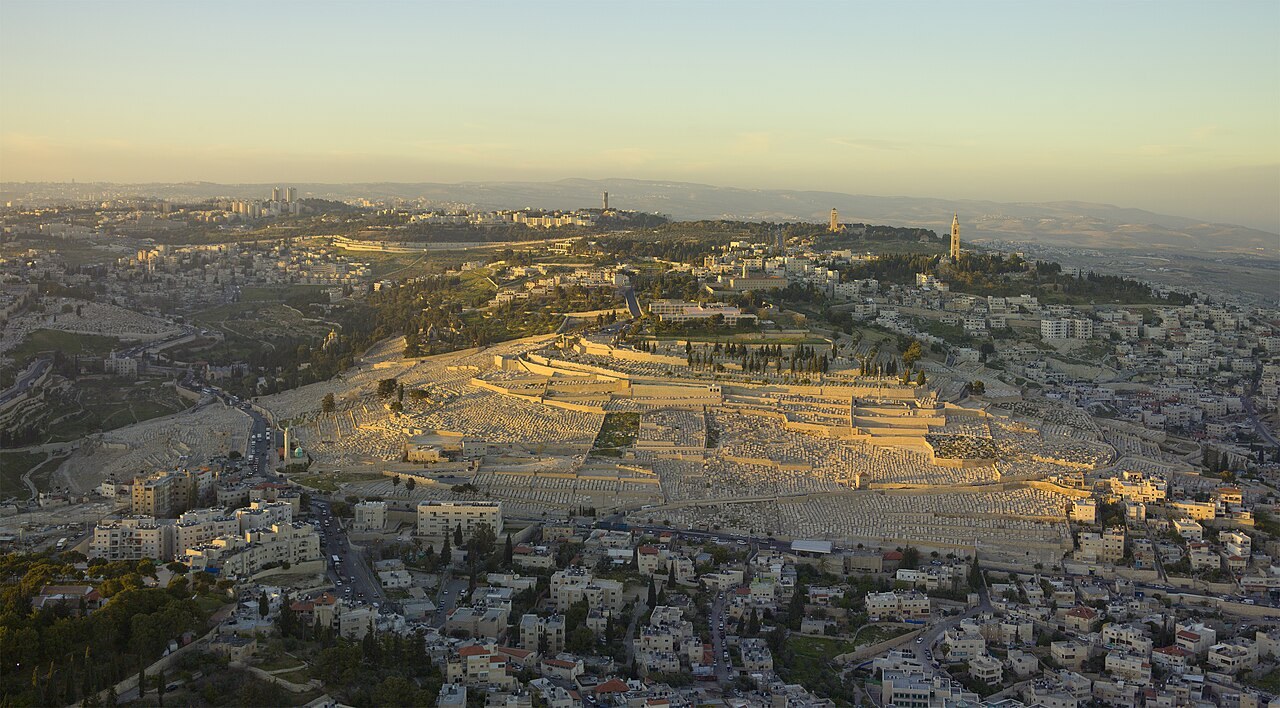
In 1896, Rabbi Yosef Rivlin died at home in the neighborhood of Ezrat Yisrael, which he had founded. He was about 59 years old. Residents from across the city attended his funeral: Ashkenazim, Sephardim, and members of the Haskalah. He left his widow and six orphans not only without fields or vineyards, but without even enough to support them through the week of mourning. To pay the doctor who had treated him and provide for the widow and orphans in the immediate aftermath, they had to seek financial help from Shimon Wolf Rothschild of Frankfurt, a member of one branch of the Rothschild family. The people of Jerusalem came to understand that although vast sums had passed through his hands, collected to purchase land, Rivlin had been honest and scrupulous.
Yechiel Michal Pines described him this way: "There was a man in Jerusalem named Rabbi Yosef Rivlin. He was simple and upright, God-fearing, learned, a preacher, an eloquent speaker, and also a prolific writer. The man had a gentle soul; by nature he was compassionate and kindhearted. As a harvest brings joy, so he always rejoiced when he was privileged to see the dedication of one of the neighborhoods established through his efforts, one after another. Jerusalem has much to thank this tireless and industrious man for, as he worked on its behalf without pause or weariness."
Pinchas Grayevsky, a historian and scholar of Jerusalem, added: "Yosef Rivlin was one of the pillars of the new Jerusalem. He did not merely contribute to the building of the neighborhoods; through his spirit, he also instilled the belief that Jerusalem would be rebuilt, not only in stone and concrete, but also in spirit and soul. He was an exemplary figure, a man of faith and action, who left behind an immense legacy."
His descendants collected the hundreds of songs he had written in a book called The Covenant of the Fathers in the Storm of Elijah. In this book, he expressed the principles of redemption according to the Vilna Gaon, which, he said, he had learned from his grandfather. In his songs, he combined two main themes: a description of the Vilna Gaon's students' work on behalf of immigration to Zion and the settlement of Jerusalem, and a clear, vivid presentation of the doctrine of the beginning of redemption taught in the Vilna Gaon's school. Rivlin laid out a clear plan for carrying out the various stages of the beginning of redemption. The book was published in several editions, the last of which includes songs written by his descendants in the spirit of his own songs. In 1966, a collection of his articles was published under the title The Scroll of Yosef. In time, part of the family saga was written by his descendants, the Orientalist Yosef Yoel Rivlin (father of Reuven Rivlin, former president of the state), and Shlomo Zalman Rivlin.
Rabbi Yosef Rivlin was not only a builder of neighborhoods, but also a builder of society, consciousness, and the future. He believed in people's power to change reality, and saw the building of Jerusalem as an inseparable part of the process of complete redemption. Thanks to his vision, determination, and dedication, Jerusalem was transformed from a crowded, constrained city into a thriving metropolis that draws Jews from every corner of the world.
תגובות
עדיין אין תגובות.