
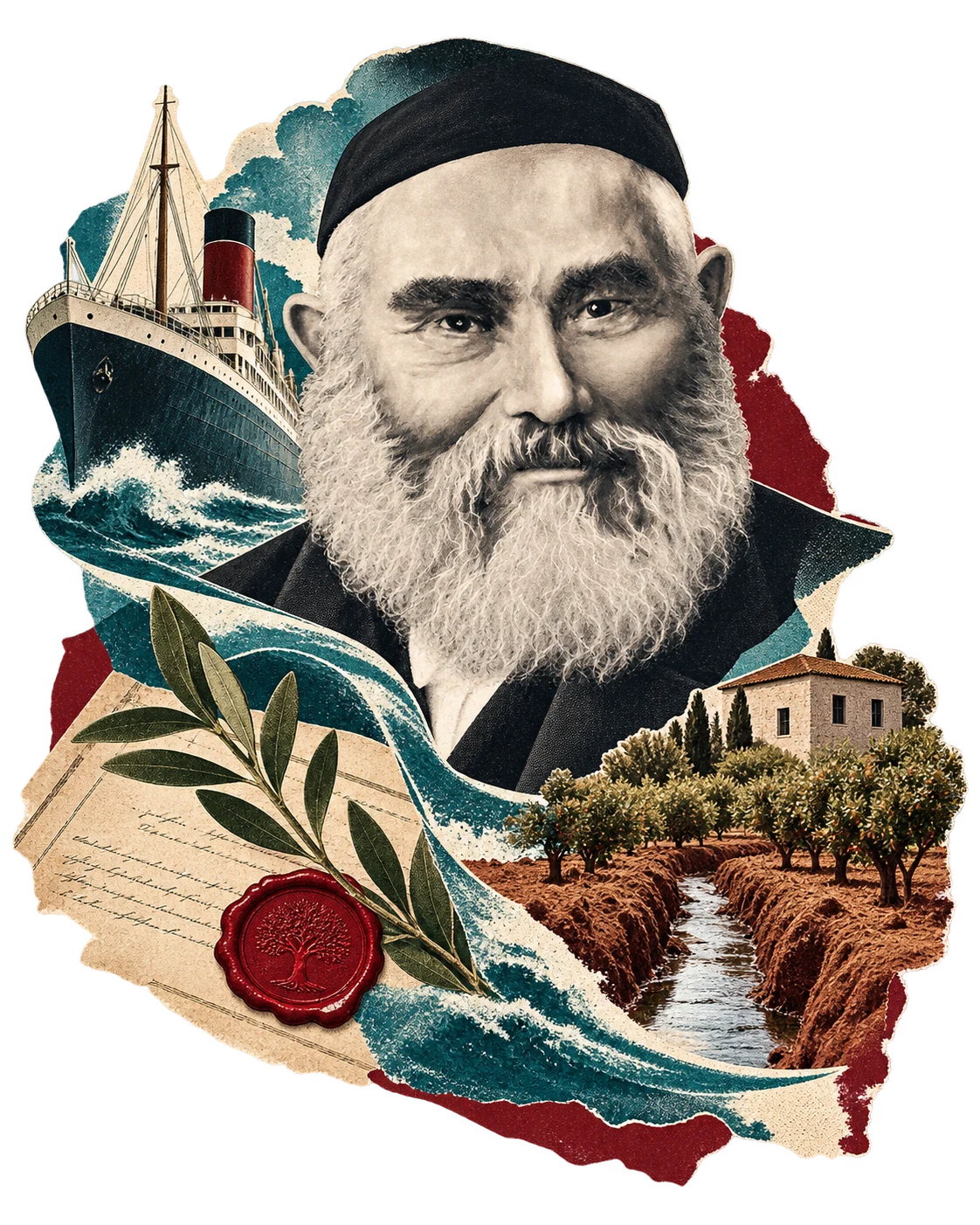
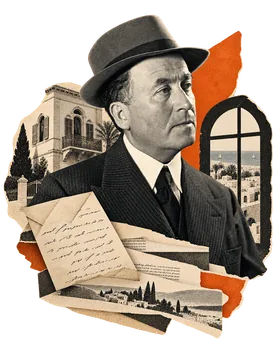
He helped found the Meah Shearim neighborhood and the colony of Petah Tikva, established the Neve Shalom neighborhood, and might have disappeared from the pages of history were it not for Yoram Taharlev's song.
The Dispute and the Founding of the Colony
The dispute between the couple came before the Jerusalem rabbi Samuel Salant, who was known for his wisdom. On one side stood Rachel Leah, a devout and strong-willed woman, a mother protective of her children. She passionately argued that after the tragedy of her eldest son's death, she was unwilling to follow her husband Zerach into the wilderness and swamps and put their four young children at risk. Rachel Leah firmly demanded that the rabbi forbid her husband from forcing her to go with him, and that, if he nevertheless insisted, the rabbinical court recognize her grounds for divorcing him. Rabbi Samuel Salant found her argument very reasonable and immediately sided with her. Without hearing the husband's side, the rabbi ruled that Zerach Barnett could not force his wife to accompany him on his dangerous journeys, and that if he insisted, she had the right to demand a divorce from him.
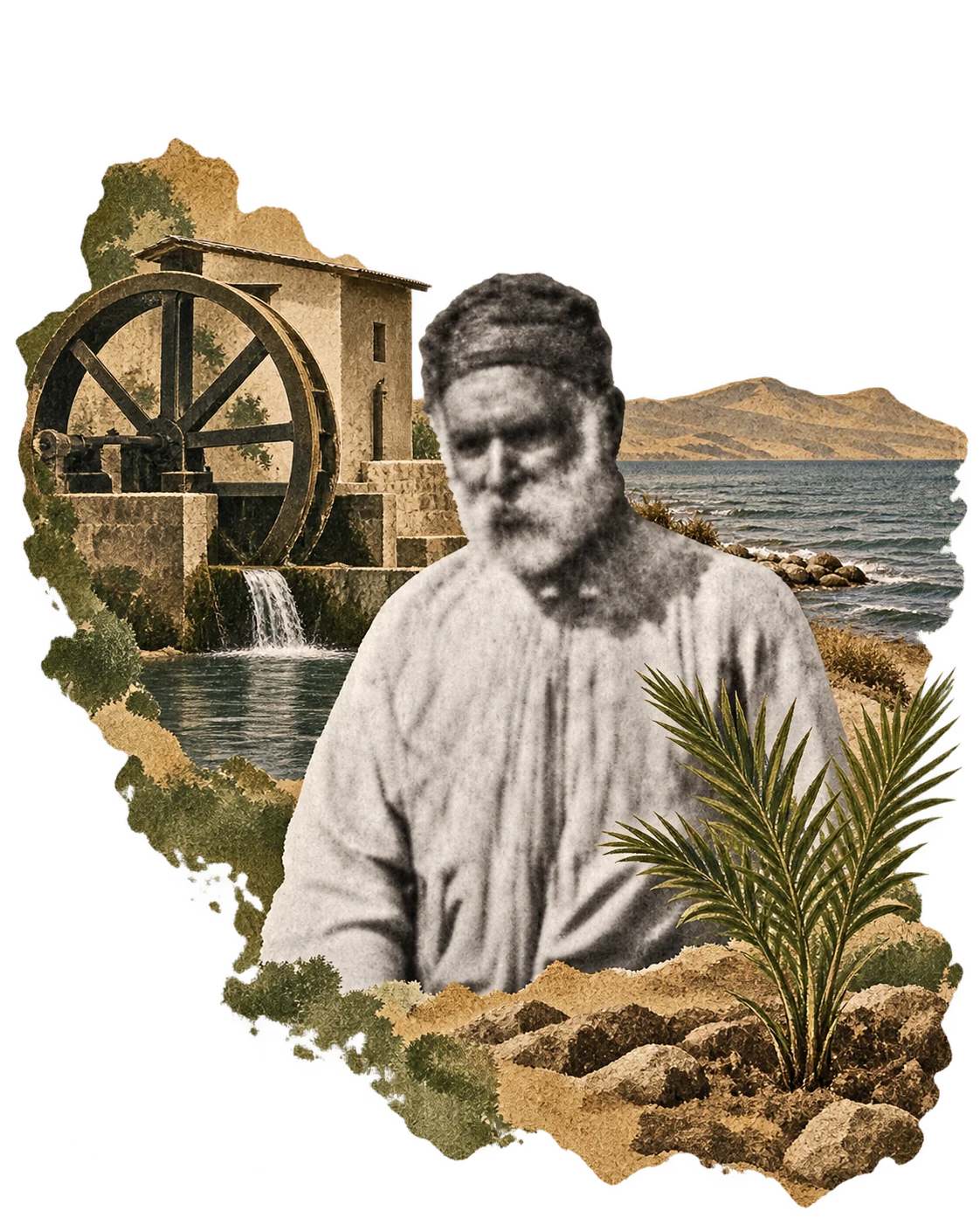
Zerach Barnett turned to the rabbi and said: "If the rabbi considers my actions the foolish acts of a madman, then any divorce I granted would not be valid under Jewish law either" (the divorce would be invalid because Zerach was "out of his mind"). He added that he was certain that, thanks to the settlement of the land, God would turn the wilderness into a Garden of Eden, and argued that his wife would not suffer there. Rabbi Salant, moved by his words, changed his mind and instructed Rachel Leah to follow her husband. In the summer of 5638 (1878), the Barnett family and 12 other families founded the colony of Petah Tikva. For the first time in his life, Barnett worked his own land. He established a farm, and with the help of members of the other families built his home from clay, sand, soil, and straw.
This event was etched in the national memory thanks to "The Ballad of Yoel Moshe Salomon," written by Yoram Taharlev. The song opens with the line "On a damp morning in the year 5638" and describes five riders setting out from Jaffa on horseback. Their names appear in the second verse: "Stampfer came and Gutman came, and Zerach Barnett and Yoel Moshe Salomon, with a sword at his waist."
The Harsh Winter and the Parting
Contrary to Zerach's vision, the wilderness did not become a Garden of Eden. Winter came, along with torrential rains that flooded the Yarkon. Houses were destroyed, and malaria, which spread through the new colony, claimed many lives, including those of four children. Some of the settlers left and moved to Jerusalem. The colony's situation continued to deteriorate. Four years after they had settled the land, the sabbatical year arrived, making life even harder for those who remained, and most decided to leave. Zerach Barnett's savings ran out, and he decided to return to London. Just before leaving, so as "not to discourage the loyal farmer-builders who had held on to their land," as he wrote in his memoirs, he gathered his friends and swore to them that if God helped him amass a fortune, he would return to his land "to work it and watch over it." He described the painful farewell to the Land of Israel in these words: "I felt as if my heart were leaping from me, with its beloved treasures - the sandy hills of the Sharon." He sailed to London with his family, and when the coastline disappeared over the horizon, he shut himself in his cabin and did not emerge for two days.
This was not the first time that a project involving Zerach Barnett had failed and cost him his money. In 1874, years before settling the land at Petah Tikva, Zerach Barnett helped establish the Meah Shearim neighborhood in Jerusalem. A year later, when his money ran out, he returned to London for two years, then came back with the capital needed to buy the land for Petah Tikva. But even that was not the first time. Zerach Barnett immigrated to the Land of Israel in 1871, and after a year he lost his money and returned to London. From this first immigration until 1906, he "immigrated to the Land" fifteen times, each journey involving a return to London to raise new capital for his ventures in the Land. Certain in his faith and filled with a sense of mission and commitment to settling the Land, he was sure that whenever his money ran out he would be able to raise more capital and repeat the same process... And indeed, it worked.
While in London, Barnett tried to enlist affluent Jews in the project of redeeming the Land. In 1882, the year his son Abraham was born, Zerach approached Baron Rothschild, who had come from Paris. The baron, who had already donated to the colonies, turned down Zerach Barnett's request.
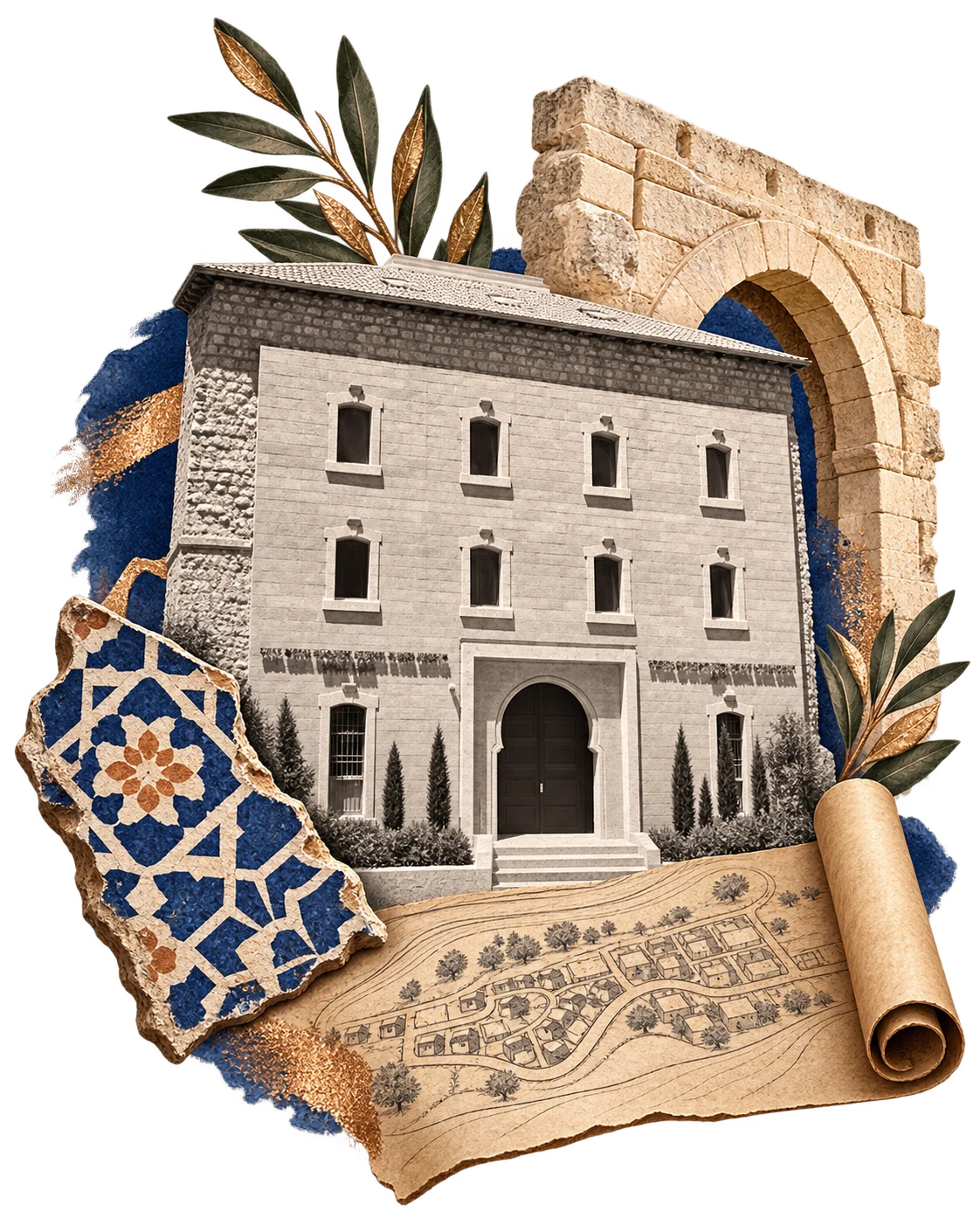
When Zerach Barnett returned to Petah Tikva, he found his house destroyed and the colony deserted. He rebuilt his home, a magnificent two-story stone house unlike any other in the colony (at the corner of Stampfer and Bar-Kokhba streets). Zerach also planted olive trees and a grape vineyard, and in 1884 he set out for London once more to raise funds.
Roots in Lithuania and Marriage
Zerach Barnett was born in 1843 in Tsitovyan (now in Lithuania, then part of the Russian Empire). He grew up in a devout family and attended a traditional Jewish school as a child. At the age of 10, he studied with his uncle, Rabbi Eliyahu, and as he grew older, he went to the Slobodka yeshiva, where he was first exposed to Zionism and became deeply devoted to the Land and passionate about settling it. He was inspired by his teacher, Chaim Kreizer, who was also a mystic and an ardent lover of Zion. In 1865, a wealthy London merchant, Rabbi Yitzhak Hacohen, himself born in Lithuania, came to visit the yeshiva. He was looking for a suitable match for his daughter Rachel Leah. The head of the yeshiva recommended Zerach Barnett, but he did not want to marry and move to London, as the bride's father requested. "If I am to leave Lithuania, then it should be for the Land of Israel," Zerach said. But his teacher blessed him, saying he would "be among the first builders," succeed in business in London, and have money to settle the Land. His British citizenship would also make it possible for him to buy land there. "I must go to London so that I can make a fortune there, which I will then be able to invest in the Land of Israel," Zerach wrote. "For even then, it was widely believed in our circles that, besides hard work, diligence, and great energy, considerable material resources were needed to bring the desolation of our holy Land back to life."
Zerach Barnett married Rachel Leah. For two years he lived at his father-in-law's expense and learned the fur trade. He then established a successful independent business. In 1868, their first son was born, but died two weeks later. "At that time a great misfortune befell me: my firstborn son, Moses, may he rest in peace, passed away," he wrote in his memoirs. In 1870, Hannah, their second child, was born, and a year later, after he received a British passport, the family decided to immigrate to the Land.
In the winter of 1871, the Barnett family first arrived on the shore of Jaffa, and two weeks later they moved to Jerusalem. During his first year in the Land, Zerach lost all the money he had saved over seven years and found himself working for wages, sewing hats for a German man in Jerusalem. In his memoirs, he wrote that one day his German employer became angry with his work and threw a hot iron on his head. In protest, he got up and quit.
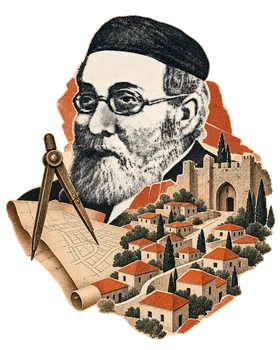
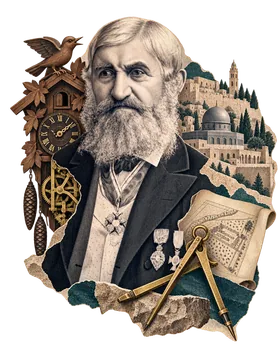
Around that time he became friends with Yosef Rivlin (one of whose descendants is former president Reuven Rivlin) and Yoel Moshe Salomon, founders of the Meah Shearim Company, established in 1872 to create a neighborhood outside the walls, a bold undertaking in those days. The neighborhood itself was established two years later. Zerach did not have the capital needed to build a house there, so he decided to return to London alone to raise new funds to build a home in Meah Shearim. Rachel Leah, who was pregnant, stayed in the Land, and in 1873 their daughter Rosie was born. When Zerach returned to build his house in the neighborhood, ten houses were already standing. He lent the money he had left to others so they could finish building their homes. The neighborhood was designed by the German architect Conrad Schick. Its houses were built as a continuous wall. The outer walls enclosed an inner courtyard, and the gates were closed at night. Each house had a garden, and the neighborhood also had water cisterns. In time, Conrad Schick built his own house next to the neighborhood. It still stands today and is considered one of Jerusalem's most beautiful houses.
Zerach waited for the loans to be repaid, but the money never came, and once again he ran out of funds. In 1875, the whole family returned to London, where their son Elijah was born. In 1877, the family came back to the Land with money, new merchandise, and 20 barrels of salted fish, the first to arrive in the Land.
To the Lands of Mlubbes
When he returned to the Land, he joined Yoel Moshe Salomon, Yehoshua Stampfer, and David Gutman, and together they set out to find suitable land for an agricultural colony. It is moving to read Zerach's diary entries describing the search for land, and especially the joy with which he was welcomed back to Jerusalem. "On one of the days of Tammuz, we set out for the area around Jaffa to visit the plots of land offered to us by the Sephardic brokers. I told my wife and family that we would be away for three days at most, and they agreed to my departure only with great difficulty. But we spent 13 days on this expedition, visiting and examining the land at Duran (Rehovot), Rishon LeZion, and various plots around Ramla. At last we chose the land of the Arab village of Mlabbes, and, through the mediation of the British vice-consul in Jaffa, Mr. Amzalak (Haim Amzalag), we bought 3,500 dunams there from the Greek Kaser at a price of 5 francs per dunam. The founders had no money at all with them, and to secure the purchase for us, I gave an immediate check for 300 pounds, drawn on one of the banks in London, as a down payment. When we later returned to Jerusalem, we brought double joy to our families and the city's residents. Our friends and relatives rejoiced over us as if we had risen from the dead, because by the fifth day after our departure they had thought we had been slaughtered by the knives of Bedouin bandits, and had asked the police to track us down. Now that we had returned, they saw us as people come back to a new life, and nearly all the other townspeople rejoiced at the great and wondrous thing the Lord had done for us by placing in our hands an estate of farmland on which we could build an agricultural Jewish colony in the Land of Israel." This account makes clear that without the down payment Zerach made, Petah Tikva would never have been established. In his memoirs, he describes with great emotion the day they returned in July 1878 to the hill they had chosen for Petah Tikva: "As soon as we saw from a distance the hill we had chosen as the site of our settlement, I spurred my horse forward and threw myself onto the open ground, kissed the earth, and watered it with tears of joy and gladness. My companions did the same... I felt then as if I had been born again, and that this was the place where I had been conceived and born." He describes the clay house he built on that hill this way: "After a few weeks I finished roofing my house, and this clay house was, and will always remain, as dear and precious to me as a royal palace, because it reminds me of those days of creation and new life." Months later, heavy rains caused the Yarkon to overflow and destroy the houses. The loss of the homes and the spread of malaria drove residents to leave the colony, and Zerach and his family returned to London once again.
This is a good place to tell the story of the source of Zerach Barnett's fortune. Several years after Zerach left Lithuania and set out for London, his brother Meir arrived and took over the fur factory Zerach had founded. Another brother, Jacob, emigrated to France, became a trader on the Paris stock exchange, and helped sell the furs there. The Barnett brothers' network spread across London and Paris and even reached New York. An international fur-trading fair was held in Leipzig every year, and Barnett regularly attended it. Zerach made his brothers partners in the business, and they saw his initiatives as an important mitzvah that they should support, and a way to share in the mitzvah of settling the Land. Every time Zerach returned to London, he expanded the business, which served as a fund for his ventures. When people asked where his money came from, he always answered that it was a loan God had provided him so he could fulfill the commandments.
In 1885, five years after his house had been destroyed by the rains, Zerach returned to Petah Tikva and built a unique, magnificent two-story stone house, the finest in the colony. The housewarming celebration was described in the newspaper Hamagid: "The day after the Sabbath was Lag BaOmer. On that day, Zerach Barnett held a grand celebration to inaugurate his home. Many were invited, including everyone from the colony, residents of the nearby colonies, and dignitaries from Jaffa... I would not be mistaken in saying that, since Israel was exiled from its land, a crowd of some four hundred people had never gathered to celebrate in this place." Along with building the house, he planted an olive grove and a vineyard. The following year, the house served as a fortress during an Arab attack on the colony, until military assistance arrived from Jaffa. During this incident, his daughter Rebecca showed great courage when she rode out on horseback to summon the men working in the fields. From then on, the Arabs called her "Beki Effendi."
From the Source of Capital to Hovevei Zion
In 1884, a year before the stone house was built, Zerach Barnett established the "Settlement of the Land of Israel" company in Leipzig. At the end of that year, he took part in the famous Katowice Conference, the first official gathering of Hovevei Zion, which aimed to encourage settlement in the Land. At this conference, whose organizers included Dr. Judah Leib Pinsker and Rabbi Shmuel Mohilever, Pinsker first defined the idea that the Jews' situation would change "only through a change of place and way of life." In other words, buying land in the Land of Israel and working it agriculturally could solve the Jewish problem. The conference was surrounded by a sense that a historic new era was beginning in the life of the Jewish people.
At that same conference, Zerach Barnett's remarkable gift for promotion came to light, as he described it: "So I resorted to a sensational ploy. I put on a Turkish fez that I had kept from my time in the Land of Israel and went to the Hotel de Rome, where the distinguished guests were staying. The fez had already drawn the attention of all the guests. They understood that a Jew from the Land of Israel stood before them, and began to take an interest in me, asking who I was and what I did... I gave the guests a full account of the agricultural settlement in the Land of Israel, its achievements and its shortages... I asked for help for the farmers of Petah Tikva, who were suffering and had become very impoverished, in the form of loans to build houses and cowsheds and buy livestock, as well as help for the members of BILU in Gedera. I emphasized the need to buy more land for new settlers... They then allocated and sent 10,000 francs to Petah Tikva, 30,000 to Gedera, and chose Mr. Tyomkin to travel to the Land of Israel to buy land. Those assembled made generous contributions for this purpose, and I too contributed a thousand rubles."
After the conference, Zerach returned to London by way of Paris and met Baron Rothschild again. The baron no longer saw Zerach as a poor farmer coming to beg for charity, but as a man of means who could look the baron in the eye and discuss the future of the Jewish people with him. This time the baron showed interest and promised to develop a new plan for the colonies, including Petah Tikva.
Neve Shalom in Jaffa
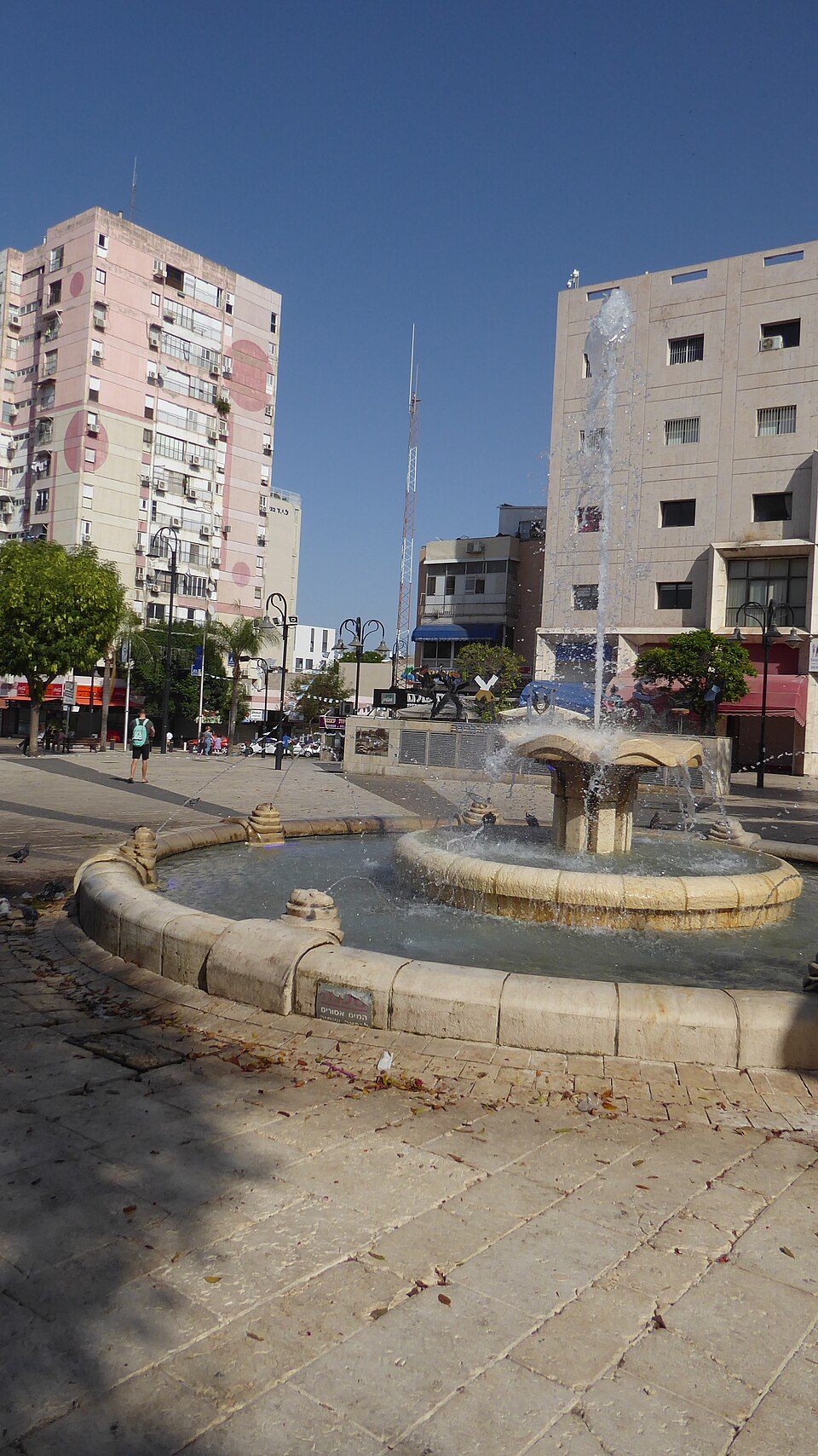
The income from farming in Petah Tikva was not enough to support the family, and the sabbatical year was approaching. In 1887, Zerach Barnett sold his house and its contents at auction and returned to London with his family for three years, during which he once again managed to amass a fortune. In London, he concluded that his agricultural life was over. "Whenever I considered returning to renew my experiment in settling in Petah Tikva, I felt my strength failing," he wrote. "I am 47, and I cannot continue working the land and bearing the heavy burden. For 14 years I gladly took on this work, with all its dangers and hardships, but I can no longer do it." Nevertheless, he added: "I have not given up on taking part in building the Land in various ways." Zerach Barnett began a new chapter in his life as an entrepreneur. In 1890, he returned to the Land with his family and settled this time in Jaffa, where he noticed that the city's Jewish population was growing and that many Jews lived in small, dilapidated houses owned by Arabs. He bought from Aharon Shlush "15,000 square cubits (about 7,000 square meters) of sandy land on the edge of the city," at a price of one franc per dunam, and celebrated the laying of the cornerstone for a neighborhood that would come to be called Neve Shalom. Many mocked him, claiming that "Foolishness and a waste of money! Weeds will grow on your cheeks, and no settlement will spring up from these sands." But Zerach was undeterred and wrote: "I believed with all my heart that urban settlement would eventually expand in the Land too, and that the merit of the great mitzvah of building the settlement would ensure that I did not lose my money in vain." In his memoirs, he recounted that when he bought the land at Neve Shalom, he had to carry a large quantity of gold coins around his waist from Jerusalem. Their weight strained his lower back, and he had to lie in bed for several days. S. Y. Agnon included this story in his novel Only Yesterday.
Immediately after buying the land, Zerach Barnett built a row of houses. He left his family in Jaffa and moved by himself into one of the houses outside Jaffa's walls. On the third night, an armed robber entered with a knife to rob him, but Zerach overpowered him. "I know you don't want to kill me because I'm a Jew, but because you have no money. Please, take some money and go home," he said, taking a substantial sum from his pocket and giving it to the robber. The next day, the robber knocked on Zerach's door and begged him: "I didn't know you were a British citizen. Don't tell the authorities - they'll hang me."
Despite the robbery, Zerach was not deterred and moved his family to Neve Shalom. He offered the houses at reasonable prices, but no buyers came because it was unsafe to live outside the walls. Here, as he believed, divine providence came to his aid. At that time, the wife of Jaffa's chief rabbi, Naftali Herz Halevi, fell ill, and doctors advised her to seek fresh air for the sake of her health. The rabbi moved with his family to one of Barnett's new homes for the summer, and the clean air and open space did indeed improve her health. The couple decided to settle in the house and buy it. Other Jews followed the rabbi to the neighborhood. Unlike Neve Tzedek, a neighborhood for the wealthy who wanted to escape Jaffa's overcrowding, Zerach envisioned a real city, with shops, a mikveh, and synagogues, and the neighborhood did indeed grow and flourish. Zerach built two-story houses. The first floor was for businesses, and the second for living quarters. The letters ZB, for Zerach Barnett, were engraved above each shop. On Fridays, about an hour before the Sabbath began, he would go from shop to shop and knock on the doors so the owners would close up and not desecrate the Sabbath. He also built a hotel in the neighborhood for immigrants arriving in the Land. Today, the neighborhoods of Neve Tzedek and Neve Shalom are commonly seen as having inspired the establishment of Ahuzat Bayit, which later became Tel Aviv, the first Hebrew city.
The Last Journey and the Legacy
In 1904, Zerach Barnett visited London for the last time and returned a year later. This time he bought land next to the Neve Shalom neighborhood, as he recounted: "In 5666 I returned to the Land of Israel from London and immigrated for the fifteenth time, the last time. I bought 20,000 square cubits of land next to Neve Shalom for 40,000 francs, and on that lot I built more houses, which now stand at the center of the Jewish settlement in Jaffa. Then I built the Shoneh Halakhot synagogue in Neve Shalom... While the synagogue was being built, a balcony was made of concrete and planks. When I went to inspect the construction, I stepped onto the balcony, which had not been properly built, and the concrete slab immediately crumbled beneath me and I fell down. I lay lifeless on the ground for twenty moments. They immediately rushed a doctor to me... I came to and cried, 'What is this? What is this?' They then tried to get me to my feet, and it turned out that one of my legs was broken. They carried me to bed and tied my leg with a rope, suspending it in the air. I lay like that for about two months. Then it occurred to me that perhaps this accident had befallen me because I had neglected Torah study: I should have promoted its study and supported those who pursued it, but I had not done so as I should. I told myself I would establish a yeshiva." And indeed, he founded the Or HaZorach yeshiva, from which his funeral procession would later set out.
Even during his lifetime, Zerach was aware of his influence on the history of the Land of Israel, and at the age of 87 he wrote his memoirs, from which we have quoted. In February 1948, the British blew up Barnett Street and the magnificent yeshiva on it.
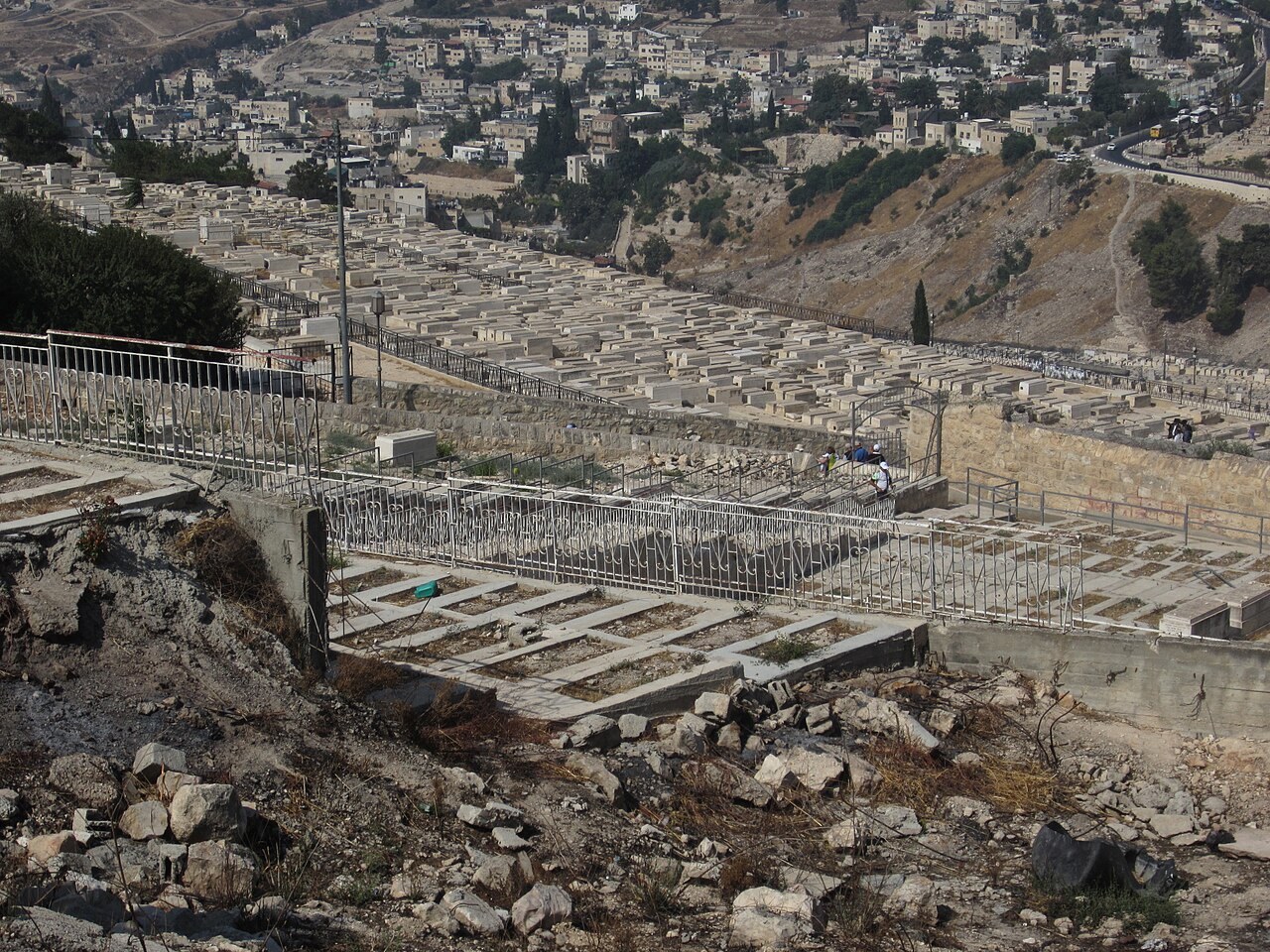
Zerach Barnett died in October 1935, at the age of 92, and was buried on the Mount of Olives beside his wife Rachel Leah, who had died in 1924. He ended his memoirs with this paragraph: "As I conclude my memoirs, which I present today, I remember with a heavy heart my wife Rachel Leah, of blessed memory, who passed away in Jaffa on the 16th of Kislev, 5685, and was taken for burial on the Mount of Olives. And I say here to all those who honored me and valued my work: what is mine is hers! Had my wife Rachel Leah not stood by me, I could not have carried out all my plans. May her soul be bound in the bond of life. And I call upon my sons and my friends: follow in our footsteps, multiply and expand your deeds in building the Land, and do not retreat in the face of any obstacle, for we are engaged in sacred work, building a wall for ourselves in Judea and Jerusalem until our faithful restoration and revival come through the Holy One of Israel, in the Land He cherishes."
תגובות
עדיין אין תגובות.