
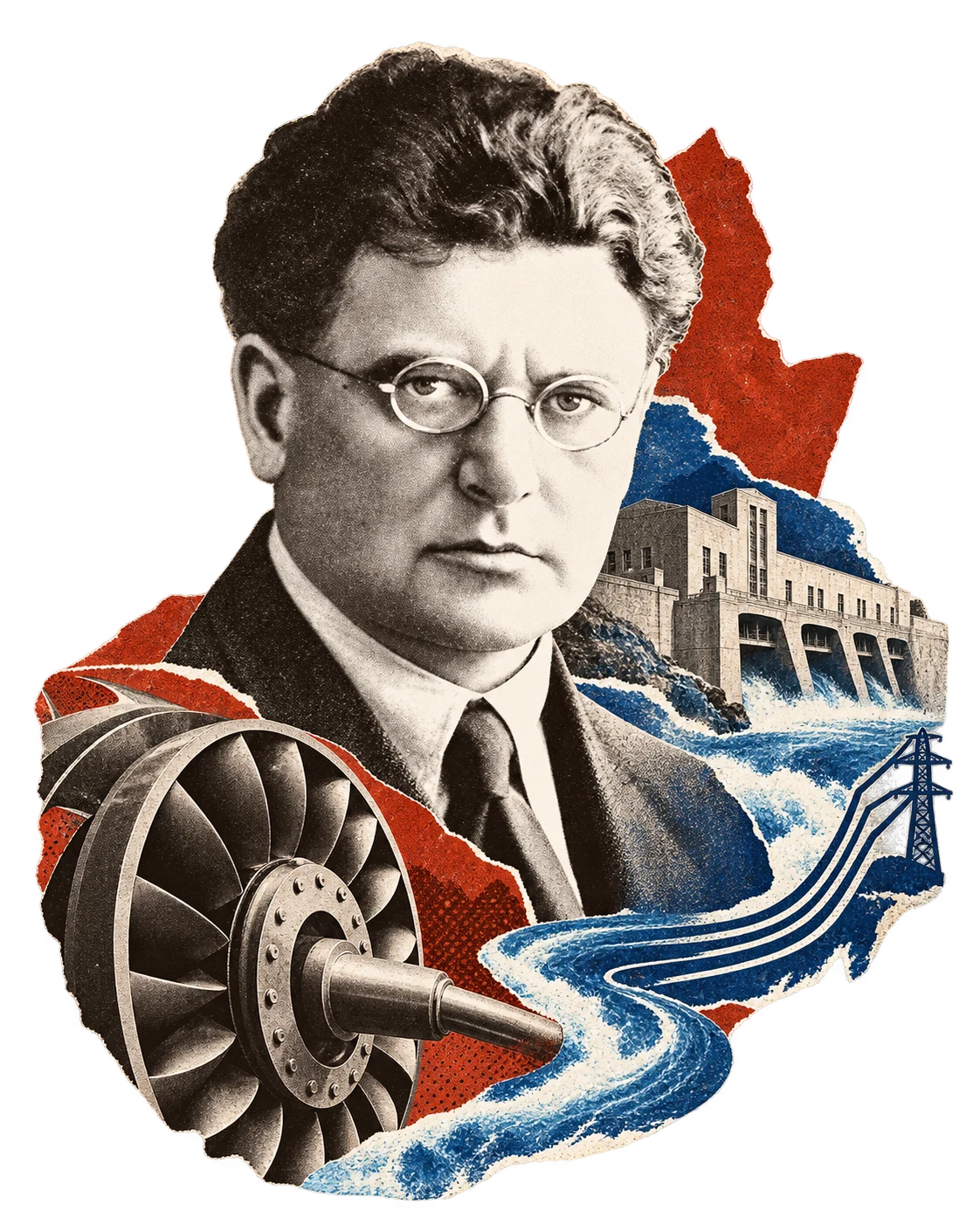
A brilliant student, passionate revolutionary, and perhaps even a murderer... A convert who promoted the idea of the Jewish Legions and was already known as the "Old Man of Naharayim" by the age of 50.
Pinchas Rutenberg was stunned. He could not believe that the man standing before him, the man he had supported and protected with his own body, the man for whom he had risked his life and fled his homeland - was a double agent. The news that the revolutionary priest was collaborating with the Russian secret police in exchange for money hit him hard. The people in the next room, members of the Socialist Revolutionary Party, which opposed the tsar and sought to establish a new regime, had also listened to the conversation and could not believe their ears. At the end of that meeting, held in 1906, the priest met his death by hanging. There are two accounts of his death: one says that Pinchas Rutenberg hanged the traitorous priest Georgy Gapon, while the other says that Rutenberg left the room after the conversation and the party members who had witnessed it were the ones who hanged the priest.
In any case, Pinchas Rutenberg realized that relations with his fellow party members had deteriorated and that the secret police were looking for him. The ground was burning beneath his feet, and he fled to Italy, where he joined a group of Russian revolutionaries who, like him, had fled the authorities. Pinchas Rutenberg converted to Christianity in Italy and began working there as a water engineer. When he heard about the Kishinev pogroms and the fall of the Ottoman Empire, which then ruled the Land of Israel, he decided to bind his fate to the Jewish people.
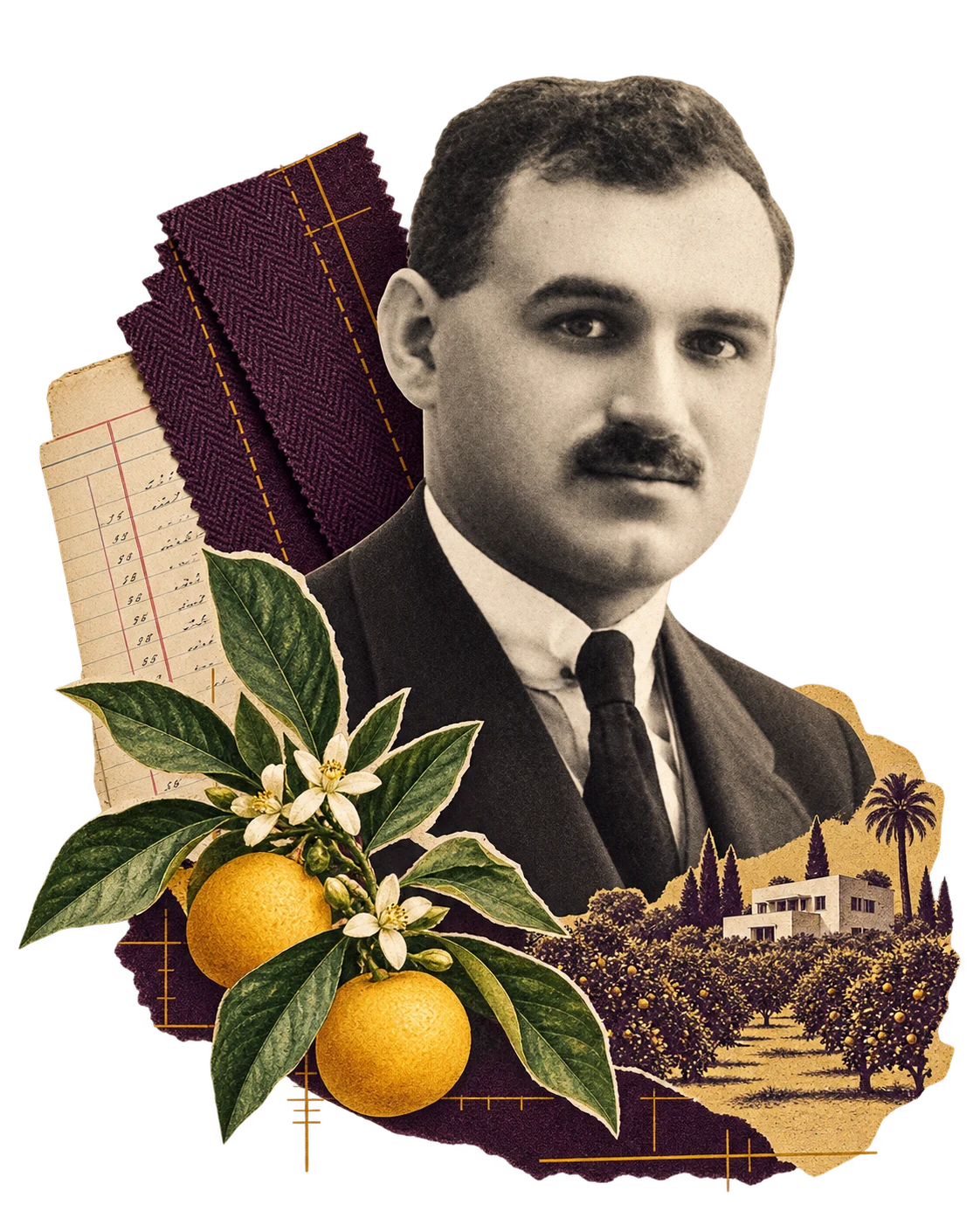
Sir Ronald Storrs, the first military governor of Jerusalem, described Rutenberg's appearance and the impression he made on those around him: "Burning eyes, physical strength. A thick neck. Radiated power and stability. Rutenberg was described as a tough man, determined, energetic, decisive, and very forceful. He always dressed in black. He tended to utter his few words in a low, threatening voice. Often armed with a pistol."
Childhood, Studies and Marriage
Pinchas Rutenberg was born in 1879 in the city of Romny in Ukraine, which was then under Russian rule. The city had a strong Jewish community, and was the birthplace of Chaim Arlosoroff and several of the important rabbis of the Chabad community. Romny was also the home of the "Romny Commune," some of whose members founded Degania.
Pinchas was born Pyotr Moiseyevich Rutenberg and, like most Jewish children in the city, studied in a cheder. At 11, he was sent to a gymnasium, where he proved to be a gifted student. He later gained admission to the Technological Institute in St. Petersburg despite restrictions on Jews entering the institution. As a young man with a keen social conscience, he joined the revolutionaries. He was arrested and exiled, but eventually returned to St. Petersburg and graduated with honors. Pinchas married Olga Khomenko, a young Christian woman who belonged to the revolutionary movement. Rutenberg converted to Christianity after his wife, and they had three children. At the time, he was working as a mechanical engineer at the large Putilov metalworks.
Gapon's Betrayal
The year 1905 was tense. It was clear that the Russian tsar's rule would not last much longer. At the initiative of the priest Georgy Gapon, workers at the factory where Pinchas Rutenberg worked went out to protest against the tsar and demand better working conditions. During the demonstration, the tsar's soldiers opened fire on the protesters and killed hundreds of them. Pinchas Rutenberg and the priest fled and crossed the border into Europe together. On their way, they met other revolutionaries, including Vladimir Ilyich Lenin, who later said he had encountered a stupid priest accompanied by a very interesting man. The priest could not resist the tempting offer made by the secret police: to betray his revolutionary comrades in exchange for a large sum of money and the chance to return to his homeland. Thus, Gapon became a police agent. Knowing how charismatic he was, the priest tried to recruit Pinchas Rutenberg as an agent. It was his last mistake... Pinchas did not take kindly to betrayal.
In 1914, the first year of World War I, Pinchas Rutenberg realized that the Ottoman Empire, which then ruled the Land of Israel, was on the verge of collapse. The pogroms against Jews in Russia made it clear to him that the time had come to establish a national home for the Jewish people in the Land of Israel. While still in Italy, he began his Zionist activities. He met Dov Ber Borochov and came up with the idea of the Jewish Legions, which would fight alongside the Allied Powers (France, Russia, and Britain) in return for allowing the Jews to establish a national home in the Land of Israel.
In September of that year, he traveled to England to meet Dr. Chaim Weizmann, then a chemist at the University of Manchester, who, like Rutenberg, believed that the Jewish people should side with the Allied Powers. Weizmann was not impressed by Pinchas Rutenberg and was even wary of him, since he was known as a murderer. Rutenberg's appearance - he was short and broad, with penetrating eyes and a low voice - made Chaim Weizmann uncomfortable. A year later, Rutenberg met Ze'ev Jabotinsky in Italy after Jabotinsky returned from Egypt, where he had founded the Zion Mule Corps. The idea of the Jewish Legions was familiar to Jabotinsky, since it was the position supported by his partner, Joseph Trumpeldor. At this meeting, they agreed that, to advance the cause, Jabotinsky would travel to England and Pinchas Rutenberg would go to the United States.
Before setting off, Pinchas Rutenberg gathered all his ideas in a pamphlet entitled "The National Rebirth of the Jewish People," in which he emphasized the need to establish an independent state for the Jewish people in the Land of Israel. He wrote that the sands could be turned into flourishing gardens and that modern industry must be established in the Land of Israel, since without it the Jewish people could not be revived. In the United States, he met with many Jewish émigrés from Russia who knew his past and admired his work. After about two years, Rutenberg realized that most people did not support the Allied Powers and were not enthusiastic about the Jewish Legions either. Nevertheless, he managed to hold a congress that brought together all the Jews of the United States.
In February 1917, Tsar Nicholas II abdicated and handed power to the socialist Alexander Kerensky, a friend of Pinchas Rutenberg's since the 1905 Revolution. Rutenberg was summoned back to his former homeland and appointed deputy governor of the capital, Petrograd (formerly St. Petersburg). Fearing the Bolsheviks, Rutenberg proposed that Kerensky arrest Lenin and Trotsky (who was Jewish) and hang them. His proposal was rejected, a decision that would later prove to be a fatal mistake. In less than a month, the Bolsheviks overthrew the government, Lenin came to power, and Pinchas Rutenberg was sent to prison. He was released by his friend, the writer Maxim Gorky.
That same year, the British captured the Land of Israel from the Ottomans, and on November 2 the Balfour Declaration was published: "His Majesty's Government views with favour the establishment in Palestine of a national home for the Jewish people, and will use its best endeavours to facilitate the achievement of this object."
The Road to the Land of Israel
In early 1919, after being declared a traitor by the regime, Pinchas decided to leave his homeland and arrived in the Land of Israel. In June of that year, on the basis of the Balfour Declaration, Chaim Weizmann petitioned the British government for a concession to build an electric power station on the western Auja River (the Yarkon). About two months later, the British authorized Weizmann to send a team of water experts to the country to conduct a survey. Weizmann sent Pinchas Rutenberg and two British experts; the concession would be granted on the basis of their survey.
The idea of electrifying the Land of Israel had existed long before Pinchas Rutenberg immigrated there. As early as 1896, Herzl wrote in his book about electricity for homes, trains, and even electric cars. The first electric lighting in the country began operating in the summer of 1893 at the Notre Dame hospice in Jerusalem, where a local generator supplied electricity to a few dim bulbs. Nevertheless, the idea of providing the Land of Israel with an electricity network was still vague at the time. Pinchas told his friends from his hometown about his idea in Degania, but even after a detailed technical explanation involving dams and waterfalls, turbines and a generator, most of them had no idea what he was talking about. Finally, one of his friends asked, "All right, there'll be electricity, but will the Arabs in Tzemach buy it?" Rutenberg replied that even the Arabs in Ovadia would buy it (Ovadia was a small, miserable Bedouin village). Nine months after this meeting, Rutenberg presented his plan, "The Water Economy in the Land of Israel," in London, explaining that water could be used to produce "cheap motive power" for the country's development.
The arrival of Sir Herbert Samuel, the first British High Commissioner to the Land of Israel, in 1920 marked the end of military rule. In early 1921, Rutenberg arrived in London and began working to secure a concession to generate electricity in the Land of Israel. He met with officials at the Colonial Office, making a strong impression on them, and then continued to the United States to raise money to build power stations. In March, he returned to the country and met with Colonial Secretary Winston Churchill (later Prime Minister of Britain). Churchill was impressed by the plans presented to him, and especially by Pinchas Rutenberg.
The Concession for the Electric Company
Churchill had a favorable view of Zionism and, above all, did not believe that Islam could bring progress to the region. Among other things, Churchill said: "Where the Arab goes, the desert often follows." In September 1921, after overcoming quite a few obstacles, Pinchas Rutenberg received the concession.
Pinchas Rutenberg's famous saying was: "Some people make history, and some are swept along by it."
After considerable effort, Pinchas Rutenberg met with Winston Churchill and in September 1921 managed to obtain two concessions to supply electricity, one from the Yarkon sources and the other from the Jordan sources. Among other conditions, the concession required that within two years he pay the British no less than two million pounds sterling, a huge sum at the time, and that he not pollute the environment. The concession was the first of many steps that led to the generation of the first watt.
One of the most important tasks was raising the money for the concession. Pinchas Rutenberg approached the Zionist Organization, led by Dr. Chaim Weizmann. The organization's demand for 50% of the company's shares, despite agreeing to invest only a small amount of money, led to a dispute between the forceful Rutenberg and Weizmann. Weizmann wrote of Rutenberg: "His mind is confused and he is guided by only one principle: a lust for power. He employs methods he learned in a school that is not ours. I am very troubled by what I heard about him in Italy" - a reference to his revolutionary and murderous past. Rutenberg did not let the matter pass without reply. He threatened Weizmann: "The interests of our unfortunate people weigh as much with you as the interest in publishing the wretched accounts of your paltry triumphs... In your recklessness, you sought to destroy our last weapon. That weapon is my work, and it is still in my hands and under my responsibility. I have no right to allow this, and I will not. If you try to carry out your threat, I will denounce you. It is my duty. You know me. When I start something, I am accustomed to seeing it through to the end. I am stronger than you... I will fight you openly and publicly, and you know that I have the strength to destroy you."
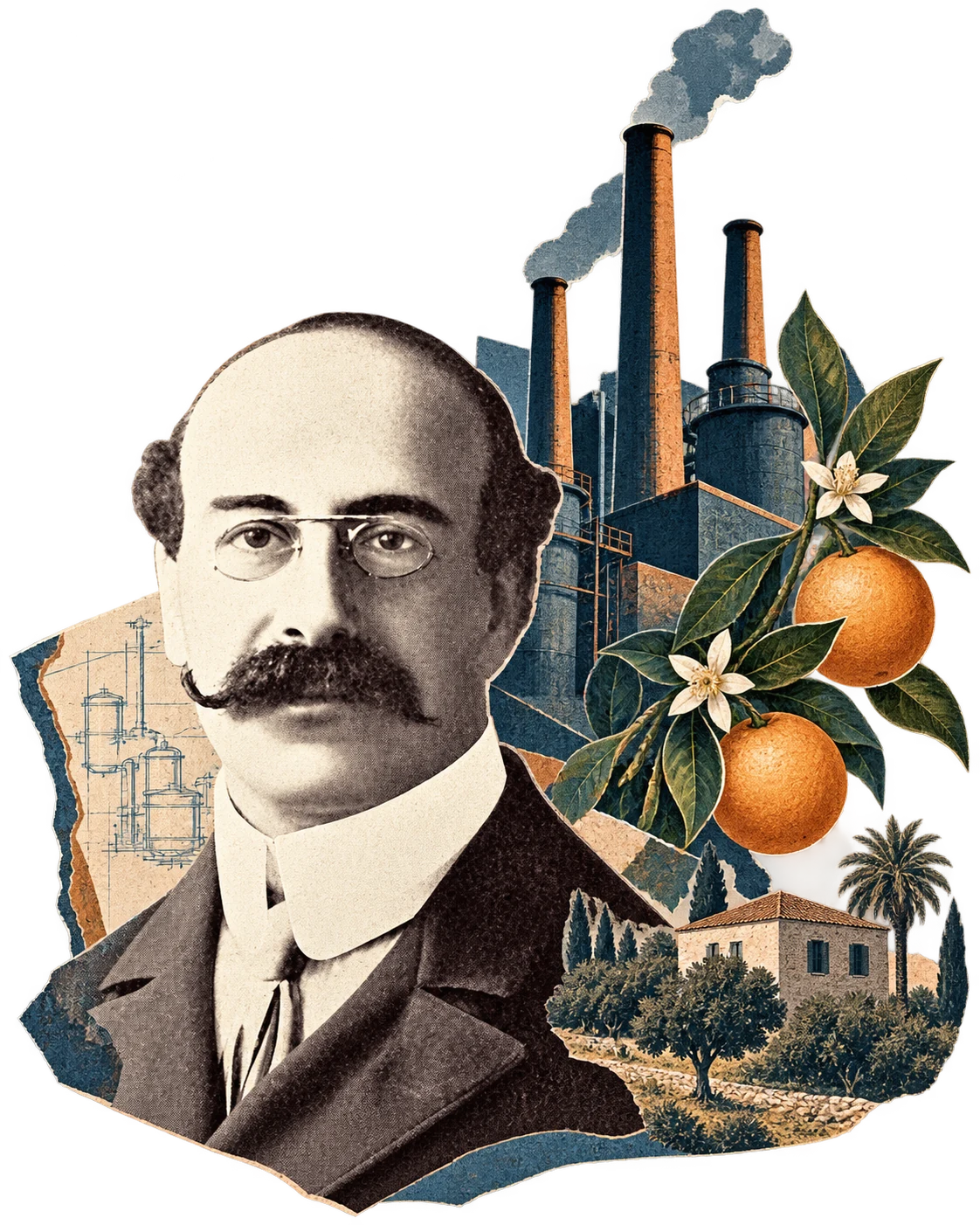
When he realized that help would not come from the Zionist Organization, Rutenberg turned to the Rothschilds and succeeded in raising money for the project. This success led him to enlist Alfred Moritz Mond (Lord Melchett), then the richest man in England. The irony was that Weizmann himself had first brought Lord Melchett to the country in 1921 and inspired him to invest in it. His son Henry (the second Baron Melchett) was chairman of the electric company, and his daughter Eva married Gerald Isaacs, the second Marquess of Reading. Pinchas Rutenberg also managed to bring Gerald's father in as an investor in the electric company (the power station in Tel Aviv was named after him). In this way, Pinchas Rutenberg established the company in England and floated it on the London Stock Exchange. The company's shares were traded, and beyond their Zionist purpose, the investments were profitable, and every year Pinchas Rutenberg distributed dividends.
The First Electricity
Rutenberg had undertaken to build a hydroelectric power station on the Yarkon, but in the end, in 1923, he built a thermal power station (diesel-powered) after the landowners along the Yarkon raised their prices. As early as June 1923, Allenby and Nahalat Binyamin Streets in Tel Aviv were lit, and in November, King George Boulevard (later Jerusalem Boulevard) in Jaffa was lit. Shlomo Shava wrote about it in his book City Rises: "In the spring of 1923, the residents of Tel Aviv, young and old, watched with great curiosity as the final electrical installations were made in their city... The electric wires were strung along Allenby Street and the lamps were hung. The people of Tel Aviv were told that each one would shine like a hundred candles, and they were skeptical... Rutenberg came to the transformer at the corner of Nahalat Binyamin and Allenby, pressed a button, and six lamps lit up brightly along Allenby Street and Nahalat Binyamin Street. Electricity in Tel Aviv! The large crowd gathered outside cheered Rutenberg. Then Rutenberg went into Altschuler's, thanked the workers, and everyone drank wine. To cries of 'Hurrah,' the workers and people in the crowd carried Rutenberg on their shoulders to his car."
Over the next two years, the electricity network expanded rapidly, in part because of the demand to connect the British base at Sarafand (today Tzrifin) to the grid. The British required electricity to be available 24 hours a day (until then, it was available only from 6:00 a.m. until midnight). This power line also served Rishon LeZion, Ness Ziona, and Rehovot, and later Ramla as well. In 1925, a thermal power station also opened in Haifa, supplying electricity to the entire city, the large factories established in Haifa Bay, and Acre.
In March 1926, Pinchas Rutenberg completed raising all the money he had pledged, and High Commissioner Herbert Plumer ratified the concessions to the electric company, granting it the exclusive right to generate electricity for 70 years. The concession remained in force until 1996, when it was replaced by Israel's Electricity Sector Law. The company was financially successful, and besides generating income, the first power stations also brought returns of 6%-9% to everyone who held shares in the electric company.
Rutenberg was a reserved man, very polite and courteous. He was sparing with words but liked to listen. While managing the electric company from Haifa, he had a private room next to his office. Company employee Ben-Zion Dikovski wrote in his book Days of Light: "I saw women and young women going up to his room at night. I don't want to name the women, who came from the finest aristocratic circles of Tel Aviv, but I remember well that they were among the most beautiful and famous women of little Tel Aviv... A young man from Germany named Yasha Lev was hired by the company at the time. Yasha brought Lisa with him, a beautiful young woman who soon became acquainted with the social circles of little Tel Aviv. When she broke up with Yasha Lev, Yekutiel Beharav, Rutenberg's right-hand man, began courting her, and at the same time she was also involved with Rutenberg. In the end, she married Beharav. Rutenberg reacted furiously. He sidelined Beharav, who until then had been his right-hand man and one of the company's senior managers, and assigned him a separate room at the main office in Haifa. By his order, letters and documents were not passed on to Beharav, and he was effectively stripped of all his authority and duties. Beharav sat in his room like that for years, imprisoned like a prisoner, until Rutenberg died."
Naharayim and the Final Days
In the years 1932-1927, Pinchas Rutenberg worked on his largest and most ambitious project: building a power station at Naharayim, powered by the waters of the Jordan and Yarmouk rivers (hence its name, Naharayim). It was the first modern hydroelectric power station in the Middle East. It was the largest enterprise in the Land of Israel, and was outside the borders of Israel, in Jordanian territory.
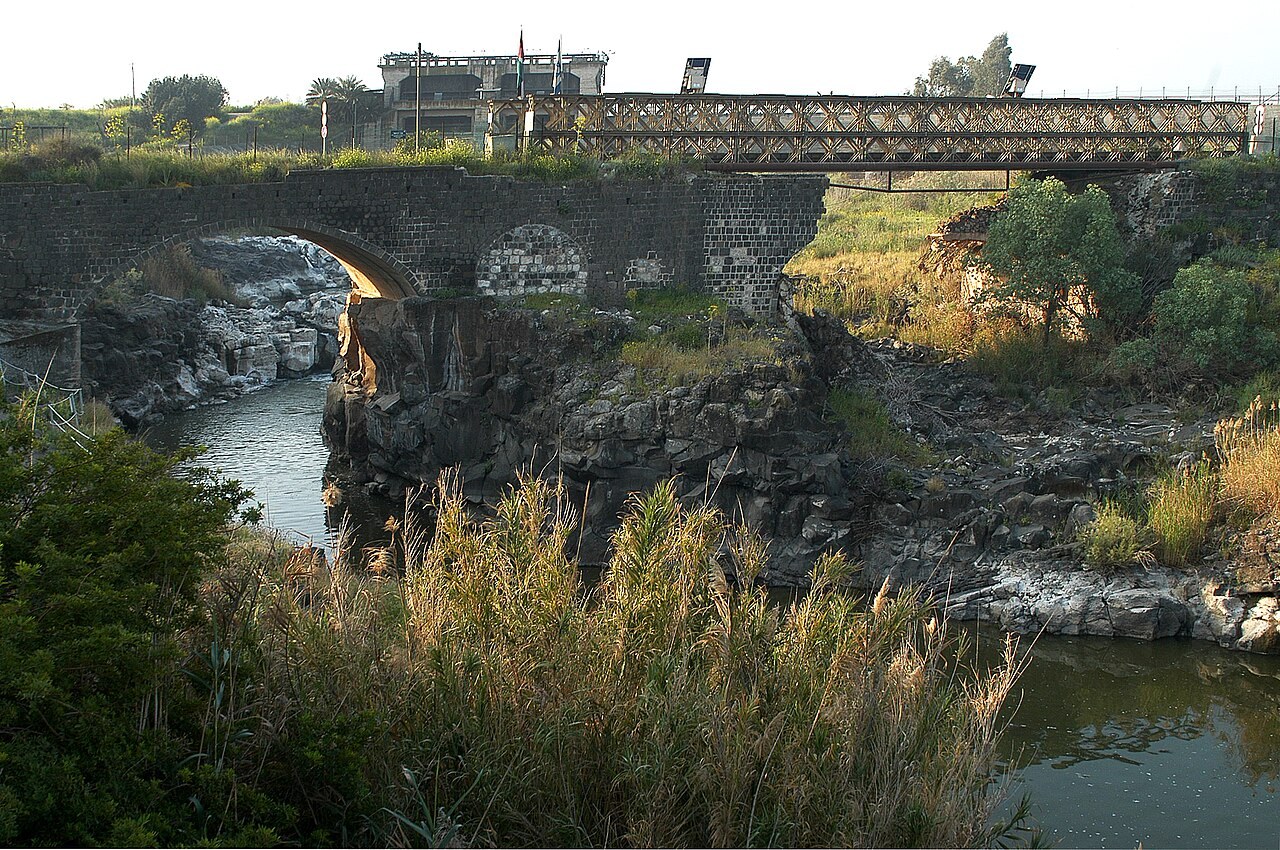
In early 1931, all preparations at the Naharayim station were complete, and Rutenberg sent a message to the chairman of the board, Gerald Isaacs, saying the station would be operating very soon. On the Friday after the letter was sent, the Yarmouk overflowed its banks, and within minutes half the station was destroyed. Rutenberg was silent, went into his room, held his head in his hands, and sank into a deep depression. When he arrived at Naharayim to survey the damage, representatives of the workers approached him and offered to work for free in exchange for food, which would be provided until all the damage was repaired. The workers' offer moved Rutenberg, and he replied, "You keep working as you should, and I'll take care of the money." From then on, employees of the electric company have received free electricity. Rutenberg returned to Europe and raised the money to restore the station.
In the winter of 1932, the station began undergoing tests, and in June 1934 (the same month the previous stations had been inaugurated) it was formally opened in a ceremony attended by High Commissioner Sir Arthur Wauchope, King Abdullah, who was even given the honor of pressing the switch that activated the station, and the British Commissioner for Transjordan, Colonel Cox. No official representative of the Jewish leadership was invited, something Chaim Weizmann resented. Pinchas Rutenberg's dream had come true.
Rutenberg, who was at that time the country's largest employer and was known for caring about the welfare of the electric company's employees, built residential neighborhoods at Naharayim for the station's workers and their families. He paid high wages and never had to deal with a strike. After a workplace accident in which four station workers were killed, Rutenberg erected a memorial in their honor. At his request, Bialik wrote an inscription for it: "In the primordial labor of light and power, the light of their lives faded. Each fell at his post - with the Jordan, their names will live on." The memorial still stands today.
Rutenberg, who was held in high regard by the Jewish leadership in Israel, served two terms as president of the National Council (the body that represented the Jews before the British Mandate authorities). His first term began in August 1929, when he tried but failed to bring about a Jewish-Arab agreement. He was elected again in September 1939, but resigned shortly afterward because of the cancer he had developed. He retired to his home on Mount Carmel, withdrew from the world, and the only person who visited him was his brother Avraham, who took over the management of the electric company. In November 1941, he met with several company employees, but his illness was kept secret.
At the end of December, his condition worsened and he was admitted to Hadassah Hospital on Mount Scopus. On Saturday, 03.01.1942, Pinchas Rutenberg died at the age of 63. At his request, he was buried on the Mount of Olives: "May he be granted the honor of being buried on the Mount of Olives in Jerusalem, among the ranks of the humble laborers; may his funeral be conducted according to Jewish tradition, without wreaths or books, and may no streets, neighborhoods, villages, or settlements be named after him." Rutenberg bequeathed his home, money, and property to a fund intended to promote the education of young people, who are "our hope for the future," and his private home became an educational center.
Several weeks before his death, he wrote: "The division of our people into sects, communities, and parties has always been our undoing. Civil war has brought us to the edge of the abyss, and if it does not cease, it will destroy us... Therefore, my request and my testament to the Yishuv and to the young generation growing up within it: always remember that it is not Jews of one sect or another, of this party or that, who are persecuted and trampled, but the Jewish people as a whole... Whether we want to or not, we are brothers in misfortune - let us understand this and become brothers in life, in creation, in action, and in building... Our youth are our hope for the future. Their proper Hebrew education is the guarantee of our survival. The principles of their proper education are rootedness, understanding and knowledge, unity and brotherhood, seriousness and loyalty. To educate the young in this spirit, I dedicate the income from all my property, transferred and to be transferred year after year, to the Pinchas Rutenberg Fund. May this capital and its income serve as the beginning of a fund for educating the young in the spirit of unity and brotherhood, in the spirit of Israel... I ask the fund's trustees to carry out my wishes."
תגובות
עדיין אין תגובות.