
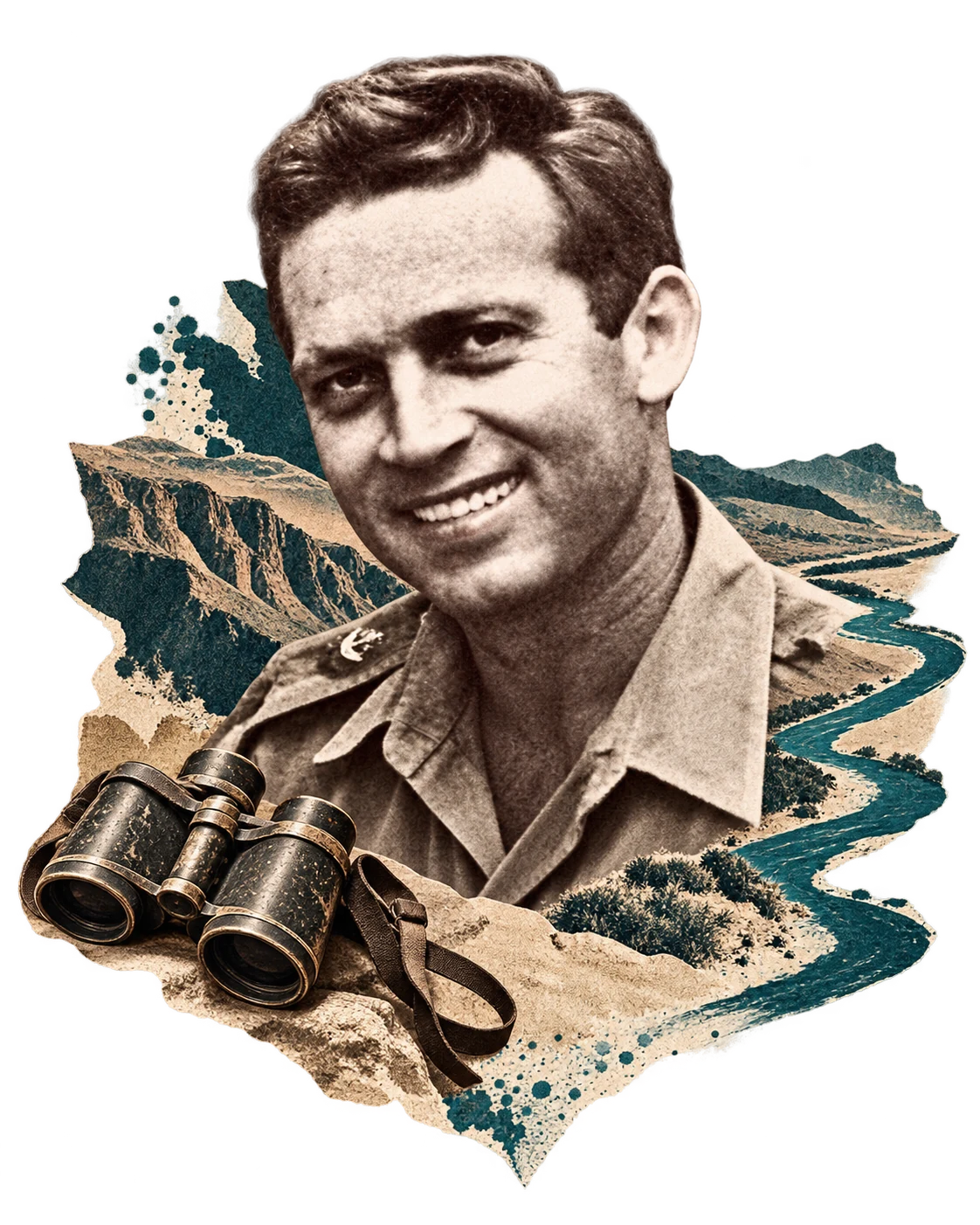
Between the Six-Day War, when we felt invincible, and the Yom Kippur War, when we felt defeated, there was another war, a war without glory: the War of Attrition, in which 141 Israelis were killed.
Land of the Pursuits in the Jordan Valley
Alongside the War of Attrition waged by Israel and Egypt in the Suez Canal sector, another front stretched through the Jordan Valley, along the Israel-Jordan border. It was known as the "Land of the Pursuits." The fighting there was nothing like conventional warfare with tanks and aircraft. As Ze'ev Boneh, then operations officer of the Haruv Reconnaissance Unit, put it: "The Wild West could have learned from us." Yossi Koller, who commanded the unit, recalled: "My soldiers didn't want to go on leave, so they wouldn't miss the action... It was a turbulent, fascinating time, with no media, no lawyers and no questions. It was a war."
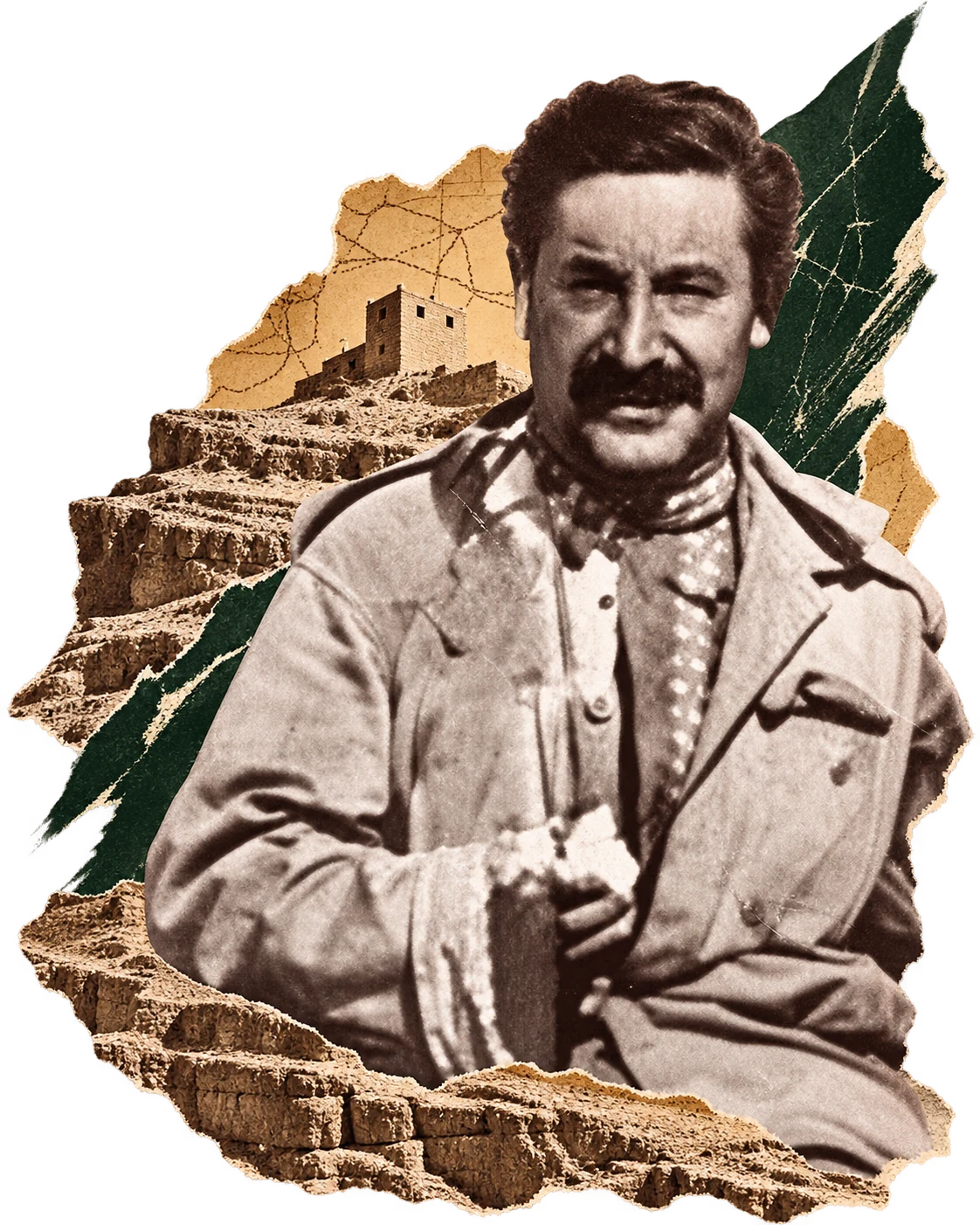
And the Wild West had one sheriff: Central Command chief Rehavam ("Gandhi") Ze'evi.
The Six-Day War drove many Fatah members into Jordan as they fled the fighting. There they regrouped under the leadership of Yasser Arafat and began crossing the border in small squads, some of them intending to carry out attacks. Fearing they would join up with the Arab population living in the central highlands and recruit them for sabotage operations, Israel decided to stop them at any cost.
The task of eliminating the squads was assigned to the Paratroopers Brigade, commanded by Colonel Arik Regev, who had replaced Rafael Eitan. In the early stages, the forces operated in the field without an established doctrine for fighting the squads. Yossi Koller, then the brigade's operations officer, recalled: "Each officer took three or four guys and formed a pursuit team, and that's how things went. It was Sodom and Gomorrah." The motto was "Forward, charge!"
On the morning of July 26, 1968, it was clear that this would be no ordinary day. Tracks on the raked-earth strip along the border signaled that a pursuit would soon begin. The officer commanding the trackers followed the trail. The tracks reappeared on the Jiftlik-Jericho road, about five kilometers south of where they had first been spotted. Regular troops from the Haruv and Dukhifat reconnaissance units were summoned to the area, along with reserve paratroopers from Battalion 65, commanded by Levi Hufash of Kibbutz Afikim. The brigade commander, Colonel Arik Regev, also arrived, as did his close friend Captain Gad Manela, his deputy and the brigade's operations officer.
Arik Regev's Path
Arik Regev was born in Poland in 1933. When he was one year old, his family immigrated to the Land of Israel and settled in Kibbutz Ayelet Hashahar. Officers who came to persuade Arik and his friends to enlist in the Paratroopers showed them the film "Objective, Burma!" - not very wisely. It depicted the Japanese wiping out paratroopers, and included a terrifying moment when one paratrooper's parachute caught on the tail of an aircraft. Surely, after seeing the film, the young men had every reason not to enlist in the Paratroopers. But Arik was undeterred. In 1950, he enlisted in the Paratroopers' 890th Battalion and rose to the rank of sergeant. He took part in several reprisal operations, succeeded in all of them and earned the acclaim he deserved. He appeared in the country's first documentary film, director Alfred Steinhardt's "The Spearhead," which portrayed the training and lives of the paratroopers. He then appeared in a feature-length film, "Hill 24 Doesn't Answer," playing a new immigrant soldier who sacrifices his life in a battle to clear the Egyptian positions. That was how he earned the nickname "the movie star."
Arik Regev feared that the terrorists would join up with local residents, so he blocked the route westward. Gad Manela spotted suspicious movement in a cave in the cliff, not far from Moshav Patzael. The terrorist squad that had infiltrated the country split into three smaller groups: one took up position in the cave, another in the area above the cliff, and the third on a hill 1.5 kilometers north of the cliff. The force approached the cave, and a firefight broke out. At that point, it was decided to send a helicopter to the cliff above the cave. Several soldiers from the Haruv reconnaissance unit who had been aboard the helicopter began making their way down toward the cave under Bilo Mishori's command. Bilo, who was a big, heavy man, lost his balance, fell off the rocks and was injured. His brother Nachman, who was on the slope below, witnessed the incident. After completing his military service, Arik Regev dreamed of becoming a farmer, but Ariel Sharon pressed him to return to the army, and in 1956 he rejoined the Paratroopers. Before the Sinai Campaign, he became a company commander under Rafael Eitan, known as Raful. In 1956, he parachuted into the Mitla Pass and was among the few paratroopers entitled to wear parachute wings with a red background, signifying participation in an operational jump. At the end of the war, he was appointed deputy commander of the 890th Battalion under Raful, in the same battalion where he had completed his basic training. The IDF General Staff recognized his abilities and sent him to take part in a special US Army commando course known as "Rangers," a grueling course that few people in the world manage to complete. Arik arrived for the course after undergoing four surgeries on his hand, but that did not stop him from graduating with distinction. Many predicted that one day he would become the IDF chief of staff. After the Six-Day War, he was appointed commander of the Jordan Valley. He began improving the tactics used against the terrorists and succeeded in almost completely stopping the squads from infiltrating.
I will always remember the valley as if in a dream - the man passes by like a traveler, biting into an apple, amid dust and wind, riding on the back of a truck to the Jordan Valley.
At this point, brigade commander Arik Regev decided to take a helicopter up to the northern ridge. With him were Gad Manela, his deputy and operations officer; Hezi Shelah, deputy commander of a reserve paratrooper battalion; and two sergeants from the regular reconnaissance units. When the helicopter landed, Arik was determined to bring the battle to a swift end and ordered an assault. He gave orders over the radio and charged forward, leading by example. A terrorist lying in wait behind a rock opened fire from a distance of fifty meters. One bullet pierced Arik's forehead, and another struck Gad Manela in the heart. Hezi Shelah, the reserve battalion's deputy commander and father of MK Ofer Shelah, threw a grenade at the terrorist and killed him. By the end of the pursuit, eight terrorists had been killed and one captured.
A rainbow hangs in the clouds, but the radio still whispers, a word or two, like the beating of wings. Answer me, "Roger, out," says the man from the Jordan Valley.
Death and Remembrance
Arik left behind a wife and three children. At his funeral in the military cemetery at Kiryat Shaul, Moshe Dayan eulogized him: "In our generation, the young among our sons safeguard the nation. They devote to it the lives they have yet to live, and pave its way into a new era with the blood they shed. Arik Regev was among the finest of our young commanders... the boldest among the brave, the first to break through... The State of Israel, born in war, has for more than 20 years been unable to sheathe its sword. The War of Independence, the reprisal operations, the Sinai Campaign, the Six-Day War, and now the war against terror. One war follows another. One battle chases the next. We do not say farewell to those who have fallen, because we cannot fulfill our mission without the faith, devotion and example that shine out to us from the graves of our finest comrades, fallen at our side."
The legends are beautiful, until suddenly they take flight, only God knows where. I built a tower, where I dreamed alone of my prince on a white horse.
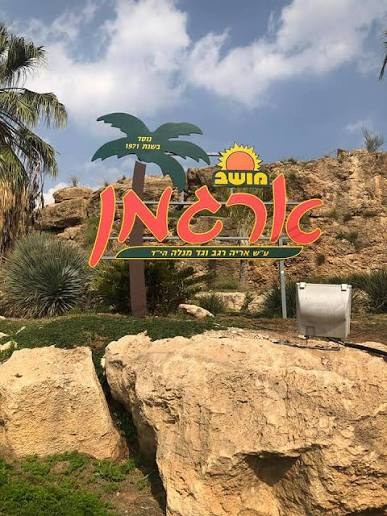
In memory of Arik Regev, Haim Hefer wrote the song "The Man from the Jordan Valley," which was set to music and arranged by Moni Amarilio. The moshav Argaman in the Jordan Valley was named in memory of Arik Regev ("Ar") and Gad Manela ("Gman"). The name was chosen by the late Rehavam Ze'evi.
תגובות
עדיין אין תגובות.