
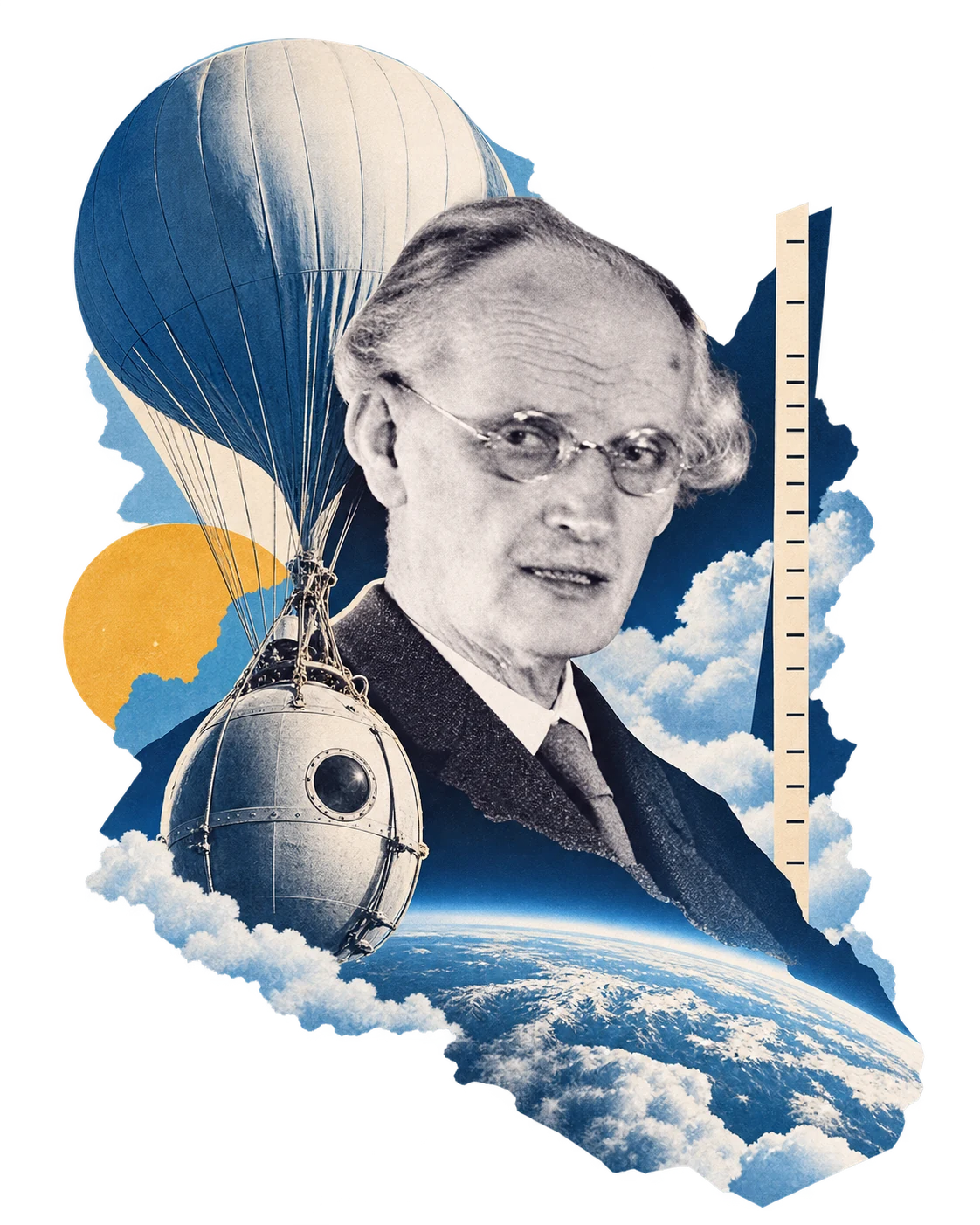
This time, we will tell the story of three generations of scientists who explored the edge of the world. Each one risked his life and opened doors for us. Each, in his own way, achieved feats that astonished the world and advanced research in his field. Each is an inspiration to many, and each deserves our respect and admiration.
In 1783, France was abuzz with talk of the Montgolfier brothers' exciting invention: the hot-air balloon. In September of that year, the Montgolfier brothers were invited to meet King Louis XVI, and an unmanned balloon demonstration was held at the Palace of Versailles. The king and the nobility, dressed in their finest clothes, watched in amazement as the giant balloon rose to a height of 500 meters.
Months later, in November 1783, the world's first manned hot-air balloon took to the skies. The two pilots who flew it reached a height of 100 meters and flew over Paris.
A month later, before the eyes of some four hundred thousand spectators, the French inventor, scientist, mathematician, and physicist Jacques Charles and an assistant climbed into the balloon's basket. Charles's balloon was filled with lighter-than-air hydrogen so it could rise to a greater height. Charles waved to the crowd, and the balloon soared upward, reaching a little over five hundred meters before the two pilots returned to earth. But Charles hoped to go higher. There was still enough hydrogen in the balloon to carry one person. He asked his assistant to leave the basket and ascended alone. He passed 500 meters, then 2,000 meters, and kept rising, but then began to feel that something was wrong. The air around him grew sharply colder, and a freezing chill began to envelop him. Suddenly, a terrible pain gripped his ears, an internal pressure that seemed about to tear his eardrums. Alarmed, Charles hurried to release gas from the balloon, and it began its descent. Jacques Charles landed safely, but the adventure was apparently enough for him. It was the last time he flew in a balloon.
Jacques Charles's story made it clear that flying at high altitudes is dangerous for people! Almost 100 years passed before researchers dared to investigate and understand why it was so dangerous.
The Danger of High-Altitude Flight
Between 1862 and 1866, British meteorologist Dr. James Glaisher began studying the upper layers of the atmosphere and how the air currents there affected the weather in the lower layers. To do this, he had to ascend in a balloon. Glaisher enlisted the help of Henry Coxwell, an experienced balloon pilot who had made hundreds of flights between England and France. Together, the two made twenty-eight flights to various altitudes and took a wide range of scientific measurements.
The most famous flight the two made was on September 5, 1862, when they decided to ascend by balloon to a height of eight kilometers for the first time. At around five kilometers, Glaisher began to feel mildly short of breath. At the same time, the air around them grew rapidly colder. Like Jacques Charles before them, Glaisher and Coxwell were unprepared for the dramatic changes. The temperature dropped below freezing, and the two shivered with cold, but they did not give up and continued to rise.
When the balloon reached a height of eight thousand meters, Glaisher's vision began to fail until he could no longer see the mercury column in the measuring instrument. A short time later, he could no longer move his arms and gradually lost the ability to move. His vision darkened, his mind slowly stopped functioning, and he came close to losing consciousness. Coxwell realized that he was suffering from a lack of oxygen. With his last remaining strength, he climbed out of the basket and, holding the ropes with his elbows, gripped the gas-release cord between his teeth and pulled it. The balloon began to lose altitude. When they reached a height of five kilometers, Glaisher began to wake from his faint. After this flight, like Jacques Charles, Glaisher stopped trying to reach such dangerous heights. He found that, under certain conditions, air currents, temperature, and humidity changed in the layers of the atmosphere, thereby significantly advancing the science of weather forecasting.
The next attempt to climb to a great height came in April 1875. Three Frenchmen, Tissandier, Spinelli, and Sivel, climbed into a balloon and took off. After passing the seven-kilometer mark, Tissandier lost consciousness. Some time later, he awoke and discovered that, for some reason, their balloon was rapidly losing altitude. Beside him, on the floor of the basket, Sivel and Spinelli lay dead. This time, altitude had claimed lives.
This disaster provided clear proof that surviving at enormous heights required more advanced technology, capable of enclosing and protecting the pilot from the severe cold while also supplying oxygen at the pressure found at the Earth's surface. Until the 19th century, no such technology had been invented, but then the Piccard brothers appeared...
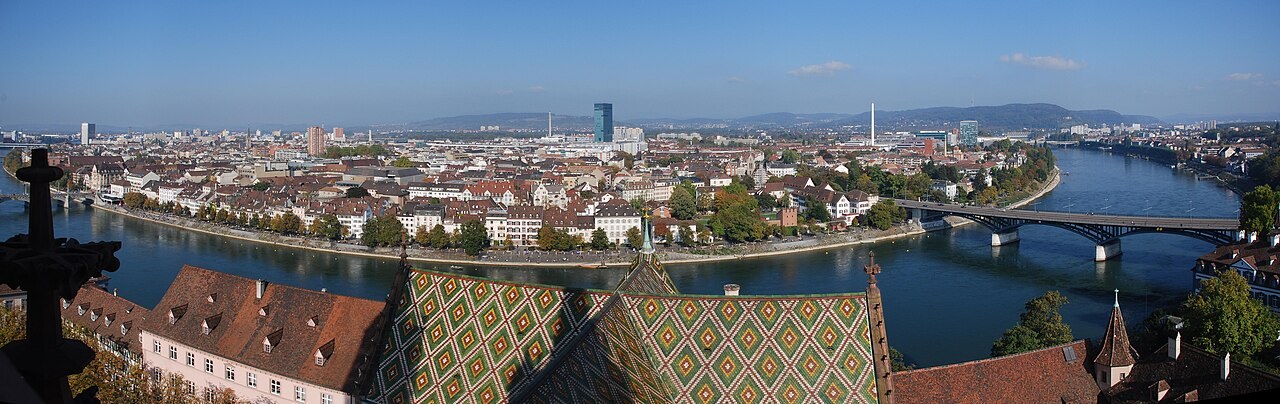
Auguste and his twin brother Jean Piccard were born in Basel, Switzerland, in 1884, into a family of scholars. Their father, Jules Piccard, was a professor of chemistry. Even as children, the Piccard brothers showed great interest in science.
While they were students at the Zurich Polytechnic, the brothers began designing a balloon that could reach the stratosphere and withstand atmospheric pressure. Their goal was to reach the stratosphere and take measurements of cosmic radiation there. The research was led by Auguste Piccard, who worked with Albert Einstein to build instruments that could measure the radioactivity of the atmosphere.
On May 27, 1931, Auguste Piccard and his assistant Paul Kipfer took off in a balloon from Augsburg, Germany. The flight lasted 17 hours, during which they reached an altitude of 15,781 meters (51,775 feet). From there, in the depths of the stratosphere, Auguste looked down at the Earth stretching out below him and smiled with satisfaction. He had set a world record. No one had ever reached such a height. Some say that from that altitude, looking west, he saw the past, and looking east, he saw the future. Auguste survived at that height and even felt comfortable because, in the special pressure cabin he had designed for the purpose, he equalized the cabin pressure to the pressure the human body is accustomed to at ground level. This was a major innovation at the time, making it possible to reach that height without endangering the passengers. In fact, to this day we use the same technique Auguste Piccard used. The air pressure in every passenger airplane is kept at a normal level, allowing passengers to maintain their natural breathing habits.
On the way back to the ground, Piccard and Kipfer discovered that one of the valves through which air was supposed to escape was blocked. They remained aloft for many hours longer than planned, and only in the cool of the night did the two manage to bring the balloon back to solid ground. When they finally landed, they discovered that they were on a glacier in the heart of Austria, near a remote village called Obergurgl. For several days, people believed they had died on the altar of science, until they were found.
The two were the first people in history to reach the stratosphere. Auguste Piccard and Kipfer were declared the first astronauts by NASA.
The Piccard Brothers Conquer the Stratosphere
The Piccard brothers later conducted several more experiments in an effort to break their own record.
In 1932, equipped with a new cabin fitted with a radio, Auguste Piccard reached an altitude of 16,940 meters. In 1934, his brother Jean and Jean's wife, a pilot, ascended to 17,550 meters.
Over the course of 27 such flights, Auguste Piccard broke the record for the highest altitude reached by a human being several times, eventually setting it at more than 23 km! Heights that had seemed unimaginable at the time.
At this point, Auguste Piccard felt he had reached the limit of the sky. In the mid-1930s, he realized that the pressure cabin he had built could also help explore the oceans, and he turned his interest in the opposite direction, toward the sea.
The identical twins Auguste and Jean Piccard died in early 1962, just a few months apart. They were considered among the greatest scientists and adventurers in Europe and throughout the world.
With Auguste's death, the star of his son Jacques began to rise as a partner in an astonishing achievement aboard the Trieste, a small manned submersible invented by his father, Auguste. We will tell his story next week

תגובות
עדיין אין תגובות.