
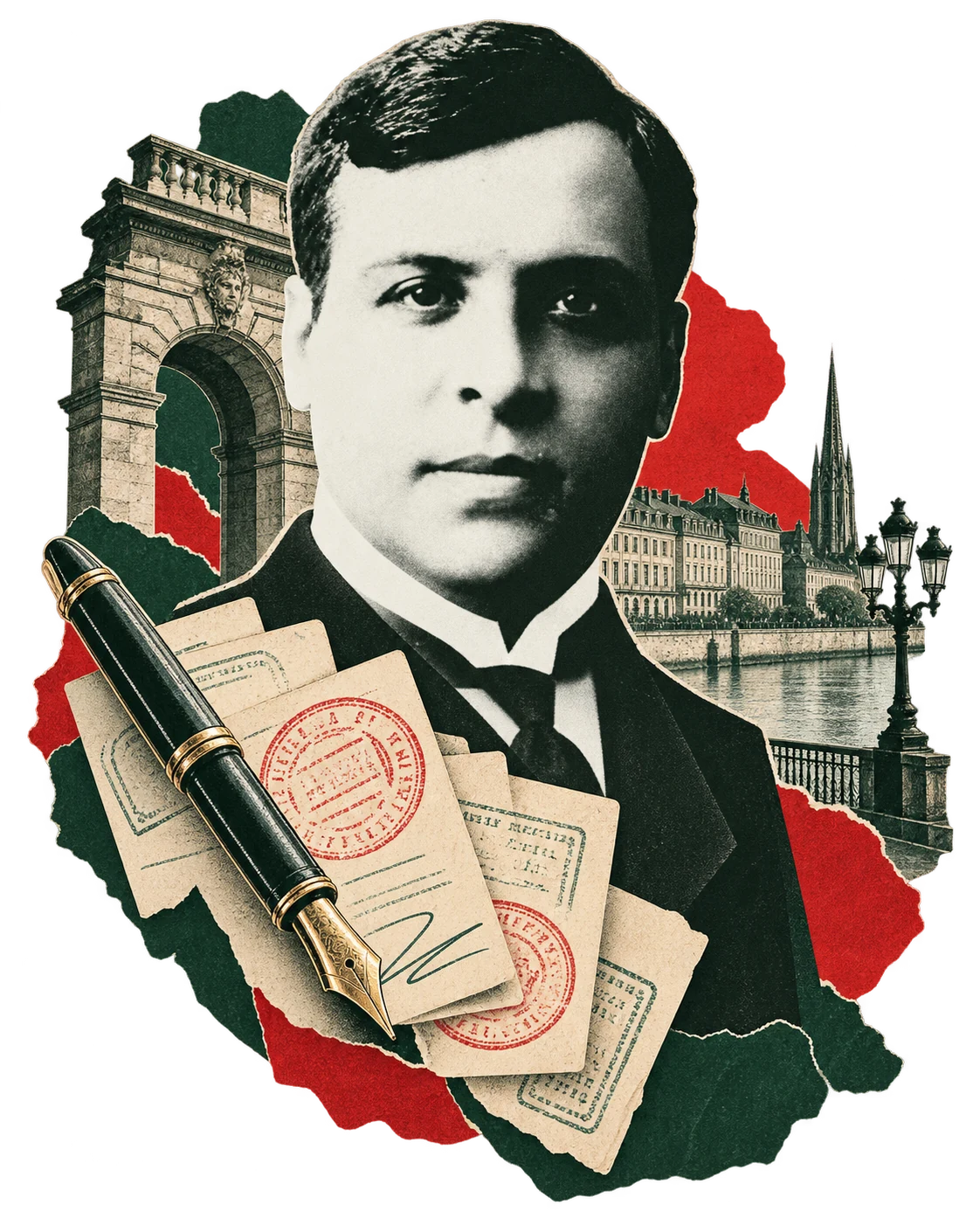
'The rebellious consul,' as he was called at the ceremony where he was named Righteous Among the Nations. The number of Jews he saved places him just after Raoul Wallenberg, yet despite his deeds, few people know about him.
The Road to Bordeaux
'Blitzkrieg' (lightning war) is a terrifying, devastating military doctrine developed by the Germans. It relies on rapid movement and the use of the overwhelming firepower of tanks and aircraft to break through enemy lines and bring about a swift victory. Some German soldiers taking part in such operations were under the influence of drugs so they could withstand the enormous pressure. The first time the Germans used this method was in September 1939, when they crushed the Polish army in just 28 days. Part of the strategy was to bomb the civilian population in the rear in order to demoralize the fighting forces. The sound of German aircraft became known around the world as 'the death rattle of the German people.'
The French believed they were protected by the 'Maginot Line,' a line of fortifications France had built along its borders with Germany to stop German tanks if necessary. On May 10, the Germans launched their second Blitzkrieg and raced into Belgium, bypassing the Maginot Line. Five days later, French Prime Minister Paul Reynaud realized that the French army had been defeated.
The French army retreated south, and panic and chaos took hold across France. Many refugees fleeing toward the southwest were stranded on muddy roads. Hundreds of thousands of French people joined the long columns of Belgians, Dutch, Poles, and Jews - masses of people with a single aim: to get away from the Germans.
The columns of refugees that filled France's roads for hundreds of kilometers were called 'the people of the catastrophe' by French writers. When their vehicles ran out of fuel, the refugees continued on foot, hungry and exhausted. They were all headed for the city of Bordeaux, and from there to neutral Spain and Portugal. The refugees on the roads of France were like sitting ducks. German pilots flew at treetop level and rained fire on refugees fleeing in every direction. When the silence returned, bodies lay along the roads, and those who had survived continued on their way. Four days after the attack, Bordeaux's daily newspaper, La Petite Gironde, reported the imminent mass arrival of refugees. Little by little, the city filled with thousands of refugees sleeping in the streets and parks. The Jews gathered around the city's synagogue.
In his letter to Yad Vashem, Chaim Kruger described what happened there: "Toward evening, a large car arrived with a driver, and suddenly stopped beside us. The aforementioned diplomat got out and spoke to me. He invited me to come to his home with my wife, the rebbetzin, and our five children. At the time, our eldest was 10 and the youngest was 2. When we arrived at his home, he told me that he was the Portuguese consul general in France and that he had 13 children. He offered us the use of every comfort in his apartment... I thanked him for his kindness. In the morning, we returned to our brothers lying in the streets, and later I went back to speak with him and explain that we had only one hope of being saved - if he would give us visas for Portugal... Mr. Mendes told me that he would give visas to me and my family, but that regarding the other refugees, he would have to consult his ministry in Lisbon."
The Portuguese Consul in Bordeaux
Aristides de Sousa Mendes and his twin brother, César, were born in July 1885 in northern Portugal into a Catholic, aristocratic, and wealthy family. Their father, José, was a high court judge, and they learned to respect the law. In 1907, they both completed their law studies at the historic University of Coimbra. César would later become foreign minister in the government of the dictator António de Oliveira Salazar, while Aristides built a diplomatic career.
Before entering the foreign service in 1910, Aristides married his childhood sweetheart, his beautiful cousin Angelina, or 'Gigi,' as he called her. Over the years, they had 14 children. She was a modest woman with a huge heart and extraordinary courage. She joined her husband on all his assignments, both pleasant and arduous. Together they worked in British Guiana, Spain, California, and elsewhere. Family time was one of the most important things to Aristides, so he made sure to have dinner with his family every day, and every Sunday the family went to the church near their home.
The year 1929 was a good one for the Aristides family. The diplomat was promoted to consul general and posted to the bustling Belgian port city of Antwerp. They lived in nearby Leuven, where their two youngest children were born, while their older children were already studying at university. Antwerp was the most rewarding assignment of Aristides's career. He became one of the city's most important diplomats, and regularly hosted the mayor and other distinguished guests in his home's salon, including playwright Maurice Maeterlinck and even Albert Einstein. They spent their holidays in Portugal at the renovated family estate that had belonged to the family for many years. The year 1934 was a difficult one for them. One evening, when the family had gathered to celebrate their second son Manuel's graduation from university, he fainted and died. Two months later, while the family was trying to recover from the first tragedy, they lost their youngest son. His death changed the family's life forever. The family wanted to leave the place that had become a painful reminder of loss and move to the Far East. Aristides's request was denied, and he was transferred to Bordeaux, France. In August 1938, the family moved to the French port city and settled on Rue du Roi Louis XVIII. The house was large, with ample living space as well as offices. Gradually, life returned to normal. The children settled into local schools and made new friends. They loved the pleasant, sunny weather and the family's outings in the French countryside.
Circular No. 14
Then World War II broke out. Aristides sent his children to Portugal, far from the fighting, and stayed in France with his wife Angelina and their two older children, who preferred to remain with their parents. Aristides's concern for people whose lives were in danger, and his willingness to help them at the cost of defying clear orders, were evident even before the stream of refugees reached Bordeaux. His clashes with the Foreign Ministry in Lisbon began with two visas he issued. The first was given in November 1939 to the Jewish refugee Arnold Wiznitzer and his wife; the second was issued in March 1940 to Dr. Eduardo Neira Laporte, a republican doctor from Spain. The Wiznitzer couple and Dr. Laporte faced the danger of imprisonment in French concentration camps. For issuing these visas, Aristides was reprimanded by telegram from Lisbon: "Any further violation or offense in this matter will be considered a breach of discipline and will constitute grounds for disciplinary proceedings, in which it will be taken into account that his actions (those of the consul), which call for warnings and condemnation, are repeated." By the time the mass flight of refugees began in the spring of 1940, he had already received a warning letter and was in the Lisbon government's sights.
At that time, Portugal was ruled by the dictator António de Oliveira Salazar, whose inclinations were fascist, but who was more moderate than the regimes in Germany, Italy, and even Spain. He declared neutrality, thereby preserving his rule for many years, but at the same time he did not want to anger Germany or Spain. In November 1939, the Foreign Ministry in Lisbon issued 'Circular No. 14' to all Portuguese embassies and consulates around the world. It set new regulations restricting the issuance of entry permits to certain groups of people, who would require special approval from the ministry. The categories included 'Jews expelled from the countries of which they are citizens or from the countries they are leaving,' 'stateless persons,' and 'all those who cannot safely return to the countries from which they came.'
Three Days of Rescue
On June 16, 1940, Aristides could not sleep. Thousands of refugees had gathered beneath his window at the consulate building. He had hosted Rabbi Chaim Kruger in his home after his visa application was denied. Aristides promised the rabbi that he would secure visas for him and his family, but the rabbi refused, saying, "It is not only I who needs help, but all my Jewish friends, whose lives are in danger." The rabbi's words gave Aristides no peace; they struck at the heart of his Catholic upbringing and love of humanity. The next day, Aristides decided to issue a visa to anyone who asked, free of charge. He explained to his staff: "My government has rejected all the visa applications, but I cannot let all these people die. Our constitution says that a person's religion or nationality cannot be used against them. I have decided to act according to this principle. I am going to approve a visa for anyone who asks for one, and even if they dismiss me for it, I can do nothing but act as a Christian and follow the dictates of my conscience." Together with the Spanish diplomat Eduardo Propper de Callejón, and with the help of Rabbi Kruger, Aristides's wife, and their two sons, who also joined the effort, he spent three consecutive days stamping thousands of refugees' passports with entry visas. Those without passports were given slips of paper bearing the longed-for visa. About 30,000 refugees received visas that saved their lives, including about 10,000 Jews. This made Aristides the person who saved the largest number of Jews after the Swedish diplomat Raoul Wallenberg. Among the thousands who owed him their lives were members of the Habsburg royal family, led by Otto von Habsburg, heir to the Austro-Hungarian throne; pianist Norbert Gingold; French writer Charles Oulmont; Polish-Jewish writer Julian Tuwim; surrealist artist Salvador Dalí; members of the Rothschild family; and most of the future Belgian government-in-exile.
The issuance of visas did not end in Bordeaux. When Bordeaux was bombed on June 19, Aristides went with many refugees to the city of Bayonne, near the Spanish border, leaving his wife and two sons behind. In Bayonne, he continued issuing visas. Three days later, he received telegrams from Salazar ordering him to stop, but he was already on his way to the border town of Hendaye. The Portuguese ambassador in Spain tried to stop him from continuing. In a report to Lisbon, he noted that Aristides was behaving 'like a deranged person' and had stayed with the refugees in the street to help them. As border controls tightened, Aristides used his familiarity with the procedures to lead a column of refugees across at a small crossing, which he used to avoid traffic jams on his way back to Lisbon. Rabbi Chaim Kruger wrote: "When we arrived at the Spanish border, an order had already come from the ministry in Portugal stating that all the visas issued by the aforementioned consul were invalid. It was Friday evening. We asked the border guards to let us cross the border in transit through Spain. While we stood there pleading with the guards, the aforementioned consul appeared and told us to wait a little, because he wanted to speak with the border guards. An hour or two later, he himself opened the gate for us, and everyone who had a visa from him was allowed to cross the border. From there, we boarded a train that went straight to Lisbon..."
As a result of Aristides's frenzied efforts, Portugal became one of the countries that opened its doors to the largest number of refugees in Europe. The media and the entire world praised Salazar, Portugal's ruler, for his good intentions...
From Punishment to Commemoration
Salazar did not forgive Aristides, and punishment soon followed. He was urgently summoned to Portugal and put on trial behind closed doors. In an affidavit submitted to his judges, he wrote: "Indeed, my aim was to save all those people, whose plight was beyond description. The dictates of my conscience... never ceased to guide me in fulfilling my duty, with full awareness of my responsibility." But it did not help him.
At the age of 55, Aristides was declared professionally unfit and dismissed from the Portuguese foreign service. His pension was taken away, as was his license to practice law. He was left with nothing. During the final decade of his life, he lived in extreme poverty. His attempts to appeal or obtain a hearing came to nothing. His twin brother, the former foreign minister, intervened, and was himself suspended from his position for five years. When Rabbi Kruger expressed his sorrow to Aristides for the suffering he had endured as a result of his actions, he replied: "If millions of Jews can suffer because of one Catholic (Hitler), one Catholic can suffer because of millions of Jews."
A few weeks before the end of the war, Aristides suffered a stroke and was left partially paralyzed. In 1948, his wife Angelina died of a cerebral hemorrhage. In the final years of his life, Aristides and his children had to eat at the Lisbon soup kitchens run by the Hebrew Immigrant Aid Society (HIAS). On April 3, 1954, Aristides de Sousa Mendes died in a Catholic hospital in Lisbon. His death was mentioned in only one newspaper, published in the Belgian Congo. His children moved to Belgium, Africa, Canada, and the United States. Most of the refugees he had saved, both Jews and non-Jews, stayed in Portugal for a short time before moving on to the United States and Latin America.
Gerald, a grandson of Aristides and Angelina, said: "No one in our very large extended family ever expressed regret about Grandpa's choice... My father says that his parents made the decision to ignore the official orders together, and never once regretted it, despite all the suffering they went through. As for the sons and grandchildren, we have always been very proud of what he did. We knew that he had saved the lives of many, many people."
In 1966, 12 years after his death, Yad Vashem named Aristides Righteous Among the Nations for his efforts to save tens of thousands of Jews.
In 1987, his ninth son, John Paul Abranches, who lived in California, established the International Committee to Commemorate Aristides de Sousa Mendes. That same year, Portuguese President Mário Soares awarded Aristides the Order of Liberty and publicly apologized to the family for the injustice inflicted on him by Salazar's government.
Some of the refugees he had saved appeared before the Portuguese parliament, and a year later the parliament unanimously decided to officially reinstate him in the records of Portugal's diplomatic corps. That same year, he was also awarded honorary citizenship of the State of Israel. In 1994, the president of Portugal inaugurated a statue of him in Bordeaux.
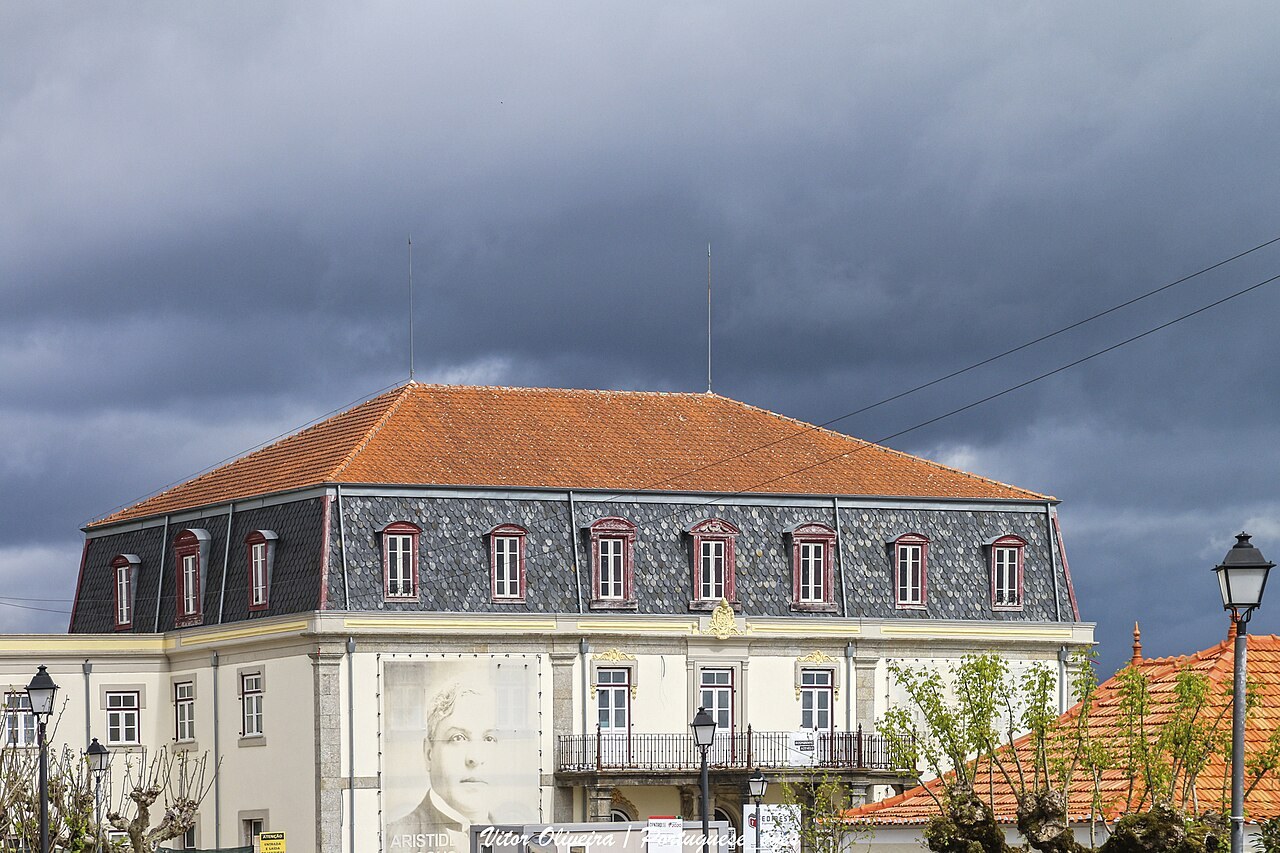
Aristides's story became widely known, and he was awarded the Grand Cross of the Order of Christ, bestowed by the Portuguese Red Cross. In 1952, his son, Sebastião Miguel Duarte de Sousa Aristides, wrote the first book about his work. In 2004, Yad Vashem published José Ruy's comic book, Aristides de Sousa Mendes - A Hero During the Holocaust. In 2011, a Portuguese-language drama film based on his story, The Consul of Bordeaux (O Cônsul de Bordéus), was produced. In 2014, Portugal's national airline, TAP, named an aircraft after Mendes. In 2017, a museum documenting Aristides's rescue efforts opened in Vilar Formoso, a border town between Portugal and Spain. In 2020, the Portuguese parliament inaugurated a memorial in his name in Lisbon. A street in Tel Aviv is named after him. In Petah Tikva, a public garden bears his name, and a square in Jerusalem was named after him.
תגובות
עדיין אין תגובות.