
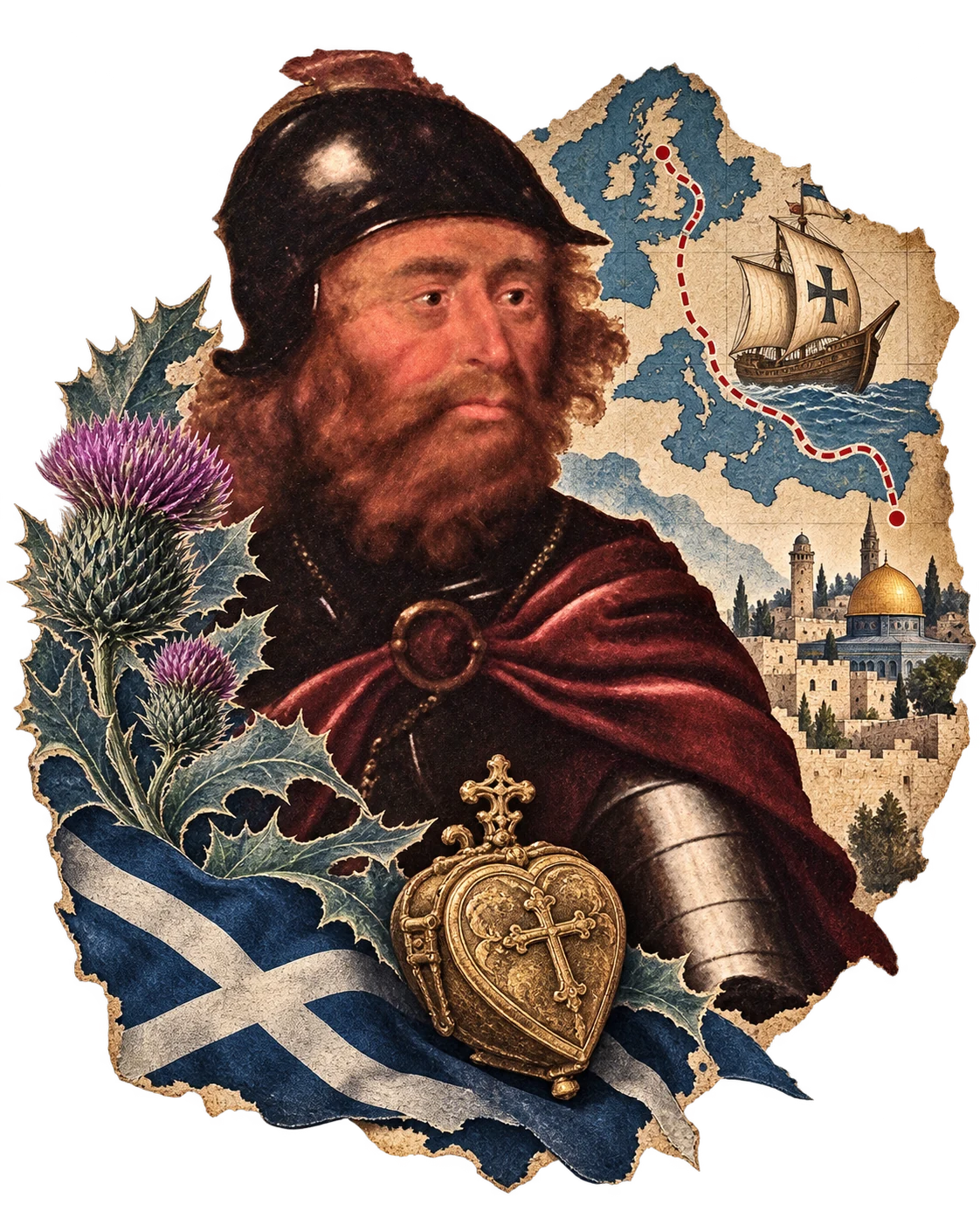
The first independent Scottish king. For many years he fought the English until he won independence for his people. As he approached death, he asked for his heart to be buried in Jerusalem.
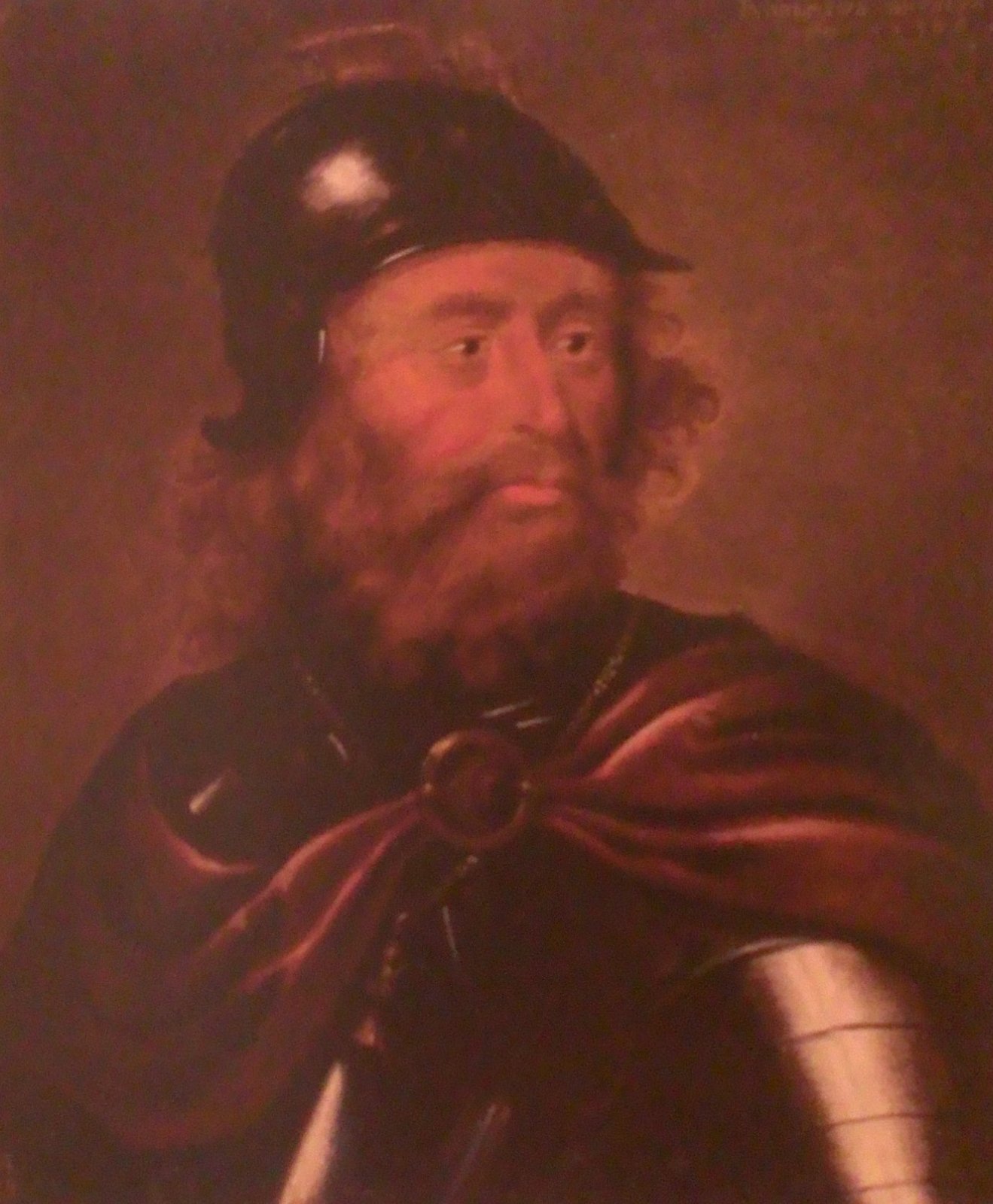
In 1066, Robert de Brus, a descendant of the de Brus family from Normandy, accompanied his duke to the shores of England. The duke was 'William the Bastard,' later known as 'William the Conqueror' after he conquered England and became king of England and Scotland. In return for his service, Robert received an estate in Yorkshire from William the Conqueror. His son, also named Robert de Brus, acquired Annandale in Scotland and became a close associate of the king. Several generations later, through marriages to women from the royal family, the de Brus family became claimants to the throne.
The Succession Struggle in Scotland
The political cunning of Edward I, king of England (also known as 'Longshanks' because of his height and nicknamed 'the Hammer of the Scots' for his cruelty toward them), along with his powerful army and deep pockets, gave him the means to divide and set the Scottish noble houses against one another, and rule over them. By around 1290, the Scottish nobility was divided over who had the right to inherit the throne of Scotland. Edward I of England was invited to settle the dispute, but his basic condition was that whoever he chose, he himself would be recognized as the supreme ruler of England and Scotland.
Fourteen people claimed the Scottish throne, but only Robert de Brus and John Balliol had well-founded claims. In 1292, Edward I chose John Balliol as king of Scotland, greatly angering the de Brus family. John Balliol was the only person in this entire story who was not Norman. He came from the region of Picardy in France. All the others, Robert de Brus, King Edward, and the other figures mentioned below, were descendants of Normans with the Viking blood of brave men who loved battle.
Although the king of England had chosen him, Balliol rebelled against the authority of the English crown in 1295 and signed the 'Auld Alliance' - the first agreement between Scotland and France, signed by Philip IV, king of France. The Auld Alliance was formed primarily against the Kingdom of England, a common enemy of Scotland and France.
This agreement sparked a war. The English, led by Edward I, responded with force. They drove Balliol into exile in France and sent a large force to 'teach him a lesson.' The lesson was brutal. In 1296, around 35,000 soldiers stormed the city of Berwick, then the richest city in Scotland, and massacred its people. Around 17,000 civilians, including women, the elderly, and children, were murdered. From that moment on, Scotland had no king.
King Edward I was not satisfied with that. He also took the 'Stone of Scone' as spoils of war. According to Scottish tradition, Jacob rested his head on this stone when he dreamed of the angels. Another tradition attributes ancient holiness to the stone, saying it was used in the coronation of the first kings of Scotland. Edward placed the stone beneath the throne in Westminster Abbey as a symbolic declaration that the kings of England ruled Scotland too (on Christmas Day in 1950, several Scottish university students entered Westminster Abbey and stole the Stone of Scone, intending to return it to Scotland. The students placed the stone on the altar of Arbroath Abbey, assuming that the Church of Scotland would not return it to England. However, when the stone was discovered, it was returned to Westminster).
Robert Chooses Scotland
A year after the Auld Alliance, Robert de Brus's father, who had abandoned his claim to the throne in favor of his son, swore allegiance to King Edward I. A year passed, and most of the Scots again rebelled against Edward I. The de Brus family was in a difficult position, having sworn allegiance to Edward. This time, the charismatic William Wallace led the rebellion. He attacked the English and won a stunning victory at Stirling. Edward I sent his army, along with Robert de Brus, to suppress the rebellion, but de Brus refused, saying, "No one bears a grudge against his own flesh and blood, and I am no exception. I must join my people and the nation in which I was born."
As the son of a noble family, Robert de Brus received the finest education. He spoke three languages: Anglo-Norman, Gaelic, and Old Scots, and also knew Latin. He studied philosophy, history, law, politics, and scripture. Robert loved reading aloud to his friends stories and recollections, such as Hannibal's defiance of Rome. The younger de Brus knew Edward I, who would become his enemy. They trained together for knighthood and were sent together to live with one of England's noble families.
In 1298, Edward I defeated the Scottish rebellion. William Wallace was killed, but the de Brus family was allowed to keep its lands in return for another oath of allegiance to King Edward I. A year later, after the rebellion had been suppressed, 24-year-old Robert de Brus and another Scottish nobleman named John Comyn were appointed 'Guardians of Scotland' by King Edward I, under his control.
For seven years, de Brus and Comyn tried to rule Scotland together, but they hated each other fiercely. Both claimed the Scottish throne. De Brus decided to seize control of his country by force, and in 1306 he stabbed John Comyn in the heart in Dumfries Church. The pope excommunicated him, but with the support of the clergy in Scotland and several nobles, Robert de Brus declared himself king of Scotland in March 1306.
Between the declaration of independence and reality stood King Edward I. Immediately after the declaration, Edward I invaded Scotland and forced Robert de Brus to flee to Northern Ireland and spend the winter in a cave on an island. Legend has it that when Robert de Brus took shelter in the cave, he saw a spider trying to contend with the wind, swinging toward a nearby rock and clinging to it. The spider struggled for a long time and refused to give up. Its tenacity inspired de Brus, who vowed to return to Scotland and fight.
The Struggle Against Edward II
Edward I died in 1307, and his son Edward II, who was determined to hold on to Scotland as his father had, succeeded him. Edward I is considered one of the most successful kings of the Middle Ages. During his reign, most of Wales was conquered and the Scots were subdued. His son Edward II was not nearly as successful...
Edward II was homosexual. His sexual orientation was not a problem, except that he gave his lovers lavish gifts and property, which caused unrest among the barons. His first lover was Piers Gaveston, a relationship that began when Edward was just 16. A year after ascending to the throne, Edward II married Isabella, the daughter of the king of France. This marriage removed the English threat to France, allowing Edward to withdraw forces from the French front and turn them against the Scots. But things did not go according to plan. Isabella was only 12 when she arrived in England, and she realized at her wedding that this would not be an easy marriage. Not long afterward, she wrote to her father that she was "the unhappiest woman in the world." The alliance between England and France was once again in danger. The English barons, who understood how dangerous Edward II's sexual preferences were and the impact they had on England's security, decided to put an end to his homosexual affair and murdered Piers Gaveston.
In 1314, Edward II faced Robert de Brus in battle at Bannockburn. The English had around 2,000 armored cavalrymen and 15,000 soldiers. The Scots had 500 light cavalrymen and 7,000 soldiers. Robert de Brus knew the terrain and used it to his advantage, forcing the English to divide their forces. He also preferred to fight on the backs of small, light horses - ponies - while the English rode large horses. The English side in the battle was led by a young knight named Sir Henry de Bohun. When de Bohun saw Robert de Brus riding a pony, he decided to attack him. Robert spotted de Bohun, rose in his stirrups and, in the perfect position, swung his axe at de Bohun's head. After killing his opponent, Robert de Brus remarked, "I have broken my good axe." De Bohun's death brought the battle to an end with a humiliating defeat for the English, leading to famine in England and the re-establishment of an independent Scottish kingdom.
A year later, Robert de Brus sought to expand Scotland's borders and sent his younger brother, Edward de Brus, at the head of an army to conquer Ireland and create another strong front against England. In May, a Scottish army of 5,000 soldiers landed in Ireland, and by early June twelve Irish clan chiefs had sworn allegiance to Robert de Brus as king of Ireland. The two de Brus brothers, pleased with the results, grew ambitious and planned to invade Wales as well and establish a Celtic alliance against England - a plan that failed. In 1318, the last English stronghold at Berwick surrendered, but Edward II still refused to relinquish his claim to Scotland.
The string of victories also united the Scottish nobles, who all supported Robert de Brus. In 1320, the nobles sent a letter to Pope John XXII, asking him to declare Robert de Brus their king. This declaration, known as the Declaration of Arbroath, established Scotland's status as an independent kingdom. Robert de Brus thus received papal recognition as king of an independent Scotland.
The End of the War and the Affair of the Heart
After the nobles murdered Piers Gaveston, Edward II's first lover, the king recovered from his grief and soon found a new lover, a nobleman named Hugh Despenser who belonged to a powerful family. The barons, who hated the Despenser family, decided to mount another show of force, but this time, because of the great power of the Despenser family, the king prevailed and the barons lost.
The person who led Edward II to his end was his French wife, Isabella, then 33. At the time, tensions with the French were growing, and the power-drunk Despenser family persuaded Edward II not only to confiscate the queen's lands and transfer them to the family, but also to take her children from her so they could 'protect' them - meaning the children would be held as hostages. Isabella was furious, left for France, and through cunning means also managed to bring her son, Edward III, to France.
In France, Isabella organized a reprisal with several exiled nobles and her lover, Roger Mortimer of Wigmore. In 1326, Isabella and her son Edward III, Mortimer, and other nobles landed in England with a large force, and English nobles joined them. Isabella's forces first captured Hugh Despenser, who was immediately executed, while Edward II was seized and imprisoned in a tiny cell. He was later executed in a cruel manner that alluded to his sexual preferences. Thus, in 1327, the throne passed to his son Edward III, and a year later the Treaty of Edinburgh-Northampton (signed in Edinburgh and ratified by Parliament in Northampton) was concluded between King Edward III and Robert de Brus. The agreement granted Scotland independence and brought 30 years of war to an end.
Robert de Brus could breathe a sigh of relief. The wars were over, but in June 1329, a year after the signing of the Treaty of Edinburgh-Northampton, he died at the age of 54, probably of leprosy. His body was buried at Dunfermline Abbey, and his intestines were buried at Cardross Manor, near Dumbarton.
Before his death, Edward I ordered his son to give his heart to a group of a hundred knights, who would take it to the Holy Land and, after the Crusade and conquest of the land, bury his heart in Jerusalem. This wish was never fulfilled, and the heart's fate is unknown.
Robert de Brus also ordered that his heart be buried in Jerusalem. After his death, his chest was sawn open, and his heart was placed in a silver casket attached to a chain worn around the neck of his close friend, the knight James 'the Black' Douglas. His mission was to take the heart to be buried in the Holy Land and obtain absolution. James Douglas did indeed take the heart with him on his journey to the Holy Land. When he stopped in Spain, he saw a group of Muslims attacking Christians. He threw himself into the fight and was killed in battle. Many years later, the hearts of James Douglas and Robert de Brus were returned to Scotland by Sir William Keith. In 1921, a small container was discovered at Melrose Abbey, south of Edinburgh, bearing an inscription stating that it held the heart of Robert de Brus. The heart was reburied beneath the church floor and was unearthed again in 1996, after archaeological excavations were carried out at the site. Today, the heart rests at Melrose Abbey, and a plaque marks its location. Robert de Brus himself rests in the town of Dunfermline.
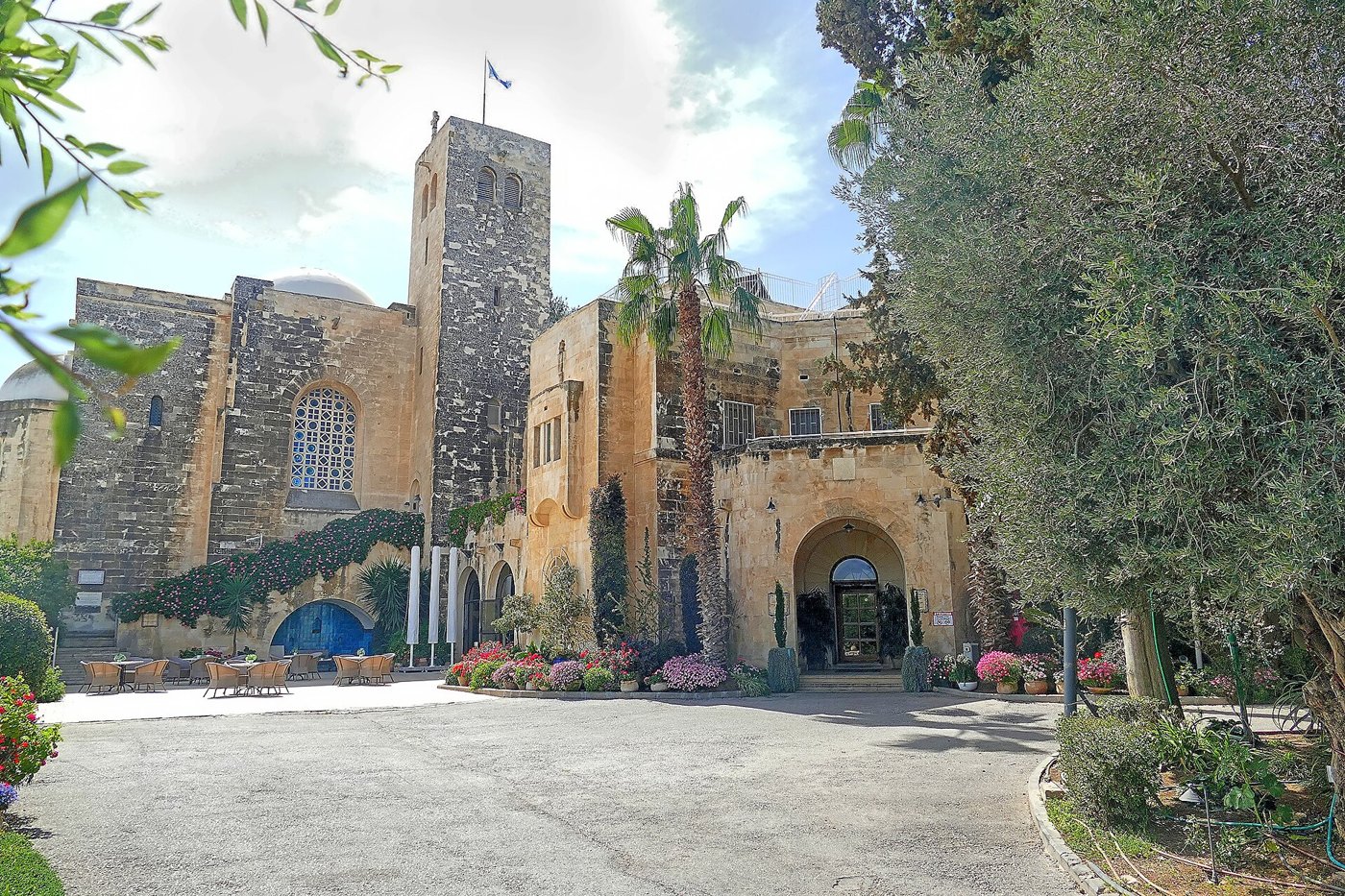
Although Robert de Brus's heart is not buried in Jerusalem, a Scottish church dedicated to St. Andrew (one of Jesus's twelve apostles and the brother of Peter), the patron saint of Scotland, was built in Jerusalem in 1927. On June 7, 1929, the 600th anniversary of Robert de Brus's death, a memorial plaque was installed in the church, noting that this was where Robert de Brus's heart was meant to be buried.
The Legacy of de Brus
Many generations later, Robert de Brus's descendants came to Russia to serve the Russian tsars. The first de Brus born on Russian soil was Yakov ('James Daniel'), a close associate of Peter I. He was a gifted student and a great scientist, whose main fields were mathematics, astronomy, and chemistry; in fact, he was the one who 'imported' advanced science to Russia. He spoke 14 languages, translated several books, and studied in England with Newton's students. Yakov became an important statesman, a gifted diplomat, and head of the Russian artillery forces. Yakov de Brus did not pursue wealth or power, and his main interest was science. Perhaps for that reason, he died peacefully in his bed, with the title of count and the rank of general field marshal. In popular Russian memory, he is remembered chiefly as a sorcerer and alchemist.
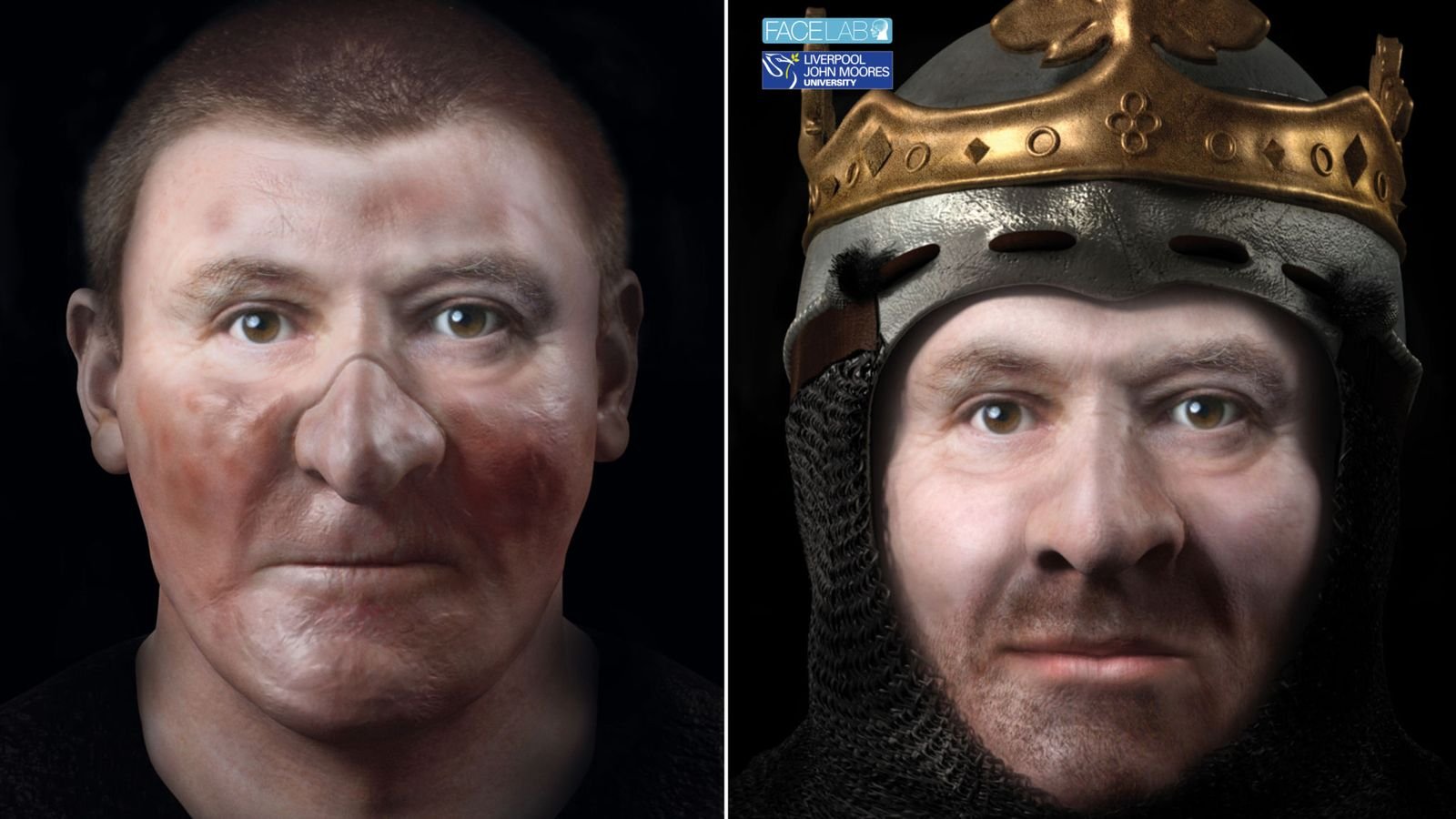
Robert de Brus died around 500 years before photography was invented. In 2016, historians from the universities of Glasgow and Liverpool reconstructed Robert de Brus's face from his skull bones, making it possible for us today to see an image of the revered king, including the signs of leprosy on his face.
De Brus also received a Hollywood portrayal (not a particularly flattering one) in the film Braveheart, in which he is a supporting character to William Wallace, the rebellious Scottish hero played by Mel Gibson. De Brus was also commemorated in the fourth song on Grave Digger's album Tunes of War, a song dedicated to Robert.
During archaeological excavations at St. Andrew's Church in Jerusalem, where Robert de Brus's heart was supposed to have been buried, nine burial caves from the late period of the kings of Judah were uncovered, carved into the cliff on which the Scottish church was built. Generations of members of noble Jewish families from Jerusalem were buried in the caves. Iron arrowheads were also found, identified as the kind commonly used by the Babylonian army. Some of the arrowheads were bent, and it seems they were deposited in a burial repository after being used in battle. A rich and varied collection of jewelry was also discovered in the cave, unlike anything previously found in Jerusalem excavations. The jewelry attests to the wealth of the family buried there. But the most important find was the written evidence. Two small silver objects, rolled up like tiny scrolls, were discovered in the cave. Their surfaces are covered with inscriptions in ancient Hebrew script. The plaques were worn as amulets and bore the name 'YHWH.' For the first time in Jerusalem excavations, the name of the God of Israel was discovered. The text inscribed on the amulets closely resembles the Priestly Blessing and is its oldest known version. It is surprising to learn that the place where Jewish nobles who fought the Babylonians in the war that led to the destruction of Jerusalem and the First Temple were buried was also meant to hold the heart of a Scottish warrior nobleman.
King Robert de Brus is buried in two different places, but not where he dreamed of being buried, and he probably did not receive absolution...
תגובות
עדיין אין תגובות.