
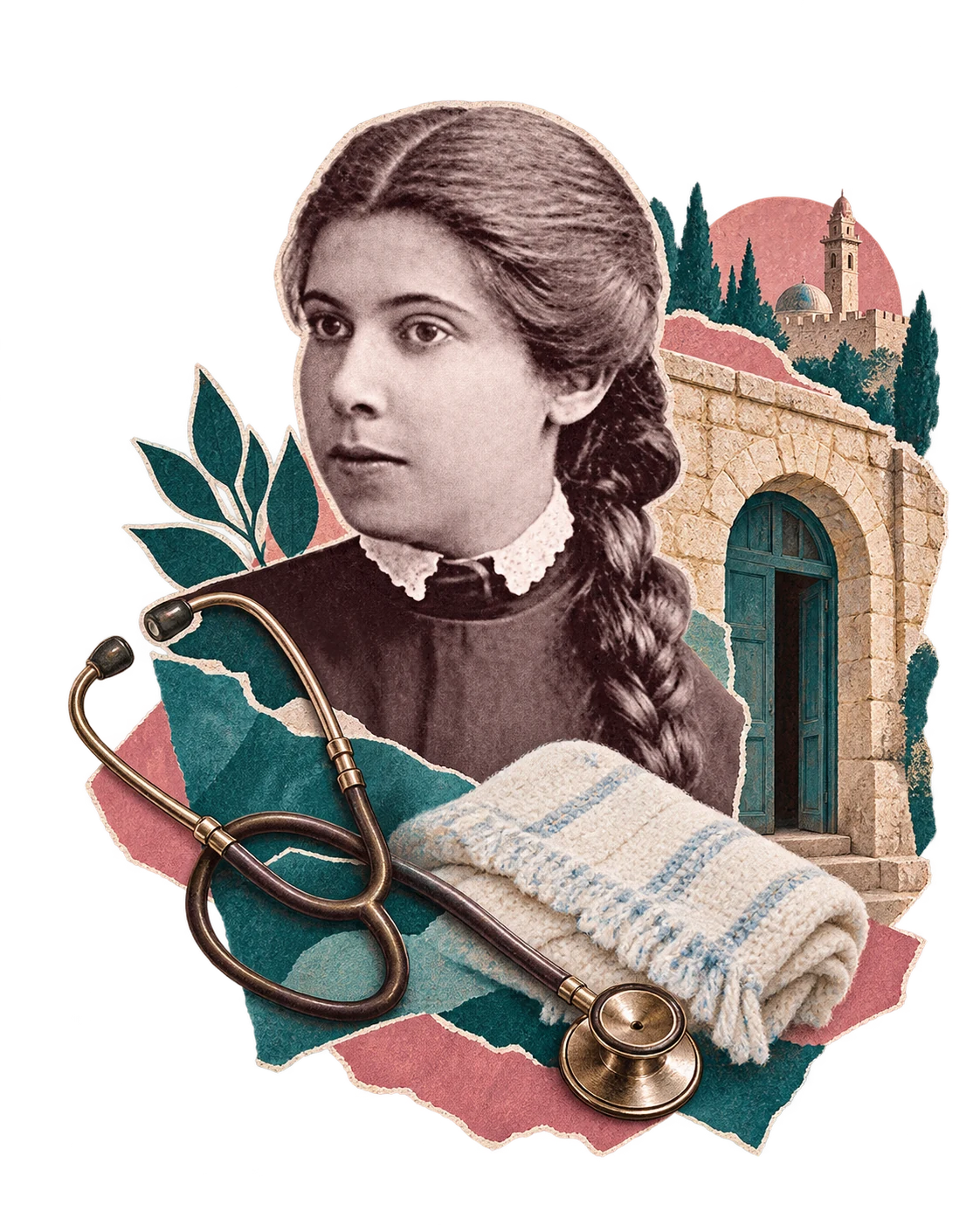
She was among the first women doctors in the country and spent most of her life treating children, yet she herself died childless.
Until the 19th century, medicine was the exclusive domain of men. Women worked as nurses and midwives, but were not permitted to study medicine at universities around the world. The idea of a woman living on her own and studying anatomy alongside men was horrifying at the time, and even women's intellectual and physical abilities to study medicine were called into question. Just how unfounded this view was can be seen in the stories of the Irish soldier James Barry and Elizabeth Blackwell.
Dr. James Barry was born in 1789. He studied medicine at the University of Edinburgh and, after graduating, served in South Africa as a surgeon, eventually attaining the rank of brigadier general. Dr. Barry performed the first Caesarean section in Africa. In 1864, Barry retired from the army and returned to England, where he died the following year. Barry's final request was to be buried in the clothes he died in, but the housekeeper who prepared his body for burial did not honor his wish. She was astonished to discover that the body before her was that of a woman - and, moreover, a woman who had given birth. Despite this, the body was buried in London as a man, under the name James Barry. James Barry had been born a girl named Margaret Ann Bulkley, and had decided to change her identity so she could enroll in medical school and pursue a career as a surgeon.
The first woman to officially break through the barrier was the British-born Elizabeth Blackwell, who earned her medical degree in New York in 1849. She was nicknamed "Mrs. Blackwell, the lioness." Despite all the difficulties, she managed to complete her medical studies because of a registration error: the person who admitted her had not imagined that a woman would dare to apply.
Women's Road to Medicine
The situation in Muslim countries was even worse, yet it was in one of those countries that Helena Kagan, the heroine of our story, was born.
Dr. Helena Kagan had a commanding presence. Tall and self-assured, she quietly and intelligently achieved everything she set out to do. She became a legend early in her career. She was widely reported on in newspapers in England and the United States, and in the country she was known as "the savior of children." The newspaper Hamodia wrote: "There was no one in Jerusalem who had not heard of the wonder doctor, and no sick child who had not been brought to her when there was fear of a serious illness." She spent most of her life on HaNevi'im Street in Jerusalem, between her home and the various hospitals where she worked over the years.
Youth and Studies in Europe
Helena was born in Tashkent, Uzbekistan, to her mother Miriam, a gifted musician born in Riga, and Moshe Zalman, a chemist born in Latvia who was a descendant of the Vilna Gaon (the Gra). After her father received a job offer, the Kagan couple moved to Uzbekistan with their eldest son, Noah, and Helena was born two years later.
At the time, most of Uzbekistan's population was Muslim, and Jews, as a minority, found it difficult to pursue higher education. In 1905, Helena's elder brother Noah began studying medicine in Breslau, Germany. He later immigrated to the Land of Israel and became a doctor with a health fund in Haifa. Noah married Rachel Cohen (Lobersky), who was a close friend of the poet Rachel and one of the only two women to sign the Declaration of Independence; the other was Golda Meir.
At the age of sixteen, Helena went to Switzerland to study piano at the Bern Conservatory. Because she was so young, she could not enroll as a regular medical student, so she registered as an auditor and took premedical courses as an external student. In 1910, at the age of 21, Kagan completed her medical studies at the University of Bern, then spent three more years specializing in pediatrics. Her outstanding performance caught the attention of researchers at the Institute of Physiology, who invited her to join them. Such an offer to a woman was highly unusual at the time, and even more so to a Jewish woman. Helena returned to Russia to consult her father, who was already on his deathbed. He asked her to travel to the Land of Israel before making a decision, so that she could fulfill his dream of visiting the country. After her father's death, Helena returned to Bern, declined the job offer from the Institute of Physiology, and decided to travel to the Land of Israel - not for a visit, but to try to settle there permanently.
In 1872, the Marienstift Children's Hospital was established. It was the first children's hospital in Jerusalem and the entire Middle East, and one of the first of its kind in the world. The hospital was founded by Dr. Max Sandreczky, a German pediatrician and surgeon. Sandreczky arrived in the country with his mother, and when he grew up, he went to Germany to study medicine. On returning, he opened the only children's hospital in the country with his wife, Johanna. The building that housed the hospital still stands at 29 HaNevi'im Street in Jerusalem. A few months after Dr. Sandreczky's death in 1899, the hospital closed because his wife was unable to keep it going. That same year, Vera Weizmann, later the wife of President Chaim Weizmann, immigrated to the country as its first female pediatrician.
The Struggle for Work in Jerusalem
In April 1914, Dr. Helena Kagan and her mother arrived in Tel Aviv, and Helena asked for work as a doctor. She later recalled: "They told me to go to Dr. Puchovsky, the best-known and most famous doctor of the day, so he could give me some advice. When I went to see him, his first question was, 'Why have you come here?' I told him I wanted to work. His answer was hardly encouraging: 'We have only a few families here and six doctors. Do you think we need another doctor?' He also said that I would have to take medical exams in Constantinople, in Turkish. I asked him whether he had taken such exams. When he said yes, I asked, 'Then why do you think I can't do it?'"
After realizing she would not find work in Tel Aviv, she moved to Jaffa, but fell ill with dysentery. Once she recovered, she decided to move to Jerusalem and met Dr. Omer Bey, the Turkish director of public health services and the official responsible for licensing exams on behalf of the Ottoman government. When he heard why she had come, he told her: "Here in Turkey, women don't study medicine, and they won't let a foreign woman do what our own women don't do." Nevertheless, and with Dr. Bey's encouragement, as he had been impressed by her professionalism, Helena refused to give in and decided to work without a license!
She bought a stone house on HaHavashim Street, then the center of intellectual life. Jerusalem's doctors and distinguished residents lived on the street, and quite a few consulates had their offices there. "For me, Jerusalem is a privilege. People come here to die in the Holy City; I came here to work," she said. At first, patients did not come, both because she was a woman and because she was so young. The medical community of the time, meanwhile, made no distinction between adults and children, and wondered: "Isn't it artificial to separate children from adults, when they differ from one another only physically?"
When World War I broke out, the country faced a severe shortage of doctors: some had returned to their own countries to join the war effort, while the rest had been drafted into the Turkish army. Helena and her mother were due to be deported because they were foreign nationals. The shortage of doctors prompted Jerusalem's physician at the time, Dr. Kamal Bey al-Husseini, from the well-known al-Husseini family, to arrange permission for the two women to remain in the country. He referred patients to Helena and also arranged for her to be appointed a nurse at the municipal hospital, where she was put in charge of training nurses. Conditions at the hospital were difficult after some of its staff died of infectious diseases that had broken out in the country. Dr. Fotios Afklidis, the hospital director and chief physician, died of typhus, as did the pharmacist, the secretary, two female nurses, and a male nurse. When Dr. Fotios Afklidis died, Dr. Helena Kagan was appointed to replace him. Around that time, a medical delegation from Turkey led by Omer Pasha arrived at the hospital. The delegation was impressed by the state of the hospital, and Omer Pasha, surprised to learn that Helena had no work permit, decided to grant her the long-awaited license. Dr. Helena Kagan thus became the first woman to receive a medical license from the Turks. Since this was an exceptional authorization, it was reported in several newspapers. The newspaper HaHerut wrote: "We are pleased to announce that the much-praised woman doctor, Dr. Cohen, has been officially accepted as a physician at the local government's municipal hospital. Mrs. Dr. Cohen, or, as she is called, Dr. Kagan, is well known to the people of Jerusalem, both in the new community and in the old community, and needs no praise from us. The fact that she has been officially accepted as a government physician at the municipal hospital is enough to demonstrate Dr. Cohen's expertise and proficiency in medicine. For, as is well known, in our country women have no special right to serve as doctors, but only as medical dressers, midwives, nurses, or ordinary assistants to doctors. And if Mrs. Dr. Cohen has been accepted as a physician by the municipality, this shows how outstanding this Jewish woman doctor is in her medical profession, to the extent that the Ottoman government has recognized her abilities and entrusted her with such an important position."
After two years, Dr. Helena Kagan was forced to leave the hospital following the "Hashomer incident." The new hospital director, Dr. Munir Bey, resented her success and looked for a way to push her out. The perfect opportunity came when Israel Shochat, a prisoner and one of the leaders of Hashomer, was admitted to the hospital, and Dr. Kagan covered the dirty wall beside his bed with a sheet. Dr. Munir Bey immediately went to Jamal Pasha and informed on Dr. Kagan, claiming that she gave preferential treatment to Zionists. When a commission of inquiry was appointed to investigate the matter, she decided to resign.
The Doctor of Jerusalem
From then on, Dr. Kagan focused on her own clinic, but by this time she was already well known, and dozens of patients visited every day. Among them were senior Turkish officers and wealthy Arabs seeking excellent professional care. She was also accepted in the ultra-Orthodox community, as she wrote in her memoirs: "The first event that brought an unexpected increase in my income and popularity was treating my first patient. He was a six-year-old boy from the distinguished family of Rabbi Blau, who lived in the Batei Ungarin neighborhood. The child was critically ill, burning with fever, delirious, and breathing heavily. Every doctor in Jerusalem was called to his bedside, one after another, and they even called a gentile doctor, as a 'segulah.' They all prescribed medicines, which were checked by an unlicensed and untrained pharmacist, Zalman Soloveitchik... Other measures were also taken: lamp oil was donated to several synagogues, and all the child's clothes and belongings were given to the poor. Six days passed, and the child's condition grew worse. Finally, one of the neighbors took pity on the family, seeing how desperate they were, and argued that surely no harm could come from calling the 'girl' who had just arrived from Switzerland and claimed to be a doctor. I was called to the child's bedside and found that he was suffering from lobar pneumonia... I did not leave his bedside all night... The crisis came as expected, accompanied by sweating and a drop in temperature, and overnight I became 'renowned.' This little boy, my first patient, would later become Rabbi Amram Blau, one of the leaders of Neturei Karta."
From that point on, Dr. Kagan's star was in the ascendant. She ran a hospital in Dr. Ticho's clinic while he was exiled during World War I, and later managed the children's department at Rothschild Hospital. At the same time, she opened a Tipat Halav well-baby clinic for Jerusalem's children, served as chief physician at a clinic for Arab children in the Old City, managed WIZO's infant home, and also ran the children's department at Bikur Holim Hospital.
Dr. Kagan lived a long life and worked until her final day. She died in 1978 at the age of 89.
תגובות
עדיין אין תגובות.