
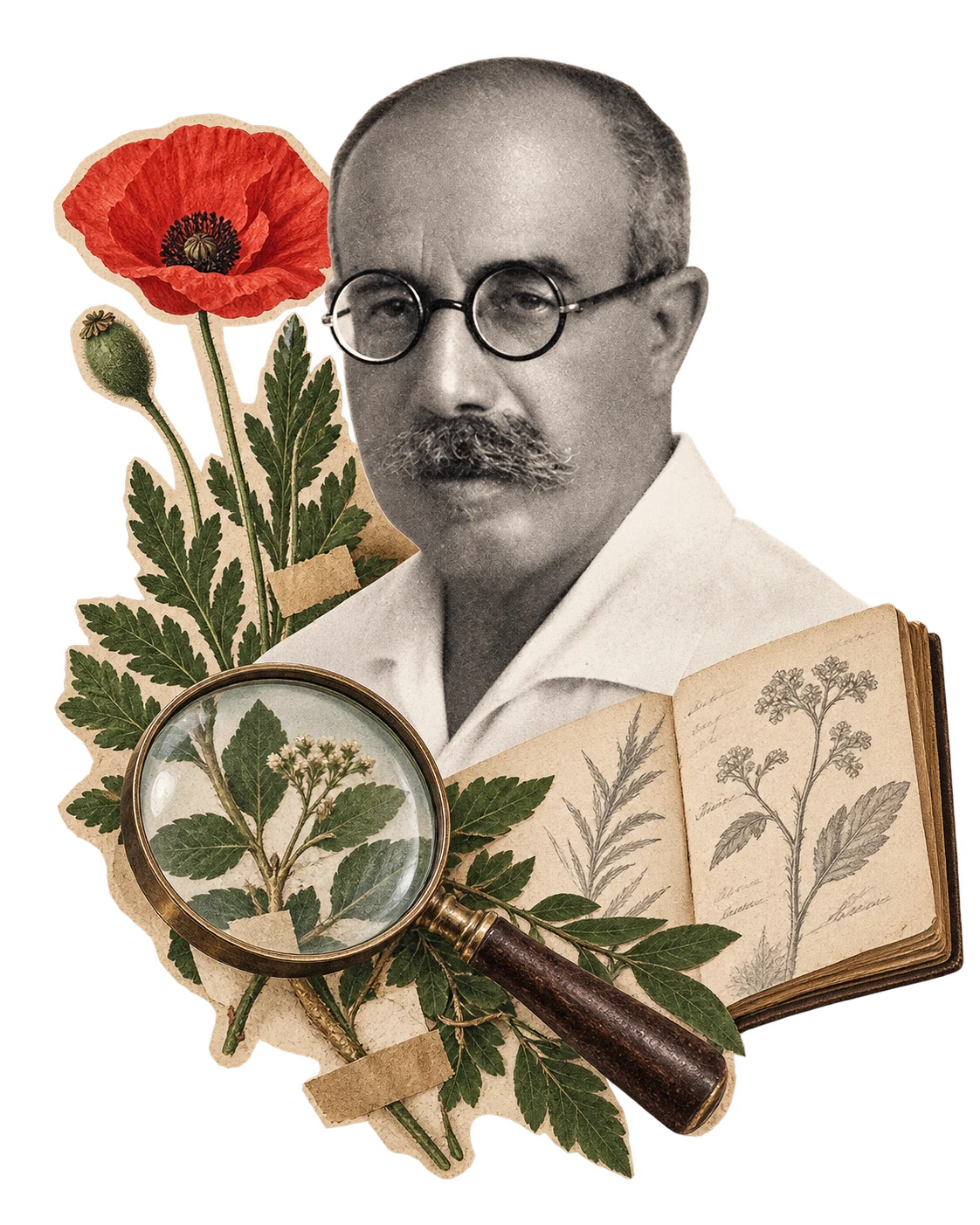
There are several professions in which the rewards bear no relation to the difficulty or importance of the work, and those who practice them are people who see their work as a calling. One of the most prominent of these professions is teaching. It has contributed several iconic figures to Israeli culture, one of them "Uncle Joshua"
Youth and Teaching Nature
Joshua Margolin was born in 1877 in the town of Hororitz, Russia. As a child, he studied Torah, and as a young man he also pursued a general education in Russian and modern Hebrew literature. A poetic soul, Margolin was especially moved by nature, its animal life and its plants. He delighted in every reference in biblical, Talmudic, and aggadic literature that revealed traces of the living bond between our ancient forebears and the nature of our land.
In 1909, he immigrated to the Land of Israel and taught in Jaffa. He took part in the drama circle of the "Lovers of the Hebrew Stage" and joined the Hapoel Hatzair movement. Margolin belonged to the generation of the first teachers in the Land of Israel. In his teaching, he stressed the need to develop children's education in the study of nature. But when he realized that this educational task required a thorough knowledge of nature and teaching methods, he returned to Russia and studied in the Faculty of Natural Sciences at the University of Kyiv.
At the end of 1923, he returned to the Land of Israel and taught nature studies at Mikveh Israel. There, he inspired many of his students with his love of nature, and together with the other teachers, transformed Mikveh Israel into a center for the study of the nature of the homeland, with collections of inanimate objects, plants, and animals.
Margolin also loved people and did his utmost to enrich the cultural lives of the local residents. He organized and led Oneg Shabbat gatherings and founded a kindergarten for the young children of families living there.
In courses for teachers, he came to understand just how much knowledge of nature the country's teachers still needed in order to fulfill their mission properly. They had indeed studied botany and zoology from translated or original textbooks, and even from notes, but learning from words was nothing like firsthand knowledge. Once Margolin understood his calling to spread knowledge and familiarity with nature among wider circles, he left his job at Mikveh Israel. He began working as a traveling instructor, teaching nature studies to teachers in the Valley, and began preparing to establish an institute for biology education in Tel Aviv, where teachers and students from across the country could deepen their knowledge of nature not only by listening and reading, but also by seeing it for themselves.
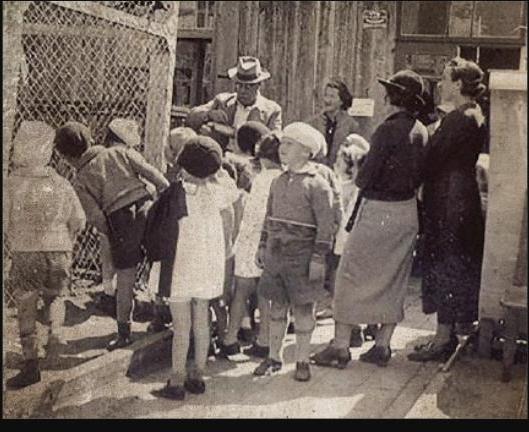
In 1931, the Tel Aviv municipality allotted him the public shed on Yehuda Halevi Street, which had until then served as a house of prayer, and granted him an annual allowance of one hundred liras. There, Margolin founded the institute, whose purpose was "education in nature and the dissemination of knowledge about nature among teachers, students, and the people." Israel's first small animal exhibit was established there.
During his years in Tel Aviv, Margolin wrote textbooks, but above all he loved writing short pieces and stories for children that described the nature and landscapes of the land. His writing is marked by a direct and guileless didactic approach.
In 1943, he wrote in the newspaper for children of the kibbutzim: "I am sure many of you children know me, Uncle Joshua, who has a zoo and a museum in Tel Aviv, at 12 Yehuda Halevi Street. Many of you have probably visited once, perhaps twice or more, and seen with your own eyes the gazelle and the ibex, the crocodiles and the wild boars, the pelicans and the other animals... I don't want to talk with you about the animals in my zoo, but about the animals in your zoos. And if you say, 'Do the kibbutzim and collective settlements have zoos?' They certainly do. Is your orchard merely a garden of trees? It is also a great zoo. And I'll tell you a secret: I love your zoos more than my zoo in Tel Aviv. My zoo is a prison for animals..."
He goes on to teach the children a lesson in birdwatching: "...Go out and watch the birds alone, without companions. Walk slowly and calmly, your eyes open and your ears alert. Choose a spot from which to observe, sit still, look over your surroundings, and follow the bird you have chosen to watch... Don't chase after many birds at once. Choose one and watch it until you know it well."
His Poems and His Legacy
Margolin also wrote poems. The best-known is "We Are Anemones," set to music by Menashe Ravina:
We are anemones, Sisters, every one of us, Red, blue, White, purple. The earth is our mother, The sun is our father, The rain gives us drink, The dew gives us life. All of us will bloom, Rejoice and be glad!
Throughout his life, Margolin lived alone, with no family or close relatives, but in his eyes all the people of the country were brothers and children. To everyone, he was a beloved uncle, "Uncle Joshua."
When the kibbutz movement decided to establish a teachers' training seminary, it saw Margolin's institute in Tel Aviv as the seminary's foundation. Margolin believed the seminary should be established in the Jezreel Valley or the Zebulun Valley, and years later his dream came true with the founding of Oranim Seminary, the kibbutz movement's school of education.
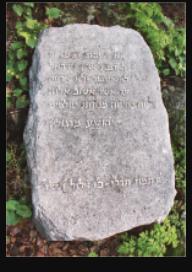
A few weeks after turning 70, Margolin died in Tel Aviv on 11.09.1947. In his will, he asked to be buried in "the cemetery at Tel Alexander, where the kibbutz seminary, which has been my life's aspiration, is to be built." He asked that his gravestone bear the words: "My hunger and thirst for the soil of the Land of Israel will not be satisfied until I return to it and rest in its embrace for eternity."
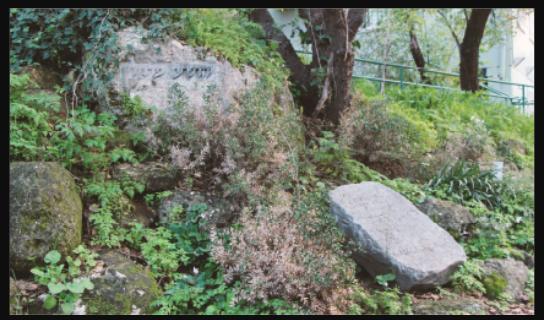
Years later, not far from his grave, the kibbutz movement's Oranim Seminary was established. The seminary grounds are home to Beit Margolin, which houses an impressive collection of taxidermied animals. Near the grave, on the western slope of the hill where the seminary stands, a remarkable botanical garden was created. Among its many trees and flowers are poems by Israeli and foreign poets.
תגובות
עדיין אין תגובות.