
A converted Jew who dealt in antiquities and sometimes even 'made' them. But was his greatest forgery really a forgery? Between fact and imagination...
His Death in Rotterdam and the Start of His Path
On March 11, 1884, a single shot rang out at the small Hotel Bloemendaal in Rotterdam. A distressed traveler had arrived there two days earlier, shut himself in his room, and ended his life. His death left behind several mysteries that remain unsolved to this day. The circumstances that led him to take his own life could easily have provided the basis for a superb Hollywood thriller - intrigue, lies, large sums of money, prestige, jealousy, and more.
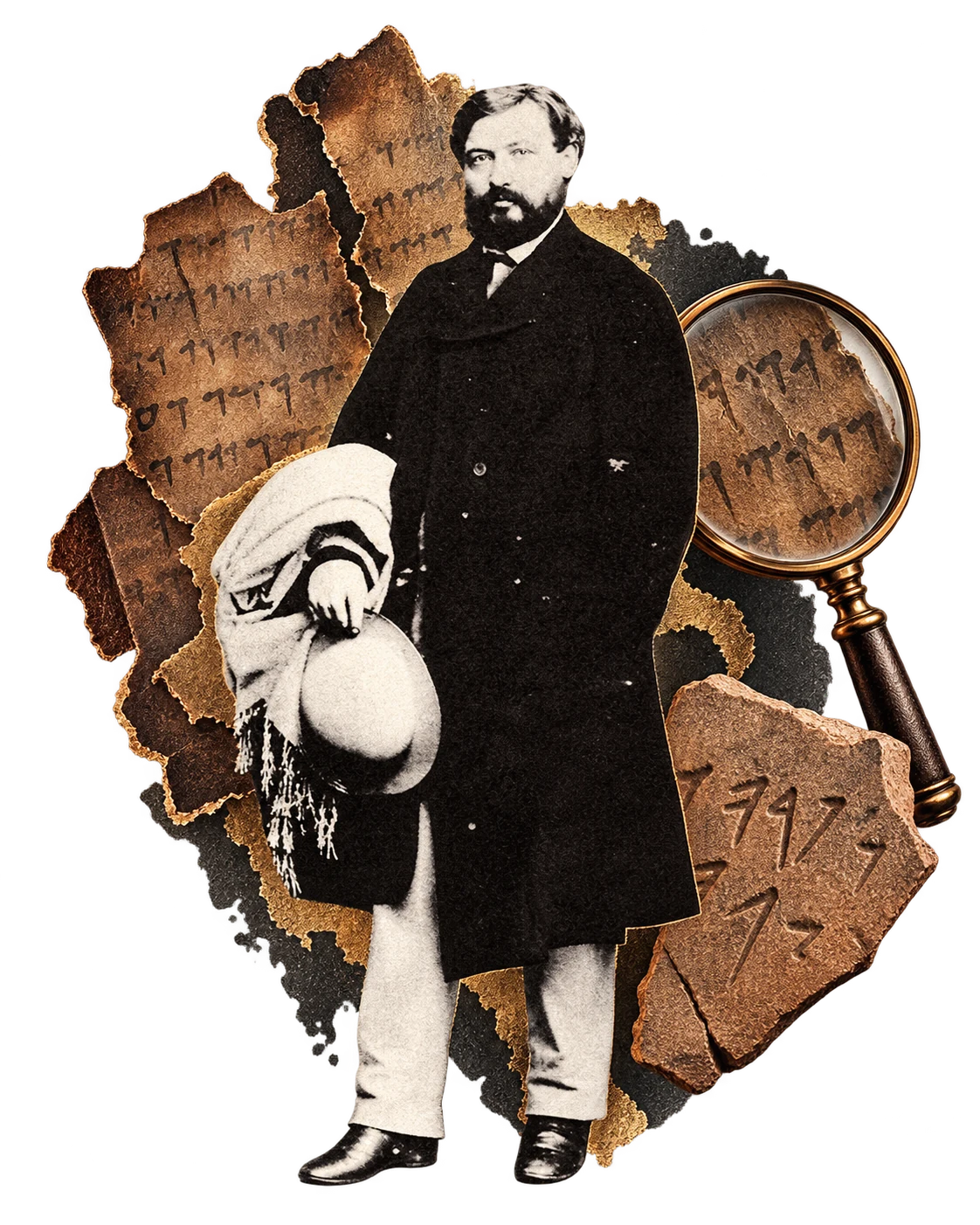
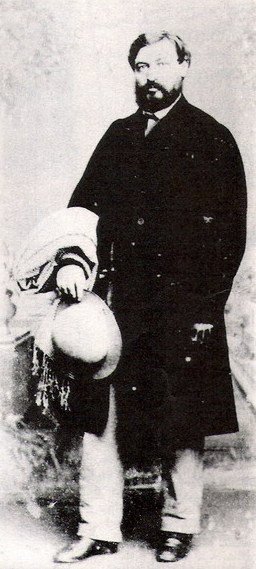
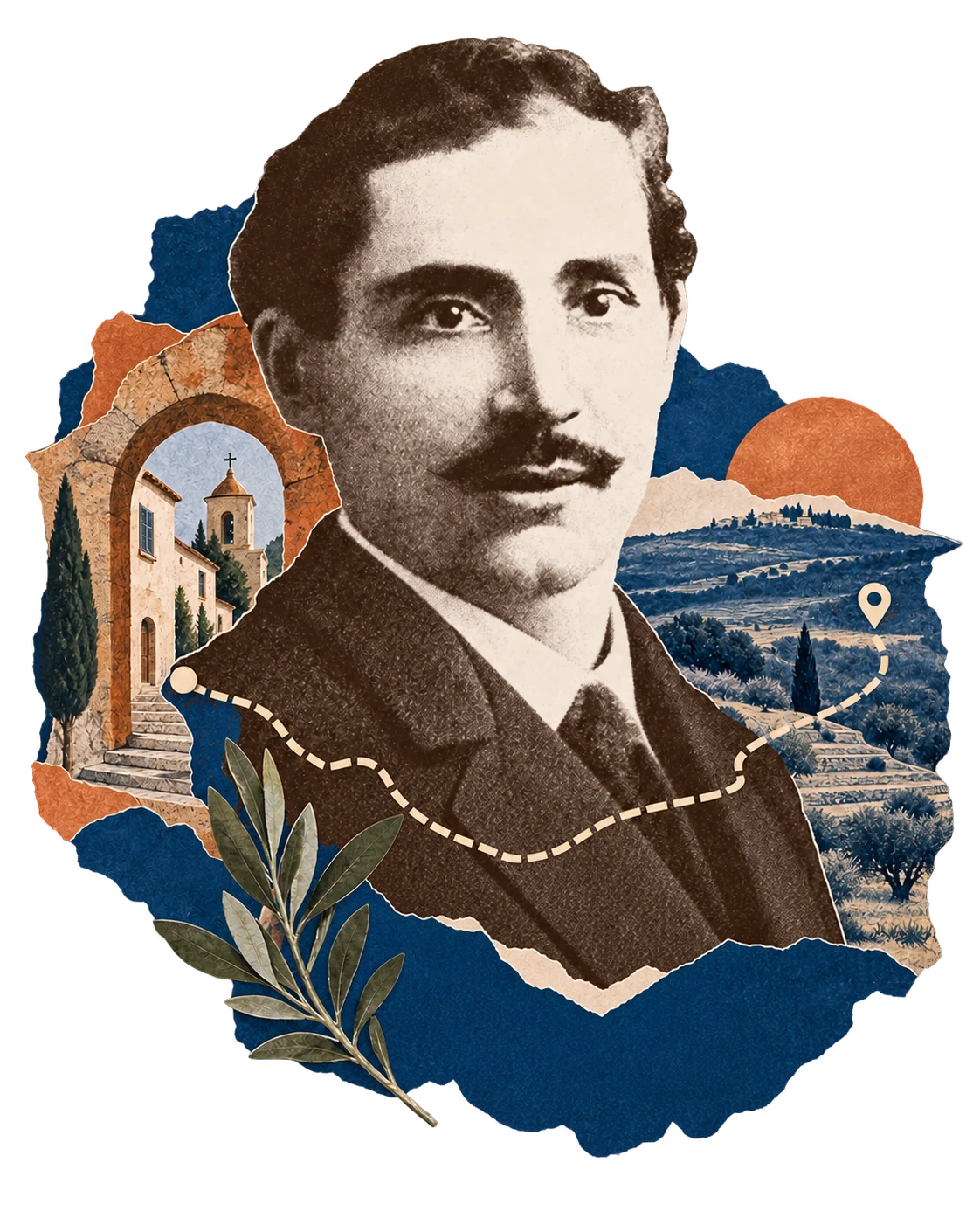
Moses Wilhelm Shapira was born in 1830 in Kyiv, Ukraine. As an adult, he began wandering from place to place and converted to Christianity. In 1856, he came to Jerusalem with his uncle to look for his father, who had immigrated to the Land of Israel before him. There he met the British mission preachers working in the city, who put him to work in their workshop. Moses, born with a double helping of charisma and personal charm, began preaching himself three years later, but holy work did not interest him all that much; his ambition was to get rich. In 1861, he married Sister Rosetta, a German woman who had come to the country for missionary reasons. The couple had two daughters: Elizabeth and Maria.
The Book and Antiquities Shop
Moses left the mission and opened an independent shop on Christian Street selling books and antiquities. The sign above his shop bore the words 'Correspondent of the British Museum.' Shapira had a special charm that particularly affected female tourists. His daughter Miriam describes him this way: "They were especially fond of arguing with him at length about verses from the Bible, and when he wrote out a verse for them in Hebrew or Arabic letters on a small olivewood plaque, they would lean in to watch the strokes of his pen. If they were beautiful, he would invite them to sit on the divan, treat them to coffee, and sprinkle rosewater on them." His greatest pride was being an authorized agent of the British Museum. He made tourists feel that they were taking home a piece of history from the Land of Israel, one that Jesus might even have touched, or that the Messiah had once breathed in the same scent of a dried flower they had just bought.
At the mission, Moses met a German pastor named Frederick Augustus Klein, who in 1868 discovered a basalt stele near the Arab village of Dhiban in Jordan. Lines of writing were engraved on its surface. The inscription was copied and deciphered as an expression of gratitude by Mesha, king of Moab, to the god Chemosh for saving him from the army of Omri, king of Israel. This is the famous Mesha Stele. At the time, it was the most exciting discovery of its kind. It caused a sensation because it was the first extra-biblical evidence of an event described in the Bible. The French archaeologist Charles Clermont-Ganneau, an expert on the Land of Israel, helped decipher the stele. The Mesha Stele was purchased by the French and displayed at the Louvre in Paris, where it remains to this day.
Shapira understood the business potential of the sensational discovery of the Mesha Stele. He soon recognized that the writing on the stele was identical to the script on pottery fragments that had arrived at his shop and which, to the best of his knowledge, came from the land of Moab. Shapira contacted several German museums and showed them the pottery fragments and figurines, inscribed in the same language as the Mesha Stele. The German museums, having learned from the failure to buy the Mesha Stele discovered by their compatriot, hurried to buy from Shapira all the Moabite pottery fragments that had come into his possession.
Clermont-Ganneau came to examine the pottery fragments and figurines and soon declared that the fragments were forgeries. In fact, Clermont-Ganneau managed to bribe Shapira's assistant, Salim al-Khuri, and get him to admit that the pottery fragments were 'home-made.'
Salim al-Khuri was a forger in his own right. Al-Khuri even tried to sell a sarcophagus that he claimed contained the remains of King David or his son Solomon. The American consul in Jerusalem had already been told about the sarcophagus and was willing to pay thousands of pounds for the sarcophagus. The purchase was prevented at the last moment, after it was discovered that the inscription on the coffin was nothing but a copy of the Siloam Inscription, made by al-Khuri before the inscription was transferred to Istanbul.
Shapira, whose good name had been damaged, was furious. He accused Salim of getting him mixed up in the Moabite pottery affair and bringing shame and disgrace upon him and his friends in Germany. Shapira returned to dealing in later manuscripts, especially Torah scrolls and mezuzot that he had acquired on his travels to Jewish communities in the East.
Leather Fragments from the Book of Deuteronomy
Shapira's business began to flourish again, and he established good relations with prominent Muslims in the region. On one occasion, while attending a party at a sheikh's home, one of the guests told him about a group of Bedouins who had found a clay jar sealed with clay in one of the caves of Wadi al-Mujib. Thinking they had come upon some kind of treasure, they smashed it. To their disappointment, it contained nothing but a few moldy rags wrapped around dark pieces of leather, on which strange writing had been inscribed. One of the Bedouins took one of the pieces of leather with him as an amulet. The amulet, it turned out, did its job, and the man managed to return home safely.
Shapira immediately became interested in these pieces of leather. He managed to buy fifteen folded pieces of parchment for a low price. When he examined the text, he realized that it closely resembled the Moabite script on the Mesha Stele. When he deciphered the text, he discovered to his astonishment that it consisted of passages from the Book of Deuteronomy: 'These are the words that Moses spoke to Israel across the Jordan...' More than that, these pieces contained the 11 commandments (the 11th commandment was 'Love your neighbor as yourself').
The feverish efforts of European archaeologists to uncover artifacts attributed to the early biblical period did not cease; they only intensified. In 1880, an inscription carved in the Siloam Tunnel was discovered, attributing the excavation of the tunnel to Hezekiah, king of Judah. Once again, a biblical artifact written in ancient Hebrew script.
Shapira kept the matter of the manuscripts secret and waited for the right moment, which came in 1883. In May, Shapira traveled to London, where he approached the Palestine Exploration Fund, whose patron was none other than Queen Victoria herself. In July 1883, Shapira told the Fund's senior officials about his discovery and his intention to sell it. He named a price of one million pounds (a sum equivalent to around seven billion dollars today).
The discovery and Shapira became the talk of the day. The leather pieces appeared on the front pages of most European newspapers, and excitement over the finds soared at the prospect that the original manuscript of the Book of Deuteronomy might become the property of the British Empire. It should be noted that the French and the British have long been rivals in every field: if one side achieves something, the other strives to outdo it. Thus, possessing Shapira's discovery was a kind of taunt to the French, who at the time held the Mesha Stele.
On August 10, The Times of London published the first part of the text, and three days later two of the fifteen leather pieces were displayed at the British Museum, carefully placed in a special glass case. Even the British prime minister, William Gladstone, was among the museum's visitors.
On August 15, the scholar Charles Clermont-Ganneau arrived in England. That very day, he hurried to the British Museum and found Shapira and the scholar Dr. Christian David Ginsburg, the museum's most senior representative, sitting at a worktable examining the manuscript. Clermont-Ganneau asked to join the examination, but Ginsburg asked for two days to think it over. Two days later, Ginsburg informed Clermont-Ganneau that Shapira objected to his joining them. The Frenchman had to look at the two strips displayed in the glass case like any other visitor. That same day, the second part of the translated text was also published in The Times.
On August 21, 1883, Clermont-Ganneau dropped the real bombshell: he claimed that the leather pieces from the Book of Deuteronomy were forgeries! He also published an article in The Times in which he described Ginsburg and Shapira's refusal to let him examine the original manuscript. In his view, it was a bold and brazen forgery. Clermont-Ganneau concluded with the derisive claim that within a few days, and for far less than one million pounds, he could supply the Book of Leviticus for the British Museum's growing collection.
The Collapse in London and Rotterdam
The museum immediately canceled the deal, and Shapira left Britain and set off wandering around Europe. He wrote several letters to his family but did not even bother to send them. On March 9, 1884, he arrived at the small Hotel Bloemendaal in Rotterdam. Two days later, after he had not come out of his room for a long time, the hotel owner asked the Rotterdam police to break down the door. Inside, the police found the body of Moses Wilhelm Shapira, who had killed himself with a single bullet to the head.
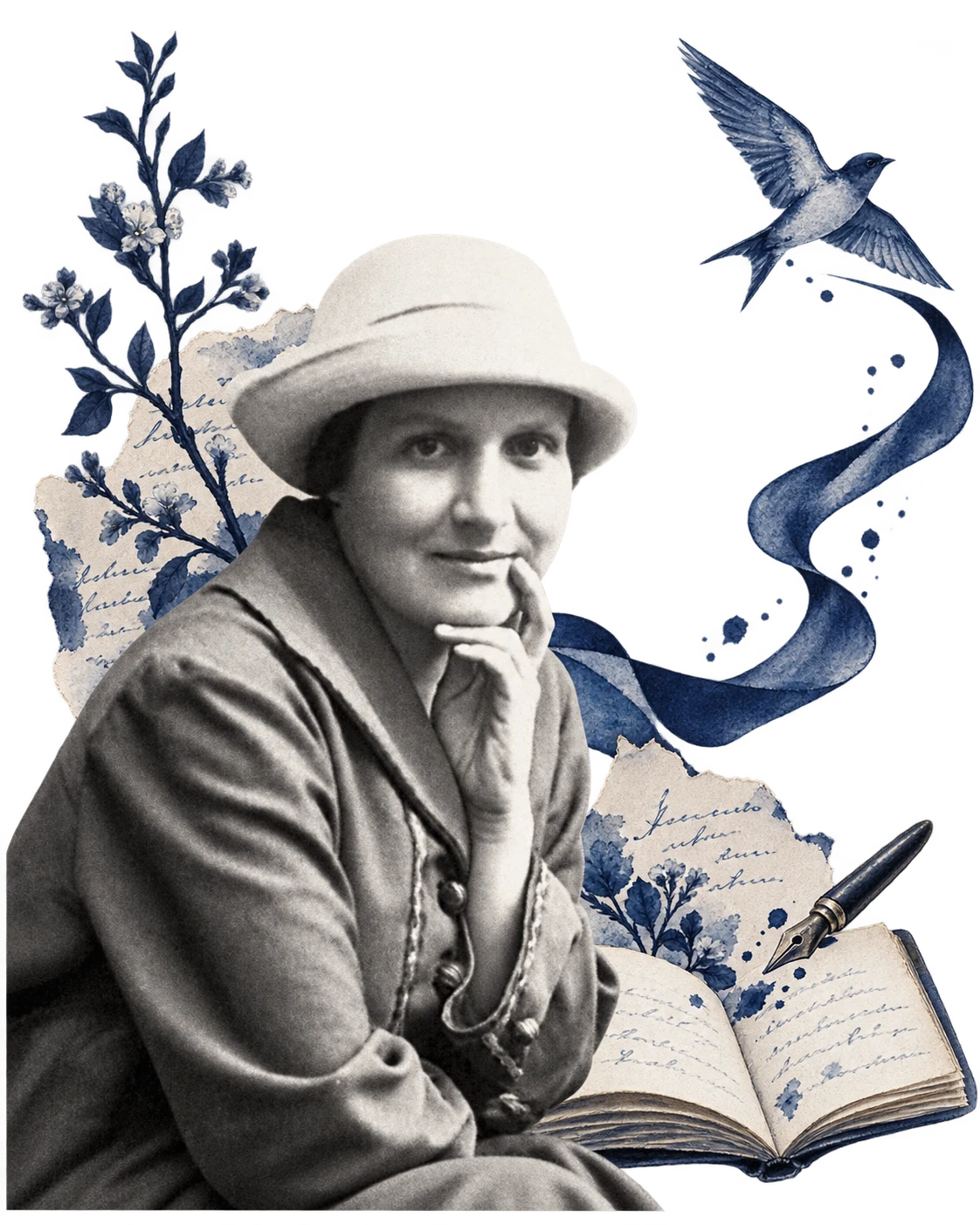
Several books have been written about this affair. The first was The Little Daughter of Jerusalem, written by his daughter Miriam. Among other things, she described the shock that overcame them when they heard the news of the antiquities fraud in which her father, whom she deeply admired, had been involved. She wrote that the family had suffered a severe financial blow and that she, her mother, and her sister had been forced to leave Jerusalem and move to Germany, their mother's homeland. Miriam's older sister, Elizabeth, who, as mentioned, was engaged to marry the son of a pastor who was an acquaintance of the antiquities dealer, was disowned by his family, and her engagement to their son was broken off. Miriam emigrated to France, where she was welcomed by society, mastered the language, and made a name for herself as a gifted writer. Miriam died in Paris in 1958 at the age of 88. The story of Wilhelm Moses Shapira can also be found in Shulamit Lapid's book Like a Broken Potsherd, and in Hanan Tigay's The Lost Book of Moses: The Hunt for the World's Oldest Bible.
Sixty-four years after the event, a Bedouin shepherd was wandering in the same area where, according to Moses Shapira, the leather pieces had been found. While looking for one of his missing goats, the shepherd came to a cave. He threw a stone inside, which hit a clay jar sealed with clay... and the rest is well known... This is how the Dead Sea Scrolls were discovered, including part of the Book of Deuteronomy. They are kept in the Shrine of the Book in Jerusalem.
The discovery of the scrolls in the same area raised the question of whether the judgment at the time that Shapira's scrolls were forgeries had been too hasty. John Marco Allegro, a researcher with the British Dead Sea Scrolls Foundation, conducted extensive research and concluded that this may not have been a case of antiquities forgery, but one of the greatest missed opportunities in the history of archaeology. Since the leather pieces are no longer extant (they were apparently burned), we will probably never know the answer.
תגובות
עדיין אין תגובות.