
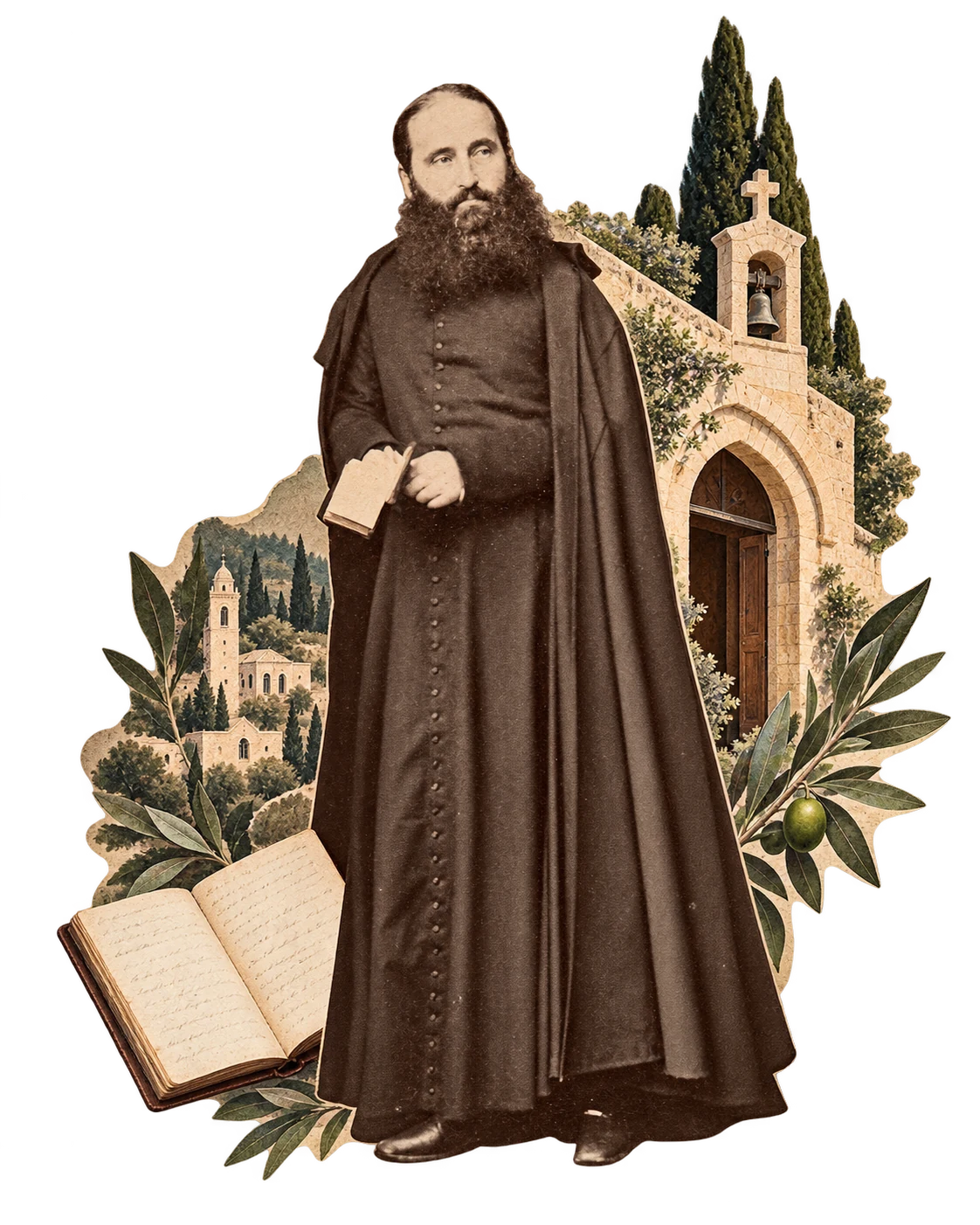
He came from a distinguished Jewish family and had a secure future ahead of him, but a trip that eventually brought him to the Land of Israel changed his life and his religion.
The Journey to Rome and the Vision
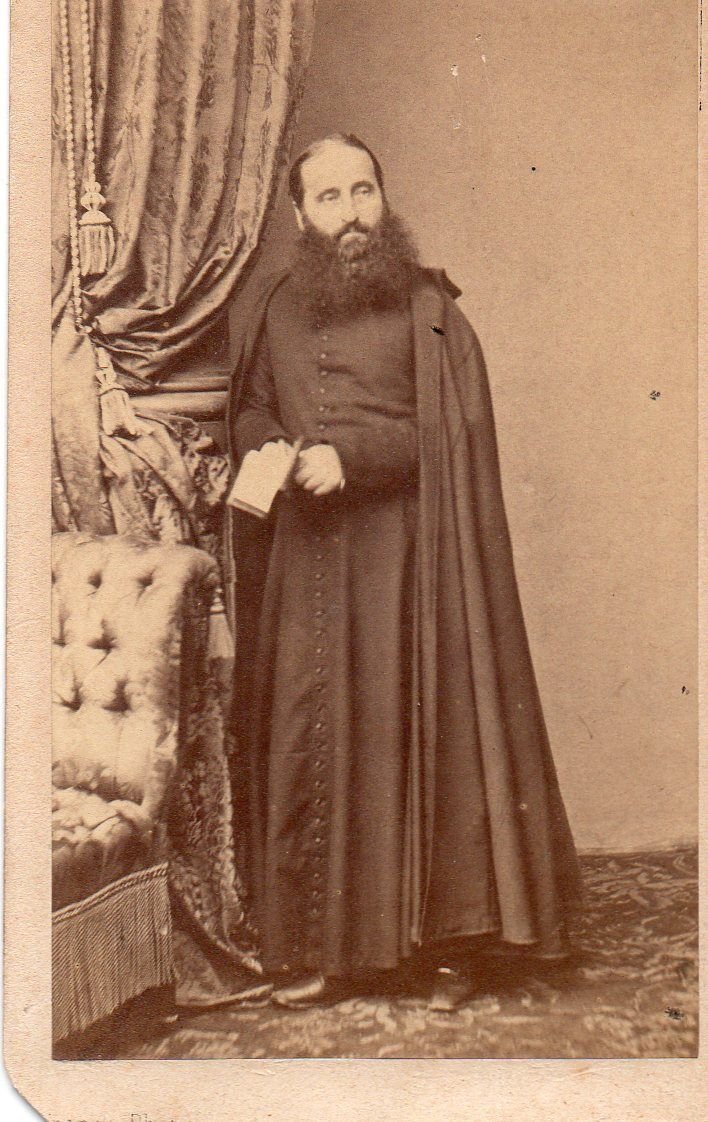
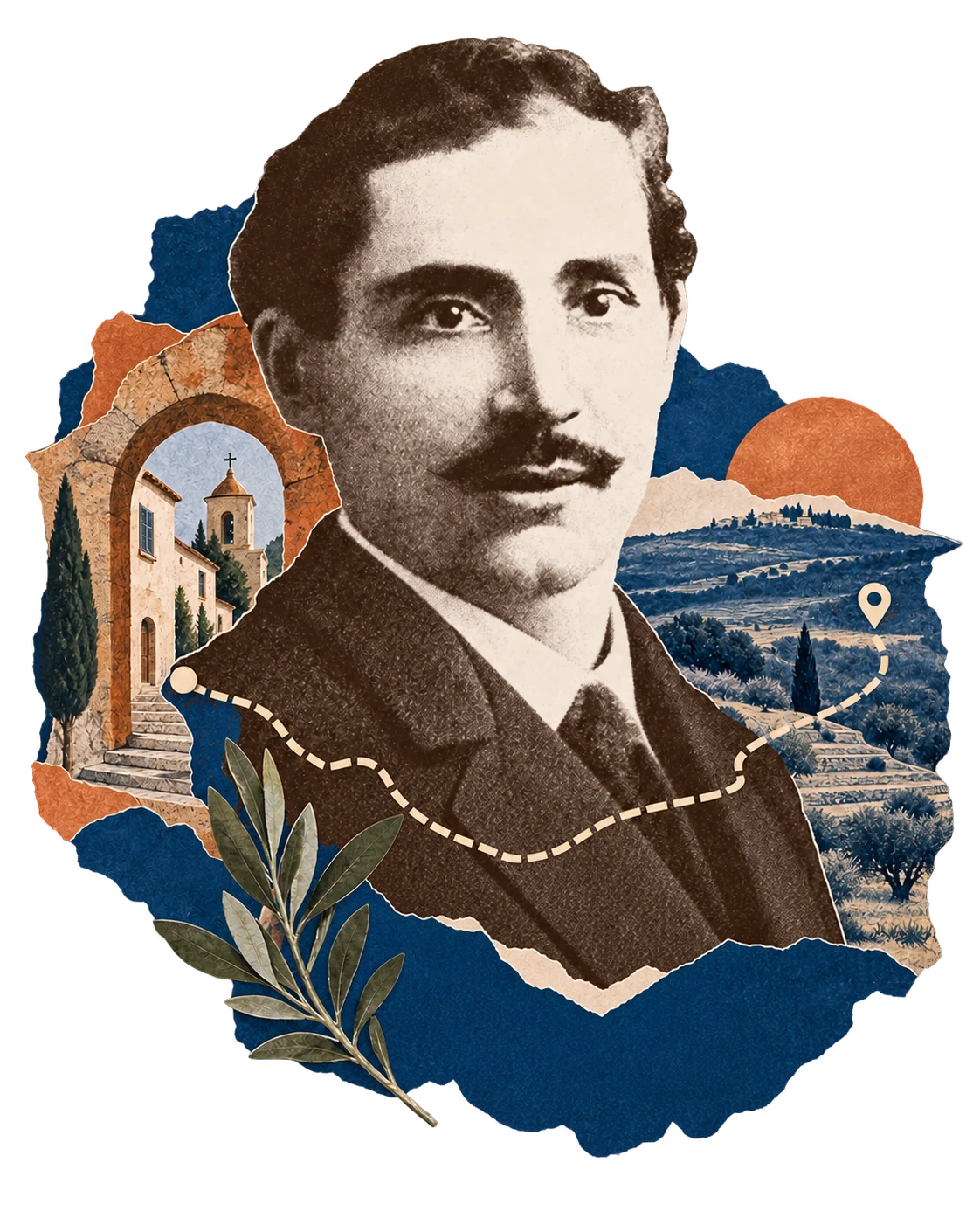
After completing his law studies, and just before getting married, Alphonse Ratisbonne decided to take a trip to Rome. There he met Gustave de Bussière, a Protestant fellow student, and his brother, a Catholic priest. Ratisbonne, an atheist Jew, saw the meeting as a wonderful opportunity to mock his Christian friends, especially the priest. He called Christianity a "dangerous form of rabies" and a "superstition." His contempt for Christianity was no accident: his brother had converted, and Ratisbonne saw the conversion as a betrayal of the family. The priest decided to prove that Ratisbonne was wrong and suggested that he wear the 'Miraculous Medal' for several days and say a special prayer; then he would see that Christianity was more than a superstition. Ratisbonne was eager for just such an opportunity to show the priest how foolish the Christian faith was.
In November 1830, a young nun named Catherine Labouré, from the Daughters of Charity convent in Paris, claimed that Mary, the mother of Jesus, had appeared to her with her hands outstretched and rays of light streaming from them. She said that an arch appeared above Mary's head, bearing the words in French: "O Mary, conceived without sin, pray for us who have recourse to thee in our distress." Labouré said that Mary had asked her to create a medal depicting the vision, and she did so. Every sick person who wore it recovered immediately. The medal brought many people into the fold of Christianity and was therefore given the title 'Miraculous Medal.'
For several days, Ratisbonne wore the 'Miraculous Medal' and, just as he had expected, nothing happened. He continued his trip with his friend de Bussière, and on January 20, 1842, the last day of the trip, the two arrived at the Church of Sant'Andrea delle Fratte, about 2.5 km east of the Vatican. De Bussière went into one of the inner rooms, leaving Ratisbonne alone. This is how he described what happened there in those minutes: "A dazzling light shone above the altar in one of the corners. At the center of the light appeared Mary, the mother of Jesus, tall, radiant, full of tenderness and majesty, and painfully beautiful; both her hands were outstretched, and rays of light streamed from them, as depicted on the Miraculous Medal." Mary signaled for him to approach, and he went to her and knelt. "The moment the Blessed Virgin beckoned to me with her hand, the veil fell from my eyes. Not one veil, but all the veils that covered my eyes disappeared, like snow melting in the sun's rays." At that moment, Alphonse Ratisbonne felt "the gift of knowledge entering me, faster than thought" and understood for the first time "what purity is, what forgiveness for sinners is, what the incarnation of God is, what the crucifixion is..."
The entire event was brief. "How can I describe it? Human words cannot tell of the unspeakable. Any description, however sublime, would profane the sublime truth I saw. I was there, on my knees, in tears... I took the medal in my hand... and, overcome with emotion, kissed the image of the Virgin surrounded by light. It was her!" Ratisbonne later confessed: "It is well known that I never opened a single holy book in my life, and never read even one page of the Bible. All I know is that when I entered that church I was an ignorant man, full of pride, and when I left, I suddenly saw everything clearly." The vision deeply affected Alphonse Ratisbonne, and he decided on the spot to convert to Christianity. Like his brother, he too was disowned by his family.
Family, Studies and a Religious Rupture
The Ratisbonne family lived in Strasbourg, on the German-French border. The family was well-off, so all ten children received an excellent education. Theodore, the eldest brother, was the first to convert to Christianity and went on to hold a senior position in the French Church.
Alphonse was born in 1814 and was the ninth child in the Ratisbonne family. His brother Theodore's rejection by the family left a wound in him. He held religion responsible for the loss of his beloved brother. As he grew up, he studied law and became engaged to Flora, his elder brother's 16-year-old daughter. His future was secure, and he began working at his uncle's bank. He was even a candidate to become a partner, as soon as the wedding, postponed because Flora was so young, took place. Meanwhile, Alphonse set out on that same trip to Paris.
The first words Alphonse wrote after his baptism into Christianity were: "O God... I, who only half an hour ago was an infidel, I, who felt such profound hatred for the Christian religion - everyone who knows me knows how much I had to gain by remaining Jewish: my family is Jewish, my fiancée is Jewish, my uncle is Jewish. By becoming a Christian, I am sacrificing all my dreams and hopes on earth, and yet I do not regret it."
In 1843, about a year after converting to Christianity and being rejected by his Jewish family, Alphonse Ratisbonne joined his brother Theodore, and together they founded the 'Sisters of Zion' congregation.
The Ratisbonne Monastery in Jerusalem
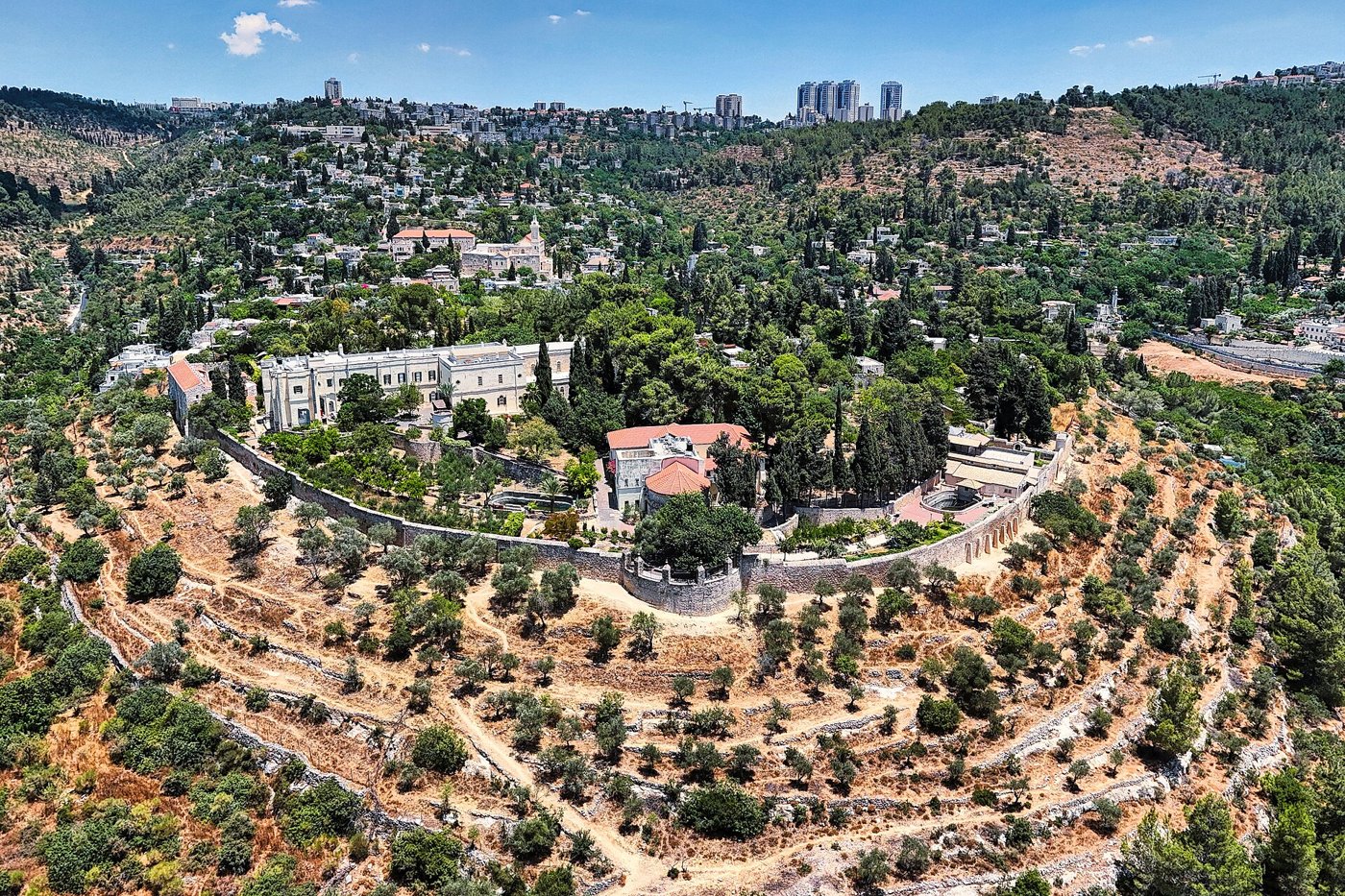
In 1855, Alphonse arrived in Jerusalem with the 'Sisters of Zion' congregation, and the following year he founded a convent in the Old City, near the 'Ecce Homo' arch. The convent housed a girls' school and an orphanage. Five years later, he founded a church and another orphanage in Ein Kerem, intended to house Maronite refugees from Lebanon whose parents had been massacred by the Druze. Alphonse also founded an orphanage called 'The Monastery of Saint Peter,' now located on Shmuel Hanagid Street in Jerusalem - the 'Ratisbonne Building' - which also housed a vocational school for boys. Alphonse Ratisbonne funded all these activities with his own money.
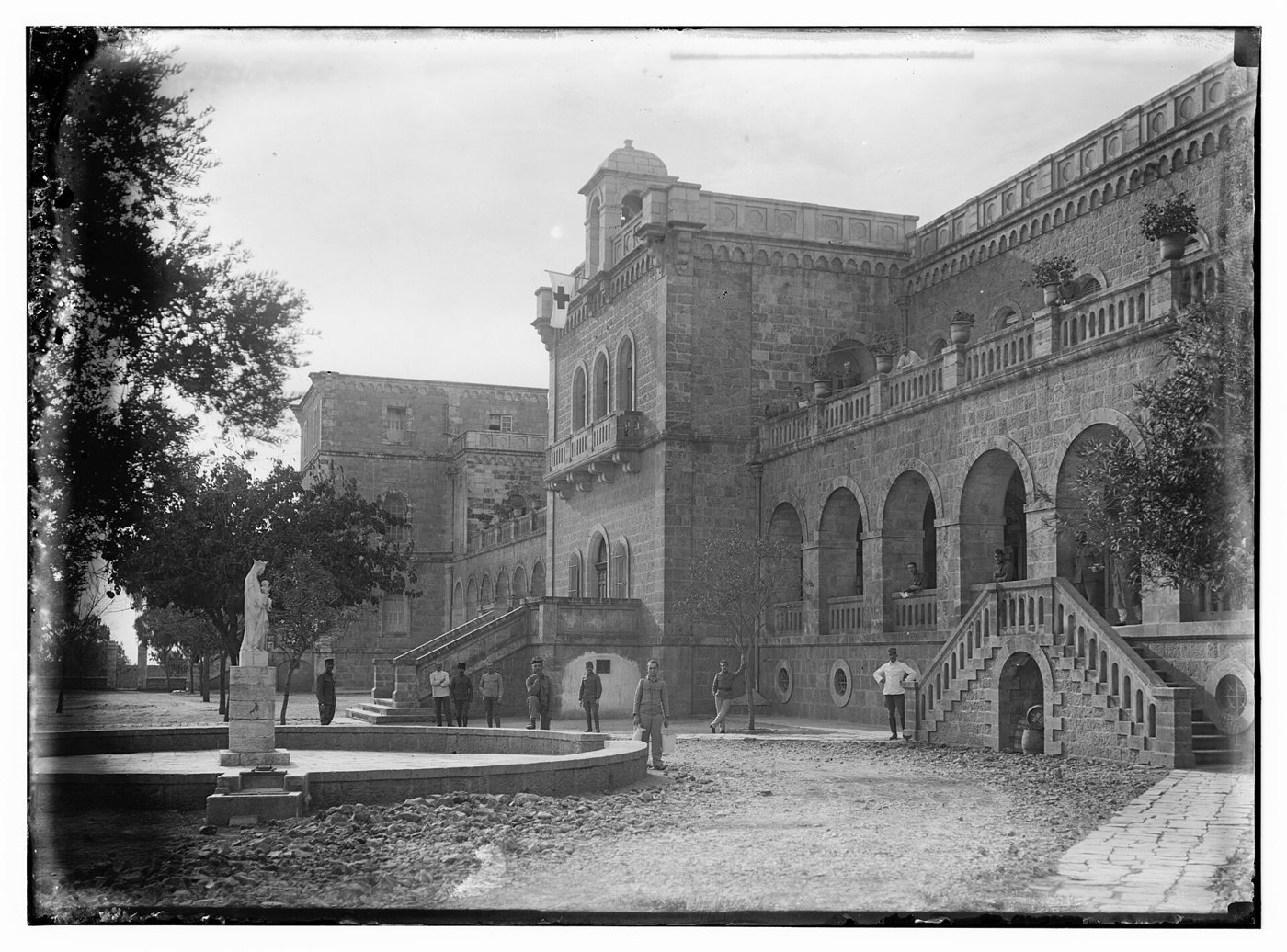
During the 1929 riots, the 'Ratisbonne Building' served as a shelter for residents of the nearby Rehavia neighborhood. The writer Yehuda HaEzrachi wrote about this in his book 'A City of Stone and Sky': "...Two monks in black robes, emissaries of Ratisbonne, came here and offered their fortified convent as shelter for the residents of Rehavia until the danger had passed. Their offer was gratefully accepted. The residents split into two groups: one group, the helpless, was moved within the convent walls, while the other group, made up mostly of men, went to the neighborhood's only two-story building... and fortified it, ready for battle."
One of the Jewish students who studied at Ratisbonne in the 1930s was Ezra Yakhin, who wrote about it in his book 'The Story of Elnakam': "Like many children from Jerusalem's poor neighborhoods, I too studied at the French Catholic convent school named after Ratisbonne. Poor parents would send their children there so they could receive a 'good European education' and learn four languages: French, English, Hebrew, and Arabic. The low tuition also made it appealing. In fact, most of Ratisbonne's students were Jewish... The teachers at the school were priests from various nations and Arabs who were residents of the country. We studied Hebrew for only one hour a day, in the first period. The few Arab students were excused from this lesson and came to school only for the second period. As part of our Hebrew lessons, we also studied the Bible - for one hour a week..."
During the battles of 1948, children from Kibbutz Ma'ale Hahamisha were moved to the convent, where they stayed until Purim 1949. Later, women and children evacuated from Gush Etzion came to the convent and lived there until their parents returned from Jordanian captivity. During the Six-Day War, too, the convent served as a shelter for neighbors during Jordanian attacks on the surrounding neighborhoods.
One of the convent's most high-profile moments came during a trial held in 1961. The eyes of the entire world were on Adolf Eichmann's trial as prosecutor Gideon Hausner delivered his immortal speech, known as "Six Million Accusers." The trial took place at Beit Ha'am, now known as the Gerard Behar Center, on nearby Bezalel Street. During the trial, the convent rented rooms to television and radio crews from around the world who had come to cover the proceedings, while Eichmann himself was held on the basement floor. The convent's main hall was converted into a movie theater and screened selected excerpts from the trial every evening. Today, the building serves as a theological seminary run by the Salesian order under the auspices of the Vatican.
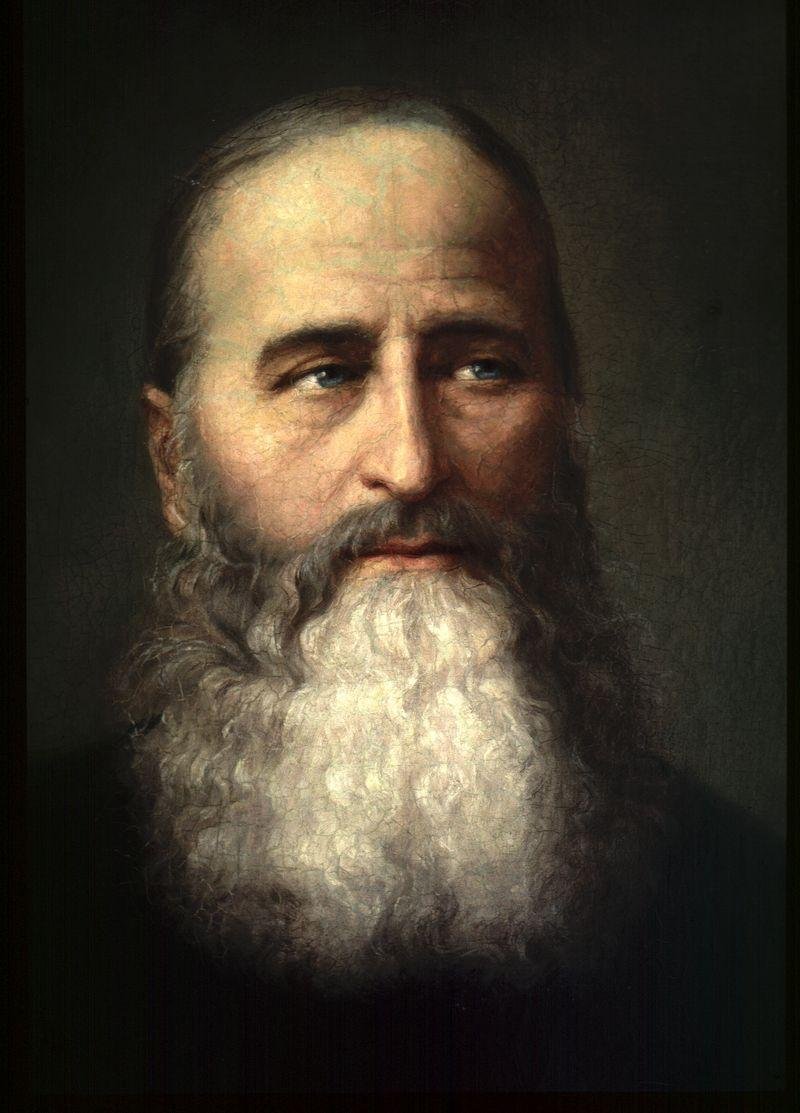
Alphonse spent the last days of his life at the 'Ratisbonne Building.' Father Philomen wrote about those days: "Ratisbonne's eyesight grew dim, and he could no longer read or write. So he would repeat the prayers he knew by heart. We seated him at the end of the sofa, facing the door, from where he could see the Tower of David so clearly that he said it was his neighbor." Ratisbonne died in Jerusalem in May 1884, a few days after his 70th birthday. At his request, he was buried in the modest cemetery at the orphanage in Ein Kerem. The headstone on his grave is a variation on the 'Miraculous Medal,' and at its head stands a stone pedestal bearing these words in French: "O Mary, remember your child, conquered by your sweet and glorious love."
Before his death, Alphonse Ratisbonne asked for a modest tombstone bearing just one word - MARIA.
תגובות
עדיין אין תגובות.