
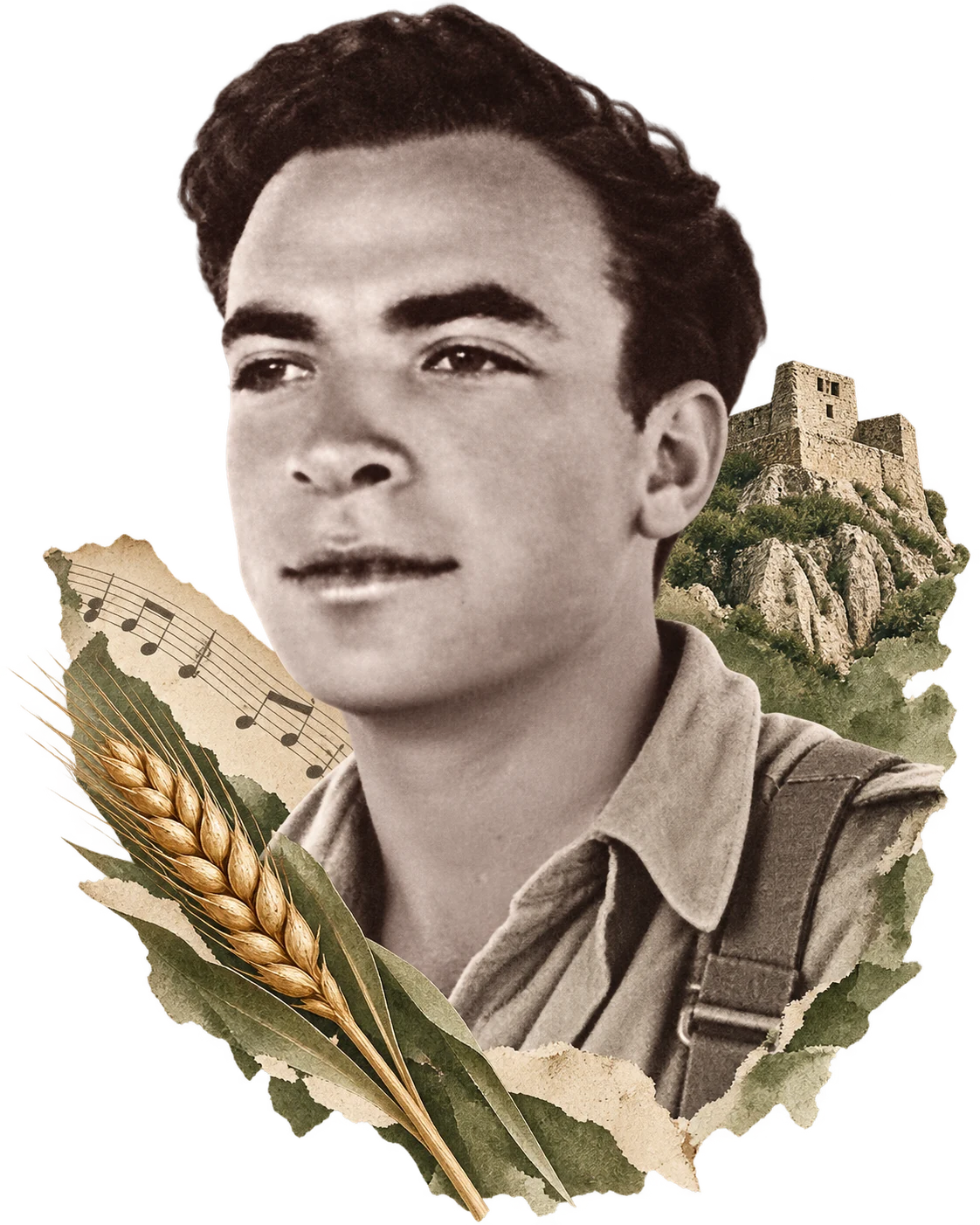
He became a symbol of the Palmach generation, the movement for agricultural settlement and labor, the will to sacrifice for the state, and comradeship. Haim Hefer wrote the song "Dudu" about him.
The Nabi Yusha Fortress and the First Battles
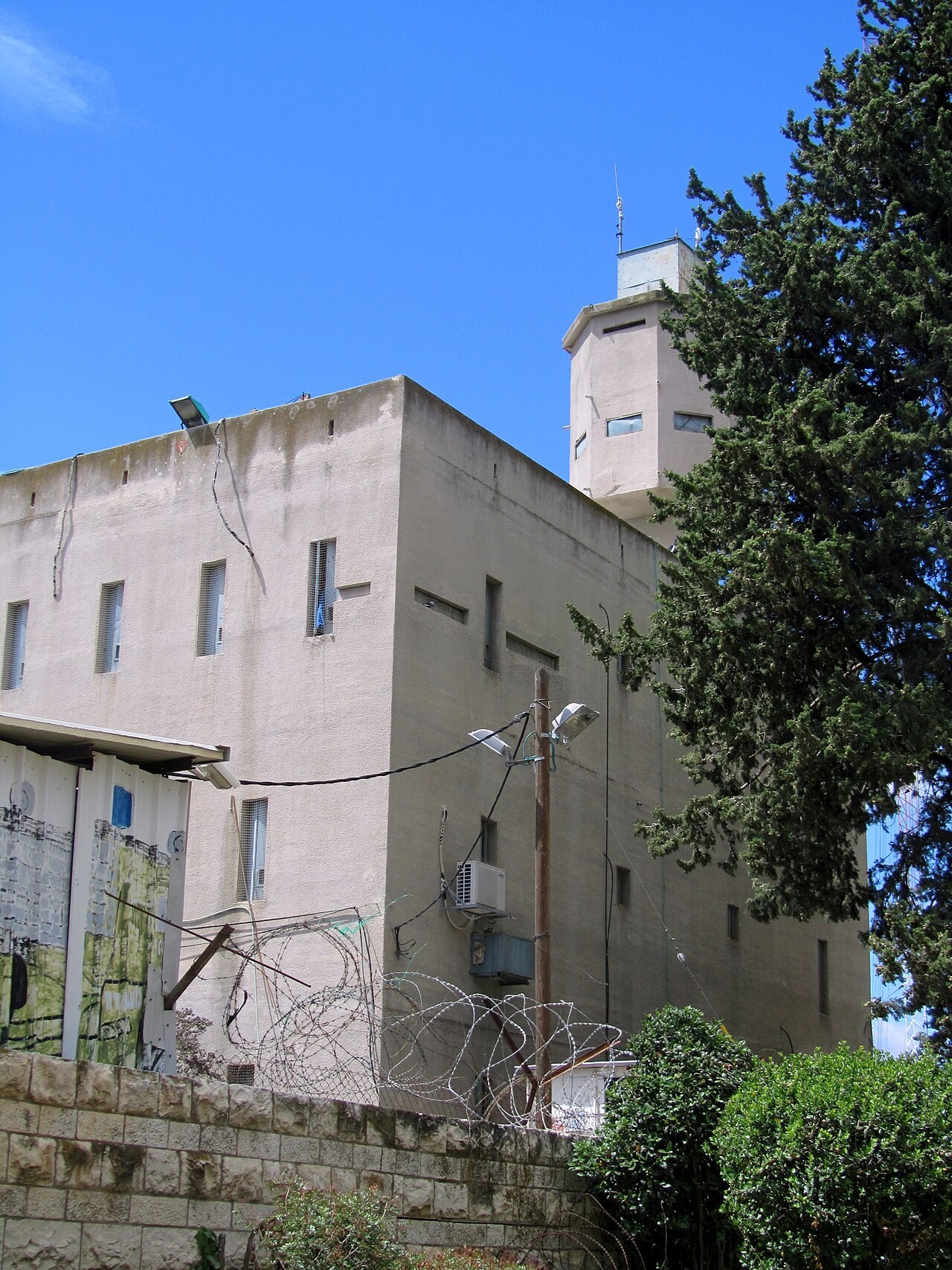
"Many people ask me why it was so important to capture the Nabi Yusha fortress and bang our heads against the wall. The answer is simple: whoever sits in the Nabi Yusha fortress is master of the Finger of the Galilee and southern Lebanon. The fortress's strategic importance is beyond measure, even in modern terms" - explained Yehuda Dekel, one of the fighters in the Third Battalion of the Yiftach Brigade. The Nabi Yusha fortress was built by the British during the Arab Revolt of the late 1930s, in a strategic location with a good view of the entire Hula Valley and the roads leading to the isolated Jewish communities in the north: Kfar Giladi, Tel Hai, and Metula. In April 1948, the British handed the fortress over to the Arabs.
That very night, the first attempt to capture the fortress was made. It relied on a swift operation in which three armored buses and a special vehicle were supposed to reach the gate under cover of darkness and break into the fortress. A technical malfunction caused the headlights of one of the buses to switch on, exposing the entire convoy. Seconds later, a devastating barrage of fire was directed at them, killing four fighters.
The already dire situation of the Jewish community in the Naftali Mountains continued to worsen. The water shortage and dwindling supplies made urgent assistance essential. It was decided to try to capture the fortress a second time.
April 20 was set as the target date. The mission was assigned to a company from the Haganah's Third Battalion, and meticulous, detailed planning began immediately. The previous day, the Galilee Squadron had made a photographic reconnaissance flight over the fortress, and by midday the aerial photographs were already before the commander of the Third Battalion, Shmuel (Mula) Cohen. Using these photographs and additional intelligence, the brigade intelligence officer built an accurate model of the fortress. Before setting out for battle, the fighters assembled at Kibbutz Hulata and received a detailed briefing.
Dudu Cherkaski Joins the Haganah
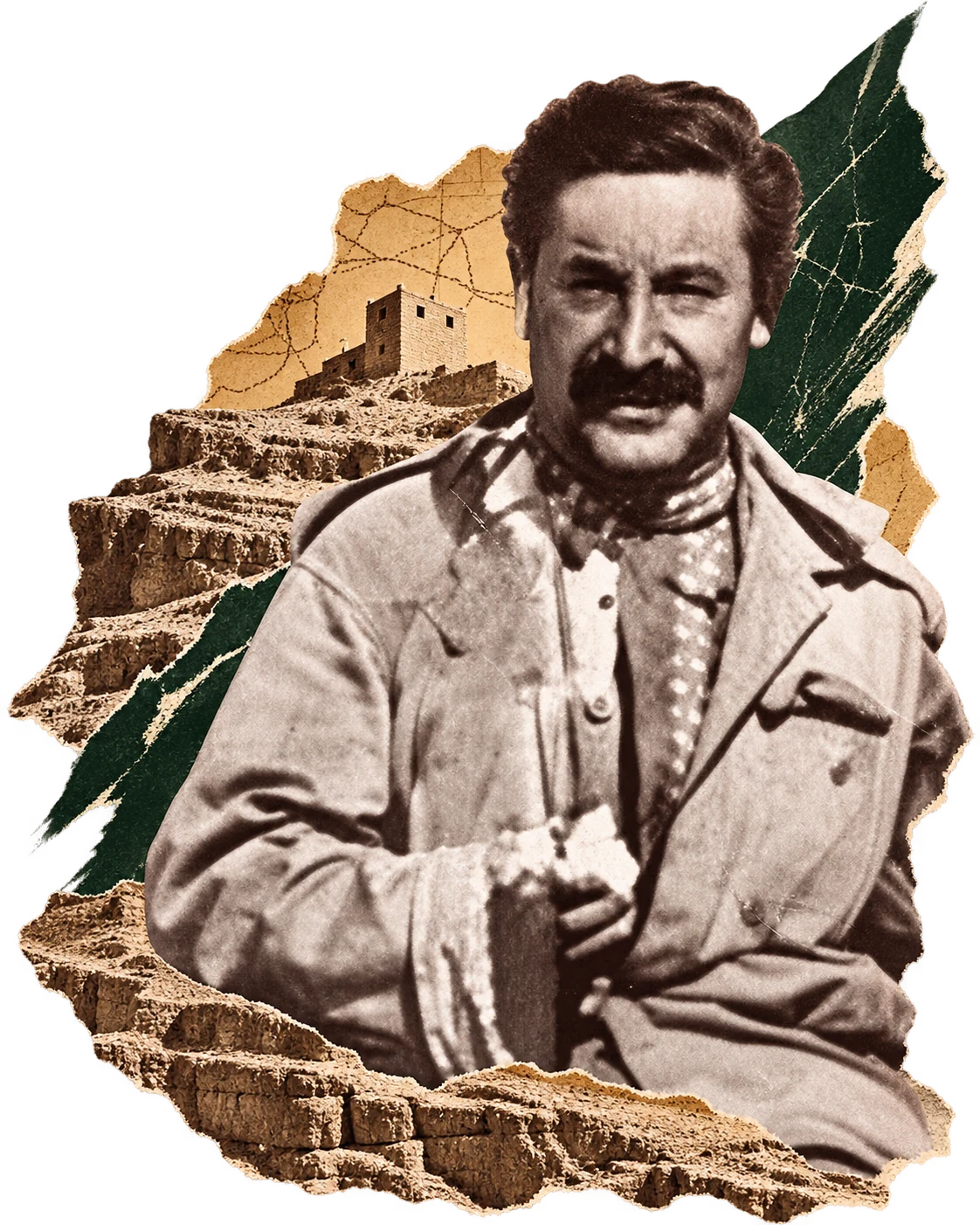
David Cherkaski was Tamar's twin. They were born in Haifa and were given pet names at a young age: Dudu and Teta. When the twins were six, they moved with their parents and their brother Hagai to Kfar Azar. The Cherkaski family was the first to settle in Kfar Azar. David's love of the land was instilled in him by his mother, Hannah (née Epstein), one of the defenders of Tel Hai. Joseph Trumpeldor mentioned her in his diary and heaped praise on her. His father, Moshe Reuven Cherkaski, was a member of the Second Aliyah who believed that the new Jew must redeem the land and himself through hard physical labor, and prepare the land for those who would come after. He was among the first workers at the Naharayim power plant. Moshe later joined the Jewish Legion. Dudu knew that one day he, too, would join in redeeming the land, both by working it and defending it.
Dudu was a counselor in the Working Youth movement and joined the Haganah at a young age. In high school, he belonged to a group devoted to learning about the land, led by Shmarya Gutman (who excavated Masada and discovered Gamla). After graduating from vocational school in 1942, he joined the Jewish Settlement Police and served as an auxiliary policeman. For two years he traveled among the fields and settlements, looking after their security while also working on his parents' farm. He had a curly forelock of hair He had a smile in his eyes And when girls crowded round him up to his neck He laughed all the way to heaven.
Netiva Ben-Yehuda, the sharp-tongued female Palmach fighter who served as Dudu's deputy, recalled: "Dudu, the platoon commander of the Scouts' training group in Dafna, was one of the most senior platoon commanders in the Palmach. He enlisted almost at the very beginning, rose through the ranks fairly quickly, and remained a platoon commander. He refused to go into the reserves and served continuously in the Palmach all those years. I loved him so much. Everyone loved him, not just me. He was the sort of person who never managed to make himself a single personal enemy in his whole life. What a charmer. Very shy, and a wonderful fellow, one of the famous veterans, truly one of the Palmach's first. But after so many years in the Palmach, he sometimes managed to loosen up and be mischievous. He really tried to live up to the image of the Palmach veterans."
In 1944, Dudu enlisted in the Palmach, completed all the training courses, and was appointed a platoon commander. At the same time, he and his friends settled the land and founded Ramot Naftali, where he also served as the settlement's headman. For the job, he learned Arabic and English: one to speak with the neighbors from the village of Nabi Yusha, the other to speak with the British. Dudu took part in almost every major operation in the north, including the raid on the Atlit detention camp to free the immigrants and the blowing up of Radar Hill in Givat Olga, which the British used to spot immigrant ships. He also took part in the raid on the Arab village of Sa'sa and defended Lahavot HaBashan. Since he knew every path and stream in the Galilee, he crossed into Syria to free immigrants and bring them to the country. Throughout this period, Dudu rarely came home and told his parents nothing, even when he was wounded in the leg. Whenever he returned to his beloved farm, he immediately went to see what needed fixing or reinforcing, then headed back north.
The Song 'Dudu' and the Battle for the Fortress
About two years before Dudu's death, Haim Hefer wrote the song "Dudu." It was written for the play He Walked in the Fields, based on the famous novel telling the story of Uri, a Palmach fighter, and his love for Mika. Haim Hefer wrote the song with the image of his friend David Cherkaski (whom he had met at Kibbutz Dafna) in mind. The song became one of the symbols of Memorial Day and of the Palmach generation: He marched with us on the grueling trek He patrolled the border with us At the campfire, he sang - and how! He helped us haul things from the chicken coop...
"Bring out the coffee pot and tell me: Is there another Palmach fighter like Dudu?" Just before midnight on April 20, 1948, the assault force set out from Jachula on foot to capture the fortress. At the head of the platoon marched Dudu, short and broad-shouldered, bent over as he searched for a path through the rocky terrain. Behind him, moving slowly and with difficulty, came the sappers, laden with explosives and Bangalore torpedoes to blow up the fences. At 3:30 a.m., Dudu spotted the fort and reported: "Hello, Bird One! We're at the staging point!" Five minutes later, he received the order: "Machine guns, open fire!"
At the same time, a unit from Ramot Naftali began staging an attack on the fort from another direction, to distract its defenders from their comrades' advance on the other side. The fighters quietly cut through one fence, crossed the ground, and cut through another. They still had not been spotted, but time was against them: the sun was about to rise. The order came at once: "Break through as quickly as possible, whatever the cost." Only when Dudu and the fighters reached the wall with the explosives did they realize they had forgotten the platform needed to raise the charge above the building's concrete foundations. As a substitute, they tried piling up stones. A grenade was thrown in their direction, wounding two fighters. A third wounded fighter refused to light the fuse until his comrades had been evacuated from the area. At that moment, Dudu's voice rang out: "Put the explosives on top of me!... Fall back!... Every man for himself!" But the sound of the exploding grenade drowned him out.
Asher S.Y., the squad commander, recalled: "No one came out of there alive. I saw them all get killed. First two guys were killed, then another one, then Dudu was badly wounded in the groin. Blood was bubbling like a spring. And after the two of them, Sefi and Musa, refused to put the explosives on him - they wouldn't hear of it - they started gathering big stones. Then both of them were killed, one after the other, by the grenades the Arabs kept throwing straight over their heads. In volleys. Grenades in volleys."
The wounded leaped through the gap in the fence. Twenty-two fighters did not return from that battle. Attempts to rescue the wounded caused most of the casualties. The comradeship and brotherhood among the fighters revealed in this battle made it the best remembered of all the Palmach battles.
Dudu was 23 when he died. He was buried beside the wall in a mass grave at Nabi Yusha. After his death, he was promoted to the rank of lieutenant.
On May 16, 1948, after an aerial attack, the Nabi Yusha fortress surrendered. By the time it surrendered, the fortress had claimed the lives of twenty-eight fighters, who were buried at its foot. In their memory, it is called the Fortress of the 28.
תגובות
עדיין אין תגובות.