
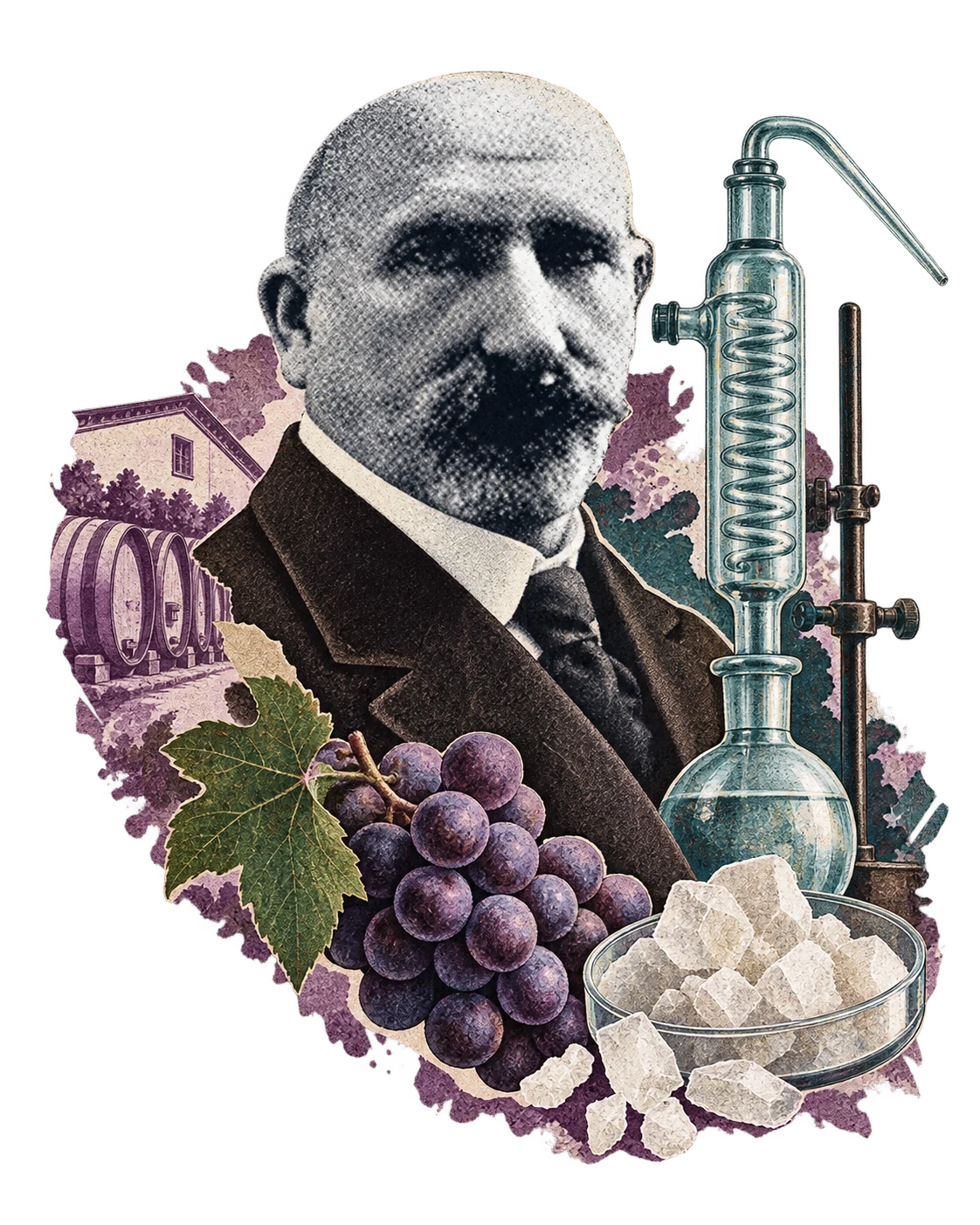
A chemist, industrialist, and entrepreneur whose life, factories, and family are woven into the fabric of the political, economic, and social history of the Jewish community in the Land of Israel.
Dov Klimker The vision of the First Aliyah pioneers was to come to the Land of Israel and establish agricultural settlements. This is what happened in Rishon LeZion, founded in 1882. At the same time, from the settlements' earliest days, industrial plants were established there. The first of these were the wineries in Rishon LeZion and Zichron Yaakov, which supported agricultural production. The Carmel Winery in Rishon LeZion was the country's largest industrial center and employer at the time. Around it grew an extensive network of by-product plants, technological ventures, and social struggles that shaped the face of the entire Jewish community. This was how industry first developed in the country. Near the Carmel Winery was an advanced metalworking shop managed by Y. Papo, the first Jewish mechanic, which maintained machinery and developed unique iron structures for the settlement's buildings. It was the chemist Dov Klimker who recognized the potential in using the by-products of the large winery. In 1904, a year after immigrating to the Land of Israel, Klimker established the first chemical plant in the country near the winery. The plant was based on purchasing yeast sediment and tartar (argol) from the winery and recycling them to produce tartaric acid (wine acid), lime salt, and alcohol. This initiative presented an early model of industrial symbiosis, turning agricultural waste into valuable raw materials for local use and export. Two advanced steam engines were installed in his laboratory and used to extract perfume essence from geranium leaves, while the empty spaces in the building were used to develop silkworm cultivation. In this way, Klimker's factory became the first incubator for biotechnological innovation in the Land of Israel.
The Winery Workers and Workers' Culture
Employment at the winery ranged from 80 permanent workers throughout the year to 150 laborers during the intense grape harvest season. The workforce was socially and ethnically diverse, including veteran residents of the settlement, workers from Urfa who came from Jerusalem for the harvest and later made their home there, Yemenite immigrants who arrived in the settlement in 1909, and Second Aliyah laborers.
David Ben-Gurion worked at the winery during the grueling harvest season in the summer of 1907. He described a harsh daily reality marked by strenuous physical labor. Alongside the work, those days were also characterized by rich intellectual and cultural activity, intended to ease the workers' hardship and develop their awareness. The center of cultural life was the first Hebrew community center, inaugurated in the settlement in 1898 at the initiative and expense of the farmers. Reading evenings, concerts by the Rishon LeZion Orchestra, and Hebrew theatrical performances were held in the building.
A significant part of the workers' education on those evenings was thanks to Dov Klimker himself, who volunteered to give lectures on chemistry and science to the settlement's young people and workers. These gatherings created a direct link between manual labor and scientific learning, and provided the workers, including Ben-Gurion, with an inspiring cultural space that connected the chemical and industrial plants with the making of a new Hebrew person.
From Kishinev to Paris and Hovevei Zion
Dov Klimker was born in 1865, in the middle of the month of Kislev, in the city of Kishinev in the region of Bessarabia (then under the rule of the Russian Empire, and now in Moldova). His parents, Rachel and Shmuel Ze'ev, a merchant by profession, ran a religious household. As a child, he received a traditional education in a cheder and yeshiva, but from a young age he was captivated by the world of science. After completing his studies at the yeshiva, he decided to pursue a general education and studied at the commercial school in Odessa. From there, he sailed to Paris and the renowned Sorbonne University, where he earned a degree in natural sciences and specialized in chemistry.
His years in France (1885-1886) gave him not only scientific knowledge but also a Zionist vision. Klimker became an energetic activist in the Hovevei Zion movement, served as secretary of the Society for the Settlement of the Land of Israel in Paris, and was a member of the Bnei Zion Society and other Zionist organizations. In 1897, he married Pnina, née Rosen, a midwife by profession. Their life together was turbulent and full of upheavals, and the couple even divorced and remarried twice during their years together. In those years he returned to Russia, and in 1901 began managing a chemical plant, while also pursuing public activity as chairman of various Zionist societies and chairman of the Council of the Trade Assistants' Association in Kishinev.
The year 1900 brought a dramatic turning point. Klimker attended the Fourth Zionist Congress in London as a delegate, and later that year traveled to Vienna for a moving personal meeting with the visionary of the Jewish state, Dr. Theodor Herzl. Klimker presented Herzl with an original, thorough, and pioneering plan to establish modern industrial and manufacturing plants in the Land of Israel. Herzl was captivated by the practical vision and forwarded the proposal in its entirety to the editorial staff of the central Zionist periodical Die Welt. The plan was published in the October 1900 issue, accompanied by an enthusiastic appeal from the editors, who warmly recommended the compelling idea.
Industry, War and Family
In 1903, Klimker fulfilled his dream: he immigrated to the Land of Israel with his family and settled in Rishon LeZion. The scientific thinking that guided him was ahead of its time: making maximum and sustainable use of local agricultural products and agricultural waste. The factory he established in the settlement was the first privately owned chemical manufacturing plant in the Land of Israel. The following year, in 1904, he also became a pioneer in the national sphere, as the first to propose donating olive trees to the Jewish National Fund (JNF).
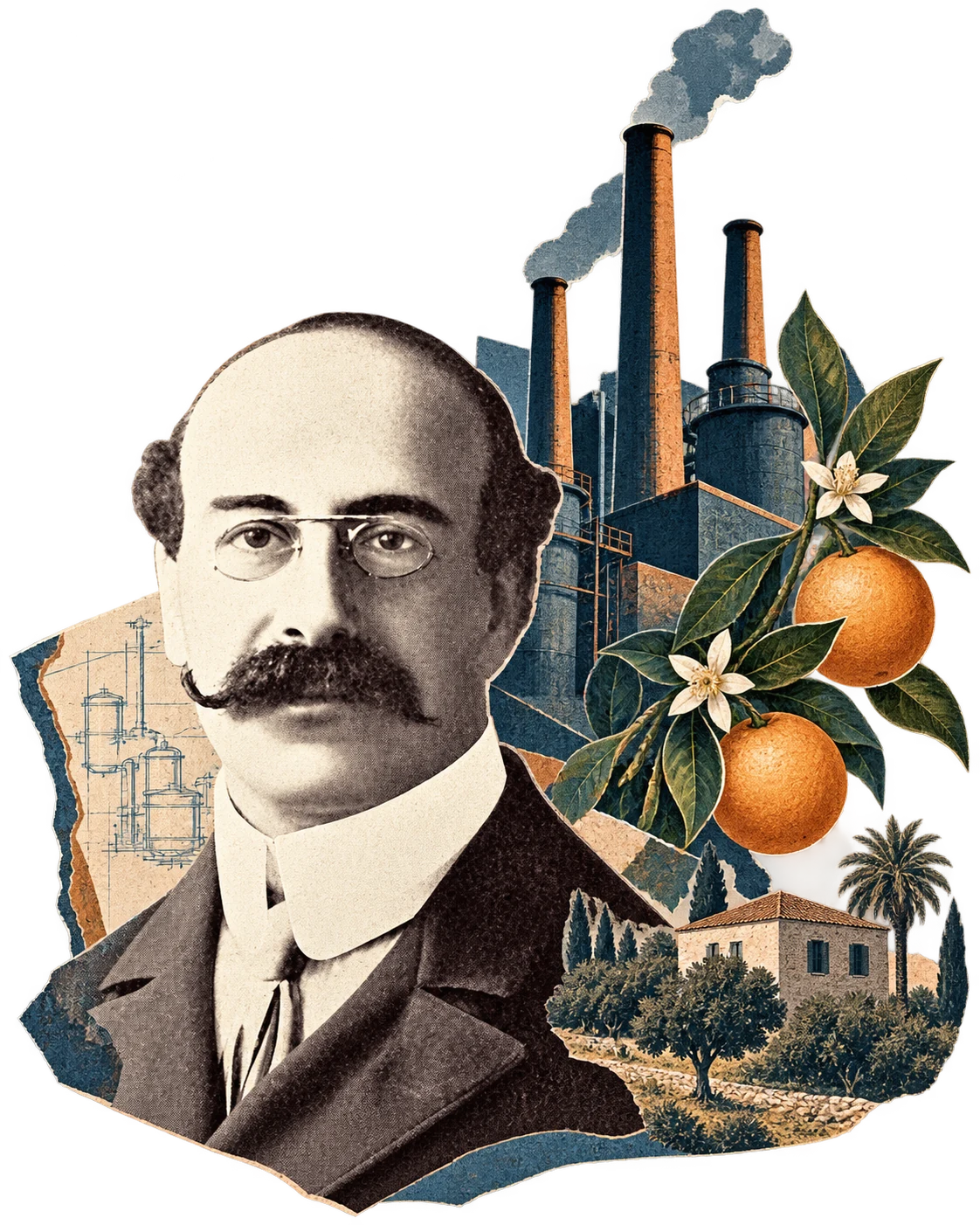
His entrepreneurial drive would not be stilled. In 1906, in partnership with Aharon Eisenberg, a pioneer through and through and one of the founders of Rehovot, he purchased about 240 dunams of land on the ruins of the village of Ayyun Tulma (Einot Telem) in the Valley of the Cedars, near Motza on the approach to Jerusalem. There, the two established the Hermon factory, which included an olive press and a plant producing oil and soap from olive pomace. Klimker's vision combined sophisticated industry with settlement. He planned to build a small residential neighborhood around the factory for the workers, with each worker receiving a plot for a small homestead.
The factory began operating in 1909 and received enthusiastic media attention. In 1912, the newspaper HaTsfira wrote about it: "Until a wise chemist came along, a passionate Hebrew who loved Zion with all his body and soul, named Dov Klimker, settled in the country, and set himself one goal: to develop industries here based on products for which only the Land of Israel is renowned." But reality made the vision difficult to achieve, and financial and logistical problems led to the factory's closure three years after its establishment.
Klimker did not give up. After the factory closed, he set out on a pioneering tour of the Negev with the agronomist Melech Zagorodsky, visiting the lands of Jammama to lay the groundwork for an agricultural farm that would eventually become the settlement of Ruhama. At the same time, he founded and managed an oil-producing plant in a settlement to which he himself gave the symbolic, historic name Ben Shemen.
In 1913, he leased and operated the Atid factory in Haifa, which later became the famous Shemen plant and also produced oil from olive pomace. When World War I broke out, the factory continued operating and supported the war effort of the Ottoman and German authorities. One day, a huge fire broke out there. Dov and the workers fought the blaze and managed to bring it under control. But as he was recovering from this severe blow, another struck: he was arrested and imprisoned by the Turkish authorities on the absurd suspicion that the fire had actually been a deliberate signal to the English fleet sailing in the Mediterranean.
In those turbulent years, a romance that would influence generations began among the third cohort of students at the Rehavia Hebrew Gymnasium in Jerusalem. Zvi Schwartz, a bright, opinionated 15-year-old who had traveled alone by ship from Odessa to study in the country, fell in love at first sight with Rachel, Dov Klimker's 14-year-old daughter. Rachel was beautiful and serious, with long braids, and was considered the top student in her class.
The excited Zvi decided to confess his great love to his close friend Rachel Gutman, the painter Nahum Gutman's sister, who had been like an adoptive family to him in the country for two years. In those days, as Zvi fondly recalled at the age of 90, a declaration of love was a solemn promise. A person's word was their bond. The embarrassed Rachel promised to answer him the next day, but that very night it emerged that Eliyahu Golomb, later known as the "uncrowned commander" of the Haganah, and the boys in the class had already discovered the secret of Zvi’s hopes. They were not especially impressed and told Zvi that he had no monopoly on Rachel's heart, since they were all courting her. Zvi replied confidently, "By all means, try," and he did win her over. Rachel later admitted that he was simply the most persistent of them all, and two years after that secret confession, they married.
Haifa, the Language and the Legacy
At the end of the war and after his release from prison, Klimker decided to devote his energy to extensive public service while continuing his scientific research. He settled in Haifa and became one of the community's leaders: he served as chairman of the city's community committee and chairman of the Hadar HaCarmel neighborhood committee, and from 1919 to 1922 headed the Engineers' and Chemists' Committee. During these years, he also taught a new generation of students, teaching chemistry at the Reali School and the Technion.
His commitment to national institutions was deep and unwavering. In 1923-1924, he went on a mission to Eastern Europe on behalf of Keren Hayesod, and from 1926 to 1930 served as chairman of Keren Hayesod in the Haifa district and as the city's representative on the fund's national board. He was also active in the General Zionist Party.
Dov Klimker was not only a scientist, diligent entrepreneur, and teacher; he understood that establishing a modern state required giving it a living scientific language. In collaboration with the Hebrew Language Committee in Jerusalem, he devised, coined, and created many chemical and technical terms in Hebrew, which were published in the collection Shnatenu and the journal Leshonenu. He published many professional articles on industry and chemistry in the local press, including the newspaper Omer, and in foreign-language newspapers, and published the research pamphlets The Industry in the Land of Israel.
Even in old age, he did not slow down. He continued conducting innovative chemical experiments in a small factory he had established, including attempts to produce sugar from oranges, extract oil from oil shale (bituminous limestone), manufacture insect sprays such as Flit, shoe polish, soda, and other chemical products.
In the summer of 1947, just one year before the establishment of the state to which he had devoted his life, Dov Klimker died in Haifa at the age of 81. He was laid to rest in the city's Hof HaCarmel Cemetery. In his memory, a street in the Ramat Motza neighborhood of Jerusalem was named after him, exactly where he had tried to realize his vision for a factory in the Valley of the Cedars.
Dov Klimker's legacy continued to pulse strongly through his children and descendants, who put down deep roots in the leadership of the state.
Rachel, Klimker's daughter, and her husband Zvi Schwartz became prominent and highly regarded figures in the Jewish community in the Land of Israel in the early 20th century. Zvi was a leading lawyer, a judge, and a member of the Supreme Court, while Rachel was a distinguished educator. Despite their own considerable achievements, they are better known as the parents of two of the country's most influential women: Ruth Dayan, wife of Defense Minister and Chief of Staff Moshe Dayan, and Reuma Weizman, wife of Major General and seventh president Ezer Weizman.
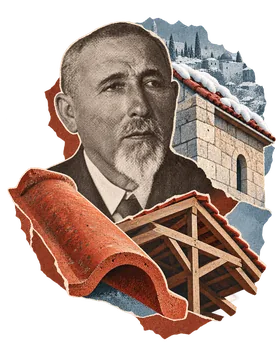
At this point, it is worth noting a striking historical coincidence: not far from the oil factory Klimker established in the Valley of the Cedars, another industrialist and pioneer, Yehiel Michel Steinberg, established a tile factory in Motza around the same time. Yehiel's daughter, Leah Steinberg, married Simcha Ambash. They became the parents of Ora Herzog, wife of Chaim Herzog, Israel's sixth president, and mother of Israel's president, Isaac "Bougie" Herzog, and Suzy Eban, wife of Abba Eban, the legendary foreign minister and Israel's ambassador to the United Nations. Thus, within a small geographic radius, in one valley, between two factories founded by two pioneering entrepreneurs, four lineages of Israeli leadership took root and flourished, shaping the country to this day.
In addition to Rachel, Dov and Pnina Klimker had other children:
David Klimker, father of Judge Gilad Giladi, former president of the Beersheba District Court; Yosef Klimker (may his blood be avenged), who fell heroically in the Battle of Haifa during the War of Independence; and Rivka Lily, wife of Menachem Shavel.
Daniel Klimker, a respected agronomist and renowned agricultural instructor in the Galilee on behalf of PICA, was also one of the founders of the Maccabi association in Tiberias and was sent on complex agronomic assignments to Baron Rothschild's farms in Morocco. His children were Dr. Harry (Ari) Klimker, a qualified physicist and respected research team leader at the Negev Nuclear Research Center, and Elsa, wife of Haim Sasson.
תגובות
עדיין אין תגובות.