
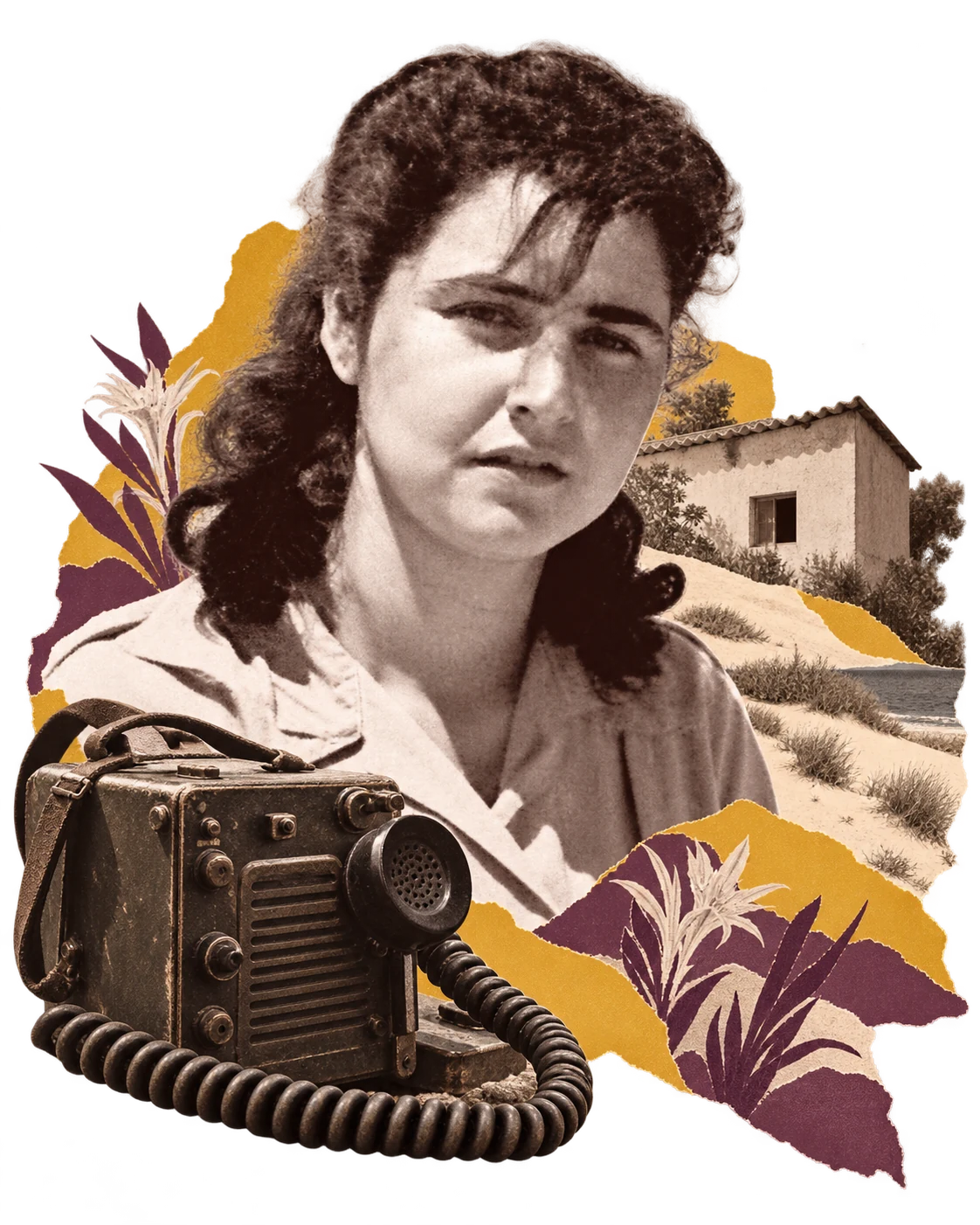
During the War of Independence, there were events whose names alone are enough to ignite a heated debate. The Altalena affair is one example, as is the surrender of Nitzanim - an event intertwined with the story of a heroine who became a legend, a heroine who chose to take part in the campaign and parted from her son with the feeling that she would never see him again.
Mira Ben-Ari Just hours after independence was declared, the Egyptian army invaded the Land of Israel in coordination with Jordan and Syria. The army advanced in two forces: the western force moved through Gaza toward Tel Aviv, and the eastern one through Beersheba toward Jerusalem. The eastern column reached the Ramat Rachel and Beit Shemesh area (the "Joint Position"), while the western column reached Isdud (Ashdod) and was halted at the Ad Halom Bridge. On the way, it captured Yad Mordechai and decided to bypass Nitzanim.
A Childhood in Berlin and Aliyah
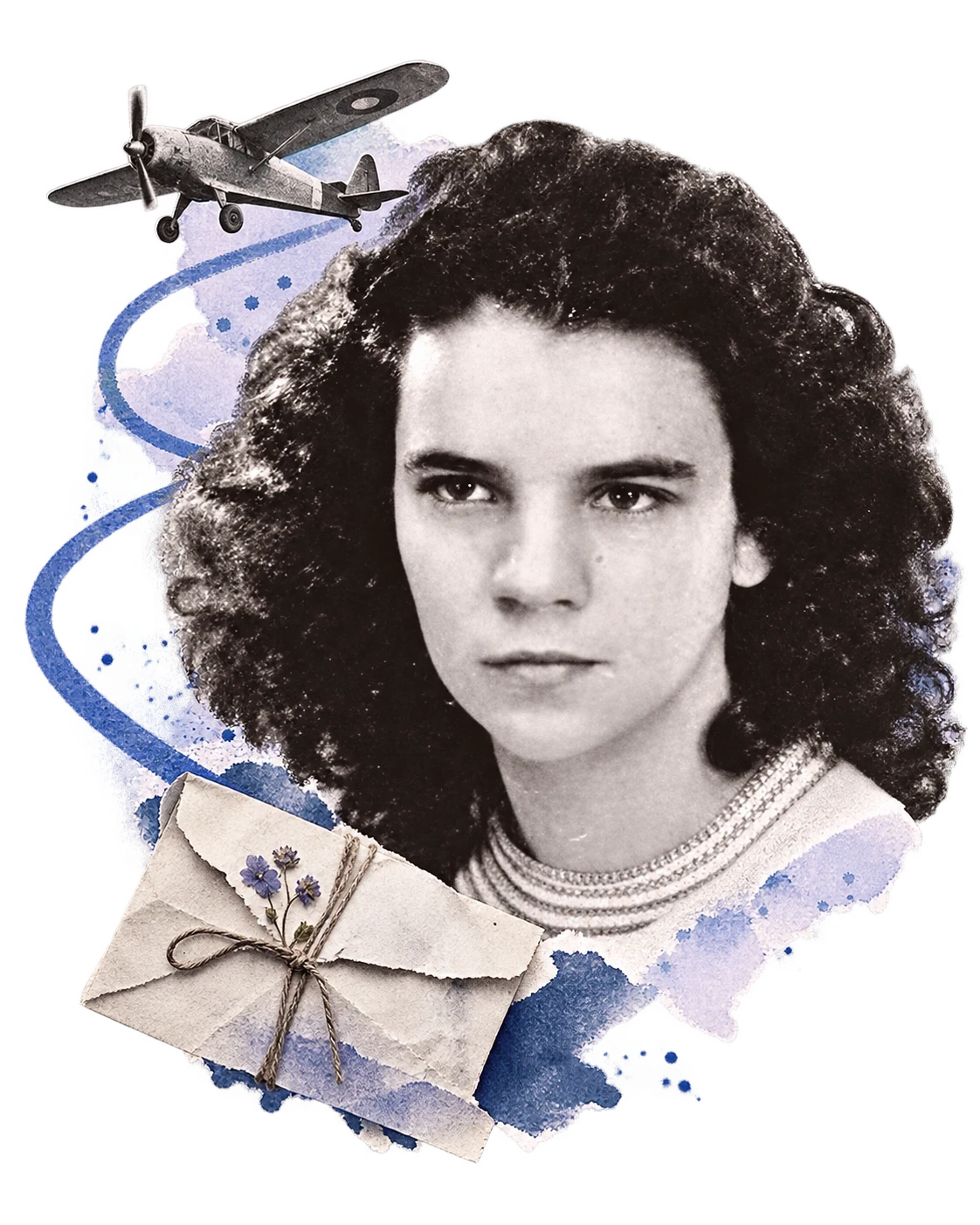
Mira (Miriam) Ben-Ari was born in Berlin in 1926, her parents’ only child. Her father, Israel, had served as an officer in the Austrian army, held a doctorate in law, and was a proud Zionist who made a point of saying that he had known Herzl personally. Her mother, Rivka, came from an influential family. At the end of January 1933, Hitler was sworn in as Chancellor of Germany. Israel correctly foresaw what lay ahead, and that same year the family immigrated to the Land of Israel and settled in Tel Aviv.
Mira was a beautiful and gifted girl, an outstanding student and a talented fencer. When reports of events in Europe began to reach her, she was 14 and volunteered for the ranks of the Lehi. Two years later, Mira visited the Western Wall and wrote in her diary: "... Israel's enemies tried to destroy the Temple completely. One wall remained, a remnant that had seen the Jewish people scattered and then gathered together again. Are these stones not somewhat like the fate of our people? Nations persecuted the Jewish people and tried to destroy them. There were always Jews who survived, everywhere. These remnants are now gathering from all the lands of exile to build their national home here, the Hebrew state..."
After finishing high school in 1943, Mira went for a year of agricultural training and was among the founders of Kibbutz Nitzanim, where she met Elyakim, a member of the Palmach. They married, and when Mira was 19, their first son, Dan, was born. When Elyakim left on a raid on Beit Darras, Mira parted from him, saying: "Go and carry out your duty thoroughly, so that I can be proud of you."
Radio Operator at Nitzanim and the Ma'apilim
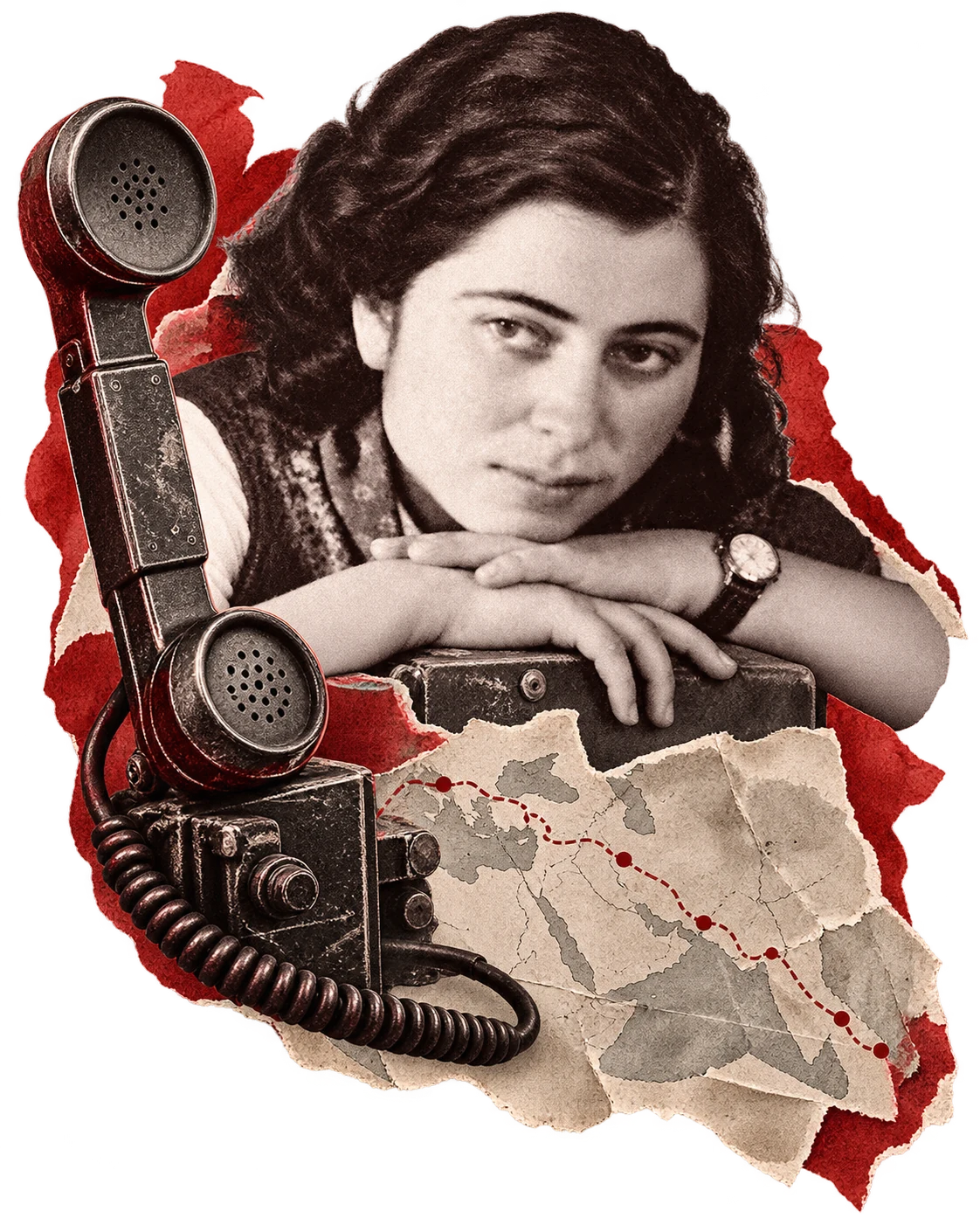
Mira joined the defense of Kibbutz Nitzanim, which was isolated and surrounded by Arab villages. She was sent to a radio operators' course and served as the communications operator for the entire area. She managed to balance being a mother with her work as a radio operator. One day she was called to Kfar Uriah. Her commander recounted: "I met Mira and asked her to volunteer as a radio operator. Our conversation was very brief and to the point... 'When should I leave?' she asked. 'Tonight,' I replied. 'I need one hour so that one of the mothers can look after my one-year-old son.' I agreed. She quickly took care of the preparations, packed equipment, hid the radio in a concealed cache, stuffed some clothes into a military backpack, and we set off. A young woman, alone, would be stationed for an indefinite period in a moshav of Jews from Kurdistan whose language she did not know and whose customs she was unfamiliar with."
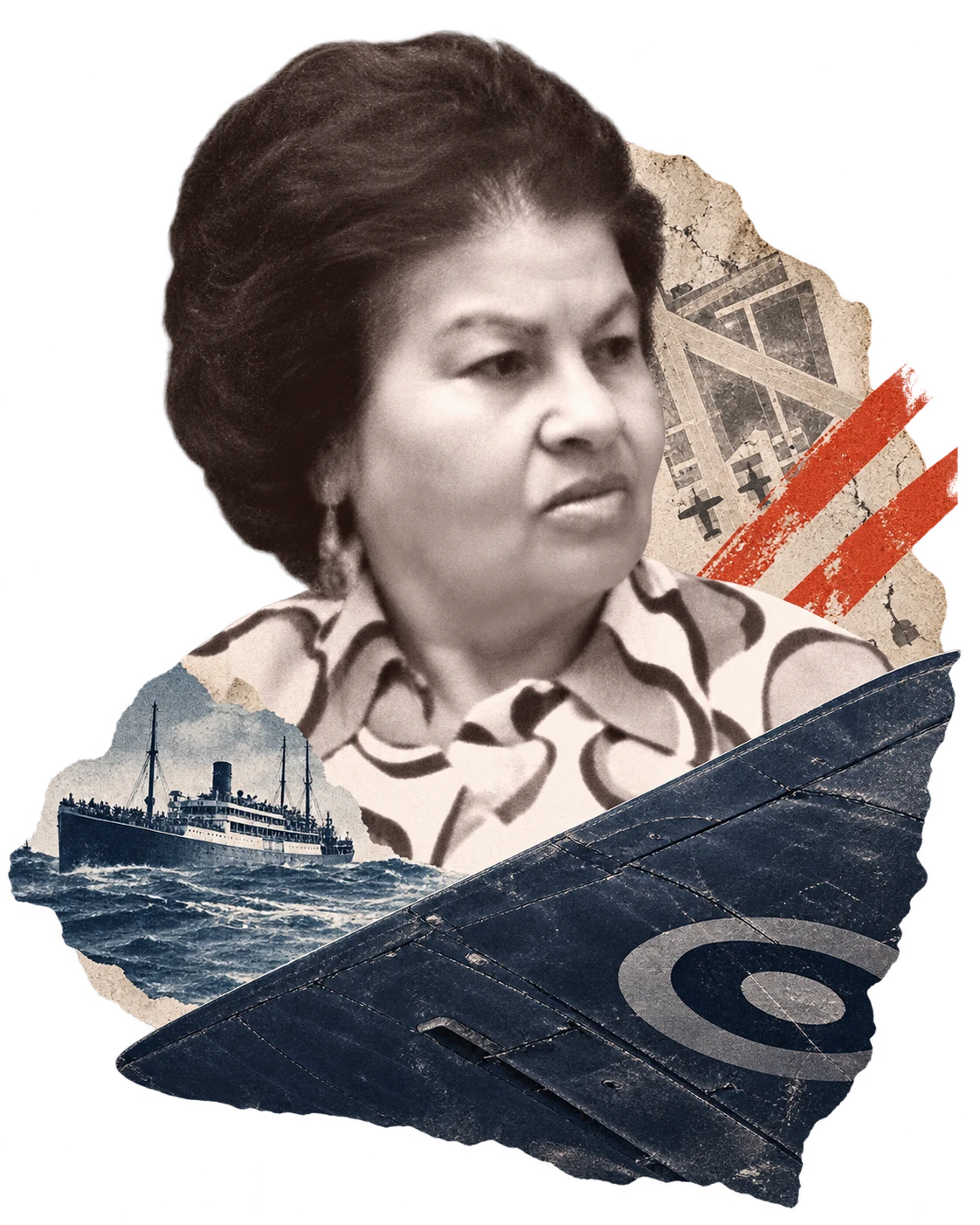
Among other duties, Mira was responsible for communicating with the immigrant ships that arrived off the coast of Nitzanim. The most famous of them was the ship Susanna. The Palyam men (a combination of Palmach and sea), under the command of David Maimon (Snapir), were ready to carry out an operation to bring 825 illegal immigrants ashore. The immigrants gathered on the beach near the town of Metaponto in Italy, and on March 4, 1947, they boarded the ship under cover of darkness and set sail. The ship's name was changed from Susanna to Shabtai Luzinsky (named after the Zionist leader who had worked as a member of the Center for Diaspora Affairs and in the camps for Holocaust survivors in Italy, and who was killed in a car accident that same year). The coast at Nitzanim was chosen as the ship's destination, both because the kibbutz was close enough to provide assistance and because the British presence there was sparse. Because of the rough sea, the ship was deliberately directed to run aground about 120 meters from the shore, so that if they were caught, the immigrants and the ship could not be sent back out to sea. A rope was stretched from the shore to the ship, and the immigrant boats were moved along it. After about three hours, the British noticed the suspicious activity, spread out along the beach, and surrounded the ship. Hundreds of Jews from the surrounding area were summoned to the site and immediately mingled with the immigrants. Everyone the British caught and asked where they were from answered in Hebrew, "I am a Jew from the Land of Israel." The British arrested more than 900 people, some immigrants and some local residents, and deported them by ship to the detention camp in Cyprus.
Haim Hefer, then a member of the Palmach, wrote the famous song "Shoshana" (named after the ship Susanna) about this ship and its story: "The sea was stormy, the mast creaked / The ship's bow was almost worn away... It was a very wretched figure / when stocky Shmulik was brought to Cyprus / but also when he sat behind the fence... The journey of days came to an end / Boats with the gang came to shore / and then everyone rushed toward Shoshana..."
Evacuating the Children and Parting from Danny
After the Egyptian force was stopped near Ashdod, the Egyptians feared that Nitzanim would become a base for hostile activity in their rear and decided to return and capture it. The kibbutz members spotted the forces advancing toward them and made decisions accordingly. One of them was "Operation Baby."
Several days before the operation, when the Egyptians were shelling the settlement, Mira wrote: "The children have become seasoned strategists. They know where the shots are coming from and who is firing. They hear every shot before the adults do. They know exactly what weapons each member has, who has a Sten gun, who has a submachine gun, and who has a pistol."
The idea of evacuating the children and babies had been raised several times as a recommendation, but the members rejected it. In mid-May, when the armies began attacking the settlements, the recommendation was replaced by a firm order: the children had to be evacuated from Nitzanim and the nearby settlements of Negba, Gezer, Kfar Menachem, Gat, and Gal-On. This was the signal for the start of "Operation Baby."
The children of Kibbutz Nitzanim, the oldest of whom was four, could not be evacuated by bus as they were in the other settlements. Nitzanim was under siege, so the children were evacuated on foot under cover of night. Before the journey, to help the children fall asleep, they were given chocolate containing sleeping pills. The mothers and several fathers carried the children in their arms and set out on foot toward the settlement of Be'er Tuvia, about eight kilometers from Nitzanim. Halfway there, the children were handed over to members of Be'er Tuvia who had come to meet them, and after a few hours they arrived at the settlement. Candles were lit in the houses that were to receive the children, and each time a child entered a house, its candle was put out. When all the candles had gone out, everyone knew that all the children had arrived safely.
Mira, who was 22, handed her only child, two-year-old Danny, to her friend Nehama and said goodbye to him with words that showed just how much she feared for her own future: "Tell Danny he had a mother." Mira could have evacuated with her son, but decided to stay with the fighters of Nitzanim and the men of the Givati Brigade.
She left a letter in Danny's pocket for his father, Elyakim, a driver who had not managed to return to Nitzanim: "I'll just write a few words, and you'll surely understand, because I can't write. It's just a little hard. More than a little. I've never felt this way before, but I'll get through it. In our time, we have to get through everything. Perhaps because our people can endure and refuse to give up, because of our stubbornness in holding on despite the fact that we are few, we will nevertheless achieve everything that is due to us after two thousand years. There is no harder parting than that of a mother from her child, but I am parting from my child so that he can grow up in a safe place and be a free man in his own country. When you come to him, give him all my love. Give my father and mother lots of kisses and ask their forgiveness on my behalf..."
Several days after the operation, Mira wrote to her parents: "It was very hard for me when the children were evacuated... I cried my heart out, but I couldn't spend much time on it because I was on the radio until the last child had reached safety." She wrote to her mother: "Tell me about Danny. What is he doing, what is he saying, how is he? Is he worried about his mother? I can't forget his sweet little voice... 'Mommy, pee-pee,' he said, his voice choked with tears! And I had no time to stay with him in those last minutes!"
The Fall of Nitzanim and Remembrance
The attack on Nitzanim began at midnight on June 6, 1948. The kibbutz, surrounded by Arab villages and home to about 140 people, half of them kibbutz members and the rest Givati fighters armed with light weapons, had no chance against the Egyptian army, which had large forces reinforced with tanks, artillery, and air support.
Mira sent desperate messages to the battalion headquarters pleading for help, but none came. Help may have been delayed because the commanders heard the Egyptians announce that they had captured Nitzanim before it had actually fallen. Some members would later claim that help was not sent because of their political affiliation. As the Egyptian forces drew closer, Mira transmitted her final message: "The battle is lost. I'm destroying the radio and going out to fight."
After about 15 hours of fighting, the Egyptians entered the kibbutz gates. The force commander, Avraham Schwarzstein, decided to surrender and sent one of the fighters to raise a white flag. When the fighter stood up with the flag, the Egyptians shot him. Avraham Schwarzstein took off the white undershirt he was wearing and raised it in his hand, but the Egyptians shot him too and wounded him. He leaned on Mira and got to his feet. As he walked toward the Egyptians to declare his surrender, one of the officers shot and killed him. Without thinking, Mira drew her pistol and shot the colonel who had killed Avraham. The Egyptians, stunned by her courage, shot and killed her. Thirty-three of the kibbutz defenders were killed and 105 were taken prisoner.
This was not the last blow dealt to the people of Kibbutz Nitzanim. Two days after the surrender, the brigade headquarters published a "battle sheet" in which Aba Kovner, the brigade's education officer, sharply criticized the surrender. Under the heading "The Fall of Nitzanim - A Failure," he wrote: "At Nitzanim, the enemy may have learned for the first time - something grave and startling - that it is possible to break through the defensive wall of a Jewish settlement within a few hours, subdue it, and take its fighters prisoner... One does not defend a home on condition... And if fate decrees it, it is better to fall in the trenches of one's home than to surrender to a murderous invader. To surrender - while the body is still alive and the last bullet still rests in the magazine - is a disgrace. To go into enemy captivity is disgrace and death!"
Nitzanim was not the only settlement evacuated or lost - the defenders of Yad Mordechai withdrew, Kfar Darom was evacuated, and Kfar Etzion and the Jewish Quarter in Jerusalem fell... But the fall of Nitzanim became a stain and a source of much dispute.
The defenders and residents of Nitzanim learned of the condemnation only after returning from captivity. In a letter to the Chief of Staff at the time, Yaakov Dori, they demanded redress: "We returned to our homeland after nine months in captivity, and only now have we learned of the smear campaign waged against us... We had hoped that on the day we returned, we would hold the southern commanders accountable, because their indifference and neglect toward us had created a difficult and tragic situation. We were stunned to hear the slander, whose purpose was clear: to cover up their mistakes."
About a year later, a committee was established by the General Staff. Among its conclusions was that Avraham Schwarzstein "demonstrated great courage and fortitude" and had decided to surrender "after no other way of saving his men could be found."
After the liberation, Mira's son Danny returned to the kibbutz, and at the age of 13 went to live with his grandparents in Ramat Gan. When he grew up, he and his father, Elyakim, founded the company Elyakim Ben-Ari for development and road construction. Danny gave one of his three daughters the name Mira.
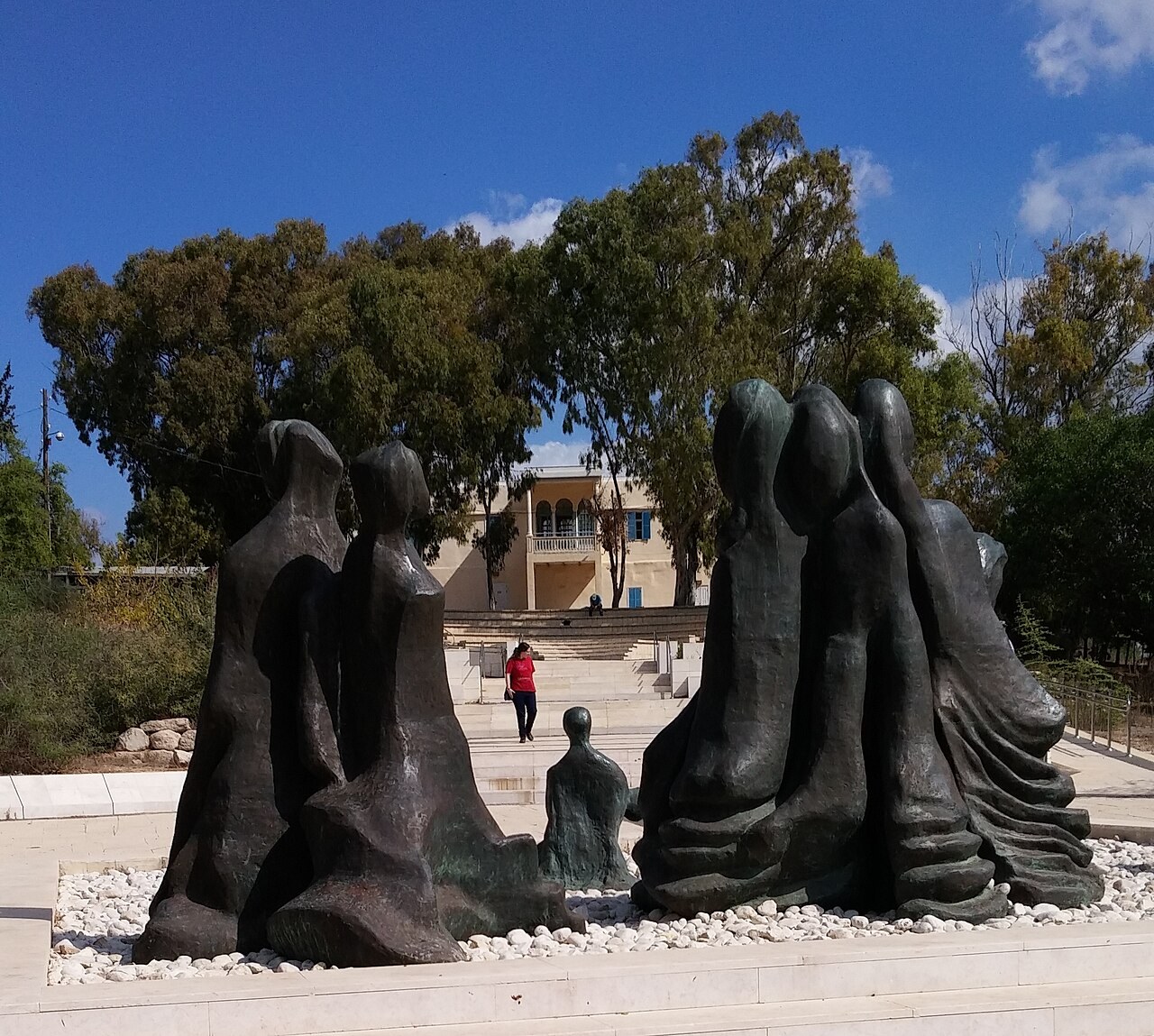
A monument, "Memorial to the Fighting Woman," was erected where Mira fell. Mira Ben-Ari, who fell at the age of 22 defending Kibbutz Nitzanim, became a symbol for all the women who fell in Israel's wars.
תגובות
עדיין אין תגובות.