
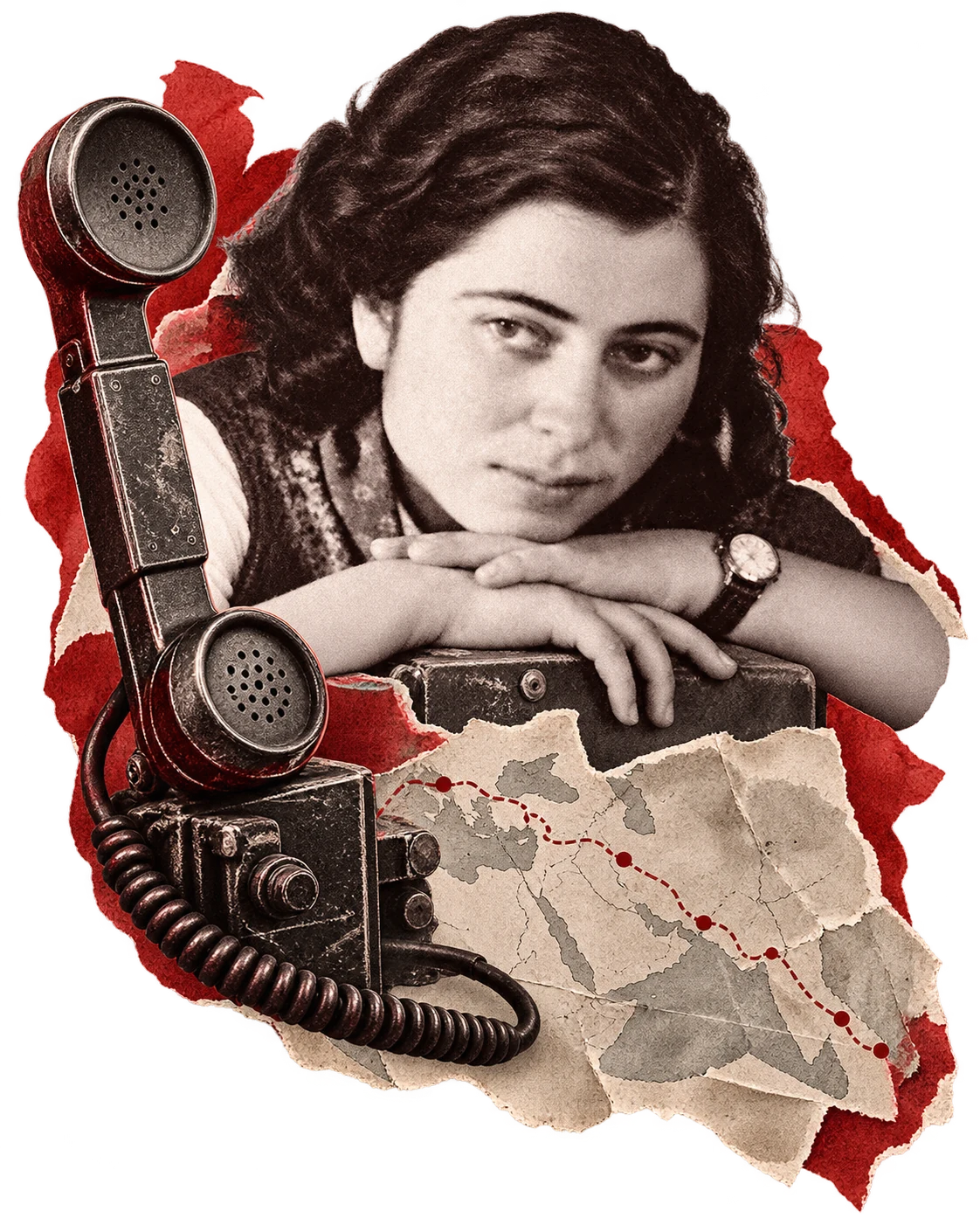
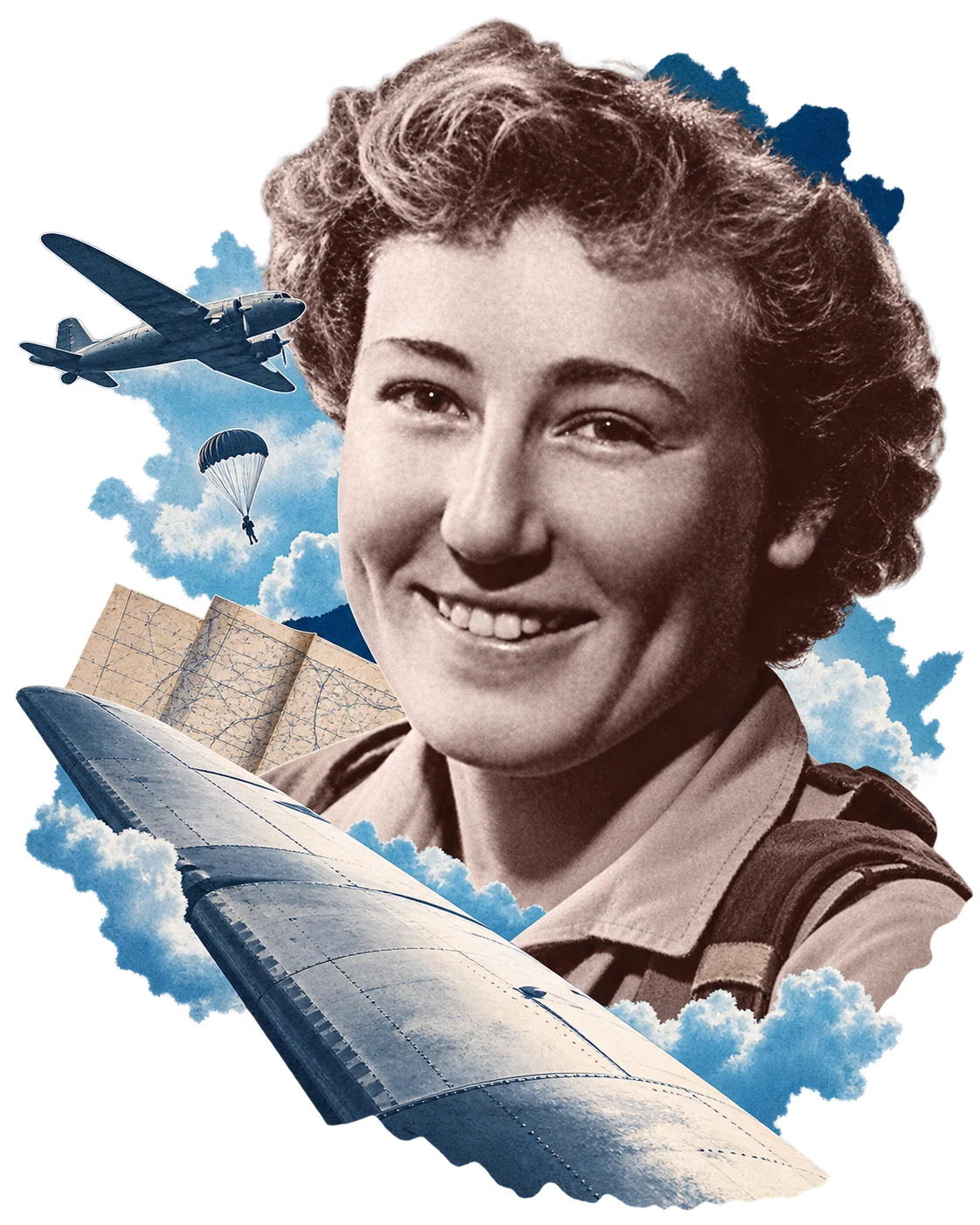
The unbelievable story of a short-haired girl who crossed continents alone, came to the Land of Israel with the Tehran Children, and wanted to fight for the country's independence. A soldier whose voice was the last heard in the Battle of Latrun.
The Struggle for the Road to Jerusalem
On November 30, 1947, the day after the UN decision to partition Palestine, the War of Independence began. Until April 1948, the fighting was characterized by clashes in mixed cities such as Safed and Jerusalem, and battles over the roads leading to besieged settlements. The besieged settlements received food, medicine, and ammunition by means of armored convoys. During March, 83 fighters were killed and dozens were wounded. It was clear that things could not continue this way.
At this stage, it was decided to take control of territory along the roads, and the first road selected was the one to Jerusalem. The campaign for the road to Jerusalem was divided between the eastern campaign, which mainly included the battles for the Castel, and the western campaign, which included Latrun, a site that controlled the nearby highway.
David Ben-Gurion's view of the road to Jerusalem was clear: "No Latrun - no road (to Jerusalem); no road - no Jerusalem; no Jerusalem - no state." Between May 24 and July 18, 1948, five fierce battles were fought for Latrun, in which 168 soldiers were killed.
The Escape from Poland Eastward
Helena Lampel was born in Poland in February 1929 to a well-to-do Jewish family that was disconnected from tradition. The journey of displacement undertaken by ten-year-old Helena began in August 1939, when her family fled for fear of a German invasion. First they moved to the eastern district around Tarnopol, Poland. A few weeks later, they went to stay with relatives in Lviv, where Helena could read in her uncle's extensive library. Hardship forced the family to move to the Carpathian Mountains, where her father began working in a sawmill. In June 1940, the family was sent east in cattle cars, deep into the vast expanses of Siberia. After 18 days, they reached Tomsk Oblast, where they stayed for only six weeks before being sent to the Urals. Her parents worked in the forest, while the two girls went out to queue for food. Her weakened parents realized they would be unable to support Helena and decided to send her to an orphanage, where her hair was cut off.
This is what Helena wrote in her diary: "If you want to listen, I'll tell you [...] We arrived in scorching Uzbekistan. At first, things were very bad for us there. Later, Father got a job at an office for Polish refugees, and somehow we scraped by in poverty. Four hundred grams of bread on ration points, and Father - five hundred. It didn't help much; the hunger continued unabated. And then came the terrible winter, the high prices, and the cold and deprivation in our room, and Father was sick, and then Mother and my sister fell ill, and I had to go to an orphanage, something neither my parents nor I wanted. There was no other way."
Helena Lampel and other children from the orphanage arrived in Tehran in August 1942. They waited to receive immigration certificates to the Land of Israel from the British, and a year later they arrived in the country.
In January 1943, about a month before immigrating to the Land of Israel, Helena began writing the diary she addressed in the second person, as if a human being were listening to her. The 14-year-old wrote: "One bright morning we saw her moored in the harbor. Her name was Dunera. And on her, on this ship, I hit on the good idea of keeping a diary. From it, you will be able to hear and learn what happened to me next. Yes, I forgot to tell you that, missing my loved ones so much, I began drawing their faces. When I feel low, I draw. I'll finish now. I don't know if you'll like me. I'll try to be open with you."
The first place Helena Lampel saw was the Atlit reception camp. From Atlit she went to Kibbutz Givat Brenner. She was accepted into seventh grade, and her greatest dream was to be like one of the Sabras. From that day on, she grew her hair long and braided it into thick black plaits: "Today I got a blanket. Tonight, after four years, I'll be able to cover myself with a blanket of my own." Shortly before Purim, her name was changed to Hadassah: "What do you think of this change to my name?... Just Hadassah, but I don't like it at all. I want to keep being Helenka."
Her classmate Gabriella Alter called Hadassah "the girl with the cat." Wherever they went during their wanderings, Hadassah adopted a local cat. She cared for cats in Givat Brenner, too. Her sense of humor also came through at the kibbutz: "Throughout the whole trip I insisted that normal people undress before going to sleep, not the other way around. Terrible mosquitoes kept us company as we slept, but it was hard for them to get through all the layers of clothing, and we fell asleep and slept soundly. In short, we walked and walked, and when I returned to Givat Brenner, half the Land of Israel was stuck to the soles of my shoes."
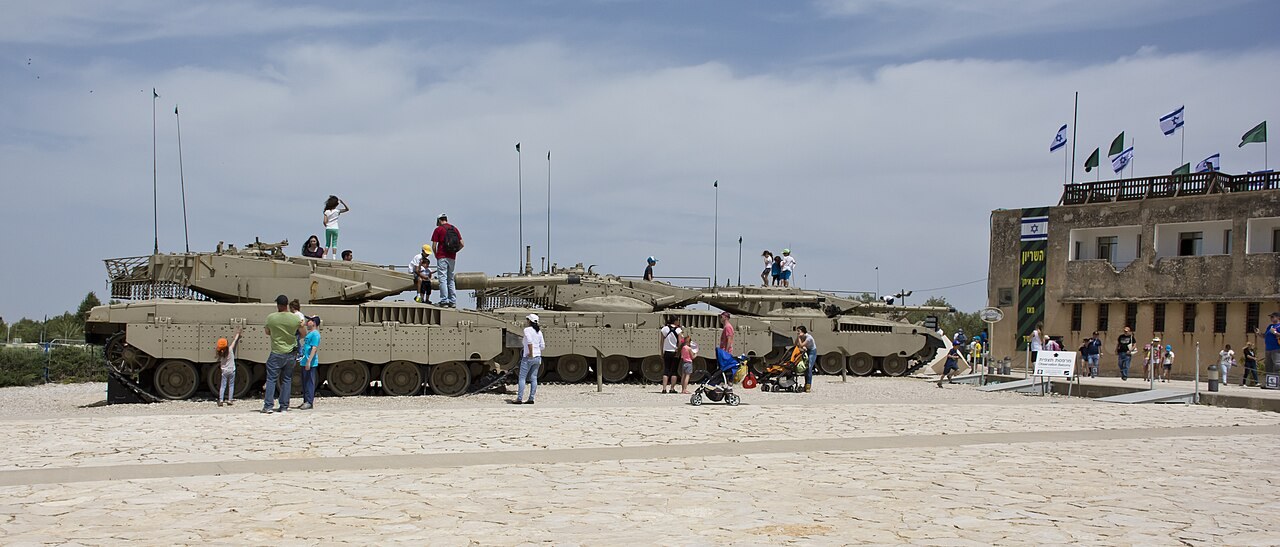
The area known as Latrun included the remains of a Crusader fortress, which gave the place its name; the Trappist monastery, built in 1890; the British police station, built in 1938 following the Arab Revolt; and a large detention camp, built in 1940. Latrun's importance came from its location at a major crossroads: the road coming from the south (Gaza), the road coming from the west (Jaffa and Tel Aviv), the road descending from the east (Jerusalem), and, from the north, the road ascending to Ma'ale Beit Horon.
Hadassah missed her family and made sure to keep in touch with them by letter, hoping they would come too: "When you arrive in the country, you will find a truly free homeland here. I think I won't disappoint you, and perhaps one day you'll even be proud of your Helenka. I can already see the tear that will glisten in your eyes, but don't cry! Keep your heads up; things will get better!"
To the Palmach and the Latrun Battles
At the age of 15, she became the girlfriend of Natan Mir from the nearby Kibbutz Shiller. Her friends envied her for having an older boyfriend, a Sabra kibbutznik. In eleventh grade, Hadassah Lampel and her friend Hadassah Montag joined the HaMachanot HaOlim youth movement in Rehovot, and in November 1946 they enlisted in the Palmach: "I love the country. Sometimes I wonder how anyone can be such a great idealist, but it comes naturally. Everything in the country is dear to me, especially the soil. Often, at work, when no one is looking, I kiss it [...] Perhaps it's a little funny to be so enthusiastic, but it's allowed in a diary - isn't it? After all, you don't laugh at me."
In January 1948, Hadassah joined the unit escorting convoys to Jerusalem. She completed a signalers' course and served as a signaler in the armored vehicles that opened the road to Jerusalem. In May 1948, she was attached to the newly formed 7th Brigade.
The first attempt to capture the police station took place during Operation Ben Nun A on the night of May 24, 1948. The force was commanded by Shlomo Shamir and included the 7th Brigade and Palmach troops, field corps soldiers, some of them from Gahal (Overseas Recruits), Holocaust survivors who had arrived from different parts of Europe, and immigrants from North Africa. The force's numerical disadvantage and lack of training led to the operation's failure. The Gahal soldiers had stepped off the ship just days earlier, and some of them were holding a rifle for the first time in their lives. Most did not speak Hebrew, and the order "Fire" had to be translated into four languages. In the operation, 74 fighters were killed, many were wounded, and 6 fighters were taken prisoner.
The second attack (Operation Ben Nun B) took place on the night of May 30, 1948. Forces from the 7th Brigade took part, supported by the 52nd Battalion of the Givati Brigade. During this operation, armored vehicles and half-tracks were used extensively for the first time - it was the first operation of the Israeli Armored Corps. Its commander, Haim Laskov (later the fifth Chief of Staff), would not agree to a woman going into battle, but without his knowledge Hadassah assigned herself as the signaler in the half-track of Jacob Wag, commander of the mechanized infantry company (and commander of the task force to capture the Latrun police station).
The armored vehicles' role in the battle was to break into the British police station and enable the infantry to enter. The half-tracks managed to break through, but the enemy hit them. The infantry force was delayed, and Hadassah, who was responsible for all the reports, received the order to retreat. In the ensuing confusion, retreat was impossible, and Jacob Wag was killed. Hadassah jumped out of the half-track and continued transmitting. According to the testimony of Amiram Yishpan, her last transmission was: "These are probably our last moments. There's hardly anyone left here. Give the guys my regards."
The operation ended in failure: 49 fighters were killed and dozens were wounded. Thirty-one Israeli dead and four half-tracks remained in the police station courtyard.
The last voice heard from the burning police station courtyard was Hadassah Lampel's. A 19-year-old girl. A Holocaust survivor. Without a home. Without an address. A girl wrapped in sorrow and longing, whose only wish was to meet her family one day. Her courage and composure astonished the Legion soldiers. During armistice discussions with IDF officers, Jordanian officers cited Hadassah Lampel as an example of the Israeli women soldiers' bravery.
The Latrun police station was not captured during the War of Independence. The station remained an enclave under Jordanian control, and the bodies of the fallen soldiers were left in enemy territory. The bodies were located and identified by the Chief Military Rabbi, Lieutenant Colonel Shlomo Goren, and on November 17, 1949, they were given a Jewish burial. The Latrun complex was captured during the Six-Day War.
Hadassah Lampel was killed on May 31, 1948. The State of Israel was 16 days old. Hadassah was 19 years old. Two months after her death, her mother, Rozalia, and her sister, Stella, arrived in the country.
Hadassah left behind a personal diary, a bundle of letters, and many drawings. Excerpts from her diary were published in a book edited and translated from Polish by Ben Zion Tomer, who was also one of the Tehran Children. A street in Jerusalem's Mount Scopus neighborhood is named after her.
תגובות
עדיין אין תגובות.