
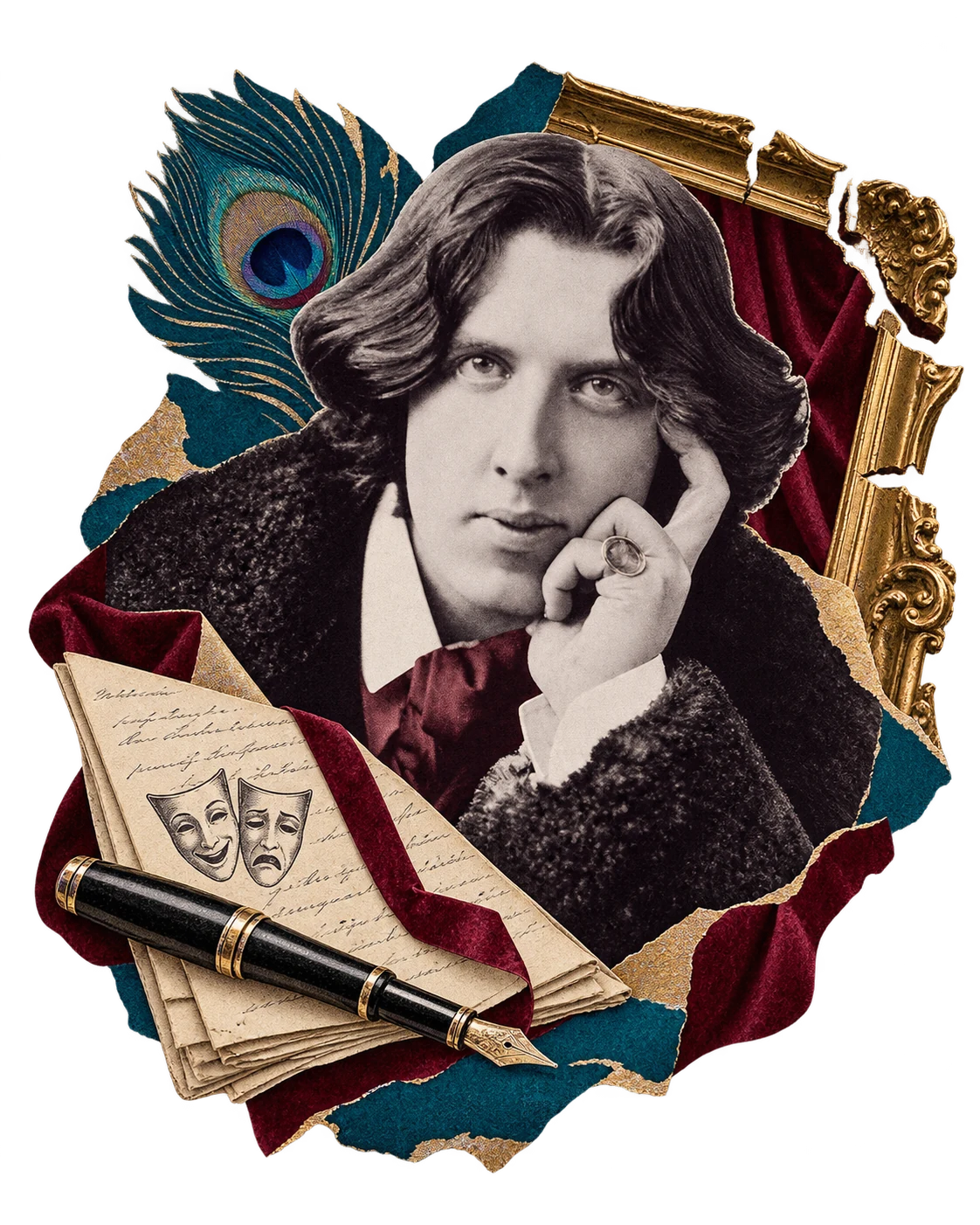
“Biographies are nothing but other people’s laundry lists” (Oscar Wilde).
This story is about three men: the first, a father of two homosexual sons who, to put it mildly, did not approve of their way of life. The second is his younger son, whose fame stemmed chiefly from his lover. And the last is the most famous homosexual lover of all: an Irish writer, poet, journalist, fashion critic, and playwright. What brought the three of them together, however, was the courtroom where the most famous libel trial in history took place.
The Marquess of Queensberry
The Marquess of Queensberry
John Douglas, the ninth Marquess of Queensberry, was a violent and stubborn man. He went down in history as the first to introduce the use of gloves in professional and amateur boxing. Today, the term “Queensberry Rules” is used mainly to describe actions that reflect fair play or sportsmanship. These rules came into effect in 1867 and are still followed in boxing rings today.
The marquess lived in the conservative Victorian era. In those years, homosexuality was illegal in England. His son, Francis Douglas, had a homosexual affair with the British prime minister at the time, Archibald Primrose, the fifth Earl of Rosebery. Rosebery was married to Hannah de Rothschild, granddaughter of Nathan Mayer Rothschild, founder of the British branch of the Rothschild family.
Oscar Wilde
Oscar Wilde
Wilde was born in 1854 in Dublin, the capital of Ireland, to Sir William, one of Ireland’s leading ear and eye surgeons. Alongside his medical work, his father wrote books on archaeology and folklore. His mother, Lady Jane Francesca, was a poet who worked as a translator and was an activist in the Irish independence movement.
Wilde graduated with honors in classical studies from Trinity College in Dublin and went on to Magdalen College at the University of Oxford. Even while at Magdalen College, he began to stand out as an eccentric. He grew his hair long and decorated his room with peacock feathers, sunflowers, and more.
In 1884, Wilde married Constance Lloyd, and they had two sons, Cyril and Vyvyan.
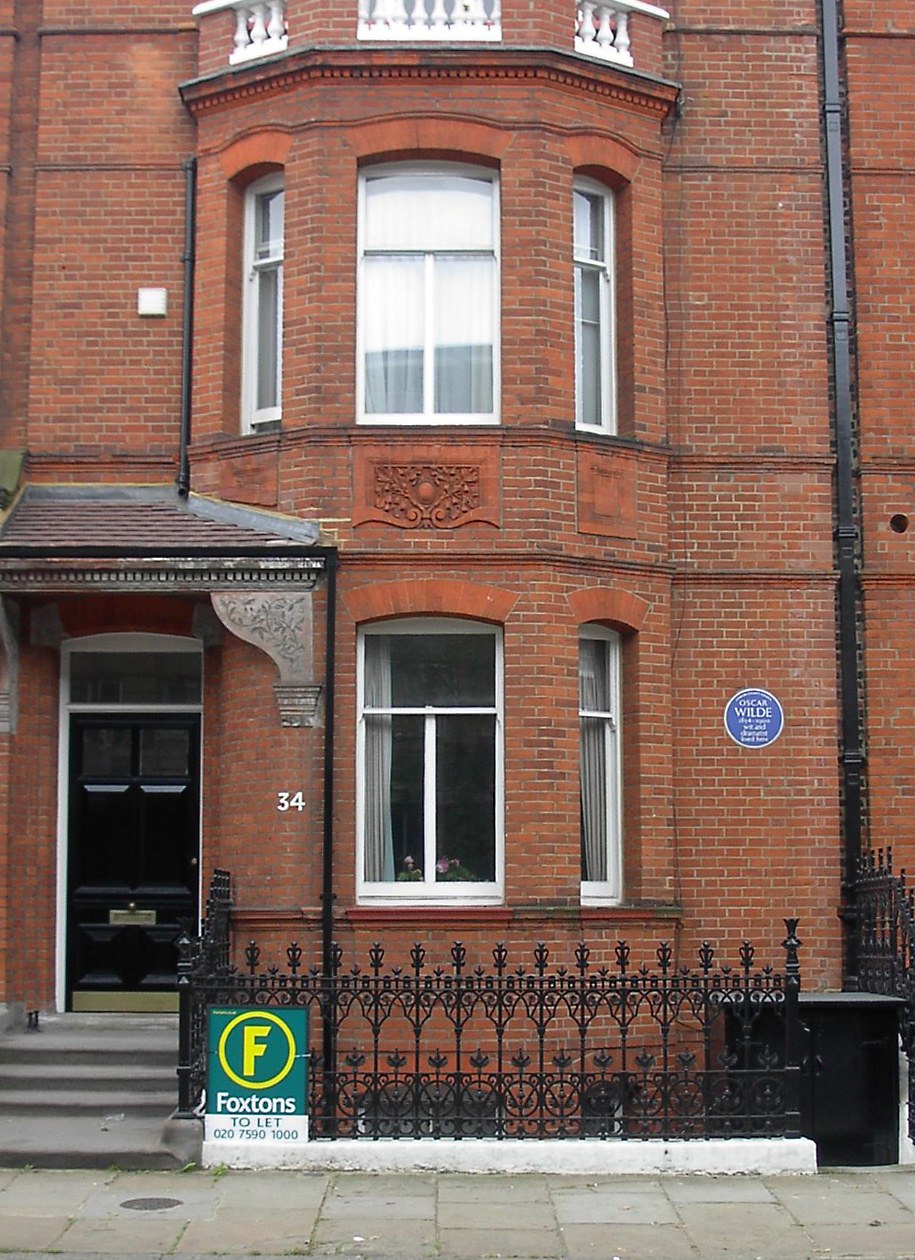
From 1887-1889, he worked as editor of the magazine Woman’s World. From the moment he took up the post, the magazine became very successful, and it was there that Wilde first came up with the idea of the serial story, which attracted many readers. During this period, he published The Happy Prince and Other Tales (1888).
Three years later, in 1891, he published the novel The Picture of Dorian Gray. The book describes the life of a man whose outward appearance remains forever young and beautiful, while inwardly he is rotten and corrupt. Many have argued that the plot and characters of the book parallel Wilde’s own life.
From 1892 onward, Wilde brought out a new work almost every year. His first great success was the comedy Lady Windermere’s Fan, which was staged at St James’s Theatre. He went on to publish A Woman of No Importance, An Ideal Husband (1895), and The Importance of Being Earnest (1895).
Wilde was bisexual. His inclination toward relationships with men was well known. His first relationship with a man was probably with Robert Ross, his close friend. In addition to Ross, he had relationships with a number of young men, some of them poets, such as John Gray (who was probably the inspiration for The Picture of Dorian Gray), as well as several young men from the middle and lower classes, some of them male prostitutes.
In 1891, Wilde began his most famous and stormy affair. His lover was Lord Alfred Douglas, a 22-year-old known by the nickname “Bosie.” Bosie’s father, John Douglas, the Marquess of Queensberry, decided to “save” his son from the relationship and made it his mission to separate the two. On the opening night of Wilde’s play The Importance of Being Earnest, the marquess tried to burst into the theater and ruin the event, but was stopped by security guards Wilde had hired in advance. A few days later, the marquess sent Wilde a calling card on which he had written: “To Oscar Wilde, posing as a sodomite.” Wilde, then at the height of his success, was hurt by the marquess’s repeated attacks and decided to sue him for libel.
As the trial date approached, Wilde’s close friends, including George Bernard Shaw and Frank Harris, tried to dissuade him from proceeding. When it seemed that Wilde was indeed inclined to listen to his friends and drop the suit, Bosie intervened. He hated his father and gave Wilde an ultimatum: either go to trial or end the relationship. Wilde chose the trial.
The Libel Trial and Imprisonment
The libel trial began on April 3, 1895. Arrogant, witty, and proud, Wilde emphatically denied the marquess’s accusations. During cross-examination, however, it became clear to him that for the past several months he had been under surveillance by private detectives hired by the marquess to gather incriminating information about him. In his opening statement, the defense counsel announced that it would call a large number of young men who had been Wilde’s sexual partners.
That evening, Wilde’s lawyer, realizing the seriousness of his client’s situation, tried to reach a deal with the defense counsel: Wilde would withdraw his suit if the marquess agreed not to present the evidence he had gathered about Wilde’s lifestyle. The next day, Wilde did withdraw his suit. But the marquess, who vehemently opposed the deal his lawyer had made, not only refused to honor it, but also sent all the evidence he had to Scotland Yard.
Wilde went from accuser to defendant. He was arrested on April 6, 1895. Within weeks, he was charged with criminal offenses for committing “indecent” acts and engaging in “promiscuous” behavior. At his trial, which opened about three weeks after his arrest, many young men testified that they had been intimate with Wilde. During the trial, he delivered his own defense, one line of which remains etched in the collective memory to this day: “The love that dares not speak its name.”
This court session ended without a verdict from the jury.
At the retrial, the Crown appointed Britain’s attorney general to prosecute Wilde. This time, Wilde was convicted of seven offenses under Section 11 of the criminal law, and on May 26 of that year he was sentenced to two years’ imprisonment with hard labor. This was the maximum penalty set by law.
His conditions of confinement were extremely harsh: he slept on a wooden bed without a mattress. For one hour a day, he was allowed to walk in the yard alongside other prisoners, but was forbidden to communicate with them. He suffered from constant hunger and contracted dysentery. “Like anyone unaccustomed to physical labor who serves a similar sentence, he is likely to die within two years,” the prison governor told one of Wilde’s friends.
The Final Years and Life After Him
After his release from prison, Wilde wrote to his lover, Bosie:
“My dear, I received your telegram half an hour ago, and I’m writing you a few words to say that I feel that if my hope of writing again is ever to be realized, it will only happen if I am with you. It wasn’t so before, but now everything is different. You certainly have the power to fill me with the energy and happy sense of strength that art needs. Everyone is angry with me because I am coming back to you, but they do not understand us. I feel that only with you can I do anything. Please mend my ruined life, and then the world will find a different meaning in our friendship and love. It is so sad that we parted after we had met. There are such deep gulfs of space and place between us now. But we love each other. Good night, darling. Yours always, ‘Oscar’.”
The two met and lived for a while in Europe, but when they had to contend with financial hardship, Bosie quickly left Wilde and returned to England alone. Wilde’s wife and children changed their surname and emigrated to the United States.
Wilde spent the rest of his life penniless, under the assumed name Sebastian Melmoth, voluntarily exiling himself from society and literary circles.
Wilde contracted meningitis and died in 1900 in a hotel in Paris, aged 46. It is said that during his illness Wilde remarked cynically, “I and the wallpaper are engaged in a duel to the death. One of us will have to go first.”
Alfred Douglas, “Bosie,” was involved in at least ten libel trials, and lost most of them. In 1913, he sued the writer Arthur Ransome, who had portrayed him unflatteringly in his book about Oscar Wilde. He lost that case. That same year, his wife’s father filed a libel suit against him in connection with the custody battle over Douglas’s son.

In 1923, Winston Churchill sued Douglas for libel after Douglas accused him in his newspaper of participating in a Jewish conspiracy to murder Lord Kitchener, the British secretary of war. Douglas lost this case too and was imprisoned for six months. During his imprisonment, he wrote “A Crown of Sonnets,” an antisemitic work containing lines such as “Israel’s leprous seed / Spreads like a plague through Albion’s blood...” Bosie was among the first to translate The Protocols of the Elders of Zion into English, in 1919.
It was not until 1967 that homosexuality was determined not to be a criminal offense in England.

תגובות
עדיין אין תגובות.