
These days, I see the judicial system dragging its feet. Sometimes a trial does end with a verdict, but there are cases in which the defendant is already dead (from natural causes or in strange circumstances...) and sometimes the judge is replaced, or simply dies too (speaking from personal experience).
In days gone by, the judicial system was so efficient that even when the defendant was dead, he was dug up, put on trial, and even punished. The following examples speak for themselves:
The Posthumous Trial of Formosus
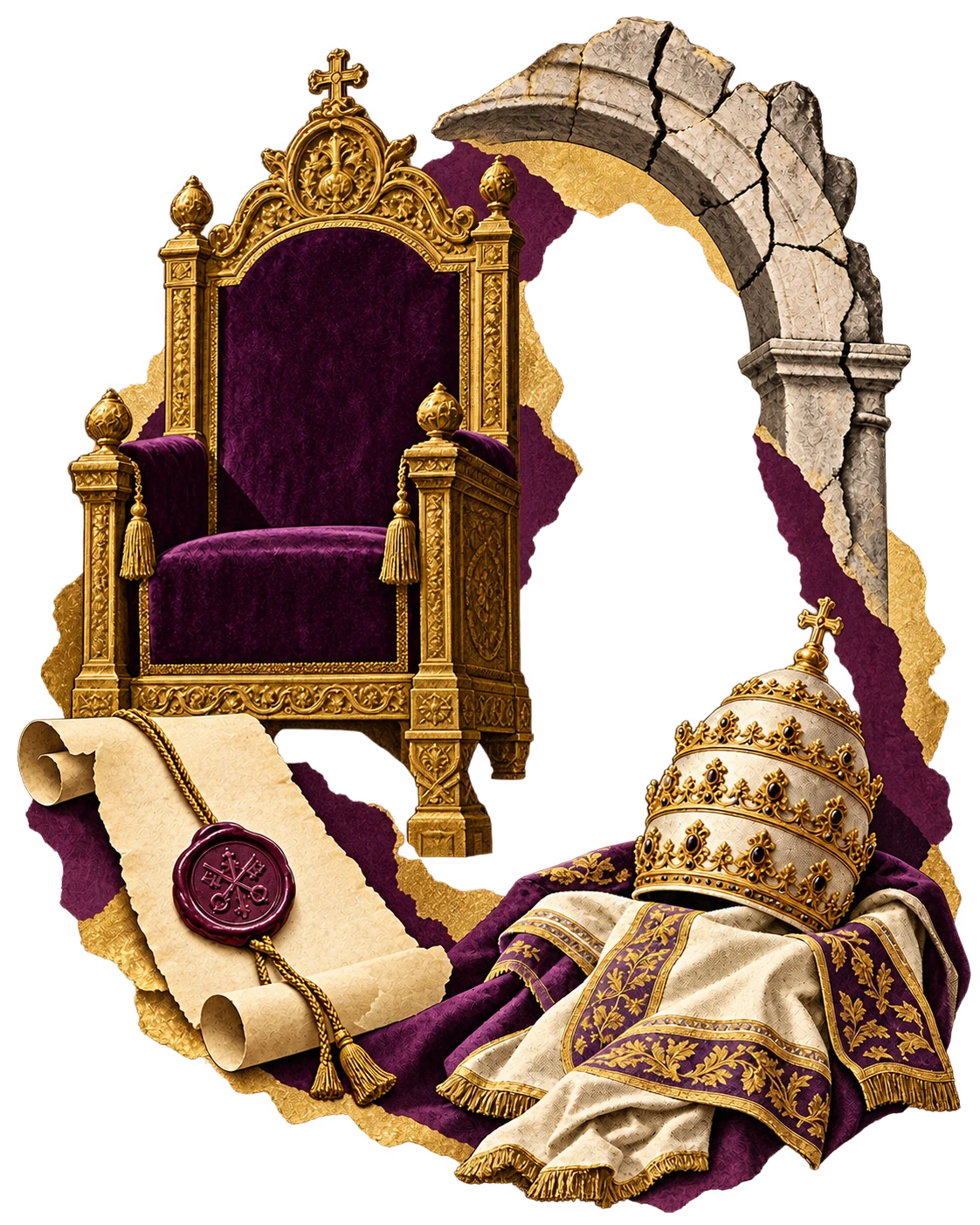
In January 897, the trial of former Pope Formosus opened in Italy. He had been charged by Stephen VI, the pope in office at the time. The defendant was given no opportunity to present his case - since he had died nine months earlier. His rotting corpse was dug out of its grave, cleaned, dressed in ceremonial robes, crowned, and placed on a magnificent chair. Formosus means "good-looking"; to put it gently, he was not looking his best during the trial... But that did not stop Stephen VI from pointing at him and angrily hurling accusations. The deacon, who was supposed to act as Formosus's defense attorney, was left speechless by the grotesque sight.
Pope Formosus was found guilty of bribery and fraud, but the most important charge on which he was found guilty was violating church law, which did not allow him to hold office in two dioceses. The defendant's sentence was to have his clothes torn off, three fingers cut from his right hand, and his body buried in a mass grave.
But that was not the end of Formosus's troubles. After the sentence was carried out, Pope Stephen thought the punishment was not severe enough, so he had the corpse dug up again, tied a weight to its leg, and threw it into the river so the defendant would drown. One of the monks found the body and pulled it from the water. The new pope, Theodore II, held a retrial for Pope Formosus and acquitted him - and so the "defendant" was buried for the third time. But the story continues...
In January 904, about seven years after Formosus's first trial, Pope Sergius III, who had judged alongside Stephen VI during Formosus's first trial, was crowned. Sergius III overturned Pope Theodore II's decision and found Pope Formosus guilty once again. The poor pope's corpse was dug up from its grave yet again and thrown into the Tiber, this time for good.
Posthumous Trials
Bishop Thomas Becket, a close friend of King Henry II, underwent a similar trial. In the middle of a dispute between the two, the king shouted, "Who will rid me of this troublesome priest?" Four knights immediately set out, and in December 1170 they murdered Becket in Canterbury Cathedral. Thomas Becket was buried in the cathedral, and a mausoleum was built over his grave.
In 1538, 368 years after he was buried, King Henry VIII "summoned" Thomas Becket to stand trial on charges of treason. Since the defendant "failed to appear" for trial within the required 30 days, he was tried in absentia and found guilty. His remains were dug out of the grave, his bones were ground up, his treasures were confiscated, and the structure above his grave was destroyed.
The next case was that of Oliver Cromwell, who led the revolution in England. In 1649, the monarchy in England was replaced by a republic after King Charles I was executed. Three years after Cromwell's death in 1658, the monarchy was restored in England, and King Charles II sentenced him to death. His body was dug up and hanged. His head was cut off and displayed on a pole outside Westminster Abbey for four years. Cromwell's headless body was thrown into a pit, while his head was finally buried in 1960 at the University of Cambridge.
The final story is from modern times. The physician François Duvalier was president of Haiti, a ruthless dictator who had many people executed. His cruelty was directed not only at people but also at dogs. When he "identified with certainty" one of his enemies as having turned into a black dog, he ordered all the black dogs on the island to be killed. He ruled Haiti from 1957 until his death in 1971. About 15 years after his death, his body was dug up and ceremonially "beaten to death."
תגובות
עדיין אין תגובות.