
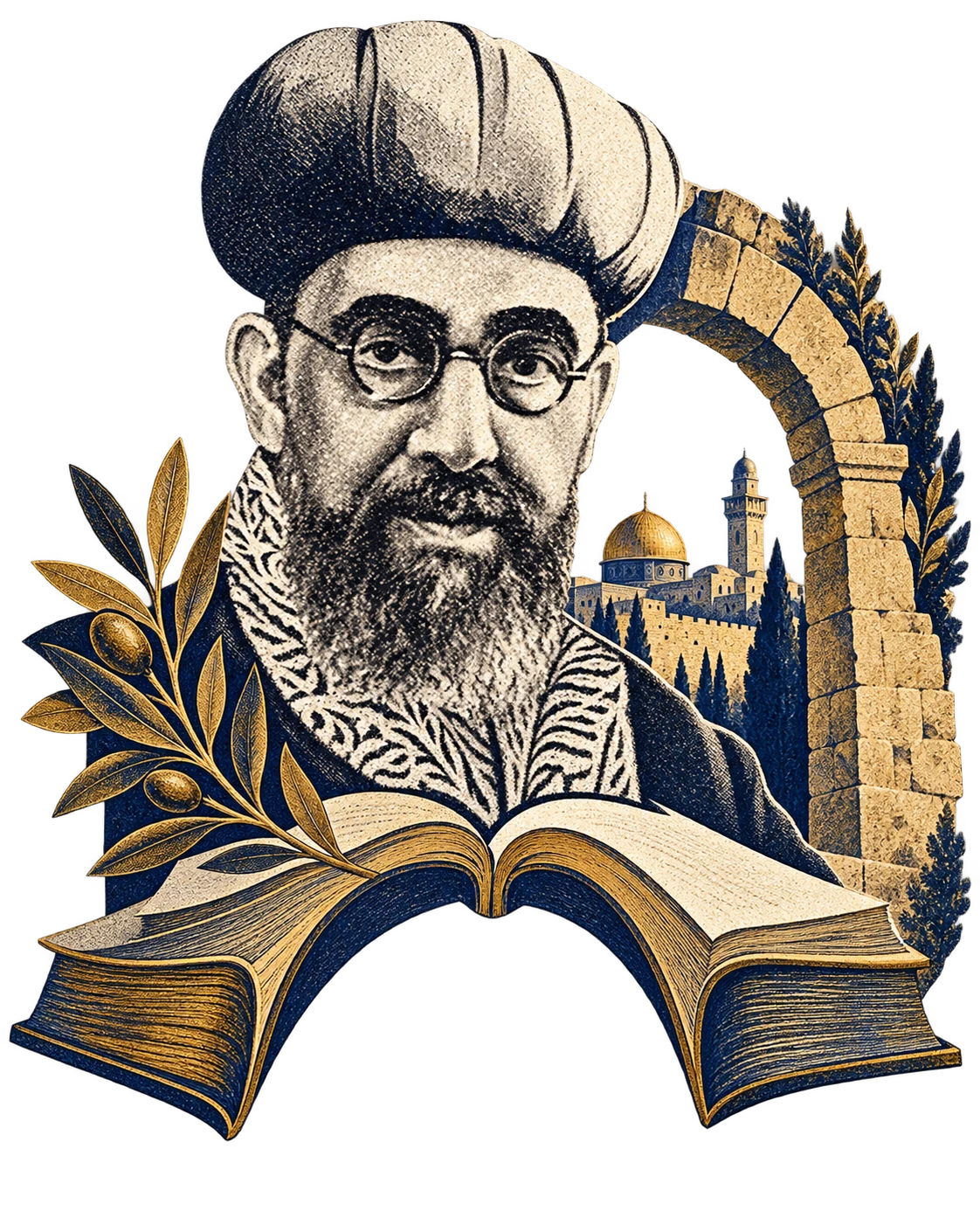
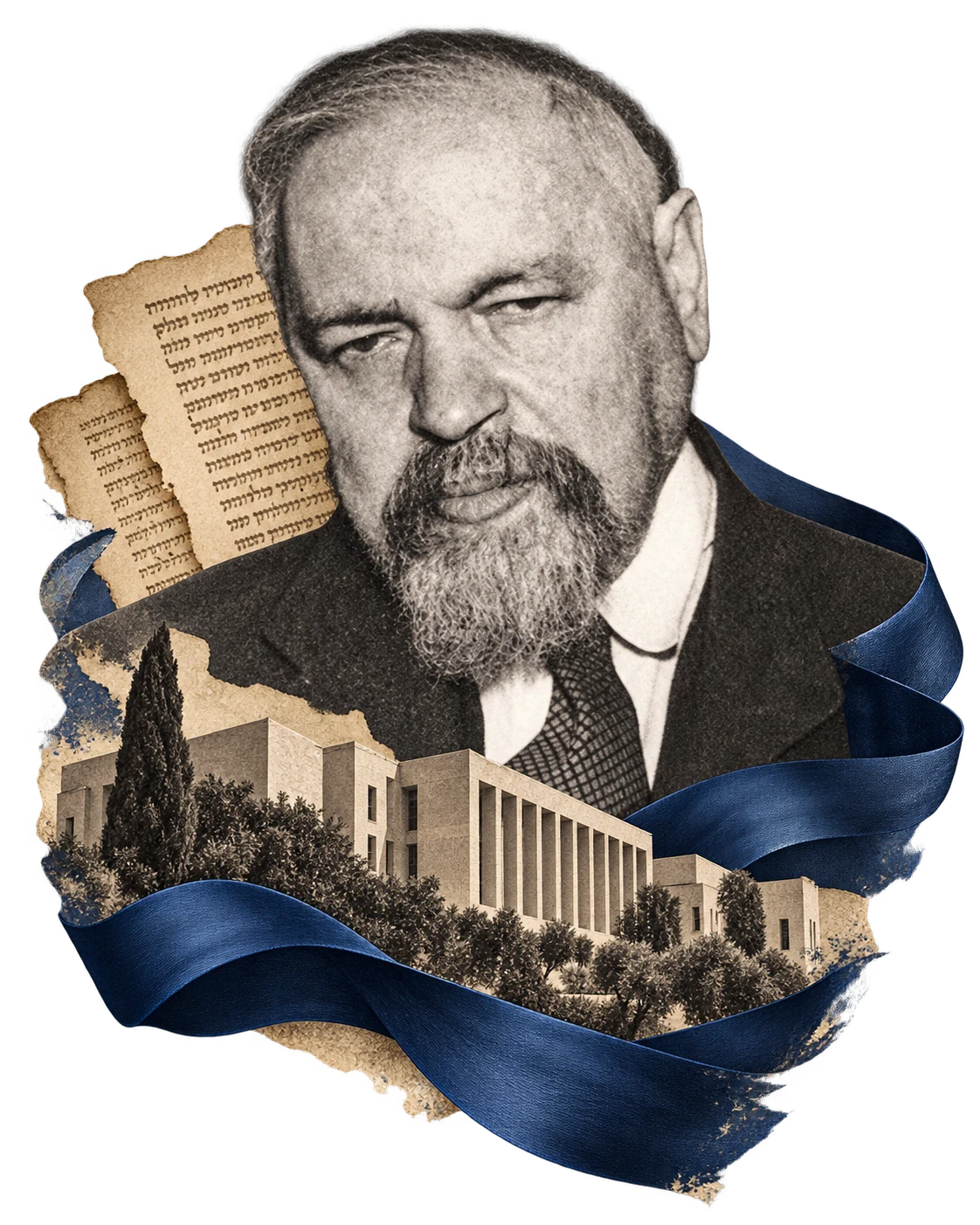
The second Sephardic Chief Rabbi of the State of Israel, who authorized work on Shabbat to defend the state and supported women's right to vote and be elected.
Jerusalem's Fortifications and the Shabbat Dispensation
On November 29, 1947, Jewish history took a dramatic turn. On that day, the United Nations declared the end of the British Mandate in Palestine and the establishment of two independent states in Palestine - a Jewish state and an Arab state. Eight hours before the Mandate was due to end, at midnight on May 14, 1948, David Ben-Gurion declared the establishment of the State of Israel. Everyone knew that war would begin as soon as independence was declared.
At first, the Arabs intended to conquer Jerusalem. As part of Operation Pitchfork, which began that very day, Irgun forces joined the Etzioni Brigade. Their mission was "to defend the Jewish areas of Jerusalem... against the incursion of forces, particularly mechanized and armored units of the regular Arab armies."
With time running short, all Jewish residents were called upon to go to areas evacuated by the British and fortify them against the expected Arab invasion. Thousands of Jews, religious and secular, volunteered for the task and worked together to dig defensive trenches, fill sandbags, and pile them up as fortifications. Since the work continued into Shabbat, the Haganah command approached the Chief Rabbinate and received permission to work on Shabbat.
David Shaltiel, commander of the Haganah in Jerusalem, went out at night to inspect the front lines. In one sector, he came upon an elderly bearded Jew digging with great devotion. Despite the darkness, he was astonished to discover that it was the Sephardic Chief Rabbi, the Rishon LeZion, Rabbi Ben-Zion Uziel, who had authorized work on Shabbat. "Rabbi," Shaltiel said to him, "does Your Honor, the Chief Rabbi, really think that without your own exertions we would fail to fortify the city?" The rabbi replied: "First, every spadeful of earth we dig hastens redemption; and second, I do not want the religious public to think that, God forbid, we were forced to permit work on Shabbat. I want to show that this work of fortification is not, God forbid, a desecration of Shabbat, but a sanctification of Shabbat."
Youth, Orphanhood and Study
Rabbi Ben-Zion Uziel was born in Jerusalem in 1880 into a well-known rabbinical family. His father, Yosef Raphael, was head of the rabbinical court of Jerusalem's Sephardic community and president of its community council. Rabbi Uziel later wrote: "From the very beginning of my life, I was destined to serve the public."
When he turned 13, his father called him over and said that he might not live until the end of his son's bar mitzvah year. He therefore asked him to marry that very year, and that is what happened. Ben-Zion Uziel married Rosa, daughter of Abraham Baruch and granddaughter of Rabbi Chaim Nissim Baruch, who had served as head of Jerusalem's rabbinical court. As his father had foreseen, Ben-Zion Uziel was orphaned at the age of 14, and the responsibility of supporting the family fell on his shoulders.
Those were difficult days for Rabbi Uziel. By day he taught children to earn a living, and at night he studied Torah and secular subjects himself: "My days of peace and happiness were brief. When I reached adulthood, the hand of God was upon me, and my father, my shield, was taken from me. Then I said to myself, I am lost. What can a boy, like a shrub in the desert, do to find his way in life? But the kindness of God, the Father of orphans, prevailed over me... and the day became my time for work, and the night my time for toil."
At the age of 20, Rabbi Uziel was appointed head of the Tiferet Jerusalem Talmud Torah and brought about a revolution there. He believed that boys should be educated by respecting them, not by beating them, and banned all harsh discipline, which he felt "fosters rebelliousness."
From Jaffa to the Chief Rabbinate
In 1911, residents of Jaffa appealed to the Ottoman authorities for permission to appoint a Hakham Bashi - a Sephardic rabbi for the Jewish community in Jaffa. Ottoman law stipulated that only an Ottoman subject, born in the country and of the third generation, was eligible to serve as Hakham Bashi. Rabbi Uziel met the Ottoman criteria and, at the age of 31 and with Rabbi Kook's support, was installed as Hakham Bashi of Jaffa.
In his installation speech, he revealed his longing to unite all the communities into one. In his view, the customs of Ashkenazim, Yemenites, Sephardim, and other communities stemmed from the disruption of exile. Now that the ingathering of the exiles had come and the people had returned to their homeland, they should return to one home, one family, and one custom.
During the British Mandate, the rabbi was frequently called upon to represent the Jewish community at the United Nations. He also appeared as one of the principal witnesses before the Anglo-American Committee of Inquiry in 1946, whose conclusions paved the way for the UN resolution to establish a Jewish state. Rabbi Uziel's conduct and integrity impressed even his harshest critics.
In 1921, after 10 years as rabbi of Jaffa, Rabbi Uziel was appointed rabbi of Salonika. Two years later he returned to the Land of Israel and was appointed rabbi of Tel Aviv. In 1938, after the death of Rabbi Yaakov Meir, he was appointed Sephardic Chief Rabbi of Israel (the Rishon LeZion).
By the time the United Nations declared the end of the British Mandate and the establishment of the state, Ben-Zion Uziel was already serving as Sephardic Chief Rabbi (the Rishon LeZion), and he called on young people to enlist in the army: "Rally to the cause! The historic declaration, proclaimed before the nations of the world in recognition of the political independence of the people of Israel in the territory of their holy land, quickly began to make itself felt through birth pangs accompanied by pain and fraught with danger... In the name of this sacred command, the highest religious institution of Jewry in the Land of Israel turns to you, young people of Israel, and calls: Rally to save the people and its holy ones, the land and its possessions. Heed the call to enlist, all of you. It is a command that will bring life to your home, the House of Israel, and ensure its survival, prosperity, and happiness in the Land of Israel. Heed it!" Later, he added that Jewish priests (kohanim) were also obligated to enlist.
As a religious leader whose life began under Ottoman rule, continued through British rule, and ended in a Jewish state, he believed that the establishment of the state had been guided by a divine hand: "Remember this, consider it carefully, and know and believe that the hand of God has done this," and that the establishment of the state was "the beginning of redemption."
When Independence Day was established as a national holiday with a religious character, a supreme and accepted halachic authority was needed. Rabbi Uziel understood the significance of the moment and decided to provide a halachic response for this special holiday. He wrote: "The fundamental change that has taken place, through God's compassion, to save us and redeem our lives with the declaration of our independence in the Land, obligates us to observe and accept for all generations the day of the declaration of the State of Israel, the fifth of Iyar each year, as a day of rejoicing for all Israel, marking the beginning of redemption, and to exclude the day on which this great miracle occurred from the mourning customs of the days of the Counting of the Omer, while providing instructions for prayers of thanksgiving and sermons appropriate to the occasion in synagogues during the afternoon service." The rabbi believed that the mourning customs observed during this period should be set aside on that day. For example, Tachanun is not recited during the morning or afternoon services, and eulogies are not delivered that day. Rabbi Shaul Yisraeli, together with the Council of Rabbis of HaPoel HaMizrachi, composed a prayer service for Independence Day and established a festive, uniform format for that day's prayers and customs. The text was submitted to Rabbi Uziel, who made several changes and approved it. The rabbi composed the prayer for the elevation of the souls of those who fell in the War of Independence, the prayer in memory of the victims of the Holocaust, and the prayer for the welfare of the state.
A few days after the establishment of the state, the rabbi wrote to Muslim leaders in the country and around the world, beginning his letter with the words: "Brothers, remember the peaceful and friendly relations that prevailed between our two nations in the Arab lands and Muslim countries." He went on to write, "Let us make a covenant of peace." His approach to Israel's Arab citizens was based on the principle: "Together, we will make the land flourish and share in its prosperity; otherwise, the holiness of the land will cast you out of it."
His Rulings, His Students and His Legacy
Rabbi Ben-Zion Uziel was a revolutionary in his halachic rulings. Among other things, he ruled that women should have the right to vote and be elected. He wrote: "Reason cannot accept depriving women of this personal right... How can we have it both ways: impose on them the duty to submit to the authority of the people's representatives, while denying them the right to choose those representatives? If they tell us that women should be excluded from the electorate because their judgment is unsound... we will answer: in that case, men whose judgment is unsound should also be excluded from the electorate, and there will never be any shortage of them in the land... The same applies to appointing women to public positions as elected representatives."
The rabbi also ruled that if a husband divorces his wife because she has not borne him children, and it turns out that the husband is at fault, he must compensate her beyond the amount of her ketubah. He put it this way: "Precisely because the wife cannot, by law, be compelled to accept a divorce, the husband must compensate her until she agrees."
He was less forgiving toward secular Jews, arguing that they had no share in the World to Come and should not be counted toward a minyan.
During the struggle for Hebrew labor, he ruled that there was an obligation to employ Jews, not as an act of piety but as a matter of Torah law. Even if employing a Jewish worker cost more, the employer was obligated to hire him.
The rabbi had a talent for recognizing people with promise. He recognized the potential of Rabbi Eliezer Yehuda Waldenberg, author of Tzitz Eliezer, and appointed him head of the Shaarei Zion Yeshiva he founded - a Sephardic yeshiva headed by an Ashkenazi rabbi. He also recognized the potential of Rabbi Ovadia Yosef, whom he ordained in 1940 and sent to serve as a rabbi in Egypt the following year. This was Rabbi Ovadia's first rabbinical post, and he was just 26 years old.
Rabbi Abuchatzeira said that if the Jewish people had been worthy of establishing the Sanhedrin, they would have placed Rabbi Uziel at its head. While still alive, Rabbi Uziel designated his successor, Rabbi Yitzhak Nissim (father of former Knesset member Moshe Nissim).
On the 24th of Elul 5713, September 4, 1953, as Shabbat began, Rabbi Ben-Zion Uziel died at the age of 73. In his will he wrote: "And now, as I take my leave of you, my brothers and sisters... to be gathered to my ancestors and to my people, may they rest in Eden, I offer my heartfelt thanks to the entire people and to all its members for the great and abundant honor... with which you honored me during my life... Guard the peace of the people and the peace of the state with all your might, and love truth and peace... Remove every cause of division and strife from our community and our state, and put in its place everything that fosters peace and unity among us, so that our camp may be pure and holy..."
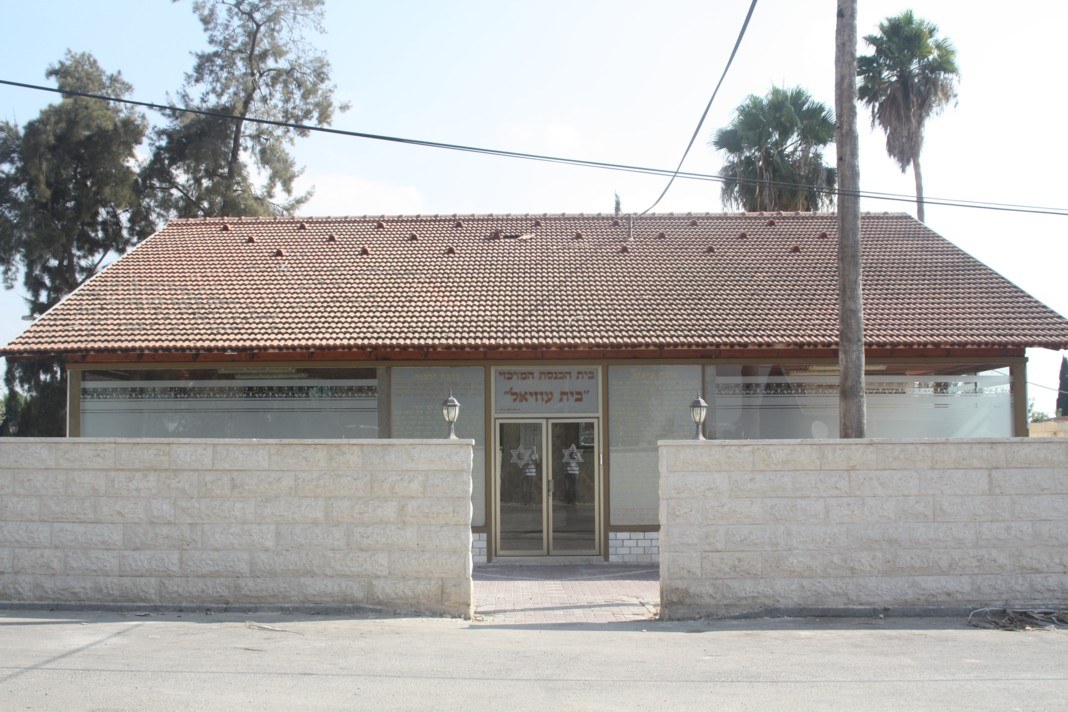
Streets in several Israeli cities, as well as the community of Beit Uziel, are named after Rabbi Uziel. His brother, Nissim Uziel, managed the Anglo-Palestine Bank (later Bank Leumi) in Jaffa and southern Tel Aviv. He was president of the Moriah Freemasons' Lodge in the city, a member of the Jaffa Rotary Club, and a member of the Association of the Sons of the Yishuv in the Land of Israel. Rabbi Ben-Zion Uziel's grandson is the journalist and satirist Meir Uziel.
תגובות
עדיין אין תגובות.